Retail News CRM

Tag: people

  • Henry Sy passes away at 94

    Henry Sy passes away at 94

    The founding father of Philippine retail, Henry Sy, has passed away. Sy, who has topped the Philippines Rich List for the last seven years, was chairman emeritus of SM Investments, one of the country’s largest business conglomerates. A Chinese immigrant who arrived in the Philippines at the age of 12 with his parents, his introduction to retailing began with helping out in his father’s neighbourhood store. He saved enough money to open a shoe store which he named ShoeMart, and whose initials later became the most recognisable brand name in the nation.

    From a single shoe store, his business expanded into department stores, the first of which opened in 1972, then into malls, with 70 shopping centres bearing the SM brand in the Philippines and more in Mainland China.

    SM Investments also owns supermarkets, BDO Unibank, almost 50 residential developments, six hotels and nine office towers.

    Sy, who died on Saturday, stepped down as chairman of the company in 2017, taking on the title chairman emeritus and leaving the business under the leadership of his family and his long-time business partner Jose Sio, who is now chairman.

    He had six children: Teresita Sy-Coson, Elizabeth, Henry Jr, Hans, Herbert and Harley. Teresita and Henry Jr are vice chairpersons of SM Investments and Harley serves as executive director of SM.

    Forbes last year estimated the 94 year old’s net worth at US$19 billion, ranking him the most wealthy Filipino and 53rd richest man in the world.

  • 7-Eleven Malaysia appoints Tsai Tzung-Han as director

    7-Eleven Malaysia appoints Tsai Tzung-Han as director

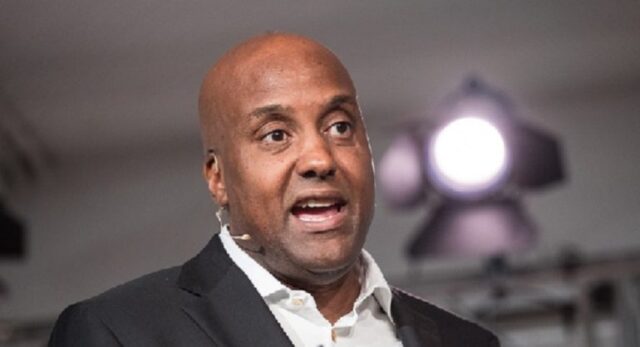
    Convenience store chain operator 7-Eleven Malaysia Holdings Bhd has appointed Tsai Tzung-Han (pix) as a non-independent and non-executive director, effective Jan 16, 2019. Tsai, 42, is currently the vice chairman of Cathay United Bank, a subsidiary of Cathay Financial Holdings which is listed in Taiwan. He also serves as a director on the board of Cathay Life Insurance, the largest life insurer in Taiwan and also a subsidiary of Cathay Financial Holdings.

    Tsai had previously served in various capacities at Cathay Life Insurance, including senior vice president in charge of alternative investments and executive vice president in charge of real estate acquisitions and development, human resources and strategic planning.

    He also ran the strategic planning department for Cathay Financial Holdings from 2010 until 2016 and oversaw the strategic investments into Bank Mayapada in Indonesia, Rizal Commercial Banking Corporation in Philippines and Conning Asset Management in the US.

    He joined Cathay United Bank in 2015 and served as the head of strategic planning until he became the vice chairman in 2016, where he continues to oversee the strategic planning, wealth management, digital banking, data analytics and overseas banking departments.

    Prior to returning to Taiwan, Tsai worked briefly in private equity at Goldman Sachs in New York and in venture capital at Pacific Venture Partners in San Francisco.

    From 2001 until 2003, he was a practicing attorney in the real estate department at Hale and Dorr LLP, currently known as Wilmer Hale, in Boston. Tsai has over 10 years’ experience in investment and business development in finance industry.

  • Ananth Narayanan steps down as Myntra Jabong CEO

    Ananth Narayanan steps down as Myntra Jabong CEO

    Fashion e-tailer Myntra Monday said its CEO Ananth Narayanan has quit, a development that ends months of speculation about his exit following a recent re-jig at its parent group Flipkart. In a statement, Myntra said Narayanan has decided to step down as CEO of Myntra and Jabongto pursue external opportunities. Amar Nagaram has been named as Head, Myntra and Jabong, and will report to Flipkart Group CEO Kalyan Krishnamurthy, it added.

    According to a report, there were speculations that Narayanan would quit after a new reporting structure was put in place when Binny Bansal — the then CEO at Flipkart Group (which owns Myntra and Jabong) — quit the company.

    As a part of the new structure, Myntra and Jabong were brought under Flipkart, with Narayanan reporting to Krishnamurthy.

    “Ananth has played an important role in making Myntra and Jabong into a formidable player in the fashion e-commerce market and steering the company towards sustainable growth,” Myntra said in its statement Monday.

    It added that over the last three and a half years, Narayanan and the management team have built a strong foundation for the company.

    “Myntra and Jabong are an important part of the Flipkart group serving our valuable customers. The company will continue to execute the growth strategy and leverage synergies with Flipkart as appropriate,” it said.

    The strong bench strength and new leadership at Myntra and Jabong will allow the business to continue on its strong and sustainable growth trajectory, the statement added. Nagaram, who recently moved to Myntra from Flipkart, has been working with the group for around seven years.

    “…(Nagaram) has played a pivotal role in making shopping accessible, delightful and affordable on every connected device. Most notably, he led the efforts on revisiting the boundaries of mobile web, making the experience on it as good as native,” the statement said.

  • Nike appoints new Converse CEO

    Nike appoints new Converse CEO

    In the week leading up to Christmas 2018, Nike Inc. said it has recruited a new leader for its Converse brand, naming G. Scott Uzzell as its president and chief executive officer, to helm the heritage sneaker company in the New Year. Uzzell replaces Davide Grasso who has decided to retire at the end of this calendar year. He will report directly to Michael Spillane, President, Categories and Product, Nike Inc.

    Effective January 22, 2019, Uzzell’s new appointment comes at a time when the brand is setting “the stage to move into new spaces by reconnecting to its heritage in sport,” according to a press release in December from Nike Inc.

    “Scott’s unique blend of experience driving both strategic business growth and strong brand development is well-suited to help unlock the full potential of the Converse Brand and lead its next phase of growth globally,” said Michael Spillane, President, Categories and Product, Nike Inc.

    Uzzell comes to Converse from The Coca-Cola Company, where he most recently served as President, Venturing & Emerging Brands Group (VEB).

    As head of Coca-Cola’s VEB Group, the consumer goods executive led a portfolio of high-growth brands for The Coca-Cola Company, including Honest Tea, ZICO Coconut Water, Fairlife Milk and Suja Juice.

    Uzzell began his career within sales and marketing for companies such as Procter & Gamble, Coca-Cola and Nabisco, before returning to Coca-Cola in 2000 in the Strategy & Planning division. Since then, he has held a number of leadership positions across its business including McDonald’s U.S. Division, Global New Business Development, Global Marketing, ZICO and VEB.

    In addition, he is a member on the boards of State Bank and Trust Company; Fairlife and Suja Juice Company, as well as being a member of the Florida A&M University Foundation Board and is part of the Executive Leadership Council (ELC).

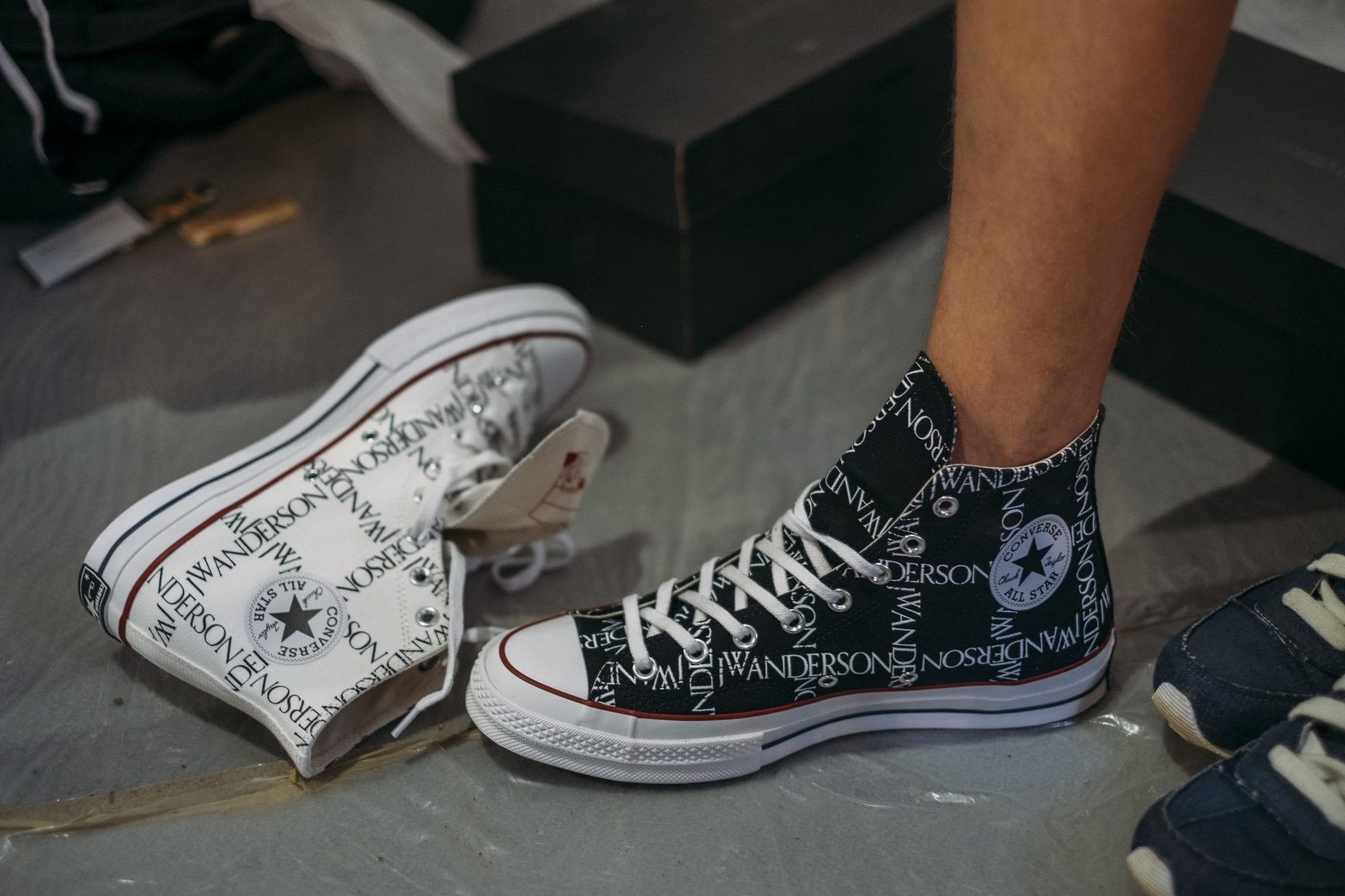
    Founded in 1908, Boston-based Converse is today owned by Nike. Converse shoes are sold globally in over 160 countries.

  • E-Land’s owners step down from management

    E-Land’s owners step down from management

    Owner family members of fashion conglomerate E-Land Group stepped down from management on Thursday, handing over the helm to younger executives internally promoted to leadership roles. The move comes in an effort to rejuvenate its governance structure to strengthen the role of the board of directors of each affiliate and enhance their autonomy when it comes to making business decisions.

    Founder Park Sung-su, 65, will step down from the day-to-day management of the group while remaining chairman. He will focus on nurturing next-generation leaders and developing new businesses instead of being directly involved in the management of subsidiaries.

    “In the past, our chairman made a lot of important decisions across the group, but since late 2016, we’ve been making preparations to give more autonomy to affiliates and develop their capacity to make business decisions on their own,” said an E-Land spokesman.

    Park’s younger sister Park Sung-kyung, 62, also stepped down from her position as vice chairwoman of the group. Having worked at E-Land for more than 12 years, Park has led the group when it comes to external affairs in the last few years. She also managed E-Land’s global operations, including in China.

    Stepping aside from management, Park Sung-kyung will chair the board of directors of the E-Land Welfare Foundation, which pursues charity activities inside the group.

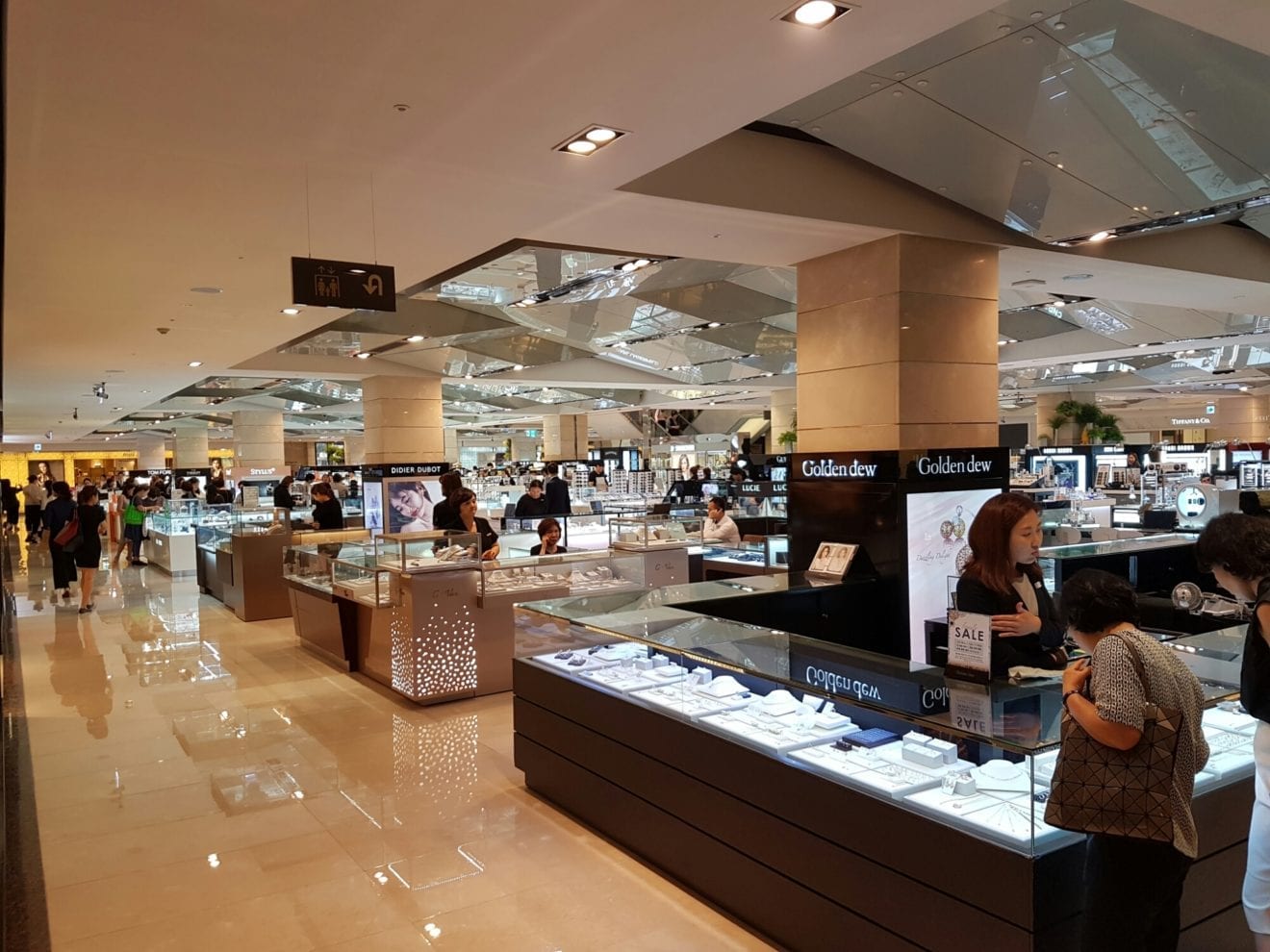
    To fill the void, two vice chairmen were appointed. Former E-Land Retail CEO Choi Jong-rang has been promoted to vice chairman of the retail subsidiary, which operates NewCore department stores as well as popular shoe brand Shoopen. Kim Il-kyu has also been newly appointed as vice chairman of E-Land World, which manages the group’s key clothing brands.

    E-Land also promoted a handful of top executives in their 30s and 40s to head up their respective business divisions.

    Choi Wan-sik was promoted to CEO of E-Land World’s fashion division. Choi previously gained recognition for his performance as the director of Spao.

    At E-Land Park, which manages the group’s resorts and restaurant chains, 35-year-old Kim Wan-sik took over the reins as the subsidiary’s head of restaurants, which includes buffet franchises Ashley and Pizza Mall.

  • Raf Simons exits Calvin Klein

    Raf Simons exits Calvin Klein

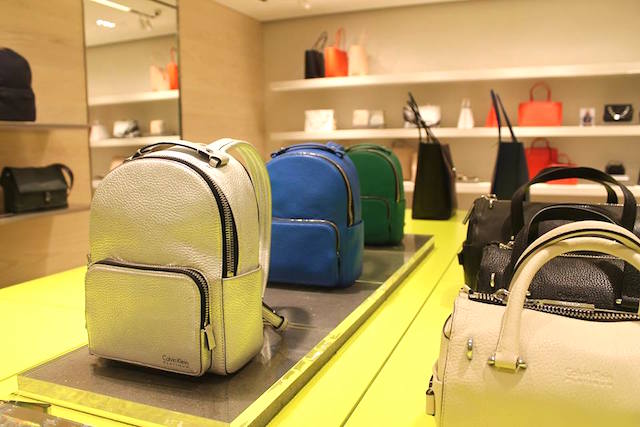
    Raf Simons is exiting Calvin Klein less than two years after his debut as its first chief creative officer and eight months before the end of his contract. The brand will not stage a runway show in February. The designer’s stint at Calvin Klein — coming after his turn as artistic director of women’s haute couture, ready-to-wear and accessory collections at Dior — won plaudits within the industry but failed to resonate commercially. His exit was widely expected after Calvin Klein parent PVH Corp. chief executive Emanuel Chirico last month criticised the brand’s uneven financial performance and skew toward “high-fashion” under Simons.

    “Both parties have amicably decided to part ways after Calvin Klein Inc. decided on a new brand direction which differs from Simons’ creative vision,” the company said in a statement. A representative for Simons declined to comment.

    Simons’ appointment in 2016 was met with much fanfare. The Belgian designer, as well known for his cult menswear label as his well-regarded stints at Jil Sander and Dior, was given a multi-million-dollar salary and the title of chief creative officer, with oversight over all aspects of marketing and design for the American megabrand, a degree of control he did not have at Dior.

    From the start, hiring a high-concept fashion designer for a brand best known to consumers for its denim, underwear and provocative marketing was a risky move. But PVH leadership saw competing businesses like Ralph Lauren stagnating for lack of creative innovation, while European stalwarts like Gucci soared after radical creative overhauls.

    With Simons, Calvin Klein hoped to not only generate a halo effect for its lower-priced products, but transform the label’s high-end ready-to-wear business, renamed 205W39NYC, from a marketing expense into a commercial powerhouse.

    But from the very beginning of Simons’ tenure, there was a disconnect between his personal aesthetic and the needs of a multi-billion-dollar, multi-tiered brand, driven less by high design and more by mass marketing, an area in which Simons had no experience. His first advertising campaign for the ready-to-wear collection, received mixed feedback. Shot by longtime collaborator Willy Vanderperre, it was arty and bloodless; far from the sexualised minimalism for which the brand was so well known.

    Yet there was plenty of industry praise for Simons’ catwalk shows. And in the first season alone, doors selling 205W39NYC jumped from 30 to 300. What’s more, Simons seemed committed to the cause of translating his designs into mass sales, visiting with Macy’s executives and hiring the Kardashian family to pose for underwear and denim advertisements.

    As recently as March, PVH appeared committed to the partnership as well, with Chirico touting the “credibility” that 205W39NYC would bring to the brand’s other lines. But PVH’s patience began to wear thin over the course of 2018, as the buzz generated by Simons failed to translate into consistent revenue growth.

    In September, a runway concept that required Simons to show off-site (recent catwalks have been held on the ground floor of the company’s headquarters) was scrapped due to budgetary constraints. Then, according to multiple sources, PVH expressed concerns that Calvin Klein’s extensive partnership with the Andy Warhol Foundation — which included merchandise — was too arty and high-brow for a mass audience.

    PVH, which also owns Tommy Hilfiger, missed sales projections in its most recent quarter. And Chirico last month called out the 205W39NYC ready-to-wear collection’s failures, adding that Calvin Klein’s recent denim collection had been a “fashion miss.” The brand’s revenue grew just 2 percent in the third quarter to $963 million. PVH shares are down 35 percent this year.

    “We will cut back on a number of these planned investments in the 205 collection business, and as we move forward, we will [be taking] a more … commercial approach to this important business,” Chirico said after PVH released financial results in November, adding that Calvin Klein will shift the focus of its marketing campaigns from high-fashion to more affordable items targeting a more mainstream audience.

    In recent months, the company had begun to dial back on some of Simons’ responsibilities, installing L’Oréal veteran Marie Gulin-Merle to be Calvin Klein’s new chief marketing officer, reporting not to Simons but to the brand’s chief executive Steve Shiffman.

    Simons earned multiple awards from the Council of Fashion Designers of America during his time at Calvin Klein and his absence will be keenly felt at New York Fashion Week, where he was one of the few designers who could command true international attention.

    “Raf brought a unique point of view to American fashion and the CFDA wishes him future success,” said CFDA chief executive Steven Kolb. “Calvin Klein is an iconic American brand that will continue to flourish under new creative direction.”


  • Vietjet CEO becomes first Vietnamese Bloomberg game changer

    Vietjet CEO becomes first Vietnamese Bloomberg game changer

    Nguyen Thi Phuong Thao is in Bloomberg’s list of 50 people who’ve been business game changers in 2018. Thao is the first Vietnamese citizen to be named in the Bloomberg list, which highlights key players in all fields, from finance to fashion, media to manufacturing, banking to biotech, politics to philanthropy, entertainment to energy. The founder and CEO of budget carrier Vietjet Air wants to take on regional giants like Indonesia’s Lion Air and Malaysia’s AirAsia Group Bhd.

    The carrier has forecast that the number of passengers it serves this year will rise 40 percent to 24 million, as it begins to tap into Vietnam’s growing middle class by expanding overseas routes.

    The expansion further changes the face of Vietnam’s aviation market that has been long dominated by state-owned Vietnam Airlines JSC, as VietJet offers millions of Vietnamese customers who have never flown the chance to buy a cheap ticket, Bloomberg says.

    Thao, 48, has extensive experience in doing business in Vietnam and abroad in many fields, including finance, banking, aviation, realestate, and retail.

    She launched Vietjet in 2011. The airline now leads the domestic market with a 45 percent share. It operates 385 flights daily within Vietnam and to Japan, Hong Kong, South Korea, Taiwan, Singapore, mainland China, Thailand, Myanmar, and Malaysia.

    The carrier made an IPO on the Ho Chi Minh City Stock Exchange on February last year, becoming the first airline in Vietnam to list publicly.

    Thao also has interests in banking and real estate, which includes owning three beach resorts.

    Bloomberg says it comes up with the list by utilizing its worldwide resources, including the work of 2,400 journalists and unique, proprietary data and analytics.

    Also on the list this year are Jerome Powell, the U.S. Federal Reserve chairman, Amy Hood, chief financial officer at Microsoft Corp, and Ryan Coogler, director of Maverl’s movie Black Panther.

    Just last week, Thao was named the 44th most powerful woman in the world byForbes, up 11 places from last year.

    Forbes estimated the richest woman in Vietnam to have a net worth of around $2.6 billion.

  • Lazada Group appointed new CEO

    Lazada Group appointed new CEO

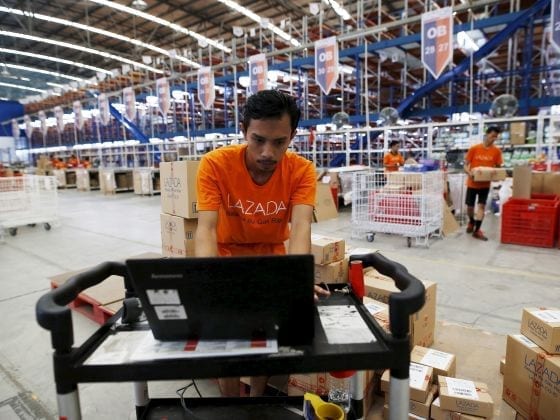
    Lazada Group has announced its second new CEO this year, with group executive president Pierre Poignant taking the role immediately. Incumbent Lucy Peng, who took over the role nine months ago after moving from major investor Alibaba, will remain with the business, assuming the title executive chairwoman.

    In a media statement, Lazada described the change as “succession planning”.

    Poignant, who was appointed president in August, will lead the company’s strategic development into new growth pillars, while continuing to manage Lazada’s operations in Indonesia, Malaysia, the Philippines, Singapore, Thailand and Vietnam, working closely with country CEOs and regional functional team leaders.

    “Pierre is a well-respected Lazada co-founder, who has contributed tirelessly to the company for the past six years,” said Peng. “He and the team of other co-founders had the vision to build our logistics network from the ground up back in the days when no one in Southeast Asia believed in e-commerce – this valuable asset has now set us apart from the competition. Over the years, Pierre has consistently delivered beyond his call of duty and excelled in every role he has taken up.”

    Poignant said Lazada has benefitted from the Alibaba ecosystem, from the technological prowess to the logistics network.

    “This year is a turning point for Lazada. We have improved and evolved and now come out stronger, more efficient, and more agile than the start of the year. Our transformation has just begun and I am confident next year will be another watershed year,” said Poignant.

  • Nike appointed two new leaders

    Nike appointed two new leaders

    Nike Inc is bolstering its executive management with its two latest hires. The U.S. sports giant has announced earlier in the month that Carl Grebert, currently the Vice-President, General Manager of the Global Jordan Brand, will become the company’s new Vice-President, General Manager of its Asia Pacific and Latin America (APLA) geography, effective December 1.

    In his prior role at Jordan, Grebert worked for 18 months and drove the basketball brand’s global product engines and marketing, merchandising, and oversaw Jordan category management teams for the brand, pushing the business into a position for the next phase of growth.

    Before Jordan, Grebert headed up the Japan geography team as Vice-President, General Manager of Nike Japan.

    He has also held senior roles in marketing and ran territory business units in Europe.

    Grebert replaces Ann Hebert, who will become the new Vice-President, Global Sales, after working as APLA head for two and a half years.

    Hebert will be responsible for driving Nike’s global sales teams and partnering with Nike Direct “to build a seamless Nike network that will continue to elevate service to consumers around the world,” said Nike in a statement.

    She replaces Mike Best, who has decided to retire after a nearly 30-year career stint at Nike.

    Likewise, Hebert has been at Nike for 23 years and served in various leadership roles.

    Prior to her APLA role, the Nike veteran was VP of the Global Nike Direct Partner business and led the North America sales team as the VP, North America Sales.

    Both new management roles will report to Elliott Hill, Nike’s President of Consumer and Marketplace.


  • India generated the highest growth rate in Asia-Pacific

    India generated the highest growth rate in Asia-Pacific

    In January, passenger traffic across Asia-Pacific recorded a +4.4% increase whereas the Middle East reported a small reduction of -0.4% compared to the same period last year. This month’s traffic was largely distorted by the later timing of Chinese New Year (CNY) compared to last year, resulting in slower growth in many countries for the month.

    India generated the highest growth rate in the Asia-Pacific region at approximately +15% in January, backed by robust domestic demand. India’s domestic sector has experienced a period of high growth since 2015 and continued to have strong momentum. Among the top 10 airports driving domestic passenger traffic volume in January seven came from India. Led by: Delhi (DEL) +12.6%, Bangalore (BLR) +19.8% and Hyderabad (HYD) +24.8%.

    The shifting timing of CNY has resulted in China’s growth slowed to approximately +2% in January. The busiest airports in the country all reported small decline or marginal increase for the month: Beijing (PEK) -0.4%, Shanghai Pudong (PVG) +0.3%, Guangzhou (CAN) +0.7%.  Passenger traffic is expected to rebound significantly for China in February 2018.

    Elsewhere in the region, vibrant international passenger travels benefited a number of markets in driving volume increase for the month. Top runners were: Seoul Incheon (ICN) +8.2%, Kuala Lumpur (KUL) +4.9%, and Bangkok Don Mueang (DMK) +7.4%.