Tag: Pepsi

  • PepsiCo names new CEO for Australia/New Zealand

    PepsiCo names new CEO for Australia/New Zealand

    PepsiCo has announced the appointment of Kyle Faulconer as the new CEO of Australia and New Zealand, effective January 2022.

    Faulconer will replace outgoing CEO, Danny Celoni, who was recently appointed to the Asahi Beverages Oceania Executive Leadership Team as the new CEO of Carlton & United Breweries, effective February 2022.

    To take up the new position, Faulconer will relocate to Sydney from the US, where he is currently Vice President and General Manager at PepsiCo’s Frito-Lay snacks business.

    He has had a 14-year tenure at PepsiCo and is a passionate advocate for consumer-centric innovation. Most recently he was responsible for leading the strategic agenda for Walmart, one of PepsiCo’s largest global customers.

    Wern-Yuen Tan, CEO, PepsiCo APAC, says that Faulconer’s strong market experience and people-first approach will be a great asset to the Australia and New Zealand team.

    “We are delighted to welcome Kyle to ANZ and know he will lead the team to new heights,” said Tan.

    In his new role, Faulconer will work to strengthen operations and drive innovation and growth across PepsiCo’s portfolio of drinks and snacks.

    He said: “I’m thrilled to join the world-class team and help the PepsiCo business continue to grow across Australia and New Zealand. I look forward to creating new opportunities to accelerate our positive, purpose-led impact for our partners, customers ad consumers.”

  • Coca-Cola to fully acquire Gatorade rival BodyArmor for $5.6 bln

    Coca-Cola to fully acquire Gatorade rival BodyArmor for $5.6 bln

    Coca-Cola said on Monday it would buy the remaining stake in BodyArmor it did not already own for $5.6 billion, as the soda maker amps up its sports drink portfolio to take on market leader, PepsiCo Gatorade.

    The deal marks a shift in strategy for the world’s largest beverage maker after it spent the last year offloading or discontinuing brands, including its own energy-drink brand, to focus on Coca-Cola sodas.

    The deal, which values BodyArmor at about $6.59 billion, is Coca-Cola’s largest for a single brand; It comes about three years after the company bought British coffee chain Costa for $5.1 billion.

    BodyArmor, which markets itself as an electrolyte-filled energy recovery drink for athletes, currently makes about $1.4 billion in annual retail sales and has a 50% growth rate, Coca-Cola said.”It gives Coke a strong stable of products in the rapidly growing sports hydration category. It’s a nice premium brand that has an opportunity for expansion over time,” Edward Jones analyst John Boylan said about BodyArmor that gained popularity after basketball star Kobe Bryant backed it in 2013.

    However, Boylan believes the massive deal would only “give Coke a solid No. 2 position in an attractive category”.

    Coca-Cola, which had first acquired a 15% stake in BodyArmor in 2018, said the brand’s co-founder Mike Repole will stick around after the deal to advise on the marketing and packaging of products.

    At the time Coca-Cola took its initial stake, BodyArmor was valued at $2 billion, according to a Sunday Wall Street Journal.

    The deal comes as Coca-Cola and rival PepsiCo face immense supply chain bottlenecks, forcing the companies to raise prices to counter higher freight and raw material costs. PepsiCo has even said it has had to deal with a shortage of Gatorade bottles.

  • PepsiCo to reduce plastic use, launch plant-based snacks in green push

    PepsiCo to reduce plastic use, launch plant-based snacks in green push

    PepsiCo, a leading food and beverage giant, has announced plans to cut back on the use of virgin plastic and expand its SodaStream carbonated-water business to more markets in response to increasing calls to combat climate change.

    According to the company, as part of a new initiative called “pep+”, the food and beverage giant aims to reduce virgin plastic use per serving by half across all brands by 2030 and use 50% recycled content in all its plastic packaging.

    PepsiCo’s ambitious plastics plan also includes scaling its SodaStream business globally, Laguarta told Reuters in an interview. SodaStream, acquired by PepsiCo in 2018, makes machines and refillable cylinders that let users make their own soda or carbonated water drinks at home.

    The brand, currently in 40 countries, will bring new flavours into 23 more markets and introduce its new SodaStream Professional platform aimed at businesses in 10 additional markets by 2022.

  • Pepsi virtual restaurant matches fizz with foods

    Pepsi virtual restaurant matches fizz with foods

    PepsiCo in the US has launched a digital kitchen called Pep’s Place to encourage consumers to experiment with matching foods with various Pepsi beverages.

    From this week, consumers can visit a dedicated website to select from eight Pepsi drinks and match them with renowned American dishes like cheeseburgers, buffalo wings, Cajun chicken sandwiches, chopped pork sandwiches, spare ribs, and chicken caesar salads. Orders will be fulfilled by major food-delivery services Uber Eats, Door Dash, and Grub Hub, or by Pepsi itself.

    Customers order by first choosing a drink – Pepsi, Diet Pepsi, Pepsi Zero Sugar, Pepsi Real Sugar, Pepsi Wild Cherry, Pepsi Zero Sugar Wild Cherry, Pepsi Mango, and Pepsi Zero Sugar Mango. After that, they are prompted with a selection of food items Pepsi believes complements the drink.

    “For years we have known that Pepsi is the perfect complement to a variety of foods,” said Todd Kaplan, VP of marketing at Pepsi. “But even though consumers know that food tastes Better With Pepsi, they often still forget to order a beverage with their favorite meals.

    “With the launch of Pep’s Place, we have designed a new ‘fast beverage’ restaurant delivery concept that features a menu and experience literally built around the idea of what foods go best with Pepsi, allowing consumers at home to fully optimize their meals,” he said.

    Pep’s Place will trade for a month, supported by eight television commercials broadcast nationwide. The company says the ads were filmed without “unrealistic, idealistic perfection” of food, instead depicting “the celebration of unapologetic love of foods like juicy, drippy cheeseburgers, topping-heavy hot dogs, and pizzas with the extra-long cheese pull”.

    As the example below shows, some are amusing…

  • PepsiCo commits to recycled packaging across entire snacks range

    PepsiCo commits to recycled packaging across entire snacks range

    PepsiCo will convert to 100-per-cent recyclable packaging across its Smith’s, Red Rock Deli, Sakata, and Doritos brands.

    The company has also partnered with the sustainable organization, Clean Up Australia, to increase soft-plastic recycling in Australia.

    By the end of the year, all the packaging will be changed out and will sport the Australasian Recycling Logo. Consumers will be able to recycle all of their snack packagings via curbside recycling for cardboard and plastic trays, and through the Redcycle collection bins for soft plastics.

    “Increased recycling rates are critical to the success of a circular economy for soft plastics,” said PepsiCo Australia and New Zealand chief marketing officer, Vandita Pandey. “Key to this is making packaging recyclable and easy to recycle.

    “We are proud to have achieved the first step – designing 100 percent of our snacks packaging to be recyclable – meeting Australia’s 2025 National Packaging Target four years ahead of schedule.”

    PepsiCo pledged $650,000 at the Australian Government’s National Plastics Summit last year for the Greening the Green program developed by Clean Up Australia. The company partnered with Redcycle and Replas to work with local sporting facilities to streamline rubbish separation and collection as well as increase soft plastics recycling.

    Greening the Green is a 12-week program that targets to improve littering and rubbish collection via an interactive online learning experience.  A pilot testing is underway at the ELS Hall Park in Ryde, NSW and there are an additional 19 sporting grounds that have signed up, bringing the number to a total of 110 sporting facilities joining them for the next two years.

    Facilities can either collect recyclables like soft plastics and beverage containers via specific bins, which will be collected by Redcycle. These will be shredded and delivered to Replas so they can be moulded into seats, bollards, signage and sports trophies., and the end product will be given to each sporting group.

  • PepsiCo franchise rights to be acquired in South, West India

    PepsiCo franchise rights to be acquired in South, West India

    PepsiCo India’s bottling partner Varun Beverages Monday said its board has approved plans to acquire franchise rights of the beverages and snacks major in South and West regions. The board has approved the company’s intent to enter into a binding agreement with PepsiCo India Holdings to acquire franchise rights in the two regions for a national bottling, sales and distribution footprint in seven states and five UTs, Varun Beverages Ltd (VBL) said in a regulatory filing.

    According to a report, upon completion of these acquisitions, VBL will be a franchise of PepsiCo beverages business across 27 states and seven Union Territories (UTs), it added.

    “The proposed acquisitions are in line with the company’s strategy to expand into contiguous territories and will help to acquire greater scale, operational productivity and efficiency leading to higher revenues and profitable growth,” it said.

    VBL, however, did not disclose financial details of the proposed acquisitions.

    The company further said its board will meet on February 26 to consider raising of capital through Qualified Institutions Placement (QIP).

    Last year in January, VBL had entered into a pact with PepsiCo to sell and distribute the latter’s entire Tropicana range of juices along with Gatorade and Quaker Value-Added Dairy in North and East India.

    VBL already held manufacturing, sales and distribution rights for Tropicana Slice and Tropicana Frutz in the two regions.

    PepsiCo had then stated that North and East regions together accounted for 80 percent of the juice market in India and VBL’s contiguous reach would help it more than double the distribution reach in these states.

  • Cola, sugar prices shoot up 10% in Korea

    Cola, sugar prices shoot up 10% in Korea

    Processed food prices rose in January, with soybean paste, sugar and cola all jumping up around 10 percent compared to a year earlier. The Korea Consumer Agency (KCA) said Monday that 18 of 26 major processed foods measured both in 2018 and 2019 cost more in January than the previous year. The highest price hikes on year included sugar at 11 percent, soybean paste at 9.8 percent and cola at 9.7 percent. Among processed grain foods, instant rice products rose the most, by 5.6 percent. Prices for cup ramyeon noodles, one of the country’s favorite snacks, rose 3.4 percent.

    The KCA releases prices for a basket of around 30 major processed food categories every month. The basket price data serves as a separate indicator of real price changes for consumers. Other tracked products include beer, coffee mix and curry.

    Compared to the previous month, the average basket price for January rose 0.2 percent to 122,686 won ($109) from 122,491 won. Soybean paste prices rose on month by 4.7 percent and curry by 1.4 percent. Average cola prices rose 6.0 percent from December. The soft drink’s price rose last month after two months of declines.

    The KCA reported that the basket’s price was most affordable from large retail stores compared to traditional markets, department stores and large-size supermarkets.

    Meanwhile, products that declined in price on year included cooking oil at minus 6.1 percent, orange juice at minus 5.3 percent and red pepper paste at minus 4.9 percent.

    The data comes as consumer prices for January rose by 0.8 percent from 2018, according to Statistics Korea. The consumer price index for “living necessity food” rose 2.6 percent last month from the previous year.

  • Pepsi India betting big on digitisation for growth; to connect 10 million retailers

    Pepsi India betting big on digitisation for growth; to connect 10 million retailers

    Food and beverages major PepsiCo India is betting on digitisation as a big growth opportunity and is looking at using technology in both backward and forward integration. According to a report: The maker of Lay’s, Kurkure and many a cola brand, including Pepsi, said it is working on a project to digitally connect about 10 million retailers along with about 600 million consumers, with the supplier.

    Ahmed El Sheikh, President and Chief Executive Officer, PepsiCo India, said that the company has just finalised a project which is digitising the total supply chain within PepsiCo India, end-to-end.

    “We are working on another project to digitise our connection with farmers. We are talking about thousands of farmers where we want to be connected with the crops in the field, getting certain parameters measured and taking corrective action against it through digital solutions.

    “We are using digital in backward integration of supply chain network,” he said.

    Sheikh said the company is making technology as the cornerstone and building the business around it.

    “We are looking at how technology is going to reshape India and I think this is one of the key enablers to unleash the potential of our business in the country,” he said.

    The company, which reported profit in 2017-18, after a gap of seven years, is bullish on the prospects in the country and is rolling out the first river shipment of its snack portfolio from Kolkata to Varanasi.

    “We are going to start the first river shipment this month, from Kolkata to Varanasi. This is based on GST, which we are leveraging. We are starting a pilot with the Government.

    “It is the first containerised movement on inland waterway on river Ganga,” he said.

    Sheikh, PepsiCo India’s first expat president, further said the company, which has been in the country since 1989, isseeing healthy growth coming out of India, which is well balanced between food and beverage, while the nutrition segment comprising Quaker Oats and Tropicana, is growing faster albeit on a lower base.

    “We need to be positive growth driver for PepsiCo, but that growth needs to be sustainable and responsible,” he said.

    He added that the water and juice segment outgrows the soft drink segment in India, and the company is counting on being glocal to succeed in the food segment.

  • Pepsi India to install plastic crushing machines across Maharashtra

    Pepsi India to install plastic crushing machines across Maharashtra

    Food and beverages firm PepsiCo India is planning to install reverse vending machines to crush PET plastic bottles in all the 36 districts of the state over the next two years as part of its plastic waste management initiative, a top executive said.

    According to a report: It aims to collect, segregate and recycle 6,500 tonnes of PET bottles in the state in the first year through this initiative.

    “We plan to roll out this (plastic waste management) initiative to all the 36 districts of the state over the next two years,” Neelima Dwivedi, Vice President, Pepsi-Co India said.

    In a meeting with chief minister Devendra Fadnavis in Nagpur in July, PepsiCo India’s president Ahmed ElSheikh had said the company is committed to the government’s vision and focus on addressing the issue of plastic waste in a sustainable manner.

  • PepsiCo to help India implement plastic ban

    PepsiCo to help India implement plastic ban

    PepsiCo on Wednesday expressed its commitment to support the plastic ban enforced in Maharashtra, India, including the extended producer responsibility for PET plastic waste bottles, a top company official said.

    PepsiCo India President and CEO Ahmed ElSheikh met Chief Minister Devendra Fadnavis here and said it has partnered with Gem Enviro Management for setting up infrastructure to collect and recycle the PET plastic bottles in the state.

    Pledging to collect and recycle all the PET plastic bottles generated through PepsiCo’s beverages, he said that Gem Enviro will set up Reverse Vending Machines, collection points and centres at various locations in Maharashtra.

    “The programme will also ensure effective recycling of the PET waste collected. In addition, through the Indian Beverage Association, we are also setting up a consortium for industry players to come together and work towards enhancing the plastic waste management infrastructure in the state,” ElSheikh announced.

    He added that the company plans to design all packaging to be recoverable or recyclable by 2025 for which it is working on new technologies for sustainable packaging solutions.

    “We will be piloting the first ever 100 per cent compostable, plant-based packaging for our popular snacks products – Lay’s and Kurkure – this year, and have resized these snacks packaging to reduce paper consumption in the value chain,” ElSheikh said.

    For the beverages business, the company has launched Pepsi Black in non-returnable glass packaging and will collaborate with Central Pollution Control Board for two pilot projects for multi-layered packaging waste management.

    “As part of our efforts to increase recycling, we have also successfully piloted a ‘Film to Fuel’ project at our Pune plant to convert all the packaging film waste from the plant, into fuel, ensuring 100 percent recycling of packaging waste at the plant,” said ElSheikh.

  • Failed Pepsi, Nivea ads show industry’s diversity problem

    Failed Pepsi, Nivea ads show industry’s diversity problem

    ‘Between Nivea’s ‘white is purity’ ad and Pepsi’s ‘Black soda matters’ ad, I think it’s time to open my ‘Ask a Black person’ consulting firm.’ Recent high-profile advertising missteps by Pepsi and skin-care company Nivea underscored anew Madison Avenue’s awkward relationship with racial diversity at a time when the United States is becoming less white.

    PepsiCo’s ill-fated “Moments” spot, featuring model Kendall Jenner, was quickly pulled with an apology after being vilified for trivializing the “Black Lives Matter” movement.

    Nivea also apologized and withdrew an ad for a deodorant after its “White is Purity” pitch was embraced by white supremacists.

    Social media had a field day with the botched campaigns, which seemed to suggest scant progress from the white male bubble of the 1960s depicted in the popular television series “Mad Men.”

    “Between Nivea’s ‘white is purity’ ad and Pepsi’s ‘Black soda matters’ ad, I think it’s time to open my ‘Ask a Black person’ consulting firm,” comedian Travon Free said on Twitter.

    In fact, data shows a diversity deficit in a sector that both reflects and molds public sentiment.

    Only 4.1 percent of advertising industry employees in the country are African Americans, well below their 13.3 percent of the overall population. Latinos account for 12.3 percent of the industry, compared with 17.6 percent of the population.

    Nearly half of respondents among advertising employees said the industry was “terrible” or “not great” at hiring diverse professionals, with another 25 percent describing it as “mediocre,” according to a survey released last September by the American Association of Advertising Agencies.

    The trade group’s outgoing president Nancy Hill made publicly calling out “racist and misogynistic behavior” her New Years resolution for 2017.

    “I have realized given the current climate in our country and our industry, that doing that privately is tantamount to condoning the behavior,” Hill said in a column on a marketing industry website.

    “Others involved need to know that this industry does not tolerate this kind of thinking and its resulting behavior any longer.”

    Some major advertisers, such as Verizon, General Mills and Hewlett-Packard have threatened to fire firms that aren’t diverse enough.

    Pepsi misfires

    The demise of the Pepsi spot has especially provoked intense discussion throughout the industry. The company is led by Indian-born chief executive Indra Nooyi, a vocal proponent of diversity.

    A poll showed 40 percent on respondents blamed the debacle on lack of diversity or diversity of thought, while 25 percent said it reflected an overzealous approach to attracting millennials and 13 percent blaming the fact that it was made by Pepsi’s in-house creative team and did not involve an outside firm.

    The spot follows Jenner as she is stirred from a fashion shoot by a handsome Asian cellist to join an unspecified but peaceful street protest with people of all ethnicities, including African American street dancers.

    The two-and-a-half minute short film culminates with Jenner handing a Pepsi to a handsome grinning police officer, a move that draws wild applause from the crowd, including from a hijab-wearing photographer who nods in agreement as she records the moment.

    The spot spurred instant ridicule, most witheringly from Bernice King, who posted a picture of her father, Martin Luther King, being apprehended at a civil rights march by police.

    “If only Daddy would have known about the power of #Pepsi,” King wrote on Twitter.

    History repeating?

    Kelly O’Keefe, a professor of brand strategy at Virginia Commonwealth University, said the spot was shockingly heavyhanded in its constant hawking of cola.

    It reflected a “cloistered view of the world and distorted view of diversity,” he said, adding that the spot has dominated discussion in class this week.

    Jake Beniflah, executive director of the Center for Multicultural Science, thought the ad was a spoof when he first saw it because of the omnipresence of the product and in its creation of “utopian” world where every race is shown.

    “Perhaps they thought diversity on camera was enough, but obviously it wasn’t,” Beniflah said. “In fact, it backfired.”

    For Judy Davis, a marketing professor at Eastern Michigan University, the controversy stirred memories of Barbara Gardner Proctor, one of the women she profiled in her book, “Pioneering African American Women in the Advertising Business: Biographies of MAD Black WOMEN.”

    Proctor was fired in the 1960s from a large firm when she refused to work on a campaign that showed black women clamoring in the street for a hair product. The ad was a tasteless allusion to the civil rights movement, she said.

    “It was the same kind of trivialization of a serious social movement and taking that to promote some brand,” Davis said.

    “You would think in 2017 things would be different. But here we are seeing some of the same problems that were present 50 years ago, and I think that’s pretty amazing.”
  • Pepsi smartphone planned for China

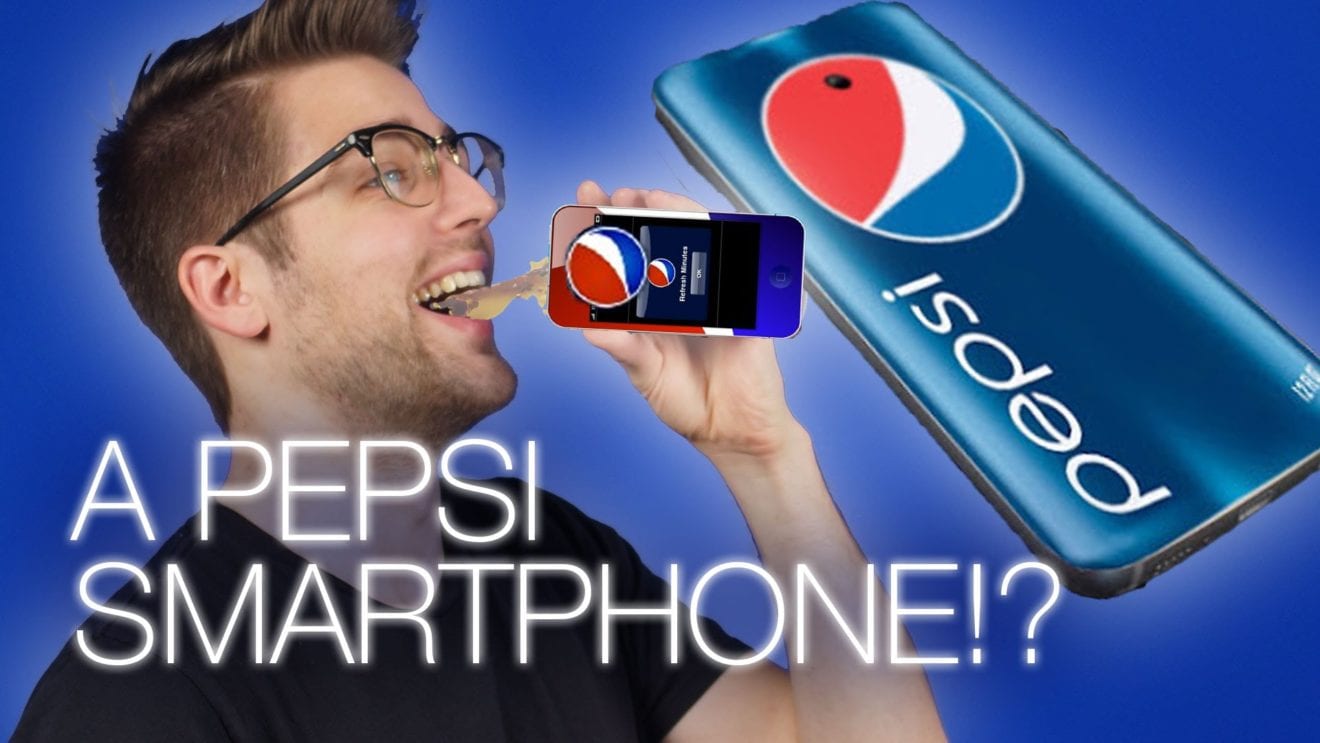
    Pepsi smartphone planned for China

    PepsiCo will market a range of mobile phones and accessories in China later this year.

    The US beverage giant will licence its brand to a manufacturing partner with the Pepsi smartphone just one of a range of planned licensed products which will also include apparel.

    “Available in China only, this effort is similar to recent globally licensed Pepsi products which include apparel and accessories,” a Pepsi spokeswoman told Reuters by email.

    No further details were released about the phone’s specifications – or the manufacturing partner.

    It won’t be the first technology product born of a partnership between Pepsi and an electronics brand. Last year it teamed up with Danish avant garde audiovisual manufacturer Bang & Olufsen to create Pepsi-branded products to support the soft drink brand’s soccer campaign.