Retail News CRM

Tag: Pharma

  • India’s Pharma Sector Under the Spotlight: Ongoing Quality Concerns Prompt Industry Reassessment

    India’s Pharma Sector Under the Spotlight: Ongoing Quality Concerns Prompt Industry Reassessment

    In the fast-evolving retail landscape of Asia, innovative marketing strategies are becoming key to success for brands eager to engage customers. As companies navigate the bustling market, the need for a strong advertising presence is paramount. Businesses now have access to diverse avenues to connect with eager consumers, from traditional print to dynamic digital efforts.

    Advertising Campaign Opportunities

    With an array of advertising solutions available, brands can tailor campaigns that echo their unique voice. Collaborating with a dedicated team can bridge the gap between print and digital formats, crafting messages that resonate across all platforms. The perfect campaign not only elevates brand visibility but also forges meaningful connections with targeted audiences.

    Real-Life and Digital Events

    Events have become an essential strategy for brands aiming to establish direct engagement with customers. Whether it’s a physical gathering or a vibrant digital event, our team excels at organizing platforms that foster networking and collaboration. Envision thought leaders and industry pioneers sharing insights that spark innovation—such opportunities can lead to fruitful partnerships down the line.

    Awards Program Recognition

    In the competitive world of retail, recognition can be a game-changer. Our annual awards programs celebrate the remarkable achievements of companies daring to push boundaries. Participating in these awards not only highlights your success but also positions your brand as a leader in the industry. Who wouldn’t want a shiny trophy on their shelf?

    As the retail scene continues to evolve, one thing remains clear: partnerships are the way forward. Let us help you take your business to new heights through innovative marketing strategies and engaging events!

    Questions & Answers

    What types of advertising campaigns can businesses create?
    Businesses can develop a variety of advertising campaigns by combining print and digital strategies to effectively reach their audience.

    How can events benefit brands?
    Events provide brands with a platform for direct engagement with customers, and they create opportunities for networking and collaboration with industry leaders.

    What is the significance of awards programs for retailers?
    Awards programs recognize exceptional achievements and enhance a brand’s reputation within the competitive retail landscape.

  • Japan Airlines’ vision for the future of pharmaceutical logistics

    Japan Airlines’ vision for the future of pharmaceutical logistics

    Japan Airlines (JAL) is taking a significant leap forward in the logistics and healthcare sectors by incorporating drone technology into its broader business strategy. This initiative is part of JAL’s Digital Transformation (DX) strategy, which focuses on integrating advanced technology with the airline’s expertise in safe operations. By collaborating with other companies and aligning with government policies, JAL aims to revolutionise air mobility through drones and electric Vertical Take-Off and Landing (eVTOL) vehicles.

    At the core of this transformation is the Air Mobility Operation Platform (AMOP), a social infrastructure designed to manage the safe operation of next-generation air mobility services. AMOP offers more than just operational management systems providing consulting, communication support, insurance, aircraft provision, and pilot training services. While the platform’s applications are vast, JAL sees particular potential in using drones to deliver lightweight, high-value, and time-sensitive medical supplies.

    “Combining our expertise in safe operations with advanced technology, we are collaborating with other companies to promote the next-generation air mobility business,” explains Eriko Yano, Manager, Drone Business Group, Air Mobility Business Creation Department, Innovation Division, at Japan Airlines. The airline envisions a future where drones and eVTOLs are a common feature of healthcare logistics, transforming how medical supplies are delivered.

    Pioneering drone-based pharmaceutical delivery
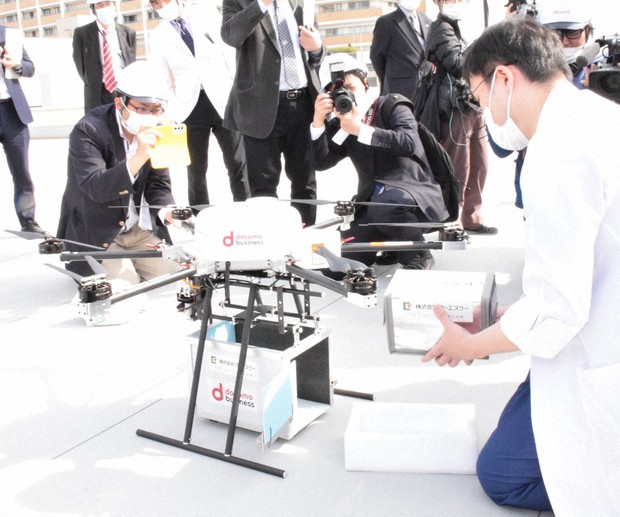
    One of JAL’s most promising ventures is its drone-based pharmaceutical delivery system, which aims to streamline the transportation of essential medications. In a demonstration in Tokyo, JAL partnered with consortium companies to deliver low-frequency, high-value pharmaceutical products from warehouses to hospitals. This initiative aims to reduce wastage caused by expired pharmaceuticals, while also addressing the unique logistical challenges faced by hospitals in densely populated areas like Tokyo.

    JAL has also expanded its efforts to more remote locations. On Amami Oshima Island, in collaboration with the Setouchi Town Office, JAL established “Amami Island Drone Co., Ltd.” to deliver pharmaceuticals to residents of remote islands. These efforts demonstrate how drone technology can bridge logistical gaps, ensuring that vital medical supplies reach even the most isolated communities.

    Enhancing healthcare logistics with drone ports
    A key takeaway from JAL’s recent demonstration in Koto-ku, Tokyo, was the potential of drone ports in hospital settings. These ports could allow hospitals to receive pharmaceutical deliveries at their convenience, reducing reliance on traditional logistics systems. As the airline continues to explore the capabilities of drone technology, it also recognises the importance of addressing the shortage of manpower in the pharmaceutical industry.

    In terms of operational efficiency, JAL is focusing on safety and reliability. The airline sees drone ports as an essential component in achieving this, allowing for automated takeoff and landing procedures that minimise human involvement while ensuring temperature control and delivery management. Hospital personnel involved in the demonstration expressed enthusiasm for the potential of drone ports, particularly in emergencies when road closures or disasters isolate healthcare facilities.

    Overcoming challenges and advancing technology
    JAL has faced challenges in its pursuit of drone-based logistics, particularly regarding Level 4 flights—drones flying beyond visual line of sight (BVLOS) in populated areas. Currently, only one drone model, the PF2-CAT3 by ACSL, is certified for these flights. To overcome this limitation, JAL works with partners to diversify drone options and expand operations into urban areas. “We need drones with advanced control capabilities and high-precision landing, especially for operations in limited spaces like urban areas,” Eriko noted.

    In addition to enhancing drone technology, JAL is also developing a flight management system that allows a single operator to control multiple drones. This would significantly reduce operational costs and improve efficiency, paving the way for widespread drone adoption.

    Building strategic partnerships
    Collaboration is key to JAL’s success in the drone industry. The airline has partnered with several organisations, including KDDI Corporation, East Japan Railway Company, and local hospitals, to bring its vision to life. Each partner plays a unique role: KDDI provides essential LTE communication, East Japan Railway Company offers implementation support, and local hospitals serve as demonstration sites, providing valuable feedback on the practicality of drone deliveries.

    These partnerships are vital not only for the technical success of the project but also for gaining public acceptance of drones in everyday life. JAL has been proactively educating the public and healthcare professionals about the benefits and safety of drone technology through workshops and demonstrations. The airline is also working on initiatives to help hospital staff acquire the necessary skills to handle drone operations.

    Navigating regulations and ensuring safety
    Navigating Japan’s regulatory landscape for drone operations has been a complex process for JAL. The airline is working closely with Prodrone Co., Ltd. to meet the stringent requirements for Type 1 Certification, which allows for Level 4 flights in densely populated areas. In addition, JAL has introduced training programs based on Crew Resource Management (CRM), a concept used in aviation to improve safety and coordination among pilots.

    JAL is also taking steps to ensure the sustainability of drone operations. One of its long-term goals is to reduce manpower and increase aircraft utilisation by allowing a single pilot to control multiple drones. Supported by the New Energy and Industrial Technology Development Organization (NEDO), JAL is conducting technological verification to achieve this.

    The future of drone-based healthcare logistics
    JAL’s drone initiatives can potentially transform healthcare logistics in Tokyo and beyond. Drones could be crucial in maintaining healthcare systems in depopulated areas, ensuring patients receive necessary medications and blood supplies even in remote regions. During emergencies, drones could provide uninterrupted delivery services, ensuring the continuous flow of critical supplies.

    “We believe that drones can contribute significantly to maintaining medical systems in areas where healthcare infrastructure is difficult to maintain,” Eriko states. The airline also sees potential for expanding drone deliveries to sectors beyond pharmaceuticals, such as food supplies and newspapers, as demonstrated by its operations on Amami Oshima Island.

    Ultimately, JAL’s vision is to create a sustainable, efficient, and reliable drone logistics service that benefits healthcare providers and patients. By reducing medication waste, improving delivery times, and enhancing operational safety, drones have the potential to revolutionise the healthcare industry—not just in Tokyo, but across the globe.
  • Pharma firms see profits soar post-Covid

    Pharma firms see profits soar post-Covid

    Many pharmaceutical firms have reported record profits in 2022 thanks to high demand for drugs and other healthcare products post-Covid.

    DHG Pharma reported a profit of VND988 billion (US$42.1 million), a 27% increase from 2021 and 29% higher than the management’s target. It is the highest profit it has reported since it started making its accounts public in 2005.

    OPC and Imexpharm also earned record profits.

    OPC’s profits increased by 16% from 2021 to over VND140 billion, and Imexpharm’s by 24% to VND230 billion.

    High demand for healthcare products following the pandemic was the main reason for the soaring profits.

    A Vietnam Report survey in October-November found that around 90% of businesses that manufacture, distribute and sell pharmaceutical products reported higher revenues and around 80% reported profit growth in the first nine months of 2022.

    Besides, they also benefited from government policies to support drug retailers and modern drugstores.

  • ANZ Pharma becomes Fiji Kava’s distributor in New Zealand

    ANZ Pharma becomes Fiji Kava’s distributor in New Zealand

    Fiji Kava (FIJ) has appointed healthcare wholesale company ANZ Pharma as its exclusive distributor in New Zealand.

    As part of the agreement, ANZ Pharma will launch the Fiji Kava range of capsules and drinking kava in the New Zealand market.

    The products will be stocked through retail channels such as supermarkets, tourism retail outlooks and petrol, route and convenience stops.

    The contract includes a sales performance requirement of $1.1 which, if met, could extend the deal by another three years.

    “Alongside the Australian market, the New Zealand market has seen a big increase in demand for kava products over the last year,” Fiji Kava CEO Anthony Noble said.

    “The team has worked hard to find the right partner, and working with a strong company like ANZ Pharma, who have a stable of national and multinational clients including Bondi Sands, Herbs of Gold, Unilever, Red Bull and Reckitt, gives us great confidence to re-enter this important market.”

    ANZ Pharma Director Nitin Patel said the partnership was in alignment with the company’s long-term strategic goal of bringing high-quality products at great value to New Zealand consumers.

  • China is Becoming a Global Center of the Pharmaceutical Industry

    China is Becoming a Global Center of the Pharmaceutical Industry

    China’s pharmaceutical industry is in the midst of a transformation. China is one of the largest markets in the world for medicine – and it is poised to become a global hub of drug innovation/a global leader in drug development technology.

    An increasing number of international investors have turned their attention to the healthcare sector as the corona crisis rages on. Weak spots in healthcare systems across the world have been exposed by the pandemic, and it has also triggered a fundamental reset in investor mindsets. One of the winners of these recent events will probably be the healthcare industry in emerging markets – which are also becoming increasingly important as a market for medicines.

    At the center of these developments is Asia, where healthcare systems are facing the same challenges as healthcare systems in the West. Changes in lifestyles and diets associated with rising wealth are having a negative impact on people’s health. For example, the rapidly growing number of overweight people worldwide is leading to a rapid increase in the number of diagnosed diabetes cases.

    A quarter of the estimated 400 million people worldwide who have diabetes live in China and almost a fifth live in ASEAN countries such as Malaysia or Thailand. At the same time, aging populations are leading to an increase in the number of patients diagnosed with cancer, neurological or circulatory diseases. This translates into steadily rising costs for national healthcare systems as more and more citizens require access to efficient and affordable healthcare.

    Asia is forging ahead. This was once again evident as the coronavirus crisis unfolded and Asian companies led the way with their solutions. Meanwhile, a raft of positive data has been published in other areas and improved the corresponding pipeline visibility. Last but not least, the process of digitization has gained momentum, while disruptive technologies are steadily improving access to healthcare.

    China has one of the largest medicine markets in the world. Its overall spending on healthcare is still low compared to many of the industrialized countries. The country is making steady progress in expanding its domestic drug research and development capabilities and its domestic drug production, which helps the government to provide an increasing number of Chinese with access to affordable healthcare.

    The Chinese government is offering tax and other financial incentives as part of a long-term plan to develop an internationally competitive homegrown biopharmaceutical industry. Beijing’s national health policy currently prioritizes efficiency and the establishment of innovation centers, which it is promoting through financial incentives. The main pillars of the government’s approach here are three vast centers of innovation – the Zhangjiang Hi-Tech Park near Shanghai, the BioBay in Suzhou and the Shenzhen innovation hub, which is often referred to as China’s Silicon Valley for pharma companies because it is already home to global companies such as Huawei.

    Sales of innovative drugs in China are forecast to triple from 117 billion yuan this year to 375 billion yuan in 2025. Local biotech companies selected as “partners of choice” for global companies seeking to enter the Chinese market and advance the development, approval and commercialization of their drugs in China will play a critical role in achieving this growth. Innovative homegrown Chinese drugs are also creating excitement worldwide and these drugs are being in-licensed by Big Pharma in the West.

    The current situation is comparable with the situation in the U.S. at the end of the 1980s when the biotech boom began, driven by scientific breakthroughs. We believe China’s medicine market is poised to become a major growth market and is currently transitioning from a «Me-Too» drug market to a «First-in-Class» or Best-in-Class market.

    Valuations in the Asian healthcare sector are currently very inexpensive and stock prices have shown a positive trend since the global coronavirus-induced crash last year. The BB Adamant Asia Pacific Healthcare Fund has outperformed the broader indexes throughout the various market cycles.

    For example, it has delivered an excess performance of more than 50 percent relative to the MSCI Asia Pacific Index since its launch at the end of April 2017. The secular upward trend in Asian healthcare markets should continue going forward, thanks in particular to the growing innovation power of the region, where companies that stand to benefit from structural trends are already winning international acclaim.

  • Pharma industry growth slows down

    Pharma industry growth slows down

    The pharmaceutical industry’s revenues rose by just 3 percent in 2020, down from an average of 11.8 percent in the previous five years.

    But it was a notable year for mergers and acquisitions. According to analysts at SSI Securities, the total value of M&A was VND1.68 trillion ($73 million) last year and involved a number of foreign investors.

    In May, South Korean conglomerate SK Group, which makes anti-cancer and cardiovascular drugs and mental health medications, paid VND920 billion to acquire a 25 percent stake in Imexpharm Pharmaceutical Joint Stock Company.

    In August, Japan’s Aska Pharmaceutical acquired a 24.9 percent stake in Ha Tay Pharmaceutical Joint Stock Company (Hataphar).

    In December, German generic drugmaker Stada paid VND400 billion to increase its stake in Pymepharco by 6 percent to nearly 76 percent.

    SSI analysts estimated the pharmaceutical industry to grow by 15 percent in 2021 mainly due to a rapidly aging population and rising incomes.

  • Foreign firms intent on stronger foothold in Vietnam’s pharma industry

    Foreign firms intent on stronger foothold in Vietnam’s pharma industry

    Foreign firms are pouring increasing sums of money into acquiring stakes in Vietnamese pharmaceutical firms, targeting larger market shares in a thriving industry. Dutch firm Stada Service Holding B.V. last month obtained permission from Vietnam’s Pymepharco to increase its ownership in the Phu Yen Province-based company to 100 percent.

    Stada had increased its stake in Pymepharco by six percent to nearly 76 percent last week. The deal is estimated at around VND380 billion ($16.4 million), based on closing stock price on December 11. In September, Hanoi-based Hataphar issued an additional 5.28 million shares, or 20 percent of its charter capital, to Japan’s ASKA Pharmaceutical Co., Ltd. The deal was valued at VND370 billion.

    Earlier last year, Japan’s Taisho Pharmaceutical took a controlling share of over 51 percent in the DHG Pharmaceutical Joint Stock Company, the biggest pharmaceutical firm in the Mekong Delta region.

    In December 2017, CFR International SpA, a subsidiary of U.S.-based medical corporation Abbott Laboratories, transferred all of its 51.69 percent stake in Domesco Medical Import Export JS Corp, based in the southern province of Dong Thap, to another Abbott subsidiary in a transaction valued at around VND2.3 trillion ($99.5 million).

    Vietnam’s rapidly growing pharmaceutical industry has been a magnet for foreign firms. The industry is set to record double-digit growth in the 2020-2025 period and is set to reach a value of $7.7 billion next year, according to a report by brokerage Yuanta Vietnam.

    There is a rising demand for healthcare products and services, and with domestic production unable to meet it, Vietnam imported $3 billion worth of medicines last year. This figure is set to reach $4.35 billion this year, the report said.

    Foreign firms are therefore keen on pouring cash into companies with growth potential, like DHG, which ranks fourth in market share behind three multinational pharma giants.

    Analysts of RongViet Securities Corporation said that their strategy is to help Vietnamese companies increase their manufacturing standards and eventually take over instead of establishing its own business and build a factory.

    CFR International SpA, a leading pharmaceutical firm in Chile, was the first strategic partner in local firm Domesco and was assisting the Vietnamese company in research and development, technology transfer, businesses consultancy and supply chain management before securing a controlling stake in it.

    Ly Thi Hien, lead analyst at Yuanta Vietnam, said the pharmaceutical industry is one that requires years of investment to build up a brand and acquire a decent market share. Domestic firms with relatively shallow pockets find it difficult to spend money on researching and developing new medicines, creating an opening for foreign firms.

    To develop further, domestic firms need to take advantage of the exclusive formulas and scientific achievements of foreign pharma giants, she added.

    Industry insiders say that partnerships with foreign companies has brought both short-term and long-term benefits.

    Le Xuan Thang, CEO of Hataphar, said that establishing a partnership with ASKA meant that the company has VND370 billion to build a new factory. It also receives consultancy services from the Japanese company on building that factory with advanced technology.

    Meanwhile, DHG, thanks to its partnership with Japan’s Taisho, was able to acquire international certification in less than two years for its effervescent tablet production chain and another Japanese certificate for its antibiotics chain.

  • Sigma chairman Resigns after remuneration protest

    Sigma chairman Resigns after remuneration protest

    Brian Jamieson, chairman of Sigma Healthcare, has said he intends to step down within the next 12 months after shareholders protested the remuneration report at Sigma’s annual general meeting on Wednesday.

    Shareholders delivered an 18 percent vote against the report during the meeting, while also opting to re-elect Jamieson, as well as David Manuel, as directors.

    The vote signalled shareholders’ frustration over Sigma’s decision to reject a takeover offer by rival healthcare business Australian Pharmaceutical Industries, as well as a protest against the remuneration report itself, which included bonuses for board members in a year that has seen Sigma’s share price fall from 80 cents per share in June 2018 to 53 cents per share.

    “This has been a defining year for Sigma,” Jamieson told shareholders at the business’s AGM.

    Over the course of the year, Sigma walked away from a supply contract with Chemist Warehouse Group, causing a major fall in the business’s share price hasn’t been recovered.

    Sigma also walked away from the proposed merger with API, which Jamieson told shareholders was “somewhat opportunistic, with Sigma at its most vulnerable” after dropping the Chemist Warehouse Group supply contract.

    “To agree to proceed may have been the easy decision, but our detailed analysis supported our view that it was not the right decision for mid to long-term shareholder value,” Jamieson said.

  • Bolloré Logistics’ Osaka Office Certified CEIV Pharma by IATA at Kansai Int’l Airport

    Bolloré Logistics’ Osaka Office Certified CEIV Pharma by IATA at Kansai Int’l Airport

    On March 31st, 2019, Bolloré Logistics Japan was successfully certified by the International Air Transport Association (IATA) as Center of Excellence for Independent Validators in Pharmaceutical Logistics (CEIV Pharma) at its platform located in the Kansai International Airport (KIX), in Osaka. The certification is a globally recognized and standardized certification for healthcare airfreight shipments. Bolloré Logistics Japan began the certification process according to the IATA CEIV Pharma standards in the second quarter of 2017. The CEIV Pharma certification will allow Bolloré Logistics Japan to have a strategic advantage in the healthcare logistics market with a stronger, more competitive and enhanced air cargo service.

    “Earning the CEIV Pharma certification demonstrates our ability to successfully build and deploy a team of experts who are fully capable to offer end-to-end logistics solution for the pharmaceutical related temperature sensitive products through the Kansai International Airport (KIX). In the near future, we are also keen to acquire the same certification in Haneda Airport (Tokyo) in order for us to expand the expertise nationwide,” said Goro UMEZAWA, Sales Manager at Bolloré Logistics Japan.

    This new success shows our commitment to achieve the highest international quality standard in the global pharmaceutical supply chain for its customers, by continually improving our processes and infrastructures to be compliant with IATA CEIV Pharma standards. With Australia, Singapore, South Korea, China and now Japan certified, the aim of Bolloré Logistics is to deploy this action throughout its global network with on-going certifications on other sites in the Asia-Pacific region
    such as China Hong Kong.

    In Europe, Bolloré Logistics has already received the IATA CEIV Pharma certification for its Paris Roissy CDG platform (France) as well as its sites in Brussels (Belgium), Frankfurt (Germany) and Lisbon (Portugal). The International Air Transport Association (IATA) created Center of Excellence for Independent Validators in Pharmaceutical Logistics (CEIV Pharma) in 2014. It aims to set the industrial standard for air cargo supply chain in pharmaceutical handling excellence. It addresses industry’s need for more safety, security, compliance and efficiency, by the creation of a globally consistent and recognized pharmaceutical product handling certification. CEIV Pharma encompasses, or even supersedes, many of the existing pharmaceutical standards and guidelines, such as IATA Temperature Control Regulations (TCR), European Union Good Distribution Practices (EU GDP), World Health Organization Annex 5, United States Pharmacopeia Standards.

  • Singapore Transforms into Pharma and Medtech Hub

    Singapore Transforms into Pharma and Medtech Hub

    Singapore is undergoing a significant infrastructure upgrade as its regional and international reach gains prestige. Research and consulting firm, GlobalData estimates Singapore’s pharmaceutical market at $948 million and increasing to $1.2 billion by 2021. With an estimated population of just shy of 6 million, Singapore’s domestic pharmaceutical market is small. However, its regional and international reach is well noted thanks to its pro-business environment and strong government support.

    Over 30 of the world’s leading pharmaceutical and medical technology firms including Abbott, GlaxoSmithKline, Lonza, MSD, Novartis, Pfizer and Sanofi-Aventis, have established their manufacturing, R&D and headquarter functions in Singapore.

    In 2015, GlaxoSmithKline designated Singapore as its Asia headquarters. The rapid growth of sales in the five biggest economies of the Association of Southeast Asian Nations (ASEAN) prompted the company to concentrate more business units in Singapore.

    US-based healthcare firm MSD opened an $8 million center also in 2015 to focus on innovation through data mining as well as conduct cyber-security surveillance. In addition, the company plans to develop mobile applications that help people live healthier lives and improve how patients follow their doctors’ instructions on taking medication.

    Pharma partnerships

    In September 2017, Singapore’s Agency for Science, Technology and Research, the National University of Singapore and pharmaceutical companies, GSK, Pfizer and MSD, signed a memorandum of understanding to launch an initiative to develop the country’s pharmaceutical sector.

    The initiative, the Pharmaceutical Innovation Programme Singapore, aims to transform the manufacturing operations and technologies of the industry including embracing such initiatives as enabling green and sustainable manufacturing and developing a fully automated supply chain that can predict and react to patient needs and market trends.

    Logistics hubs

    The logistics community has responded to Singapore’s plan to grow its pharmaceutical industry. One such example is the partnership between Singapore’s airport, Changi Airport Group and several airfreight providers including Bollore Logistics, CEVA logistics Singapore, DHL Global Forwarding, dnata Singapore, Expeditors Singapore, Global Airfreight International, SATS, Schenker Singapore and Singapore Airlines Cargo to create the Pharma@Changi initiative. All of the airfreight providers have achieved the IATA Center of Excellence for Independent Validators Certification for Pharmaceutical Handling (IATA CEIV Pharma).

    “Over the last three years, pharmaceutical cargo has consistently ranked among the top five cargo types transported via airfreight globally, in terms of total value. 

    As part of Pharma@Changi, the companies have promised to jointly pursue the best standards in pharmaceuticals handling, and promote Singapore Changi Airport as a trusted and reliable pharmaceuticals air freight hub in the region. According to Changi Airport Group’s Managing Director for Air Hub Development Mr Lim Ching Kiat, “Over the last three years, pharmaceutical cargo has consistently ranked among the top five cargo types transported via airfreight globally, in terms of total value. In the first eight months of 2017, Changi Airport handled more than 15,500 tonnes of pharmaceutical cargo.”

    The Changi Airport Group is also part of Pharma.Aero, an alliance founded by the Brussels and Miami Airports. The group is committed to sharing best practices and market knowledge to improve pharmaceutical handling for the air cargo industry worldwide.

    In early 2016, global logistics provider, Kuehne + Nagel opened its Singapore Logistics Hub facility. Within the facility, 46,000 sqm of the 50,000 sqm facility is dedicated to warehousing space, and 40% of the facility is furnished with advanced chilled storage, redressing and postponement facilities to support the growing base of pharmaceutical and healthcare companies in Singapore.

    Also in 2016, DHL Supply Chain opened its logistics center in Singapore in anticipation of increases in pharmaceutical and high-tech air cargo traffic in the Southeast Asian region. The 90,000-square-foot facility incorporates 130 robotic shuttles to retrieve and store products from up to 72,000 locations arranged in 26 levels.

    Other logistics providers including UPS, CEVA and Schenker have also established a pharmaceutical logistics presence in Singapore.

    Singapore’s medical technology sector is also a major contributor to Singapore’s life sciences industry. Due to a lack of domestic competition in other ASEAN markets and the strategic geographical location of Singapore in the region, medical device companies often decide to set-up their headquarters in the city state. According to consultant group, Dezan Shira & Associates, 10% of the world’s contact lenses, over 70% of microarrays, and roughly half of the world’s thermal cyclers and mass spectrometers are currently produced in Singapore.

    Singapore is well-positioned to be Southeast Asia’s hub for not only pharmaceuticals but also medical technology solutions.

    Currently most of the products are destined for international markets, as the region matures, domestic demand will increase and balance demand and thus logistical requirements.

  • A community approach in maintaining pharma shipments

    A community approach in maintaining pharma shipments

    In recent years, the demand for reliable end-to-end transport for pharmaceutical cargo has seen a tremendous rise, bringing to light the lack of reliability and data sharing, that affects the entire supply chain. As with every growing industry, the need for improvements and quality checks becomes ever more apparent with the growing demand. The solution: Pharma.Aero, an independent membership driven association comprised of members from airport communities, pharmaceutical shippers and other cargo logistics stakeholders from around the world.

    In 2016, Brussels Airport (BRU) and Miami International Airport (MIA), the first and second International Air Transport Association (IATA) designated pharma hub airports in the world, took on the initiative to create Pharma.Aero – an organisation that would be focused on improving pharma handling and quality in the air cargo industry worldwide.

    The worldwide Pharma.Aero platform will enable its members – consisting of airport communities, airline carriers, pharma shippers, and other logistics stakeholders – to foster strong collaboration amongst themselves. By jointly working on innovative regional initiatives, with an emphasis on the IATA CEIV Program, airports and their operators will achieve excellence in reliable end to end transportation for the shippers and patients.

    The organisation will bring its visions to life by fostering route certification and development of pharmaceutical trade lanes. Therefore, members of the organisation will be able to share expertise, market knowledge and implement best practices within the entire supply chain (from end-to-end). Furthermore, the association will help organise events, projects, workshops, as well as local and regional shipper forums, that connect CEIV airport communities to the end customers: pharmaceutical manufacturers.

    Early adopters

    At the launch of the initiative which was held in Paris, Nathan De Valck, Cargo Product Development manager at Brussels Airport and Chairman of Pharma.Aero reiterated, “with the vision to achieve a reliable end-to-end air transport for pharmaceutical cargo, Pharma.Aero will focus on pharmaceutical shippers and all industry stakeholders who embrace the IATA CEIV program. Members of the organisation will foster route certification/development of pharmaceutical trade lanes, implementation of best practices and sharing of market knowledge and expertise”.

  • Unisys launches software to enhance visibility of pharma supply chain

    Unisys launches software to enhance visibility of pharma supply chain

    Unisys Corporation has launched PharmaTrack, new software that combines security, advanced data analytics and compliance technology in a single, unified platform to provide life sciences and healthcare companies enhanced visibility and oversight of the entire global pharmaceutical supply chain and thus help combat theft and counterfeit drugs.

    This newest addition to the Unisys ActiveInsights suite of solutions arose from an overlap of industry needs between two industries in which Unisys has deep domain expertise: life sciences and healthcare, and travel and transportation.

    “When we started talking to people involved in pharmaceutical supply chain management, we quickly realised that Unisys already had developed the technologies in other industries required to address longstanding problems in pharmaceuticals,” said Jeff R. Livingstone, PhD, vice president and global head, Life Sciences and Healthcare, Unisys. “We then started right away to work with the Unisys Travel & Transportation group and other teams to successfully adapt their technologies for our Life Sciences clients.”

    According to the World Health Organisation, dangerous counterfeit drugs make up more than 10 percent of the drug market worldwide. In addition, supply chain theft and materials erroneously compromised by poor environmental quality controls can cost manufacturers billions of dollars annually and likewise put their patients at risk. PharmaTrack helps secure the supply chain by leveraging Unisys’ leading cross-platform analytics to identify and pre-empt fraudulent activity, issuing immediate alerts when product authentication fails.

    PharmaTrack also enables track-and-trace capabilities so companies can verify product shipping information, monitor temperature issues and other environmental factors affecting drug viability and flag potentially counterfeit product at any point in the supply chain. All data tracked and transmitted through PharmaTrack is protected by Unisys’ state-of-the-art Unisys Stealth micro-segmentation security software, preventing unauthorized access while maintaining the confidentiality of shipping contents.

  • Another first for Hactl’s pharma handling

    Another first for Hactl’s pharma handling

    Hong Kong Air Cargo Terminals Limited (Hactl) has been confirmed as complying with all the requirements of IATA CEIV Pharma. Hactl is the first handler in Hong Kong to obtain the certification.

    Hactl’s certification is the result of an initiative sponsored by Hong Kong Airport Authority, in which all relevant industry players at the airport will undergo validation for the IATA CEIV Pharma standard.

    IATA CEIV Pharma represents a co-ordinated effort to ensure competency, as well as operational and technical readiness, for the storage and transportation of pharmaceuticals by air. It is designed to help the industry further develop a network of certified pharmaceutical trade lanes that meet consistent cold-chain management standards and assure product integrity.

    Hactl’s accreditation follows an extensive independent assessment and validation, involving detailed inspections, and personal interviews with managers and supervisors at all levels within Hactl. The assessment and validation covered the company’s quality management system and procedures, personnel, training, documentation, infrastructure and equipment, quarantine procedures, sub-contractor management, self-inspection procedures, transportation and operations. All were found to be fully compliant, with no non-conformances.

    The validation report praised Hactl’s preparations for the audit process, the helpful attitudes of its staff, and its total cooperation. Says IATA’s General Manager, Hong Kong and Macau, Yvonne Ho: “I congratulate Hactl on being the first to receive CEIV certification in Hong Kong.  In doing so, Hactl has achieved an internationally recognized standard for pharmaceutical handling.”

    Adds Hactl’s senior manager – quality assurance, Benny Siu: “We are very pleased with the positive outcome of the IATA CEIV Pharma Validation, and value the cross-departmental team effort that resulted in Hactl becoming the first to obtain this important certification.”

    Mark Whitehead, chief executive of Hactl, concludes: “We applaud the Airport Authority’s initiative in sponsoring this drive to adopt IATA CEIV Pharma in Hong Kong. It’s an excellent example of what can be achieved through collaboration, and will benefit the entire airport cargo community and its customers.”

  • Changi Airport Group strengthens pharmaceutical supply chain in Singapore

    Changi Airport Group strengthens pharmaceutical supply chain in Singapore

    Changi Airport is the first airport in Asia to join Pharma.Aero as a strategic member, together with partner Singapore Airlines Cargo who comes on board as a full member. Both parties envisage that this effort will raise pharmaceutical handling capabilities at Changi Airport.   An organization comprising stakeholders of air cargo supply chain from around the world, Pharma.Aero is dedicated to achieving excellence in end-to-end air transportation for pharma cargo.

    Pharmaceutical cargo is among the fastest growing segments at Changi Airport, growing 19 percent year-on-year for the first nine months of 2016, and registering a five-year compounded annual growth rate (CAGR) of 13 percent from 2010 to 2015.

    The South West Pacific and North East Asia regions account for 45 percent of total share of pharmaceutical cargo at Changi Airport. In terms of volume, Australia, China and India are Changi’s top three pharmaceutical markets on a year-to-date (January to September 2016) basis. The top markets showing strongest growth for the period are China (+51 percent), Vietnam (+35 percent) and Hong Kong (+32 percent).

    Pharmaceutical products that pass through Changi Airport include vaccines, tablets and pills. These products are highly sensitive to fluctuations in temperature. Pharmaceutical cargo is the sixth most valued segment in terms of total air cargo handled, and account for under 10 percent of total value of cargo handled.

    Changi Airport is well-equipped with specialized facilities to be the preferred gateway of pharma cargo in Asia, with the two ground handlers (Coolport by SATS and Coolchain by Dnata) having the ability to handle more than 300,000 tonnes of temperature sensitive cargo annually. Our excellent connectivity (6,800 flights to 330 cities served by over 100 airlines) and strong mix of freighter and bellyhold capacity provides ample options for pharma shippers to access the global economy.

    Changi Airport is the first airport in Asia to embark on a community approach for the IATA CEIV Pharma certification, thereby raising the local community’s handling standards and capability for temperature-sensitive pharma cargo. The pioneer group of companies in the Changi CEIV Community consists of Singapore Airlines Cargo, dnata Singapore, Global Airfreight International Expeditors Singapore, CEVA Logistics Singapore, and Schenker Singapore.

    SATS Coolport, a major cargo player at Changi Airport, was the first facility in the world to attain the IATA CEIV Pharma certification in 2014.

    Global spending on pharma cold chain logistics is projected to grow at eight-nine percent per year, totaling US$16.7 billion by 2020 according to Pharmaceutical Commerce. Asia is expected to account for the largest regional share growth with more than $1.2 billion of cold-chain growth through 2019.

  • Pharma in Indonesia: Competing for Higher Margins

    Pharma in Indonesia: Competing for Higher Margins

    IPMG members – including Novartis, Merck, Bayer, Boehringer Ingelheim, and Pfizer – have invested more than USD $1 billion in Indonesia’s pharmaceutical industry over the past few years, particularity for the construction of factories and clinical research (source: AmCham Indonesia).

    An example is Bayer, which recently invested 8.1 million euros in the expansion of its factory in Cimanggis (West Java). This factory produces multivitamins and medicines, about 75% of which is exported to 26 countries.

    Concurrently, Indonesia’s largest pharmaceutical company, Kalbe Farma, is shifting from being a maker of generic drugs to a high-tech pharma developer. Besides producing cancer drugs, Kalbe has been investing in R&D on stem cell therapies. Significantly, a lack of generic substitutes in these fields in Indonesia implies no government-set price ceilings, and therefore these products offer higher margins.

    In fact, there are more than 200 drugmakers in Indonesia, most of which produce only low-margin generics. While they control 95% of the market by volume, they have a combined 75% share in value terms. Therefore the few multinationals operating in the country have been able to make more profits because of their focus on high-value products.

    Such activities are taking place while Indonesian President Joko Widodo is pushing its universal health care program to cover the country’s projected population of 270 million by 2019, a leap from the 170 million currently covered. This year for the first time, government expenditures on health care reached the legally mandated 5% of the state budget. Health care spending is expected to grow 12% every year through 2020.

    To join the discussion on all developments in this industry sign up for CPhI South East Asia and its LinkedIn group. CPhI is the must-attend pharma event in Indonesia comprising of a trade show and state of the art conference where the regional industry meets to leverage connections, knowledge and insight to spur business. Launched 6 years ago, the next edition takes place during 22-24 March 2017 at JIExpo in Jakarta. Workshops and exhibitors’ presentations will add into the mix, and will complement the 3 days together with a business matchmaking platform.