Finnair is gearing up for expansion, and preparing for a difficult market, with Asia playing a significant part in its plans.
Currently, cargo makes up only 17% of Finnair’s revenues, and it’s a part of the airline’s strategic plan to increase that number, although maybe not to the same levels as some Asian carriers enjoy.
“Our goal is really to maximize revenues in a structured manner in order to contribute as positively to Finnair as we can,” Janne Tarvainen, vice president and head of cargo for Finnair, told us in an interview. “The structured manner means ambitious targets for the strategic focus markets and emphasis on providing value-added, high-quality solutions to our customers
One of the prompts for this was the 19 Airbus A350-800s joining the Helsinki-headquartered carrier’s fleet. A lot of cargo capacity is being added because of passenger growth, and it won’t be allowed to go to waste, especially after the board of directors strategized to be a modern cargo carrier and sold off the airline’s designated freighter fleet.
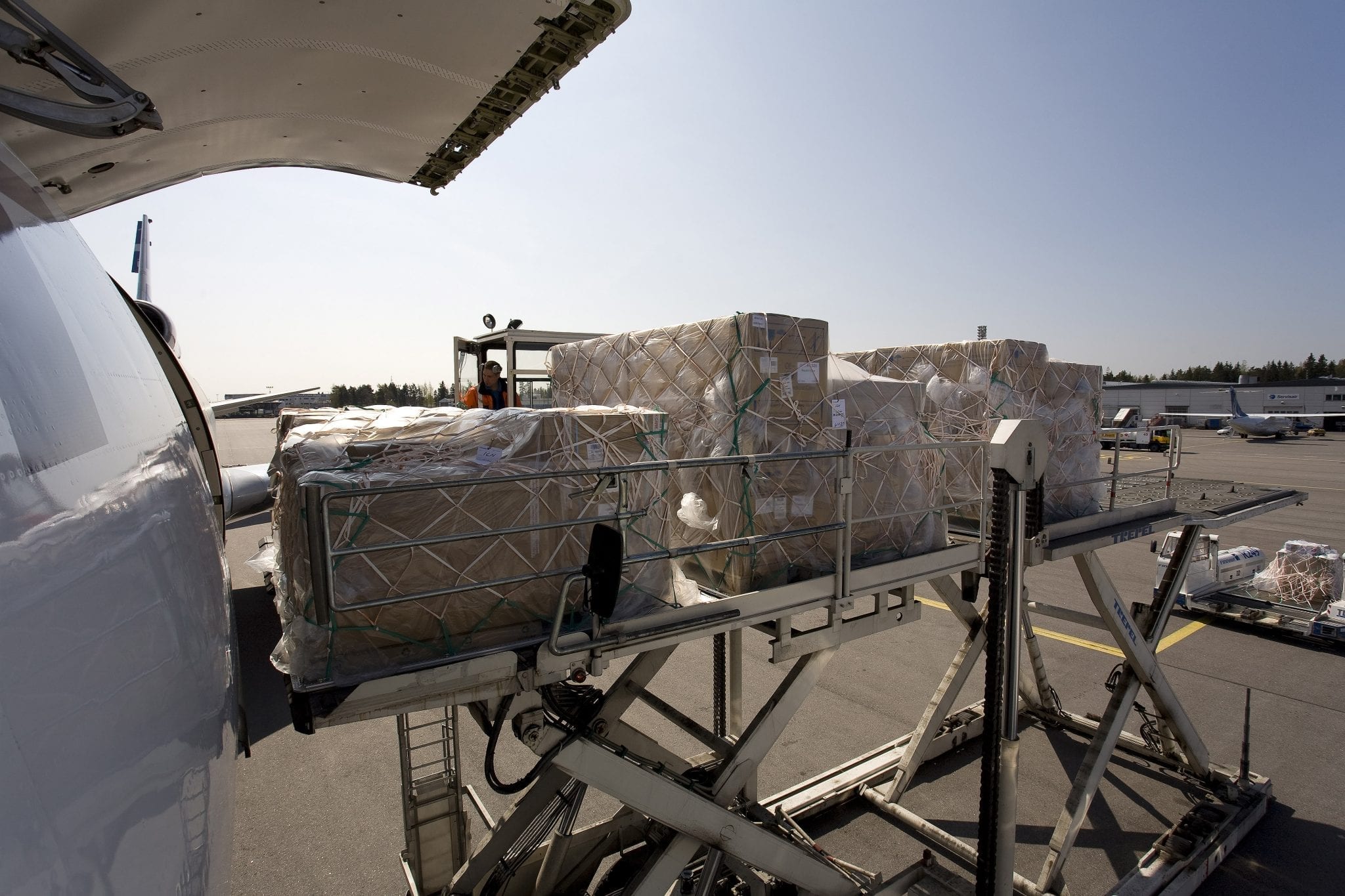
How Finnair plans to achieve these goals is led by its COOL Nordic Cargo Hub programme, a new state-of-the-art cargo hub, which it calls the most modern air cargo terminal in Europe. Opening in May 2017, the terminal will be 31,000 square metres overall, with some 3,000 square metres each for pharmaceutical products and perishables – areas where Finnair hopes to make its mark.
“Another reason why it’s cool is that it is highly automated,” added Tarvainen. “We have integrated acceptance, delivery and automated racking system and a completely automated ULD-handling.”
Not only is the hardware Finnair has at its disposal being strongly improved, but the software that manages it is being upgraded, too. The other big initiative that Finnair is undertaking as part of its upgrade is SkyChain Cargo Management, which is to be expanded and put in use in October 2016.
“It’s almost an off-the-shelf product, requiring a little bit of tailoring to fulfil special requirements set by the local authorities. It’s a production system with a full integration to the terminal automation supporting all the activities we do,” said Tarvainen.
Finnair is doing all this to link the market it already serves, where seafood makes up a significant part of cargo, and the markets it is eyeing, where it hopes to make pharmaceuticals just as successful.
There is no doubting the importance of seafood to Japan and to Finnair’s four routes there. Salmon is cultivated and prepared in northern Norway and then trucked to Helsinki, where it is loaded onto flights to Japan. The tagline for this industry is “34 hours from sea to sushi-plate” – giving it a freshness that Japan’s demanding consumers like – and pay for.
Norway’s salmon farmers generate as much seafood business as Finland in its entirety does – each make up a bit more than 10% of Finnair cargo. Fukuoka, a new Finnair destination in Japan, where first-month figures have been “relatively successful,” proves the point.
More striking has been the other destination Finnair opened last month – Guangzhou, although the freight carried is very different. The seafood market hasn’t started yet, nor has the pharma side, but inbound from the southern Chinese business centre Finnair is doing “very good loads” of all kinds of industrial goods, Tarvainen says.
This fits into a pattern of a very good year so far, at least in terms of volume. In so strained a market, revenues are the sort of issue that is getting glossed over in the hope of better days to come.
“So far this year, load-wise the development has been very, very good,” said Tarvainen.
Last year, Finnair moved 130 million kilograms of freight, and this year has exceeded that. In the past two months there has been growth of 20%, something which also applies to RTK, he said. “That’s been pretty good. It’s excellent,” he added.
“We have really focused on certain markets and focused on getting the loads in,” he said of the overall approach.
Not only has Finnair opened two new routes, one of them already busy, but it has also worked its established markets, the Nordic countries and their Baltic neighbours, well.
It also is working what its calls its extended home markets of Brussels and London. These two locations are chosen because they are the buckles in different pharmaceutical belts, and the quality of its service, especially on reliability and punctuality, helps win it.
Tarvainen was cautious about detailing the Brussels market and its impact on the bottom line, saying only it was growing and yields were “a little bit better.”
Where he is more forthcoming is on the immediate prospects for the sector, and he is not optimistic. Chief among his reasons is China. “The times of double-digit growth are gone. We can see the difference.”
Longer term, there is not much bounce either. Passenger demand is growing, which means more and more cargo capacity also enters the market. Worsening this is the slump in oil prices. “No aircraft is in storage” he said, adding that cheap oil allows planes to keep flying.
What is going right is consumer confidence, something Tarvainen hopes will lift the industry, even though he doesn’t believe miracles will happen in the big markets. Probably wise then, as Finnair plans to concentrate on the industry niches and routes where things, if not miracles, can be made to happen.