Retail News CRM

Tag: philippine

  • Lucio Tans Sky-High Ambitions: Philippine Airlines to Boost Fleet with 20 Boeing Dreamliners

    Lucio Tans Sky-High Ambitions: Philippine Airlines to Boost Fleet with 20 Boeing Dreamliners

    Philippine Airlines, under the leadership of banking and tobacco magnate Lucio Tan, intends to acquire up to 20 Boeing 787-10 Dreamliner jets as the company upgrades its fleet in response to increased demand in air travel. The national airline has committed to purchasing at least 15 Dreamliners, with the option to buy another five, as stipulated in a preliminary agreement established in the United Kingdom.

    A Historic Purchase for Philippine Airlines

    The new order represents Philippine Airlines’ initial acquisition of Boeing aircraft in nearly 20 years, with delivery slated between 2031 and 2034. While the financial details of the agreement were not disclosed, the overall deal could potentially exceed $7.1 billion based on listed prices. A single Dreamliner typically ranges from $150 million to $200 million, even though its list price can reach a peak of $355 million.

    The procurement follows Philippine Airlines’ successful fundraising of $300 million from its inaugural bond sale after emerging from Chapter 11 bankruptcy in the U.S. in December 2021. The generated funding will contribute to the rejuvenation and expansion of the 85-year-old airline’s fleet.

    Lucio Tan III, president of PAL Holdings, the airline’s parent company, said, “This investment exemplifies our faith in the future of Philippine Airlines and the projected growth of air travel.” He added, “The Boeing 787-10 will augment our medium and longhaul fleet, enabling us to offer an enhanced travel experience for our passengers while improving operational efficiency.”

    A Broader Strategy for Efficiency and Sustainability

    The acquisition of the 787 Dreamliners is part of a larger plan to build a more efficient, sustainable, and competitive airline. The new aircraft will be powered by GE Aerospace’s GEnx-1B engines. Philippine Airlines, which boasts a fleet of over 80 aircraft, provides service to various destinations across the Philippines and 40 international routes in Asia, North America, Australia, and the Middle East.

    Since 2024, the airline has been actively expanding and upgrading its fleet, following a record profit in 2023 spurred by a post-pandemic travel surge. In December, the airline also added five Airbus A320 aircraft to its fleet.

    In addition to aviation, Tan’s business portfolio extends to banking, beer, spirits, tobacco, and real estate through his publicly traded LT Group. His net worth is estimated to be $2.9 billion.

    This purchase also represents a significant win for Boeing, which has also recently secured orders for 100 aircraft from leasing company SMBC and 28 jets from Riyadh Air.

    Questions & Answers

    What is the significance of this purchase by Philippine Airlines?
    This is the first time in nearly two decades that Philippine Airlines has placed an order for Boeing aircraft, marking a significant milestone in the company’s fleet upgrade strategy.

    How will this acquisition benefit Philippine Airlines?
    The acquisition of the Boeing 787-10 Dreamliner aircraft is expected to enhance operational efficiency and the overall travel experience for passengers, particularly for medium and long-haul flights.

    What are Lucio Tan’s other business interests besides aviation?
    Apart from aviation, Lucio Tan’s business interests span across various sectors, including banking, beer, spirits, tobacco, and real estate through his publicly listed LT Group.

  • Philippine Airlines Soars with $300M Bond Sale: Billionaire Lucio Tans Strategy for Expansion and Recovery Post-Bankruptcy

    Philippine Airlines Soars with $300M Bond Sale: Billionaire Lucio Tans Strategy for Expansion and Recovery Post-Bankruptcy

    Philippine Airlines, under the ownership of billionaire Lucio Tan, renowned for his ventures in the tobacco and banking sectors, has successfully garnered US$300 million via a five-year bond sale. This strategic move is aimed at financing the carrier’s ambitious plans for fleet modernization and growth.

    The bonds, which have been guaranteed as senior unsecured, were issued at a rate of 7.75% by Primero Agila, a fully owned subsidiary of the airline. The statement issued by the carrier also revealed the overwhelming response received for the offering, which was subscribed to 4.5 times more than anticipated, resulting in an order book surpassing $1.4 billion.

    First Bond Sale Since Bankruptcy Clearance

    Significantly, this bond sale is the first for Philippine Airlines following its emergence from Chapter 11 bankruptcy proceedings in the U.S. in December 2021. The funds raised will be used to bolster the carrier’s international expansion plans, which include augmenting the frequency of flights to major North American hotspots including Chicago, New York, Toronto, and Vancouver.

    In the words of Lucio C. Tan III, president of PAL Holdings and the grandson of the tycoon, “This landmark bond offering is a powerful affirmation of Philippine Airlines’ transformation and the confidence that global investors have in our long-term vision and growth ambitions. This allows us to strengthen our network and continue to elevate the travel experience for our customers.”

    A Landmark Achievement

    The bonds, which have received an unconditional and irrevocable guarantee by Philippine Airlines and its wholly-owned subsidiary, Air Philippines Corp., will be listed on the Singapore Exchange. The $300 million bond sale has been recognized as the first rated high-yield bond offering by a Philippine issuer in over a decade and the first unsecured rated high-yield bond issued by an Asian airline.

    Moreover, the airline has demonstrated a robust earnings recovery since the height of the Covid-19 pandemic. Its net profit witnessed a rise of 2.6% to $78.6 million in the first quarter, compared to the same period in the previous year, while revenue experienced a healthy increase of 9.7% to $895.7 million.

    In addition to aviation, Tan maintains interests in multiple sectors including banking, beer, spirits, tobacco, and real estate via his publicly listed flagship company, LT Group. His net worth stands at an impressive $3 billion, making him one of the wealthiest tycoons in the Philippines.

    Questions & Answers

    What will the proceeds from the bond sale be used for?
    The funds raised from the bond sale will be used to support Philippine Airlines’ international expansion plans, including the increase of flight frequencies to major North American cities.

    Why is this bond sale significant for Philippine Airlines and the aviation industry?
    This bond sale is the first for Philippine Airlines since it emerged from bankruptcy proceedings last year. It is also the first rated high-yield bond offering by a Philippine issuer in over a decade and the first unsecured rated high-yield bond issued by an Asian airline.

    How has Philippine Airlines performed financially since the height of the Covid-19 pandemic?
    The airline has shown a strong earnings recovery, with net profit rising 2.6% to $78.6 million in the first quarter from a year earlier, while revenue increased 9.7% to $895.7 million.

  • Korean Coffee Giant, TheVenti, Brews up Philippine Expansion with Local Franchise Deal

    Korean Coffee Giant, TheVenti, Brews up Philippine Expansion with Local Franchise Deal

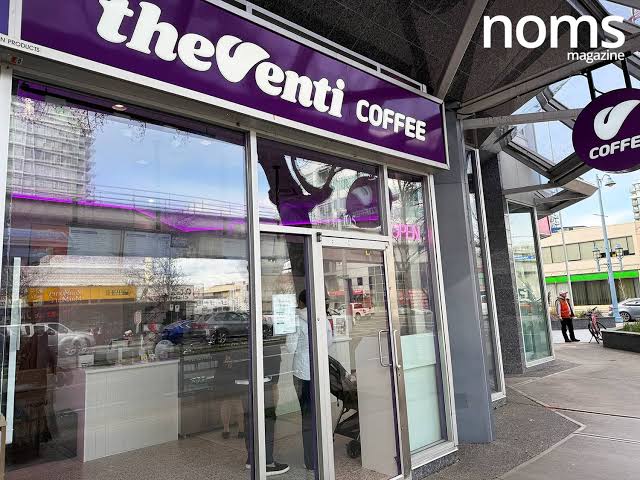
    TheVenti, a leading coffee chain from South Korea, has recently announced its introduction to the Philippine market in partnership with JJR Brothers, a local distributor of food and beverages.

    Known for its large 20-ounce servings, TheVenti was established in 2014 and has since become popular for its unique offerings such as espresso drinks, Korean grain lattes, and fruit teas. It currently operates over 1,600 stores in South Korea and has expanded its footprint to various international markets including Vietnam, Canada, and Jordan.

    Adapting to Local Preferences

    The coffee chain has shared plans to adjust its menu and store operations progressively in line with local consumer tastes and trade locations. This initiative aims to strengthen its foothold in the country and ensure the successful integration of its brand into the local market.

    TheVenti views its Philippine venture as a stepping stone towards further expansion in the Southeast Asian market. “We are thrilled to introduce TheVenti’s unique coffee and beverage experience to local consumers, with the goal of progressively augmenting our global brand’s competitive edge,” stated the company spokesperson.

    TheVenti is set to open its inaugural Philippine store in the third quarter of this year.

    Questions & Answers

    What is TheVenti known for?
    TheVenti is renowned for its sizeable 20-ounce servings and a unique menu that includes espresso drinks, Korean grain lattes, and fruit teas.

    What is TheVenti’s plan for the Philippines?
    TheVenti plans to adapt its menu and store operations gradually in line with local tastes and trading locations in the Philippines. It aims to build its presence by catering to local consumer preferences.

    When is TheVenti opening its first store in the Philippines?
    TheVenti plans to open its first store in the Philippines in the third quarter of this year.

  • Marks & Spencer Reaffirms Philippine Presence with New Franchise Deal with MAP

    Marks & Spencer Reaffirms Philippine Presence with New Franchise Deal with MAP

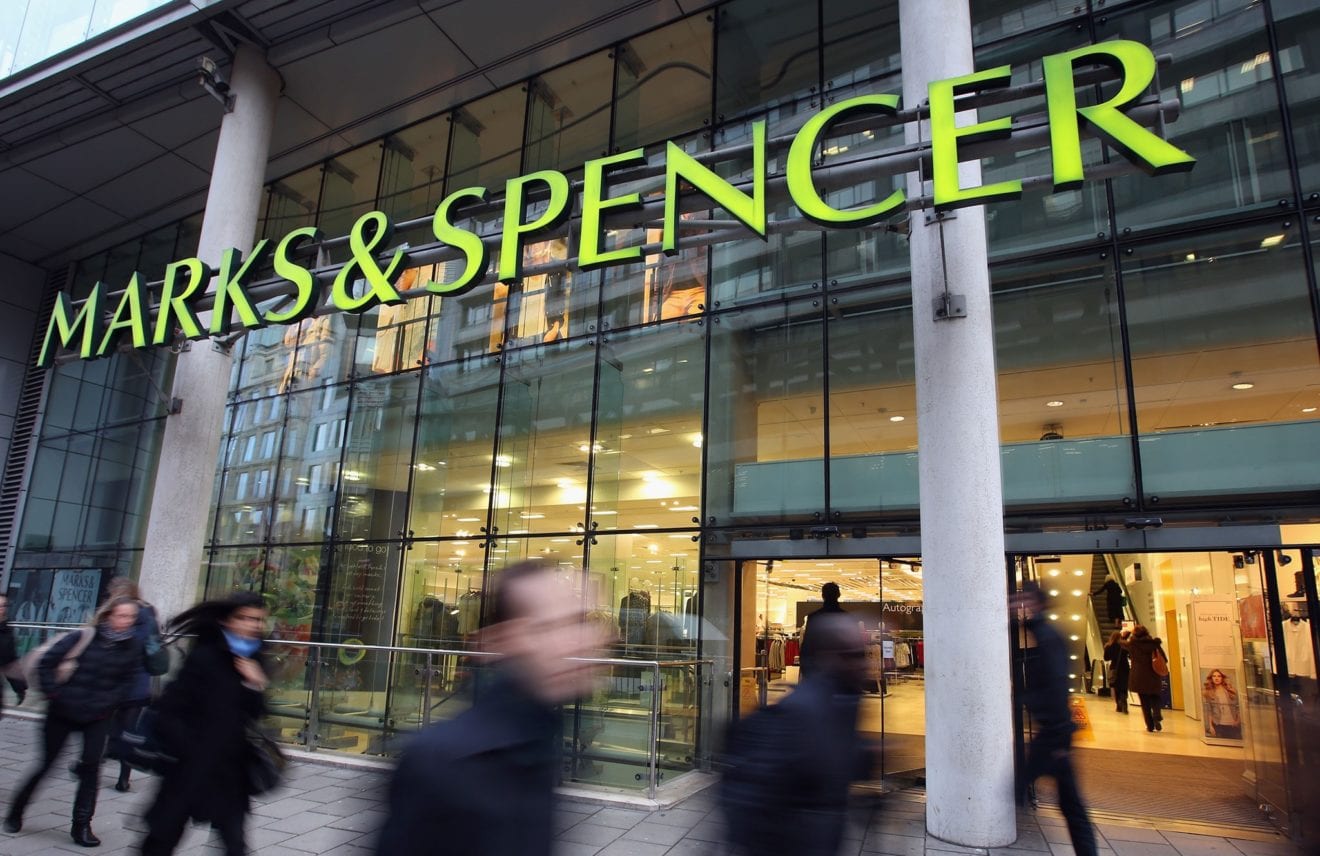
    Marks & Spencer (M&S), the iconic British retailer, has recently announced a continuation of its operations in the Philippines. This is possible due to a fresh franchise agreement with PT Mitra Adiperkasa Tbk (MAP), an Indonesian retail giant. MAP has had a successful history managing Marks & Spencer’s brand in both Indonesia and Vietnam.

    M&S Returns to the Philippine Market

    As part of the new agreement, various M&S product lines, including fashion, home, beauty, and food, are set to reappear on the Philippine market. The first of these stores plans to open its doors in Glorietta by the end of the year.

    Marks & Spencer has been a fixture in the Philippines since 1984, previously via its franchise partner, Rustan’s. However, a string of recent store closures had led consumers to speculate about the retailer’s potential departure from the local market.

    Mark Lemming, the Managing Director of Marks & Spencer International, reaffirmed the company’s commitment to expanding its footprint in the Philippines. He expressed optimism about MAP as the ideal collaborator to drive the company’s next growth phase in the region.

    Lemming highlighted the vital role MAP has played in propelling M&S’s growth in Indonesia, expressing confidence in the firm’s deep local knowledge as they gear up for increased expansion in Southeast Asia. He also acknowledged the strong demand for the M&S brand in the Philippines and voiced his excitement about re-launching their stores and online platforms later this year.

    MAP’s Role in M&S’s Expansion

    MAP’s relationship with Marks & Spencer isn’t new; the Indonesian retailer has been managing M&S’s franchise businesses in its homeland for over a quarter-century.

    Sameer Prasad, CEO of MAP Fashion, welcomed the expanded collaboration as a significant milestone in the firm’s regional growth plan. Prasad acknowledged the Philippines as a vibrant, rapidly expanding market, and deemed Manila as the ideal location to start this new chapter for M&S. He ended by expressing his eagerness to enhance M&S’s brand visibility in the local market and offer Filipino customers a superior retail experience.

    Questions & Answers

    What is the significance of the new franchise agreement between M&S and MAP?
    This agreement allows M&S to continue its operations in the Philippines using MAP’s local market expertise.

    What product lines will M&S reintroduce to the Philippine market?
    M&S plans to bring back its offerings in fashion, home, beauty, and food segments.

    What is the role of MAP in M&S’s operations?
    MAP will manage M&S’s brand, thanks to its deep regional knowledge and a successful history of managing M&S operations in Indonesia and Vietnam.

  • Oh!Some Breaks Into Philippine Market: Unique Lifestyle Retailer Unveils First Flagship Store in Makati

    Oh!Some Breaks Into Philippine Market: Unique Lifestyle Retailer Unveils First Flagship Store in Makati

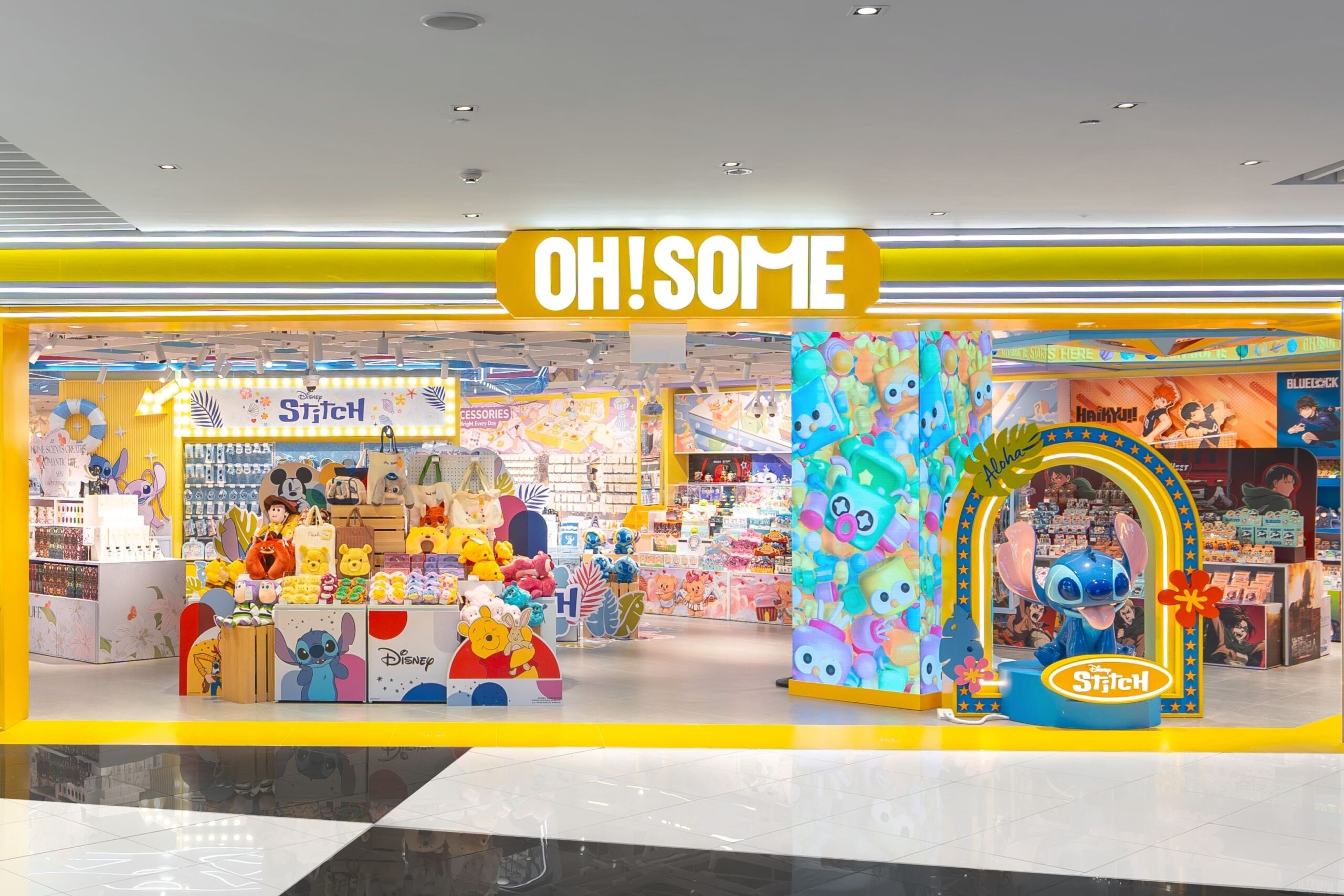
    Lifestyle retailer Oh!Some has expanded its operations into the Philippines by launching its inaugural flagship store at One Ayala in Makati.

    The Oh!Some Brand

    Oh!Some has a reputation for its unique, intellectual property-driven merchandise. In keeping with this trend, its product line in the Philippines includes items such as Korean designer toy Zizone, Pingo Cat-themed toys, phone charms, plush bags, and various collectibles.

    Continuing its tradition of carrying licensed merchandise from globally recognized franchises, the flagship store also offers products from the popular Japanese anime series, Spy x Family, as well as from the Disney entertainment conglomerate. Customers can expect to find a vintage-styled Toy Story dining and kitchen range, as well as travel accessories inspired by the Disney movie Zootopia.

    Expansion Across Asia

    The company’s entry into the Philippine market is part of its strategy to continue building momentum in its regional growth across Southeast Asia. Currently, Oh!Some operates over 180 stores throughout Asia, with a steadily increasing presence in markets that include Singapore, Malaysia, Thailand, and now, the Philippines.

    Questions & Answers

    What is Oh!Some known for?
    Oh!Some is known for its unique, intellectual property-driven merchandise, including licensed products from globally recognized franchises.

    Where has Oh!Some recently expanded its operations?
    Oh!Some has recently launched its flagship store in the Philippines, located at One Ayala in Makati.

    What regions does Oh!Some have a presence in?
    Oh!Some has established a presence in several markets across Asia, including Singapore, Malaysia, Thailand, and now the Philippines.

  • Philippine Sensation Mary Grace Cafe Set to Debut in Singapore: A Milestone in Global Expansion

    Philippine Sensation Mary Grace Cafe Set to Debut in Singapore: A Milestone in Global Expansion

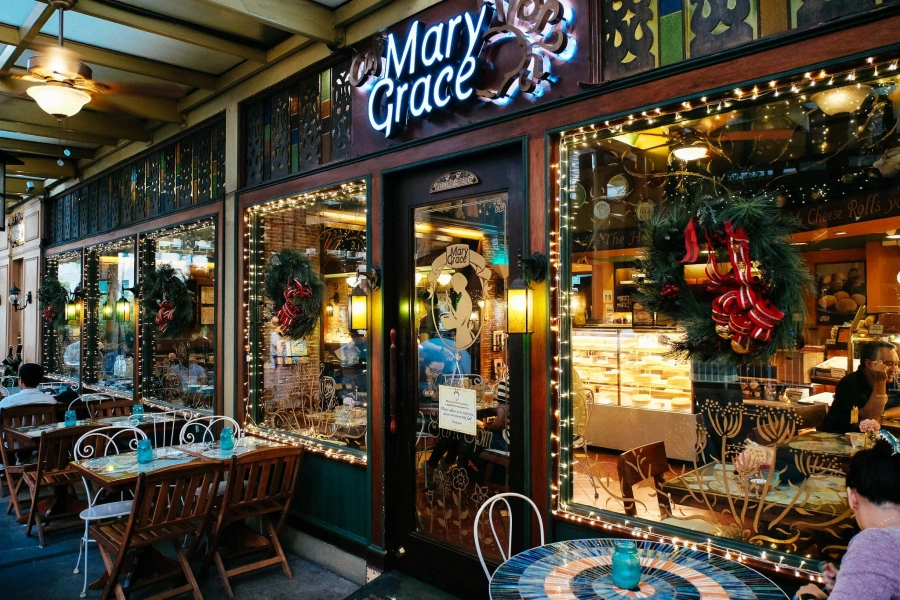
    The popular food and beverage chain from the Philippines, Mary Grace Cafe, is set to establish its inaugural full-service cafe in Singapore in the coming year. This expansion represents the brand’s initial venture into international markets.

    Mary Grace Cafe was established in 2006 and has since flourished, boasting over 140 cafes and kiosks scattered throughout the Philippines. The brand is renowned for its inviting and cozy store design, reminiscent of a homely atmosphere.

    The Singapore branch’s menu will showcase the brand’s beloved culinary offerings. Customers can expect to enjoy hot chocolate, ensaymadas, cheese rolls, and a variety of traditional Filipino dishes like tapsilog and Vigan longganisa sandwiches.

    For Mary Grace Dimacali, the founder, president, and CEO of the brand, the expansion signifies not just a business milestone but also a personal achievement. She reflected on her humble beginnings when she first started baking in her home kitchen, admitting that she never anticipated the brand would extend its reach beyond the Philippines.

    Questions & Answers

    What is Mary Grace Cafe?
    Mary Grace Cafe is a well-known food and beverage chain from the Philippines, noted for its warm, home-style store design.

    What new venture is Mary Grace Cafe embarking on?
    Mary Grace Cafe is preparing to launch its first full-service cafe in Singapore next year, marking its debut in overseas markets.

    What are some signature items on the Mary Grace Cafe menu?
    The menu of Mary Grace Cafe features items such as hot chocolate, ensaymadas, cheese rolls, and traditional Filipino dishes like tapsilog and Vigan longganisa sandwiches.

  • Philippine Powerhouse Sunnies World Storms into Thailand, Unfurls Rapid Expansion Plans

    Philippine Powerhouse Sunnies World Storms into Thailand, Unfurls Rapid Expansion Plans

    Sunnies, a renowned lifestyle brand from the Philippines, has established its presence in Thailand, inaugurating its initial outlets in Bangkok. The company has also announced its intention to introduce two additional stores by the end of the current year.

    Sunnies World in Central Park Dusit

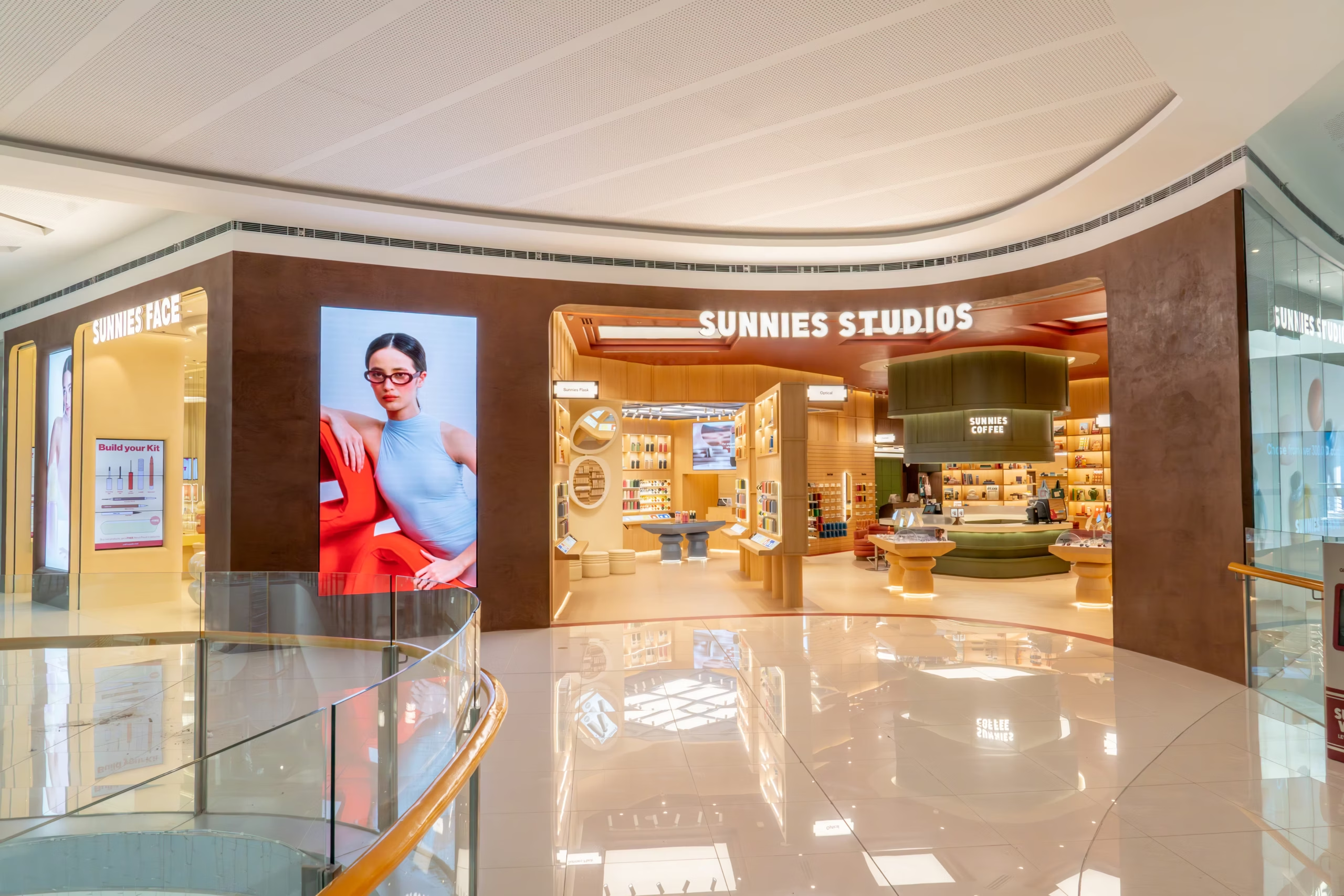
    Sunnies’ foremost establishment, Sunnies World, has been set up in Central Park Dusit. This outlet manifests all the diverse lifestyle concepts of the brand. It incorporates Sunnies Studios, which specializes in eyewear, Sunnies Face, the brand’s cosmetics segment, Sunnies Flask, offering customizable flasks, and Sunnies Coffee, a cafe.

    Adding a unique touch to the shopping experience, the store also features the Sunnies Face Bath. This is a lounge area where shoppers can explore a selection of merchandise exclusive to Thailand. The exclusive range includes items like tote bags, dumpling pouches, jelly pouches, and pencil cases.

    Second Store Opening at Central Ladprao

    The subsequent store, opened in Central Ladprao, provides Sunnies Studios eyewear, Sunnies Flask merchandise, and Sunnies Face cosmetic products.

    In a statement, the company described Sunnies World Thailand as more than just a store. They envisage it as a thriving community center facilitating the intersection of vision, beauty, and creativity.

    Upcoming Store Launches

    The brand has announced two additional store openings scheduled for the near future. The first, a Sunnies Flask store, is set to open at Central Rama on December 1. The second, offering Sunnies Studios, Sunnies Flask, and Sunnies Face products, will open at Fashion Island on December 19.

    Founded in 2013 by Bea Soriano-Dee, Eric Dee, Georgina Wilson, and Martine Ho, Sunnies started its journey as an eyewear label. The brand subsequently ventured into the realm of cosmetics, lifestyle accessories, and cafe concepts.

    Questions & Answers

    What is Sunnies’ plan for expansion in Thailand?
    Sunnies intends to establish its presence further in Thailand by opening two more outlets by the end of the year.

    What does the newly opened Sunnies World in Central Park Dusit offer?
    Sunnies World houses all the brand’s lifestyle concepts, including Sunnies Studios, Sunnies Face, Sunnies Flask, and Sunnies Coffee. It also features the Sunnies Face Bath, which offers Thailand-exclusive merchandise.

    What are the upcoming store openings for Sunnies in Thailand?
    Sunnies has plans to open a Sunnies Flask store at Central Rama on December 1, and another outlet offering Sunnies Studios, Sunnies Flask, and Sunnies Face products at Fashion Island on December 19.

  • Malaysia’s OldTown White Coffee ramps up Philippine expansion

    Malaysia’s OldTown White Coffee ramps up Philippine expansion

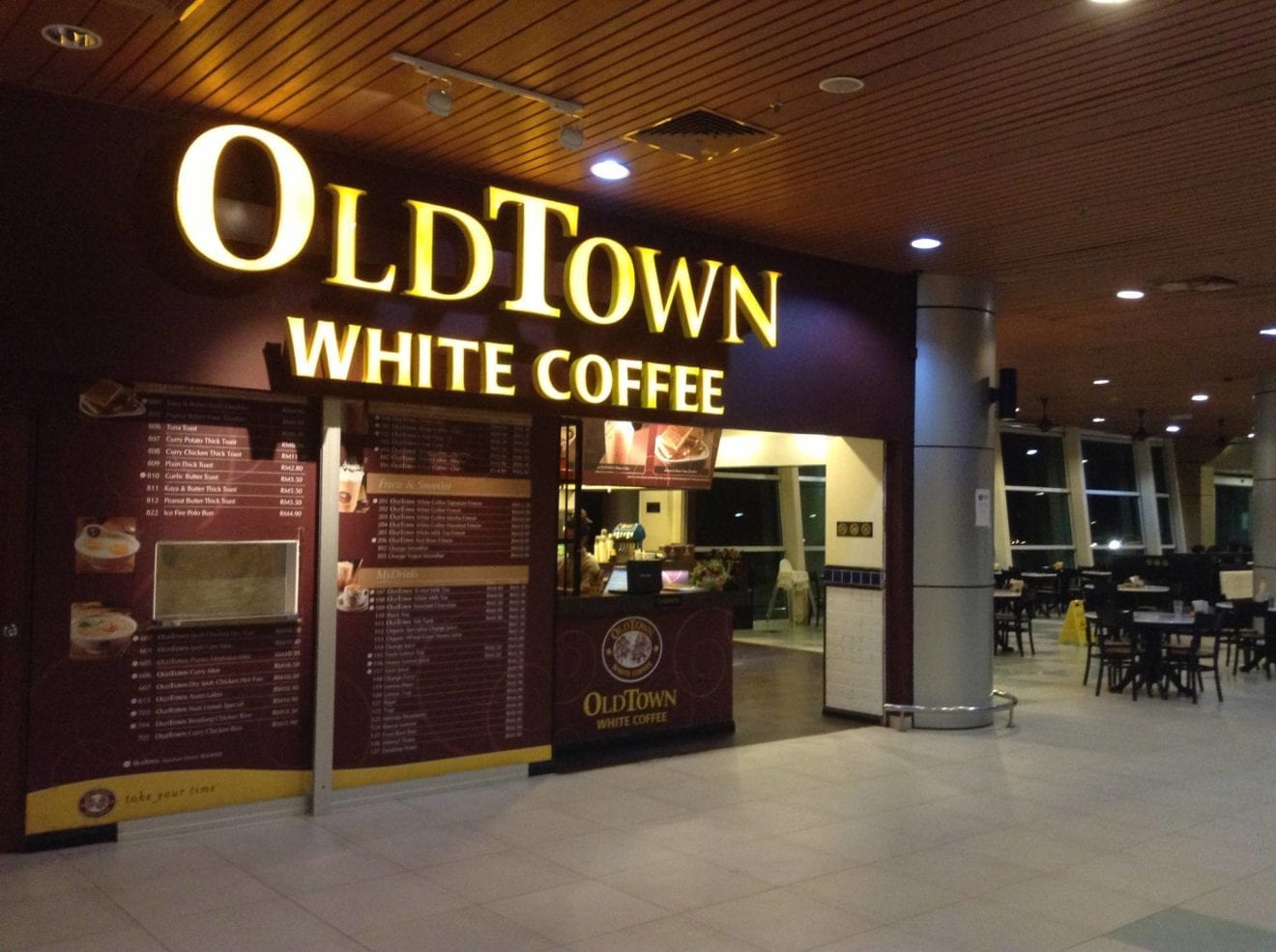
    OldTown White Coffee, a renowned Malaysian coffee brand, is charting an ambitious growth trajectory in the Philippines with a hefty investment amounting to US$21 million (PHP400 million). The funding will facilitate the introduction of 20 additional outlets over the next half-decade.

    This strategic expansion is spearheaded by the brand’s Philippine licensee, Del Mundo Group. This follows hot on the heels of the inauguration of OldTown’s inaugural branch in Zamboanga City. This new entrant marks the 11th OldTown outlet in the Philippines and the first in Western Mindanao.

    The new café, nestled in Tumaga’s Pasonanca Road, is the entrepreneurial venture of Pherhan and Jhulie Saiddi. The duo aims to enrich Zamboanga’s vibrant food and beverage landscape with their venture.

    “We aspire to introduce a global brand to Zamboanga that resonates with quality and cultural authenticity. OldTown White Coffee encapsulates this aspiration perfectly,” expressed the Saiddis.

    Debuting in 1999, OldTown White Coffee has earned a name for its signature roasted white coffee and authentic Malaysian cuisine. With more than 200 outlets across Malaysia, the brand has extended its footprint to Singapore, Indonesia, and Hong Kong.

    The Philippine chapter of OldTown White Coffee began in 2023, under the aegis of Del Mundo Group. The group is also known for managing brands like Mesa Filipino Moderne, Ramen Bari Uma, Buchiton, Hayashi Yakiniku, and Cravy.

    Matt Ablis, the COO of Del Mundo Group, revealed the group’s intention to penetrate key provincial markets with burgeoning consumer demand and local economic growth. “This expansion is not just about opening new stores, it extends to bringing OldTown’s established café format and menu to previously untapped regions,” he shared.

    Questions & Answers

    What is OldTown White Coffee planning for the Philippines?
    OldTown White Coffee aims to expand its presence in the Philippines with a US$21 million investment, planning to open 20 more outlets over the next five years.

    Who is leading the expansion of OldTown White Coffee in the Philippines?
    The expansion of OldTown White Coffee in the Philippines is being spearheaded by the Del Mundo Group.

    What is the vision of the owners of the new café in Zamboanga City?
    The owners of the new café in Zamboanga City aim to enrich the city’s food and beverage scene by introducing OldTown White Coffee, which they believe encapsulates quality and cultural authenticity.

  • Putien opens first outlet in the Philippines

    Putien opens first outlet in the Philippines

    Singaporean Michelin-starred restaurant Putien has opened its first eatery in the Philippines.

    The Cantonese/Fujianese-style brand has been introduced to the territory by The Vikings Group and opens in The Podium in Ortigas as its 67th location internationally.

    “Putien serves characteristically light, down-to-earth, and flavourful food, with an emphasis on fresh ingredients,” the restaurant’s founder and CEO Fong Chi Chung told the Manila Standard. The restaurant specializes in cuisine made from ingredients sourced exclusively from the Fujianese coast.

    “The Fujian flavor gives a unique twist to the usual Cantonese-style food,” said Vikings Group marketing director Charles Lee. “We’re excited for Filipinos to finally try this new type of cuisine that’s making waves in Singapore, Hong Kong, Malaysia, and China for its good quality and service”.

  • Jollibee Foods taking acquisition path to China, US

    Jollibee Foods taking acquisition path to China, US

    Fast-food chain Jollibee Foods Corporation is seeking acquisitions to accelerate expansion plans in China and the US.

    Targets could include other fast-food chains as well as fast-casual restaurants like Smashburger, the US franchise of which Jollibee owns 40 per cent, says president Ernesto Tanmantiong.

    “We are looking at the world arena. Acquisition is part of our growth strategy.”

    Jollibee is on track to meet its goal of doubling profit in the five years through to 2019, and Tanmantiong says he now wants it to be one of the five biggest restaurant chains by market capitalisation globally. Its current market value is US$5.2 billion.

    Jollibee runs more than 3500 stores globally, with its best-selling item being Chickenjoy. Three-quarters of its outlets are in the Philippines.

    “We are optimistic with the future of the Philippine market,” says Tanmantiong. “Major pillars will still be the Philippines, China and US, though we don’t close our door to opportunities in other geographic areas.”

    Filipino diaspora focus

    Its expansion plans focus on overseas locations that have a concentration of Filipinos, like California, Florida, Guam and Hawaii. The chain opened its first Florida store in March, making it the 36th outlet in the US.

    Jollibee spent $100 million for its stake in Smashburger in 2015, which had 362 stores in the US at the end of June. The Philippines company has completed 12 deals valued at about $301 million since 2010, according to Bloomberg data, and has considered about 20 potential acquisitions during the past two years.

    While it is reportedly considering a bid for UK sandwich chain Pret A Manger, Tanmantiong says the company hasn’t made any bids in recent months. He became president/CEO in 2014. His older brother, Tony Tan Caktiong, founded the chain as an ice-cream parlor in Quezon City in 1975.

    Jollibee’s Chinese businesses include Hard Rock Cafe and it own outlets in Hong Kong, and on the mainland such brands as Dunkin’ Donuts, noodle chain Yonghe King and congee outlet Hong Zhuang Yuan.

    “China is now one of the highest growth areas in our business,” says Tanmantiong.

    The company also wants to take its Philippine chicken barbecue chain Mang Inasal and its Chinese restaurants global.

  • AirAsia’s Philippine Affiliate Eyes India Market

    AirAsia’s Philippine Affiliate Eyes India Market

    Low-cost carrier Philippines AirAsia is seeking to operate flights to India from the Philippines. A regulatory filing showed Philippines AirAsia has filed an application for designation as official Philippine carrier and for the grant of allocation of flight entitlements to India.

    In particular, Philippines AirAsia wants to be able to operate seven weekly flights on the Manila – Bangkok – New Delhi route.

    The carrier’s request is being made in accordance to the existing air services agreement between the governments of the Philippines and India.

    A hearing is scheduled on Jan.10 at the office of the Civil Aeronautics Board in Pasay City to enable the government to decide on Philippines AirAsia’s petition.

    Philippines AirAsia is a joint venture company between Filipino investors Antonio Cojuango, Alfredo Yao, Michael Romero, Marianne Hontiveros and Malaysia’s AirAsia Berhad.

    It operates domestic and international flights out of Manila, Cebu and Kalibo.

    In November last year, the carrier expanded its operations by offering direct flights to Singapore from Cebu, as well as direct flight services to Taipei in Taiwan from Manila and Cebu.

    In the third quarter last year, Philippines AirAsia trimmed its net loss by 12 percent to P1.20 billion from P1.36 billion in the same period in 2015 amid higher revenues and passenger volume.

    AirAsia Group CEO Tony Fernandes earlier said Philippines AirAsia is on track with its turnaround plan.

    “We will take PAA (Philippines AirAsia) into the black by end-2017 on double-digit topline growth and a lower cost base from a more efficient fleet and keeping staff costs to below 10 percent of revenue,” he said.

    “We will go further by working on increasing ancillary revenue to above P500 per passenger,” he added.

  • PayMaya Philippines, JCB team up to widen JCB cards acceptance in the Philippines

    PayMaya Philippines, JCB team up to widen JCB cards acceptance in the Philippines

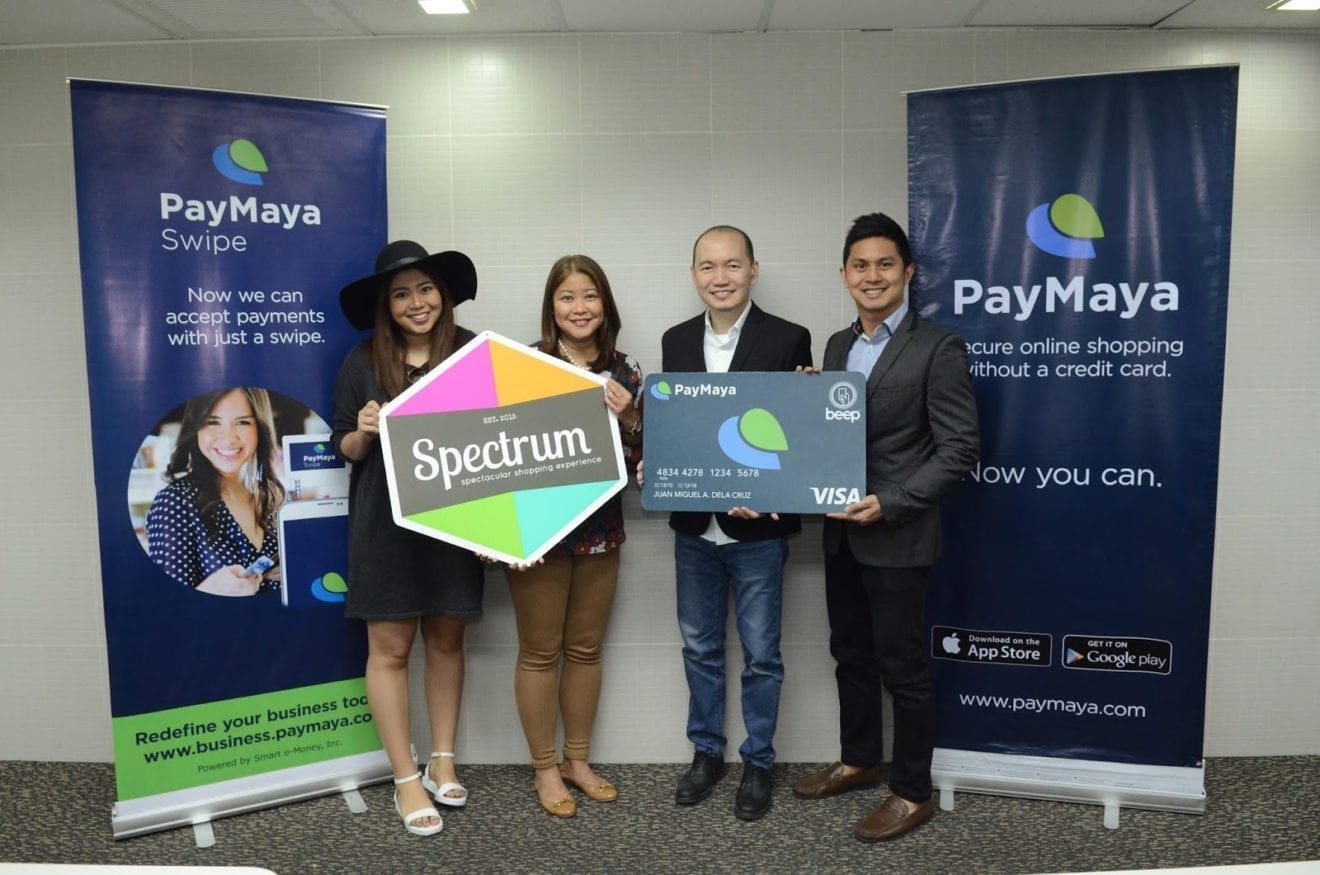
    PayMaya, the Philippines’ pioneering financial services provider, and JCB International Co., Ltd. (JCBI), the international operations subsidiary of JCB Co., Ltd., have forged a new partnership for JCB Merchant Acquiring and Card Issuing business in the Philippines. The partnership deals with the acceptance of JCB cards at online merchants that use PayMaya Checkout as the payment gateway. PayMaya and JCBI also plan to issue co-branded cards in the future.

    PayMaya Business is focused on delivering solutions that power businesses of all types and sizes to accept all kinds of payments. The services PayMaya Business provides are PayMaya Checkout, a system that enables online shops to accept card payments, PayMaya Swipe, a mobile point-of-sale device that can simply be attached to any mobile device so merchants can accept card payments, and PayMaya Touch, a payment solution which allows businesses to accept swipe, dip, and contactless card payments.

    The partnership will benefit all JCB cardmembers in the Philippines and overseas. JCB is a pioneer in the Japanese payment card industry with over 70M cardmembers and 95M in total worldwide. JCB cardmembers will be able to use their JCB cards at online merchants that use PayMaya Checkout as their payment gateway.

    In 2017, JCB cardmembers will also be able to transact in big retail outlets in the Philippines but also in micro- and small-medium enterprises including local boutiques, food carts, and community stores which offer a unique shopping experience through PayMaya Swipe and Touch. These outlets prefer more affordable and easier payment acceptance solution like PayMaya Swipe, Checkout, and Touch.

    Kimihisa Imada, Deputy President of JCBI, said, “The Philippines is one of the most important markets for JCB’s global business expansion and we are pleased to welcome our new partner to the JCB network. I am certain that this partnership with PayMaya will bring more benefits and convenience to all JCB card members, especially in the e-commerce space. We are also looking forward to exploring further business opportunities such as ‘PayMaya-JCB Card’ issuance soon.”

    “At PayMaya, we strive to shape the future of commerce and drive local business growth through digital payment innovations. We are strengthening this commitment by collaborating with strategic partners such as JCBI, which help us enable merchants to accept payments from more consumers here and abroad. We are thrilled to see the progression of our alliance with JCBI as we continue our mission in redefining the payment landscape in the Philippines,” said Orlando Vea, President and CEO of Voyager Innovations and PayMaya Philippines.

    The JCB “Uniquely Yours” Experience

    JCB is a major global payment brand and a leading payment card issuer and acquirer in Japan. JCB launched its card business in Japan in 1961 and began expanding worldwide in 1981. Its acceptance network includes about 31 million merchants and over a million cash advance locations in 190 countries and territories. JCB cards are now issued in 21 countries and territories, with more than 95 million card members. As part of its international growth strategy, JCB has formed alliances with hundreds of leading banks and financial institutions globally to increase merchant coverage and cardmember base. As a comprehensive payment solution provider, JCB commits to provide responsive and high-quality service and products to all customers worldwide.

    The unique benefits of PayMaya Business

    PayMaya handles the requirements of merchants in enabling their online and card payment acceptance–no need to talk to banks, expert programmers, or payment aggregators separately.

    For online payment, PayMaya Checkout API is easy to integrate in websites or apps. The process involves three simple steps: integration to sandbox environment, testing, and production.

    PayMaya provides simple pricing and fast settlements. Merchants are not required to settle monthly fees or present bank statements. They will only pay for the transactions they make. The package comes with access to a dashboard of transaction reports for sales performance tracking.

    The Philippine Airline’s mobile website and its recently launched online boutique, and the online gadget store Kimstore are powered by PayMaya Checkout.

  • The moment to tap the Philippine furniture market is now

    The moment to tap the Philippine furniture market is now

    The Philippine economy is a thundering train and it is about time for the Nordic design and furniture companies to get on board, Joni Koro, project manager at Nordic Business Council Philippines and founder of GRØN Design Solutions, says.

    “The sheer amount of new office, retail and residential developments is staggering. Although I have lived in Malaysia, Mainland China and Taiwan in the past, this is something I haven’t seen anywhere before”, the Finnish Manila-resident says.

    With an annual growth of around 6 percent, the island state is one of the world’s fastest growing economies.

    The construction boom is huge and in 2015 Metro Manila recorded the highest premium office space take-up in history on 459,000 square meters. Similar take-up of premium office space is expected also for 2016.

    Naturally this creates a great demand for furniture and design companies to furnish the office spaces.

    A lot of multinational offices are opening in Manila, and they are looking for sustainable quality furniture and are ready to pay the price for it, so the time to tap into the market is now, Joni Koro tells.

    But why just now?

    “Well if you ask me, actually we’re already late. It’s like when talking about China, the best time to get into the market was 5 years ago, but the second best is now and this also goes for the Philippines”, the Finnish entrepreneur says.

    “Unfortunately Philippines has really been flying under the radar in the Nordic region. There’s a huge potential here, especially since the last six years have been the best in the Philippine history.”

    Battling the US and European design

    When Joni Koro says, that the Scandinavian engagement on the furniture market is already late, it’s partly because more American and some European furniture companies have already jumped the gun and invested heavily in the Philippine market.

    As the market is now American contract furniture companies like Steelcase, are the biggest competitors on the market for quality Scandinavian offering, but more European companies has penetrated or are to penetrate the furniture market as well.

    Another reason why it is a good idea for the Scandinavians to tap into the market, is that the name of the cold north is already hot in the Philippines.

    “The concept of Scandinavian design and quality is fairly well known in the Philippines, but the offering is mostly limited to local mockups which rarely live up to the Nordic standards”, Joni Koro says.

    Why is Scandinavia and the Philippines a match

    If you ask Joni Koro there are several reasons why Scandinavian furniture and the Filipino market should be a successful match.

    The most significant reason is a rising interest for green awareness and thereby a demand for sustainable and environmentally friendly furniture, especially at the multinational offices, which represents the most likely buyers for Scandinavian furniture. This demand fits like a glove with what Scandinavian furniture is famous for.

    “The green movement is definitely getting stronger in the Philippines. Looking at the new office building developers, more and more of them are applying for the US Green Building Council’s LEED certification for their new buildings, he says.

    “The certificate works like a seal of approval that your office is environmentally friendly and of course gives the company a good name and a chance to price the square meters higher in a country where electricity price is one of the highest in Asia”. Joni Koro tells.

    The certifications have become highly popular. “I think out of the 80 upcoming high-end office buildings, roughly 30 have already applied for the certificate. These are the buildings the multinationals also want to be located in”.

    One way to achieve higher level in certification is choosing a green furniture supplier, as this will grant the company points when the application is rated and most Scandinavian furniture manufacturers have the green profile, that grants these points.

    Processed with VSCO with b1 preset

    According to Joni Koro, Scandinavian design has advantages in the Philippines.

    Another reason why Scandinavian furnitures fits the Philippine market are the traditions of Scandinavian furniture.

    Joni Koro’s own enterprise, GRØN Design Solutions, is the local partner for Denmark’s largest office furniture manufacturer, Duba-B8 as well as for Finland-based silent space manufacturer Framery acoustics. For Joni Koro these brands are good examples on what Nordic furniture has to offer in the Philippines.

    “Duba-B8 products are highly ergonomic which starts to be a hot topic also in Asia. In this regard Scandinavians are the world leaders”, Joni Koro explains.

    “At the moment, the demand for ergonomic, sustainable high-end furniture, that Nordic brands often represent still comes mostly from the multinational companies. But this is to change”.

    “Another very interesting product is a movable silent space from Finland. Framery silent spaces address the noise issues at open plan and activity based offices. This company is growing four fold this year – the demand around the globe for their solutions is huge and we also see the potential and need here in the Philippines”.

    Any challenges?

    As there might be many reasons and conditions to tap into the market now, there are on the counterpoint challenges to be aware of.

    “Unfortunately the local demand for high-end sustainable office furniture is still fairly limited and we can talk about niche market here. The price matters”, Joni Koro admits.

    “Even though the Philippines is closer to the western cultures compared to many, or any, other Asian country, most of the local companies still rely on cheap Chinese furniture and on layout design support individual work in cubicles instead of collaboration and activity based working”, he says.

    The Philippines elected a new president the 9th of May 2016. The new man in charge turned out to be Rodrigo Duterte, who is seen as a highly controversial figure in Western media, mainly because of his outspoken quotes on justice policy. But the new political situation shouldn’t be a challenges for the market, Joni Koro says:

    “Despite we a new President in the country the fundamentals are there. The growth of the consumption driven economy is further fed by expanding Business Process Outsourcing sector as well as Overseas Filipino Workers’ remittances, which last year were the third largest in the world, USD 26 billion. The Gross Domestic Product (GDP) is set to grow by 5 to 7 percent in the coming years. If Duterte does well with building the confidence towards foreign investors and can accelerate the infrastructure project the country could grow up to 8 to 10 percent, so the economical situation is still fertile”.

    The Scandinavian situation

    When overviewing the state of Scandinavian design in the Philippines in general, one senses that there’s a taste for it. Some well-known brands are responding to that and have already entered scene.

    Popular companies like BoConcept and Hay have opened retail stores with a help of local partners. Republic of Fritz Hansen and some other household names can also be found in multi-brand design stores.

    Joni Koro does his to open the market for Scandinavian furniture through NBCP and GRØN Solutions.

    “I want to bring authentic Nordic design and especially quality to the Philippines – first to the office market and soon after to the consumer market as well. I want to build a gateway for Nordic furniture and decor companies to enter the Philippine market”.

    Even though the Scandinavian design and furniture mark in the Philippines is still fairly unseen, things are developing, Joni Koro says and hopes.

    A big leap would be to get IKEA to the market, he says. “That would really create awareness of Scandinavia”.

    Do you have any advices to give if one were to get into the Philippine market with Scandinavian design?

    “The demand for high-end products in the consumer market is strong, but if you want to play it safe and build the awareness of your brand slowly you should start with fast-moving items like decorations. If I should give any recommendations you should of course do you research as always, be committed to the market, and find a trustworthy local partner to work with to deal with retail restrictions”.
    Processed with VSCO with a5 preset

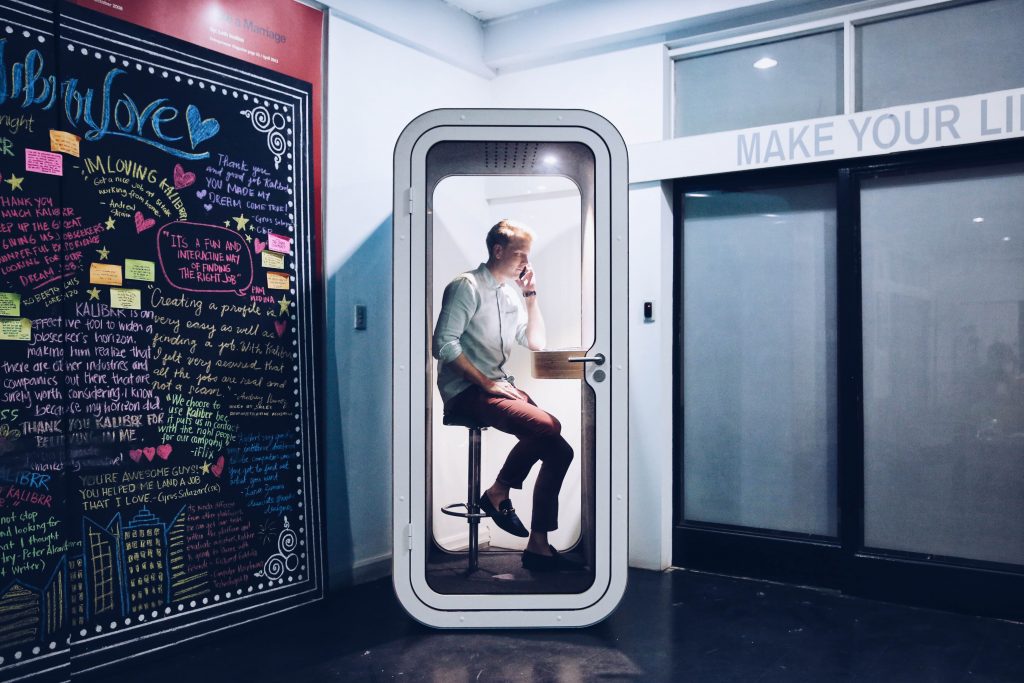
    Joni Koro in the Framery’s O booth – a single person phone booth, he distributes in the Philippines as a demo unit.


  • Philippines Welcomes Chinese Smartphone Huawei Expansion

    Philippines Welcomes Chinese Smartphone Huawei Expansion

    Chinese telecommunications equipment maker is extending its reach to Southeast Asia’s retails sector.

    Huawei has launched its first experience store at the SM Mall in Manila. This new experience store represents another major step of the overseas market expansion of Huawei and the company continues to develop and grow its brand influence.

    With an area of 110 square meters, the Huawei experience store adopts a full-white minimalist design representing the “Huawei and I” idea, which aims to establish a better interaction between Huawei and its end users. In this store, users can experience Huawei’s Android watch and Google’s Nexus 6P smartphone made by Huawei.

    Charles Wu, head of the Philippines region of Huawei, said at the store opening ceremony that they launched new technologies to help users improve their quality of life. Their existing devices are widely used by users every day. Huawei provides end-to-end solutions and they introduce new products to the market with their technologies.

    Jojo Vega, Huawei’s consumer business manager, said that consumers in the Philippines show great interest in Huawei’s products. The company is now more confident and believes its stronger platform can attract more consumers and promote more interactions.

    Huawei now has 40 branded retail stores and 32 simple sales outlets in the Philippines. The company plans to increase the number of its branded stores to 60 in the country by the end of 2015.

  • Manny Villar eyes expansions in retail, real estate

    Manny Villar eyes expansions in retail, real estate

    Former Senator Manny Villar is all about business these days.

    Villar said his company will continue to expand into the retail industry, seeing it as an integral part of the firm’s business model.

    As chairman of MBV Retail, Villar has launched a convenience store, department store, and housing goods store under the “All” brand.

    “We have entered in a big way into retail because we feel that retail and malls, they go together. We are very happy with the results, and we are encouraged by the results,” Villar told ANC’s Cathy Yang in an exclusive interview at the sidelines of the Forbes Global CEO Conference in Solaire.

    MBV Retail was formed in 2013 to carry the brands All Shoppe, All Home, and All Day, which is the only local player in a very competitive convenience store business.

    “Family Mart, 7-Eleven and Mini Stop are Japanese brands, but the only Filipino brand is All Day. And I’m very proud of that,” said Villar.

    Villar is also chairman of property firm Vista Land, which he also expects to continue expanding its reach.

    He said that from the current 92 cities and municipalities nationwide, Vista Land is looking to expand its presence to 120 cities and municipalities.

    “There’s no limit as to how far we can go,” he said.

    Villar believes that 2015 will continue to be a banner year for the property industry in the country.

    “I don’t see any change in 2015, there are challenges though. The world market is not as stable now, with what’s happening to China, and capital markets. But the Philippines is doing OK, since we’re in the Philippines, we’ll be OK,” the former senator said.

    Villar is the 13th richest man in the Philippines with a net worth of $1.5 billion. His wife, Cynthia, took his place in politics, something the former Senate president said will not be part of his plans in the near future.

    “I’m happy where I am now, I’m enjoying business. You can still do public service while in business, that’s what I discovered. That makes me happy,” he said.