Retail News CRM

Tag: philippine

  • Robinsons Retail eyes new global brands to bring to PH

    Robinsons Retail eyes new global brands to bring to PH

    Gokongwei-owned Robinsons Retail Holdings, Inc. is in talks with other global brand owners as it continues to be on the lookout for other retail names it could bring to the Philippines.

    The company has set aside P6 billion to open up to 300 new stores and bring its current networks of 1,356 stores to 1,600 by yearend, said Robinsons president and chief operating officer Robina Gokongwei-Pe.

    “We may bring in other brands…we are still talking (with brand owners). “We will continue to be on the look out for potential acquisitions that could add value to the company,” she said.

    Robinsons Retail last month successfully brought to the country specialty coffee brand Costa Coffee, United Kingdom’s number one coffee chain.

    “We also expanded into the specialty coffee business with the recent opening of our first Costa Coffee store in Eastwood city last June 29. Costa Coffee is the number one coffee chain in the UK with 3,000 stores across 31 countries including the Philippines. Reception has been positive,” Gokongwei-Pe said.

    As such, Robinsons Retail is targeting to open four Costa Coffee stores this year.

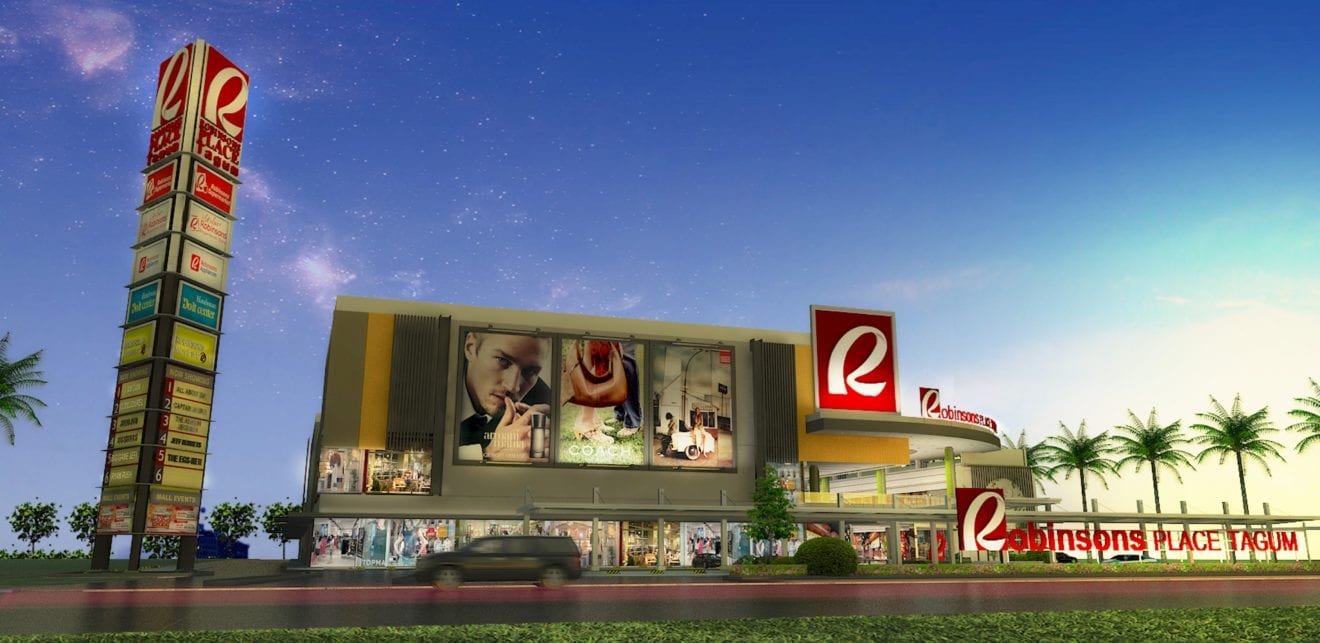
    To fast track expansion, Robinsons Retail has also developed community malls dubbed as Robinsons Townsville with Robinsons Supermarket as the main anchor tenant.

    Jody Gadia, general manager of Robinsons Supermarket, said the size of these innovative community malls would range from 5,000 square meters to a hectare and that around 60 to 70 percent of leasable space would be occupied by Robinsons Retail’s various formats.

    The balance, he said, would be leased out to other tenants and establishments.

    “The whole idea is to get closer to targeted markets and provide them accessibility and convenience and meet their basic shopping needs. The choice of location is densely populated areas that cannot be served by other malls,” Gokongwei-Pe said.

    The group is aiming to open two of these community malls a year in the next five years but depending on the opportunities, the expansion target could increase to three to four a year.

    “The value proposition is you won’t get stuck in traffic. We opened one in Cavite and we’re also opening one in West Fairview this year,” Gadia said.

    Moving forward, Robinsons Retail may explore other formats such as e-commerce and possibly more food brands once it masters the coffee business.

    As of the first quarter of the year, Robinsons Retail had a total of 1,356 stores broken down as follows: supermarkets, 113; department stores, 42; DIY stores, 159; convenience stores, 473; drug stores, 330 and specialty stores, 239.

    In the first quarter of 2015, net sales grew to P19.7 billion, up 13.1 percent from P17.4 billion recorded in the same period last year.

    Sales from supermarkets accounted for bulk or 49.1 percent of total sales during the quarter. Department stores’ sales followed with a 15.1 percent share, DIY stores, with 11.2 percent, drug stores with 9.5 percent, specialty stores with 8.7 percent and convenience stores with 6.4 percent.

    Robinsons Retail is the second largest multi-formal retailer in the Philippines. It operates a wide spectrum of formats and brands — supermarket, department, convenience store, hardware and home improvement, convenience store, drugstore, consumer electronics and appliances store, international fashion specialty and beauty brands, toy store and one-price concept store.


  • Philippines records 27% hike in Indian tourists from Jan-May 2015

    Philippines records 27% hike in Indian tourists from Jan-May 2015

    The Department of Tourism (DOT), Philippines has welcomed about 31,245 Indian tourists during the first five months of this year, recording an increase of 27.40 per cent, compared with 24,525 tourist arrivals from India from January to May 2014. The destination also plans to welcome tourists to the Philippine Shopping Festival 2015 which will be held from October 23 to November 8, in association with the Philippine Retailers Association (PRA). This was informed by Verna Covar-Buensuceso, Director and Officer-in-charge, Market Development Group, Tourism Development Sector, Department of Tourism (DOT), Philippines, while speaking to the press at the recently concluded multi-city roadshow in New Delhi post travelling to Nagpur, Chandigarh and Lucknow.

    Comprising 11 trade partners from Philippines, this sixth roadshow by DOT Philippines was the biggest-ever delegation to India. The roadshows included interactive B2B sessions, education programmes and workshops and saw participation of over 300 key tour operators, MICE and up-market leisure operators.

    “We aim to achieve 100,000 Indian tourist arrivals by 2017,” said Glen Agustin, Chief Tourism Operations Officer, Market Development Group, DOT, Philippines. He elaborated that they conducted a familiarisation trip for Kolkata-based tour operators wherein participants interacted with their B2B counterparts in Philippines. This has yielded excellent results and the tourism has been booming from the Kolkata since then, he said. Moreover, about 600 tour operators and counting have been certified under the Philippines Specialist Program (PSP) which has indeed assisted tour operators to lure tourists from Tier-II cities as well. As per the trend this year, Indians are staying for seven days on an average and spending about USD 120 a day. Though the length of stay has increased, we look forward to increase the tourism spend as well, highlighted Agustin.

    Agustin felt that the progress has been quite impressive and DOT Philippines will continue to remain bullish on the Indian market. “India ranked as the 13th top source market for Philippines Tourism, and we firmly believe that it has a huge potential to up its ranking. Weddings, MICE and Film Tourism are some products which we are aggressively promoting in the Indian market as of now. More than half of the tourist arrivals in 2014 comprised MICE travellers, especially incentive. In the year going forward, we plan to participate in PATA Travel Mart from September 6-8 in Bengaluru, Karnataka and thereafter in the Outbound Travel Mart 2016 from February 18-20 in Mumbai,” revealed Agustin.

    Elaborating on the Philippine Shopping Festival 2015, Covar-Buensuceso, said, “It will be a two week-long sale where shopping malls and retailers in the Philippines will offer different discounts and promotions to entice people to shop and offer a unique shopping experience. In line with DOT’s ‘Visit the Philippines 2015’ campaign and PRA’s efforts in the development of the Philippine’s retail industry, the Philippine Shopping Festival aims to make the destination a new shopping hub in the Asia Pacific region,” added Buensuceso. She added that India is among the top 10 source markets to travel to newer destinations in Philippines such as Cebu, Davao, Palawan and Bohal along with the preferred ones such as Manila and Boracay.

  • Jamba Juice Indonesia to open subsequent yr

    Jamba Juice Indonesia to open subsequent yr

    PT Sari Gemilang Makmur has gained the franchise rights to Jamba Juice Indonesia.

    The US smoothie chain Jamba Juice has launched into an aggressive worldwide enlargement technique with some 600 new cafes now within the improvement pipeline in South Korea, Taiwan, Thailand, the Philippines, Mexico, UAE, Saudi Arabia, Bahrain, Oman, Kuwait, Qatar and Canada.

    Sari Gemilang Makmur is a subsidiary of PT Mitra Adiperkasa Tbk, which operates greater than 1800 retail shops beneath a variety of its personal and franchised manufacturers in 65 Indonesian cities.

    Jamba Indonesia plans to open 70 Jamba Juice cafes in Indonesia inside 10 years, beginning in Jakarta in mid 2016.

    Tom Madsen, senior VP & GM, international progress, with Jamba Juice within the US, stated the corporate selected PT Sari as its associate as a result of it  is a number one operator of way of life manufacturers in Indonesia, an anchor tenant in main malls, and has a confirmed monitor report of efficiently constructing its personal and franchised manufacturers.

    “In PT Sari, we now have discovered a terrific associate for Indonesia, with a robust ardour for Jamba Juice and a mission to deliver well being, happiness and fulfilling life to Indonesian shoppers.”

  • On-line market Luxify enters Philippines

    On-line market Luxify enters Philippines

    Luxify, a web-based luxurious market for purchasing and promoting luxurious merchandise, is launching within the Philippines.

    The Hong Kong based mostly firm, which additionally has workplaces in London and Singapore, says it’s “notably excited” concerning the present “opportunistic occasions” in the Philippines.

    The Philippines is certainly a rising marketplace for luxurious merchandise,” says Alexis Zirah, co-founder of Luxify.

    Amidst usually testing occasions to the worldwide financial system, the Philippines has emerged with one of many biggest financial growths in Asia. From being as soon as touted because the “sick man of Asia” the nation is now unquestionably stronger, particularly after it emerged because the second quickest rising nation inAsia final yr.

    The reported financial progress of 6.1 per cent in 2014 can also be complemented by an inflow of high-end manufacturers and overseas corporations. The forecasts for the longer term are equally constructive, with corporations and shoppers displaying robust confidence.

    The current setup and success of luxurious manufacturers all through the Philippines has set the inspiration for different prosperous manufacturers to prosper.  Luxify says it’s assured of seeing extra prolific shoppers in the Philippines who’re hungry for luxurious and more and more influenced by eCommerce.

    “The spurt of progress in the Philippines could be very encouraging, particularly for classy manufacturers like ourselves,” says Zirah.

    “There’s nonetheless lots to discover on this market and with shoppers being extra open to luxurious, we now have an thrilling lineup forward. This month we’ve teamed up with Salcedo Auctions, the one public sale home in the Philippines to specialise within the sale of advantageous artwork, jewelry, ornamental arts and collectible equipment, for his or her upcoming Collectors’ Sale public sale, all of which enhance our imaginative and prescient and product vary splendidly,” he added.

    The forms of merchandise listed within the public sale embrace worldwide and conventional Filipino artwork items, basic furnishings, elegant jewelry, in addition to collectible books, maps, and work.

    Particulars of every merchandise are listed on Luxify’s web site and consumers might additionally go to Salcedo Public sale’s centre in Manila, for a particular preview till June 5, earlier than the public sale begins on June 6.

  • 9 keys to reaching Asian shoppers

    Whether or not they’re searching on-line or shopping for in-store buyers have extra selection than ever, forcing retailers and malls to get artistic to draw their consideration.

    With the area’s center class predicted to double to 1.32 billion by 2020, Asian shoppers – and their expectations – are altering quickly.

    Adam Prepare dinner, retail undertaking and improvement providers lead with JLL Asia Pacific, explores a number of the rising developments altering the best way retailers are connecting with shoppers:

    1. The brand new digital buying actuality

    Know-how is now probably the most dynamic pressure within the retail business, opening up new channels and interesting new audiences whereas concurrently feeding new ranges of competitors. Digital Actuality (VR) could also be progressing slowly within the shopper area, however the tipping level of adoption in retail is quick approaching. The 2015 Way forward for Retail Research from Walker Sands discovered that round a 3rd of shoppers would store extra on-line if they might work together with merchandise nearly first. VR know-how is now permitting buyers to expertise a digital trend present, wander round a digital retailer and discover a digital mall with many different improvements to return as retailers experiment with the know-how. It’s poised to generate a completely new sale channel for retailers within the subsequent few years.

    1. Enhanced buyer relationship administration (CRM) know-how

    Because the battle for the buyer greenback intensifies, loyalty will develop into the brand new foreign money of commerce – with slightly assist from know-how. Digital cost strategies akin to Apple Pay and AliPay are getting used together with more and more refined location-based providers like iBeacon – Apple’s indoor positioning system – to provide new ranges of perception into shopping for behaviour. Retailers can now present buyers with real-time info based mostly on their consumer profiles and engagement historical past.

    ShopperTrak just lately introduced a partnership with Shopkick for a purchasing app permitting retailers to work together in real-time with clients whereas they’re buying. There are already 10 million customers on the Shopkick app and greater than 8000 shopBeacons deployed in retail shops. Insights assist retailers join with related shoppers at a precise location and in real-time, which in flip could be refined to take care of loyalty.

    1. Robots in disguise

    Whereas some manufacturers are experimenting with improvements comparable to drone supply, laws are more likely to floor most business drone concepts within the short-term. As an alternative we’ll see the continued rise of robots and humanoids in retail conditions. Already a function in lots of Japanese shops, robotic know-how is enhancing at a meteoric fee. And with rising labour prices, it isn’t onerous to think about a close to future when primary retail duties similar to making espresso or manning an experiential retailer is dealt with by a humanoid. Nippon Enterprise Capital just lately launched a $42 million fund in Japan by to speed up and commercialize humanoid know-how and neuroscience purposes, lots of that are being designed for the retail business.

    1. Cross-border purchasing

    Shoppers are flocking to digital retail markets which are more and more nation agnostic to hunt out the perfect product and one of the best offers. Asian shoppers already spend greater than the worldwide common on cross-border purchasing, and that is solely more likely to improve as a brand new era of shoppers look to spend their disposable revenue.

    1. Model extensions

    Experiential shops reminiscent of Google’s new (and thus far solely) buying expertise in London permit shoppers to play with merchandise earlier than shopping for them, often on-line. However this will typically have the unintended consequence of showing the restrictions of the model’s core merchandise. Thus, one other means for manufacturers to distinguish themselves is to increase their attain past their core providing. Meals extensions have turn into widespread just lately as retailers search to diversify and develop. Ideas such because the bar and cafe inside Alfred Dunhill outlets are a very good instance of clothes manufacturers shifting into the meals and beverage area. Anticipate this development to collect tempo because the battle to maximise dwell time and share of the buying basket heats up.

    1. Menswear

    Traditionally, males are extremely underserved within the style business – and there’s proof that their shopping for preferences are evolving. Bain & Firm estimates menswear progress has outpaced womenswear for the final six years, rising at between 9 and 13 per cent yearly – virtually double that of womenswear. As manufacturers search to take care of progress, we’ll see a re-focusing of the retail business to focus on males. Model partnerships, notably in athletic and sportswear, will proceed to develop and can develop into a key function of retail plans within the brief to medium-term.

    1. The rise of the Asian trend home

    European and American dominance in Asian excessive style has been the norm for a few years, and the overwhelming majority of luxurious manufacturers with robust Asian gross sales are owned by Western companies. Because the retail market continues to develop in Asia, we anticipate to see the rise of an Asian luxurious model -most in all probability within the style area – which can equal or exceed the recognition of Asian-American style icons comparable to Alexander Wang, Vera Wang and Philip Lim.

    With Western designers utterly absent from Shanghai’s Trend Week in 2014, trend critics targeted on rising Chinese language designers, and it’s doubtless that many of those manufacturers will develop loyal clients past China and meet the worldwide trend business by way of the important thing markets of Hong Kong, Tokyo and Seoul. Asian trend designers will quickly be on par with the likes of style homes resembling LVMH, Prada and Michael Kors, and can kick-start a brand new period of Asian retail innovation and management.

    1. The brand new flagship

    Intricately related to the emergence of the experiential development is the resurgence in retailers working flagship shops. Pushed by a want to reconnect with shoppers and the necessity to evolve from a static entity to an attractive expertise, the brand new flagship will re-imagine a retail retailer. It is going to be a press release, a model ambassador. More and more these areas will blur the road between retail and leisure, and develop into locations the place buyers are inspired to play and keep. This development is most noticeable in main markets like New York, Japan, and even Sydney the place single-brand luxurious and quick trend retailers are signing bigger leases and investing extra into the in-store surroundings.

    1. 3D Printers

    We’re on the tipping level of 3D printing and really quickly it’ll grow to be the norm in each facet of our lives. The primary 3D printed constructing was just lately unveiled in China and every thing from automobiles to weapons has adopted. For consumers on the lookout for a personalised expertise on their very own phrases, 3D printing gives an virtually limitless array of choices. Jewellers are already permitting clients to print their very own designs, whereas everybody from cooks to cycle outlets are experimenting with the know-how’s software within the retail area. That is genuinely game-changing know-how, and one that may definitely come to outline retail within the coming years.

  • Robinsons Philippines profit surges

    Robinsons Philippines profit surges

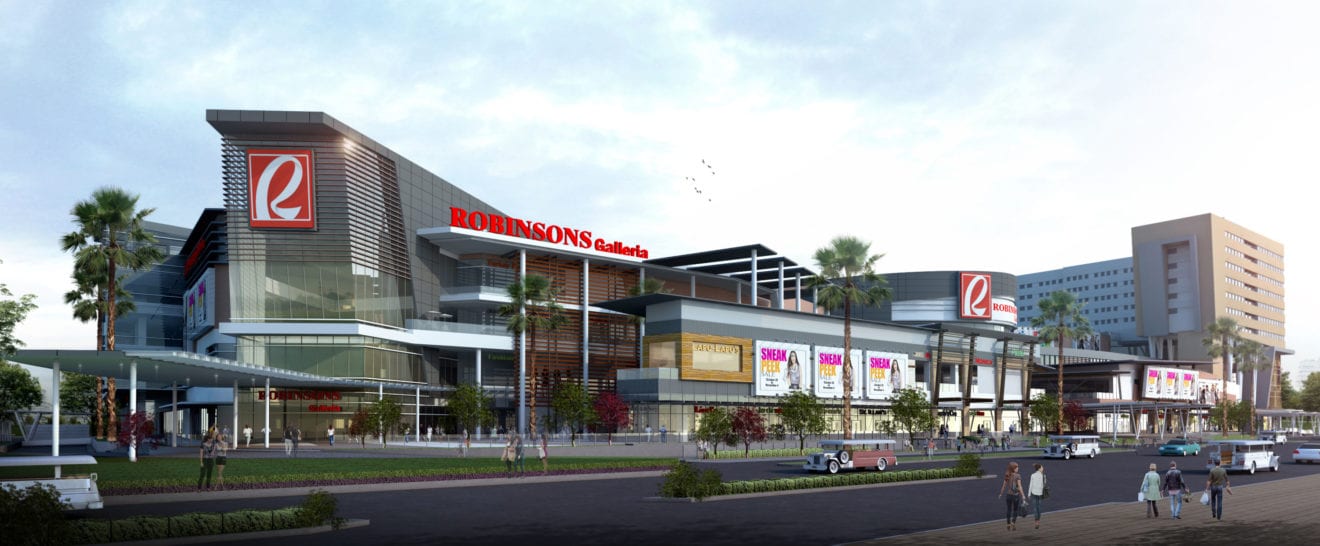
    Robinsons Retail Holdings says its net income rose 39.1 per cent to P781 million (US$17.5 million) in the first quarter of 2015.

    Robinsons Philippines runs a raft of retail businesses split into six operating divisions: Robinsons Supermarket, Robinsons Easymart and Robinsons Selections; department stores; DIY stores under the Handyman Do it Best, True Value and the new big box hardware brand AM Builders’ Depot; Ministop convenience stores; South Star Drug and Manson Drug stores; and specialty stores selling appliances and consumer electronics.

    It has 1356 stores – 211 more than at the end of March 2014.

    In its quarterly trading disclosure the company says its core net earnings grew by 10.1 per cent to P584 million ($13.1 million) in the three months to March 31.

    “I am pleased with our results of the first quarter of 2015, particularly our same store sales growth performance. Nonetheless, we remain vigilant as competition continues to intensify on all fronts,” RRHI president Robina Gokongwei-Pe said in the statement.

    “We are optimistic with the recent opening of True Home, a segment of True Value focusing on furnishings at Robinsons Magnolia, and also excited about the scheduled launch of our first Costa Coffee in the middle of this year as well as the opening of our second Robinsons Selections, the premium format of our supermarket segment, at the Fort.”

    Combined net sales grew 13.1 per cent to P19.72 billion ($442.8 million), largely due to contributions from new stores and a solid same-stores growth of 3.4 per cent.

  • Retail boosts SM Investments bottom line

    Retail boosts SM Investments bottom line

    SM Investments Corporation says its retail operations delivered solid 6.5 per cent growth in the first three months of 2015.

    Retail accounts for just 19 per cent of the diversified corporate’s business, with banking accounting for 41 per cent and property 40 per cent. The company delivered its first quarter results this week, reporting an 8.1 per cent increase in net income to P6.7 billion (US$150 million).

    “We are focused on expanding all our core businesses given the favorable economic outlook. Our expansion plans are geared towards meeting the needs of under-served customers across the country and to positioning ourselves to compete effectively in each of our growing markets,” SM president Harley T. Sy said in a statement to the Philippine Stock Exchange.

    SM Retail’s turnover in the quarter was P44.9 billion ($1 billion) and its profit rose 6.5 per cent to P1.3 billion ($29.1 million).

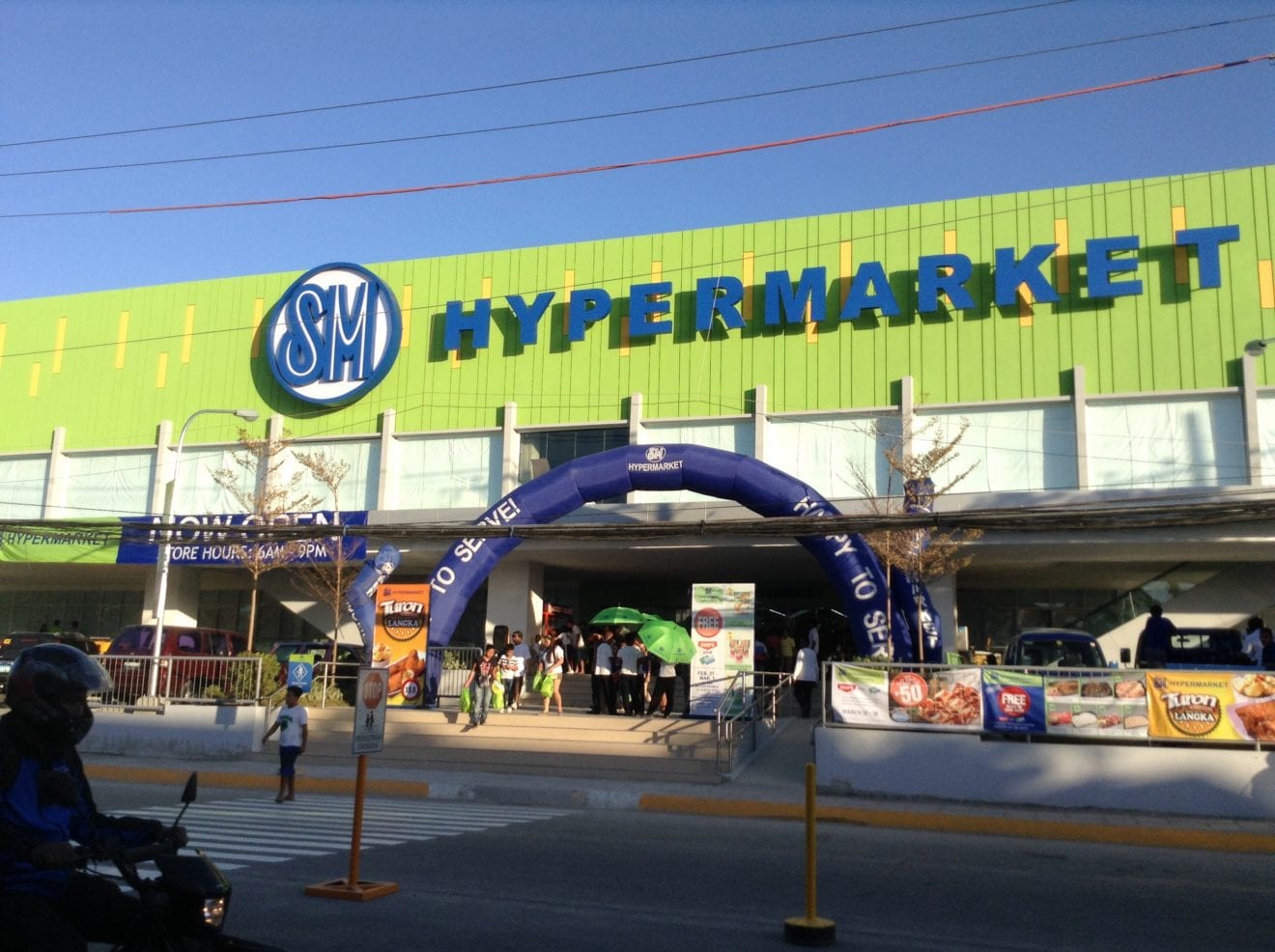
    The company opened 10 new stores in the quarter in the provinces of Luzon, Visayas and Mindanao. As at March 31, it operated 279 stores: 50 SM Stores, 40 SM Supermarkets, 43 SM Hypermarkets, 120 Savemores and 26 WalterMart stores.

    Property division SM Prime Holdings, which owns shopping centres amongst other assets, recorded P16.7 billion ($374 million) in revenue, up nine percent quarter-on-quarter. Its net income soared 176 per cent to P12.6 billion ($282.3 million), including an extraordinary gain of P7.4 billion ($165.8 million).

    SM Corp says its retail and commercial revenue grew 10 per cent to P9.4 billion ($210.6 million).