Tag: Philippines

  • Cebu Pacific sale offers P299 domestic, P699 international fares

    Cebu Pacific sale offers P299 domestic, P699 international fares

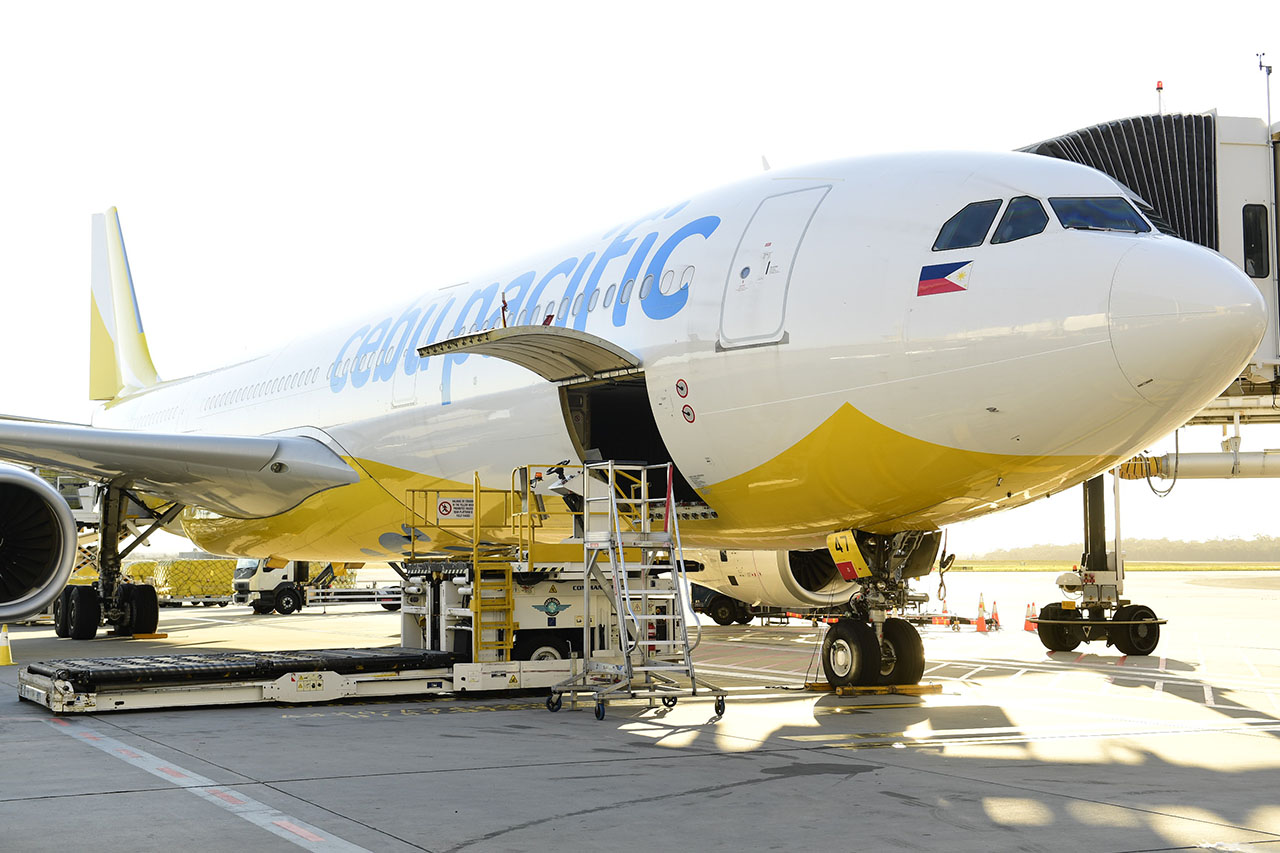
    Cebu Pacific said it was offering domestic and international seats on sale starting Thursday.

    The Philippines’ largest airline said the sale would run until Friday for travel from Nov. 1 to March 31 next year.

    Among the destinations on offer are Boracay, Coron, Puerto Princesa and Siargao at P299 for one-way base fare, Cebu Pacific said.

    Flights to international destinations like Bali, Hong Kong, Bangkok, Beijing, Taipei and Tokyo are also on offer for as low as P699 one-way base fare, the airline said on its website.

    Other destinations like Dubai are also on offer for as low as P1,599; Melbourne for as low as P4,599 all in; and Sydney at P5,599 all in.

    The quoted domestic one-way base fares are inclusive of 7 kg hand carry baggage allowance, but exclusive of web admin fee, 12 percent VAT, terminal fees and fuel surcharge, it said.

    Quoted international one-way fares are inclusive of 7 kg hand-carry baggage allowance, but exclusive of web admin fees for short haul and long haul flights, respectively and P550 international terminal fee and fuel surcharge.


  • Globe to ramp up network expansion program

    Globe to ramp up network expansion program

    The Philippines’ Globe Telecom has pledged to ramp up its network expansion and modernization program to cater to soaring demand for mobile data.

    The operator revealed that mobile data traffic on its network grew to 370 petabytes during the first three months of 2019.

    This represents a 105% increase from the 180 petabytes recorded a year earlier, and a 421% increase from the first three months of 2016.

    Data traffic growth is also driving revenue growth, with Globe Telecom reporting consolidated service revenues of the quarter of 36 billion pesos – up 13% year-on-year – and mobile data traffic accounting for 16.5 billion pesos of this total.

    “With the explosion of data traffic consumption, building more cell towers and modernizing our network infrastructure will continue to play a fundamental role in delivering superior quality of experience to our customers,” Globe CEO Ernest Cu said.

    “This is why we will continue ramping up our network rollout and utilizing next-generation technologies to enhance the way our customers experience mobile data.”

    Around 68% of Globe’s total capex budget for the first quarter of 8.8 billion pesos was allocated towards enhancing data-related services. During the quarter the company escalated its cell site deployment and invested in improving its network capacity.

  • Globe digitally transforms Semirara Island

    Globe digitally transforms Semirara Island

    The Philippines’ Globe Telecom worked with the nation’s largest coal producer Semirara Mining and Power Corporation (SMPC) to digitally transform Semirara Island in Antique.

    The 55 square kilometer island is home to the Philippines’ richest coal reserves, and is home to a number of coal workers and their families who rely on mobile connectivity a digital applications in their daily life.

    As part of the project, Globe, SMPC and the local government collaborated to upgrade all mobile towers in the island with LTE technology.

    The partners are also adopting a modern payroll solution for the mining company in collaboration with Ant Financial subsidiary Mynt and Ayala that takes advantage of Globe’s GCash mobile money service.

    In addition, Globe will work with public and private high schools in the island on digitally-enabled education initiatives.

    The Digital Thumbprint Program, developed by Globe in conjunction with Singtel and its Australian subsidiary Optus, has already been used to aid the education of 1.9 million students across the Philippines.

  • Philippines publishes common tower rules

    Philippines publishes common tower rules

    The Philippines’ Department of ICT has published the rules and regulations for the new common tower provider regime with the goal of building or converting at least 2,500 common towers across the nation.

    The rules will pave the way for deployments in properties owned by the departments, other government agencies, and hard-to-access areas identified by the market’s mobile operators.

    With the rules, the DICT has committed to streamlining the issue of licenses for the deployment of telecommunications equipment in towers not built by the independent tower companies participating in the scheme.

    They also seek to encourage voluntary sharing of towers by incumbent mobile operators by offering incentives in the form of allowing companies to build passive infrastructure in government properties and to enable operators to offer, transfer and convey existing tower resources to tower sharing entities.

    Independent tower companies participating in the scheme will need to be at least 20% owned or in a consortium with companies with at least five years of experience constructing, owning, operating and/or maintaining towers.

    They must also be wholly independent of mobile operators to ensure they offer non-discriminatory access and have reached agreements with the DICT and secured the required permits.

    The DICT said that to date 22 tower companies have signed memoranda of understanding with the department over the common tower initiative.

    “This is the starting point of more comprehensive policy for our initiative on passive infrastructure sharing. This will help tower firms to acquaint themselves in our telco industry,” DICT acting secretary Eliseo M. Rio Jr. said.

  • Mislatel cleared to receive congressional franchise

    Mislatel cleared to receive congressional franchise

    China Telecom backed joint venture Mislatel Corporation has been cleared to secure a congressional franchise to become the Philippines’ third mobile player.

    Mislatel, the joint venture established with businesses owned by Philippines tycoon Dennis Uy, has received congressional approval to acquire the franchise owned by Mindanao Islamic Telephone Co.

    The National Telecommunications Commission will now make preparations to issue a certificate of public convenience and necessity and an allocation of spectrum for the operator. The allocation is expected to be complete by mid-June.

    But Mislatel will first be required to pay a 25.7 billion peso bond, which it will need to forfeit if it does not meet its rollout and other commitments to the government.

    These commitments include achieving 84% population coverage within five years, and reaching a minimum average internet speed of 27Mbps within the first year of operations, increasing to 55Mbps after this time.

    Mislatel won the selection process to become the market’s third major player in November last year. But the company was recently forced to postpone its planned launch date in early 2021 due to delays receiving the congressional franchise.

  • Shake Shack opens first store in Philippines

    Shake Shack opens first store in Philippines

    The new QSR restaurant has opened at Bonifacio Global City (BGC) as the brand’s 225th location, although only its second in Southeast Asia after Singapore.

    “It is known for quality and consistency in taste,” said the president of the exclusive franchise holder SSI Group Anton Huang. “As far as SSI is concerned, we want to be the purveyor of lifestyle choices to the Filipino consumer. In keeping with that goal, we identified Shake Shack as a brand or concept that would really resonate well with the Filipino consumer.”

    “Filipinos are already clamoring for it to begin with and it would be a must do part of their pilgrimage to the US,” he added.

    The restaurant’s Instagram announcing the Manila launch achieved 16,000 likes, the highest-ranking post on its account.

    Huang expressed confidence that the new store will meet revenue and sales targets, and is keeping a tight focus on the performance of the first outlet before making expansion plans.

    “We’re concentrated on doing well to serve our customers and meet their expectations,” he said. “Once we’ve done that, and I’m pretty sure we are going to get that right from the beginning or the get-go, then, we will look at expansion. As I am sure you can sense, with the kind of demand there is for Shake Shack in the Philippines, I think the expansion opportunities are in fact endless. You really just have to select properly where we will expand.”

  • McDonald’s Philippines Planning 50 Restaurant Openings

    McDonald’s Philippines Planning 50 Restaurant Openings

    McDonald’s Philippines is expanding, with new stores and branch upgrades unfolding this year along with menu additions.

    There are currently around 650 McDonald’s restaurants in the territory, 61 of which opened last year.

    “We’re continuing our aggressive expansion,” said McDonald’s MD Margot Torres. “In terms of new stores, we’re looking at about 50.”

    The firm’s outlets will be upgraded to the McDonald’s Nxtgen system, featuring a touch-screen service allowing customers to place orders without interacting with a cashier. The Nxtgen kiosks also allow customers to customize their orders and access additional offerings.

    An estimated 70 per cent of stores are expected to receive the upgrade by 2021

  • Cebu Pacific Q1 profit more than doubles

    Cebu Pacific Q1 profit more than doubles

    Budget airline Cebu Pacific saw profit in the first quarter of the year more than doubled on strong demand and as fuel costs, which weighed on earnings in 2018, eased during the period.

    Cebu Pacific, owned by the Gokongwei family’s JG Summit Holdings, said in a stock exchange filing that net income from January to March this year hit P3.43 billion, up more than 138 percent compared to the same period in 2018.

    The airline, which signaled its intention to expand aggressively this year, also saw total revenues hit P21.18 billion, up 16 percent. Most of this came from passenger ticket sales, which rose 14.6 percent to P15.68 billion. Cebu Pacific, which recently took delivery of newer planes such as the next-generation A321neo, saw passenger volume increase 8.5 percent to 5.3 million. Average fares also ticked higher to P2,965, an increase of 5.7 percent.

    The airline also improved cargo revenues by 12.7 percent to P1.44 billion as well as ancillary revenues, which increased 22.7 percent to P4.1 billion.

    As noted, the carrier’s bottom line was propped up by the 4.3-percent decline in oil prices, a major operating expense.

    The company’s flying expenses alone rose 3.8 percent to P7.17 billion mainly as it ramped up operations.

    Overall, operating expenses went up 8.4 percent to P17.34 billion.

    “The increase was driven by its expanded operations, growth in seat capacity from the acquisition of new aircraft and the weakening of the Philippine peso against the US dollar,” Cebu Pacific said in its filing.

  • Cebu Pacific’s income jumped 138% to P3.4b in first quarter

    Cebu Pacific’s income jumped 138% to P3.4b in first quarter

    Cebu Air, the operator of low-cost carriers Cebu Pacific and Cebgo, said net income jumped 138.4 percent in the first quarter from a year ago, on the back of strong passenger and cargo revenues. The airline unit of the Gokongwei Group said it posted a net income of P3.4 billion from January to March, up from P1.4 billion it earned in the same period last year. Revenues increased 16 percent in the three-month period to P21.17 billion from P18.26 billion it generated a year earlier.

    Passenger revenues increased 14.6 percent to P15.67 billion from P13.67 billion. The increase was attributed to the 8.5-percent growth in passenger volume to 5.289 million from 4.876 million last year as the group added bigger A321 aircraft to its fleet. The average fare went up 5.7 percent to P2,965 in the first quarter from P2,805 a year ago, contributing to the higher revenues. Cargo revenues grew 12.7 percent to P1.44 billion from P1.279 billion following the increase in both yield and volume of cargo transported in 2019. Operating expenses went up 8.4 percent to P17.34 billion from P15.997 billion a year ago.

    Cebu Air said the increase was driven by expanded operations, growth in seat capacity from the acquisition of new aircraft and the weakening of the Philippine peso against the US dollar. The peso depreciated to 52.36 per US dollar in the first quarter from an average of 51.49 a dollar last year. Flying operations expenses increased 3.8 percent to P7.173 billion from P6.910 billion.  “This was mainly accounted for by the increase in pilot training costs,” CEB said. Fuel expenses also went up as the fuel volume increased by 7.9 percent in the quarter.  The MOPS price of fuel slightly went down to $76.50 per barrel in the first quarter from $79.99 a barrel in the same period last year.

  • SM Retail Achieves Small Profit Boost

    SM Retail Achieves Small Profit Boost

    SM Retail has achieved a first-quarter profit increase of 5 percent to P2.7 billion (US$51.7 million).

    Retail revenues in the first three months rose by 13 percent year-on-year to P79 billion, while sales from specialty retail stores grew by the same percentage to P19.6 billion.

    As at the end of March, SM Retail had 2385 stores, comprising 63 department stores, 1388 specialty retail stores, 57 SM Supermarkets, 53 SM Hypermarkets, 194 Savemore, 52 WalterMart, and 578 Alfamart stores.

    The figures were included in the quarterly report of SM Investments, which boosted its profit by 26 percent to PHP10.7 billion (US$205 million).

    The gains reflected improved sales from the retail business as well as its property and banking activities.

    Consolidated revenues during the period were up 15 percent year-on-year to PHP109 billion ($2.1 billion).

    “We continued to deliver double-digit growth to both our top and bottom line in the first quarter,” said SMIC president Frederic DyBuncio. “Performance was strong across our businesses, particularly for our banks.”

  • SM Prime profit rises 16% in first 3 months this Year

    SM Prime profit rises 16% in first 3 months this Year

    Philippine property giant SM Prime Holdings says its net income in the first quarter increased 16 percent based on higher rental income and residential sales.

    Gross earnings increased 14 percent to PHP26.5 billion (US$508.1 million) during the time period, while total outgoing grew 11 percent to PHP13.6 billion ($260.7 million). Net income attributable to shareholders hit PHP8.8 billion ($168.7 million) in the first quarter, in comparison with PHP7.6 billion ($145.7 million) for the same period a year earlier.

    “SM Prime continues to benefit from the overall growth of the Philippine economy that boosts the household income of most families,” said SM Prime president Jeffrey Lim. “We are optimistic that we will sustain this performance this year as we continuously expand our core businesses in developing provincial cities across the country.”

    The firm plans to launch four new malls this year in Pangasinan, Zambales, Caraga and Zamboanga.

  • HyalRoute to invest up to $2b in Philippines fiber project

    HyalRoute to invest up to $2b in Philippines fiber project

    Singapore-based shared fiber network provider HyalRoute has signed an agreement with the Philippines’ Department of ICT to invest up to $2 billion expanding to the market.

    The company’s subsidiary Philippine Fiber Optic Cable Network (PFCON) signed a memorandum of understanding with the department committing to deploy the network in various phases between 2019 and 2028.

    The DICT has, in turn, agreed to provide assistance in providing the required permits and licenses, and to closely coordinate with PFCON on the implementation of the project.

    HyalRoute was established with the goal of creating the first region-wide, independent shared fiber network platform in emerging Asia. The company currently provides domestic fiber solutions in Myanmar and Cambodia.

    DICT acting secretary Eliseo M. Rio Jr said the planned deployment will support the government’s own telecommunications ambitions.

    “There is a need for more fiber optic cables in this country, thus this partnership will greatly improve our telecommunication services. We can now have cable networks that anybody can use and this jives with our National Broadband Plan,” he said.

    The deployment will also support the DICT’s Free Public Wi-Fi initiative by allowing its expansion to unserved and underserved areas of the country, Rio added.

  • PLDT taps Panlilio as chief revenue officer

    PLDT taps Panlilio as chief revenue officer

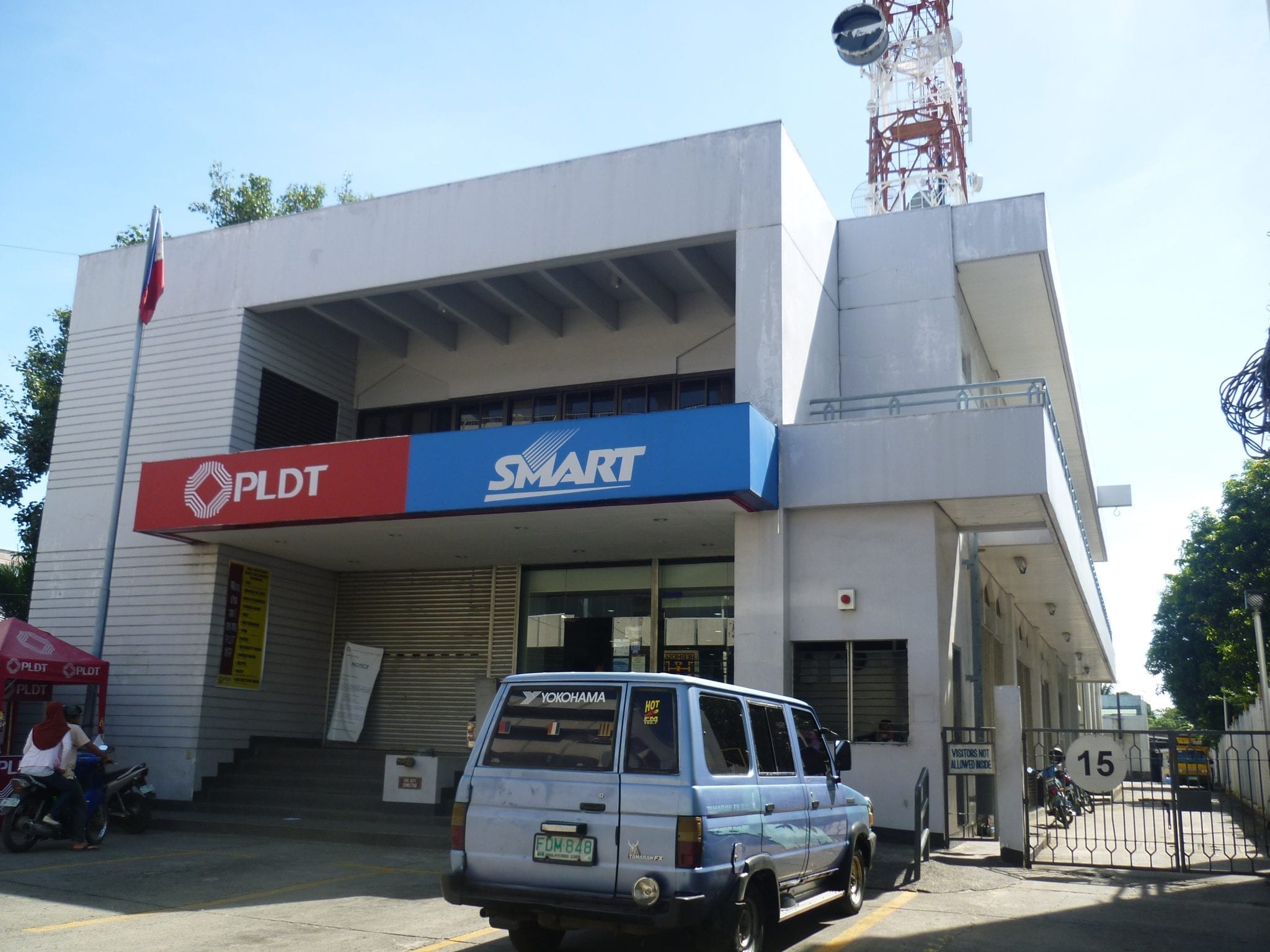
    PLDT announced Alfredo S. Panlilio (AI) will return to the Philippines telco as chief revenue officer of both PLDT and its mobile unit Smart Communications, starting July 1, 2019.

    Panlilio (pictured) currently serves as senior vice president of customer retail services group at the Manila Electric Company (Meralco).

    He first joined PLDT as SVP for the telco’s corporate business group in 1999 and was later tasked to head PLDT’s carrier business group before he joined Meralco in 2010.

    Panlilio will replace Ernesto R. Alberto (Eric), who is set to step down from his post as PLDT and Smart CRO, effective June 30.

    “We would like to thank Eric for his 16 long years of service and loyalty. Under his watch, PLDT Enterprise rose to become the leading force that it is in the market today,” said Manuel V. Pangilinan, chairman and chief executive officer of PLDT and Smart.

    Enea has tapped former Ericsson executive Jan Häglund as its new CEO.

    Häglund was chosen to lead the company late 2018 to succeed Anders Lidbeck, who becomes chairman of the board, Enea said in a statement.

    Haglund brings to the table 25 years of experience in the telecoms industry. Prior to joining Enea, he was head of Ericsson’s product portfolio and R&D for digital services.

    Anders Lidbeck, chairman of Enea said Häglund will help Enea strengthen and develop its position as a reference supplier and trusted partner.

    “[Häglund’s] wide-ranging experience across many disciplines at Ericsson will benefit Enea and our continued expansion,” he said.

  • HyalRoute to invest up to $2b in Philippines fiber project

    HyalRoute to invest up to $2b in Philippines fiber project

    Singapore-based shared fiber network provider HyalRoute has signed an agreement with the Philippines’ Department of ICT to invest up to $2 billion expanding to the market.

    The company’s subsidiary Philippine Fiber Optic Cable Network (PFCON) signed a memorandum of understanding with the department committing to deploy the network in various phases between 2019 and 2028.

    The DICT has in turn agreed to provide assistance in providing the required permits and licenses, and to closely coordinate with PFCON on the implementation of the project.

    HyalRoute was established with the goal of creating the first region-wide, independent shared fiber network platform in emerging Asia. The company currently provides domestic fiber solutions in Myanmar and Cambodia.

    DICT acting secretary Eliseo M. Rio Jr said the planned deployment will support the government’s own telecommunications ambitions.

    “There is a need for more fiber optic cables in this country, thus this partnership will greatly improve our telecommunication services. We can now have cable networks that anybody can use and this jives with our National Broadband Plan,” he said.

    The deployment will also support the DICT’s Free Public Wi-Fi initiative by allowing its expansion to unserved and underserved areas of the country, Rio added.

  • Globe Q1 profit grows 44%

    Globe Q1 profit grows 44%

    The Philippines’ Globe Telecom has reported a 44% year-on-year increase in net profit for the first three months of 2019 to 6.7 billion pesos ($129.1 million), partly as a result of strong data revenue growth.

    The company reported revenue for the quarter of 36 billion pesos, up 13% year-on-year. Growth was mainly fueled by increasing data usage across the operator’s service offerings.

    Mobile revenue grew 11% to 27 billion pesos, with mobile data revenues reaching 16.5 billion pesos, representing 61% of gross service revenues. Total mobile data traffic surged to 370 petabytes for the quarter.

    But mobile voice revenues fell 15% to 6.3 billion pesos, with SMS revenues down 22% to 4.2 billion pesos.

    Globe’s home broadband business reported 21% higher revenue of 5.2 billion pesos, with the company’s total subscriber base increasing 22% year-on-year to 1.7 million. Of these, 63% are fixed wireless subscribers. Enterprise data revenues grew 16% year-on-year to 2.7 billion pesos.

    Globe’s capex for the quarter reached 8.8 billion pesos, representing 24% of topline revenues.

    “As we continue to invest in our LTE network, we are also excited with the growth opportunities of our 5G commercial pilot launch in June this year,” Globe CEO Ernest Cu commented.

    “Through this launch, we will be able to offer our customers a whole new ecosystem of devices to enhance the way they experience data to the home. This is in line with our proven strategy of making our customers a priority, by providing them a superior digital and network experience, despite all the industry challenges that we face ahead.”