Tag: Phones

  • Google’s Gemini Vs Google Assistant: Exploring The Hotword Controversy On Pixel Phones

    Google’s Gemini Vs Google Assistant: Exploring The Hotword Controversy On Pixel Phones

    A loyal consumer recently expressed curiosity regarding Google’s decision to replace Google Assistant with Gemini, the new AI model, on Pixel phones. The user queried the need to continue using “Hey Google” as the activation hotword, despite the shift to Gemini. The question arises as even after replacing Google Assistant with Gemini, the hotword remains the same, causing some confusion among users.

    Exploring the “Hey Gemini” Hotword Debate

    The suggestion of a hotword change to “Hey Gemini” appears to be a reasonable request as it is more syllable-friendly in comparison to its predecessor. Even though it has more syllables (four) than “Hey Google” (three), users may find it easier to pronounce, eliminating the tongue-twister effect some experience with Google. This alteration could also minimize the cognitive dissonance created when activating Gemini but having to say “Hey Google.”

    Understanding the Current Assistant Activation

    For clarity, if you have set Gemini as your assistant on your Pixel, saying “Hey Google” will activate Gemini. Similarly, if you have the Google Assistant set, using the same hotword will activate Google Assistant. Switching between the two can be done through the Settings > Apps > Assistant pathway, followed by selecting your preferred digital assistant. Regardless of the choice made, the activation hotword remains as “Hey Google.”

    Alternate Activation Methods

    A potential solution to bypass the hotword confusion is the Quick Tap feature. This function allows users to activate their chosen assistant by double-tapping the back of the phone. To use this feature, one must navigate to Settings > System > Gestures > Quick Tap and activate the “Access your digital assistant” option. This way, users can avoid using the power button or saying “Hey Google” to activate their assistant.

    Disabling Power Button Activation

    If users find long-pressing the power button bothersome or confusing, this shortcut can be deactivated. This can be done through Settings > System > Gestures, with the Press & Hold power button toggled off. Users can then opt for a long press of the power button to open either the Power menu or the Digital assistant. The sensitivity of the long press can also be adjusted according to user preference.

    Impact of Google’s Shift to Gemini

    Regardless of the available activation techniques, the optimal way to access either Gemini or Google Assistant is no longer present on Pixel phones. Earlier models, such as the Pixel 2, featured an Active Edge function, which allowed users to squeeze the sides of their phone to activate Google Assistant. However, this feature was removed on later models, starting with the Pixel 5.

    The current debate emphasizes the need for Google to consider a hotword change for Gemini, perhaps to “Hey Gemini” or simply “Gemini.” As Google continues to substitute Google Assistant with Gemini on Android, this is likely to happen. Users are encouraged to make the switch to Gemini on their Pixel for a more seamless experience.

    Questions & Answers

    1. Why do users still have to say “Hey Google” to activate Gemini?
    This is due to Google not yet implementing a hotword change following the shift from Google Assistant to Gemini.

    2. What is the Quick Tap feature on Pixel phones?
    Quick Tap is a feature on Pixel phones that lets users double tap the back of their device to activate their digital assistant, bypassing the need to say the hotword.

    3. What was the Active Edge feature on previous Pixel models?
    The Active Edge feature allowed users to squeeze the sides of their Pixel phone to call up Google Assistant. However, this function was removed in later models, starting with the Pixel 5.

  • Revolution In Audio Broadcasting: Expanding Auracast’s Compatibility And Real-world Applications

    Revolution In Audio Broadcasting: Expanding Auracast’s Compatibility And Real-world Applications

    In March, we introduced our readers to a Bluetooth technology known as Auracast. This innovative feature, designed for Bluetooth Low Energy (LE), empowers a singular audio source, such as a phone, to transmit a high-quality audio stream to a limitless number of Bluetooth receivers in proximity. Instead of the traditional one-to-one Bluetooth connection (e.g., your smartphone to a pair of Bluetooth earbuds), Auracast transforms your device into a broadcasting station capable of delivering a one-to-many signal.

    Auracast Support for Hearing Aids

    Six months ago, Google initiated support for hearing aids using Auracast with the release of the Pixel 9 series. This support featured several preset settings tailored to assist those who have hearing problems. Recently, Google expanded this list to include Sony headphones among the hearing aids and earbuds compatible with Auracast. Other notable inclusions in this list are the JBL Tour One M3, the Samsung Galaxy Buds 3 Pro, and the Sennheiser Accentum True Wireless.

    Phones with Auracast Capability

    Among the smartphones equipped with the ability to utilise Auracast for audio broadcasting are the Google Pixel 8 and later models, the Samsung Galaxy S23, S24, and S25 series, and the Galaxy Z Fold 5, Z Fold 6, and Z Fold 7. Certain Xiaomi and Poco phones unavailable via U.S. carriers are also outfitted with Auracast support.

    Practical Applications of Auracast

    Auracast proves to be particularly useful in public places, such as airports and train stations, where public announcements are common. It also offers a solution for shared listening experiences, like when you want a nearby friend to hear a song you’re enjoying. Instead of sharing an earbud, a practice some might find unsanitary, Auracast lets you transmit the song directly to your friend’s headphones, earbuds, or even a compatible hearing aid.

    Users can also share their audio with members of a nearby group equipped with compatible Bluetooth devices. Simply scanning a QR code or tapping their phone using Google’s Fast Pair allows these group members to tune into the broadcast.

    At present, this feature is available only on certain phone models and Bluetooth-enabled audio devices.

    Questions & Answers

    What is Auracast?
    Auracast is a feature for Bluetooth Low Energy (LE) that allows a single audio source to broadcast a high-quality audio stream to an unlimited number of Bluetooth receivers nearby.

    Which phones are compatible with Auracast?
    Phones that are compatible with Auracast include the Google Pixel 8 and later models, the Samsung Galaxy S23, S24, and S25 series, and the Galaxy Z Fold 5, Z Fold 6, and Z Fold 7. Certain Xiaomi and Poco phones also support Auracast.

    Where could Auracast be useful?
    Auracast could be particularly useful in public places like airports and train stations, where public announcements are common. It’s also handy for shared listening experiences, allowing you to broadcast a song you’re listening to a friend’s headphones, earbuds, or even a compatible hearing aid.

  • Transforming Old Smartphones into Micro Data Centers: A Smart Solution for Cities and Oceans

    Transforming Old Smartphones into Micro Data Centers: A Smart Solution for Cities and Oceans

    In a groundbreaking initiative, researchers from the University of Tartu Institute of Computer Science have developed an innovative and sustainable approach to tackling electronic waste by transforming outdated smartphones into miniature data centers. This method not only provides an eco-friendly alternative but also reimagines the potential use of these often-discarded devices.

    A Surprising Data Solution to E-Waste

    With over 1.2 billion smartphones produced each year—most of which are tossed aside within just a few years—this new solution offers a cost-effective and practical alternative to both landfills and the energy-intensive processes of traditional recycling. By removing the original batteries and utilizing external power sources, the researchers have significantly reduced environmental risks while ensuring that the devices can operate continuously.

    Innovative Prototyping and Testing

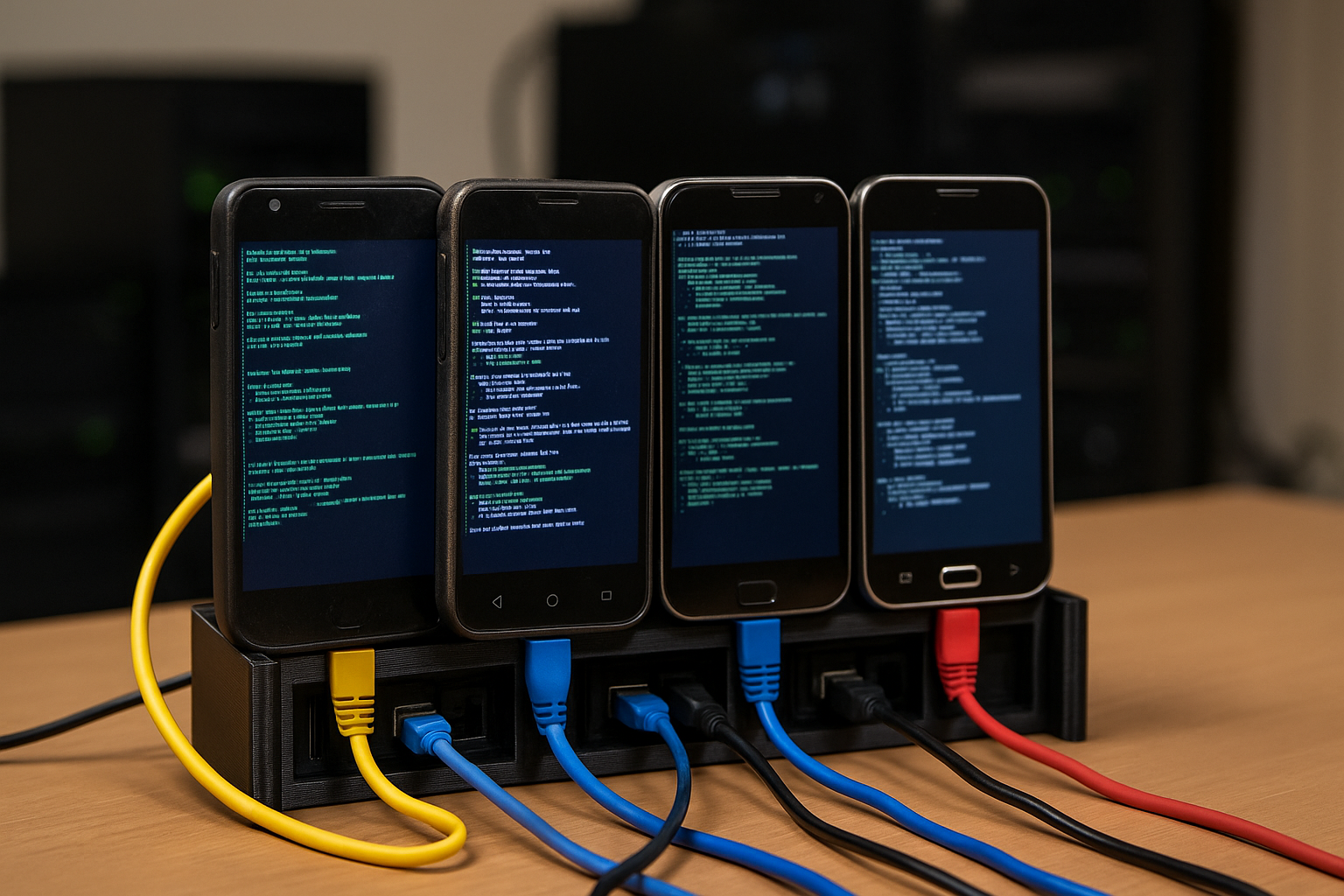
    The project features a prototype composed of four interconnected smartphones encased in 3D-printed housings. Remarkably, these devices have been tested in a variety of challenging conditions, including underwater scenarios, where they autonomously gathered and processed data on marine life. It’s a testament to the surprising resilience and adaptability of technology that many might consider obsolete.

    Affordable and Scalable for Future Cities

    Each repurposed smartphone comes at a modest cost of approximately EUR 8, presenting an affordable option for smart city infrastructures and environmental monitoring systems. This initiative not only facilitates a significant reduction in electronic waste but also emphasizes the immense potential of older devices in fostering sustainable, decentralized networks for data processing. Imagine a future where your old smartphone could help monitor river pollution or track wildlife in real-time—what a twist on the planned obsolescence narrative!

    Questions & Answers

    How does repurposing smartphones contribute to reducing electronic waste?
    Repurposing smartphones minimizes the volume of discarded electronics that typically end up in landfills, while also providing an eco-friendly alternative to energy-intensive recycling.

    What are the costs associated with transforming smartphones into data centers?
    The conversion of each smartphone into a miniature data center costs about EUR 8, making it an accessible option for various applications in smart city projects.

    What are some practical applications for these repurposed devices?
    These converted smartphones can be used for environmental monitoring, such as tracking marine life data or monitoring air quality, integrating seamlessly into modern smart city infrastructures.

  • Smartphone sales tumble in Vietnam

    Smartphone sales tumble in Vietnam

    Smartphone sales in Vietnam have plunged in the first two months of 2023 as tightened spending amid rising inflation prompts the sector’s first decline in years of recent growth.

    According to an industry report, less than 2.5 million smartphones were sold in Vietnam this January and February, down 30% year-on-year.

    “This year consumers have tightened their spending, even during the Tet holiday, which has been peak shopping season for years,” said Nguyen Lac Huy, a media representative at CellphoneS, referring to the Lunar New Year holiday which fell at the end of January this year.

    Industry insiders estimate that sales since the beginning of this year have dropped to levels not seen in at least two or three years. In recent years, growth over the same period has often been within the 5-15% range.

    This decline is in line with global trends.

    Smartphone sales worldwide in the last quarter of 2022 plunged 18.3% year-on-year, according to the International Data Corporation (IDC).

    It was the steepest decline in a quarter since 2013, IDC reported. Total smartphone sales in 2022 dropped by 11.3% from 2021.

    In Vietnam, the biggest drops were recorded in the middle and affordable segments. Last year, sales of smartphones under VND5 million dropped 60% from 2021.

    “Economic difficulties have had a large impact on the low-income population, including workers,” said Hong Quan, an industry observer.

    Tightened credit policies have also prompted some retail chains to cancel their zero-interest installment payment campaigns.

    The high-end segment is also struggling. The iPhone 14 Pro Max, one of the most expensive smartphones on the market, has seen prices plunge by 25% to VND27.4 million over the last five months.

    Phan Thi Kim Quyen, a media representative of retail chain Minh Tuan Mobile, said that this year Apple lowered its latest smartphone price earlier than in previous years (in which the drop has come as late as June).

    Other retail chain representatives have said they are now lowering prices because they misinterpreted market demand trends and imported more than they should have. iPhone prices in Vietnam are now among the lowest in the world.

    FPT Shop anticipates that there will be no growth in smartphone and computer sales this year, while other chains expect a recovery in demand by early next year, or the end of this year at the earliest.

    CellphoneS is cutting business hours and staff sizes at low-revenue shops. It is also seeking rent discounts from property owners.

  • Samsung executive says foldable phones are about to go mainstream

    Samsung executive says foldable phones are about to go mainstream

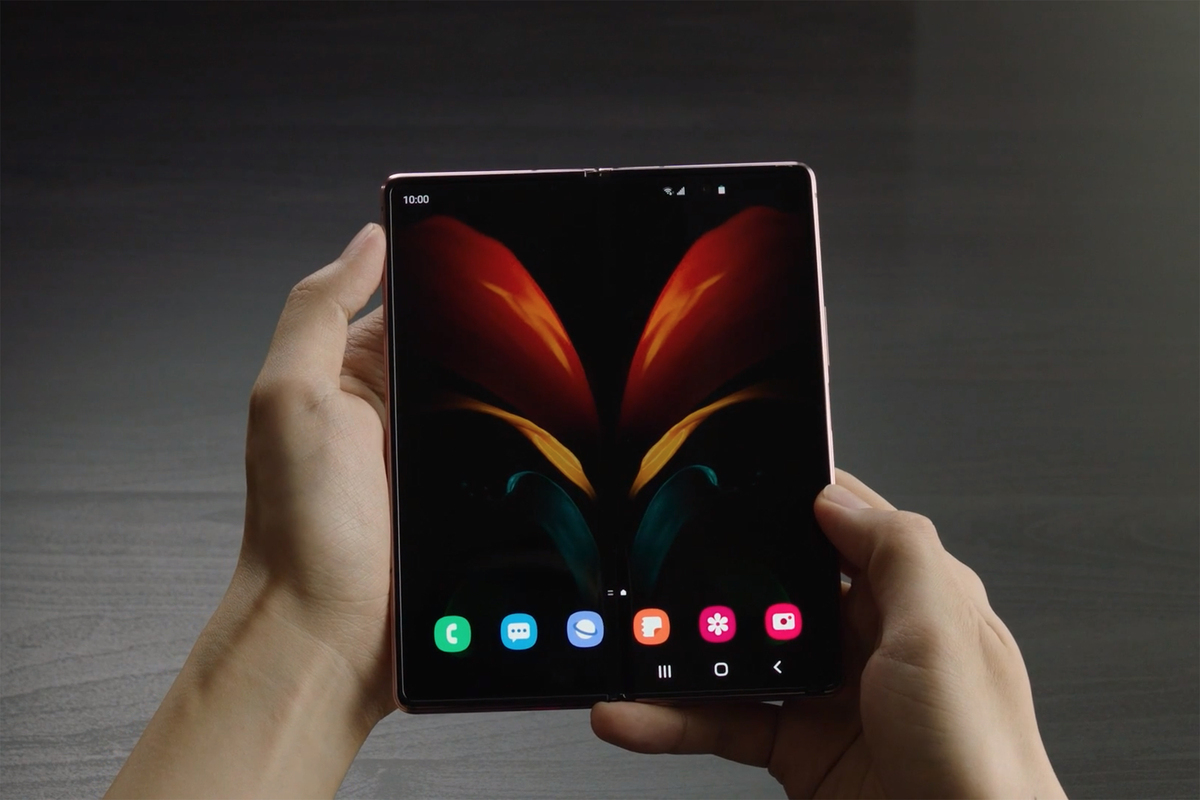
    Whether it’s because of the abrupt and satisfying way that you can hang up on someone who is being a pain in the ass, or because of the pocketability of such a device, consumers favor flip-style foldables like the Galaxy Z Flip 3 and the upcoming Galaxy Z Flip 4. In Roh’s blog post called “The Mainstream Moment for Foldable Smartphones Is Here,” the executive pointed out that last year 70% of Galaxy Z foldable phone buyers voted with their own money and picked the Galaxy Z Flip while the remaining 30% chose the Galaxy Z Fold.
    Of course, it did help that the Galaxy Z Flip 3 was priced at $999 and up, a nice-sized discount from the $1,380 price for the basic version of its predecessor. Samsung might not get as aggressive when pricing the Galaxy Z Flip 4 although a smaller decline to $899 is possible.

    While the Galaxy Z Flip can open from a device that fits comfortably in your pocket to become a tall and thin 6.7-inch handset. Roh writes that “Flip users love owning a device built for self-expression, whether choosing bold color options for their device or taking pictures in a new way with Flex mode.” He says that Galaxy Z Fold users also have their reasons to buy that model. “Fold users love the multitasking capability of a screen that doubles in size, so they can be more efficient and get things done faster,” Roh said.

    With the next Unpacked event taking place on August 10th, the Samsung executive states that the thing to watch is not what the latest technology can do. It is all about what you can do with the latest technology. He adds that Samsung customers are the muse that the company draws from to develop innovative new ideas for the company’s foldable handsets.
    Roh says, “I can’t wait to show you the potential of our new Samsung Galaxy foldables as the ultimate tool for both productivity and self-expression. Now, you can do more than you ever thought possible, all at once, on one device.”

    It seems that the head of Samsung’s Mobile Experience Business is happy to spread the credit for the success of Samsung’s foldable phones. Roh even called out Google and Microsoft as “industry leaders that are helping to expand the experiences that are now being made possible throughout the foldable ecosystem.”

    Samsung’s goal is to take the Galaxy Z Flip 4 closer to being a mainstream phone, something that seems much more possible with the Galaxy Z Flip 4 than the Galaxy Z Fold 4. Yeah, some of it is the pricing which is why the manufacturer is reportedly looking at building another line of foldable Flip and Fold handsets for its budget-priced Galaxy A line. But based on last year’s sales, the flip build is overwhelmingly the favorite foldable among consumers.
    Will there be a day when foldable smartphones dominate the landscape? It’s hard to see how until the most influential smartphone brand, the Apple iPhone, has its own foldable device. However, even Apple won’t be able to ignore the trend if foldables continue to be bought up by consumers. Last year 10 million foldable phones were shipped, up 300% year-over-year. Numbers like that cannot be ignored for long.
    As Roh writes in his post, “We are reaching the moment where these foldable devices are becoming widespread and staking a bigger claim in the overall smartphone market.” Consumers, keep your eyes on this area of the industry to find the fastest growing sector of the smartphone industry.
  • Apple looking to further diversify chip suppliers, reportedly finding new partner for the iPhone 14 Pro

    Apple looking to further diversify chip suppliers, reportedly finding new partner for the iPhone 14 Pro

    Apple is gearing up for the launch of the iPhone 14 series (which is inching ever so closely as we approach the fall), and it now seems Cupertino is set on not allowing any supply chain shortages to create issues. Reputable industry insider Ming-Chi Kuo now reports that Apple is looking to further expand its suppliers for the iPhone 14 series and has now added a new partner.

    According to Kuo, SG Micro (headquartered in China) has now passed quality certification for chips for the higher-end iPhone 14 models (meaning the iPhone 14 Pro and Pro Max). The company is likely to take orders for PMICs (power management integrated circuitry – basically a chip to manage power) in the second half of this year for the upcoming iPhones.

    This is the first time that said company would supply components for higher-end iPhones. According to the industry insider, this partnership will continue in the future, so that Apple can avoid future supply chain risks.
    Recently, Kuo said that some iPhone 14 display panel suppliers, as well as memory suppliers, have had supply issues; however, he doesn’t believe this will make a big impact on mass production. It seems that, at least according to Kuo, Apple is on track with the iPhone 14 production.
    As a quick recap, this year we expect there to be a more significant gap between the non-Pro iPhone models and the Pro versions. The iPhone 14 Pro and the iPhone 14 Pro Max are expected to be the only models to come with Apple’s latest processor (the A16), while the non-Pro variants are said to come with this year’s iPhone 13 chip.

    On top of that, the Pro iPhone 14 models will come with a new design for the Face ID sensors and the selfie camera, getting rid of the notch which will remain for the non-Pro iPhone 14 and iPhone 14 Max. We also expect the Pros to come equipped with an always-on display.

    The four phones are to be unveiled sometime in the fall, probably September.

  • Honor introduces two new 5G phones, the X30 and the Play 30 Plus

    Honor introduces two new 5G phones, the X30 and the Play 30 Plus

    Continuing to celebrate its separation from Huawei, which allows it to install the Google version of Android on its phones, Honor today unveiled the X30 handset. The device sports a 6.81-inch LCD display with a resolution of 1080 x 2388, and thin side bezels that weigh in at 1.05mm. The screen refreshes 120 times each second for buttery smooth scrolling, enhanced animations, and more.

    Under the hood (another area where Honor is no longer restricted thanks to Huawei’s $15 billion sale of its former sub-brand) you’ll find a 5G Snapdragon 695 SoC built on the 6nm process node by TSMC. Compared to the MediaTek Dimensity 900 that powered the X20, the chip powering the new phone will deliver CPU and GPU performances 15% and 30% higher, respectively.

    On the back, the camera array includes a 48MP primary camera, a 2MP macro camera for extreme close-ups, and a 2MP depth sensor. There is a small punch-hole in front for the 16MP selfie snapper.

    Keeping the lights on is a 4800mAh battery that charges at 66W. At that rate, you might be able to juice up your phone to 80% in only 30 minutes. Memory ranges from 6GB to 12GB with storage options of 128GB or 256GB. Honor’s Magic UI 5.0 is found on top of Android 11 and the X30 will be available in silver and black (Las Vegas Raiders’ colors), gold and blue.

    The Honor Magic X30 is priced at CNY1,499 (equivalent to $235) for the base 6GB RAM/128GB model and rises to CNY 2,299 ($361) for the 12GB RAM/256GB variant. The phone goes on sale in China on Christmas Eve and Honor has yet to mention anything about a global version of the device. While the X20 had a limited release, Honor CEO Geroge Zhao has hinted at wider distribution of the X30.

    The executive said, “Through both online and offline channels, we have been able to expand our offerings to even more consumers,” he said. “We are grateful for the trust of our retail and carrier partners around the world and look forward to introducing more products together in 2022.”

    Also introduced today was the Honor Play 30 Plus. A less ambitious phone than the X30 is, the Play 30 Plus carries a 6.7-inch LCD screen that refreshes 90 times each second. It is equipped with MediaTek’s Dimensity 700 chipset and does support 5G. The phone comes with 4GB-8GB of memory and 128GB of storage. On the back is a 13MP camera with a 2MP depth sensor. In the front is a teardrop notch with a selfie camera that weighs in at 5MP.

    A 5000mAh battery is inside the handset although charging is no faster than 22.5W. The color options are the same as the four available for the X30 (silver, black, gold, and blue), and the software (Magic UI 5.0 on top of Android 11). The model with 4GB of memory and 128GB of storage is priced at CNY 1,099 (equivalent to $173). The version with 8GB of memory and 1238GB of storage trim and maxes out at 8GB RAM and 128GB storage which will set you back CNY1,499 ($235).

    Honor is also celebrating its freedom by announcing that it plans on becoming an “iconic global brand.” In a release, the company said, “HONOR spent the past year developing strategic collaborations with its global supply chain partners and established over 30 partnerships with leading suppliers including AMD, Intel, MediaTek, Microsoft and Qualcomm.”

    Honor CEO Zhao said, “Thanks to the support of our friends and partners over the past year, HONOR has been able to deliver on our promise to help consumers go beyond as well as expand our brand to provide both premium and accessible technology to a wider range of users. I am so proud of the industry breakthroughs we have introduced as a result of the dedication and passion of my colleagues and collaborations with our leading global chain partners.

  • Samsung wants to double its foldable phone shipments in 2022

    Samsung wants to double its foldable phone shipments in 2022

    It looks like Korean manufacturer Samsung is very serious and confident about the future of its foldable smartphone lineup. According to analyst firm UBI Research the giant manufacturer wants to double its foldable OLED panel production next year.

    Currently, Samsung is said to produce 8.1 million panels in 2021. This should translate into about 8 million foldable phones shipped. The yield rate of assembly lines is reported to be about 80 to 90%, which could result in a lower number.

    Doubling foldable OLED displays’ production to 18 million should translate into about 14 to 16 million foldable phones produced next year. A subsidiary of Samsung Display called Dowoo Insys is the company processing the Ultra-Thin Glass cover needed for the Galaxy Z Flip and Z Fold devices which is supplied by SCHOTT Germany. It is reported that Samsung is going to set up more production lines in order to double the manufacturing capacity. UBI Research also says foldable panels shipments could reach 49 million units in 2025.

    The increased production of foldable panels will also allow Samsung Display to sell them to other phone manufacturers. Chinese manufacturers like Xiaomi and Vivo are said to be looking to get the Samsung panels for their own foldable devices. Rumors about Google and Apple looking into adding a foldable phone to their lineups are also circulating, with Samsung being the obvious choice for a display supplier.

    This year the Korean phone manufacturer was very aggressive as far as its foldable strategy is concerned. Instead of releasing a successor to the 2020 Galaxy Note, it opted for a big release of new foldable phones.

    In August Samsung revealed the Galaxy Z Fold 3 and Galaxy Z Flip 3. Both phones offered significant improvements in their foldable display technology and more attractive pricing. The Galaxy Z Fold 3 is praised for its versatility and S Pen support, while the Galaxy Z Flip 3 is liked for its looks and pocketable size.

    It is unclear whether Samsung will expand its foldable phone lineup in 2022. An even more affordable folding phone for the masses might be on the horizon. The company is already the leader in this category of devices and such a move could only expand its lead even further. It is also a leader in manufacturing with 91% of all foldable OLEDs in 2021 being made by Samsung Display.

  • Woolworths to recycle batteries, mobile phones

    Woolworths to recycle batteries, mobile phones

    Supermarket Woolworths is further hastening its consumer-facing sustainable initiatives by announcing a battery recycling initiative, with collection units to be placed in every Woolworths store around the country.

    The units will accept used batteries, as well as mobile phones, in an effort to bump up Australia’s rate of battery recycling – which currently sits at around 10 per cent, lagging behind other developed nations.

    “We’re working towards a better tomorrow by reducing our own environmental footprint, while also making it easier for our customers to do the same,” said Woolies’ head of sustainability Adrian Cullen.

    “By offering customers a convenient place to drop off batteries and phones as part of their regular weekly shop, not only can we help prevent batteries going to landfill, but also reduce at home stockpiles which can be a safety risk.”

    The program is operated in partnership with battery recycler Ecobatt, which will collect and process the batteries and phones. It also comes as the Federal Government produced additional funding for the Battery Stewardship Council, of which Woolies is a member, to support schemes such as this.

    “Convenience is often one of the key elements to changing consumer behaviour, so it’s wonderful to see Woolworths providing their customers drop off points for used batteries,” said Federal Minister for the Environment Sussan Ley.

    Used batteries can often leak harmful chemicals into their surroundings, and can be recycled to extract useful metals such as copper, aluminum and steel.

  • Huawei founder and CEO says Apple makes the best 5G phones

    Huawei founder and CEO says Apple makes the best 5G phones

    Huawei is not the company it was a couple of years ago when it was on its way to becoming the world’s largest smartphone manufacturer. Restrictions placed on the firm by the U.S. forced Huawei to sell its Honor sub-brand in order to get Honor out from under the thumb of the U.S. The manufacturer that could have been number one this year is more likely to be number seven by the end of the year.

    Huawei is aware that in one major regard, it is much closer to being like Apple than it is to be like other Android manufacturers in its class such as Samsung and arguably Google. Like Apple, Huawei has more control over both the hardware and software used on its phones. The head of Huawei’s U.K. consumer business told Forbes last year that “we are one of only two companies globally that can have this hardware and software solution for our own ecosystem… Only Huawei and Apple can do this—it’s our long-term strategy.”

    A couple of years ago, Huawei founder and CEO Ren Zhengfei admitted that he uses an iPhone and even buys them for his family. Ren said in 2019, “iPhone has a good ecosystem and when my family are abroad, I still buy them iPhones, so one can’t narrowly think the love for Huawei should mean loving Huawei phones.” That same year, the executive said,”Apple is the world’s leading company… Apple is my teacher; it is advancing in front of us.” When Ren’s daughter, Huawei CFO Meng Wanzhou, was arrested in 2018 under a U.S. warrant for fraud and conspiracy to commit fraud, she had in her possession a MacBook, an iPad, and an iPhone.

    Zhengfei says that the 5G iPhone 12 series features the best 5G enabled handsets currently available. He calls them “the world’s best” 5G phones and has talked up the quality of the technology found in the 2020 iPhone lineup. He has also used Apple’s 5G iPhone models as a way to promote the quality of Huawei’s 5G networking equipment; Huawei remains the world’s largest supplier of networking equipment. “We support the progress made by Apple’s iPhone 12,” Ren said, pointing out that the device “has been able to achieve download speeds of 1.82 Gbps, making it the best in the world… We helped build the best 5G networks in many cities around the world: Berlin, Munich, Madrid, Zurich, Geneva, Amsterdam, Vienna, Barcelona, Seoul, Bangkok, Hong Kong, Riyadh… Our networks in Europe top global network performance tests.” As the company started just last week, “Huawei has undertaken hundreds of 5G networks worldwide. According to the results of 5G network experience test in global major cities conducted by many third-party organizations around the world, in cities such as Seoul, Amsterdam, Madrid, Zurich, Hong Kong, and Riyadh, Huawei’s contracted operators ranked number one in 5G network experience.”

    Ren also complimented Apple’s dominance of the high-end premium phone sector and said that Huawei’s networking equipment is good for iPhone users. Ren commented that “Many high-end device users in Europe use iPhones, and the way those phones operate on our networks in Europe actually is a sign we are also doing well. The fact high-end users can use the iPhone 12 to its fullest effect on our 5G networks in Europe is a testament to the quality of our networks. This is helping balance opinions towards Huawei in Europe.” Zhengfei pointed out last year that “there are only two big players with ecosystems,” he said, “Apple and Google. It will not be a problem to have a third one. In any industry, three top players is reasonable.” Huawei has since added its own ecosystem and we could see the company’s own HarmonyOS debut on a smartphone with the upcoming P50 line.

  • Phones continue to lead exports

    Phones continue to lead exports

    Exports of phones and phone parts were worth $51.18 billion last year, a whopping 18 percent of Vietnam’s total exports, according to the General Statistics Office.

    The phones were exported to over 50 countries and territories, with China being the largest market, accounting for almost a quarter.

    The second-largest market was the EU with 19 percent, followed by the U.S., South Korea, and the UAE.

    But for the first time in 10 years, phone and component exports fell, by 0.4 percent.

    Samsung was the biggest contributor to the exports. Its smartphone manufacturing factories in the northern provinces of Bac Ninh and Thai Nguyen are its two largest in the world and are also its largest home electronics factory in Southeast Asia.

    About 60 percent of all Samsung smartphones are produced in Vietnam.

  • Cars, phones deliver one-fifth of Vingroup revenues

    Cars, phones deliver one-fifth of Vingroup revenues

    Automobiles and smartphones accounted for 19 percent of private conglomerate Vingroup’s revenues in the last quarter of 2020.

    This marked a 40 percent year-on-year increase to VND6.9 trillion ($299.45 million).

    The largest private conglomerate in Vietnam sold 31,500 cars last year, with its VinFast sedan and SUV models among the bestsellers in their respective segments.

    The group’s VinSmart phones were also among the bestsellers in Q4, 2020.

    The company saw revenues from real estate in the quarter rising 47 percent year-on-year to over VND22.2 trillion after handing over three major Vinhomes projects.

    Revenue from tourism and entertainment, however, fell 40 percent to VND1 trillion because of the Covid-19 pandemic.

    For the whole year, Vingroup’s pre-tax profit fell 11 percent to VND13.96 trillion, while revenue fell 15 percent to VND110.46 trillion.

  • Huawei reportedly cuts shipments of its phones

    Huawei reportedly cuts shipments of its phones

    After being banned from accessing its U.S. supply chain, Huawei decided in May to stop taking orders for its low and mid-range handsets that aren’t powered by the company’s Kirin chipsets. Huawei has reportedly stockpiled a year’s worth of chips and components in anticipation of such a ban, it is now cutting shipments of its higher-end handsets. The report states that earlier this month, the company started cutting orders for the Huawei P30 line, which includes the P30 Pro. The latter is the manufacturer’s most premium handset at the moment. While U.S. carriers can’t stock Huawei’s phones,  earlier this year retailer B&H offered U.S. consumers the Latin American version of the P30, P30 Pro and P30 Lite adding a one-year U.S. warranty. However, since the U.S. ban, B&H has stopped selling these models.

    Today’s report notes that Huawei has also started cutting orders for the upcoming Mate 30 series. Not expected out until October, the line includes the Huawei Mate 30 Pro; this model would normally be considered Huawei’s most technologically advanced phone of the year. With the ban, it isn’t clear what new features will be included in the device. Currently, expectations call for the Mate 30 Pro to sport a 6.7-inch AMOLED display with a QHD+ resolution. The device could be equipped with a pair of chips from Huawei’s HiSilicon unit, namely the Kirin 985 SoC and the Balong 5000 5G modem chip.

    Barring a sudden removal from the U.S. Entity List, Huawei’s new phones will most likely ship with its own HongmengOS (aka ArkOS) pre-installed. Huawei has its own app distribution platform called App Gallery, but it remains to be seen how much developer support ArkOS will get.

    Internally, Huawei expects its international phone shipments to drop by 40% to 60% this year. Of the 206 million units it delivered in 2018, about half were shipped out of China; that means that the company believes it will see total shipments drop by as many as 60 million handsets this year. Just last quarter, the manufacturer shipped 59 million smartphones worldwide, up over 50% year-over-year. At that pace, Huawei was on track to deliver just under 240 million units for 2019. Now the company is looking at a figure in the neighborhood of 140 million to 160 million smartphones. While Huawei planned on becoming the top smartphone manufacturer in the world next year, that goal will have to be scrapped for now.

    Once Huawei uses up the inventory of Kirin chips it does have, things are going to get tough for the company. With chip design firm ARM Holdings cutting ties with Huawei (the company is headquartered in the U.K. but uses some American technology), the company might have to turn to an open source replacement. And the software from U.S. companies that the manufacturer uses to design its chips will also have to be replaced. While Huawei apparently did have the foresight to develop its own operating system and stockpile chips and key parts, it appears that the company might not have alternate plans for everything it needs to be self-sufficient.

    For those coming in late, Huawei ended up in this predicament because of U.S. lawmakers’ fears that the company’s products will spy on American corporations and consumers. Under Chinese law, the communist government can demand that Huawei gather intelligence on its behalf. Huawei has repeatedly denied that its phones and networking equipment contain any sort of backdoors; its chairman, Liang Hua, said back in February that if the Chinese government asks him to spy, he will defy them. The executive added last month that he would sign a no-spy document with any country. Ironically, that took place on the same day that the U.S. first announced Huawei’s placement on the Entity List.

    While U.S. President Donald Trump admitted in May that Huawei was placed on the list for security reasons, he added that “it’s possible that Huawei even would be included in some kind of a trade deal. If we made a deal, I could imagine Huawei being possibly included in some form, some part of a trade deal. It would look very good for us.” At this point, Huawei brass is probably hoping that the U.S. uses the company as a bargaining chip to obtain better terms from China in a new trade agreement. After all, the president was able to save ZTE from its U.S. export ban and it too is considered a national security threat.

  • Android Q may have a life-saving feature exclusive to Pixel phones

    Android Q may have a life-saving feature exclusive to Pixel phones

    At Google I/O this year, the company behind Android revealed many new and exciting things coming to the next iteration of the world’s most popular mobile OS. These include native support for foldable devices, system-wide Dark Mode, Smart Replies and Suggestions, and a handful of other features.

    But aside from those, savvy developers have uncovered something else that’s coming with Android Q, and it wasn’t mentioned at this year’s I/O. The folks over at XDA have found lines of code in the Android Q Beta 3, referencing a possible automatic car crash detection feature. The beta has an app called Safety Hub, and strings of code within the app suggest that automatic car crash detection is coming to Android Q, and that it may also be a Pixel-exclusive feature.

    Google is no stranger to introducing Pixel-exclusive features, though they’ve been more on the “bonus” side of things, so to speak. Two prominent examples are the excellent Night Sight mode, baked into the Google camera app, and unlimited Google Photos storage for original quality photo backups, available only to Pixel phone owners. However, more essential features have always managed to make their way into Android skins by other OEMs, so the upcoming car crash detection may start as a Pixel-exclusive thing and become more widely available thereafter.

    It’s currently unclear how Android Q will detect car crashes, though it’s likely going to happen by gathering data from various sensors on the phone. For example, Google could use GPS data to determine whether you’re driving, use the accelerometer to detect when a violent stop occurs, and even rely on the microphone to pick up the sound of the crash. After an accident has been detected, the Safety Hub app could automatically alert emergency services and/or select contacts.

    We have our fingers crossed that future Android Q betas will reveal more about this potentially life-saving feature, and that it won’t be Pixel-exclusive forever.

  • Mobile phone sales drive wireless power market

    Mobile phone sales drive wireless power market

    It used to be that wireless charging was a nice-to-have but not got-to-have feature. These days, however, high-end smartphones have started to pick up on the interest and including this as standard feature.

    So when IHS Markit made its forecasts of the wireless power market, the analyst made it clear that mobile phones were an important factor driving the growth in this segment in 2018, comprising 71% of all receiver units shipped.

    The latest IHS Markit Wireless Power Market Tracker report put annual unit shipments of wirelessly charged mobile phones up by nearly 40% in 2018, reaching 300 million units, mainly driven by flagship models. The growth is expected to build in the mid-range smartphone category, as mobile phone companies plan to extend the adoption of wireless charging in that price band.

    Fortified by the growth in the sales of wirelessly charged mobile phones, global shipments of wireless power receivers and transmitters across all applications and product segments grew by 37% in 2018 to 600 million units, compared to the previous year. Global shipments will continue to grow to approximately 2.1 billion units in 2023, according to HIS Markit.

    “Wireless power technology continues to evolve rapidly, with reach expanding beyond smartphones to wider applications and product segments,” said Dinesh Kithany, wireless power and power supplies analyst, IHS Markit. “Wireless power technology is also undergoing further sub-segmentation, with regard to wider power levels and distance range.”

    He noted that wireless charging feature is used as a market differentiator to promote flagship models. “For example, Huawei and Samsung both included some cool innovations in their smartphones, with features like reverse-charging, wireless power-sharing, multi-device charging and the introduction of NFC wireless charging,” Kithany said.

    Opportunity outside mobile

    Beyond the mobile ecosystem – which also includes smartwatches, wireless earphones, and wearables – wireless charging is expanding into computing devices, smart home devices, IoT sensors, medical devices, small home appliances, power tools, robots and drones, augmented reality and virtual reality devices, gaming applications, industrial sector, 5G applications, electric vehicles and public infrastructure.

    “This wireless charging expansion creates opportunities for emerging wireless power solutions such as high-frequency-based resonant and radio-frequency, infrared and other uncoupled solutions to gain entry into the overall wireless power market,” Kithany said.

    According to IHS Markit, the smart home devices market is an especially promising segment for wireless power, because of the opportunities it presents to manufacturers and the benefits that accrue to consumers. Led by smart speakers, the wireless charging enabled smart home market is expected to grow to more than 100 million units in 2028.

    “Smart thermostats, air-control devices, electronic door locks, garage-door systems, intruder alarms, video cameras, video doorbells and other smart home devices will follow,” Kithany said. “The IoT sensors market alone is expected to add more than one billion wireless charging devices to this market in the next five years.”