Tag: Pomelo

  • Unlocking New Markets: Vietnam Secures Green Light for Pomelo and Lemon Exports to China

    Unlocking New Markets: Vietnam Secures Green Light for Pomelo and Lemon Exports to China

    A recent agreement has paved the way for Vietnamese pomelos and lemons to be exported to China. This phytosanitary requirements protocol was formalized between Vietnam’s Ministry of Agriculture and Environment and the General Administration of Customs of China. The agreement unfolded during a state visit to China by To Lam, who is the Party General Secretary and State President of Vietnam.

    Phytosanitary Requirements and Protocols

    The newly agreed protocol stipulates that all areas cultivating and facilities packaging pomelos and lemons for export to China have to be registered with the Ministry of Agriculture. Furthermore, they must gain approval from both the Ministry and China’s customs. These facilities are mandated to enforce stringent pest control measures to ensure the quality of the produce.

    The cultivation areas are required to adhere to Good Agricultural Practices (GAP) and Integrated Pest Management (IPM) requirements. These requirements demand fruit to be bagged at least 60 days prior to harvest and the use of traps to combat fruit flies.

    The packaging facilities must maintain sanitary conditions and appropriate functional zoning. Fruits are required to be sorted, classified, and cleaned to remove any diseased or pest-infected fruits, as well as any plant debris and soil residues.

    The Impact of the Agreement

    The Ministry has cited this agreement as the result of structured technical negotiations between plant protection and quarantine agencies of both nations. These discussions have been ongoing since 2019.

    The agreement signifies an important shift towards transparent, standards-compliant official export channels and a more sophisticated bilateral cooperation framework, amidst growing Vietnam–China agricultural trade.

    China continues to be a crucial market with strong demand and potential for Vietnamese fruit exports. Building on the success of other exports, pomelos and lemons are expected to increase their market share, consolidate their position, and boost overall export growth.

    The ministry has expressed its commitment to working closely with localities, associations, businesses, and producers to effectively put the protocol into practice. This will include guidelines on regulations, standardizing cultivation areas and packaging facilities, and strengthening inspections to guarantee full compliance with Chinese requirements.

    Vietnam’s Agricultural Advantage

    Pomelos and lemons are among Vietnam’s most successful agricultural products. Vietnam currently cultivates pomelos on approximately 106,000 hectares, positioning itself as a major global producer of the fruit.

    Questions & Answers

    What does the new protocol between Vietnam and China involve?
    The protocol involves the export of Vietnamese pomelos and lemons to China. It stipulates that all cultivation areas and packaging facilities for these fruits must be registered with the Ministry of Agriculture and approved by both the Ministry and China’s customs.

    What requirements must the Vietnamese farms and packaging facilities meet under the new protocol?
    The farms must adhere to Good Agricultural Practices (GAP) and Integrated Pest Management (IPM) requirements, which includes bagging fruit 60 days before harvest and using traps for fruit flies. The packaging facilities must maintain cleanliness and appropriate functional zoning.

    How will this protocol impact the Vietnam-China agricultural trade?
    The protocol signifies a shift towards transparent, standards-compliant official export channels and provides a more sophisticated bilateral cooperation framework. It is expected to boost the market share of Vietnamese pomelos and lemons in China and strengthen the overall growth of fruit exports from Vietnam to China.

  • “Pomelo’s Fashion Revolution: Partnering with FJ Benjamin for Malaysian Market Domination”

    “Pomelo’s Fashion Revolution: Partnering with FJ Benjamin for Malaysian Market Domination”

    The Thailand-based fashion label Pomelo recently entered into an exclusive distribution agreement with FJ Benjamin for operations in Malaysia. The arrangement, set to last an initial five years with an option for a five-year extension, provides FJ Benjamin with the authority to oversee the brand’s operations and store management within the country.

    Online Launch and Physical Stores

    Pomelo plans to make its initial foray into the Malaysian market via e-commerce marketplaces before the year’s end. This digital debut will be followed by the opening of physical stores within major shopping centres in Kuala Lumpur in the early part of next year.

    Collaborative Effort

    David Jou, CEO of Pomelo, highlighted the collaboration’s potential, combining Pomelo’s digital-first fashion and technology-driven retail model with FJ Benjamin’s extensive expertise in brand development and retail operations. He sees this partnership as an opportunity to reshape the fashion retail experience not just in Malaysia, but beyond its borders as well.

    Expansion of Pomelo

    Earlier this year, Pomelo expanded its reach by entering an exclusive distribution agreement with the Kolao Group, marking its first store opening in Laos. In addition to its home base of Thailand, Pomelo has a presence in Singapore, Indonesia, Cambodia, and the Philippines, and plans are underway for a future debut in Vietnam.

    Pomelo, founded in 2013, has carved out a niche for itself as a leading destination offering a curated selection of women’s wear that includes both emerging local designers and international brands. The company had projected an initial public offering (IPO) in 2022, but this plan has not yet been actualised.

    Questions & Answers

    What are Pomelo’s plans for entering the Malaysian market?
    Pomelo plans to launch online on e-commerce platforms before the end of this year, followed by the opening of physical stores within key shopping centres in Kuala Lumpur in the early part of next year.

    What does the partnership with FJ Benjamin entail?
    The partnership gives FJ Benjamin the authority to manage Pomelo’s operations and stores in Malaysia for an initial five-year term, with an option to extend for another five years.

    Where else does Pomelo operate?
    In addition to Thailand, Pomelo operates in Singapore, Indonesia, Cambodia, the Philippines, and Laos, with plans to debut in Vietnam in the future.

  • Thai fashion brand Pomelo opens in Cambodia

    Thai fashion brand Pomelo opens in Cambodia

    Thai omnichannel fashion retailer Pomelo will launch in Cambodia in the first quarter of next year with physical stores and an e-commerce platform.

    The company has signed a partnership agreement with local distributor Zando Group to make its Cambodian debut and the launch is also part of a strategy to expand further within Southeast Asia.

    Pomelo, founded in 2013 by David Jou and Casey Liang, has developed from an internet-only fashion firm to a major Southeast Asian omnichannel retailer, with physical stores in Thailand, Singapore, Malaysia, and Indonesia, as well as online shipping to 50 countries.

    The brand opened its first store in Thailand in 2018 with the Tap, Try, Buy concept, which allows customers to order an infinite number of things online without paying anything upfront.

    Due to its growing economy, rising middle class, and increased demand for high-quality products, Cambodia’s retail sector has attracted major foreign labels in recent years.

    MLB, a South Korean streetwear brand, also opened its first physical store in Cambodia earlier this year, in collaboration with Vietnamese distributor Maison Retail Management International (MRMI).

  • Pomelo exports soar as New Zealand, US start buying

    Pomelo exports soar as New Zealand, US start buying

    Pomelo exports have surged this year after shipments to the U.S. and New Zealand began, with the figure for the first eight months standing at US$29.6 million. It represented a 144% year-on-year increase.

    Dang Phuc Nguyen, general secretary of the Fruit and Vegetable Association, said pomelos, previously exported only to the EU and the Middle East, have been shipped to the U.S. and New Zealand since the end of 2022.

    With the quality of Vietnam’s green-skin pomelo improving rapidly, it is becoming popular in many countries, he said.

    Nguyen Dinh Tung, general director of Vina T&T Export Import Service Trading Company, which accounts for 60% of all fruits and vegetables exported to the U.S., said Vietnamese pomelos face competition from China and Mexico, but are gaining a stronger foothold in the market.

    In the U.S. market, Vietnamese pomelo is sold at $9 per kilogram and Chinese varieties at only $2, but the former has won over more and more consumers due to its quality, he said.

    “This is the first year my company exports pomelos to the U.S., but volumes have increased sharply each quarter. In the first three months of this year we exported four 40-foot containers a month, now we export 16.”

    Fresh pomelo is the seventh fruit after mango, longan, lychee, dragon fruit, rambutan, and star apple that Vietnam exports to the U.S.

    The Plant Protection Department said pomelo is exported to 12 countries and territories.

    Vietnam has 105,400 hectares under the fruit and an annual output of 905,000 tons.

    Most of the green-skin pomelo is grown in the Mekong Delta.

  • First Vietnamese pomelo exported to US

    First Vietnamese pomelo exported to US

    Pomelo became the seventh Vietnamese fruit to be officially exported to the U.S. Monday with the first 100 tons being transported from the southern province of Ben Tre.

    The batch is split into six containers. Four of them will be exported by air and two by sea.

    Deputy Minister of Agriculture and Rural Development Tran Thanh Nam said at the announcement ceremony Monday that the U.S. is one of the most difficult markets in the world but has large demand for fresh fruits.

    He added that Americans consume about 12 million tons of fruits annually, with 30% of them imported.

    The exported pomelo must come from the 36 growing areas in Vietnam that have been registered with U.S. authorities.

    They span 752 hectares, or 0.71% of Vietnam’s total pomelo growing area.

    Many measures must be strictly taken to ensure the fruits are clean and healthy.

    Ben Tre Province Chairman Tran Ngoc Tam said that of the seven Vietnamese fruits that are exported to the U.S., the province has three: pomelo, longan and rambutan.

    Other fruits that have been approved for official U.S. exports are mango, dragon fruit, star apple and lychee.

  • Thai fashion retailer Pomelo culls staff

    Thai fashion retailer Pomelo culls staff

    The online fashion retailer cut about 55 employees, or 8% of its headcount, it said in a statement on Thursday in response to queries by Bloomberg News. The company said it streamlined its processes “to move toward more sustainable growth.”

    The Bangkok-based startup is in the midst of raising external capital and has engaged banks including Morgan Stanley to help with the effort, according to people familiar with the matter. The startup in August secured about $10 million from existing investors including Jungle Ventures, regulatory filings showed, and has raised a total of at least $83 million from investors including JD.com Inc. and Provident Growth Fund.

    Representatives for Pomelo and Morgan Stanley declined to comment on the fundraising effort.

    Pomelo is joining peers in the region trying to reduce cash burn as investors become less willing to bankroll growth without profits. Launched in 2013, Pomelo sells clothing and accessories online and in its retail stores in Thailand, Singapore, Indonesia and Malaysia, according to its website.

    Many of Southeast Asia’s e-commerce companies are facing slower growth as macroeconomic conditions sour and consumers pull back on spending amid rising inflation. Sea Ltd.’s commerce arm Shopee in June made its first major job cuts and is scaling back its overseas footprint. The Singapore-based giant has lost almost $170 billion of its market value since an October high on questions about its money-making prospects.


  • Pomelo’s growth shows hope for retailers

    Pomelo’s growth shows hope for retailers

    Pomelo’s triple-digit revenue growth after re-opening across the region has shown hope for retailers in Southeast Asia as retail bounds back post-Covid lockdowns.

    In Thailand, the omnichannel retailer saw a spike in the platform’s revenue growth of 127 percent between August and October as the country eased restrictions with malls and restaurants reopening in September. Across the broader Southeast Asia region, Pomelo saw an increase in retail foot traffic of 84 percent.

    “We are currently seeing a dramatic increase in spending across all of the Pomelo channels since the reopening,” said David Jou, co-founder, and CEO at Pomelo Fashion. “Both online & offline are benefiting from the pent-up demand and this is a global trend happening everywhere across the world.

    “With the borders slowly beginning to open up and travel resuming, we expect to see another uptick in terms of demand for the fashion industry.”

    Prior to the reopening in the region, the retailer launched seven stores, including new locations in Kuala Lumpur, Rayong, and Chiang Mai. Pomelo currently operates 26 brick-and-mortar stores and has more than 600 other brands on its e-commerce platform.

    The omnichannel retailer recorded around 40 percent in revenue growth last year, while the fashion industry in Southeast Asia was down 25.5 percent due to the pandemic, according to Euromonitor. About 90 percent of Pomelo’ revenue was generated from e-commerce channels.

  • Thai startup Pomelo to launch fashion tech platform Prism

    Thai startup Pomelo to launch fashion tech platform Prism

    JD-backed Thai fashion e-commerce startup Pomelo plans to boost revenue by offering its own technology in analytics and demand forecasting to other fashion brands in the region, its CEO David Jou says, amid slowing offline sales.

    The women’s fashion firm, which started as an online business in 2013, plans to launch its business-to-business (B2B) unit, Prism, next month to offer services like demand planning and logistics for other fashion and lifestyle brands.

    The plan comes as physical store sales and traffic have dropped.

    Store traffic in Thailand plummeted 71 percent in the first quarter of this year and about 20 percent in its other markets, said Jou in an interview with Reuters, adding that e-commerce was strong.

    Its B2B service has drawn brands like Levi’s as customers.

    The startup has raised a total of $83 million from investors including Thailand’s largest retailer Central Group and competes with companies like Japan’s Uniqlo.

    Retailers are accelerating digitization due to the pandemic, creating demand for the service, he said.

    Local brands, which already know their customers, can get support in product development, textile sourcing, and supply chain management, Jou said.

    Pomelo would continue to sell its own apparel brand and is planning to add 44 more physical stores on top of its 25 existing locations.

    The company is also experimenting with having customers try on clothes at home in a partnership with ride-hailer, Grab.

  • Pomelo expands its online presence with localised Philippines store

    Pomelo expands its online presence with localised Philippines store

    The omnichannel fashion platform has launched a localized online store in the Philippines as part of its digital expansion across Southeast Asia.

    According to Pomelo, monthly orders from the Philippines currently account for around 10 percent of Pomelo’s total orders. Coinciding with the brand’s eight-year anniversary, the launch will help the brand strengthen their presence in Southeast Asia and increase its market share in the Philippines. Currently, the brand’s listing on Zalora Philippines has amassed more than 100,000 unique orders from locals.

    The Philippines’ online store will house Pomelo’s exclusive collaborations and fashion-forward apparel, including the brand’s new Spring/Summer 2021 Collection. The store will also feature the brand’s cashback reward and loyalty program, ‘Pomelo Perks.’

    This year in particular has seen the brand’s efforts to expand across the region increase with new stores launched in Singapore and Indonesia. The brand will also launch a flagship store in Malaysia this May.

  • Pomelo, Senreve explain how to maximise sales conversions via social media

    Pomelo, Senreve explain how to maximise sales conversions via social media

    Online retailers who follow their consumers along the customer journey can see where buyers trail off without completing a purchase. Worldwide, the online shopping abandoned cart rate is about 70%—representing a key challenge and opportunity for marketers. At leading fashion eCommerce brand Pomelo Fashion, which produces a range of stylish, affordable clothes for the digitally native female consumer, finding a way to meet that challenge was a major marketing priority, one they decided to address by leveraging Braze.

    Founded in 2013 in Bangkok, Pomelo Fashion has disrupted the fast fashion industry by providing a seamless shopping experience both online and offline. Pomelo has a strong presence in Asia, with over 4 million monthly visits to their website and a 60 million monthly reach on their social media pages. As a result of being a leading fashion brand in the region, styles frequently run out of stock as customers race to buy their favorite items.

    Customers take advantage of the purchase options Pomelo Fashion gives them, such as the ability to buy from specific store inventory and the ability to buy online and pick up in-store. Buying online and picking up in-store is so popular amongst customers that Pomelo has multiple pick-up only locations amongst its rapidly expanding retail portfolio. As a customer-centric company, Pomelo wanted to give customers a heads up when items they’re interested in are running low on stock. 90% of sales come from the Pomelo Fashion app, so communicating with push notifications and News Feed cards made the most sense.

    You’re reading Perspectives magazine, our new monthly hub for industry-shaking news and strategy—plus interactive experiences and refreshers to make the most of our platform. Want to see the whole story?

    At Pomelo Fashion, they knew that speaking to their customers as individuals was the key to encouraging users to re-engage after abandoning a cart. Pomelo Fashion utilized Canvas—the Braze lifecycle engagement tool—to target consumers based on their personal preferences and recently viewed items, as well as where they stopped along their purchase journey. The “Browsed Category” level and the “Added Item to Cart” level were the two stages where users were targeted for follow-up communications.

    At the “Browsed Category” level, the goal was to encourage users to return to the category and view a product. Push notifications and News Feed Cards mentioned the category of clothing that a user viewed, focusing on the scarcity of products within that category. This campaign saw a 5% increase in sessions, an 84% increase in conversion rate, and a 235% increase in revenue when compared to users who didn’t receive targeted messages.

    The campaign that targeted app users at the “Added Item to Cart” level also saw very successful results. The goal of this campaign was to nudge users to come back to the app to complete their order. Pomelo Fashion tested generic push notifications against hyper-personalized push that included a user’s name and an image of the low stock item that a customer had recently viewed, which was pulled into the message using the Braze platform’s Connected Connect dynamic personalization feature. This campaign drove a 126% increase in sessions and a 66% increase in conversions when compared to their generic push notifications.

    A user’s News Feed on the Pomelo Fashion app was leveraged by the brand to showcase relevant promotional content for each individual. By segmenting users based on whether they were new customers, existing customers or lapsing users, Pomelo was able to display different coupon codes in the News Feed based on user type, supporting a more targeted experience.

    Geo-triggered push notifications were also used by Pomelo to send out promotional messages. When target customers were close to brick-and-mortar locations, they received notifications triggered using Braze Geofence support. These notifications highlighted new collections and offers in stores that were relevant to users based on their preferences. Other notifications alerted users about items they had recently viewed in the app and items on users’ wishlists. By leveraging Braze APIs and Connected Content, Pomelo Fashion’s notifications were able to notify users when items were newly available in a given user’s size.

    Pomelo Fashion tackled one of the most entrenched problems ecommerce retailers face—namely, customers failing to complete a purchase after beginning the process. By skillfully utilizing data highlighting product scarcity, Pomelo sent out targeted notifications based on an app user’s viewed items that moved the needle for their engagement efforts. The success of these personalized push notifications and News Feed Cards shows how powerful testing campaigns against a control group can be.

  • Pomelo store lifts off in Jakarta

    Pomelo store lifts off in Jakarta

    Omnichannel fashion retailer Pomelo has launched in Indonesia with its first store at Central Park Mall, Jakarta.

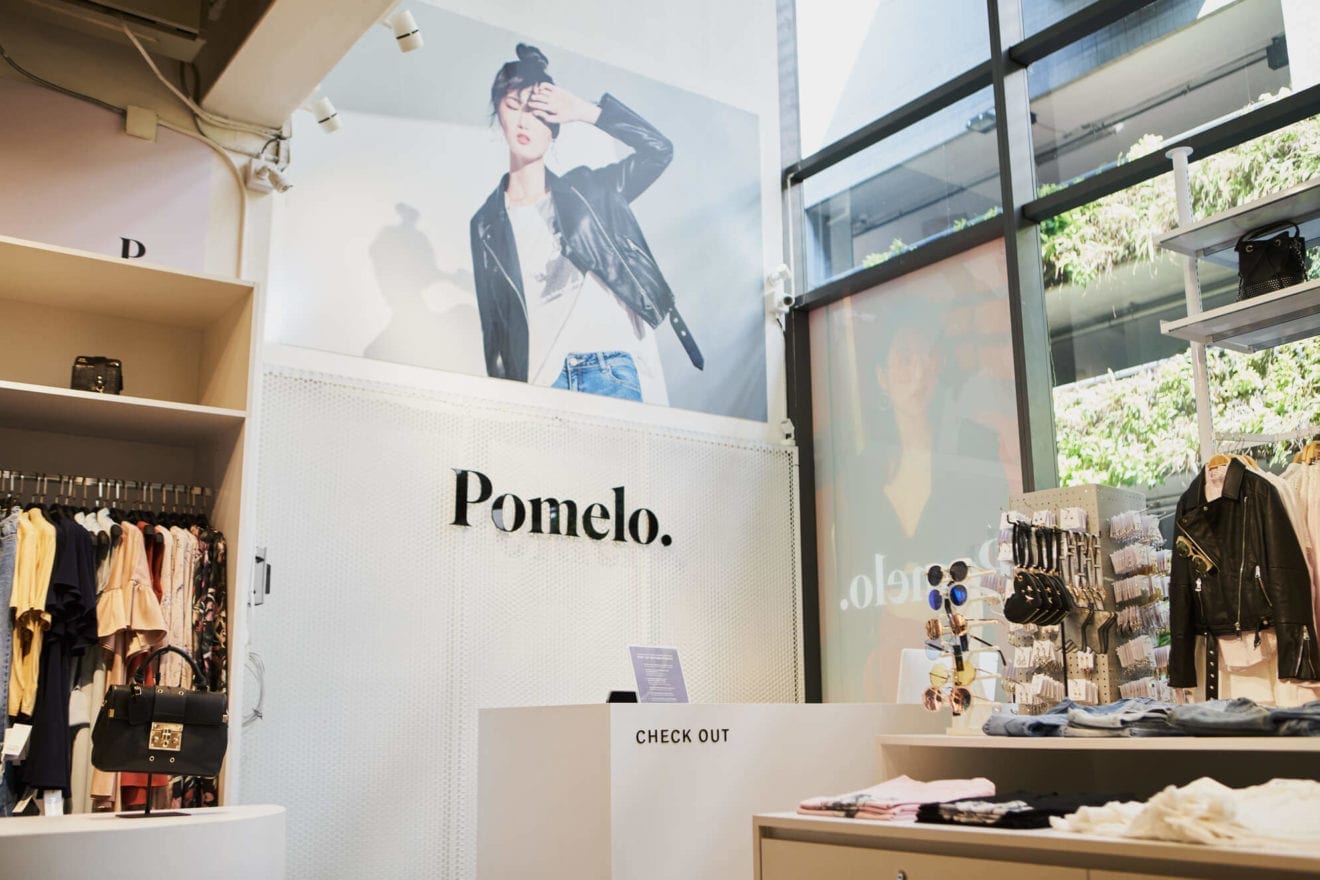
    The new store features a new design with an entirely different interior layout and looks to stores elsewhere in Southeast Asia.

    Pomelo Indonesia also embraces sustainability concepts, with sustainably-produced components used in the fit-out and 90 percent of waste produced in-store every day recyclable.

    Beside its usual range, the store shows off exclusive collections, including the collaboration with Thai designers Milin Yuvacharuskul and Pomelo’s collaborative collection with Barbie.

    Pomelo also implements its Tap Try Buy, a rebranded iteration of its Pomelo Pick Up service, at the Jakarta store, allowing customers to shop online and try on at a preferred location and only pay for what they want to keep.

    “We look forward to expanding our offline footprint to even more customers across Indonesia over the coming months,” said Anders Heikenfeldt, chief retail officer at Pomelo.

    The launch is part of the company’s retail expansion plan in Southeast Asia. The first Malaysian store is scheduled to open next year.

  • Pomelo roams from fashion label to multi-brand environment

    Pomelo roams from fashion label to multi-brand environment

    Thai-based omnichannel fashion platform Pomelo has launched a redesigned version of its online platform which features multiple brands.

    Besides offering in-app exclusive live streaming, the new app houses more than 100 brands on its Thai version, including Vans, Converse, L’Occitane, and local brands such as Rally Movement and Matter Makers.

    But the company told Inside Retail Asia it will continue to design and release its own Pomelo range as well.

    Pomelo, which is building a footprint across Southeast Asia, plans to expand its expanded multibrand selection into other markets next year.

    The new app has a feature called Tap Try Buy, previously called Pomelo Pick Up, which allows customers to order items online through the app or website, select a store or partner location to try on their selected items, and only pay for only what they choose to keep. Tap Try Buy orders already make up almost half of the retailer’s online orders, a percentage that has grown during the Covid-19 crisis.

    Overseeing the new multi-brand direction is Alexandra Schonfrucht, newly appointed former Zalando and JD Sports executive, who is now Pomelo’s global head of third party brands.

    “We’re thrilled to welcome Alexandra to the Pomelo team as we enter this next phase of growth as a multi-brand platform,” said David Jou, CEO, and founder of Pomelo. “We’re continuing to build a diverse brand portfolio to provide the best omnichannel experience for our users.”

    The new app also incorporates Pomelo’s new branding elements including a refreshed logo.

  • Pomelo speeds up Southeast Asian retail expansion

    Pomelo speeds up Southeast Asian retail expansion

    Pomelo is speeding up its retail expansion plans across Southeast Asia as part of a multi-market retail strategy.

    The company said it will enter Indonesia and Malaysia next. Indonesia’s first store will open at Central Park mall this November, while Malaysia’s first store is expected to launch in the first quarter of next year.

    “Creating a seamless omnichannel experience has always been at the core of what we do at Pomelo, and it’s what allows us to continue expanding our retail presence at a time when other brands may be doing the opposite,” said Anders Heikenfeldt, chief retail officer at Pomelo.

    Last month, Pomelo Thailand opened two retail stores – at The Mall Ngamwongwan and Terminal 21 in Bangkok. By November, the brand will roll out three more stores in the city’s popular shopping locations, including Fashion Island and Siam Center. The company said it plans to reach 20 stores in the country by the end of this year.

    In Singapore, Pomelo will open the city’s second store at Nex mall in November.

    Pomelo’s Tap Try Buy, a rebranded iteration of the Pomelo Pick Up service, makes up almost half of Pomelo’s online orders, with this percentage continuing to increase during Covid-19.

    “With Tap Try Buy, we’ve seen a huge increase in user adoption, especially as Thailand started to ease lockdown restrictions,” said Heikenfeldt. “For us as a brand, this emphasized the importance of opening more physical touchpoints to both engage with our existing customers as well as enable new shoppers across the region to experience our unique omnichannel approach.”

  • Pomelo Cares programme launched to aid Covit19 battles

    Pomelo Cares programme launched to aid Covit19 battles

    Asian omnichannel fashion brand Pomelo has launched Pomelo Cares, an initiative to support the community and frontline medical sector during the coronavirus pandemic, as well as educate and encourage people to practice social distancing.

    From today, Pomelo Cares will support organizations and charities leading Covid-19 relief efforts in Singapore, Thailand and Indonesia. It will see 100 percent of profits from three-pack antibacterial fabric masks transferred to partner health organizations such as the Red Cross. Pomelo has also become a producer in creating these masks, using fabric originally procured for fashion items, and has pledged to donate more than 40,000 surgical masks to Thailand’s Red Cross.

    “We want to do our part to help spread the message of the importance of social distancing and giving back in this time of need,” said Pomelo CEO David Jou. “The coronavirus situation will evolve and we will continue to do our part to mitigate its spread, as well as finding new ways to engage our community in this time of need.”

    The website for the Pomelo Cares campaign will feature content from #PomeloGirlsAtHome, a social campaign aiming to spread positivity, unite the community, and encourage social responsibility with weekly Livestream shows. The campaign will also focus on the importance of social distancing during this time, with content encouraging Pomelo customers and the wider community to stay at home and find new ways to come together.

  • Pomelo is redefining O2O retailing in SE Asia

    Pomelo is redefining O2O retailing in SE Asia

    As technology increasingly merges online and offline channels, addressing pain points along the purchase journey, a new breed of retail startups is drawing funding from private equity investors. One of the leaders is Bangkok-headquartered Pomelo, co-founded by Korean-American David Jou.  Before Pomelo was born in 2013, Jou co-founded and served as MD of Lazada Thailand and he has acted as an angel investor in several small startups.

    Bangkok in 2013 was already a buzzing creative hub with designers, graphic artists and digitally savvy technology specialists aplenty, a thriving fashion industry and a destination where a growing number of international producers were heading to film movies and television commercials. So Jou sat down with his co-founders and thought: How do we put all of this together and turn it into a business?

    “Back then, the core pillars that are required to get the e-commerce market going were just starting to be put into place: logistics, high-speed internet, smartphones, and a social-media infrastructure. And one of the things that was completely devoid in the region was e-commerce,” he recalls.

    “That was really the inspiration for Pomelo. We said hey, let’s build a direct-to-consumer fashion brand. And we’re going to use digital, we’re going to use social media, we’re going to use technology to really take out the middleman and make the entire process more efficient. We felt like we really had to create a brand for the digital era. So we started working on the idea and launched to the public at the beginning of 2014.”

    In the five years since Pomelo has grown from a fledgling online-only fashion platform to an omnichannel retailer with a presence in five countries serving customers in more than 50.

    In September, the company closed another funding round, securing US$52 million. Investors to date include heavyweights like JD and Thai retail-and-mall conglomerate Central Group who chipped in back in 2017.

    Since then, Pomelo has expanded to Singapore, Hong Kong and Malaysia, grown its gross merchandise volume seven-fold, launched nine physical stores in Thailand and a flagship on Singapore’s Orchard Road. The brand has expanded its product offering even further, launching categories like Purpose, an eco-friendly collection and Beet cosmetics.

    While on the surface Pomelo appears to be a fashion retailer, its raison d’etre is very firmly in developing technology-driven business models. And so as Pomelo has grown in brand awareness it has earned a reputation in Asia for its relentless experimentation, for thinking outside the traditional norms of the rag trade.

    The company’s market-positioning statement is “Fashion born in Asia. On Trend. Online. On The Go”. With K-pop and K-fashion already booming at the time of its launch, Pomelo’s team took inspiration from what was trending on the streets of Seoul. Then they worked on search engine optimization, social media promotions and Facebook to build the brand – “and old-school methods like email”. Recruiting key opinion leaders for live streaming in different markets added further momentum.

    Now, in January 2020, its newest initiative is ‘partner stores’. The company has been building a network of 100 retail outlets in Thailand where people who buy clothing online can have their orders delivered and try them on before taking them home. Or they can return them or order an exchange if the fit is not right, paying for only what they keep. It’s an ingenious solution to one of the most significant pain points in online fashion retailing for vendors: significantly lowering returns which can run as high as 70 percent in some Asian markets.

    Partner stores include cafes, salons, fitness studios, florists and even other clothing stores frequented by its core demographic: females aged 25 to 34.

    “Creating the best omnichannel retail experience means integrating our products with customer lifestyles, and the first 35 partner stores in Thailand allowed us to be where our customers live, work and play,” said Jou.

    The partner stores pay no sign-on fee – in fact, they earn a commission for everything collected from their locations. But they have to meet minimum guidelines, such as a customer-friendly environment and a fitting room. The company will start recruiting Singapore partner stores early this year.

    A world apart

    With a true online-offline approach to business, Pomelo is setting itself aside from traditional fashion brands. Jou believes a critical success factor is that the company approaches customers from the opposite direction to traditional retailers.

    “The brick-and-mortar guys have a product or a business model that they’re pushing and the customer kind of comes at the end of that value chain, whereas we are using customer feedback to really drive our future.”

    Its business model evolved from listening to customer feedback in the early days when it set out to be on-trend.

    “We were working with social media influencers to identify different groups of customers. Then we were designing collections specifically based on their preferences.”

    During that process, over and over again the Pomelo team kept getting the same feedback: ‘We love the brand. We love the style. The price is great. But I don’t feel comfortable buying fashion on the internet. If it doesn’t fit me, I don’t want to deal with the hassle of returns’.”

    The iteration before partner stores was Pomelo Pickup, where customers could try-before they bought at pop-up stores in Bangkok and Singapore, to their own schedule. The feedback was overwhelmingly positive, says Jou.

    This carefully charted course, evolving on listening to customers and solving their problems rather than just churning out high volumes of fast fashion, is clearly what is attracting investors.

    “This is a disruptive time for omnichannel in Asia and Pomelo is in a unique position because of its vertically integrated model and innovative technical abilities,” said Michael Aw, founding partner at Provident Growth Fund, one of the investors in the most recent funding round.

    “We are confident they will lead the way in fashion across Southeast Asia and beyond. Leveraging its direct-to-consumer fashion technology, Pomelo has proven itself a trailblazer in omnichannel fashion since its launch.”

    Jou says Pomelo’s omnichannel strategy is built upon its ability to provide a variety of retail options.

    “As a fashion brand with a technology DNA we place the customer experience at the forefront of everything we do.

    “Everywhere we look, we see opportunities for innovation to reinvent how things are done to create better products, better serve customers, and maximize omnichannel productivity and efficiency. Fashion is as relevant today as ever and we are excited to chart a unique path forward in an effort to reinvent what it means to be a fashion brand,” he concludes.