Tag: Porche

  • Porsche to hike Taycan output

    Porsche to hike Taycan output

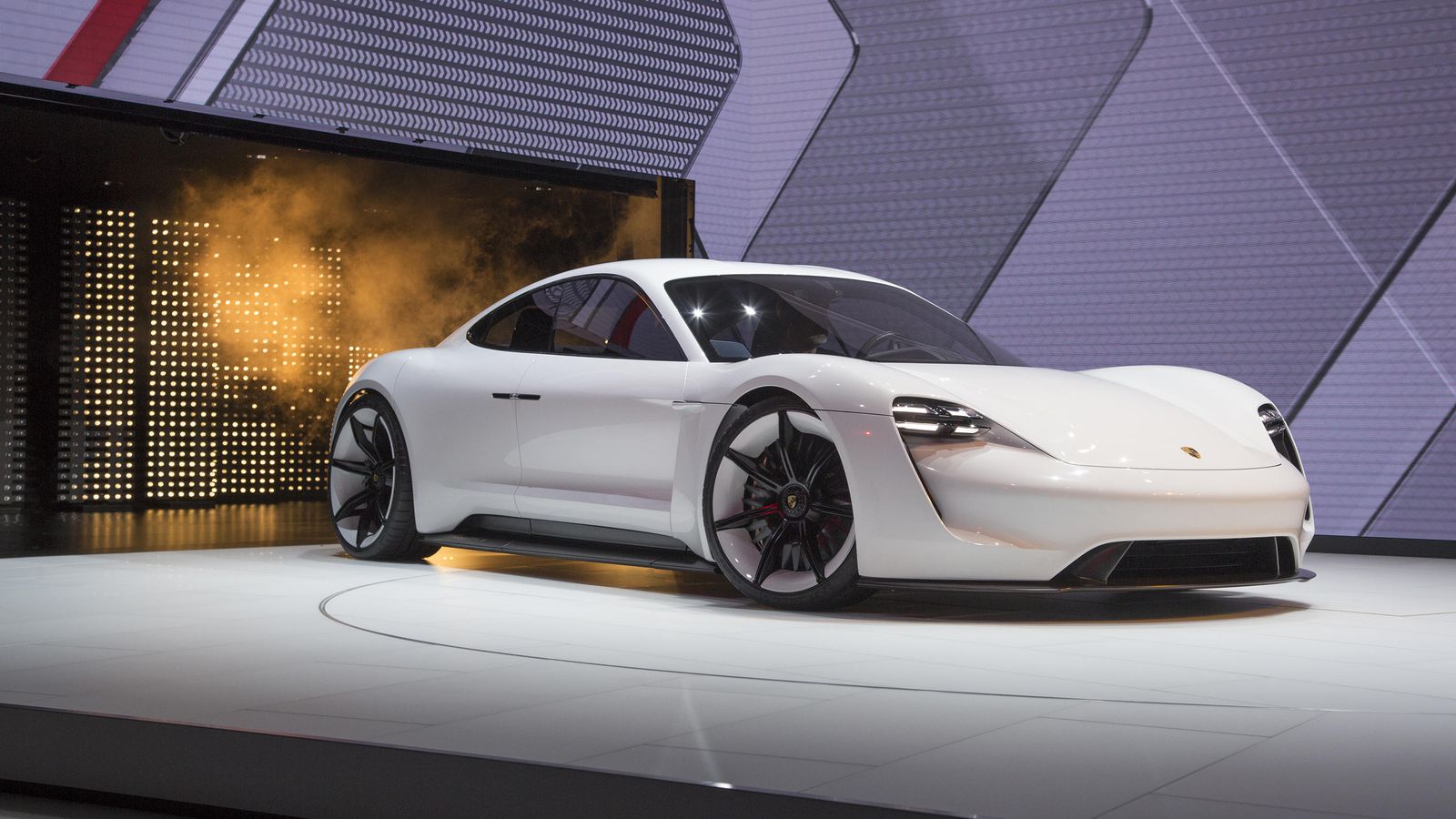
    Porsche AG will increase production of the Taycan after more than 20,000 potential buyers registered to purchase the brand’s first electric car, matching the entire annual output initially earmarked for the four-door sedan.

    “The overwhelming interest in the Taycan shows us that our customers and fans are just as excited about the first Porsche electric athlete as we are,” Porsche sales chief Detlev von Platen said Friday in a statement. “We’ve therefore increased our production capacities.”

    The Taycan will be unveiled in September with a price range between the 74,800-euro ($83,866) Cayenne SUV and the 97,800-euro Panamera coupe to compete with Tesla Inc.’s Model S. The car is part of a wave of new models from Jaguar, Mercedes-Benz and Audi that’ll challenge Tesla’s electric-car leadership.

    Porsche is parent Volkswagen AG’s most profitable brand and its success is vital for the group to pull off the industry’s most aggressive push into electric vehicles. VW has allocated some 40 billion euros for electric and connected cars and targets 50 battery-powered models by 2025. To help drive uptake, Porsche is installing fast chargers at its dealerships in the U.S. and Europe that’ll get the Taycan’s battery up to 100 kilometers (62 miles) in four minutes. The car’s overall range on a single charge stands at 500 kilometers.

    The model’s planned production of 20,000 vehicles per year is based on a two-shift system at Porsche’s main site in Stuttgart, Germany, and can be expanded if needed, production chief Albrecht Reimold told reporters last year. Porsche also confirmed recently it will offer a fully-electric version of its best-selling Macan SUV.

    Interested Taycan buyers are required to make a down payment of 2,500 euros in Europe to register.

  • Porsche Mission E Cross Turismo To Go Into Series Production

    Porsche Mission E Cross Turismo To Go Into Series Production

    It was at the 2018 Geneva Motor Show, that Porsche first unveiled the Mission E Cross Turismo concept. Back then, we’d told you that the car looked great and did not have that concept feel to it. It’s very close to something you’d see on actual roads and it was as production ready as it gets. However, Porsche still called it a concept as the Supervisory board of the company had not given the green light for the project. But now the company has said that the Supervisory Board of Porsche AG gave the green light for series production of the concept study Mission E Cross Turismo. The sports car manufacturer will create 300 additional jobs at its headquarters in Zuffenhausen for production of the vehicle, which was presented at the Geneva Motor Show next year.

    The Porsche Mission E Cross Turismo is a derivative of the Taycan

    The Porsche Cross Turismo includes an emotional design with striking off-road elements as well as an innovative display and operating concept with touchscreen and eye-tracking control. It measures in just under 5 metres and has all-wheel drive and can also be charged by induction, at a charging station or using the Porsche home energy storage system.

    The four-door Cross Turismo has an 800-volt architecture and is prepared for connection to the fast charging network. It has a system output of 600 horses and a range of 500 km (NEDC). This enables the Mission E Cross Turismo to accelerate to 100 km/h in less than 3.5 seconds and to reach a speed of 200 km/h in under 12 seconds. The vehicle is a derivative of the Taycan which is the first purely electric Porsche that will be launched in the market in 2019. Porsche plans to invest more than six billion euros in electromobility by 2022.

  • 2018 Porsche Cayenne India Revealed

    2018 Porsche Cayenne India Revealed

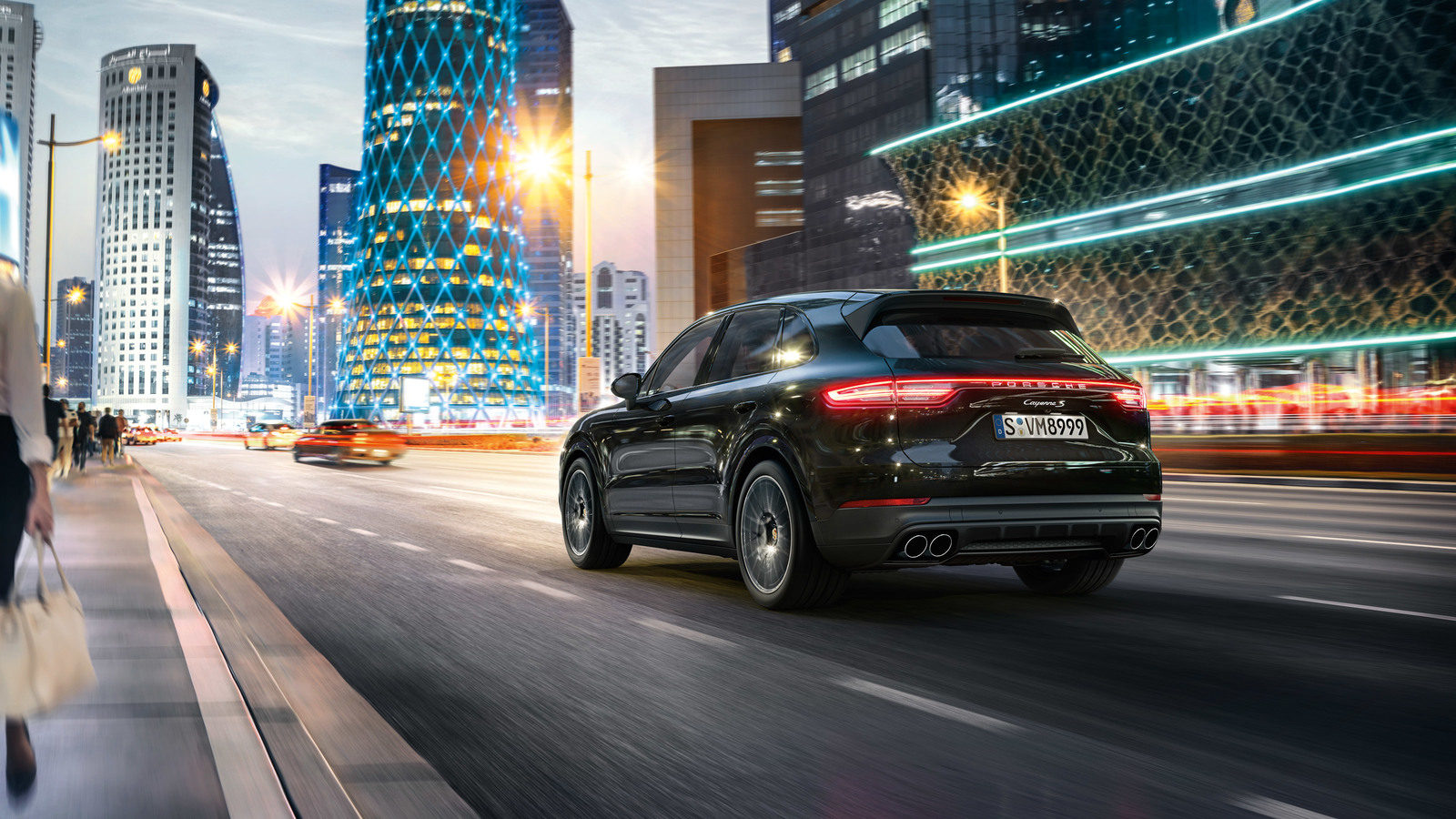
    We’d told you a long time back that the 2018 Porsche Cayenne is all set to land on Indian soil this year. Though the launch has been delayed to the festive season, the company was planning to launch the car in the middle of the year. However, the third generation of the SUV is all set to grace our shores today. Bookings for the new Porsche Cayenne Turbo had already started in September and the first batch of cars will be delivered this year. The all-new model boasts of a new and more agile platform, more powerful engines and for the first time, the option of a hybrid powertrain as well.

    The 2018 Porsche Cayenne SUV gets a host of upgrades over its predecessor including a revised chassis, and a separated link design for the front axle and a multi-link rear axle. The latter though is offered as optional, but further improves the agility on the car. Visually too, the Cayenne has evolved and gets a sharper looking appearance while keeping the appearance similar. The SUV now comes with the Porsche Dynamic Light System (PLDS) or LED Matrix Beam headlights, which also include PDLS.

    In terms of power, the new generation Porsche Cayenne will be offered in a range of engine options including V6 and V8. The standard version will use a 3.0-litre single-turbo V6 with 335 bhp and 450 Nm of peak torque, while the Cayenne S will draw power from the 2.9-litre twin-turbo V6 that produces 433 bhp and 550 Nm of peak torque. The 2018 Cayenne Turbo packs in 542 bhp and 770 Nm of peak torque from a 4.0-litre bi-turbo V8 engine, and is capable of hitting a top speed of 286 kmph.

  • Porsche to price Taycan electric sports car between Cayenne, Panamera

    Porsche to price Taycan electric sports car between Cayenne, Panamera

    Porsche will position the Taycan below the brand’s Panamera sedan when the electric four-door sports car reaches markets next year, with a likely starting price above 80,000 euros (about $92,500).

    “We’re expecting a price somewhere between a Cayenne and a Panamera,” said Robert Meier, the complete vehicle model line director for the Taycan.

    Including taxes, that would place the vehicle between 74,828 euros and 90,655 euros for its base version of the car in Germany.

    However, Porsche Chief Financial Officer Lutz Meschke told reporters that he wants to offer higher-performance versions that could be priced as much as 200,000 euros, such as a Taycan Turbo S.

    The Taycan’s two permanently excited synchronous electric motors, supplied by Italy’s Magneti Marelli, will produce more than 600 hp and accelerate the vehicle from 0 to 100 kph (62 mph) in less than 3.5 seconds. The Taycan aims to be the fastest series production electric car around Germany’s Nordschleife racetrack, with a lap time of less than 8 minutes.

    “Asynchronous e-motors are clearly more affordable, but they have one very important disadvantage: You can only overload the motor once when you want high dynamic acceleration before it quickly reaches its limits the second or third time,” Meier said. “That’s fine for most electric cars but not for a high-performance Porsche.”

    The 800-volt lithium-ion battery, built by Draexlmaier Group outside Stuttgart, is composed of “pouch” cells sourced from LG Chem of Korea in a specific power-to-energy ratio that balances the needs of range with those of performance.

    Together, the roughly 400 battery cells have a gravimetric energy density equivalent to 270 watt-hours per kilogram, roughly comparable to the latest technology on the market today.

    The Taycan will be able to drive more than 500 km (310 miles) miles on a single charge under the New European Driving Cycle. Once drained, the battery needs only about 4 minutes to add a further 100 km in range when using a 350-kW fast-charging station. By comparison, Porsche estimates a Tesla requires two and a half times that duration. Porsche expects it will build 20,000 units of the Taycan a year on two shifts, but production boss Albrecht Reimold said a third shift could be added if more capacity is needed.
  • Vietnam’s April car sales fall 4 pct on-year

    Vietnam’s April car sales fall 4 pct on-year

    Toyota remained the leading brand last month, with sales rising 3 percent from a year earlier to 4,234 units. Vietnam’s car sales fell slightly in April, declining 4 percent from a year earlier to 20,557 units, according to data released by the Vietnam Automotive Manufacturers Association (VAMA).

    Sales in April were 2 percent lower than in March, VAMA said in a statement.

    Toyota remained the leading brand last month, with sales rising 3 percent from a year earlier to 4,234 units.

    Truong Hai (Thaco) group, the local assembler and distributor of brands such as Kia, Mazda, Peugeot and Hyundai and a significant player in the commercial vehicle segment, reported a 0.5 percent rise in group sales to 8,679 units in April.

    Ford’s sales were 47 percent lower at 1,359 units in April while Honda sales rose four-fold to 2,815 units.

    For the first four months of this year, total car sales in the country fell 2 percent from a year earlier to 79,115 units, VAMA said.

  • Rodenstock to introduce new Porsche Design products

    Rodenstock to introduce new Porsche Design products

    Rodenstock, the German manufacturer of ophthalmic lenses and spectacles frames, will be introducing products from Porsche Design’s sunglasses range at this year’s TFWA Asia Pacific Exhibition & Conference in Singapore.

    The company has secured a licensing agreement to sell some of the top pieces from Porsche Design’s eyewear collections in travel-retail, as it looks to build its business in the Asia Pacific region.

    These include Porsche Design’s P-8479 model, a classic sunglasses design featuring an ultra-light titanium frame and high-quality shield lenses.

    Rodenstock will also be introducing several other brand new models from Porsche Design to the Asia Pacific travel-retail market for the first time including the Iconic Laser Cut P-8663 with a 100% titanium frame and cut-outs in the side areas of the middle section, an exclusive model from the 911 series. As with all models, the characteristic Porsche Design logo is engraved in the titanium temples by means of a special laser technique.

    Also being introduced is the Ti-Namic, which has the striking shape of titanium temples, reflecting the side air intakes of sports cars; made possible through a modern 3D pressing process.

    Finally, travel-retail buyers will get the chance to view a new Porsche Design limited special edition “40Y” of its P-8478 model, created for Porsche Design Eyeware’s 40th anniversary and featuring a gold-coloured nose bridge and four pairs of interchangeable lenses in blue gradient, brown, olive/silver mirrored and mercury/silver mirrored.

    Rodenstock Head of Travel Retail Petra Eckhardt-Koestler said: “We are absolutely thrilled to have become a member of TFWA and to be exhibiting at the TFWA Asia Pacific show for the first time this year.

    “It is a clear demonstration to our customers of our commitment to building our travel-retail presence both in this region and globally. We very much look forward to meeting our existing and new clients in Singapore.”

  • Porsche, Audi to develop joint electric car platform to save costs

    Porsche, Audi to develop joint electric car platform to save costs

    Porsche and Audi, Volkswagen’s main luxury car divisions, plan to develop a joint platform for electric vehicles that will enable them significantly cut down on costs, German newspapers quoted their chief executives as saying.

    “By 2025, we’re facing a low single-digit billion euro sum to develop the architecture,” Audi CEO Rupert Stadler told both the Stuttgarter Zeitung and Stuttgarter Nachrichten.

    “If both would act on their own, costs would be 30 percent higher,” Porsche CEO Oliver Blume said, adding Audi was hiring 550 developers for the project and Porsche 300.

    From 2021 onwards, both businesses want to bring several models to the streets based on the joint platform, with Stadler saying that would build two sedan cars in Neckarsulm and two sports utility models at its Ingolstadt base.

    Porsche’s Blume said the sportscar maker could build its first model based on the joint architecture in Leipzig, where it is already assembling its Macan sport-utility model. “I currently see good chances for Leipzig,” Blume said.

  • Nissan, BMW, Porsche face fuel economy probes in South Korea

    Nissan, BMW, Porsche face fuel economy probes in South Korea

    South Korea has filed a complaint against Nissan Motor’s South Korean unit alleging that the Japanese car maker manipulated the fuel economy test results of its Infiniti Q50 sedan, a government official said on Tuesday.

    The transport ministry is also investigating BMW and Porsche on a similar matter, the official, Koh Sung-woo, told Reuters.

    The Seoul Central District Prosecutors’ Office has launched a probe into Nissan after a criminal compliant was filed by the ministry, a spokesman at the office said.

    Makers of imported cars, which have surged in popularity in recent years in South Korea, have been facing growing scrutiny in the country following Volkswagen’s emissions-test cheating scandal.

    The latest government action follows an announcement by South Korea’s environment ministry last month that the sale of 10 models of Nissan, BMW and Porsche had been banned after the carmakers were found to have fabricated documents on emissions and noise-level tests. The models banned include BMW’s X5M and Porsche’s Cayenne and Macan models.

    The probe was then expanded to whether the three car makers have falsified documents on fuel economy tests of the 10 models as well, Koh said.

    Koh said Nissan overstated the fuel economy of the Q50 so that it is 3.4 percent higher than the actual test result. “They manipulated the test results of the car to make the fuel economy look better,” he said.

    Nissan Korea said it reported “some inappropriate problems” in certification documents to authorities last year, saying the errors were caused by the misconduct of a manager at the company.  “We express sincere regret over those issues,” a spokeswoman said.

    Representatives of BMW and Porsche in Seoul said the companies have not been notified of the probe.

    The complaint adds to the troubles in South Korea for Nissan, which is already accused of cheating on emissions of its Qashqai diesel model. Last week, a South Korean court sided with the government which had said the Japanese automaker used a so-called defeat device in its Qashqai sport utility vehicle to turn off its emissions reduction device during regular driving.

  • South Korea to disallow sales of some Nissan, BMW and Porsche models

    South Korea to disallow sales of some Nissan, BMW and Porsche models

    South Korea said on Tuesday it plans to disallow sales of two Nissan Motor Co Ltd, one BMW AG and three Porsche AG car models after finding errors in certification documents for the car makers’ imported models.

    South Korea’s environment ministry said in a statement it also plans to fine the local units of the foreign car makers a combined 6.5 billion won ($5.56 million) after finding certification errors in two Nissan, one BMW and seven Porsche models.

    Out of the seven Porsche models, four have discontinued sales, the ministry said.

    The decisions on the sales halt and fines will be finalised in December after a hearing, the environment ministry said.

    The ministry announced the results of a probe into whether foreign car makers besides Volkswagen AG falsified documents for certification, following a similar finding on Volkswagen earlier this year.

    A Nissan Korea spokesman said the company plans to cooperate with the environment ministry and clarify its position in the hearing.

    Spokespersons for BMW and Porsche could not be immediately reached for comment.