Retail News CRM

Tag: Porsche

  • Porsche Expects To Repeat Record Vehicle Sales

    Porsche Expects To Repeat Record Vehicle Sales

    Volkswagen’s Porsche sports car brand is confident it can repeat last year’s record sales in 2018, the division’s chief executive told. Porsche sold 196,562 vehicles during the first nine months of the year, with Europe showing a 9 percent increase and China, the world’s largest car market, growing by 4 percent.

    “In light of these good numbers we expect that we can reach last year’s record again,” Oliver Blume said in e-mailed comments on Thursday.

    Porsche delivered 246,375 vehicles in 2017.

  • Porsche SE execs, board are safe to travel to U.S.

    Porsche SE execs, board are safe to travel to U.S.

    Top managers and supervisory board members at Porsche SE, Volkswagen Group’s majority shareholder, can still travel to the United States without risk or fear of prosecution, the company’s head of legal affairs said.

    “Porsche SE is convinced that no board member can be accused of offenses, and that the members of the management and supervisory boards can still travel to the United States without restrictions and risk,” Manfred Doess, the holding firm’s legal chief, said on Tuesday at Porsche SE’s annual shareholder meeting.

    U.S. authorities earlier this month issued an arrest warrant against VW Group’s former CEO, Martin Winterkorn, after indicting him on four felony charges in the automaker’s diesel-emissions scandal.

    Porsche SE CEO Hans Dieter Poetsch, VW’s former finance chief who is being investigated by prosecutors in Brunswick, Germany, for suspected market manipulation related to the scandal, told shareholders that he regularly travels to the U.S.

    Doess said Porsche SE has no knowledge of an international arrest warrant against Wolfgang Porsche, the firm’s chairman and a member of VW’s supervisory board.

  • Germany recalls Porsche Cayenne models over emissions software

    Germany recalls Porsche Cayenne models over emissions software

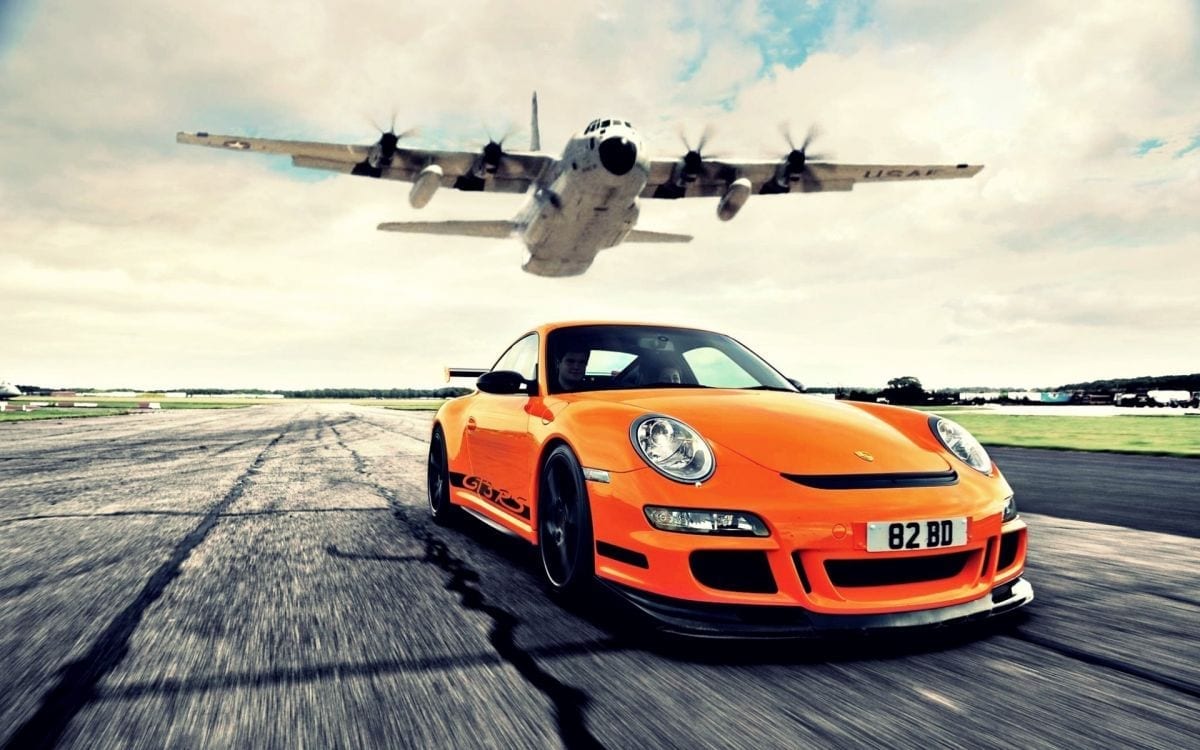
    German Transport Minister Alexander Dobrindt on Thursday announced a recall of Porsche Cayenne models equipped with 3-litre diesel engines after finding potentially illegal emissions controlling software in the vehicles.

    Dobrindt told he was withdrawing certification for the vehicles, which will need to undergo a software update.

    Sports car maker Porsche AG is owned by Volkswagen, which in 2015 admitted to systematic manipulation of engine management software to cheat emissions tests.

    Porsche on Thursday said it had discovered “irregular” engine management software during an internal probe into emissions. Porsche also said it had agreed to recall the vehicles to fix the problem.

    “The producer will of course bear 100 percent of the costs,” Dobrindt said. “There is no explanation why this software was in this vehicle,” Dobrindt said.

    The minister said: “We have examined Porsche Cayenne vehicles of the 3 liter TDI Euro 6 Mark – during tests these vehicles deploy a so-called defense strategy, which isn’t activated in real traffic.”

    “In our view that is a kind of test recognition, which we regard as an impermissible deactivation strategy.”

    “Even if there is a modern exhaust gas cleaning system in these vehicles, if this software is nonetheless there it is illegal, does not meet the legal requirements and needs to be removed,” Dobrindt said.

    He also said that Porsche would quickly be in a position to bring the software into conformity with the law.

    Dobrindt also said there were some 7,500 vehicles of this type certified in Germany and some 22,000 certified in Europe. “We don’t know how many are with dealers. These are the cars that fall under the certification ban.”

    The Porsche Cayenne model shares components with a sister model, the Volkswagen Touareg.

    Asked about Volkswagen’s Touareg model, Dobrindt said: “On the technical question, it is assumed that this vehicle has a similar parameter set but identical construction does not mean that the same software was used in it but it is assumed that the same software was used.”

    He said the Transport Ministry was, however, checking that and a hearing with Volkswagen would show whether that was the case or not, adding: “The probability is high.”

    Volkswagen CFO Frank Witter had no immediate comment about the Porsche recall on a VW earnings call also held on Thursday.

    Stuttgart prosecutors have been investigating Porsche AG after some models were fitted with 3 liter diesel engines supplied by Audi.

    Audi, another premium brand owned by Volkswagen is also being probed by prosecutors in Munich who are separately investigating Audi about its role in designing the 3 liter diesel engine.
  • VW’s Audi and Porsche to join forces on vehicle development

    VW’s Audi and Porsche to join forces on vehicle development

    Volkswagen Group’s Audi and Porsche brands will join forces on vehicle development, the two upmarket brands said on Wednesday, to help the world’s largest carmaker save money in the wake of its costly emissions test cheating scandal.

    The pact comes as Volkswagen (VW) Chief Executive Matthias Mueller, who previously worked as Porsche’s CEO and Audi’s head of product management, finalizes a plan to step up development of autonomous cars, electric vehicles and digital services.

    Porsche and Audi said the focus was on jointly developing shared vehicle platforms, modules and components, in a deal that follows a period of intense in-house competition for development resources.

    Projects will be jointly headed by representatives from each brand. In the coming months, joint teams will prepare the specific areas of cooperation and define a roadmap to 2025, they said.

    Porsche, taken over by VW 2012, has emerged as a strong rival engineering center to Audi. Porsche’s MSB platform, used for its four-seater Panamera model, has been adopted for VW group’s next generation Bentley Continental model even though Audi had developed a similar offering.

    Since the group’s emissions test cheating on diesel engines was exposed in September 2015, Audi has lost two research and development chiefs and the head of its automotive electronics division, who did pioneering work in the area of autonomous driving and battery technology.

    Audi remains the group’s center of excellence for sport-utility vehicles, a lucrative and growing market, where it supplies platforms to Porsche and other brands such as Bentley.

    With self-driving vehicles likely to play a major future role in the industry, Audi also develops autonomous cars for the group.

    But a separate internal race has begun to become an engineering hub for electric vehicles, a field which includes research and development of battery cells, battery packs and electric motors.

    Porsche has developed the J1 electric cars platform, while Audi has also worked on its own electric car.

    Porsche has also taken over production of eight-cylinder gasoline engines for large sportscars for the VW group, even though Audi has its own engine factory in Hungary.

  • Porsche, Audi lift VW to record underlying profit

    Porsche, Audi lift VW to record underlying profit

    Record Audi and Porsche sales helped Volkswagen (VOWG_p.DE) swing to a record underlying profit in 2016, although a bigger than expected charge from the diesel emissions scandal meant it missed estimates for its operating profit.

    Sales of the German carmaker’s luxury brands lifted underlying operating profit before special items 14 percent to 14.6 billion euros ($15.5 billion) in 2016, after the company reported its biggest ever loss in 2015.

    VW forecast broadly stable earnings this year.

    Underlying profit was broadly in line with forecasts for the world’s biggest car manufacturer by volume sales, which hiked its dividend more than expected after group sales rose to new highs, with an 8.1 percent jump in fourth quarter deliveries.

    Volkswagen (VW) is struggling with the fallout from its admission 17 months ago that it rigged U.S. diesel emissions tests, a scandal that some analysts have estimated may cost it more than $30 billion in fines, compensation and vehicle refits.

    VW has since embraced a costly shift to more electric vehicles and last year eclipsed Toyota (7203.T) as the world’s top-selling carmaker with record deliveries of 10.3 million.

    ONE-OFF CHARGES

    Although group sales fell 4 percent in January on the back of national holidays and a tax hike on small-engine cars in China, its biggest market, VW forecast an underlying operating margin of between 6 and 7 percent for 2017, compared with the 6.7 percent it achieved last year.

    But the damage from the emissions cheating affair took its toll, with VW booking bigger-than-expected one-off charges of 7.5 billion euros in 2016, of which 6.4 billion were related to the emissions-test rigging scandal. Analysts had on average forecast the cost would be 4.2 billion euros in total.

    Including those charges, VW made a 2016 operating profit of 7.1 billion euros, missing a consensus forecast of 10.5 billion euros but a big swing from a loss of 4.1 billion euros in 2015.

    VW’s Chief Executive Matthias Mueller said the carmaker was now well set for the years ahead.

    “As the figures show, Volkswagen is very solidly positioned in both operational and financial terms. This makes us optimistic about the future,” he said in VW’s results statement.

    The return to profit at group level may help calm tensions in Wolfsburg where labour bosses and VW’s brand management have been sparring over its ability to tackle the high cost base of VW’s German plants, which what analysts and investors say will be key to a further recovery.

    VW said it would propose a dividend of 2.06 euros per preferred share, more than the 1.86 euros expected by analysts on average, and 2.00 euros per ordinary share for 2016.

    That is up from 0.17 euros and 0.11 euros respectively a year earlier, when VW had to cut the dividend because of the cost of the diesel emissions cheating.

  • Porsche Customers Most Satisfied Overall

    Porsche Customers Most Satisfied Overall

    The Porsche brand has ranked highest among all nameplates, according to the latest J.D. Power 2016 U.S. Sales Satisfaction Index (SSI) Study released today. The brand also placed higher than all other luxury manufacturers for the second consecutive year. Porsche improved upon its 2015 standing by 72 points to capture the overall ranking for the second time in the 30-year history of the SSI Study.

    The SSI Study measures satisfaction with the sales experience among new-vehicle buyers and rejecters — those who shop a dealership and purchase elsewhere. Buyer satisfaction is based on four measures: working out the deal (25%); salesperson (19%); delivery process (16%); and facility (15%). Porsche ranked highest among all automotive brands across all four categories. Rejecter satisfaction is based on five measures: salesperson (10%); fairness of price (4%); experience negotiating (4%); facility (3%); and variety of inventory (3%). Porsche improved this year in the areas of price, facility and inventory.

    “Customer satisfaction is our highest priority in our endeavor to deliver a unique and rewarding Porsche experience,” said Klaus Zellmer, President and CEO, Porsche Cars North America, Inc. “We pride ourselves on building exciting and innovative sports cars, but our success is ultimately measured by the approval and appreciation of our customers. I would particularly like to thank our dealer partners who have made it their mission to provide a benchmark experience for their clients who are purchasing a Porsche.”

    The 2016 SSI Study is based on responses from 28,979 buyers who purchased or leased their new vehicle in April or May 2016. The study is a comprehensive analysis of the new-vehicle shopping and purchasing experience and measures customer satisfaction at U.S. dealerships.

  • VW brand profit plunges, Porsche lifts group

    VW brand profit plunges, Porsche lifts group

    Volkswagen said third-quarter operating profit at its core brand plunged more than half, adding weight to management calls for cutbacks at VW’s biggest division.

    Operating profit at the VW namesake brand dropped to 363 million euros ($396 million) from 801 million a year earlier, VW said on Thursday, or just 1.5 percent of sales.

    The figure was well below a consensus forecast of 462 million euros in a Reuters poll of analysts.

    Europe’s largest automaker needs to make savings at high-cost operations in Germany to help fund a shift to electric cars and self-driving vehicles while facing billions of euros in costs from its diesel emissions test-cheating scandal.

    “The results reinforce the need for cost cuts at the VW brand,” said Commerzbank analyst Sascha Gommel, who has a “hold” recommendation on the stock.

    In the seasonally slow July-to-September period, business at the VW brand was marred by suppliers halting parts deliveries to protest against the cancellation of a contract by VW, curbing output of the top-selling Golf and Passat models at the Wolfsburg and Emden plants by about 20,000 units.

    Analysts estimated the supplier dispute shaved a three-digit million-euro amount off the brand’s quarterly profit and said the carmaker also offered incentives to offset the impact of its emissions scandal on sales.

    Year-to-date sales of the VW brand swung back to growth on a 6.7 percent gain in September and posted the strongest growth in two-and-a-half years last month at group level, helped by strong demand in China and Europe.

    The VW group raised its guidance for profit and revenue this year after posting higher-than-expected quarterly earnings of 3.3 billion euros, adjusted for special items, reflecting strong gains at premium brand Porsche.

    The group said it expected revenue to match last year’s 213 billion euros after predicting in July that revenue would fall by as much as 5 percent this year.

    The group’s operating margin may come in at the upper end of VW’s 5-6 percent target range before special items, the carmaker said. It previously forecast the profitability benchmark to fall within that corridor.

    The shares were trading up 0.1 percent at 126 euros as of 0804 GMT.

    “Despite major challenges and the negative impact of the diesel issue, the Volkswagen Group remains on a solid financial footing,” finance chief Frank Witter said.

  • 2016 Porsche Macan retail prices confirmed, from RM415,000

    2016 Porsche Macan retail prices confirmed, from RM415,000

    Sime Darby Auto Performance (SDAP), authorised importer of Porsche vehicles in Malaysia, has finally confirmed prices for the entry-level Porsche Macan. Starting at RM415,000, the confirmed base prices are some RM20,000 lower than was previously indicated during the launch, at RM435,000.

    The updated Macan features minor styling enhancements, added standard infotainment equipment such as the Porsche Communication Management system (PCM) and a power hike of some 15bhp, now totalling 252bhp between 5,000rpm and 6800rpm, while a 20Nm increment of torque now totals 370Nm, enjoyed between 1,600rpm to 4,500rpm.

    The optional list of equipment is exhaustive, as with any Porsche – including Porsche Dynamic Light System Plus (PDLS Plus) which continuously adjusts the headlight level and the Sport Chrono Package which cuts down 0.2 seconds on the 0-100km/h sprint to just 6.5 seconds.


  • Porsche launches digital business division for premium segment

    Porsche launches digital business division for premium segment

    Porsche AG, the sportscar unit of Volkswagen, launched Porsche Digital GmbH, a division dedicated to developing digital services for the premium segment.

    Porsche Digital GmbH will become a competence centre and an incubator to help find ideas which can be turned into businesses and services, the company said on Friday.

    The division will be based in Ludwigsburg near Stuttgart, and have offices in Berlin, Silicon Valley and China.

    It will be headed by Thilo Koslowski, a former digital mobility analyst at consulting firm Gartner.