Tag: POS

  • VNPAY PhonePOS Unlocks Global Payment Acceptance for Small Merchants

    VNPAY PhonePOS Unlocks Global Payment Acceptance for Small Merchants

    For many small businesses, especially in suburban and rural areas, the costs associated with traditional point-of-sale (POS) devices have posed a significant barrier to embracing modern payment methods. This disparity has highlighted a digital divide: regions that have enthusiastically adopted technology are racing ahead, while others with limited infrastructure—home to 4 million small enterprises—lag behind.

    Transforming Payments with VNPAY PhonePOS

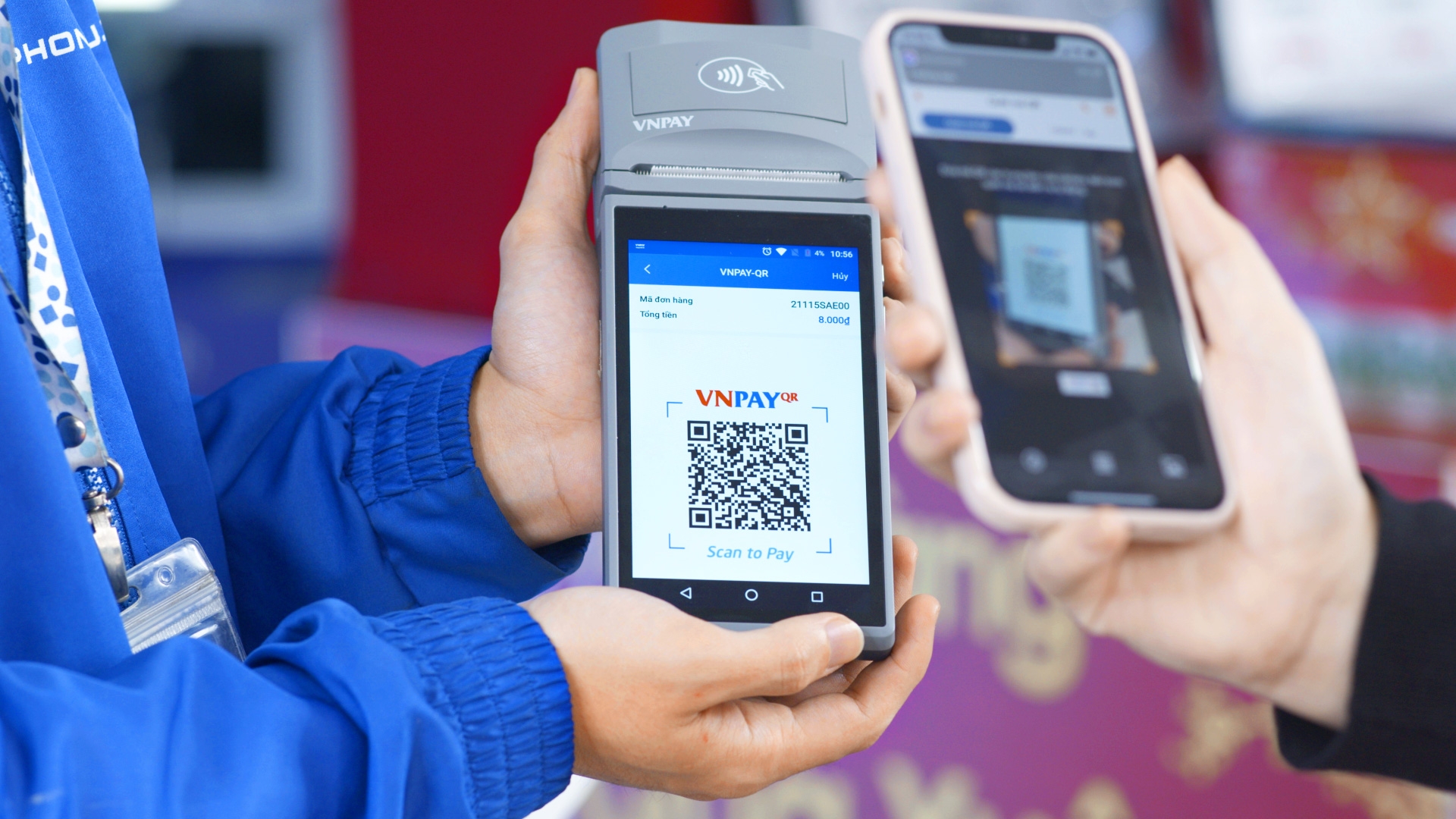
    The introduction of the VNPAY PhonePOS solution is set to change this landscape dramatically. With just an Android smartphone equipped with NFC capabilities, merchants can effortlessly accept payments via major cards like Visa, Mastercard, JCB, and Napas, along with international e-wallets like Apple Pay and Google Pay. This innovation allows businesses to sidestep the hefty expenses linked to investing in specialized POS technology.

    Empowering Small Retailers

    VNPAY PhonePOS not only streamlines acceptance of card payments but also incorporates a robust real-time transaction reporting system. This feature enables sellers to monitor revenue, manage cash flow, and check transaction history directly from their smartphones. For those without advanced accounting software, this tool offers a simple yet effective way to enhance business operations.

    According to a 2024 report by the State Bank of Vietnam, cashless transactions in the country skyrocketed by 53% compared to last year. While this feat is commendable, it barely scratches the surface of the untapped potential within the fragmented retail market.

    Bridging the Digital Payment Divide

    Tran Tri Manh, Chairman of VNPAY, emphasized that the push for technological progress hinges on solutions that facilitate easy, low-cost, and secure technology adoption. VNPAY PhonePOS checks all the boxes and integrates seamlessly into the VNPAY Merchant platform, making it highly accessible for small merchants.

    “Rural regions, home to over 60% of our nation’s population, are increasingly gaining access to digital payment methods. From local markets to highway stops, cashless transactions are now faster and safer,” he highlighted.

    Solutions like VNPAY PhonePOS, which were once exclusively available in shopping malls, are now reaching these underserved markets, unlocking new business opportunities for millions of small entrepreneurs across Vietnam.

    Expanding into Tourism

    Moreover, PhonePOS is extending its reach into the burgeoning tourism sector. Numerous popular tourist spots, including Hoi An, Sa Pa, and Phu Quoc, are experiencing a surge in foreign visitors. Consequently, the capacity to accept international cards is becoming increasingly essential for small businesses, from quaint homestays to bustling roadside eateries. With just a smartphone, they can tap into fresh streams of revenue.

    Technology truly shines when it empowers the masses. Under this lens, VNPAY PhonePOS reduces costs while serving as a bridge connecting small businesses to global financial networks. The dream of digital economy participation for everyone in Vietnam is gradually transforming into reality.

    Previously known as VNPAY-SoftPOS, the newly renamed VNPAY PhonePOS—marketed with the catchy tagline “PhonePOS – Turn Your Phone into POS”—highlights its simplicity and broad appeal. Any store, no matter how tiny, can now play in the digital payment arena with an NFC-enabled Android phone.

    In a remarkable achievement, VNPAY has become the first company in Vietnam to secure the Mobile Payments on Commercial Off-The-Shelf (MPCOS) security certification for the VNPAY PhonePOS solution, as verified by the Payment Card Industry Security Standards Council.

    To earn this certification, the payment solution met over 190 stringent technical security requirements concerning system operations, monitoring, and protection, including end-to-end data encryption and proactive attack detection. This comprehensive security framework ensures robust safety throughout the user experience.

    Questions & Answers

    How does VNPAY PhonePOS work?
    It transforms any NFC-enabled Android smartphone into a payment acceptance device, allowing businesses to accept card payments and e-wallet transactions.

    What benefits does VNPAY PhonePOS offer small businesses?
    It’s cost-effective, easy to use, and provides real-time transaction reporting, which enhances financial management without the need for complex accounting software.

    What makes VNPAY PhonePOS a secure option?
    The solution has achieved MPCOS security certification, meeting over 190 technical requirements for security, including end-to-end encryption and regular security testing.


  • Qatar Airways taps PROS for optimal pricing

    Qatar Airways taps PROS for optimal pricing

    Qatar Airways Cargo is empowering its online channels with real-time personalised dynamic pricing for air freight bookings with PROS Smart Price Optimization and Management.

    The AI-powered optimisation solution models improve win rates by personalising the price offering and maximising sales. This means customers can now receive real-time, reliable, and personalised pricing with each shipment requested via Digital Lounge, marketplaces and host-to-host integrated connections, enabling them to book immediately with the best prices available

    Qatar’s Digital Lounge places an emphasis on user experience and ease of use, allowing customers to price and book cargo shipments without the need to call or email the sales team directly. The new pricing feature is now live on all online booking channels across the airline’s network.

    The carrier said PROS Air Cargo Orchestration Services enables it to provide real-time, optimised prices to third-party digital marketplaces like WebCargo, CargoAI and Cargo.one.

    “PROS real-time pricing engine provides a highly accurate, scalable pricing capability that directly translates to a reliable and responsive buying experience for our customers,” said Florent Bonello, Vice President Cargo Revenue Management at Qatar Airways Cargo. “As a next phase of our implementation, we are seamlessly integrating PROS Smart Configure Price Quote within our sales ecosystem, so that we can quickly manage and deliver omnichannel quoting across our spot, contract and allotment sales.”

  • Workplace Technology Critical to Positive Customer Service Outcomes, Research Shows

    Workplace Technology Critical to Positive Customer Service Outcomes, Research Shows

    Only four percent of workers believe that technology did not play a role in their ability to serve customers today 

    Research by Humanforce, a provider of intelligent workforce management solutions, has shown seventy-four percent of frontline workers in Australia, including retail staff, believe that technology plays a critical role in customer service today.

    Alarmingly, while technology is being recognised as increasingly important to meeting customer needs, only twenty-eight percent of Australian retail workers feel that the technology they use in their workplace is advanced, with thirteen percent identifying that the technology in their workplace was either poor or limited.

    “Part-time and casual workers are at the frontline of customer service in Australia, making them commonly the first point of contact for customer queries and taking the lead for any issue resolution. Importantly, these workers rely on technology to connect with their employers and colleagues, assist in their roles and meet customer needs,” said Clayton Pyne, CEO, Humanforce.

    Workers themselves identify that they need advanced technologies to do their jobs, with only four percent of people surveyed saying that technology did not play a role in their ability to serve customers.

    Today, frontline retail workers not only prefer employers that offered workplace technologies that support their work but sought out companies that used technologies that empowered workers to manage their own shifts. Eighty-three percent of those surveyed would be more likely to join a company if they used automated technology to help better manage their work – including tasks, shift availability and pay. Conversely, twenty-three percent of frontline workers would consider leaving an employer if they did not offer technologies in the workplace that helped employees plan and manage their work.

    After mobile phones, tablets, and computers. the workplace technologies reportedly most used by frontline workers in Australia were:

    • Scanners – thirty-six percent
    • Point of sale (POS) systems – twenty-three percent
    • Wearable technologies – eleven percent

    “One bad experience or poor customer service interaction today can lead to customers abandoning a purchase and forming a negative perception of a brand, that may never subside. To meet Australian consumers’ expectations, businesses need to step up their customer service game and support workers with the right technologies,” said Pyne. “Solutions that can speed purchase processes, instantly surface a customer’s purchase history, or provide background on a product issue or complaint, equip frontline workers with invaluable tools and information to better meet customer needs, while in the flow of work.”

    Training was identified as a priority by retail workers to help them adapt to new workplace technologies, with hands-on training provided by a manager or colleague and online training accounting for 49% of respondents’ preferred training metholodogies.

    “In a competitive hiring environment, businesses need to focus on the employee experience by offering workers technologies that support positive customer service outcomes and enables them to better manage their work; while allowing businesses to optimise costs, improve productivity and realise compliance. Workforce management solutions can help simplify workplace processes and empower employees to manage their working lives through automating shift management, onboarding, training and more, while ensuring business objectives are met,” said Pyne. 

    Methodology

    • Humanforce contracted Zoho Survey to survey 500 Australian frontline workers (part-time and casual worker respondents) on technologies used in their workplaces in Q4 2021.

    About Humanforce

    The intelligent platform for your shift-based workforce.

    Almost every shift has its no-shows, late arrivals, and special requests, but you’ve also got to stay up to date with the big shifts in how people work – everything from new employee expectations to new technologies, new regulations and more. Humanforce brings a whole new approach to managing your teams by simplifying the process, giving you complete visibility and allowing you to stay ahead of the curve. That’s why thousands of businesses of all sizes – from hotels to hospitals, resources to recreation, stadiums to shops and more – use Humanforce to get ready for the next shift. www.humanforce.com

    Media Contact:

    Sarah Park

    Mulberry Marketing Communications

    +613 9023 9110

    [email protected]

  • South Korean firm to invest $700 mln towards cashless payment in Vietnam

    South Korean firm to invest $700 mln towards cashless payment in Vietnam

    Financial solutions firm Alliex will invest over $700 million to build shared Point of Sales (POS) across Vietnam. Alliex plans to install a total of 600,000 shared POS devices in Vietnam over the next five years, its director Park Byounggun told Deputy Prime Minister Vuong Dinh Hue at a meeting on Friday.

    The company, along with local partners, will build and operate this shared system, and continue to add new features on the POS devices such as QR code, contactless payment, and biometrics in line with regulations, Byounggun said.

    The shared POS system will help local authorities cut down cash in circulation and transaction costs, combat tax losses and speed up payment transactions in a safe and efficient manner, helping the government’s efforts to transform Vietnam into a cashless society, he added.

    Alliex has also signed collaboration contracts with private lender Sacombank and the state-owned VietinBank to roll out the POS system in Vietnam.

    Electronic payments in the country increased by 22 percent in 2017 to $6.14 billion, according to Statista, a local market research firm. The figure is projected to rise to $12.33 billion by 2022.

    Economists have said that the potential for cashless payments in Vietnam is huge due to a growing middle class and rapidly improving telecom infrastructure. The Vietnamese government targets to make 90 percent of all transactions cashless by 2020.

    However, for now, the reliance on cash remains huge. About 80 percent of Vietnamese prefer to use cash for daily transactions, according to the Ministry of Industry and Trade.

  • Picking the Right POS Software

    Picking the Right POS Software

    Point of Sale software, or simply POS, is capable of so much more than simply accepting credit cards. It can also be a tool to manage your inventory or make reports. Retail business heavily relies on the efficiency of the process and the time needed to serve the customer – Point of Sale system can have a huge impact on that.

    Choosing the best POS software for your business can turn out to be a real headache because there are so many options out there. We will help you to get on track and select the system that suits your situation the best, just follow the steps described below.

    1) Define Your Goals

    Most of POS systems are very similar regarding the main features – they all can take credit and debit cards, manage the inventory or split bill/add tips if it’s a POS system for a restaurant. Besides that, Point Of Sale Software can have additional features, such as delivery tracking, ID check interface, online orders, or a calendar for appointments.

    So before you decide to buy or rent POS software, make sure to define your goals and look for a product that can offer you the functionality you desire. Obviously, more features will probably result in a higher price, so don’t go for a system that has all of it, even though you don’t really need it.

    2) Equipment First, Software Later

    Usually, the POS system consists of two separate parts – processing equipment and the software itself. Most of the businesses select the processor first because that’s a logical move. There are a lot of card processing providers willing to offer you their equipment, so request a quote from at least several of them before making a choice. It’s predicted that 1 in 3 POS terminals will be mobile-based by 2021, i.e. payments will be handled by a tablet or a smartphone. Don’t invest too much into the equipment that might be outdated soon.

    When you have the processing equipment in your hands, it’s time to decide what POS you will choose. In this case, the choice will be limited, but you will be offered the most popular software that is completely compatible with the equipment you have. In addition to that, it will be easier to make a decision because of the narrowed options. 

    3) Leasing Vs. Buying

    There are two options for how you can pay for your POS system – buy it or lease it. Buying requires bigger cash flow, so it might be painful for a small business. However, leasing costs more in the long term. Since every case is different, you need to sit down and do the math by yourself.

    It’s a great idea to plan ahead. Keep in mind that retail stores in the US and all over the world are closing faster than expected, so be realistic about the perspective of your business. If you are not sure about the future, it’s probably a better idea to just lease POS software and equipment instead of buying it. However, if you have enough spare money and the future looks good, consider paying upfront and saving money in the long term. 

    4) Setup The System Properly

    Once you have all the pieces in place, you need to take care of the installation. You can do that yourself by following guides provided by the POS company, or hire a professional IT technician to do that for you. The second choice is more reasonable unless you are tech viz yourself.

    It’s better to set up and test the system properly before real customers get their hands on it. The poor performance of POS software can cause a lot of disappointment and bad customer experience, so make some transactions on a test account and train your employees to use the new POS system properly. Most POS software providers have 24/7 customer support, so don’t hesitate to reach out to them if you have bumped into some problems. 

    5) Don’t Stop Improving

    Imagine your POS software provider as a partner and not just someone who is there to support the technical side of your POS and collect payments. The game is changing fast, especially in a retail business, so you have to adapt to it. The same goes for the POS software – talk to them constantly just to see if there are any new features, upgrades, or maybe they are organizing training and you could attend them?

    If you are not satisfied with your POS software quality or some failures occur too often – tell them about it, there is no shame in that. It’s a customer-centric business and they will do everything to keep you satisfied. If not, there is always an option to withdraw from the contract and seek for a better service. 


  • imageHOLDERS Launching New Tablet Kiosk at RBTE 2018

    imageHOLDERS Launching New Tablet Kiosk at RBTE 2018

    imageHOLDERS will be unveiling their new Mini POS kiosk called the Integrator Pro 15, at RBTE 2018.

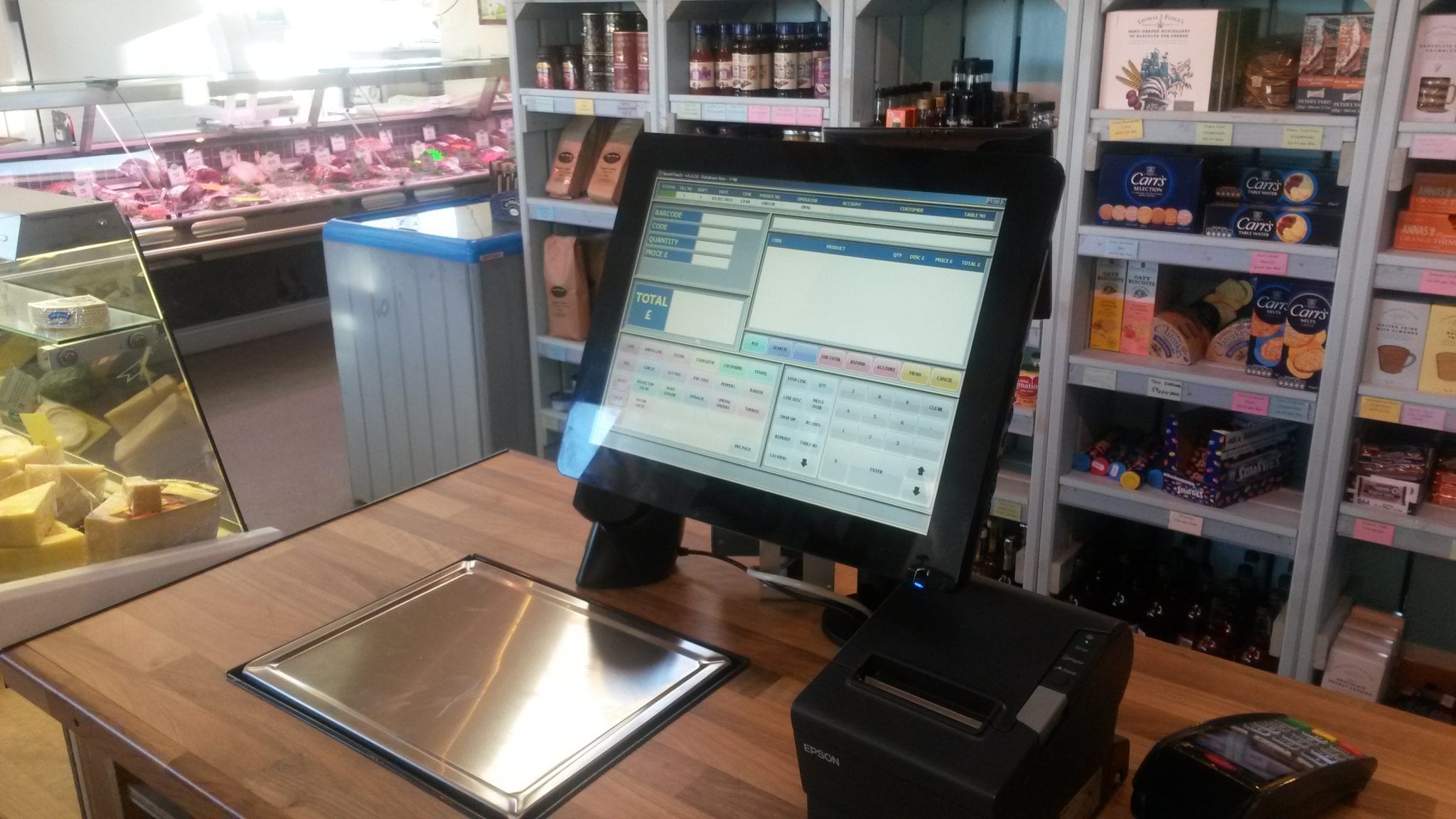
    The all-in-one countertop kiosk is a versatile and robust solution with internal space for up to five devices. The latest addition to imageHOLDERS vast portfolio of self-service solutions, the Integrator Pro 15 is a new take on the original integration kiosk imageHOLDERS launched in 2015. The upgraded design can enclose a 15” tablet or touch screen alongside multiple devices within the base of the kiosk.

    Designed to be modular and easy to adapt, the futureproof design drastically lowers the cost of ownership in comparison to alternative solutions. The Integrator Pro 15 is an all-in-one kiosk which can be countermounted, or mounted on bespoke furniture designed by imageHOLDERS to mount kiosks securely.

    Alongside the new Integrator Pro 15, imageHOLDERS will be showcasing their self-service retail solutions which have been successfully deployed for several large retailers and supermarkets.

    Many industries are seeing technology greatly impact their traditional structure, and none more so than the retail and hospitality industry. Retail Business Technology Expo brings together over 370 suppliers and organisations within the retail and hospitality industries, showcasing innovative solutions and tools to support businesses.

    Retail Business Technology Expo is being held at the London Olympia on the 2nd and 3rd May 2018. If you would like to visit imageHOLDERS exhibit, please click here to sign up for your ticket.

  • Forever 21 investigating POS security breach

    Forever 21 investigating POS security breach

    A Forever 21 data breach uncovered last November has prompted the fashion retailer to boost security at its checkout counters.

    In the security scare, hackers installed malware on point-of-sale machines at store checkouts in the US.

    A two-month long investigation has revealed that encryption technology on some POS devices at an unspecified number of stores was not always on and that malware had been installed by criminals looking to mine the system for customer payment data.

    The breaches occurred between April 3 and November 18 last year, lasting between a few days and in some cases the entire period, the company has admitted. Forever 21 stores use multiple POS devices and in most cases only one or a few of the POS devices in a store were affected.

    The malware searched for data on cards used for payments at the point-of-sale. In most cases, the data did not include the cardholder’s name, so was of no use to the hackers, but in a minority of instances, the cardholder’s name was found.

    Forever 21 said it has been working with its payment processors, hardware suppliers and independent consultants to improve the encryption systems on the POS devices in all Forever 21 stores.

    “We also continue to work with the payment card networks so that the banks that issue payment cards can be made aware of this incident,” the company said in a statement. “Lastly, we will continue to support law enforcement’s investigation of this incident.”

  • HP develops POS solution for retailers

    HP develops POS solution for retailers

    HP has developed a point of sales solution aiming to reimagine how technology can transform the in-store experience for customers.

    HP ElitePOS supports several use cases including interactive signage, employee attendance, and self-service applications like a customer check-in and access to additional product offerings in the “endless aisle”.

    For retailers who want a clean and clutter-free counter space, or who need greater versatility in the placement of their point-of-sale terminal, the display can be separated from the input/output (I/O) base for maximum placement versatility.

    With point-of-sale devices increasingly targeted by hackers, security continues to be top of mind for the retail industry. According to Verizon’s 2016 Verizon Data Breach Investigations Report, 64% of breaches in the retail industry that contained data loss were caused by point-of-sale intrusions.

    “As the retail and hospitality industries undergo a revolutionary shift, the point-of-service device will be a critical hub in delivering the in-store experience for customers,” IDC VP of retail insights Leslie Hand said.

    “But with this rapid transformation in digital business also comes increased threats, in the form of targeted attacks and malware. Retail POS systems, including the new HP ElitePOS, must be able to balance the growing needs of the customer and the brand while also acting as a guardian of the  sensitive information that passes through the device on a daily basis.”

  • Dairy Farm Singapore puts out unified POS terminals

    Dairy Farm Singapore puts out unified POS terminals

    Dairy Farm Singapore Group (DFSG) has confirmed it is deploying 2,000 new unified point of sales (POS) terminals across all Cold Storage, Market Place, Jasons, Giant, 7-Eleven and Guardian stores island-wide. Over 650 stores are expected to receive the new terminals in 2017.

    The new POS terminals will be deployed at its Cold Storage, Market Place, Jasons, Giant, 7-Eleven and Guardian Health and Beauty stores.

    While the company positions the investment as giving shoppers greater payment convenience, the project will net the group a reduction of 20%-30% (or 9-11 seconds) in the time required at checkout counters. It will also improve productivity with savings of 106 hours a day for all the stores.

    The collaboration between DFSG, NETS and UOB is in line with the Singapore Government’s Smart Nation initiative to leverage innovative technology in enabling the use of cashless payment in Singapore. It will accelerate the retail sector’s transition from using paper-based instruments to adopting electronic platforms that promote interoperability, efficiency and security, and offers a ubiquitous user experience that cuts across market segments and demographics. Implementing Unified POS solution is part of this vision as it is swift, simple, secure and accessible to all and accepted by all.

    In addition to credit and debit cards, the Unified POS system will support NETS, NETS FlashPay, Apple Pay, Android Pay, Samsung Pay, UOB Mighty Pay, and EZ-Link. DFSG’s co-brand card – the UOB Delight card – as well as its Tap For More loyalty programme via the PAssion card have also been integrated into the system.

    Dairy Farm Singapore finance director Tom van der Lee says “The implementation of the Unified POS system significantly simplifies and shortens the payment process for our customers.  It also has the added benefit of improving efficiency which means that cashiers now have more time to focus on what is truly important – serving our customers.”

  • Midas Touch Delivers Large POS Tablet for Hospitality & Retail

    Midas Touch Delivers Large POS Tablet for Hospitality & Retail

    The MTB-3133 13” large Point-of-Service (POS) Tablet provides secure data capture, storage and transmission within a durable design ideal for food ordering. Midas Touch large POS tablet run on Windows 10 IoT Enterprise OS for seamless front and back office application integration and take full advantage of advanced Windows 10 security.

    The MTB-3133 Rugged Tablet features the integration of a 13.3″ Full-HD capacitive touch screen, energy efficient Intel Bay Trail J1900 processor, and a full-slot smart card reader within a slim, lightweight, durable package. With built-in 2M camera and GBE as well as options for RFID reader. With its large, vivid display, the MTB-3133 is perfect for the mobile cart for POS systems or the nursing cart.

    Midas Touch POS Tablet provides dedicated solutions ideal for customer service. All optional features are built into the tablet for reliable operations, providing customized POS tools for a restaurant, hotel, store or entertainment company to achieve enhanced ROI.

  • Spa Ceylon opens nine POS operations in Asia

    Spa Ceylon opens nine POS operations in Asia

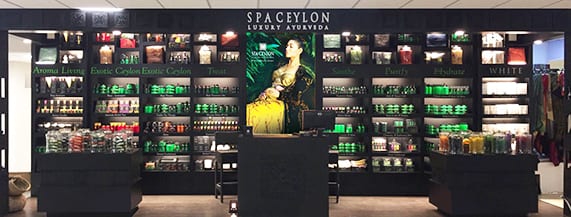
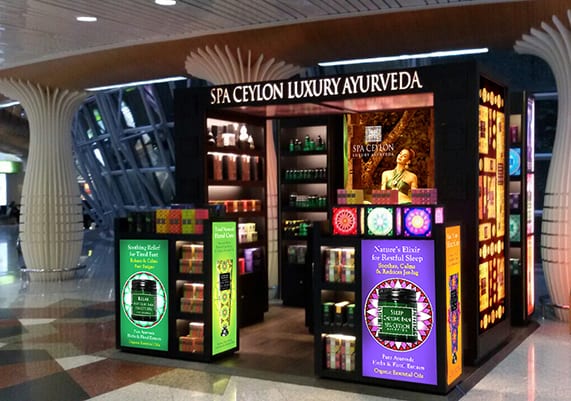
    Sri Lanka’s Spa Ceylon Ayurveda retail and spa company has opened nine new points of sale in Asia, including business with standalones, kiosks and airlines since it exhibited at last May’s Tax Free Asia Pacific show and it is expecting five more new presences in early 2017.

    Spa Ceylon says this progress follows the debut presence of its range of body, bath, beauty, aroma and wellness products to travel retail, which has been built on ‘success across ten countries with 55 boutiques and spas already in operation in downtown retail’.

    SPECIAL TRAVEL RETAIL OFFERINGS

    Commenting on the offering, company management said: “The all natural range of products offer a fresh new aspect to travel retail through Ayurveda-based formulae, using exotic herbs, fruits and minerals from their island home of Ceylon.

    Spa Ceyon has a strong presence at Bandaranaike International Airport in Colombo, Sri Lanka.

    KLI Airport 2

    Spa Ceylon at Kuala Lumpur International Airport in Malaysia.

    AMBITIOUS EXPANSION PLANS

    “The vibrant packaging in jewel-hued bottles and gift boxes adorned with colourful traditional palace art makes the brand stand out and has soon become a popular gift purchase among travellers.”

    By contrast, the impulse offering comprises the Spa Ceylon Palace Art range which is a collection of lip balms, hand creams, soaps, solid perfumes, coconut butters and balms with rich tropical scents made with fruit butters, herbs and oils.The company describes the core of its travel retail offering based on wellness and impulse. It adds that the wellness ranges such as ‘Sleep, De Stress and Detox’ offer an array of products suited for travel weariness and wellness needs.

    The Spa Ceylon store in the prestigious Royal Court, in Colombo, Sri Lanka.

    GROWING TR FOOTPRINT IN JAPAN

    Spa Ceylon’s management says it has continued to grow its global foot print within travel retail and downtown retail with the opening of its first retail store in Tokyo in October 2016, followed by a 3,000sq ft flagship store in Tokyo’s premium shopping district in the Ginza in November 2016.

    A further 10 locations are planned in the next calendar year in Japan and Spa Ceylon also intends to expand rapidly over the next 24 months, reaching a milestone of 100 stores internationally by 2018, across 20 countries.

  • Kiosk uniting with Taiwan Posiflex

    Kiosk uniting with Taiwan Posiflex

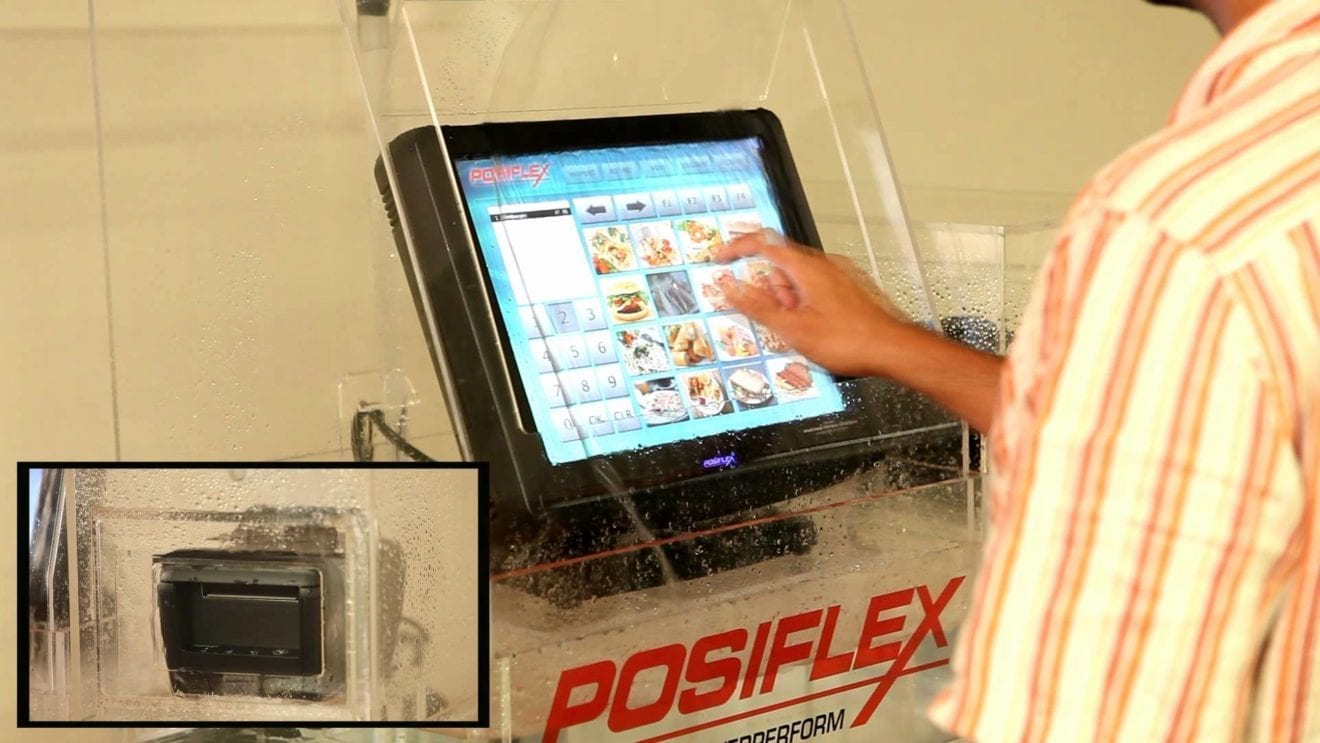
    Taiwanese Point-of-Sales terminal brand Posiflex announced that they have entered into a purchase agreement with Kiosk Information Systems (Kiosk), a provider in self-service solutions.

    Posiflex will offer Kiosk a cash purchase for all outstanding ordinary shares, for a total consideration of approximately US$105 million. Both companies are industry forerunners known for best-in-class POS and self-service platforms. Combining these complementary strengths positions Posiflex for continued growth tied to emerging “Internet of Things” (IoT) applications within the service automation industry.

    Retailers, financial service providers, hospitality and logistics service providers are key among an even wider industry audience driving steady and steep demand in transaction automation.

    Deployers are increasingly incorporating self-service as a “must-have” element of today’s Omnichannel consumer experience; increasing touch points, reducing costs – all while simultaneously collecting valuable transaction data.

    Kiosk is unique among its’ competitors in its ability to provide a complete end-to-end solution encompassing custom design engineering, manufacturing, software development, field services, and highly secure managed services. This “total solution” approach to services has fueled Kiosk’s continued growth and reinforced analyst’s rankings of Kiosk as the dominant North American provider and #3 globally.

    As the IoT is driving improved asset utilization, better logistics management, and better customer experiences, self-service automation platforms become an increasingly integral element of Omnichannel sales strategies.

    Utilizing IoT data from transactions provides valuable insight for customer-specific data collection and enables customized point of sales marketing. Posiflex CEO Owen Chen adds that, “By combining Posiflex and Kiosk’s dual-value proposition in this domain, we are confident in emerging as a distant leader in this growing market.”

  • Asian mPOS use booming

    Asian mPOS use booming

    The fast-growing population of smartphones and tablets are driving an Asian mPOS boom.

    Mobile point-of sale (POS) terminals will take on a significant role in businesses, handling 40 per cent of all retail transaction value by 2021, up from an expected 12 per cent in 2016, finds Juniper Research.

    The company says mPOS is enabling smaller merchants in emerging markets, particularly across India, Southeast Asia and Latin America, to accept card payments and grow their businesses.

    With larger retailers adopting mPOS in retail sales, Juniper forecasts the use of mPOS systems to account for more than one in three POS terminals by 2021

    “We are seeing several vendors tailor their software to the needs of specific industries, integrating mPOS capabilities as part of broader cloud-based business software,” said James Moar, research author.

    “These additional services can then make use of the sales data directly to manage inventory, monitor staff performance and other functions, which can all add more value to a business and justify a higher margin.”

  • 1 in 3 POS terminals to be mobile by 2021

    1 in 3 POS terminals to be mobile by 2021

    Smartphone and tablet-based mobile point-of sale (POS) terminals will handle 40% of all retail transaction value by 2021, up from an expected 12% in 2016, a new study from Juniper Research showed.

    The research firm forecasts that the use of mPOS systems will account for more than 1 in 3 POS terminals by 2021, driven by larger retailers adopting mPOS as part of an array of point-of-sale options.

    The new research, “Worldwide mPOS Markets: Devices, Technologies & Growth Opportunities 2016-2021,” found that mPOS will enable retailers to ‘queue bust’ in stores, reducing lines and developing more targeted and situational campaigns as well as offering automatic ordering systems in restaurants.

    “We are seeing several vendors tailor their software to the needs of specific industries, integrating mPOS capabilities as part of broader cloud-based business software,” commented research author James Moar.

    “These additional services can then make use of the sales data directly to manage inventory, monitor staff performance and other functions, which can all add more value to a business and justify a higher margin.”

    The research has also found that mPOS is enabling smaller merchants in emerging markets, particularly across India, Southeast Asia and Latin America, to accept card payments and grow their businesses. Much of the growth in these regions being supplied mostly by local vendors, such as Banamex, Digio, PagSeguroand

  • Pos Indonesia to expand storage facilities

    Pos Indonesia to expand storage facilities

    State postal service firm PT Pos Indonesia plans to expand its warehouse facilities from 3 hectares to 3 hectares to improve its logistics services.

    The land acquisition and development is estimated to cost US$250 million to $300 million.

    PT Pos Indonesia president director Gilarsi Wahju Setijono did not say how the firm would finance the land procurement, but did say the company was in talks with other state-owned enterprises ( SOEs ) for asset swaps. The company has many assets in strategic locations that it could exchange for larger plots of land in other locations.

    “We are asking them to exchange their plots, such as at the airport or seaport with our assets in strategic places,” Gilarsi said.

    Despite having assets in strategic places, PT Pos is struggling with increasing expenditure that is eating away at its profits. It posted Rp 16 billion ( US$ 1.2 million ) in profit last year.

    “Our revenue increased a bit from Rp 4.3 trillion ( US$ 324 million ) in 2014 to Rp 4.6 trillion ( US$ 326 million ) in 2015, but our expenditure increased more than our revenue,” Gilarsi said.

    PT Pos is currently conducting restructuring in its logistics business. The company will also revive its financial services business, such as offering money transfers and utilizing postmen as payment agents in the next four years.

    “Sixty percent of the Indonesia population do not use online banking. We’ve got many branches and will employ our postmen as payment agents,” he said.