Retail News CRM

Tag: POS

  • Singapore’s SoftPay Mobile buys Vietnam MPOS

    Singapore’s SoftPay Mobile buys Vietnam MPOS

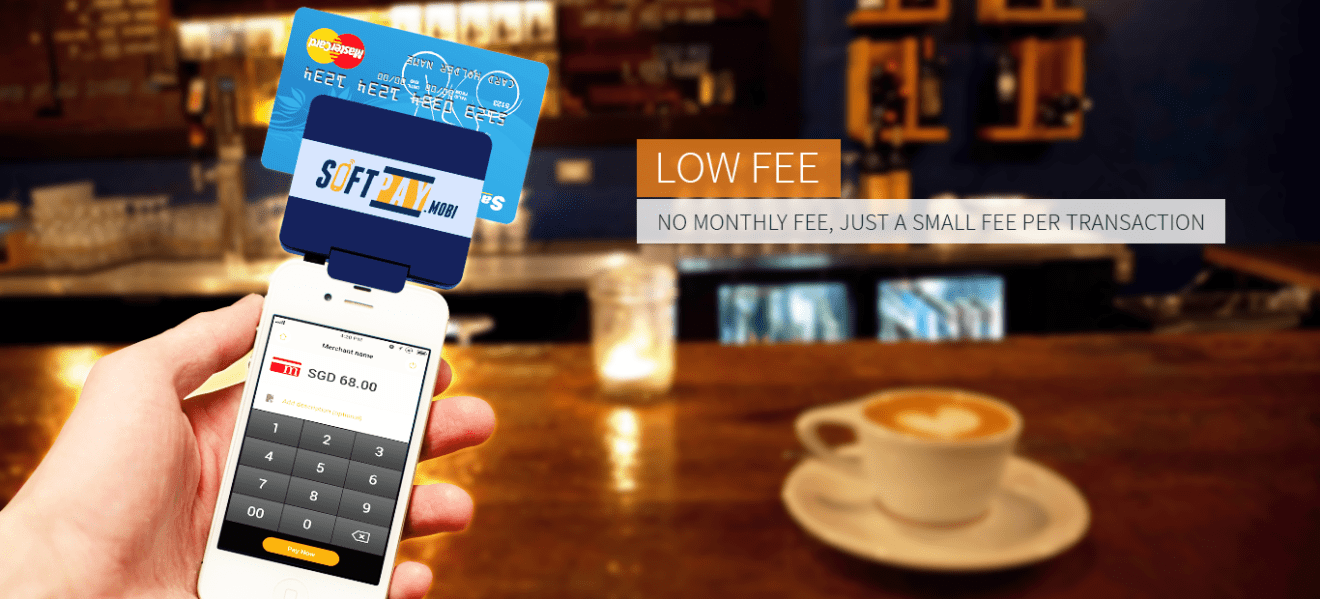
    Singapore-based mobile point of sale (mPOS) provider SoftPay Mobile International has arranged to buy out Vietnam MPOS Technology.

    Vietnam MPOS customers include Mai Linh Taxi Group, one of the largest taxi groups in Vietnam, as well as insurance companies. Lazada Vietnam, the largest e-commerce group in the country, is also a customer.

    mPos has proven incredibly popular in Southeast Asia where a vast majority of people living in rural areas have no access to traditional banking infrastructure.

    With the advance of mobile technology, mPos devices such as SoftPay’s mobile terminal are able to take advantage of these devices to provide merchants anywhere with a full suite of options for receiving payments.

    “With this investment, SoftPay Mobile will be able to work closely with our new Vietnam MPOS company to further consolidate our market position as the leading mPOS company in Southeast Asia,” said Christopher Low, CEO of SoftPay Mobile.

    SoftPay Mobile is a venture-backed mPOS company with a presence in Vietnam, Malaysia, Singapore and Indonesia. Since its incorporation in late 2014, it has been aggressively pursuing expansion in Southeast Asia.

  • How EpiCentre used iBeacon to integrate online and offline

    How EpiCentre used iBeacon to integrate online and offline

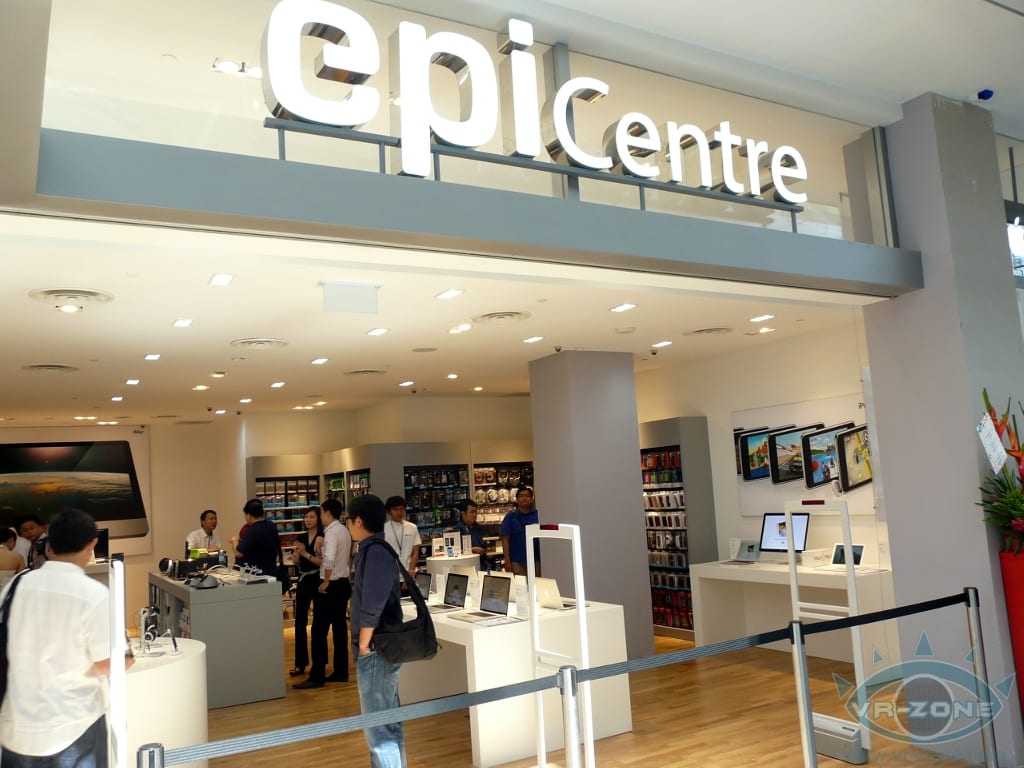
    In Singapore, location-based marketing is still largely a fringe activity, adopted mostly by marketers who are tech-savvy and risk-takers. Marketing spoke to one such risk-taker: Danielle Siauw, manager (CRM, m&e-commerce, new media) at Apple Premium Reseller EpiCentre.

    EpiCentre recently invested in Apple’s iBeacon technology. The iBeacon is a device that sends Bluetooth signals detectable by iOS software, allowing marketers to send location-targeted promotions and content to Apple users.

    The iBeacon functions as part of EpiCentre’s membership programme, allowing members to earn points through their mobile app when they visit stores. For example, members earn 10 points every time they step in to a store. EpiCentre also uses iBeacons to deliver location-targeted discount coupons to customers near their stores, amongst other uses. Currently, all 10 EpiCentre stores are iBeacon enabled, and the brand is looking into an iBeacon payment system as well.

    Marketing: Why did you choose to invest in location-based technology?

    EpiCentre started out as a brick and mortar retailer. Our core strength is still in retail stores. As all of us know, the retail scene is looking bleak in Singapore with more competition from e-commerce. To counteract this problem, we started to look into omni-channel strategies for sales and marketing. We started by revamping our CRM system for brick and mortar in 2013, then integrated our e-commerce site www.epilife.com.sg with our CRM system in early 2014. In late 2014 we tied our mobile platform, epiApp, with our CRM system and e-commerce site. In this way, we have successfully delivered a seamless membership programme that extends to both the online and offline channels; however, there is still a missing puzzle, which is how to use the mobile platform to drive footfall in our stores. For this, iBeacon becomes a natural choice.

    Marketing: Location-based marketing has been held up as a marketing goldmine over the past few years. Yet, still it’s not used on a mass scale. Why is this?

    One of the key issue is with the Personal Data Protection act. Location-based marketing through SMS or notifications are often seen as spam. To send users information via this mode requires opt-in. The customers who opt-out would be missed opportunities.

    Secondly, although the cost of doing location-based marketing is not high the expectation in terms of ROI (i.e. translating to actual sales) still does not match up.

    Lastly, location-based technology such as GPS and GSM do not render accurate results when used indoors. However, there are other location-based technologies that work indoors, such as geo-fencing and iBeacons. iBeacons are, however, very much much in-app, and customers still need to download and install the app on their phone. This can be cumbersome. Also, customers need to switch on the Bluetooth on their mobile devices to experience the iBeacon.

    Generally there is slow adoption by retailers for such technology in Singapore, especially among traditional retailers. One reason for this is low user adoption and education about such technologies. I think it boils down to a chicken and egg issue: Retailers need to find compelling reasons that location technology can complement their existing businesses.

    Marketing: How should retailers strike the balance between annoyance and genuine consumer value?

    I think whatever technology that we implement, we must always add value to our customers and stakeholders. Customers must find the technology useful; the technology has to solve a problem. We must first understand our own business and our customers, then formulate the right content and promotions to reach out to the customers. For example, offering relevant content, attractive offers and coupons, or as part of the company’s loyalty programme. We should also be mindful about the number of times the content is sent, and not be spammy. One advantage of iBeacons is that they allow for content and promotions to be tailored to individuals, based on past purchases and preferences.

    Marketing: Have you seen cases where iBeacons have been deployed effectively?

    Macy’s uses the iBeacon in 800 stores in the US. They can effective track customer behaviour and send out relevant promotions within the category through their mobile app. This cuts down the print materials required and allows them to update their promotions on the fly.

    Another innovative and practical use of the iBeacon is at Starwood. They use the iBeacon to greet guests upon arrival, allowing guests to skip the whole check-in process, go direct to their room and use the mobile phone to enter the room. Starwood also uses the iBeacon to let housekeeping staff know if guests are still in the rooms. This creates a seamless experience for the guests through their mobile app. This shows how the iBeacon can integrate the online and offline experiences in a way that adds genuine value.
  • Powa takes tablet POS to Japan

    Powa takes tablet POS to Japan

    As the demand for tablet and mobile-based point of sale solutions accelerates across the Asia Pacific region, Powa Technologies today announced that S-Cubism Technologies has become the first Japanese-based POS software provider to complete integration with its PowaPOS tablet-based hardware.

    The full-featured solution will use its EC-Orange POS for iPad and Windows, and is available from Billing System Corporation, a leading payment gateway and reseller. Billing System Corporation is also a reseller of PowaTag, Powa’s innovative mobile payment enablement application that turns any point of contact into a point of sale.

    “Powa has created the most sophisticated and revolutionary fixed tablet point of sale platform available, which will help us serve the growing demand for tablet-based solutions,” said Kenji Hosoda, CTO, S-Cubism Technologies. “The fully integrated hardware and advanced SDK combine to help us create a solution that will easily meet the needs of the Japanese retail marketplace.”

    PowaPOS is the first point of sale platform purpose built for tablet-based payments. Its fully integrated design rids merchants of the need for mismatched peripherals and provides industry-leading ease of set-up. Features include a built in thermal printer, 2D QR/barcode scanner, orientation sensor, as well as the optional PowaPOS Cash Drawer – all in a compact footprint and powered by a single cord. With its advanced SDK, PowaPOS is the only tablet-based platform to easily integrate with all POS software applications across all operating systems. The PowaPOS SDK also supports third party payment devices, including NFC/Apple Pay devices, and enables instant integration with PowaTag.

    “Powa Technologies’ PowaPOS and PowaTag solutions are truly revolutionary in the retail marketplace today,” said Toshihiko Eda, President & CEO of Billing System Corporation. “The innovative PowaPOS platform is the ideal component to help us deliver a complete POS and payments solution to existing customers, and open up new markets for us in Japan, as many retailers seek a tablet-based solution for the very first time.”

    EC-Orange POS is a next generation POS software solution, available for iPad and Windows tablets. Features include payment processing, inventory management, customer relationship management, promotions support, and sales analysis. With more than 4,200 stores across Japan already using EC-Orange POS, S-Cubism is one of the country’s leading POS software providers.

    “Powa’s partnerships with Billing System Corporation and S-Cubism Technologies provides retailers in Japan with a fully integrated tablet POS solution to run their businesses, complete with an unmatched ‘out of the box’ hardware experience,” said Zvi Mitlanski, SVP & GM, Asia Pacific, PowaPOS. “With this integration, PowaPOS continues to expand its global footprint, with a significant step forward in providing next generation tablet-based payments to the retail end-user in Japan.”

  • Malaysian customs urges small retailers to invest in GST-compliant sales system

    Malaysian customs urges small retailers to invest in GST-compliant sales system

    Installing a point-of-sale (POS) system to issue printed receipts as part of implementing the goods and services tax (GST) will only be a one-time investment, the Malaysian Customs Department’s GST division told operators of small businesses on Thursday.

    GST division director Datuk T. Subromaniam said the system will be usable for a long-term basis and would help businesses identify standard and zero-rated items, adding that adopting POS would cost between MYR3,000 (USD828) and MYR4,000.

    He also said tax deductions were available under Accelerated Capital Allowance (ACA) for businesses on purchases of information communication technology equipment, hardware and training.