Retail News CRM

Tag: post

  • Instagram’s Hashtag Revolution: Limiting Tags Per Post, A Millennial Nightmare or Gen Z Evolution?

    Instagram’s Hashtag Revolution: Limiting Tags Per Post, A Millennial Nightmare or Gen Z Evolution?

    Over the past decade, hashtags have stood as a vital feature of Instagram, rarely experiencing any significant changes since their introduction in 2011. However, Meta, the tech giant behind Instagram, is in the process of testing what could potentially be the most significant change to the platform’s hashtag system to date.

    Testing Hashtag Limitations

    Instagram appears to be experimenting with restricting the number of hashtags users can include in their posts. Some users have taken to online forums to voice their experiences with the new limitations, reporting that the platform is preventing them from adding more than three hashtags to a post’s description. If users attempt to go beyond this limit, they are met with an error message.

    This restriction has not been officially announced by the platform and does not appear to be universally applied to all accounts. It seems that Meta is currently in the process of testing the change on a select number of accounts before deciding whether to roll it out platform-wide. Alternatively, the feature could be in the early stages of a gradual rollout, similar to Instagram’s recent interface redesign.

    Instagram’s Changing Landscape

    When Instagram launched its hashtag feature in 2011, it became one of the most effective methods for users to discover posts related to specific topics. For many users, particularly those looking to reach beyond their immediate follower base, the use of up to 30 hashtags per post was key to expanding their reach.

    However, the perceived importance of hashtags has been diminishing in recent years. Instagram’s ‘Explore’ page now curates posts and reels for users based on a variety of factors, including content and description, rather than just hashtag use. Instagram CEO Adam Mosseri has also publicly stated that hashtags do not contribute to a post’s reach, instead serving as a tool for categorization.

    Hashtag Use and Generational Differences

    For millennials, understanding and strategically using hashtags was a valuable skill in the mid-2010s. Yet, the perception of hashtags has changed, with their use now potentially being seen as outdated or even as an indication of trying too hard. Some have argued that changing the hashtag system is unnecessary and could be seen as an unwarranted critique of millennials. If, as stated, hashtags do not significantly impact the reach of posts, the utility of changing the system is questioned.

    Questions & Answers

    What changes are being tested by Instagram?

    Instagram is currently testing a limitation to the number of hashtags users can include in their posts, restricting them to a maximum of three.

    How important are hashtags in increasing a post’s reach on Instagram?

    According to Instagram’s CEO, Adam Mosseri, hashtags do not significantly increase the reach of a post, instead functioning as tools for categorization.

    What is the perception of hashtag use across different generations?

    While hashtag use was a valuable skill for millennials in the mid-2010s, it is now potentially viewed as outdated or trying too hard, particularly among newer generations of social media users.


  • Taiwan’s Retail Sales Slump For Third Consecutive Month Amid Tariff Negotiations

    Taiwan’s Retail Sales Slump For Third Consecutive Month Amid Tariff Negotiations

    Retail sales in Taiwan experienced a decline of 2.9 percent in June, falling to a total of NT$390 billion (US$13.3 billion). This downward trend marks the third consecutive month of sales decreasing.

    Decline in Retail Sales

    The drop in sales fell within the anticipated range of 0.4 to 3.4 percent. The sectors most affected were those of cars, motorcycles, auto parts, and accessories, which faced a significant decrease of 17.3 percent in year-on-year sales. The slump in demand for these industries was largely due to customers waiting for the results of tariff negotiations between Taiwan and the United States.

    The fabric and clothing sector also felt the impact, with sales falling 6.3 percent. This was attributed to fewer holidays in the period. Additionally, department stores recorded a 3.6 percent decrease in sales.

    Food and Beverage Industry

    The food and beverage sector, after experiencing growth for three consecutive months, also reported a decline of 2 percent. The primary factor contributing to this downturn was a reduction in restaurant sales.

    Overall Retail Sales

    For the second quarter, overall retail sales in Taiwan slid by 1.6 percent, and by 0.4 percent for the first half of the year. Looking ahead, the Ministry of Economic Affairs predicts retail sales growth for July to vary between a 2 percent drop and a 1 percent rise.

    Questions & Answers

    What was the overall decline in retail sales for Taiwan in June?
    The overall decline in retail sales for Taiwan in June was 2.9 percent.

    Which sector experienced the most significant decrease in sales?
    The sector of cars, motorcycles, auto parts, and accessories experienced the most significant decrease in sales, with a drop of 17.3 percent year-on-year.

    What projections have been made for retail sales growth in July?
    The Ministry of Economic Affairs predicts that retail sales growth for July will range between a 2 percent drop and a 1 percent rise.

  • Taiwan’s Retail Sales Suffer Third Consecutive Month Of Decline Amidst Auto Sector Slump

    Taiwan’s Retail Sales Suffer Third Consecutive Month Of Decline Amidst Auto Sector Slump

    Retail activity in Taiwan took a hit in June, as sales dropped by 2.9% to approximately NT$390 billion or US$13.3 billion, marking the third consecutive month of decline.

    Industry Specific Declines

    The slump was consistent with the projected range of a 0.4% to 3.4% decrease in sales. The most significant dip was observed in the automotive sector, with car, motorcycle, and auto parts and accessories sales plummeting by 17.3% year on year. This industry-wide slowdown was exacerbated by customers holding off on purchases while awaiting the outcome of Taiwan’s tariff discussions with the United States.

    Meanwhile, the fabric and clothing industry also suffered, recording a 6.3% drop in sales. This decline was partly due to a reduction in the number of holidays in June. Similarly, department stores experienced a 3.6% drop in sales.

    Food and Beverage Sector

    The food and beverage industry, which had previously enjoyed three months of consecutive growth, reported a 2% decrease in sales. According to the Ministry of Economic Affairs, this decline was largely driven by a slump in restaurant sales.

    Overall Retail Landscape in Taiwan

    Cumulatively, the country’s retail sales slid by 1.6% for the second quarter and 0.4% for the first half of the year. Looking ahead, the Ministry of Economic Affairs predicts that retail sales growth in July could range from a 2% decline to a 1% increase.

    Questions & Answers

    What was the overall decline in Taiwan’s retail sales in June?
    Sales fell by 2.9% to approximately NT$390 billion or US$13.3 billion.

    Which sector experienced the most significant sales decline?
    The automotive sector, which includes cars, motorcycles and auto parts and accessories, experienced the most steep decline with a drop of 17.3%.

    What are the projected retail sales for July as per the Ministry of Economic Affairs?
    The Ministry expects the retail sales growth for July to range between a decrease of 2% and an increase of 1%.

  • Instagram rolls out more actionable insights for its Creators

    Instagram rolls out more actionable insights for its Creators

    Instagram is making some changes to its Insights feature to help creators better understand how their content is performing. The goal is to give creators more actionable insights and personalized recommendations so they can learn more about overall trends across their audience and their content’s performance.

    One of the new metrics is called “View Rate.” This metric tells creators what percentage of their followers and non-followers continue to watch after the first 3 seconds. The first few seconds of a reel are the most important, so this metric can help creators see if their reels are grabbing their audience’s attention right away.

    Another new metric is called “Views Over Time.” This metric shows creators how many views their post has received so far compared to the average views their posts typicaly get over the same time period. Creators will also be able to break down their views between followers and non-followers.

    In addition to these new metrics, Instagram is also providing more actionable, personalized tips to help creators understand if their content is performing better or worse than usual. These tips are meant to help creators more easily see which content is resonating with their audience.

    These changes are part of Instagram’s ongoing effort to help creators grow their audience and reach. By providing creators with more data and insights, Instagram hopes to make it easier for them to create content that resonates with their audience and achieve their goals.

    I think these metrics are very valuable to Instagram creators, and it’s frankly surprising they hadn’t been made available until now. As a creator myself, I’m always looking for ways to improve my content and reach a wider audience. These new features and personalized tips in Insights will definitely be helpful in this regard. I’m also excited to see how these changes will help other creators grow their audience and reach. With TikTok right now on shaky ground, it’s important for creators to diversify and be able to find ways to monetize in more than one platform, and I’m glad Instagram is providing the tools to assist with that goal.

  • Australia Post announces three-year strategic partnership deal with IKEA

    Australia Post announces three-year strategic partnership deal with IKEA

    Australia Post and IKEA announced a new strategic partnership, entering into a three-year agreement to further expand IKEA’s delivery footprint in Australia.

    With ten stores in six states and territories Australia-wide, the Swedish retailer’s focus on omnichannel retailing through e-commerce and remote selling channels has sparked exponential parcel growth over the past five years, with over 500,000 parcel orders being fulfilled in FY24. Under the new multi-million-dollar deal, Australia Post becomes their primary eCommerce fulfilment partner for small and medium parcels, accounting for approximately 65% of IKEA Australia’s total number of parcel orders.

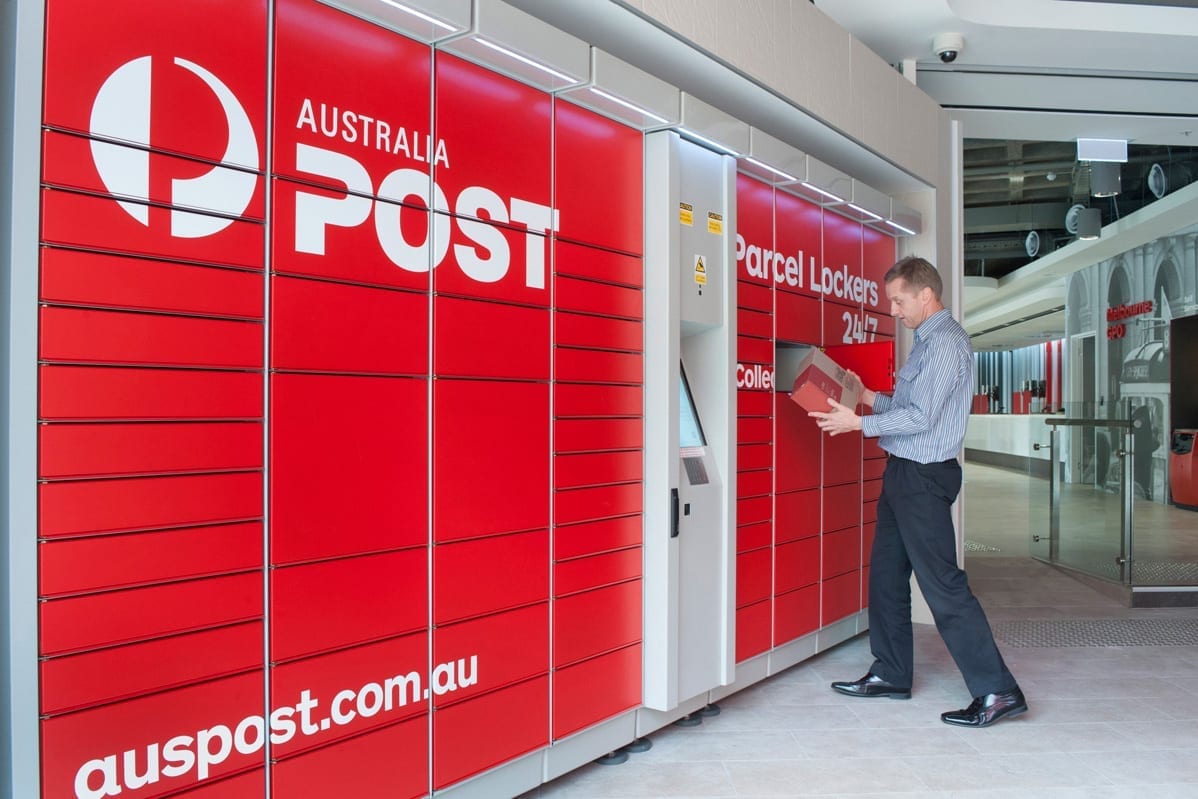
    With 23% of all IKEA Australia parcel orders delivered to areas outside the reach of metro stores, Australia Post will support the expansion of IKEA deliveries across its extensive network, reaching even the most regional and remote parts of Australia. The widespread Australia Post collection points across Australia will also greatly benefit IKEA customers, who will be able to pick up their IKEA parcel orders from convenient locations such as their local Post Office.

    Australia Post CEO and Managing Director, Paul Graham, highlighted the partnership as strategically beneficial for both companies.

    “Australia Post is proud to be chosen as IKEA Australia’s trusted delivery partner. With our robust infrastructure and commitment to reliability and efficiency for customers, we have built the largest delivery network in the country.

    “We look forward to supporting the continued growth and momentum of this iconic brand as they expand their customer reach in Australia through our extensive delivery capabilities.”

    IKEA Australia CEO and Chief Sustainability Officer, Mirja Viinanen, said:

    “As an omnichannel retailer, our goal is to bring IKEA to more people, in more ways and in more places, making it easier and more convenient than ever before for Australians to shop with us to create homes they love.

    “We’re famous for our flatpack furniture, however what our customers don’t always realise is much of the IKEA home furnishing range is available to them in a parcel via the post. Partnering with Australia’s largest delivery provider allows us to greatly enhance our accessibility for our customers in this way.

    “We are excited to work together with such a highly trusted brand as Australia Post, who shares our values when it comes to excellence in customer experience and a dedication to sustainability and look forward to a successful new partnership.”

    Australia Post is projected to deliver over 250,000 IKEA parcels each year under the agreement, offering both Parcel Post and Express Post delivery options for customers across the country.

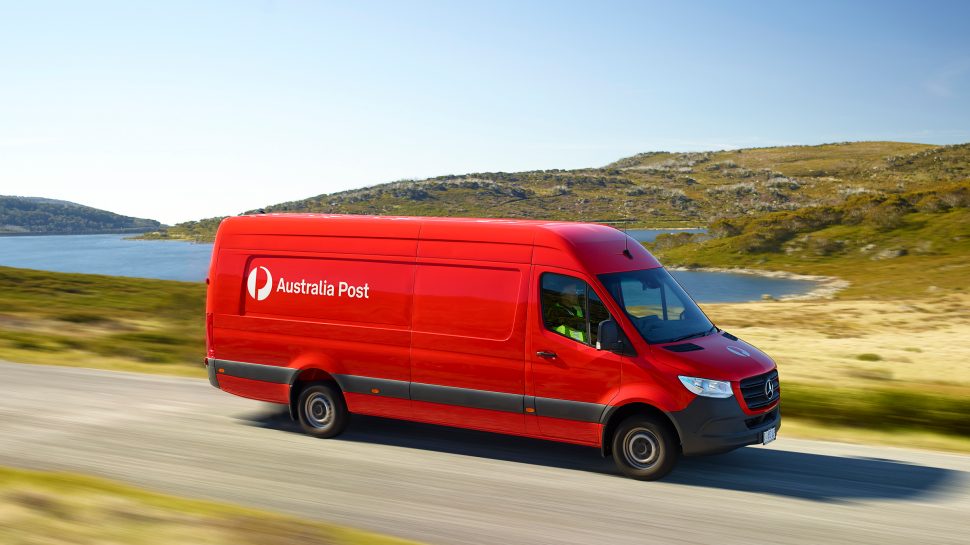
    Sustainable delivery solutions also underpin the partnership, with Australia Post operating the country’s largest electric delivery vehicle fleet, contributing to IKEA Australia’s ambition to offer zero-emission deliveries.

    The three-year partnership launches this October.

  • Australia Post Metro next day delivery service launches in Adelaide

    Australia Post Metro next day delivery service launches in Adelaide

    Australia Post has just expanded its next-day delivery service, Australia Post Metro, to Adelaide. This delivery service provides eligible retailers and their customers with speed and more certainty when they shop online.

    The launch of the new service is a direct response to the Adelaide community continuing to embrace the online shopping trend with consistent year-on-year eCommerce growth with online purchases 15.2% higher than in 2019 and nearly 500,000 households shopping online in the past year.

    Recent data found that 68% of online shoppers are likely to abandon their shopping cart if they feel the delivery method is too slow.

    Australia Post Metro addresses these changing consumer needs and helps retailers entice customers to finalise their online purchase.

    Gary Starr, Australia Post Executive General Manager Parcel, Post and eCommerce Services said the flexibility and reliability that next-day delivery provides customers was becoming increasingly important, as the desire for fast fulfilment continues to be a key factor in online sales.

    “We’ve been listening to our customers, and know they expect more certainty, simplicity and speed when ordering online. The Australia Post Metro service raises the bar for customers – prioritising next day delivery in metropolitan areas enabling us to respond to that demand and deliver parcels to customers’ doors sooner.

    “We already have some of the country’s largest retailers using the Australia Post Metro service covering the lifestyle, fashion, beauty and FMCG space, with more retailers coming online every month. This new service provides a more agile, flexible delivery option as we head into our busiest time of year.” Mr. Starr said.

    Jo-Ann Hicks, Director of BIG W’s Ecom and Digital business says, “BIG W is excited to offer Australia Post’s next day delivery service to our Adelaide customers, giving them the opportunity to receive their BIG W shopping quickly by ordering online. Next day delivery joins many convenient ways to shop at BIG W including Pick up and Direct to Boot services.”

    In less than a year since the launch of Australia Post Metro across Australia, more than 2.6 million parcels have been delivered and this is expected to continue growing strongly as demand for this product increases, and new retail partners come on board.

  • Instagram to adjust its algorithm to give preference to original content

    Instagram to adjust its algorithm to give preference to original content

    Sick of seeing only TikToks on Reels? So is Instagram. On a more serious note, Instagram is tweaking its algorithm not only to crack down on reposts but also to incentivize creators to produce original content.

    Adam Mosseri, the current head of Instagram, announced yesterday some interesting changes coming to the social media platform. In addition to expanding the functionality of tags, Instagram is introducing a ranking for originality and implementing it in its algorithm.

    This is the next step in Instagram’s concrete efforts to encourage creators to produce original content for the app. The idea is pretty straightforward – more creativity, fewer reposts.

    This is how Mosseri explains the rationale behind the recent changes in a video posted on Twitter.

    In a subsequent tweet, Mosseri expressed concerns over the long-term future of Instagram, if the platform does not stop to “overvalue aggregators”. The changes to the algorithm are a step in the right direction as they will aim to single out aggregator accounts and handle them accordingly.

    The exact way in which Instagram will filter “original” content currently remains unclear, however. Mosseri himself is not entirely confident in the platform’s ability to do so consistently. Some trial and error will likely be required before the mechanism is refined

    Ultimately, this is just another milestone in Meta’s vision. Instagram and Facebook have steadily been transitioning away from their previous purpose of keeping people connected. They now aim to be, above all, platforms for creators with the recent changes reflecting that perfectly.

  • AusPost secures record revenue

    AusPost secures record revenue

    Australia Post has announced its group revenue of $7.499 million, a new record up seven percent, and a profit before tax of $53.6 million. The Group credits its revenue was boosted by further eCommerce growth during COVID-19.

    Growth in e-commerce has been a strong driver behind Australia’s Post 2020 financial result that was released on Thursday, August 27.

    While total revenue grew by more than $500 million during the period, boosted by a boom in e-commerce, growing losses in the letters business and increased network costs resulted in a profit before tax result up only $13 million compared to FY19.

    Australia Post’s parcel and services revenue at $5.503 million was up 15 percent, adding $729 million to the full-year result, highlighting that 73 percent of total revenue is now generated from highly competitive markets.

    Domestic Australia Post branded parcels rose 25 percent to $2,456 million. In the second half of the year parcel revenues were boosted by the continued growth of eCommerce as consumer demand grew as families adapted to lockdown restrictions and more businesses went online as their physical stores hibernated.

    Costs increased over the period by $477 million including higher operational network costs to support growth in parcels and AP Global, additional processing facilities and chartered air freight to meet customer demands, as well as personal protective equipment for workers.

    Australia Post Group Chief Executive Officer and Managing Director Christine Holgate said the result highlighted the critical need for temporary regulatory relief announced by the Federal Government in April this year, as the business quickly adapts to changes in consumer behavior accelerated by COVID-19.

    “We understand the important role our Posties and Post Offices play in serving Australia.  Protecting their roles, whilst meeting new community and business expectations, is critical as our business adapts to significant market changes,” Christine stated.

    “And while the growth in eCommerce has been a strong driver behind this year’s financial result, we have had to make changes to ensure our workforce and network can operate as efficiently and safely as possible.”

    Christine said the pandemic has also severely impacted the Group’s ability to deliver across the country on time.

    “We had to make temporary changes, including new parcel pop-up facilities and chartering planes for air freight, to continue to serve the country during what has been a very uncertain year,” she said.

    Letter revenues were $2.0 billion for the period, down $220 million or 10 percent for the full year.

    “Although traditional services such as letters, passports and Billpay fell in the period, due to travel restrictions and as businesses switched to digital communications, parcel revenues grew and have become their most important income source.  Over-the-counter parcel transactions have increased as people looked to send care packages and parcels to stay connected with loved ones through the COVID-19 crisis.”

    Christine said international business has been impacted by global conditions, due to a significant fall in air freight capacity to and from Australia, as well as many countries closing their borders in the second half of the financial year.

    “Although international letters and packets volumes were down 16 percent year on year, the strong performance of AP Global, our cross-border eCommerce business, saw revenue grow by $146 million to $225 million, ensuring our total international portfolio remained strong,” she said.

    Christine highlighted that domestically, the Group’s focus on investment in growing capacity in the parcels network has “served us well”.

    Australia Post opened the largest parcel processing facility in the Southern Hemisphere opening last October in Brisbane.

    “This facility, along with 16 temporary smaller sites, has ensured we were able to support small and large businesses in connecting them with their customers, proudly contributing $2.4 billion in eCommerce economic activity in the fourth quarter,” she said.

    “Of course, this result would not have been possible without the continued hard work and dedication of our people – particularly our posties, delivery drivers, parcel and mail processors, contact center and both corporate and licensed Post Offices teams. They continued to show up for work each and every day through uncertain times and worked hard to ensure the community had sustained access to essential goods and services.”

    The 2020 Annual Report will be tabled in Federal Parliament in October 2020.

  • TikTok, seeking advertisers, reveals info about its subscribers and how they use the app

    TikTok, seeking advertisers, reveals info about its subscribers and how they use the app

    TikTok has been seeking more advertisers for the global and U.S. versions of the short-form video app. As a result, the company has been meeting with potential advertising partners while carrying a B2B pitch book for its TikTok for Business unit. As you might imagine, the pitch deck reveals information about TikTok designed to show off the large number of TikTok users that could be mined by advertisers.

    The pitch deck has leaked online revealing plenty of information about TikTok’s audience. As of October, TikTok’s own numbers show that it’s monthly active users (MAUs) worldwide amount to 732 million. In the U.S., the MAU figure is over 100 million.

    When you consider that those figures are six months old, the numbers are much higher-perhaps tens of millions higher globally. Thanks to a lawsuit filed against the government last year, we know that from the end of July 2020 to October 2020, the app gained approximately 14.3 million monthly active worldwide users each month. If this growth continues over the next 13 months, by May 2022 the app will have over one billion monthly active users globally.

    Some of the data that TikTok is pitching to advertisers should be able to convince them to put some money in TikTok’s till. 47% of users said that they have purchased something that they saw on TikTok in the past while 67% said that TikTok gave them the inspiration to go shopping even if they weren’t planning to do so.

    The pitch deck also revealed the app’s attractive demographics with 42% of active users between 18 and 24 years old. 17% are between 13 and 17 with 22% aged between 25 and 34, 12% between 34 and 44 and only 7% over the age of 45. TikTok users continually return to the app as the average user opens TikTok 19 times a day although it isn’t clear whether this number reflects the actions of global or U.S. users.

    And as of this past January, the average TikTok user views the app 89 minutes a day. 80% of users call TikTok “the most entertaining platform.” The pitch deck is supposed to make TikTok sound like the perfect place for advertisers to spend their money and based on the numbers, many of them will do so on the app.

  • Instagram’s newest feature is all about GIFs

    Instagram’s newest feature is all about GIFs

    Instagram is one of the many social services that allows its users to add GIFs to their posts, but that’s where anything GIF-related stops. Let’s say your friend posts an animated sticker in stories and you wish to reply with a GIF. Well, that’s not possible, or at least it wasn’t until today.

    Earlier today, Instagram announced that users can now reply to their friends’ stories using GIFs pulled from GIPHY. In order to take advantage of the new feature, Instagram users must update their apps via the App Store or Google Play Store.

    Judging by the number of replies Instagram’s tweet received soon after the announcement, the ability to reply to stories with GIFs is a welcome addition to the service. Make sure to update your app to try it out now.

    Meanwhile, Instagram confirmed last week that it’s testing reactions to direct messages, another long-awaited feature that we might get in the not so distant future. Of course, these are the improvements that we know of, but there might be others in the pipeline.

  • Hong Kong Post to open 80 more iPostal stations for online shoppers

    Hong Kong Post to open 80 more iPostal stations for online shoppers

    Hong Kong Post will roll out more than one new iPostal station every week this year, to boost services to online shoppers.

    The company will build 20 iPostal stations in the first quarter of this year and more than 80 by the end of the year, which will take the iPostal station network to more than 120.

    Hong Kong Post created iPostal stations as delivery address for online shoppers to have purchase delivered to a secure location to avoid missing parcels through not being at home during delivery attempts.

    Two new iPostal stations open tomorrow (January 7) in Oi Tung Estate and Siu Sai Wan Plaza, taking the network to 23.

    Senders now can set new iPostal station as the delivery address for their SmartPost, Local Parcel and Local CourierPost items through the EC-Ship platform, while recipients can set any of these stations as the default pick-up point for their items with a Mail Collection Number.

  • Instagram will now shame you before you post something offensive

    Instagram will now shame you before you post something offensive

    Instagram prides itself on actively fighting against bullying through numerous features that prevent people from trolling and/or shaming users of the social network. Instagram announced yet another feature that’s meant to prevent users from posting messages that could be considered offensive.

    Several months ago, Instagram launched a tool that notifies people when their comments may be considered offensive before they’re posted. The most recent feature expands on that tool by using the social network’s AI to detect a potentially offensive caption.

    Those who write such messages will receive a prompt informing them that their caption is similar to those reported for bullying and that they might want to reconsider their message. Instagram will let users edit messages before they are posted if they’re flagged as potentially offensive.

    The new feature is meant to educate Instagram users and prevent them from breaking the social network rules and potentially lose their accounts. According to Instagram, the new caption-warning feature will be rolled out in select countries, then expand across the world in the coming months.

  • New Zealand Post underpays workers over nine years

    New Zealand Post underpays workers over nine years

    New Zealand Post has revealed it may have underpaid up to 22,000 staff since 2010, and is setting aside $38 million to repay any lost holiday pay.

    “It’s too early to say who exactly may be impacted, but some scenarios that typically result in underpayments are those employees who earn regular overtime or have variable patterns of work,” NZ Post chief financial officer Michael Boersen said.

    “We’ll be able to confirm with individuals who register, and start the back payments from July 2020.”

    The announcement comes after the logistics provider was identified by the ministry of business, innovation and employment as an employer that needed to update how it calculates holiday pay.

    Boerson said that the business has written to 17,000 former employees asking them to register their details, as NZ Post calculates how much it needs to return to workers.

    Gerard Hehir, national secretary of Unite Union, said NZ Post had been through several changes over the last decade, and its possible many members could qualify for back payments.

    NZ Post recently revealed domestic e-commerce players are gaining traction, with over 65 percent of shoppers preferring to purchase directly from local sites as opposed to international players, in its 2019 New Zealand E-commerce Review.

    “Domestic sales growth is outstripping international online sales growth,” said Bryan Dobson, chief marketing officer at NZ Post.

    Additionally, the data showed that Kiwi shoppers are transacting online 10 percent more often on average, compared to 2017.

  • Japan Post to end Saturday standard mail delivery

    Japan Post to end Saturday standard mail delivery

    Japan’s Internal Affairs and Communications Ministry has accepted a proposal from a government panel to end Saturday delivery for standard mail in the country due to a labor shortage at Japan Post Co. and a drop in demand because of increased use of the internet.

    The ministry will seek to amend the law this fall, with Saturday deliveries potentially terminated next year. The panel also proposed that next-day delivery for standard mail be ended.

    Japan Post, a unit of Japan Post Holdings Co., has been calling for a review to trim standard mail service hours to five days a week from the current six, to address the workforce shortage. The company estimates the changes will lift its profit from the postal service business by ¥62.5bn (US$594m) through reduced labor costs, which are on the rise due to the staffing shortfall.

    Saturday delivery for parcels is to remain, along with express and registered mail. The postal service unit is considering a 10% cut in charges for express mail in return for discontinuing Saturday mail service. The panel also proposed extending the standard delivery time limit of three days to four days to maintain stable services.

  • Australia Post announces e-vehicle trial

    Australia Post announces e-vehicle trial

    Australia Post has announced the trial of a new Australian-built three-wheeled electric delivery vehicle.

    Built in Melbourne’s south-eastern suburbs, the new Stealth OzPOD will service residents in the suburb of Lilydale over a five-week period, as Australia Post tests its features over different terrains in a bid to complement existing electric vehicles in operational use.

    Australia Post general manager of network optimization, Mitch Buxton, believes Lilydale is a perfect area to trial the new vehicle, with locals increasingly embracing online shopping and more small parcels being delivered than ever before.

    “We know that residents in Lilydale love online shopping. Health and beauty, fashion and media are the most popular purchases among residents in the trial area,” he added.

    “The yearly growth rate in Lilydale is higher than the national average, at close to 21%. The area saw almost 79% of households purchasing online in 2018, above the national average of 73%.

    “The Stealth OzPOD has been developed over the past 2.5 years and is designed to cater for Australian conditions, with added safety and stability, wet weather, and gradient and surface measures.”

    Buxton continued, “As our business continues to transform, we are equipping our posties to deliver more small parcels. In February we announced an order of 1,000 Swiss-built three-wheeled electric delivery vehicles, so this trial is another example of how we are looking at ways to keep our posties delivering for Australians and supporting local manufacturing businesses.”

    The Stealth OzPod has an increased carrying capacity of up to 720 liters and can travel up to 50km/h (31mph). Australia Post will use the trial to review the vehicle’s performance and identify where it can be introduced.