Retail News CRM

Tag: post

  • Instagram announces ads will be served to users Explore feed

    Instagram announces ads will be served to users Explore feed

    Instagram has just confirmed it will bring ads to your Explore feed. As one of the go-to features for Instagram users who search for places, shops and connect with people businesses and creators, Explore looks like a great monetization tool.

    According to Instagram, more than 50% accounts on its social network use Explore every month to see photos and videos related to their interests from accounts they aren’t following. Apparently, the company considers brands an important part of the Instagram experience for its users, which is why over the next few months, it will introduce ads in Explore feed.

    Instagram says it will release ads in Explore “slowly and thoughtfully,” so not everyone will see them at the same time. Here is how it works for users: after tapping on a photo or video in Explore, you may see ads as part of your browsing experience just like in the main feed.

    For advertisers, it’s quite obvious that this is an opportunity to reach larger audiences in Explore. And they will be able to do that by extending their campaigns with a simple opt-in. So, there you have it, folks, expect to start seeing ads in your Explore feed pretty soon.

  • KBank joins rush to tap postal network in Thailand

    KBank joins rush to tap postal network in Thailand

    Kasikornbank (KBank) and Thailand Post, a state-owned enterprise, yesterday sealed a business deal that saw one of the country’s biggest banks appoint the postal operator as a banking agent.

    KBank became the first of the large banks to enter such an arrangement with Thailand Post.

    “We aim to service 250,000 online vendors across the country under this deal, which will allow them to send out their parcels and deposit money with Thailand Post’s branches across the country,” said Patchara Samalapa, KBank’s president.

    Patchara indicated that Kasikornbank was looking at broader gains from the initiative, saying that with the bank’s large deposit base it did not need to attract more deposits.

    In the first stage of service, the bank’s customers can deposit up to Bt20,000 per transaction – or up to Bt40,000 a day – via 964 Thailand Post branches. The service costs Bt10 until the end of the year, before rising to Bt20.

    The bank targets 150,000 transactions derived from the banking agent channel by the end of 2018. The volume of transactions is expected to reach 600,000 in the first three years of operation.

    Cash withdrawal and money transfer services would be offered next year should the central bank give the green light, Patchara said.

    “The use of banking agents is cheaper for us than setting up full bank branches nationwide, but that does not mean than we plan to shut down some bank branches,” he said.

    Smorn Terdthampiboon, president of Thailand Post, said that doing business with Kasikornbank would improve its logistics business in the face of more competitors entering in the market.

    “We did not set out to make more revenue from it since it is not our core business, but we aim to provide a better service for our customers,” she said.

    Some seven small commercial banks have appointed Thailand Post as a banking agent since 2011, and its Bank@Post service has grown about 13 per cent annually.

    Smorn said the logistics business in Thailand is growing due to the increased popularity of shopping online.

    Traditionally, Thailand Post provided a basic service of sending letter from senders to receivers. Now, the dispatch of goods accounts for the biggest share of the agency’s business, at more than 40 per cent. Mail delivery makes up about 30 per cent, with the rest of the revenue from money services and sales of parcel packaging items and stamps, she said.

    Thailand Post has 1,300 branches nationwide and 3,000 more come under its postal network operated by private entities.

    Parcel delivery has grown about 20 to 30 per cent annually, as people were shopping online more, Smorn said.

    Some other large banks had also sought business partnerships with Thailand Post, she added. Thailand Post targets revenue of Bt30 billion this year, up from Bt25 billion last year. Last year it made a profit of Bt4.2 billion and this is expected to rise to Bt4.5 billion this year, Smorn said.

  • Thailand Post to launch e-commerce service offering local products

    Thailand Post to launch e-commerce service offering local products

    Thailand Post is to add e-commerce to its logistics services, offering locally made products from across the country.

    From the fourth quarter, the enterprise will pilot exports of community-made products to Japan by collaborating with Japanese online marketplaces. The move aims to capitalise on cross-border e-commerce to compete with Chinese internet giants dumping their products in Thailand.

    “The company spent 10 million baht to launch Thailandpostmart.com, helping local communities sell their products in a marketplace with special delivery costs,” says Thailand Post president Samorn Terdtampiboon. The website, co-developed with BEC Tero, gathers local products nationwide into a “digital community”, aiming to be the largest distribution channel for agricultural products, crafts, food and One Tambon One Product items.

    The site’s eight categories are halal products, health and beauty, mail products, best cuisine in Thailand, best provincial products, locally made products, home and garden, and automotive.

    In the next phase, the site will integrate with at least 5000 points of sale in communities by year-end through collaboration with the Ministries of Commerce, Industry, Interior, Energy and Agriculture, as well as the Bank for Agriculture and Agricultural Co-operatives, to bring more local products to the e-marketplace.

    After the official launch, there will be an estimated 12,000 stock-keeping units of locally made products by April next, with THB200 million (US$6.2 million) in sales revenue through the website.

    Products can be delivered to buyers within two days after order and payment, and mobile apps for both Android and iOS will be available soon.

    By the fourth quarter, Thailand Post will pilot cross-border products to Japan’s largest e-marketplace for items like crafts, jewellery and locally made goods.

    Thailand Post will next month launch an e-wallet developed with partner 2C2P.

  • Facebook fighting a war against clickbaiting posts

    Facebook fighting a war against clickbaiting posts

    Facebook will this week begin demoting news feed posts from people and pages that use clickbaiting to get greater reach.

    In what it describes as an effort to promote more meaningful and authentic conversations on the platform, Facebook staff have detected different types of clickbaiting – or in social media lingo, “engagement baiting” – to show spammy and sensational content less on the news feed. But the clampdown will exclude posts that ask people for help, advice, or recommendations.

    Facebook warns that business pages and publishers that use engagement baiting will get less engagement, and more significant drops in reach if they repeatedly use the tactic.

    As a result, pages should continue to focus on posting relevant and meaningful stories that do not use engagement bait tactics.

    To learn more about clickbaiting and how to avoid using it on Facebook guidelines.

  • Australia Post launches services hub

    Australia Post launches services hub

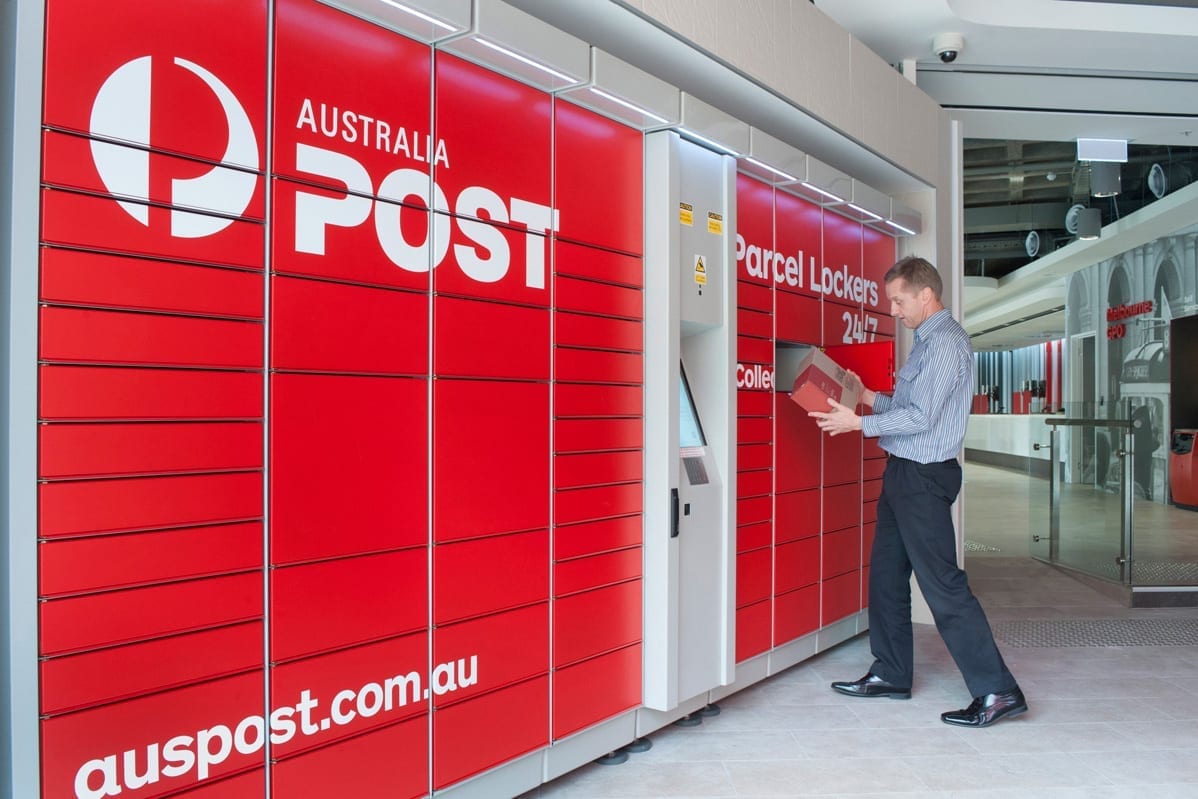
    Australia Post is looking to draw a line under concerns that retailers are finding it increasingly hard to compete with the scale of global competitors, announcing a partnership with fintech company AlphaPaymentsCloud that promises to bring traders an integrated service platform.

    Incorporating everything from payments and identification to logistics, loyalty and fraud protection, Australia Post is touting its new service, called the AlphaCommerceHub, as an API solution to the myriad of different vendor contracts many retailers currently have to negotiate.

    Australia Post will instead bring on vendor partners into the system, allowing retailers to “switch” services off-and-on depending on their individual needs, while remaining PCI compliant.

    Chief digital officer at Australia Post, Andrew Walduck, told that the publicly-owned postie was looking to up its capabilities in identity verification, to drive the next wave of growth in the payments space.

    “We’re building capabilities in identity and payments as we see it as one of the critical things that will enable our economy to be able to thrive in the next wave of growth, driven by great customer experiences getting people things in the way they want,” he said.

    The platform has been designed to incorporate innovation in services, and will include both traditional payment options in conjunction with banking partners as well as mobile payment products like Apple Pay.

    Walduck said smaller retailers have been in a less advantageous position than larger players when it comes to sifting through an ever-growing number of retail services to maintain a leading customer proposition.

    “The platform provides the ability for retailers to integrate into a single place, reducing overall costs…they can move to provide a one click purchase process in a way that makes it really easy for a customer to be identified, and then control how that product is delivered.

    “It’s an absolute game changer in Australia’s fintech evolution so we’re incredibly excited about the potential this joint venture brings to both our banking partners and our customers,” Walduck said.

    Australia Post began trailing its recently launched verification of identity application earlier this month with initial discussions taking place with credit unions, mortgage brokers and government departments.

    Initial partners include Airtasker, Credit Union Australia, Travelex and the Queensland Police Service.

    Its internal research has previously estimated that the existing state of identity verification processes costs the Australian economy as much as $11 billion per year.

  • Australia Post appoints new MD and group CEO

    Australia Post appoints new MD and group CEO

    Ex-Blackmores chief, Christina Holgate, has today been announced as the new chief of Australia Post effective from October, after a ‘global search that identified her as the outstanding candidate’ to lead the company in its transformation program.

    Holgate will be the corporation’s next managing director and group CEO, and succeeds the departing Ahmed Fahour who will step down next month after seven-and-a-half years in the role.

    Holgate joins after nine years as CEO of Blackmores and previous executive roles with Telstra, JP Morgan and Cable & Wireless.

    The Turnbull Government issued a statement welcoming the appointment of Holgate.

    Following direction by Government in February 2017, the remuneration of Australia Post’s new chief is now subject to oversight by the Remuneration Tribunal, an independent statutory authority. The government said consistent with the parameters set by the Remuneration Tribunal, the Australia Post board has agreed to a total remuneration of $1.375 million and performance pay of up to $1.375 million per annum.

    Malcolm Turnbull had previously called on Fahour to take a voluntary pay cut and was critical of the $4.4 million salary and a $1.2 million bonus Fahour was paid last year, labelling it part of a “cult of excessive executive CEO remuneration”.

    Australia Post chairman, John Stanhope, said the past seven years had seen the company “transformed into Australia’s leading parcels and e-commerce company” with critical reforms introduced to its letters service. He said Holgate had a demonstrated track-record of delivering results in large, complex organisations, both here in Australia and internationally.

    “The Board was impressed by her experience of working very successfully in a range of different industries that are highly regulated. And, on top of that, she has a proven ability to implement strategy – and successfully grow a business in Asia,” he said.

    Stanhope also said Holgate’s business philosophy was a strategic fit for the company. “She is a firm believer that businesses must perform commercially, but also serve the community. And that’s entirely consistent with our objectives as a community-based business that has both commercial objectives and community service standards to uphold.”“Her knowledge of global e-commerce will be invaluable as we pursue our Asian Strategy, which is all about offering logistics support to Australian businesses that are either selling in Asia, or sourcing their products there.”

    The Australia Post Board today also announced that its group chief customer officer, Christine Corbett, will lead the business through the CEO transition period – between Fahour’s departure on 28 July and Holgate’s arrival in October.

    Corbett joined Australia Post in 1990 and has extensive experience working in key leadership roles across retail, mail network, major change, strategy, marketing and communications.

    Holgate said she felt privileged to be appointed as CEO of such an iconic Australian corporation and she looked forward to building on the achievements of her predecessors.

    “Australia Post has proven itself to be one of the most resilient and successful postal businesses anywhere in the world.  I feel fortunate to be joining at a time when we can really strengthen Post’s leading position in the e-commerce market – both here, in Australia, and in Asia,” Holgate said.

    “I’m a passionate advocate for Australian business seizing the opportunity that’s on our doorstep in Asia and that creates opportunities for everyone – our workforce, our shareholder, the community, as well as businesses across Australia.

  • NEC updates postal automation system for Hongkong Post

    NEC updates postal automation system for Hongkong Post

    In recent years, Hong Kong has witnessed a rise in the number of postal items addressed in traditional Chinese characters. This has in turn boosted the need for automated sorting and processing of addresses written in traditional Chinese characters in addition to those handwritten or printed in English.

    This new function has been introduced to 15 systems delivered to Hongkong Post by NEC on several occasions since 2008 that are currently in operation at the Central Mail Centre in Kowloon Bay. The introduction of this function enables the automatic sorting and processing of up to 564,000 postal items with addresses written in traditional Chinese characters per hour, thereby contributing to the improvement of Hongkong Post’s operational efficiency.

    NEC has been doing business with Hongkong Post for approximately 30 years since the postal operator’s introduction of a postal automation system in the latter half of the 1980s. The introduction of this function was made possible by the high acclaim NEC has received over the years for its achievements and technological capabilities.

    NEC began developing its postal automation system business in 1961, and has since then delivered systems to postal operators in more than 50 countries around the world. In Japan, domestic postal operators have utilized a function for reading and sorting addresses written in Chinese characters as part of postal automation processing since the 1980s. The introduction of this function by Hongkong Post was made possible by applying the wealth of knowhow NEC has developed in Japan over the years in reading and sorting addresses written in Chinese characters. Moreover, it has resulted in increased efficiency and a reduction in the amount of time needed for processing.

  • Asian postal services adapt to post-mail era

    Asian postal services adapt to post-mail era

    With the pre-Christmas rush at its peak, a serpentine network of conveyor belts at Singapore Post’s new logistics centre moves parcels destined for addresses across the world in time for the festive season.

    It is a scene repeated in sorting offices around the globe in December, the busiest time of the year for postal firms with armies of workers toiling to get presents delivered on time.

    But times are changing and the explosion of online shopping is forcing traditional delivery companies such as SingPost to adapt or be damned.

    The growth of websites such as Amazon and Alibaba means customers can avoid crowded high streets and buy anything from mobile phones to sports equipment online and send them straight to loved ones.

    US-based research firm eMarketer said online sales are expected to reach $1.9 trillion this year and top $4.0 trillion by 2020.

    And traditional firms are making moves to keep up.

    The nearly 200-year-old SingPost, which is partly owned by China’s Alibaba, last month inaugurated its ecommerce sorting office capable of handling up to 100,000 parcels a day.

    It also now provides a service setting up retail websites for clients and allows for online payments while it has teamed up with brands including Adidas, Timberland and Xiaomi to help expand their online retail sales in the region.

    And last year it expanded its US and European presence by buying ecommerce technology provider Jagged Peak and ecommerce firm TradeGlobal.

    – ‘Change or die’ –

    “In this new digital age, the lives of the traditional postal companies are coming to a turning point: change or die,” said Cris Tran, an analyst with consultancy Frost & Sullivan.

    With traditional mail volumes dropping dramatically, ecommerce offers hope for national postal firms in Asia if they adapt quickly enough and do battle with giants like FedEx and DHL.

    This year’s “Singles Day” ecommerce promotion by Alibaba on November 11 grossed 120.7 billion yuan ($17.8 billion), smashing last year’s sales record of 91.2 billion yuan.

    Asian postal firms “are doing some very innovative things to take advantage of ecommerce”, said Brody Buhler, global managing director for post and parcel at consultancy Accenture.

    Japan Post has partnered with convenience stores to provide 24-hour delivery, while Pos Malaysia is boosting its warehousing, logistics and other other capabilities in a bid to become a full-service ecommerce provider, Buhler said.

    “Pos Indonesia investments in capabilities such as lockers and faster fulfillment from China are great examples of postal organisations investing to take full advantage of the opportunity ecommerce provides for growth,” he added.

    In the year ended March 2016, ecommerce-related revenues accounted for 35.8 percent of SingPost’s turnover which crossed Sg$1.0 billion ($707 million) for the first time, and that is tipped to rise further.

    Teo Chung Piaw from the National University of Singapore’s Business School said Asian postal firms must also compete with domestic startups and delivery specialists such as Japan’s Ta-Q-Bin and China’s SF Express.

    Regulation of state-owned postal firms is also slowing crucial reforms that will allow them to compete better, he added.

    Government-owned Australia Post needed regulatory approval to raise the cost of a basic postage stamp, a move it said was necessary to ease losses in its traditional letter business.

  • Worst post-Lunar New Year sell-off in 22 years

    Worst post-Lunar New Year sell-off in 22 years

    The Hong Kong stock market saw the worst post-Lunar New Year session in 22 years on Thursday, a day after U.S. Federal Reserve chair Janet Yellen confirmed fears of a global slowdown in her testimony to Congress.

    Yellen raised the likelihood that U.S. interest rate hikes will be put on hold and possibly even cut over concerns about external risks to the U.S. economy and convulsions across stock markets worldwide.

    “Foreign economic developments, in particular, pose risks to U.S. economic growth,” said Yellen, referring to the debilitating effects of China’s economic slowdown, most remarkably, in dragging commodities prices down.

    On the back of those comments, the Hong Kong bourse reopened after a three-day break to a sharp sell-off, with the benchmark Hang Seng Index shedding 3.8% to close at its lowest level since June 2012 at 18,545.80. The Hang Seng China Enterprise Index of Hong Kong-listed mainland companies fell 4.9% to end at 7,657.92.

    The city’s blue chips fell almost across the board, with technology company Lenovo Group, which recently posted disappointing top-line growth, leading the decline with a 6.7% drop to 6.35 Hong Kong dollars.

    Financials and oil stocks bore the brunt of the selldown. China Life Insurance slumped 6.6% to HK$16.44. Other insurers such as Ping An Insurance Group and AIA Group lost 5.6% at HK$39.15 and 3.7% at HK$37.95, respectively.

    HSBC fell 5.44% to HK$49.50. Its Chinese counterparts Agricultural Bank of China, China Construction Bank, Bank of China, and Industrial and Commercial Bank of China all dropped about 4% over worries about a mounting credit crisis on the mainland.

    China’s largest oil refiner China Petroleum & Chemical (Sinopec) skidded 6.4% to HK$4.10, while other mainland energy giants, PetroChina, CNOOC and China Shenhua Energy slipped more than 5%.

    Of all the property stocks, China Vanke took the deepest plunge to close 8.92% lower at HK$1.58, while China Overseas Land & Investment was down 4.3% to HK$21.10.

    Consumer stocks such as Belle International, Hengan International and Tingyi Holding all lost around 6%. A fierce riot in Mongkok, one of the most popular shopping districts in Hong Kong, during the holidays has hurt sentiment toward the city’s already-battered retail sector.

    Mainland internet and telecom heavyweights such as Tencent Holdings and China Mobile were not able to escape the selling pressure, falling 5.4% to HK$136.10 and 3.1% to HK$82, respectively.

    Bad news from China also contributed to the sell-off. Before the holiday, the People’s Bank of China reported that the country’s foreign exchange reserve had fallen to $3.23 trillion in January, the lowest level since 2012, depleted by the central bank’s defense of both its currency and stock market.

    On Wednesday, Yellen’s comments were scrutinized for clues about future interest rate direction. She said that “monetary policy is not on a pre-set course,” suggesting that a rate cut could be considered if necessary. Overnight, the Dow Jones Industrial Average and the S&P 500 indexes ended slightly down, posting their fourth consecutive day of losses, while the Nasdaq ended three days of decline.

    Investors looking for safe havens in the risk-off environment pushed the spot gold price up to $1,207.6, the highest level since May 22.

    While mainland China and Taiwan markets remained shut for the Chinese New Year holiday until next week, most bourses across Asia faltered.

    South Korea, which also reopened after a long Lunar New Year break, saw its benchmark Kospi Index lose 2.9%. Singapore’s Straits Times Index and Thailand’s SET index dropped 1.7% and 1.84%, respectively. India’s Sensex Index closed 3.3% lower to its weakest level since May 2014.

    The Indonesian and Philippine markets were the only ones bucking the trend, rising 0.9% and 0.3%, respectively.


  • E-business lifts Thailand Post

    E-business lifts Thailand Post

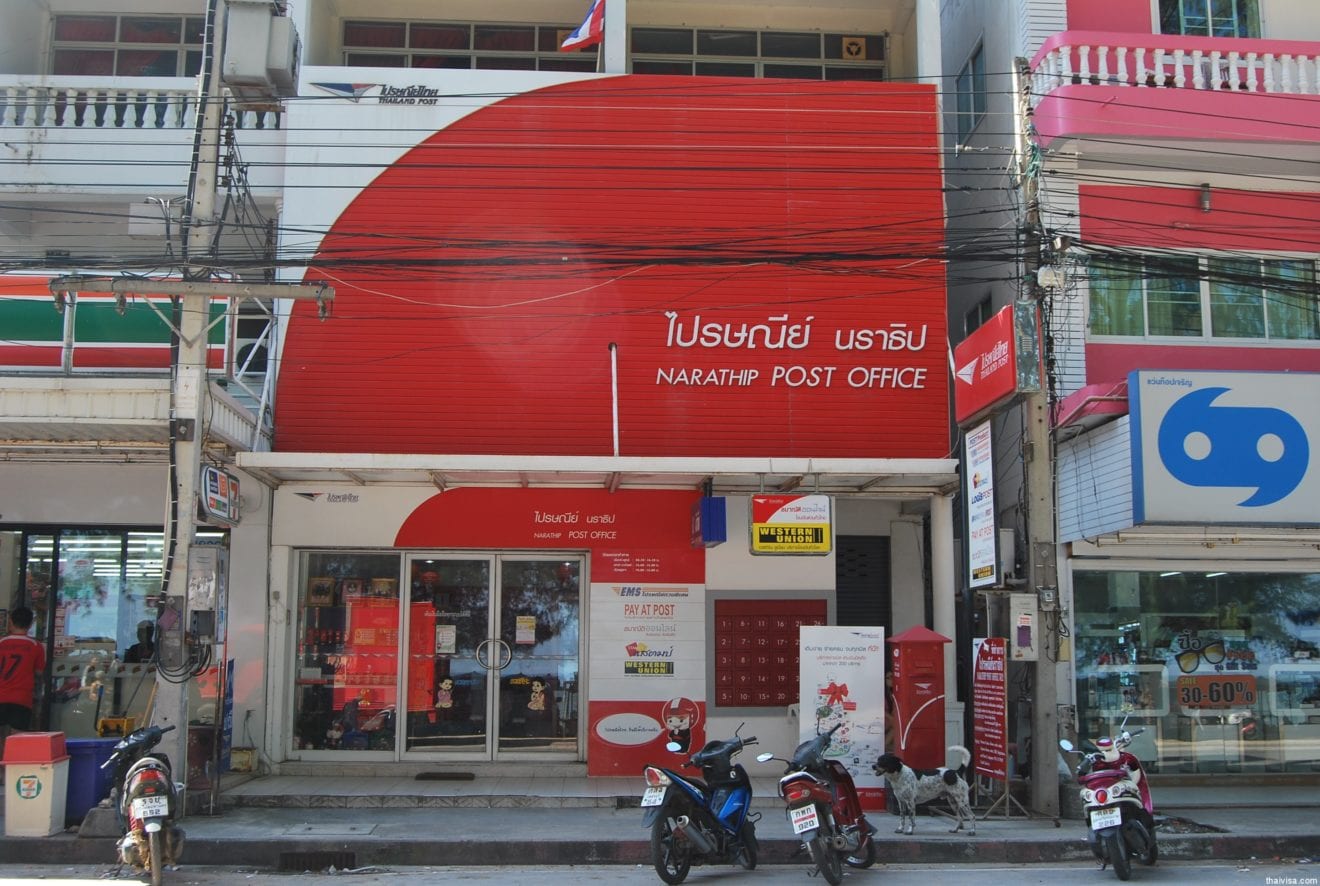
    A man walks past red postboxes outside the Thailand Post branch at Government House. The booming e-commerce market has spurred greater demand for the state enterprise’s express parcel service, despite continued issues with mishandled packages. CHANAT KATANYU

    Thailand Post expects to maintain its stellar profit growth of 10% and reach 2 billion baht this year, supported by the higher-margin express parcel business and booming e-commerce market.

    But the state enterprise’s revenue is forecast to increase by just 1% to 22 billion baht, due to the sluggish economy.

    Piyawat Mahapauraya, deputy president of Thailand Post, said the local e-commerce market grows by 20% a year on average, spurring greater demand for the express parcel service.

    Thailand Post reported consolidated first-half revenue of 11.04 billion baht.

    Of the total, emergency mail service and parcel delivery were still the highest revenue source at 5.13 billion baht or 46.4%, followed by mail service (4.86 billion), retail business (440 million) and payment services (287 million).

    Thailand Post is on the verge of overhauling its delivery processes for emergency mail service and parcels to tackle persistent delivery problems.

    Up to 1,200 parcels were lost during the first half. In addition, 280 parcels were damaged and 3,000 were delayed or arrived after the guaranteed delivery date.

    “We are adopting advanced technologies to address the delivery problem by installing CCTV at all post office branches nationwide,” Mr Piyawat said.

    Damaged parcels amount to fewer than 1% of parcels delivered, he said, and Thailand Post aims to have zero cases of damaged goods within a few years’ time.

    To boost its corporate image and reputation, the postal service has launched a campaign of indemnification for damage incurred by the emergency mail service.

    The campaign, running until this November, lets customers use the screening process of the post office’s service point and confirm that the parcel was “checked”.

    Thailand Post guarantees a payout of 1.5 times the value of a parcel found to be damaged during the delivery process (not to exceed 3,000 baht per parcel).

    The campaign will apply at 17 post offices in Bangkok as a pilot project, Mr Piyawat said.

  • Thailand Post ‘s logistics arm aims to be Indochina hub

    Thailand Post ‘s logistics arm aims to be Indochina hub

    Warakan Srinualnad, chief executive officer of Thailand Post Distribution, said yesterday that the company aimed for Bt400 million in revenue in 2015 and expected to keep growing at 10 per cent per year. The company will expand to cover the whole Indochina region by 2017.

    The main target customers include providers of medicines and medical supplies, e-commerce and home shopping, banks and financial institutions, multinational companies and border traders.

    “The company already has customers such as the Government Pharmaceutical Organisation, the National Security Health Office and a home shopping company. As of now, most of our customers are government organisations. Our services are available for business-to-business, government-to-government, and business-to-government,” Warakan said.

    Thailand Post Distribution, a wholly owned subsidiary of Thailand Post, was established last year with registered capital of Bt350 million. It offers total logistical solutions including packing, warehousing, delivery and payment services for both private companies and government organisations.

    Warakan said the company was combining the strengths of Thailand Post with those of strategic partners in both fleet management and warehouses.

    Currently, the company has about eight fleet-management partners, with combined transport fleets of 500. Its warehouse partners include WHA Corporation, while its parent company, Thailand Post, and technology partners provide warehouse and transport management systems.

    Thailand Post Distribution has established its 20,000-square-metre warehouse network under Good Storage Practice standards, setting aside around 11,000sqm for temperature-controlled areas for storage of such products as pharmaceuticals, cosmetics and cosmeceuticals.

    The company also uses 10 of Thailand Post’s 16 warehouses and distribution centres located throughout the country. Its transport and distribution services adhere to Good Distribution Practice standards.

    “The services of Thailand Post and Thailand Post Distribution are complementary to each other. We act as strategic partners to use each other’s infrastructure and resources. For example, we can use Thailand Post’s 5,000 outlets [post offices, postal centres, and regional postal centres] to fulfil our services,” Warakan said.

    The logistics market in Thailand accounts for around 15-17 per cent of gross domestic product, Warakan said. The market is also growing in emerging areas, especially e-commerce.

    Piyawat Mahapauraya, senior executive vice president and acting president of Thailand Post, said its four main businesses were communications, logistics, retail and financial services. Thailand Post Distribution is now responsible for logistics.