Tag: prada

  • Prada Embraces Indian Craftsmanship: Launches Authentic Kolhapuri Sandals to Mend Cultural Appropriation Rift

    Prada Embraces Indian Craftsmanship: Launches Authentic Kolhapuri Sandals to Mend Cultural Appropriation Rift

    Prada, the renowned Italian luxury brand, is set to debut a limited-edition collection of sandals crafted in India, bearing a keen resemblance to the traditional Indian Kolhapuri footwear. This initiative comes just months after the brand had to face a wave of criticism for showcasing similar designs without giving due credit to their Indian origins.

    Price Point & Controversy

    These exclusive pairs, each having a price tag of approximately 750 euros (US$881), are set to make a grand entrance into the luxury fashion platform. This initiative has its roots in a controversy that stirred up in June 2025. Prada was under fire for presenting sandals at a Milan fashion show which greatly resembled the traditional Indian Kolhapuri chappals. This led to an uproar among Indian artisans and political figures, who claimed this to be a case of cultural appropriation.

    In response, Prada acknowledged the inspiration drawn from the timeless Indian styles and disclosed that it had initiated discussions with artisan groups for potential collaboration.

    Production & Distribution

    In December, Prada revealed its plans to manufacture a total of 2000 pairs of these Indian-inspired sandals. This production will take place in the Indian states of Maharashtra and Karnataka, as part of agreements with two state-endorsed organizations. This collaboration aims to blend localized craftsmanship with innovative Italian technology.

    The brand announced that these sandals will be available for purchase in 40 carefully chosen Prada outlets around the globe, as well as online.

    Artisan Training Programme

    Moreover, Prada has initiated a three-year training programme specifically designed for artisans hailing from the eight districts in India traditionally associated with the crafting of Kolhapuri sandals. This programme, divided into six-month structured modules, will be delivered by two esteemed Indian design institutes. The objective is to enhance the skills of 180 artisans, with the first batch starting next month.

    In a statement, Tanu Kashyap, the director general at the National Institute of Fashion Technology, expressed her enthusiasm for the initiative, stating, “It is time that Indian traditional crafts take their rightful place on the world stage”.

    Additionally, these artisans will be given a chance to visit the Prada Group Academy in Italy to enhance their technical prowess further.

    Questions & Answers

    What was the controversy Prada faced in June 2025?
    Prada faced backlash for showcasing sandals at a Milan fashion show that resembled traditional Indian Kolhapuri chappals, without acknowledging their cultural origin.

    How is Prada merging traditional Indian craftsmanship with Italian technology?
    Prada plans to manufacture 2000 pairs of sandals in Maharashtra and Karnataka in India, in collaboration with local artisans and under agreements with two state-backed organizations.

    What is the three-year training programme initiated by Prada?
    Prada has kicked off a three-year training programme for artisans from eight districts in India traditionally associated with Kolhapuri sandal-making. Delivered by two leading Indian design institutes, the programme aims to enhance the skills of 180 artisans.

  • Prada Unveils Asia-Pacific’s Largest Store at Landmark Hong Kong: A New Era of Luxury Retail

    Prada Unveils Asia-Pacific’s Largest Store at Landmark Hong Kong: A New Era of Luxury Retail

    Prada, the iconic Italian fashion house, has inaugurated a new flagship boutique at Landmark Hong Kong. This development comes as a part of the brand’s ongoing mission to refine its tangible presence in the city and within the Landmark retail complex.

    Grand Opening

    Sprawling over an impressive 1300-square-meter expanse, the newly opened store arranged over three levels stands as the brand’s biggest outlet in the Asia-Pacific region. This prime location at the intersection of Des Voeux Road and Ice House Street boasts conspicuous street-facing windows and a striking off-white steel facade.

    The exterior design showcases Prada’s signature triangular motif and is adorned with a sophisticated Porto Bianco stone finish, enhancing the overall aesthetic appeal of the store.

    Inside The Flagship

    The store’s interior carries forward the quintessential Prada design elements that are seen in other boutiques worldwide. A tasteful combination of a black-and-white checkered marble floor, green wall finishes, and black metal detailing lends a luxurious and contemporary vibe to the space.

    The store’s first floor is dedicated to women’s ready-to-wear pieces, while the second floor primarily caters to menswear. A limited selection of women’s items can also be found on this floor. The ground floor offers an exclusive shopping experience with private rooms specifically designed for fine jewellery consultations and personalisation services.

    The Larger Retail Landscape

    Prada’s relocation is indicative of the persistent demand for large-format stores in premium locations among international luxury brands. This is in spite of the shifting tourism dynamics and changes in consumer spending patterns in Hong Kong’s retail market.

    Questions & Answers

    What does the new Prada store’s relocation signify?
    The move signifies the ongoing demand for large retail spaces in prime locations by international luxury brands, despite changes in consumer spending and tourism in Hong Kong.

    What are the distinguishing features of the new Prada store?
    The new store is characterized by its street-facing windows, an off-white steel facade featuring Prada’s triangular motif, and Porto Bianco stone finishes. The interior boasts a black-and-white checkered marble floor, green wall finishes, and black metal detailing.

    What does the layout of the new Prada flagship store look like?
    The 1300-square-meter store is spread over three levels. The first floor is dedicated to women’s ready-to-wear, the second floor primarily houses menswear along with some women’s items, and the ground floor includes private rooms for fine jewellery appointments and personalisation services.

  • Prada Group Posts 19th Consecutive Quarter Growth Amid Global Retail Challenges

    Prada Group Posts 19th Consecutive Quarter Growth Amid Global Retail Challenges

    The Prada Group has demonstrated sustained growth for the 19th straight quarter, even in the face of a complex global retail landscape. The financial results for the nine months leading up to September 30 reveal a promising overview.

    Financial Overview

    During this period, the luxury group’s net revenues climbed 9% year-on-year, reaching $4.7 billion. This growth was bolstered by a corresponding 9% rise in retail sales, which accounted for $4.2 billion. Despite a high base from the previous year, retail sales in the third quarter increased by 8%, mirroring the growth seen in the second quarter.

    Brand Performances

    Miu Miu, a brand under the Prada Group, has continued its strong performance. It reported a 41% growth over the nine months and a 29% increase in the third quarter. This comes after an impressive 105% surge during the same period the previous year.

    In contrast, sales for the Prada brand itself eased slightly. The third quarter saw a decrease of 1%, and a 2% drop was reported over the full nine months.

    Company Response

    Patrizio Bertelli, Chairman of Prada, viewed these results optimistically. He commented that the consistent performance, despite a challenging macroeconomic environment, “attests to the resilience of our brands and the effectiveness of our strategy.”

    Questions & Answers

    What was the overall growth for the Prada Group in the recent quarter?
    The Prada Group saw a 9% increase in net revenues year-on-year, reaching a total of $4.7 billion.

    How did the individual brands under the Prada Group perform?
    While Miu Miu saw significant growth with a 41% increase over nine months, the Prada brand experienced a slight decrease in sales, with a drop of 2% over the same period.

    What has the Chairman of Prada said about the company’s performance in this quarter?
    Chairman Patrizio Bertelli emphasized the consistent results despite a complex macroeconomic environment, attributing the success to the resilience of the brands and the effectiveness of their strategy.

  • Prada Sees 9% Revenue Boost, Credits Rising Star Miu Miu Amid Tough Luxury Market

    Prada Sees 9% Revenue Boost, Credits Rising Star Miu Miu Amid Tough Luxury Market

    Prada, a family-owned group known for its luxury fashion, recently reported a 9% spike in first-half net revenues at constant currencies. The company’s lesser-known yet rapidly growing Miu Miu brand played a significant role in this upswing, potentially signaling a positive shift in an otherwise sluggish sector.

    In terms of figures, Prada’s net revenue reached a substantial 2.74 billion euros ($3.16 billion), mirroring analysts’ expectations. This growth can be attributed to supportive performance across all regions.

    Brand Performances

    Despite the group’s overall success, the Prada brand experienced a 3.6% drop in retail sales in the second quarter. In contrast, the Miu Miu label saw a remarkable 40% increase in sales, accounting for a quarter of the group’s total revenues last year.

    Prada’s second quarter was adversely affected by reduced tourist influx into Europe and Japan, as well as unfavorable comparisons to last year’s performance. Company executives shared these insights during a conference call held after the results were announced.

    Andrea Guerra, the Chief Executive, informed analysts that he anticipates tourist traffic levels to rebound by the end of August.

    Management Changes

    In a noteworthy development, the Italian firm recently separated from Prada’s brand CEO, Gianfranco D’Attis. Guerra has temporarily assumed the additional responsibilities, with plans to retain them for an extended period. He stated, “If it is an interim (arrangement), it’s a long one.”

    Operating Profit and Future Acquisitions

    The group’s adjusted operating profit climbed 8% to 619 million euros in the first six months, falling slightly short of the 636 million euro operating EBIT projected by analysts.

    Prada Chairman Patrizio Bertelli commented on this solid performance, stating it was achieved amidst a challenging backdrop, somewhat unprecedented in our industry.

    In terms of upcoming developments, the group anticipates finalizing the acquisition of Versace from Capri Holdings between September and November this year.

    Luxury Industry Outlook

    Despite these positive developments for Prada, a robust recovery for the luxury industry remains uncertain. For instance, Gucci’s parent company, Kering, reported a 15% fall in quarterly revenues. Additionally, LVMH recorded a 4% drop in quarterly sales, and Hermes, despite a 9% sales surge, showed signs of being affected by the broader luxury downturn.

    Questions & Answers

    What accounted for Prada’s 9% increase in first-half net revenues?
    Prada’s growth in the first half was largely due to supportive performance across all regions and the exceptional growth of the Miu Miu brand.

    How has Prada’s management changed recently?
    Prada recently parted ways with its brand CEO, Gianfranco D’Attis. The company’s Chief Executive, Andrea Guerra, has taken on these additional responsibilities for the foreseeable future.

    What is the current outlook for the luxury industry?
    The luxury industry faces uncertain times. While some brands like Prada and Hermes have shown growth, others, such as Gucci and LVMH, have reported decreases in revenue. A robust recovery for the industry remains elusive.

  • Prada brings Versace home to create Italian luxury contender

    Prada brings Versace home to create Italian luxury contender

    Prada’s deal to buy Versace revives hopes for a ‘made in Italy’ luxury champion after many other family-founded brands ended up in French, Swiss or US hands, and comes as many Italian groups are outperforming the struggling sector.

    The US$1.375 billion deal brings one of fashion’s best-known Italian labels back under Italian control after it was sold to US-listed Capri Holdings, then known as Michael Kors, for $2.15 billion including debt in 2018.

    Despite Italy accounting for 50 per cent to 55 per cent of global personal luxury goods production, according to consultancy Bain’s estimates, the country lacks a group with a scale that matches up to French players such as LVMH and Gucci-owner Kering.

    Milan-based Prada, controlled by designer Miuccia Prada and husband Patrizio Bertelli and listed in Hong Kong with a market capitalisation of about $15 billion, is the largest Italian luxury fashion group by revenue.

    But the group, which also includes the fast-growing Miu Miu label, has been a relative minnow in terms of stock market valuation compared with the likes of Louis Vuitton-owner LVMH.

    The Versace deal comes after Andrea Guerra became Prada’s CEO in 2023 to bridge a change in generation, with Lorenzo Bertelli, the son of the company’s main owners and its chief marketing officer, regarded as the heir apparent.

    “Prada’s ambition to become a leading Italian luxury conglomerate is a significant move in a market that is dominated by French groups. It’s exactly what many Italians have been hoping for”, said Achim Berg, a fashion and luxury industry adviser.

    The combined revenue of the five biggest Italian-owned listed luxury groups – Prada, Moncler, Ermenegildo Zegna, Brunello Cucinelli and Ferragamo is still well below Kering’s roughly $19 billion, even after a big fall in sales at the French group last year.

    Company founder Brunello Cucinelli summed up the difference in approach on the two sides of the Alps in typically colourful fashion.

    “Our esteemed French counterparts are great financiers,” he told the Milano Fashion Global Summit 2024 last October.

    “But we Italians regard our ‘tiny big’ companies as if they were our little children, so we want to look after them and hand them down to a next generation,” he added.

    While LVMH and Kering have swallowed many Italian brands, even the larger Italian groups have until now been comparatively reluctant to make big acquisitions.

    “This acquisition represents Prada’s serious attempt to build a group – and a much more ambitious one compared to their past ventures with Helmut Lang and Jil Sander,” Berg said.

    Prada’s chairman and co-owner Patrizio Bertelli defined the acquisition of those two brands – which were bought at the turn of the century and sold a few years later – as “strategic mistakes”. The group has since focused mainly on organic growth, with the exception of acquisitions of suppliers.

    Both Prada and Versace have their roots in Milan and still have headquarters there, just four kilometres (2.5 miles) apart.

    Milan-based Moncler, the mountain gear brand that was bought and revived by Italian entrepreneur and current main shareholder Remo Ruffini in 2003, has also shown some interest in dealmaking, buying Italian streetwear brand Stone Island in a $1.3-billion deal agreed in late 2020.

    Moncler’s net cash position of $1.5 billion has fuelled analyst talk of more deals, but the group has denied such speculation.

    Jil Sander is now part of Italian entrepreneur Renzo Rosso’s OTB Group, which also includes brands such as Diesel and Maison Margiela. But with annual sales of $1.9 billion, it remains relatively small.

    The big Paris-based groups, meanwhile, have continued to make forays into Italy, underscoring the challenge an enlarged Prada would face to compete with them.

    In the latest deals, Kering bought a 30 per cent stake in Italian maison Valentino in 2023, and LVMH last year helped to take Tod’s private and took a 10 per cent stake in Moncler’s top shareholder.

    In the longer-term, eyes are on companies such as Milan-based Armani and Dolce & Gabbana, among the few in Italy that are still fully family-owned and unlisted.

    Their ultimate fates could be decisive in any effort to create a true Italian powerhouse in global fashion.
  • Prada looks to double China business in the medium term

    Prada looks to double China business in the medium term

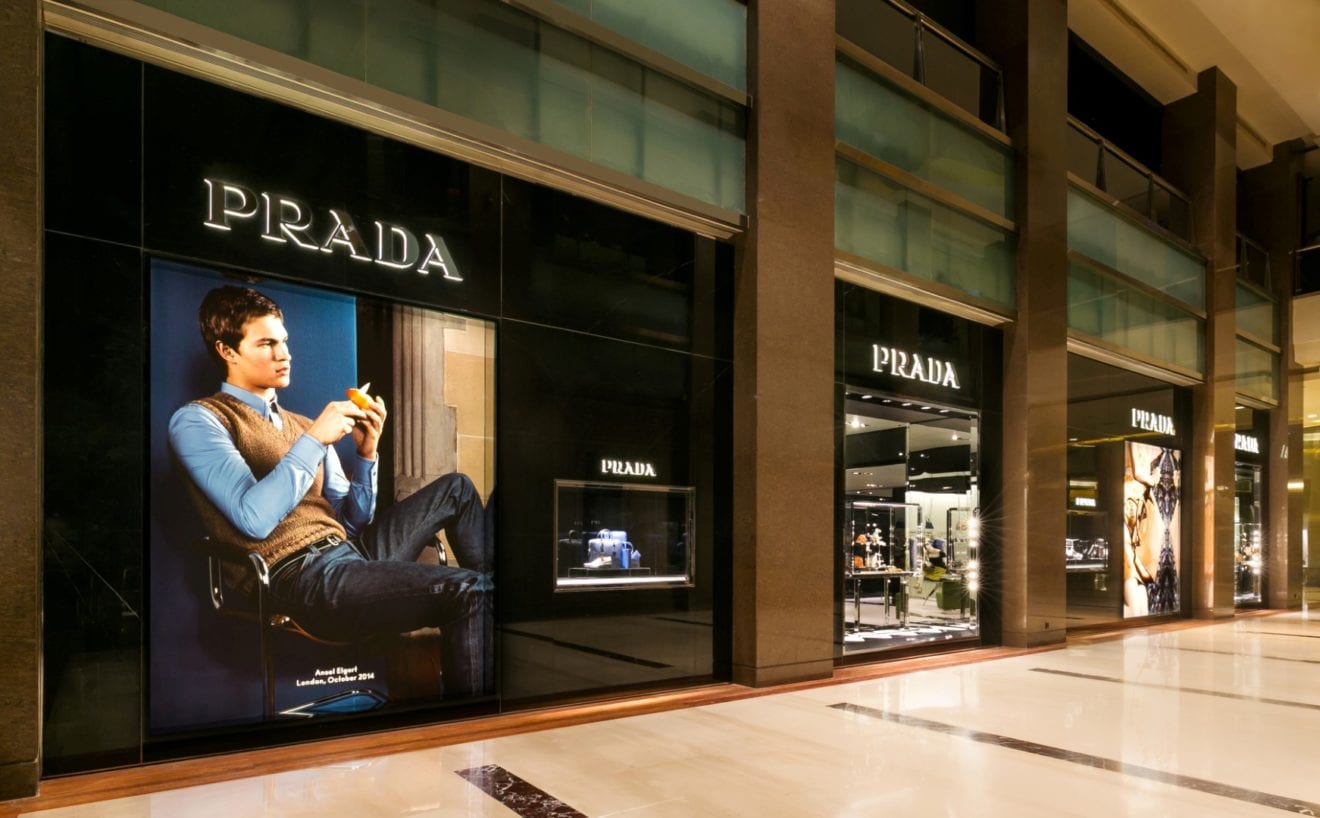
    Prada is looking to double its business in key luxury market China, Chief Executive Gianfranco D’Attis said on Wednesday, even as the country faces slowing growth in luxury demand and significant economic headwinds.

    “We have a lot of ambitions here in China, to double our business in the upcoming mid-term future. And with that comes also increasing our investments,” D’Attis told reporters in Shanghai.

    He did not give an exact timeframe for the ambition but said increased investments would not necessarily mean a major uptick in the number of stores opening across the country.

    “Not only the number of stores is important to us, but the quality of stores, bigger stores with more categories, with more localized products, with more experiences, with more hospitality, more events, more special capsules,” he said.

    D’Attis, a former Dior executive who took the helm at Prada in January, was speaking at a preview of the brand’s Pradasphere II exhibition in Shanghai. This is the second iteration of a concept that first showed in London.

    As well as a deep dive into the brand’s archive and identity, Pradasphere II, which is showing at a museum on Shanghai’s Huangpu River, also includes a Prada-themed cafe and a gift shop in a repurposed train parked alongside the museum.

    According to D’Attis, this likely won’t be the last time fans of the brand in China get to enjoy something like the Prada cafe, which boasts premium Italian coffee. Developing a hospitality concept is on the agenda for the brand worldwide, including in China, he said, possibly in 2024 or 2025.

    The Prada Group, whose brands also include classic English shoemaker Church’s, reported a 10% rise in third-quarter revenues in November, saying a strong performance in Asia and Europe helped to compensate for weakness in the Americas.

    According to consultants Bain, China is forecasted to account for almost 40 percent of global luxury sales by 2030.

    D’Attis is hopeful Chinese consumers will return to traveling and shopping in greater numbers in Europe, but said that wouldn’t necessarily impact sales at home.

    “Because we have such a different offer abroad than the local offer that we have, we believe that there is no cannibalization,” he said.

    “They will continue to spend locally, they will continue to be treated like kings and queens in China and when they travel, they get a different product… than they can find in China. So it’s very complementary.”

    Prada is not alone in remaining optimistic about China’s post-pandemic market. Even as luxury growth slows in the world’s second-largest economy, spooking investors, global brands from Louis Vuitton to Chanel have all recently staged events in cities such as Shanghai and Shenzhen.

  • Prada sales surge in nine months

    Prada sales surge in nine months

    Prada Group enjoyed higher net revenue in the first nine months of FY23, with Miu Miu delivering outstanding results, attributed to growing brand awareness and increasingly strong client relationships worldwide.

    The luxury retailer saw net revenue rise 17 percent year over year to US$3.53 billion in the nine months ended September 30.

    Retail sales of Prada brand jumped 13 percent, while Miu Miu surged 49 percent.

    “In the third quarter, Prada remained on a sound growth trajectory, driven by solid full-price like-for-like sales. Miu Miu continued to deliver a strong performance across all geographies and categories,” said Andrea Guerra, CEO at Prada Group.

    “In an uncertain geopolitical and economic backdrop that requires us to stay vigilant, we continue to see positive momentum in the business and strong excitement around our brands, positioning us well for Q4 and vis-à-vis our ambition to deliver solid, sustainable, and above-market growth in FY23.”

    The group’s retail sales soared 17 percent to $3.15 billion while wholesale sales inched 6 percent higher to $307.6 million. Royalties swelled 67 percent to US$77.2 million.

    Japan posted the highest retail sales growth across all geographies at 47 percent. Retail sales in Asia Pacific, Europe, and the Middle East grew 21 percent, 17 percent, and 12 percent, respectively.

    The company experienced a slight decline of 1 percent in retail sales in the Americas.

  • Prada works with Amazon to nab Chinese counterfeiter

    Prada works with Amazon to nab Chinese counterfeiter

    Prada Group and other luxury retailers collaborated with Amazon’s Counterfeit Crimes Unit (CCU) to provide information to Chinese authorities, resulting in a case against a counterfeit items seller who pleaded guilty.

    “We are firmly committed to eradicating the sale of counterfeit goods to protect our brands and to ensure that our products meet the level of quality, craftsmanship and care that people expect from us,” said Francesca Secondari, general counsel and chief legal officer at Prada Group said.

    Amazon’s CCU detected the attempted counterfeiting back in 2021, followed by an investigation. Amazon provided the evidence to the relevant regional Chinese enforcement agency to lodge a criminal case against the accused.

    The defendant has been sentenced to three years in prison and obliged to pay a $25,000 fine.

    All the counterfeit products found in the defendant’s inventory will be destroyed and revenue from selling such items will be forfeited.

    “The guilty plea is a significant win for Amazon’s CCU, but more importantly it’s a win for all of those who share our commitment to tackling the industry-wide issue of counterfeiting,” said Kebharu Smith, director at Amazon’s CCU.

  • Prada hires former Luxottica chief Andrea Guerra as new CEO

    Prada hires former Luxottica chief Andrea Guerra as new CEO

    Patrizio Bertelli, the current CEO of the premium brand, will be chosen chairman at the annual shareholder meeting next spring. He will succeed Paolo Zannoni, who will be proposed for the position of executive vice chairman of the group and chairman of Prada Holding, the parent firm.

    Current Co-CEO Miuccia Prada, age 73, will continue to serve as creative director of the Miu Miu and Prada brands, the latter with Belgian designer Raf Simons, and as a board member.

  • Prada sees second-hand fashion as opportunity, weighs partnerships

    Prada sees second-hand fashion as opportunity, weighs partnerships

    Italian fashion group Prada sees opportunity in the booming second-hand fashion sector which it can develop both in-house and through partnerships, marketing chief and heir designate Lorenzo Bertelli said.

    The market for pre-owned chic bags and clothes has surged over the last three years, driven by younger, more environmentally conscious shoppers looking for affordable high-end goods.

    It is expected to reach 33 billion euros ($37.2 billion) in size this year after growing by 65% between 2017 and 2021, according to consultancy Bain. This compares with 12% growth for brand new luxury goods.

    Some rival luxury companies are already exploring the sector. Earlier this year, French conglomerate Kering took a 5% stake in Vestiaire Collective, a leading platform for second-hand clothes and handbags. Kering’s star brand Gucci also formed a partnership with U.S.-based resale platform The RealReal last year.

    “Second hand is a strategy we have been investigating for more than a year,” Lorenzo Bertelli, the eldest son of co-Chief Executives Patrizio Bertelli and Miuccia Prada, and the future brand leader, said in an interview.

    “I cannot disclose too much but for sure second-hand is there. We will take it as an opportunity.

    “It can be a partnership with a player or it can be something more in-house, or both of them, a sort of hybrid solution like for e-commerce,” he said.

    The heir to Prada’s empire, who said he wants to keep the family-controlled group independent when he takes the reins in a few years, doesn’t seem fazed by the future challenges of the ever-changing luxury sector.

    “Rallying and sport, in general, taught me a lot. (It) teaches you to never give up and also a lot of humility, in the sense that you have to learn,” he said. “Sometimes sport is cruel when you want to measure yourself.”

  • Prada bags sales boost from China rebound

    Prada bags sales boost from China rebound

    Italian fashion group Prada’s sales and profits rebounded at the end of last year from a first-half slump due to the coronavirus pandemic, boosted by a strong performance in China and elsewhere in Asia, and the positive trend has carried on into 2021.

    Luxury fashion companies have been hit hard by the impact of the crisis on tourism and travel, but an improving backdrop in China, one of the world’s biggest luxury markets, has helped some companies to bounce back.

    Milan-based Prada, famous for its luxury bags and clothes, also benefited from a surge in online sales.

    The pandemic has accelerated the luxury goods industry’s move towards digital sales. Prada’s e-commerce sales more than tripled in 2020 versus 2019 levels, the Hong Kong-listed company said.

    Last year, Prada launched e-commerce in new key markets and revamped the Prada website.

    “We are just at the beginning of our growth trajectory and there is still a huge potential to unlock,” said marketing head Lorenzo Bertelli, son of Prada’s founders Miuccia Prada and Patrizio Bertelli, who are co-CEOs.

    CEO Patrizio Bertelli said: “We have 130 stores that are still closed due to the pandemic and group’s performance in early 2021 is quite good anyway. That give us the confidence to face the upcoming rebound, as soon as the most critical phase of the pandemic will end.”

    The first months of 2021 have seen a slight growth in sales compared with the early part of 2020 and are up from 2019 levels, CFO Alessandra Cozzani said conference call after the group’s results were published on Wednesday.

    CEO Bertelli said Prada had responded quickly to market changes, strengthening the relationship with local customers whose consumption in the second half of the year almost fully offset the absence of tourists.

    “All of these initiatives led to a full recovery in the second half to pre-pandemic profitability levels,” he said in a statement.

    The recovery in retail sales, which account for around 90% of Prada’s total, was driven in the second half by mainland China (+52%), Taiwan (+61%), Korea (+22%) and also by the Americas (+4%). Japan and Europe suffered from the lack of tourists and prolonged lockdowns.

    Full-year revenues fell by 24% to 2.42 billion euros ($2.9 billion) thanks to an improvement in the second half after a 40% slump in the first six months.

    Lockdown measures to stem the spread of coronavirus led to around 18% of the group’s store network being closed on average during the year and the restrictions also hit tourism.

    Earnings before interest and taxes (EBIT) totalled 20 million euros in the full-year, following a 216 million euro EBIT in the second half, broadly in line with the same period of 2019, after a 196 million euros operating loss in the first six months.

    Analysts had expected revenues at 2.44 billion euros and an EBIT of 13.8 million, based on a Refinitiv analyst consensus.

    Analysts did not expected any dividends, but Prada’s board decide

  • Prada CEO sees massive revenue growth during next years

    Prada CEO sees massive revenue growth during next years

    Italian luxury group Prada sees revenues rising to 5 billion euros ($6.1 billion) in four to five years, its chief executive said on Thursday.

    “We will reach five billion euros in a matter of four to five years. COVID-19 has given a strong shock to the whole system, we will see a strong acceleration when it will be over,” Patrizio Bertelli said in an interview with Italian daily Il Sole 24 Ore.

    “We have not grown as much as we would have liked so far, but we are the group that has best maintained its identity,” he added.

    The Hong-Kong listed group said it would close 2020 with an operating profit. Net revenues in 2019 were 3.226 billion euros.

    The fallout from the COVID-19 crisis triggered a 40% decline in Prada’s revenues in the first half of last year, leading to a 196 million euros operating loss.

    In the interview, Bertelli said there could be positive signs for the luxury sector as a whole from March, when lockdowns in many European countries may end.

    The executive, founder of the brand with wife Miuccia, said the company was not interested in acquiring other brands but would press ahead with buying production plants instead, investing 100 million euros per year in sites and shops in coming years.

    “Made in Italy’ production will be more and more important,” he said, noting 80% of Prada’s current production is based in Italy.

  • Prada cuts ties with Chinese actress after surrogacy controversy

    Prada cuts ties with Chinese actress after surrogacy controversy

    Italian luxury label Prada has ended all cooperation with Chinese actress Zheng Shuang, a week after appointing her as a brand ambassador after she was engulfed in a surrogacy controversy that has enthralled the Chinese public.

    Prada made the announcement late on Tuesday, after coming under heavy criticism on Chinese social media for cooperating with 30-year-old Zheng, whose former partner Zhang Heng has accused her of trying to abandon two young children the couple had through a U.S -based surrogate.

    It is the latest global brand to succumb to public pressure in China, where customers have become increasingly vocal about their expectations for the behavior of companies and celebrities, especially foreign ones.

    “The Prada Group has terminated all cooperation with Ms Zheng Shuang,” the company said on its official Weibo account, without providing further details.

    Prada did not respond to Reuters queries on Wednesday. Zheng and Zhang also did not answer Reuters’ requests for comment.

    China has become an increasingly important market for luxury labels during the global pandemic and its shoppers are expected to account for around half of all global spending on high-end brands in 2020, up from 37 percent in 2019, according to McKinsey & Company.

    Prada has said the group’s China sales jumped 60 percent in June and 66 percent in July.

    “The hit to Prada’s image is huge,” said Huang Shengming, professor of the Communication University of China in Beijing. “Their decision to stop working with Zheng is an effort to cut their losses and it’s the right move.”

    Surrogacy Controversy

    The controversy erupted on Monday after Zheng’s former partner Zhang Heng said on social media that the couple had turned to a surrogate to birth two children in the United States and released voice recordings of a woman he said was Zheng lamenting that the children could not be aborted.

    Zhang said he was stranded in the United States because he had to take care of the two children born in 2019 and 2020.

    Zheng quickly became the target of public criticism, with Weibo users calling her “irresponsible” and “vicious”. The controversy has over the past three days been a top trending item on the Twitter-like site, with 600 million views and more than 100,000 comments.

    Thousands of users also left comments on Prada’s Weibo account to question and ridicule the brand for hiring her.

    On Tuesday, the actress said on her Weibo account that she had not violated laws in either China or the United States but did not comment on whether any of the accusations were true.

    “It’s a very sad and private matter for me,” she said.

    Surrogacy is forbidden in China but going abroad to have surrogate children in countries such as the United States has increasingly become an option for some Chinese couples, especially wealthy ones.

    Chinese state media have weighed in on the Zheng controversy. Changan Sword, an online media site backed by the Central Political and Legal Affairs Commission, criticized her for taking advantage of the law and “corrupting human ethics”.

  • Prada reports China sales growing at a fast pace

    Prada reports China sales growing at a fast pace

    Sales of luxury Prada items in China have exceeded last year’s levels since the brand’s physical stores reopened following the coronavirus pandemic.

    The Chinese appetite for luxury items has rebounded strongly despite the impact of Covid-19, even as global sales are hit with a decline of 35 percent.

    “To date, the Prada Group’s sales in China have already largely exceeded the levels of 2019, showing double-digit growth since the beginning of the year,” said Prada CEO Patrizio Bertelli.

    Prada’s growth within China has exceeded more than 60 percent since March, with a sales record hit on August 25, this year’s Chinese Valentine’s Day.

    The firm’s projections suggest the trend will continue in the coming months, according to Bertelli.

  • Prada opens a new store in Tokyo’s Shibuya district

    Prada opens a new store in Tokyo’s Shibuya district

    Italian luxury fashion house Prada has opened a new boutique in Tokyo’s Shibuya district, featuring the unique evolution of its green-themed interior design.

    Located at the Miyashita Park shopping mall, the store is designed by OMA studio, founded by Rem Koolhaas. With a floor area of about 300sqm, it displays Prada’s full range of clothing, bags, accessories, and footwear for men and women in unisex and thematic versions.

    The store also offers cotton poplin t-shirts featuring original prints exclusive for the store’s opening, including a Prada oval logo reinterpreted by OMA bearing the Prada Miyashita Park store name, and a travel tag print with TYO (Tokyo) symbols.

    The external facade features floor-to-ceiling glass, which allows a view into “a dreamlike, virtual ‘container’ against a dynamic backdrop.”

    The store interior has a black-and-white chequered floor and green walls designed in backlit “sponge” – the ‘air and matter’ hybrid material designed by OMA. A digital wall, which can be assembled and disassembled, is installed to draw attention.

    The brand uses aluminum for all displays and racks to “enhance the minimal aesthetics and contemporary feel of the interiors”.

    Coinciding with the store’s launch, Prada has announced a digital project called “My Shibuya View”, featuring personal films introducing creators and musicians’ favorite spots in Shibuya. Project participants include singer and songwriter Taichi Mukai, model Ruka and actor, model, and musician Yoshi.