Retail News CRM

Tag: prada

  • BlinQ to offer Yoox catalogue in SE Asia

    BlinQ to offer Yoox catalogue in SE Asia

    Bob Chua, founder and CEO of BlinQ​, says the partnership will give Southeast Asian consumers easy access to thousands of new products from high-end brands. “We have been growing quickly, and this partnership provides a greater depth of brands and products to our users in the Southeast Asian region.”

    Chua says BlinQ has more than 30,000 users joining the platform every month and it now boasts high-end brands including Prada, Off-White and Kenzo.

    For Yoox, which has 3 million customers worldwide, the deal will allow it to expand its Southeast Asian customer base.

    The Yoox deal closely follows BlinQ’s launch of a pre-loved offer and Asean Houz – a collection of high-end fashion brands from around the region.

  • Prada sales rise as markdowns capped

    Prada sales rise as markdowns capped

    Prada sales rose 2 percent in the first half of the year, as improving full-price sales and solid growth in its wholesale channel offset the impact of a move to cut back on markdowns.

    The Hong Kong-listed Italian luxury fashion group said this year it would stop offering end-of-season promotions in its stores and be more selective with wholesalers to support full-price sales to lift margins and protect its brands.

    Prada sales had risen last year for the first time in four years, helped by a new strategy aimed at rejuvenating the brand, which focused on renovating shops, new products, and digital sales.

    In the first half of 2019, revenue totaled US$1.73 billion, which was flat when stripping out the impact of currency swings.

    The retail network declined 3 percent affected by the phase-out of markdown sales, while the wholesale channel rose 14 percent driven by online sales, with the rationalization not having any impact yeton that part of the business.

    Prada warned however it will affect results in the short-term.

    Operating profit, or earnings before interest and taxes (EBIT), decreased 13 percent to US$166 million, equivalent to 9.6 percent of sales. The group’s operating profit margin has been declining every year since 2012 when it stood at 27 percent.

  • Prada to phase out virgin nylon

    Prada to phase out virgin nylon

    Luxury Italian fashion brand Prada has launched six bags made from regenerated nylon, as the first stage in a plan to phase out virgin nylon during the next two years.

    In a project dubbed ReNylon, Prada will replace virgin nylon in its collections by using regenerated nylon yarn called Econyl.

    The first products made with Econyl are a belt bag, shoulder bag, tote bag, a duffle and two backpacks.

    The company will replace all the virgin nylon it currently uses with Econyl recycled nylon in the next two years.

    “Our ultimate goal will be to convert all Prada virgin nylon into ReNylon by the end of 2021,” said head of communications at Prada, Lorenzo Bertelli.

    Prada has collaborated with Italian textile yarn producer Aquafil on the project, a manufacturer with more than 50 years experience in producing synthetic textiles.

    The resulting material, Econyl, is produced through a process of depolymerisation. It can be recycled an indefinite number of times with no loss of material quality.

  • Prada to phase out virgin nylon

    Prada to phase out virgin nylon

    Luxury Italian fashion brand Prada has launched six bags made from regenerated nylon, as the first stage in a plan to phase out virgin nylon during the next two years.

    In a project dubbed ReNylon, Prada will replace virgin nylon in its collections by using regenerated nylon yarn called Econyl.

    The first products made with Econyl are a belt bag, shoulder bag, tote bag, a duffle and two backpacks.

    The company will replace all the virgin nylon it currently uses with Econyl recycled nylon in the next two years.

    “Our ultimate goal will be to convert all Prada virgin nylon into ReNylon by the end of 2021,” said head of communications at Prada, Lorenzo Bertelli.

    Prada has collaborated with Italian textile yarn producer Aquafil on the project, a manufacturer with more than 50 years experience in producing synthetic textiles.

    The resulting material, Econyl, is produced through a process of depolymerisation. It can be recycled an indefinite number of times with no loss of material quality.

  • Prada Thunder pop-up Store opens at Harbour City

    Prada Thunder pop-up Store opens at Harbour City

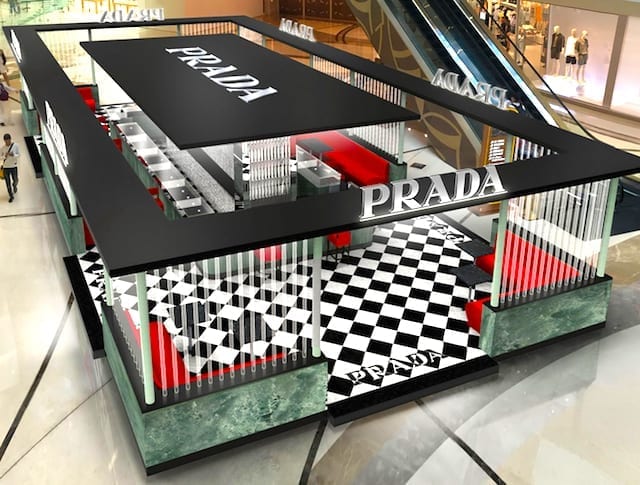
    Luxury fashion house Prada has launched a pop-up store at Atrium II in Harbour City to introduce its Prada Thunder project.

    The store showcases a selection of ready to wear, bags, shoes and accessories for men and women, featuring Prada Menswear and Womenswear Fall/Winter 2019 prints designed by artist Jeanne Detallante exclusively for the brand. Symbols from the Frankenstein’s monster universe as well as his Bride – the heart, the electric rose and the thunder – are used to augment these original items sold in matching packaging.

    The Prada Thunder pop up will remain open until July 1, dedicated to the theme and inspired by “the romantic and gothic atmosphere” of the collection. A wallpaper – entitled Alternating Currents – depicts silhouettes of male and female figures against a glowing vista of moorlands and cliffs, while display cases and dimly illuminated transparent tables evoke the concept of a surreal laboratory.

    Prada Thunder will also be presented in Prada’s Canton Road store with a special display from July 2 to 28.

  • Prada reveals ‘Code Human’

    Prada reveals ‘Code Human’

    Chinese artist Cao Fei has entered into a collaboration with Prada on a special project, “Code Human”, starring Chinese idol Cai Xu Kun to showcase the Prada Fall/Winter 2019 menswear collection.

    The project, which explores “the meaning of iconography, idolatry, fandom and adoration in our super-media age”, is part of a long-standing program of cross-media Prada campaigns and projects spanning the fields of design, architecture, cinema, and art. Prada continues in this campaign to collaborate with leading creative practitioners to explore the intersection of different cultural disciplines and experiences.

    “Upon reflection, nobody is as crazy as Miuccia Prada to think of this pairing, asking a Chinese artist to photograph a Chinese ‘idol’,” said Cao Fei. “I was excited for many days afterward I received the proposal, not only because of Cai Xu Kun, but about the project itself, to have this opportunity to plumb these cultural depths, using a real-life ‘idol’ to communicate with the tens of millions of followers behind him. As an artist, you cannot ignore those who stand behind him. How should I represent somebody else’s idol?”

    “Code Human” debuted on June 1 to coincide with Prada’s Spring/Summer 2020 fashion show in Shanghai.

  • Prada to cull wholesale sales channels

    Prada to cull wholesale sales channels

    Italian luxury fashion label Prada is to cull its wholesale distributor list, in order to take more direct control of pricing.

    In a short filing with the Hong Kong stock exchange (where the company is listed), Prada said that its board has analyzed in detail the structure of its wholesale channels “and noted the growing complexity and fragmentation of the wholesale market”.

    Consequently, the board has resolved in favor of additional rationalization of its network of independent partners.

    “The Prada Group considers it essential to ensure greater consistency in pricing policies across retail and digital channels,” said chairman Carlo Mazzi in the filing.

    “This strategic review is intended to further strengthen the Prada Group brands with the aim of supporting sustainable long-term growth.”

    The statement offered no further details of how the rationalization would be undertaken or how many wholesalers would be culled, although it is apparent online distribution may be most affected.

    Like many luxury brands, Prada wants to maintain relative product pricing between wholesalers and its own stores, in much the same way Apple has succeeded globally.

  • Prada Chongqing store has Italian Design Elements

    Prada Chongqing store has Italian Design Elements

    Fashion label Prada has opened a new outlet in Chinese Chongqing at the popular MixC department store.

    The 600sqm Prada Chongqing space stocks a selection of both women’s and men’s collections spanning ready to wear, leather items, shoes and accessories.

    The store’s design features spiral metal blades in gold and silver set against black marble and large windows to maximise natural light. The interior, inspired by Prada’s historic Galleria store in Milan, prominently features green Aver marble and chequered black and white marble flooring.

    The Prada Chongqing store’s velvet seating is a tribute to classic Milanese design of the 1950s and attempts an elegant and refined environment.

  • From Gucci to Dolce & Gabbana: racism in fashion continues?

    From Gucci to Dolce & Gabbana: racism in fashion continues?

    Luxury fashion is all about breaking codes, creating a new, irresistible message that captivates consumers. But some of the globe’s top brands have raised eyebrows with designs that have seemingly racist undertones. The latest instance of that was Italian fashion designer Gucci, which produced a black wool balaclava jumper with an oversized collar that pulls over the chin and nose. It includes a slit where the mouth is, ringed with what look like giant red lips.

    Its similarity to blackface prompted an instant backlash from the public and forced the company to apologise publicly on Wednesday.

    Gucci also withdrew the offending garment from sale on websites and stores. It said the incident would be “a powerful learning moment for the Gucci team and beyond”.

    But the question persists: how can fashion houses that thrive on detail miss such critical social cues?

    Prada similarly withdrew a monkey bag charm that recalled blackface in December, saying it “abhors racist imagery.” And Dolce & Gabbana issued a video apology after one of the designers made insulting remarks about Chinese people in a private chat discussing the questionable depiction of a Chinese model in a campaign.

    “Luxury brands used to be able to get away with provocative and eccentric ads that push the boundaries of our society and culture in the name of being creative and cutting edge,” says Qing Wang, a professor of marketing at Warwick Business School in the United Kingdom.

    “However, a long list of recent incidents have caused public outrage, suggesting that era is now gone, or that luxury brands have lost touch with public sentiment. What used to be considered ‘creativity’ has now turned into ‘bad taste’ or even ‘racist’.

    He cited other fashion fails that evoked stereotypes, including Dolce & Gabbana’s “slave sandal” in its spring-summer 2016 collection and a recent Burberry campaign for the Chinese New Year that was compared to Asian horror films.

    While many of these incidents have caused immediate social media backlashes, the longer-term impact will take time to measure, and will depend on the brands’ reaction and future sensitivity.

    Dolce & Gabbana was forced to cancel its Shanghai runway show after the insulting remarks were publicised, top Asian influencers backed out of campaigns and Chinese websites dropped their line – a warning sign from a region that holds great sway in global luxury sales.

    The blackface images have particular resonance in the United States, where the governor of Virginia and his attorney general have been caught up in a scandal over blackface incidents from their college days in the 1980s. The offensive depictions are reminiscent of travelling entertainers from the 19th century, who would paint their faces black to portray African characters in a ridiculous and mocking fashion, spreading racial stereotypes along the way.

    Italian sociologist Michele Sorice at Rome’s Luiss university says that the evocation of blackface by Italian fashion houses signals “a mixture of good faith, and ignorance”. He notes that Italian society still isn’t fully aware of the racial charge in some words and images.

    “I imagine that they don’t truly think they are racist,” Sorice says. “I think they didn’t have the instruments to understand that these images are archetypes that were used to contrast the concept of blackness and make them ridiculous. I think that many simply don’t know. It is a cultural issue.”

    Paolo Cillo, a marketing professor at Milan’s Bocconi University, says the designer’s intent may have been taken out of context and amplified, and she credits Gucci with acting swiftly to quell the controversy.

    “I wouldn’t stigmatise fashion,” Cillo says, comparing the fashion designer process to artistic pursuits like filmmaking, painting or music. “There are artists in the world of culture that did more outrageous things and no one ever said a thing. There is a perception that fashion is ephemeral, or commercial. But from my point of view, it is not. It reflects the times, like all other artistic forms.”

    While the fashion world has been at the forefront of addressing sexual norms – Gucci has been redefining genderless dress codes under Alessandro Michele – it has lagged behind other industries in taking on social issues such as racial tolerance, climate change or women’s empowerment, according to Larry Chiagouris, a marketing professor at Pace University, US.

    “It is not clear why this is,” Chiagouris says, “but the evidence clearly points to the fashion industry’s need … to catch up with the rest of the world.”

  • Reebonz to use blockchain technology to assure authenticity

    Reebonz to use blockchain technology to assure authenticity

    Southeast Asian online luxury marketplace Reebonz is exploring blockchain technology as part of its strategy to demonstrate the provenance of products. Complementing the firm’s existing in-house team of ateliers who specialise in authenticating leather products, timepieces, gemstones and jewellery, Reebonz intends to incorporate all transactions on a blockchain to ensure the comprehensive traceability of all products sold within its ecosystem. The firm’s goal is to enable buyers to verify the authenticity of products on their own and stamp out losses and distrust generated by the global exchange of counterfeits.

    By establishing end-to-end traceability, customers will also be able sell their items back to Reebonz, which would allow the company to easily identify a customer’s purchase.

    “The Reebonz leadership team is extraordinary and has already developed a cutting-edge technology and platform”, said Tim Draper, senior advisor of Draper Oakwood Technology Acquisition and founding partner of Draper Associates.

    “The authentication of pre-owned luxury items using the blockchain is just one of many high impact innovations Reebonz is pioneering to improve the luxury shopping experience for customers across Asia Pacific.”

    “While we started as an online platform that helps consumers access affordable luxury, we have evolved into an ecosystem that connects buyers and sellers through the widest range of luxury,” added Reebonz CEO and co-founder Samuel Lim.

    “Identifying gaps and opportunities in the luxury e-commerce landscape and spearheading strategies that present innovative ways of redefining luxury consumption has made us a leader in this industry. As we continue to build out a thriving community of buyers, sellers and international boutiques, it will become critical for the industry to evolve, and for us to become a leading innovator of authenticity solutions. We are excited to use the blockchain technology to solve one of the key global issues that impacts our industry.”

  • Prada ‘racist’ incident ended up with apology

    Prada ‘racist’ incident ended up with apology

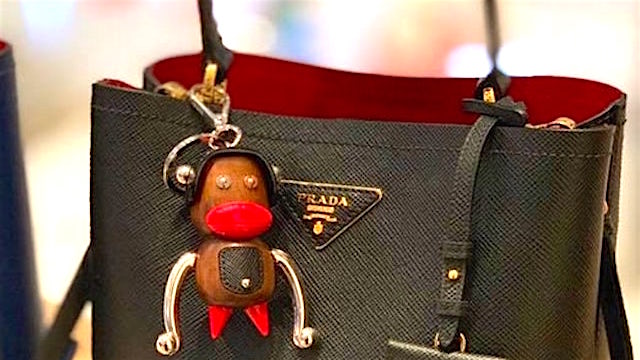
    Prada has apologised for selling a US$550 monkey figurine after a social media backlash from US consumers alleging the character is racist. The monkeys, with oversized red lips and dark skin have been likened to “racist caricatures historically used to dehumanise black people” according to a commentary in The Business of Fashion.  Some social media users pointed out a resemblance to golliwogs, the fictional children’s book character created by Kate Upton in the late 19th Century, which brands worldwide have avoided using in marketing for reasons Prada executives could have easily found with a quick Google search.

    The ‘racist’ monkey character was part of the Pradamalia range of small accessories like keychains and toys featuring cartoon characters.

    Prada said in a statement that the creatures were “not intended to have any reference to the real world and certainly not blackface”.

    “Prada Group never had the intention of offending anyone and we abhor all forms of racism and racist imagery. In this interest, we will withdraw all of the characters in question from display and circulation.”

    The Business of Fashion described the company’s design as “at best tone-deaf, at worst racist and exploitative”.

    Some people in the retail industry may well ask how Prada released such a product after the high-profile case of H&M having to apologise after releasing marketing images of a black child wearing a hoodie with the text “Coolest monkey in the jungle” in January, which prompted a similar chorus of disapproval. H&M immediately withdrew the hoodies from sale globally and recycled them, but not before some stores in South Africa had to be closed temporarily after protests and vandalism.

    And just last month, Dolce & Gabbana was forced to apologise to Asians customers around the world for a video campaign mocking a Chinese model trying to eat pasta with chopsticks, followed by an extraordinarily racist rant on Twitter by one of the label’s founders (which he later claimed – to widespread skepticism – was the result of his account being hacked).

    Facebook user Chinyere Ezie (who took the photo of the Prada monkey used with this story) was one black American woman outraged by the product. Her post had been shared more than 10,000 times by Monday morning and received some 4300 comments.

    “Today after returning to NYC after a very emotional visit to the Smithsonian National Museum of African American History and Culture, including an exhibit on blackface, I walked past Prada’s Soho storefront only to be confronted with the very same racist and denigrating #blackface imagery,” she wrote.

    “I entered the store with a coworker, only to be assaulted with more and more bewildering examples of their Sambo-like imagery. When I asked a Prada employee whether they knew they had plastered blackface imagery throughout their store, in a moment of surprising candor I was told that *a black employee had previously complained about blackface at Prada, but he didn’t work there anymore.*

    “History cannot continue to repeat itself. Black America deserves better. And we demand better.”

    The products were withdrawn from window displays – and sales – within hours of Ezie’s post on Friday.

  • More brands join anti-fur movement

    More brands join anti-fur movement

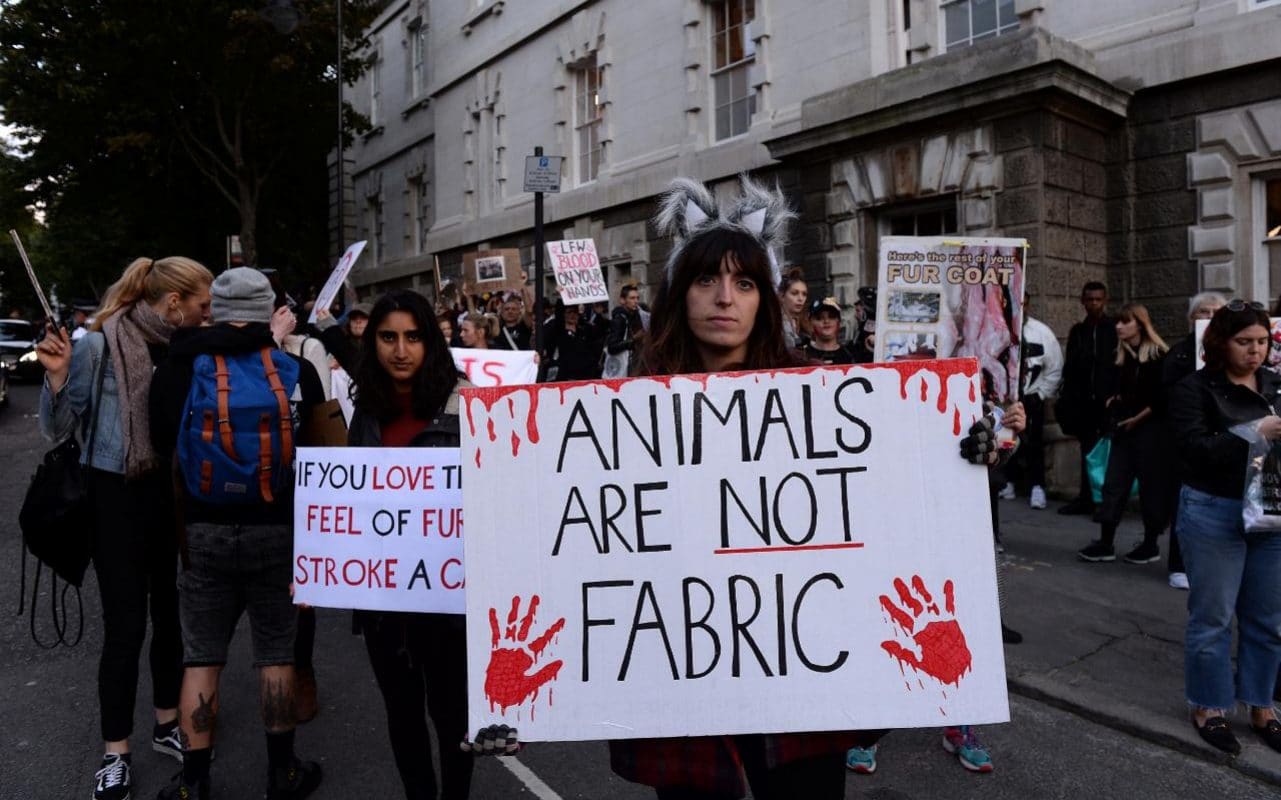
    Among the investors who snapped up shares in luxury e-commerce marketplace Farfetch after its September IPO was one buyer with little interest in operating profits or projected revenue. People for the Ethical Treatment of Animals pounced on shares in the newly public company so it could make its case directly to ban fur sales on the platform. They needn’t have bothered.

    Farfetch quietly committed to going fur free in May, inserting a promise in the terms and conditions section of its website to stop selling items made with fur by the end of next year.

    Farfetch joins a growing list of luxury brands and retailers turning their backs on animal fur.

    Within the past 18 months, Yoox Net-a-Porter, GucciMichael Kors, Versace, Furla, Burberry and DVF have all announced anti-fur policies, while this year’s September London Fashion Week became the first of the major fashion weeks not to show any fur on the catwalk.

    Within the luxury space, the balance has tilted against fur.

    In the 1980s, fur was synonymous with luxury, representing a status symbol for many women.

    The global fur trade is valued at $40 billion, but today fur is central to the image — and revenue — of only a handful of major brands.

    Meanwhile, anti-fur messaging is being amplified by social media and a millennial customer base that is paying closer attention to the values represented by the products they buy.

    For brands like Gucci, the goodwill generated by banning fur outweighs the sacrifice of a few million dollars in sales of fur-trimmed loafers.

    “[It’s about] being more modern in our thinking and our approach to business and how we talk and engage with our consumer and our community of women,” Sandra Campos, chief executive at DVF, said of the decision earlier this month to stop using fur, exotic skins, mohair and angora in upcoming collections.

    “No one really wanted to associate the brand with [fur]. We don’t need real fur to have a status symbol anymore.”

    The anti-fur movement has ebbed and flowed for decades.

    Calvin Klein stopped using fur in 1994, the same year Peta ran a campaign featuring supermodels including Naomi Campbell and Christy Turlington, who claimed they would “rather go naked than wear fur.”

    Ralph LaurenTommy Hilfiger and Selfridges barred fur in the mid-2000s.

    More recently, Hugo Boss joined the no-fur list in 2015, followed by Armani the following year.

    Gucci kicked off the latest wave of brands announcing fur bans in October 2017.

    Winning over luxury’s hottest brand was a coup for animal-rights activists who had been targeting specific companies for almost a decade via a mix of behind-the-scenes talk and public protest.

    In July 2017, more than 20 animal rights activists heckled Michael Kors during a speech, while in September 2017, Burberry’s London Fashion Week show was disrupted by about 250 anti-fur protesters.

    Michael Kors agreed to ban fur in December, Burberry last month.

    The rise of social media has provided the general public with a direct line of communication to companies and a platform for opinions and protest, making it harder for brands to ignore targeted activism.

    It’s also given animal rights organisations a platform for mobilising consumers into action.

    The global fur industry is fighting back, launching its own campaign making the case for fur as a natural, sustainable product that is better for the environment than alternatives, which are often made from plastic.

    One recent campaign featured Fendi and Oscar de la Renta, among other brands.

    “Brands are under huge pressure to respond to social media and avoid any controversy,” says Mark Oaten, chief executive of the IFF.

    “Even in a five year period that has changed … the fear of reputational damage is increased at the moment.”

    Studies show activism is impacting purchasing decisions.

    Prior to announcing its fur-free policy last June, Yoox Net-a-Porter surveyed 24,000 customers: 72 percent said social or environmental considerations drove their purchasing decisions at least some of the time, while 58 percent said having more information about the ethics and sustainability of a product would influence their shopping choices.

    Indeed, the idea of what luxury means to consumers today has evolved.

    “It’s become synonymous with social responsibility and innovation,” said PJ Smith, fashion director at the Humane Society US.

    “Companies that want to position themselves as corporate social responsibility leaders are seeing the marketing potential of going fur free, especially with new luxury consumers.”

    For a brand like Michael Kors or Burberry, going fur free won’t have much impact on the bottom line, while providing a marketing boost.

    For DVF, fur was “a very minimal percentage” of the overall business, said Campos.

    “It wasn’t something we relied on heavily at all,” she said. “It made sense for us to walk away from it in total.”

    Similarly, Gucci’s decision to bet on animal rights activism wasn’t much of a trade-off, as the brand sold only €10 million ($12 million) in fur products last year, less than 0.2 percent of revenue.

    Gucci’s Instagram post announcing the news was among the brand’s top performing posts at the time of the announcement, amassing 179,524 likes.

    Even brands that still use fur are acknowledging shifting attitudes.

    Fendi, which started as a furrier in 1925, rebranded its Couture Week show this past July as haute couture, rather than the haute fourrure description it used in recent seasons.

    And while fur was still present in the label’s Spring 2019 collection, it was less prominent than in past seasons.

    Prada, too, has been decreasing its use of fur.

    Recently the brand has come under pressure as a result of a targeted campaign spearheaded by the Fur Free Alliance, a coalition of 40 animal rights groups.

    According to the company, thousands of e-mails demanding it bans animal fur have been sent to the Prada Group and personal addresses of employees.

    However, the company has not announced plans to stop using fur.

    “We believe it is important to stress that all the advertising campaigns of the Group’s brands, together with the fashion shows and displays in the shop windows, have not been presenting these products for some time, in order to discourage demand from consumers,” the Italian house said in a statement.
  • Comeback for Prada’s Linea Rossa

    Comeback for Prada’s Linea Rossa

    Italian fashion brand Prada has relaunched its iconic Linea Rossa sportswear collection into the luxury market, some twenty years after it folded.

    First launching in 1997, the debut of the new Linea Rossa line took place last week, forming part of the fashion activity at New York Fashion Week for spring/summer 2019.

    Known for its super technical, ultra-functional and progressive fashion, the fresh-faced Linea Rossa showcased a 90s- inspired collection. The line was designed using cutting-edge methodology and a close focus on technical detailing.

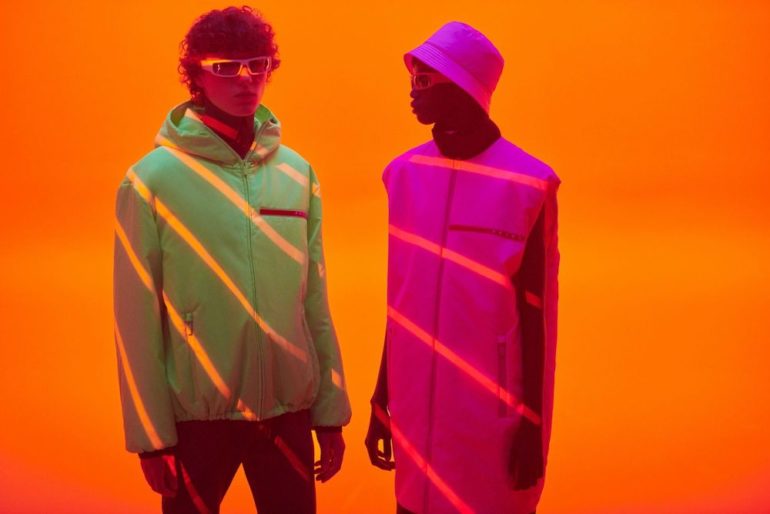
    Although there is no word on exactly what to expect from the return of Prada Linea Rossa, the first looks revealed monochromatic garments accented by the iconic red Rossa tag; fluorescent bucket hats, nylon oversized vests, and spandex trousers, as well as sunglasses in stark white and black geometric frames with mirrored lenses.

    To mark the launch, Prada Linea Rossa hosted a celeb- packed party in New York, with a guest list that included Henry Golding, A$AP Rocky, Adriana Lima, Zara Martin, Sara Sampaio, Ansel Elgort and Negin Mirsalehi.

    An official campaign has also been created consisting of a series of videos produced under the creative supervision of New York agency Michael Rock/2×4 New York. Each film has been directed by Arisu Kashiwagi and with Lotta Volkova in charge of styling.

    Finally, a Linea Rossa collection tour is slated for Asia in September.

    The line will come to Hong Kong on September 12, before arriving September 13 in Shanghai at the Prada Rong Zhai cultural venue (where a pop-up store will open from September 15 to 29) and on September 14 in Tokyo, at the Prada store in the Aoyama district.

  • Asia leads Prada’s sales growth

    Asia leads Prada’s sales growth

    Asia has once again energised luxury fashion label Prada’s sales in the first half year.

    The company has reported net revenue up 9.4 per cent in the six months to June 30 (although a lesser 3.3 per cent at current exchange rates).

    However Prada Asia-Pacific sales surged 13.8 per cent at constant exchange rates, or 6.6 per cent at current rates, most of that growth coming from company-owned stores.

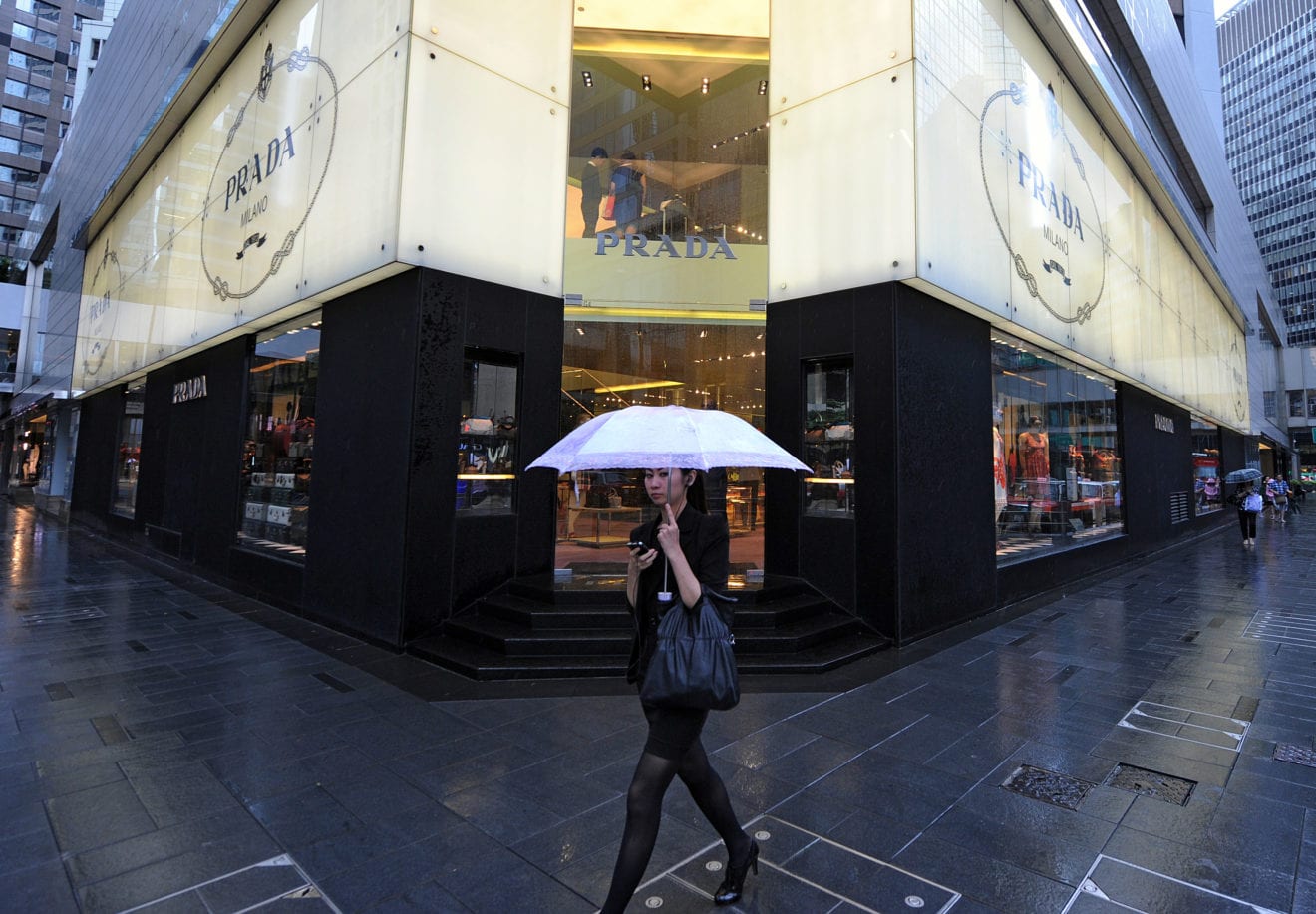
    Prada, which is listed on the Hong Kong stock exchange, singled out a recovery of inbound tourist flows into the city from the mainland as the primary contributor to Asia’s strong performance.

    Greater China sales rose 17.2 per cent at constant exchange rates, or by 9.2 per cent at current rates, to €344.4 million, while sales in Japan rose by 9.1 per cent at constant exchange rates.

    Global sales totalled €1.535 billion and net profit €105.7 million, up 10.7 per cent on the same period last year.

    By category, clothing sales increased by 19.5 per cent, with both both Prada and Miu Miu achieving double-digit growth at constant exchange rates. Sales of leather goods rose by 8.4 per cent at constant exchange rates.

    Prada group’s namesake brand achieved a 10.1 per cent improvement in sales, while

    Miu Miu made a return to positive growth across all product categories, net sales rising 8.2 per cent.

    The only poor performances were the Church’s brand, where sales were down 3.9 per cent, and income from royalties, which slipped 3.2 per cent with a healthy increase in fragrance sales offset by falling eyewear demand.

    “The [Church’s] decline was nearly entirely attributable to the results of the wholesale channel, which has still not recuperated from its reorganisation process,” said Prada in its earnings release.

    The Marchesi 1824 patisserie chain achieved double-digit growth.

  • It is sneaker time for luxury fashion

    It is sneaker time for luxury fashion

    What do you get when luxury fashion meets sport? $10,000 sneakers.

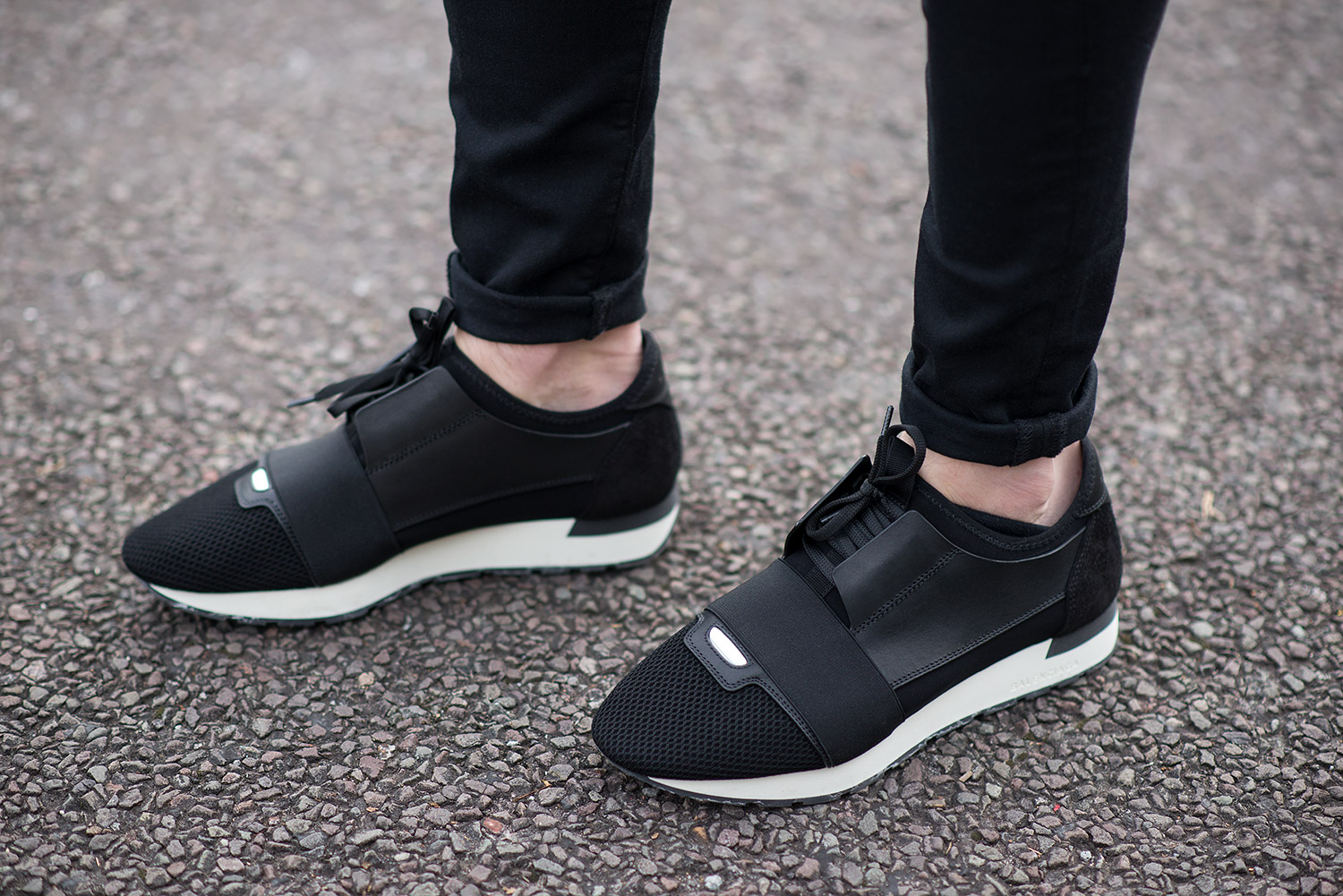
    High-end brands such as Kering’s Gucci, Prada and Balenciaga are increasingly looking to sneakers for growth, putting them in direct competition with sportswear giants like Nike, Puma PMUG.DE and Adidas, and giving rise to ever-more striking and expensive designs.

    Luxury groups say they are now increasing investments and marketing budgets to face down their new opponents.

    “When I saw sneakers were going to be a thing, I fought it for a bit,” Salvatore Ferragamo’s (SFER.MI) designer Paul Andrew said at a conference. “We’re definitely now investing heavily in that category, getting in very specialized people”.

    Global sales of sneakers – or trainers – rose 10 percent to 3.5 billion euros last year, outperforming a 7 percent rise in handbags, according to consultancy Bain & Co.

    “It’s not really even a trend anymore – it’s become a category,” said Bruce Pas, Men’s Fashion Director at U.S. department store Neiman Marcus.

    Both luxury groups and sports companies are looking to cash in on a booming market. Premium sneakers can start at around $400 but can easily rise as high as $3,000, for a pair of Christian Louboutin’s leather, crystal-embellished sneakers.

    Limited editions can sell for well over $10,000, including the Chanel X Pharrell Hu Race Trail or Nike’s Air Jordan 3 Retro DJ Khaled Grateful.

    Sneakers are a big driver of the luxury shoe business, which accountancy firm EY says is the fashion industry’s fastest-growing area.

    The rise of luxury sneakers is part of the growing influence of casual and streetwear in high-end fashion, where it is now acceptable to team sneakers with a tailored suit.

    Upmarket brands are tapping into street style to refresh their looks and young buyers are driving the shift. “Millennials” – born between the early 1980s and mid-90s – already represent a third of the luxury market, according to Bain.

    Several luxury group executives recently noted the importance of sneakers for their business and the need to step up their game to face the rising competition.

    Emilio Macellari, finance chief of Italian luxury goods company Tod’s – a pioneer in the sector, having launched its first Hogan luxury sneaker in 1986 – said “there is no brand that is not currently considering its (sneaker) offer”.

    Pointing out how times are changing, he said luxury brands were now “under attack” from sportswear companies, on top of the usual competition from their luxury peers.

    But so-called “sneakerisation” could steal market share from more traditional and formal-looking footwear, industry operators say.

    “What has changed is competition, with a clear overlap,” said Claudia D’Arpizio, partner at Bain & Co. “Luxury consumers are buying Nike and Adidas and vice-versa”.

    “If (luxury groups) go the sports way… it is only positive,” said Puma Chief Executive Bjorn Gulden said. “If that is a trend that pulls the sneaker market up, we can only be happy.”

    Analysts also say the intensifying competition is unlikely to erode profit margins because the market is expanding.

    “There is large space for prices moving up,” said Erwan Rambourg from HSBC. “The ‘luxurisation’ of sneakers could possibly impact margins positively”.