Tag: product

  • Korea’s industrial output growth slowest in near 20 years

    Korea’s industrial output growth slowest in near 20 years

    Industrial output is growing at the slowest rate in nearly 20 years, while facility investment dropped the most in a decade.  Other signs that the economy is in trouble include seven straight month of declines in the coincident and leading indexes. According to Statistics Korea and the Ministry of Strategy and Finance Thursday, last year industrial output grew 1 percent compared to 2017. This is the slowest annual growth rate since 2000.

    Manufacturing industry output was only able to rise 0.3 percent, while the construction industry, which is an important contributor to the domestic economy, fell 5.1 percent, with a particularly weak second half.

    Facility investment was down 4.2 percent, the sharpest drop since 2009, when the number declined 9.6 percent. The government said the decline in facility investment was largely due to weakening in the semiconductor sector.

    Consumption statistics were relatively strong, on the rising sales of both durable and nondurable goods. When compared to the previous year, consumption rose 4.2 percent, the sharpest increase in seven years. In 2011 consumption went up 4.6 percent.

    Strength was noted at duty-free shops and online.

    While traditional retail store sales were down, including those of discount marts like Emart and Lotte Mart, falling 2.8 percent, as well as those at smaller supermarkets and miscellaneous stores, falling 0.7 percent, sales of online stores were up 14.2 percent and duty-free sales surged 31.5 percent. Chinese tourists returned to the country in great numbers as a result of easing tensions over the introduction of a U.S. missile defense system.

    Convenience store sales were up 8.5 percent, a trend that has been seen in recent years as the number of people living alone has been rising.

    December figures weren’t comforting.

    When compared to the previous year, overall output grew 0.3 percent, which is half of the 0.6 percent reported in November. When compared to the previous month, December output fell for the second consecutive month at 0.6 percent.

    Manufacturing and mining output improved compared to the previous month. It also rose 1.6 percent compared to the same month the previous year, compared to November’s 1.1 percent.

    December output fell 1.4 percent month-on-month, the second consecutive month of decline.

    While the fall in output of automobiles was one of the major factors, down 5.9 percent compared to November, semiconductor output was also another contributing factor, as it fell 4.5 percent.

    The ministry said automobile production continued to fall as exports have shrunk. Overseas and domestic demands have been weak.

    Semiconductors, which have long been a positive force, started to become a drag, with production at some companies falling on weak demand.

    Investment in December alone fell sharply, declining 14.5 percent year-on-year, the sharpest fall since September 2018, when it tumbled 19.2 percent. Even when compared to the previous month, it dipped 0.4 percent.

    The coincident index, which shows the current economic situation when compared to the previous month, fell 0.2 points, down for nine consecutive months.

    It is the longest losing streak since falling for 11 months starting September 1997, when Korea was hit by the first financial crisis.

    The leading economic index fell 0.2 points compared to November, declining for seven consecutive months.

    In a statement, the ministry said it will swiftly move on “big projects” so investment sentiment will improve.

    “The government, if possible, is trying spend a quarter of the budget as early as possible,” Finance Minister Hong Nam-ki said Thursday.

    He denied he is looking into the possibility of a supplementary budget to boost the economy.

    “We’re only in January,” Hong said. “A supplementary budget is not under consideration.”

    The minister said the government will be announcing export measures, mostly focusing on financial aid to SMEs.

    “While finding new markets [for exports] is important, currently the most difficult issue is [SME] exporters struggling to get financial aid,” Hong said.

  • China will flood US with its product

    China will flood US with its product

    Turnover in the Chinese retail industry will eclipse that of the US later this year, according to analyses. “Nothing is going to stop them,” said one commentator as new data emerged showing a fast-narrowing gap between the two markets. The fact China would overtake the US was never in doubt – China’s population of 1.4 billion is vastly more than the US population of 325 million.

    According to data from eMarketer, total Chinese retail sales will grow 7.5 per cent this year to reach US$5.636 trillion. But growth in the US is likely to be significantly slower at just 3.3 per cent, reaching $5.529 trillion.

    Not even the slowdown in China’s economic growth is likely to affect the figures – a rebound may even hasten the milestone.

    GlobalData Retail MD Neil Saunders says a big factor in the speed of China’s retail growth is the way the industry has evolved. In the US, retailers were established well before the advent of the internet meaning adapting to the new online environment has meant managing their brick-and-mortar stores while pursuing growth online.

    But in the US, the market began to mature in an online world, and online spending there will account for more than 30 per cent of total retail sales this year. In the US, online is predicted to account for less than 11 per cent.

    “The US retail environment grew up in a very different era,” says Saunders. “It grew up before the internet. There is a historical difference and an evolutionary difference, which has created this very different backdrop to retail.”

    The rapid rise of the Chinese retail industry has been fuelled by rising incomes across the country, the urbanisation of the population and a burgeoning middle class.

  • Singapore banks lose up to 40 per cent of new product sales to competitors

    Singapore banks lose up to 40 per cent of new product sales to competitors

    The latest survey by management consulting firm Bain & Company found that Singapore retail banks lose up to 40 per cent of new product sales to competitors that are better at digital marketing, sales and service.

    In its seventh annual report on consumer banking behaviours, the consultancy said such “hidden defection” of consumers – purchasing a new banking product from a competing bank or financial technology firm – could get worse.

    “There are a lot of customers who frankly consider themselves prisoners in their own banks. They don’t switch their primary bank because it’s too much hassle to do so. But they’re going to go elsewhere for any new needs,” said Ms Chew Seow-Chien, partner and head of Bain’s Financial Services practice in Southeast Asia.

    The survey polled more than 137,000 consumers in 21 countries, including Singapore.

    The Singaporean customers polled indicated that they would buy new banking products from a competitor rather than their primary bank up to 40 percent of the time.

    About 30 per cent of them said they would switch their primary bank if it were easy to do so, the research showed.

    Bain noted that fintechs and technology companies are siphoning off customers seeking high-value products and services, such as credit cards, loans, insurance and investments.

    In its research, the consultancy found that deposits made up about 50 per cent of purchases from primary banks in Singapore over the last 12 months, versus just 22 per cent at competing banks.

    Meanwhile, insurance were the most purchased product at competing banks – 31 per cent of purchases – followed closely by credit cards.

    As younger, more plugged-in generations learn how to bank, their purchases of banking products through digital channels, especially online, will rise – making it important for banks to improve their digital offerings, simplify products lines and streamline user experiences.

    “By now, the digital disruption in banking should come as no surprise, and most banks clearly understand the importance of digital migration,” said Ms Chew.

    “The bigger challenge lies in how to organise the transition and instill the necessary changes, both at the frontline and in the back office, to improve how consumers do their banking.”

  • Sales of Educational Products Popular among Korean Workers

    Sales of Educational Products Popular among Korean Workers

    Korea’s unyielding economic slump and more frequent corporate restructuring are driving employees to quickly prepare for a hazy future. These employees are referred to as saladents – a portmanteau of the words salaryman and student.

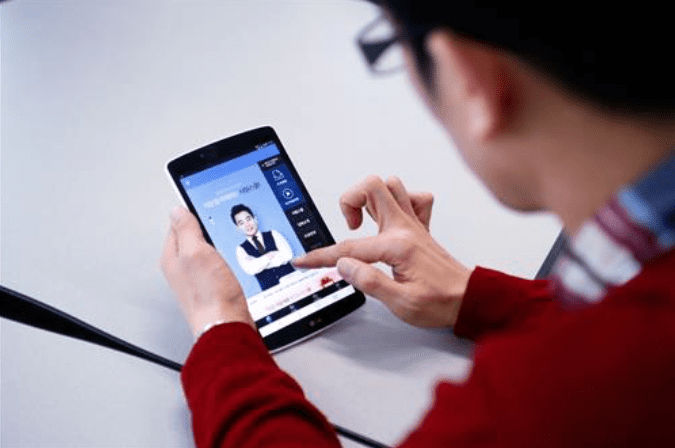
    According to a retail industry watcher, Hyundai Home Shopping generated 30 billion won in revenue from sales of the Siwon-school Tab, an English-learning device. The device was first introduced on its channel in January, and has been aired 31 times in the past five months.

    The device is based on LG’s G-pad 8.0 with an internal SD card, and offers its users a variety of English lectures without having to connect to any networks.

    However, the more intriguing part of its popularity is that 59.8 percent of the purchasers were men. In Korea, there are usually twice as many female home shoppers as male customers, with a male-to-female ratio of 22:78.

    Furthermore, 50 percent of all customers were in their 40s.

    Hyundai Home Shopping explained that there is a greater number of male customers who are studying prior to retirement, or with hopes of getting a promotion. And they tend to prefer such devices that offer more convenient and unrestricted means of study in contrast to visiting private academies before or after work hours.

    “In the past, parents would purchase learning devices for their children,” said Lee Sung-gu, senior merchandiser (MD) for Hyundai Home Shopping. “But more recently, it’s the saladents who want to improve their competitive advantage in society.”

  • Help retail electronics customers navigate to the right products

    Help retail electronics customers navigate to the right products

    Singapore will be the first offshore location for Australian consumer electronics product information platform Product Lighthouse.

    Singapore has been identified because of the sophistication of the domestic market, the high demand for electronic goods, and the close level of integration with neighboring countries.

    Product Lighthouse acts as a bridge between vendor product content and retailer product information systems. Through Product Lighthouse, information authored by vendors can be readily made available for retailer websites, catalogues, staff training and in-store tickets.

    The launch of Product Lighthouse Singapore is slated for the second half of 2016, with discussions underway now with leading retailers and manufacturers.

    Retailers have an opportunity to increase sales and retain customers  

    Consumer research conducted by Product Lighthouse shows consumers are hungry for product information – but they are often not getting it from store staff or online. Research undertaken by Product Lighthouse showed that.

    • 87% of consumers say they leave a website and go elsewhere when they encounter poor quality or missing product
    • 64% of consumers say they would be less likely to purchase from a retailer who provided incomplete product

    CEO Chris Grannell said “Most of us have visited a store and found staff unable to answer our questions. Even though most consumers purchase electronic goods in a physical store, the growing significance of the Internet in the product discovery process means that comprehensive and accurate information online is essential.”

    Singapore audit reveals product information gaps

    Product Lighthouse undertook an audit of product information on retail websites in Singapore and found many inaccuracies and information gaps.

    Grannell said: “In Singapore our audit has shown some astonishing inaccuracies, such as incorrect specifications, key attributes missing, wrong weights and sizes. We even found one website that had a laptop listed with a gender! “

    “These things happen because content is transferred from manufacturers to retailers through a manual process. Even with the most conscientious staff, mistakes will happen. Added to that, the nature of this industry means that information is not available all at once which means that it is more of a drip feed and less of a single transfer. Never before has there been a system that can accommodate this process and facilitate the collaboration around this data”

    Product Lighthouse is designed with low-fi integration in mind

    Gex Cheng, CTO of Product Lighthouse, said “Our technology platform can be thought of as an API layer between manufacturers and retailers. But ‘making things easy’ is part of our DNA, so we’ve created the ability for retailers to export content in customised spreadsheets that can be loaded into their systems. We’ve also invested heavily in collaboration tools and in the ability to read output from all kinds of manufacturer databases and libraries.”

    Cheng continued, “I always like to remind our users that our approach is to ensure our software fits to your workflow rather than changing it.”

    Discussions taking place now

    Cheng and Grannell will be spending time in Singapore during April, when Product Lighthouse will also be showcased at the Tech in Asia expo at Suntec Convention Centre. Grannell said “We are encouraged by the current focus on productivity by the retail sector in Singapore. Programs such as the Capability Development Grants from SPRING show that government and industry alike are keen to invest in productivity, marketing and customer service.”

  • Singapore startup Semantics3 in new funding round

    Singapore startup Semantics3 in new funding round

    Singaporean software startup Semantics3 Friday said it has successfully closed a $1.55 million round of bridge funding, with Brussels-based seed investor E-Merge bringing $1.5 million to the table.

    The company will use the latest funding, which also saw participation from early-stage investor Zillionize, to expand its business team and ramp up sales efforts. The company had raised $600,000 from the two investors in a previous financing round in March 2013.

    “We are at break even, but we’re not profitable yet,” chief executive Varun Sivamani told CNBC.

    Semantics3’s proprietary software allows companies to more efficiently track their products. Conventional barcodes are unable to track products and prices in real time across the internet, which creates a conundrum for e-commerce retailers.

    The four-year-old startup’s over-the-top software solves this problem by allowing them to use their barcodes to access detailed information about any item in their inventory, and track the price of their products in real time across a variety of websites.

    While competitors Indix and Factual have more funding and a larger share of the market, Semantics3’s software is currently being used by retailers, as well logistics, industrial supply, and insurance companies, including Liberty Mutual and American Family Insurance, the company said.

    The brain child of three students from the National University of Singapore, Semantics3 in 2013 became the first Singaporean startup to make it into the prestigious Y Combinator accelerator program that has also seen participation from bitcoin wallet provider Coinbase and Codeacademy.

    With some 99 percent of Semantics3’s customers based in the US, the company is looking forward to stress testing some of its software’s new features during the Black Friday sales in the US later on this month.