Retail News CRM

Tag: Profits

  • Spicing Up Profits: Vietnam Rakes in $1.5B from Pepper Exports amid High Demand

    Spicing Up Profits: Vietnam Rakes in $1.5B from Pepper Exports amid High Demand

    By the end of November, Vietnam had exported approximately 225,000 tonnes of pepper, generating over US$1.5 billion in revenue. Despite a 4.4% year-on-year reduction in export volume, there was a 24.4% increase in revenue due to robust demand and consistently high export prices, as reported by the Vietnam Pepper and Spice Association (VPSA).

    Export Prices and Major Markets

    In the period from January to November, the average export price stood at $6,618 per tonne for black pepper and $8,636 per tonne for white pepper. This represented a rise of $767 and $2,175 respectively, compared to the same period the previous year.

    The U.S. continued to be Vietnam’s largest export market, accounting for 21.7% with 48,849 tonnes, despite a 28% decrease. This was followed by the United Arab Emirates (UAE) taking in 19,930 tonnes, China with 17,744 tonnes, India importing 11,750 tonnes, and Germany with 10,876 tonnes.

    November Trade Figures

    In November alone, Vietnam exported 18,582 tonnes of pepper, which included 16,322 tonnes of black pepper and 2,260 tonnes of white pepper. This resulted in earnings of $121.5 million. Compared to October, export volume decreased by 4.4% and value fell by 6.2%. However, compared to the previous year, there was a substantial increase of 16.5% in volume and 14.2% in value.

    The average export price in November was $6,519 per tonne for black pepper and $8,072 per tonne for white pepper. This represents a 1.2% increase for black pepper, but a 3.8% decrease for white pepper on a month-to-month basis.

    Imports of Pepper

    On the import front, Vietnam imported 2,459 tonnes of pepper in November, valued at $15.2 million. This was a significant 47.2% increase from October but a steep 43.9% decrease compared to November 2024. Cambodia was the largest supplier in that month, providing 1,506 tonnes (61.2%), followed by Brazil with 475 tonnes and Indonesia with 210 tonnes.

    By the close of November, Vietnam had spent a total of $252 million on importing 40,242 tonnes of pepper. The year-on-year increase in import volume was 22%, and the value rose by 62.3%, indicating stronger purchasing for re-export and processing. Brazil remained the largest supplier with 18,956 tonnes (an increase of 10.6%), followed by Cambodia with 11,211 tonnes (a surge of 65.5%). Meanwhile, Indonesia supplied 7,156 tonnes, a sharp decrease of 49.3%.

    Questions & Answers

    What was the total revenue from Vietnam’s pepper exports by the end of November?
    Vietnam generated over US$1.5 billion from pepper exports by the end of November.

    Which countries are the biggest importers of Vietnamese pepper?
    The U.S., the United Arab Emirates, China, India, and Germany are the major importers of Vietnamese pepper.

    Who are the main suppliers of pepper to Vietnam?
    Brazil, Cambodia, and Indonesia are the primary suppliers of pepper to Vietnam.
  • Unveiling Coupang’s Winning Strategy: Streak of Profits and Global Expansion Rooted in Operational Innovation and Taiwanese Traction

    Unveiling Coupang’s Winning Strategy: Streak of Profits and Global Expansion Rooted in Operational Innovation and Taiwanese Traction

    Coupang, a South Korean e-commerce giant, has experienced substantial growth, recording a record quarterly revenue of $9.3 billion during the three months leading up to September – a 20% year-on-year increase. This growth not only signifies the company’s third profitable quarter in a row since being listed on the New York Stock Exchange in 2021, but also a significant 51% leap in operating income to $162 million.

    Boosted by Local and Overseas Markets

    Coupang’s financial gain is attributed to both sustained growth in its domestic market and successful expansion into Taiwan. The company’s CEO, Bom Kim, expressed satisfaction with the progress, particularly in the Korean market, which he believes to be a largely untapped opportunity for further growth. He also noted a strong and varied customer base that continues to support the company.

    Domestic Strength and Expansion

    Coupang’s Product Commerce sector, encompassing Rocket Delivery, Rocket Fresh, Rocket Growth, and Marketplace, saw an 18% increase in net revenue to $8 billion. The company’s adjusted EBITDA also went up by a remarkable 50% to $705 million. This positive performance propelled Coupang’s gross profit margin, reaching a record 29.4%, largely due to supply chain efficiencies and the expansion of higher-margin categories. Furthermore, the company reported that it ended the quarter with 24.7 million active customers, a 10% increase from the previous year, and a 7% rise in revenue per active customer to $329.

    Taiwan as a New Growth Engine

    In recent times, Taiwan has emerged as a significant growth engine for Coupang. The company’s Developing Offerings segment, which includes Taiwan, Coupang Eats, Coupang Play, and Farfetch, experienced a 32% annual growth to $1.3 billion. The Taiwan business itself reportedly experienced growth in the “triple digits,” largely driven by the increased adoption of Rocket Delivery and the newly launched third-party marketplace.

    Strategic Investments and Operational Innovations

    Despite the widening losses in the Developing Offerings segment, Coupang’s management stated that this reflects strategic investments rather than operational shortcomings. The company is accelerating the deployment of automation technologies across its logistics and fulfillment network, which is expected to improve service levels and operating costs.

    In addition to operational innovation, Coupang is also investing in sustainability. The company expanded its reusable ‘ecobag’ program to cover a wider range of deliveries, reducing packaging waste and enhancing the customer experience.

    Broadening Offerings

    Coupang’s Fulfillment and Logistics by Coupang (FLC) service continues to grow, which not only allows merchants to utilize the same logistics infrastructure that powers Rocket Delivery, but also helps to deepen merchant relationships and diversify revenue streams. Kim believes that one of the biggest opportunities for Coupang’s future growth lies in broadening the selection across both first-party and marketplace offerings.

    Questions & Answers

    What contributed to Coupang’s record quarterly revenue?
    Coupang’s record quarterly revenue of $9.3 billion results from steady growth in the South Korean market as well as successful expansion into Taiwan.

    What is the strategic direction of Coupang’s operational innovation?
    Coupang aims to improve service levels and reduce operating costs by accelerating the deployment of automation technologies across its logistics and fulfillment network.

    How is Coupang’s expanding its customer value proposition?
    Coupang plans to expand its customer value proposition by broadening the selection across both first-party and marketplace offerings, which is expected to drive future growth.

  • Surging Sales Propel Coupang’s Q3 Profits: Detailed Insights into the South Korean E-commerce Giant’s Stellar Performance

    Surging Sales Propel Coupang’s Q3 Profits: Detailed Insights into the South Korean E-commerce Giant’s Stellar Performance

    South Korea’s premier online retailer, Coupang, has witnessed an increase in profits in the third quarter, reflecting a sustained momentum in sales growth.

    Revenue and Profit Analysis

    The firm’s net revenues have experienced an 18% upsurge to reach $9.3 billion for the quarter that ended on September 30, marking a 20% rise when assessed on a constant currency basis. The net income and net income attributable to Coupang shareholders have also witnessed notable growth, with a 48% and 36% increment respectively, to reach $95 million.

    Segment Details

    The product commerce segment of the company’s operations reported a 16% surge in net revenues, amounting to $8 billion. This was matched by a 10% increment in active customers, bringing the total to 24.7 million.

    The developing offerings segment, encompassing international operations and innovative initiatives like Eats, Play, Fintech, and Farfetch, recorded commendable growth with a 32% rise in revenues, equating to $1.3 billion.

    Profit Margins

    The gross profit margins of the company expanded over 50 basis points, touching 29.4%. This was primarily driven by the product commerce segment. Additionally, the adjusted EBITDA margins saw an increase of 10 basis points, reaching 4.5%.

    CEO’s Statement

    Bom Kim, the CEO of Coupang, has expressed optimism and conviction in the consistent performance and growth potential of the Korean market. “Korea remains a remarkably durable growth opportunity with a largely untapped runway ahead,” he stated. He further emphasized the company’s continued strength across all customer segments.

    Kim also noted the firm’s accelerating progress in Taiwan, highlighting impressive year-over-year and quarter-over-quarter revenue growth. The levels of customer adoption in Taiwan, he added, are reminiscent of the early stages of their retail business in Korea, reinforcing the company’s confidence in Taiwan’s long-term potential.

    Questions & Answers

    What was the net revenue reported by Coupang for the third quarter?
    The net revenue reported by Coupang for the third quarter was $9.3 billion.

    How much did the company’s active customer base grow in the product commerce segment?
    In the product commerce segment, Coupang’s active customer base grew by 10%.

    What are the key factors behind the expansion of Coupang’s gross profit margins?
    The expansion of Coupang’s gross profit margins was primarily driven by the product commerce segment.

  • Vipshop Experiences Q2 Revenue Decline Amid Strategic Adjustments; Foresees Growth Ahead

    Vipshop Experiences Q2 Revenue Decline Amid Strategic Adjustments; Foresees Growth Ahead

    VIPshop Holdings, a prominent Chinese online discount retailer, has reported a decrease in revenue and profit for the second quarter of the 2025 fiscal year. This decline is part of a broader strategic adjustment that the company is currently undertaking.

    Revenue and Profit Decline

    The company’s total net revenues fell by 4.1 per cent, equating to RMB 25.8 billion (US$3.6 billion), a decrease from RMB 26.9 billion recorded in the second quarter of the 2024 fiscal year. The gross profit for the second quarter stood at RMB 6.1 billion (US$845.2 million), a small drop from RMB 6.3 billion during the same period in the previous year.

    Although the company experienced a reduction in earnings, it noted an increase in customer activity and signs of inherent robustness. The Gross Merchandise Value (GMV), a critical indicator of total sales on the platform, rose 1.7 per cent year-on-year to RMB 51.4 billion (US$7.12 billion). This increase suggests enhanced engagement and transaction volume.

    Business Stability and Growth Plans

    Eric Shen, Chairman and CEO of VIPshop, said, “We managed to stabilize our business trajectory by taking quick measures to boost customer activity and sales momentum. Our vision of discount retail for brands has guided us in implementing internal changes to augment the self-reinforcing flywheel across merchandising, operations, and customer engagement.”

    VIPshop has also seen growth in its high-value customer base. This growth is primarily attributed to the double-digit increases in its Super VIP membership program. The company continues to focus on fashion and lifestyle categories to retain value-conscious shoppers, with apparel remaining a key revenue driver.

    Platform Optimization Efforts

    The company’s current platform optimization strategies, which include more stringent inventory control, more focused brand partnerships, and enhanced personalization, are part of a broader effort to distinguish itself within China’s competitive e-commerce sector.

    Despite persistent revenue pressure, the management expressed cautious optimism that its revised strategy is taking hold. The stable GMV and the growing loyalty segment are seen as early signs of a turnaround.

    Mark Wang, CFO of VIPshop, stated, “We delivered another quarter of healthy profitability, demonstrating our consistent financial discipline in prioritizing growth initiatives and optimizing resource allocation. Looking ahead, our consistent strategy and focused execution position us well to return to sustainable growth.”

    Questions & Answers

    What could be the reasons for the decline in VIPshop’s revenue and profit?
    This decline is part of VIPshop’s ongoing strategic adjustment, which involves a more stringent inventory control and more focused brand partnerships.

    How is VIPshop planning to boost customer activity and sales momentum?
    VIPshop is implementing changes across merchandising, operations, and customer engagement to improve its business trajectory.

    What are the early signs of VIPshop’s strategic realignment taking effect?
    The stability of the Gross Merchandise Value (GMV) and the growth of the loyalty segment are early indicators of a positive turnaround.

  • Coca-Cola Beats Earnings Expectations Despite Sales Dip; Unveils Cane Sugar Product For Us Market

    Coca-Cola Beats Earnings Expectations Despite Sales Dip; Unveils Cane Sugar Product For Us Market

    Coca-Cola’s quarterly earnings have surpassed expectations, the company reported on Tuesday, due to increased pricing. This comes despite a decrease in sales volumes in significant markets, and the announcement of a new Coca-Cola product made with cane sugar for the U.S. market.

    Higher Prices and Lower Volumes

    The boost in prices compensated for a 1 per cent decline in sales volumes, which had increased by 2 per cent in the previous two quarters. The decline was primarily due to a decrease in sales in essential markets, including Mexico and India, and within the Coca-Cola brand in the United States. After adjusting for certain items, the company made a profit of 87 cents per share, surpassing the expected 83 cents.

    Sales of higher-priced sodas have fluctuated in recent times, especially in wealthier nations, as consumers with lower incomes become more price-sensitive.

    Healthier Substitutes

    In response to demands for healthier alternatives, food companies are looking to diversify their offerings. Recently, President Donald Trump announced that Coca-Cola had agreed to use real cane sugar in the United States. Coca-Cola’s CEO, James Quincey, stated during a post-earnings call that the company is exploring different sweetening options to meet consumer demand. This new cane sugar product will “complement” the company’s existing range, he added.

    Competing brand PepsiCo, which also exceeded quarterly earnings estimates recently, stated it would use natural ingredients if consumers expressed a preference for them.

    International Success and Domestic Challenges

    Coca-Cola already sells Coke made with cane sugar in various markets, including Mexico. Some U.S. grocery stores also offer glass bottles of Coke made with cane sugar, labelled as “Mexican” Coke.

    However, the transition to cane sugar will increase costs, including significant changes to supply chains, according to industry analysts. Higher-priced products could also put pressure on consumer budgets, as Quincey acknowledged that sales volumes in North America decreased due to continuing uncertainty and pressure affecting certain socioeconomic consumer segments.

    Coca-Cola maintains that the cost implications due to “global trade dynamics” are manageable. Approximately 61 per cent of the company’s revenue is derived from overseas markets.

    Higher Pricing and Volume Recovery

    Coca-Cola’s comparable revenue for the three months ending June 27 rose 2.5 per cent to $12.62 billion, outperforming the forecasted $12.54 billion. Quincey stated that a boycott-related drop in demand in the U.S. and Mexico has largely been resolved.

    Annual comparable earnings per share are expected to be near the upper limit of the company’s target increase range of 2 to 3 per cent, aided by a weaker dollar.

    Sales volumes of Coca-Cola Zero Sugar soared, with a 14 per cent increase recorded across all geographies.

    Questions & Answers

    What was the cause of the decrease in Coca-Cola’s sales volumes?
    The decrease in sales volumes was primarily due to a decline in sales in key markets such as Mexico and India, and within the Coca-Cola brand in the U.S.

    Is Coca-Cola planning to introduce new products to the market?
    Yes, Coca-Cola has announced it will introduce a new product made with cane sugar to the U.S. market as part of their commitment to meet consumer demand for healthier alternatives.

    What is the outlook for Coca-Cola’s annual comparable earnings per share?
    The annual comparable earnings per share are expected to be near the upper limit of Coca-Cola’s target increase range of 2 to 3 per cent, aided by a weaker dollar.

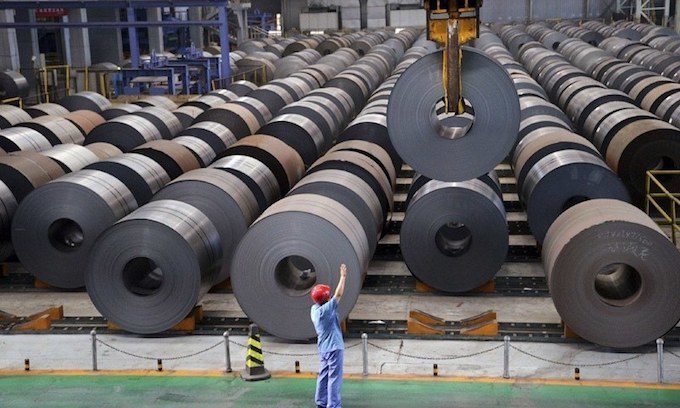
  • Steelmaker Hoa Phat reports 2.5-fold jump in profits

    Steelmaker Hoa Phat reports 2.5-fold jump in profits

    Vietnam’s biggest steelmaker Hoa Phat Group said post-tax profits were up 2.5 times last year to VND34.52 trillion ($1.52 billion).
    The company sold 8.8 million tons of steel during the year, a 35 percent increase.

    It accounted for nearly a third (32.6 percent) of the construction steel market.

    Exports doubled to 2.6 million tons even as the domestic market was hurt by the Covid-19 pandemic.

    The company’s other businesses maintained their leading positions in the market. It topped in terms of Australian beef production and was the leader in the northern chicken egg market.

    The company is working on some major projects this year such as its second steel manufacturing plant and a new port in the central province of Quang Ngai.

    It is also building a container manufacturing plant in the southern province of Ba Ria

  • OCBC Profits Climb Higher on Lower Allowances

    OCBC Profits Climb Higher on Lower Allowances

    OCBC’s posted a robust profit increase in the third quarter, which was fueled by a significant reduction in allowances.

    OCBC registered S$1.22 billion ($904 million) in net profit for the third quarter, according to its latest results, marking a 19 percent year-on-year increase.

    A significant reduction of allowances by 54 percent to S$163 million due to an improved credit outlook was a major contributor to profit growth.

    Total income was flat at 1 percent growth to S$2.56 billion while operating expenses and associates grew 8 percent and 33 percent, respectively. As a result, pre-allowance operating profit was flat, decreasing 1 percent to S$1.576 billion.

    Overall wealth management income – including insurance, premier and private banking, asset management and stockbroking – was down 7.4 percent to S$897 million.

    OCBC’s private wealth arm, Bank of Singapore, saw assets under management increase 6 percent to S$167 billion ($123 billion) driven by inflows of net new money and positive market valuations.

    Our third-quarter results were resilient, despite the challenging conditions associated with the Delta virus variant,» said OCBC chief executive Helen Wong. We remain positive on the long-term outlook but are watchful of the near-term headwinds from the pandemic.

  • Honda Swings To Q1 Operating Profit

    Honda Swings To Q1 Operating Profit

    Honda Motor Co swung on Wednesday to a first-quarter operating profit of 243.21 billion yen ($2.23 billion) from a 113.7 billion loss a year ago as car sales recovered from the impact of the COVID-19 pandemic.

    Operating profit at Japan’s No.2 carmaker by sales for the three months ended June 30 was double the average profit estimate of 119.2 billion yen based on nine analysts surveyed by Refinitiv.

    Honda raised its full-year forecast by 18% and now expects an operating profit of 780 billion yen in the current financial year, having previously forecast in May a 660 billion yen operating profit.

    The new forecast is higher than an average forecast of a 764 billion yen operating profit from 19 analysts polled by Refinitiv.

  • DBS Registers Record First-Half Profits

    DBS Registers Record First-Half Profits

    DBS maintained profit momentum in the second quarter, resulting in all-time high performance for the first half.

    DBS registered a record-high profit of S$3.71 billion ($2.75 billion), according to the latest results, marking 54 percent year-on-year growth.

    Total income slipped slightly by 4 percent to S$7.44 billion and expenses inched 3 percent higher to S$3.13 billion but allowances for credit and other losses fell by 95 percent to S$89 million.

    The bank also declared a dividend of S$0.33 per share for the second quarter, bringing the first-half dividend to S$0.51 per share.

    DBS’ strong performance in the first half was also driven by all-time high figures across the board including fee income (20 percent increase to S$1.82 billion), fixed income fees and trading income.

    The second quarter alone was also a strong showing with S$868 million in fee income – the second-highest on record behind the last quarter – resulting in a net profit of S$1.7 billion, a 37 percent increase.

    «We achieved an exceptional first half with the first and second quarters the two highest on record,» said DBS chief executive Piyush Gupta. «Business momentum and asset quality have both been better than expected as the economic recovery from the pandemic takes hold. While risks remain, our pipeline remains healthy and we expect business momentum to be sustained in the coming quarters.»

  • 7-Eleven Malaysia keeps profit levels as before Covid-19 outbreak

    7-Eleven Malaysia keeps profit levels as before Covid-19 outbreak

    Convenience-store chain 7-Eleven Malaysia has maintained its profitability despite the impact of the coronavirus pandemic.

    Profit for the first half of the current financial year from the brand’s convenience-store and pharmaceutical businesses hit US$5.8 million and $1.4 million respectively. The group’s consolidated profit after tax for the half-year was $3.35 million.

    The business remained healthy despite the Covid-19 restrictions that enforced restricted hours and the temporary closure of some stores. Stores are still unable to trade 24 hours.

    While the business remained profitable, most product categories recorded lower revenues, with the exception of tobacco, which grew 22.7 percent during the reporting period.

    The group expects to explore further opportunities for growth in the second half of its financial year as trading conditions gradually recover.

  • Samsung’s net profit dips in Q4 amid declining sales

    Samsung’s net profit dips in Q4 amid declining sales

    The world’s biggest smartphone maker, Samsung Electronics, reported a slump in fourth-quarter net profits, blaming weakening demand in key products and falling chip prices.

    Net profits in the October-to-December period were 5.23 trillion won ($4.4 billion), down 38 percent from a year ago, it said in a statement.

    “Fourth-quarter profit dropped from a year earlier due to the continued fall in memory chip prices and weakness in display panels,” Samsung said in a statement.

    The firm is the flagship subsidiary of the giant Samsung Group, by far the largest of the family-controlled conglomerates known as “chaebols” that dominate business in the world’s 12th-largest economy.

    But it suffered a series of difficulties in 2019, with the global memory chip market — which has driven profits in recent years — hit by rising supply and falling demand.

    The premium smartphone market has also grown fiercely competitive, with buyers waiting longer before upgrading to new models.

    Samsung said it expects “weak sales from seasonality in memory chips, OLED and consumer electronics” in the first quarter of 2020 as the firm navigates “continued uncertainties in the global business environment”.

    Operating profit dropped more than 30 percent year-on-year to 7.2 trillion won, while sales in the fourth quarter stood at 59.9 trillion won.

    For full-year 2019, the firm reported net profits of 21.7 trillion won, down 51 percent from a year ago.

    Samsung has been strained by a trade war between China and the US and caught in a diplomatic row between Seoul and Tokyo over wartime history, with Japan imposing tough restrictions on exports crucial to South Korean tech giants in July.

    In another shadow hanging over the firm, its vice chairman and de-facto leader Lee Jae-yong is on trial for the second time over a sprawling corruption scandal that led to the impeachment of South Korea’s former president Park Geun-hye.

    A guilty verdict and long prison sentence would deprive the firm of its top decision-maker.

    Lee was initially jailed for five years in 2017 on multiple charges including bribery, then released after several of his convictions were quashed, only for the Supreme Court in August to order a retrial.

    In the mobile business, strong demand for Samsung’s mid-range A-series handsets gave the firm a much-needed boost over the last few quarters, said Gerrit Schneemann, a senior analyst at IHS Markit.

    The premium devices, such as the latest Galaxy Note that was widely available in the fourth quarter, faced competition from Apple – which reported its best-ever quarter powered by the new iPhone 11 and iPhone 11 Pro models.

    “A strong quarter from Apple in key markets will have had an impact on Samsung,” Schneemann said.

    In 2020, Samsung is pinning its hopes on increasing availability of 5G telecom services driving sales of its handsets — it is a world leader in the technology — and said it will roll out an “enhanced” 5G lineup.

    Global demand for the superfast 5G handsets in 2019 was higher than expected, with nearly 19 million units shipped worldwide, according to the latest data from market researcher Strategy Analytics.

    Samsung held 36 percent of market share, it said, closely trailing Huawei, which was leading the tight race with 37 percent, although most of its shipments were in China, where US sanctions made relatively less impact.

    “Samsung’s 5G smartphone shipments are international and span a wide spread of countries, from South Korea to the UK to the United States,” said Ville-Petteri Ukonaho, Associate Director at Strategy Analytics.

    Samsung said earlier this month it had shipped more than 6.7 million Galaxy 5G smartphone devices globally last year, claiming it had more than half the world’s 5G smartphone market as of November.

    The firm is due to unveil new Galaxy devices next month in San Francisco that it said — without offering details – will “shape the next decade of mobile experiences”.

    Samsung shares were down 1.1 percent in early morning trade in Seoul.

  • Jollibee net profits rises in Q1

    Jollibee net profits rises in Q1

    Jollibee Foods Corp. said Friday net income rose 17.3 percent in the first 3 months of the year, as higher expenses offset growth in revenues, according to a stock exchange filing.

    Net income attributable to shareholders grew to P1.8 billion in the first quarter from P1.5 billion during the same period in 2017, the country’s largest fast food operator said.

    Gross revenues rose 19.4 percent to P35 billion while gross expenses rose 19.7 percent to nearly P32 billion, Jollibee said.

    Jollibee shares were up 2 percent at noon, compared to a 2.47-percent increase in the main index.

    Casual restaurant operator Max’s Group said Thursday net income fell 30 percent in the first quarter due to higher costs of raw materials and labor.

    Inflation reached a 5-year peak in April and on Thursday, the Bangko Sentral ng Pilipinas raised the benchmark borrowing rate for the first time since September 2014.

  • Revenue down, profit up for Kappa licensee China Dongxiang

    Revenue down, profit up for Kappa licensee China Dongxiang

    While half-year revenue was down, profit rose for Kappa brand licensee China Dongxiang Group. The international sportswear company’s revenue for the six months to the end of June fell 3.7 per cent to RMB626 million (US$93.8 million) while profit attributable to equity holders rose 11.9 per cent to RMB536 million.

    Gross profit margin was up 1.1 points to 58.3 per cent.

    During the half, the group says it continued to adopt online and offline brand-marketing strategies.

    Meanwhile, Kappa co-operated with artists from various genres such as entertainment, music and arts in a pop-culture/sportswear collaboration embodying its brand philosophy. It initiated a tripartite co-operation with A.Four Labs by designer Kazuki Kuraishi and independent experimental music label Posh Isolation in Copenhagen to launch a cross-border collection.

    Kappa Kids continued with its active marketing campaign, including pop-up events with BTV Juvenile Dance Group in Beijing Chongwenmen and Beijing New Yansha Mall. Kappa Kids also sponsored TV program Super Surprise on Shandong Cable TV to boost brand awareness.

    At the end of June, the group had 1639 Kappa stores (including 328 Kappa Kids outlets).

    During the first half, the group rejigged its business in Japan. It changed most of the management team, as well as evolving its approach from simply selling to brand management.

    Meanwhile, the group started introducing the Japanese ski brand Phenix into China to capitalise on its hosting of the 2022 Winter Olympics. It is partnering with ski centres to open specialty stores at ski grounds.

    E-commerce development remained steady, says the group. In an online exclusive, it launched a Kappa x Pac-Man range in co-operation with the video game company. E-commerce sales for the six months surged by 25 per cent (e-commerce sales of childrenswear excluded).

    China Dongxiang owns all rights to the Kappa brand in China, Macau and Japan.

  • Samsung Electronics expects record-high Q2 profits

    Samsung Electronics expects record-high Q2 profits

    Samsung Electronics said Friday it expects profits to jump 72 percent in the second quarter to a record high, amid soaring memory chip prices and increased demand for smartphones.

    Operating profit is estimated at 14 trillion won ($12.1 billion) in the April-June period, up from 8.14 trillion won a year earlier, the tech giant said.

    It marks the all-time high quarterly operating profit ever posted by Samsung Electronics, surpassing the previous record 10.1 trillion won set in the third quarter of 2013.

    Sales for the April-June period are also expected to surge 17.8 percent on-year to 60 trillion won.

    Samsung witholds sector-by-sector business performance until it releases its final earnings report later this month.

    The earnings forecast surpassed a market consensus of around 13.2 trillion won compiled by FnGuide, a financial information service provider.

  • AirAsia sees 2017 results surpassing 2016 despite lower 1Q earnings

    AirAsia sees 2017 results surpassing 2016 despite lower 1Q earnings

    AirAsia, Asia’s largest budget airline, saw net profit drop 29.8% to RM615.81 million or 18.4 sen a share in the first quarter ended March 31, 2017 (1QFY17) from RM877.79 million or 31.5 sen a share a year ago, mainly due to higher fuel costs as average fuel price rose 20% to US$67 (RM286.18) per barrel in 1QFY17 from US$56 per barrel in 1QFY16 and a strong US dollar.

    Staff costs also went up sharply by 27% year-on-year to RM363.5 million in 1QFY17, mainly due to a revised staff remuneration package that was introduced in 4QFY16. As a result, total net operating profits fell to RM267.1 million in 1QFY17 from RM337.7 million in 1QFY16. However, the airline remains positive about its prospects in 2017 and is optimistic that the 2017 results may surpass that of 2016, it said in a filing with Bursa Malaysia yesterday.

    For the remaining quarters of 2017, AirAsia said it remains optimistic as it continues to observe strong demand across most sectors coupled with a favourable fuel price and foreign exchange environment.It is projecting to achieve an average forecast load factor of 91% in 2QFY17 based on the existing forward booking trend. “The strong demand is expected to derive from the festive Hari Raya season, in conjuction with the midterm school holidays in India, as well as the expanded South Korea and China network from the Philippines,” it added.

    AirAsia’s quarterly revenue jumped 31% to RM2.23 billion in 1QFY17 from RM1.7 billion in 1QFY16 due to the consolidation of Indonesia AirAsia (IAA) and Philippines AirAsia (PAA) Group during the current quarter under review. AirAsia said the improved quarterly revenue growth was also derived from a 6% increase in total passengers carried on an additional 1% growth in seat capacity, as well as a strong seat load factor of 89% in 1QFY17 compared with 85% in 1QFY16. Despite of a slight reduction in the average fare of 2%, overall revenue per available seat kilometre improved 3% to 14.91 sen in 1QFY17 from 14.42 sen in 1QFY16. Its cost of available seat kilometre (CASK), however, rose 14% to 13.61 sen in 1QFY17 from 11.97 sen in 1QFY16, while non-fuel CASK increased 9% to 8.6 sen from 7.87 sen.

    In a separate statement yesterday, AirAsia group chief executive officer Tan Sri Tony Fernandes said following the completion of the capital injection exercise in January, the airline’s net gearing ratio stood at 1.22 times at the end of 1QFY17 compared with 1.33 times at the end of 4QFY16. “With the start of consolidated accounts combining our Malaysia, Indonesia and Philippine units, we are taking a major step to being recognised as one airline, not many. AirAsia as OneAirAsia, sharing a single cost structure, brings immense benefits in terms of economies of scale and building a dominant position in the markets we operate in. We hope to include Thai AirAsia in our consolidated accounts beginning the second quarter,” he said.

    He said the airline will add 29 new planes this year through a combination of finance and operating lease, bringing the total fleet to 201 aircraft by end-2017. “This is the most number of aircraft we have added in four years, demonstrating our confidence in the competitive environment in Asia.

    “In March this year, we signed a joint venture in Vietnam and later another in China in early May. Adding these two countries will give us air operator certificates in a total of eight Asian countries, and with that, unrivalled connectivity within the region,” he also said.

    The airline is also expected to achieve 10% further savings by end-2017 as it moves towards regional consolidation and streamlining group operations across the board. It also plans to grow its ancillary target per passenger from RM50 to RM60 this year.

    “In generating returns for our shareholders, we hope to monetise our non-core assets and distribute a special dividend every two years. We are currently in final negotiations and will materialise the sale of Asia Aviation Capital, our leasing arm, very soon. We continue to work toward the listing of PAA and IAA and our training centre — AirAsia Aviation Centre of Excellence,” said Fernandes.