Retail News CRM

Tag: Profits

  • Softbank Q4 profit surges on Sprint turnaround

    Softbank Q4 profit surges on Sprint turnaround

    Japan’s Softbank has reported a twelvefold increase in net profit for the March quarter as a result of a recovery at US mobile unit Sprint.

    Profit increased to 580.5 billion yen ($5.08 billion), on the back of a nearly 2% increase in revenue to 2.32 trillion yen.

    For the full year, profit grew to a record 1.4 trillion yen, up from 474 billion in the prior financial year, as the result of the divestment of part of the operator’s stake in Alibaba and cost reductions at Sprint.

    Total revenue increased from 8.88 trillion yen to 8.9 trillion yen over the same period, partly due to the addition of revenue from recent acquisition ARM.

    Sprint’s operating income increased to $1.8 billion for the year, from just $300 million in the prior year, while total costs were reduced to $15.9 billion, representing a $3.4 billion reduction over the past two years.

    Revenue from domestic telco operations meanwhile grew to 3.19 trillion yen from 3.14 trillion yen a year earlier. The company added 360,000 mobile subs during the year to take its total to 32.4 million, with FTTH subscribers roughly doubling to 3.59 million.

    SoftBank separately announced plans to collaborate with Qualcomm and Sprint to jointly develop technologies for 5G in the 2.5-GHz band, including developing the 3GPP new radio standard for the band.

    The companies plan to provide commercial services and devices based on the development activities in late 2019.

  • JD.com swings to profit first, revenues surge 41%

    JD.com swings to profit first, revenues surge 41%

    E-commerce giant JD.com said on Monday first-quarter revenues lifted 41% for fiscal 2017, as the second-biggest online retailer in China recorded its first profit as a publicly listed company.

    JD.com reported net income of 239 million yuan ($35 million) for the three months ended March — its first time in the black since listing in 2014. Sales rose 41 percent to 76.2 billion yuan, also topping the 73.6 billion yuan projected.

    JD, which bought Walmart’s Yihaodian local shopping platform in 2016, saw a rapid expansion into household supplies and food, as well as fashion and homewares during the last quarter, which increased users.

    JD also dipped into data, cloud and artificial intelligence services – moves that saw it swing to a profit from a loss in the previous quarter.

    “Margins benefited from our rapidly growing scale across all of our product categories,” JD’s chief financial officer, Sidney Huang, said in a statement.

    In November, JD.com said that it would seek to split off JD Finance, its financial unit, making it a fully Chinese-owned entity. The move allows JD to apply for licenses that Chinese laws forbid foreign-listed firms from holding, including mutual funds and securities. Under the restructuring, CEO Richard Liu will be one of the buyers and JD.com will receive 40% of any pre-tax profit.

    In the financial statement, JD forecast second-quarter revenues to lie between 86.6-89.1 million yuan excluding JD Finance, representing a growth rate of 33-37%, in line with analyst predictions of 36%.

    However, Huang cautioned future investments, such as the construction of warehouses, would “significantly increase” capital expenditure resulting in falling free cash flow.

    “Our quarterly earnings will likely be lower in one or more of the next few quarters,” he said. “The Chinese e-commerce market remains highly competitive and we remain committed to returning a meaningful portion of our incremental gains from scaled economies onto our customers.”

  • Vietnam banks aim for high profit in 2017

    Vietnam banks aim for high profit in 2017

    At the AGM on March 25, LienVietPostBank’s shareholders agreed on this year’s development plan, aiming to reach US$66.2 million in pre-tax profit, 10 per cent higher than that of 2016 (US$59.5 million).

    Furthermore, the expected dividend rate was raised to 12%. LienVietPostBank also planned to raise capital from US$285.1 million to US$309.0 million by issuing 54 million shares.

    On April 10, VPBank organised its AGM. According to the AGM’s documents, VPBank’s pre-tax profit goal for this year is US$300.2 million, 38% higher than that of 2016.

    Its total assets are expected to reach US$12.4 million and total outstanding loans and corporate bonds US$8.9 million.

    With this expected total outstanding loan volume, to ensure the capital adequacy ratio (CAR) of 9% stipulated the State Bank of Vietnam (SBV), VPBank’s total capital must reach at least US$794.5 million.

    With its current owner’s equity of VND15.4 trillion (US$679.8 million), VPBank must increase capital by US$132.4-176.6 million.

    Techcombank’s documents for its AGM on April 15 showed that the bank is aming to increase consolidated pre-tax profit by 26% over 2016’s US$221.6 million.

    This year, Techcombank planned to increase its chartered capital by US$220.7 million (from US$391.9 million to US$612.6 million), and raise its total assets to US$12.4 billion.

    Other banks also expect great increases in profit. For instance, at its AGM on April 21, HDBank plans to get shareholders’ approval on the US$72.5 million pre-tax profit target, 28% higher than that of 2016.

    Meanwhile, OCB is planning to aim for US$34.4 million at its AGM, 60% higher than the previous year. Also, Vietcombank’s board of directors has set a goal to reach US$406.1 million in pre-tax profit, a 12% increase on-year.

    Well-founded optimism

    These ambitious figures in expected profit correspond with the results of the survey on business trends in the second quarter of 2017 for credit institutions and foreign bank branches in Vietnam, which was conducted by the Monetary Forecasting and Statistics Department of the SBV.

    According to the results, 89.5% of the credit institutions reported improvements in the first quarter of 2017. 90.4% of the institutions expected great increases in pre-tax profit compared to 2016.

    The expected average increase for the whole system is much higher than that showed in the survey in December 2016 (+ 13.4%).

    The banks’ optimism is due to domestic economic circumstances and good forecasts for the industry.

    According to the report on the economic situation in the first quarter of 2017 and forecasts on the fiscal year conducted by National Financial Supervisory Commission (NFSC), aggregate demand will improve in the upcoming time since directions from the government have initiated major increase in public investments in several key projects and capital disbursement in the application of high-tech agriculture projects.

    This positive attitude is also due to the fact that, despite the recent wake of US protectionism, based on the economic optimistic potential of the US and the globe at large, the International Monetary Fund (IMF) has forecasted the trade growth of Emerging Markets and Developing Economies at 4% in 2017, higher than the estimated 1.9% for 2016.

    A senior leader of the SBV shared with VIR that the bank would adjust the interest rates flexibly, in correspondence to macroeconomic indicators, inflation, and the currency market.

    Also, SBV would continue directing credit institutions to balance their capital and interest rates, economise operating costs, and increase business efficiency to lower interest rates.

    SBV continues its policy on operating currency rates flexibly, closely following the interbank foreign exchange market, the currency rate on the global market, economic and currency balances, and the monetary policy.

    It would also introduce measures to improve credit quality, focus lending on manufacturing and prioritised areas.

    “We would closely inspect the credit granting situation in some industries and fields that have high chances of risk, such as medium-long term credit, credit for large customers, credit for real estate, as well as BOT and BT transportation projects,”, the senior leader shared.

  • Indonesia’s BCA posts record annual profit, buoyed by tax amnesty

    Indonesia’s BCA posts record annual profit, buoyed by tax amnesty

    Bank Central Asia (BCA) on Monday reported an all-time high annual net profit, as Indonesia’s key tax amnesty programme helped to lower cost of funds for the country’s biggest lender by market value.

    BCA posted a 2016 net profit of 20.6 trillion rupiah (S$2.17 billion), up 14.4 per cent from a year ago. This was a record high and also slightly above an average estimate of 20.0 trillion rupiah from 21 analysts.

    Indonesia’s tax amnesty scheme, launched last July and aimed at bringing back billions of dollars stashed abroad by citizens, boosted the funds at BCA’s current accounts and saving accounts (CASA) in the second half of 2016, the bank said in a statement.

    “Tax amnesty funds were parked at CASA,” BCA President Director Jahja Setiaatmadja told reporters. “What’s positive is that our cost of funds is low because our interest rate is low.”

    However, some of those funds were only “transitioning” at BCA and would likely be placed eventually in assets including property and government bonds, Mr Setiaatmadja said.

    At the end of 2016, BCA’s gross non-performing loans (NPL) stood at 1.3 per cent, one of the lowest in Indonesia’s banking sector.

    BCA’s rival, Bank Mandiri, last month reported its lowest annual net profit in five years due to an increase in provisions. Mandiri’s gross NPL of 4.0 per cent was the highest since 2008.

  • StarHub Q4 profit falls 33.2%

    StarHub Q4 profit falls 33.2%

    Singapore’s StarHub revealed its fourth quarter profit fell 33.2% to S$54 million ($38.6 million), as a result of higher costs and growing competition.

    Revenue for the quarter stayed flat at S$634.8 million, but service revenue grew 1% year-on-year to S$567.1 million.

    Higher handset subsidies, a higher finance expense and other costs all contributed to the decline in profit during the quarter.

    Mobile revenue decreased slightly to S$311.8 million, with both postpaid and prepaid ARPU declining by S$2 year-on-year to S$70 and S$15 respectively. Pay TV revenue also decreased 6% year-on-year to S$93.9 million.

    Broadband revenue by contrast grew 4% year-on-year to S$54 million, with ARPU growing S$2 year-on-year to S$37. But residential broadband customers fell by 1% year-on-year to 473,000.

    Enterprise fixed line revenue also grew 10% year-on-year to S$107.2 million due to a higher take-up of data and managed services.

    For the full year, SartHub’s net profit fell 8.3% to S$341.4 million, with total revenue down 1.9% to S$2.39 billion. Mobile revenue was up 2% to S$1.2 billion, broadband revenue was 8% higher at S$216.6 million and enterprise fixed revenue increased 3.9% to S$400 million.

    “Despite increased competition, we have registered growth in key areas. Mobile, which accounts for half of our total revenue, showed resiliency as we saw an increase in subscriber base and data revenue. Momentum for our broadband revenue was maintained and we also witnessed a consistent revenue growth in our enterprise fixed business,” StarHub CEO Tan Tong Hai said.

    “In the new year, we remain focused on our customer-centric approach to deliver innovative solutions to both our consumer and enterprise customers.”

    Based on the current outlook, StarHub is currently projecting roughly flat service revenue for the current year. The operator has a capex target of around 13% of total revenue.

    The Singaporean mobile market is facing renewed competitive pressure due to the upcoming entry of Australia-based TPG Telecom as well as the impact of disruptive 4G MVNO Circles.Life.

  • Profits fall again at South Korea’s LG Electronics

    Profits fall again at South Korea’s LG Electronics

    South Korea’s LG Electronics on Wednesday reported its second successive year of slumping net profits due partly to weak smartphone sales.

    Full-year net profit for 2016 was 126.3 billion won (Dh398 million, $109.3 million), the Seoul-based firm said, down by almost half on 2015 — when they had fallen by 50 per cent.

    The company produces a range of products, from mobile phones to televisions and home appliances including air conditioners, washers and refrigerators.

    It said in a statement it fell into losses in the fourth quarter, taking hits in its mobile telecommunications and vehicle components businesses.

    LG Electronics made a net loss of 258.8 billion won ($224 million) in the October-December period.

    Its home appliances and home entertainment units both turned in strong performances, but in mobile communications “profitability was hampered by weak sales of the G5 smartphone and higher marketing investments”.

    LG has struggled for years to increase its smartphone sales after a late entry into the market dominated by Samsung and Apple.

    It has since found itself hemmed in by emerging Chinese rivals such as Huawei or Xiaomi.

    Its vehicle components unit saw revenues jump by nearly two-thirds in the fourth quarter, but “R&D investments negatively affected profitability”, it said.

  • PLDT profit falls 20% in 9M16

    PLDT profit falls 20% in 9M16

    The Philippines’ PLDT has reported a 20% drop in net income for the first nine months of the year to 21.7 billion pesos ($442 million) due to higher capex costs and declining revenues.

    Revenue fell 2% year-on-year to 125.4 billion pesos, but remained stable when excluding the impact of international and national long distance as well as interconnection costs.

    Fixed line revenues grew 7% to 46.8 billion pesos, driven by demand for data and broadband, which grew to account for 59% of fixed line revenues.

    But wireless revenues shrank 8% to 71 billion pesos, despite a 22% increase in wireless data and digital platform revenues. SMS and cellular domestic revenues by contrast declined 15%, and international voice revenues were 24% lower.

    PLDT’s consumer wireless business reported a 5% decrease in subscribers due to aggressive unlimited voice and SMS offers from the competition, the company said.

    PLDT has set aside 48 billion towards a network improvement program covering both fixed and mobile networks, and made major improvements in the coverage and capacity of mobile unit Smart’s mobile network during the nine-month period.

    Based on the operator’s results thus far, PLDT has reduced its projected full year ebitda by 4 billion pesos to 60 billion pesos. The company is accordingly projecting a consolidated core net income of 28 billion pesos.

    “We are making this adjustment, anticipating that while data and broadband will keep posting steady growth, toll, cellular voice and SMS revenues will, however, continue to wane,” PLDT chairman Manuel Pangilinan said.

  • BMW warns profits under pressure as car margins slip

    BMW warns profits under pressure as car margins slip

    BMW’s profit margins on cars fell in the third-quarter, hit by spending on more engineering staff and new electric car technologies against a backdrop of stiffer price competition in the U.S. luxury car market.

    BMW and its rivals are struggling to maintain profit levels amid heavy investment in new technology including electric and self-driving cars, cleaner diesel engines as well as new ride-hailing business models to rival Uber.

    The Munich-based carmaker reiterated its full-year target of a slight increase in group pretax profit but warned that margins would remain under pressure due to continued investment.

    “Costs generally rise towards the end of the year so we expect this to have a dampening effect on earnings,” Chief Financial Officer Friedrich Eichiner told analysts on a call on Friday to discuss BMW’s results.

    “Capital expenditure will also be higher in the last three months of the year, mainly due to the start of production and ramp-up of the new BMW 5 Series,” Eichiner said, adding that research and development spending would remain high into 2017.

    While sales of BMW, Mini and Rolls-Royce cars rose 7.1 percent in the quarter ending in September, the return on sales at BMW’s core automotive division fell to 8.5 percent from 9.1 percent a year earlier.

    By contrast, archrival Mercedes-Benz Cars’ (DAIGn.DE) third-quarter operating margin was 11.4 percent while Audi’s was 6.9 percent for the first nine months of the year.

    BMW’s shares took a hit in early trading, but had recovered by late afternoon to trade unchanged at 1530 GMT, outperforming German blue-chips .GDAXI which were 0.8 percent lower overall.

    BMW said the dip in automotive profits was mainly attributable to higher personnel expenses as staff numbers rose 3.6 percent, along with changes in the mix of vehicle models sold.

    Customers are migrating to less profitable smaller sport utility vehicles (SUVs) while BMW’s popular 5-series is at the end of its lifecycle and competing with a brand new Mercedes-Benz E-class.

    BMW said sales in the United States, a market where sales of highly profitable large sport utility vehicles has been strong, had fallen 3.6 percent in the quarter.

    “Pricing remains a challenge in North America in particular,” Eichiner told analysts.

    The more competitive sales environment has already forced German premium auto maker Audi to cut its sales forecast for the year and to warn that its operating margin would remain below its 8 to 10 percent target range this year.

    BMW said it plans to keep the return on sales at its automotive division between 8 and 10 percent, a goal it has achieved for the last 26 quarters in a row.

    At a group level, BMW said third-quarter earnings before interest and taxes (EBIT) were 2.38 billion euros ($2.6 billion), in line with a 2.37 billion consensus forecast in a Reuters poll and little changed from 2.35 billion last year.

    The group benefited from a profit boost from its financial services business and a gain from derivatives hedging.

    “Operational performance on a group level came in as expected but for automotive below expectations,” DZ Bank analyst Michael Punzet said in a note on Friday.

  • Pertamina Reports Net Profit rp23,8 Trillion Six Months

    Pertamina Reports Net Profit rp23,8 Trillion Six Months

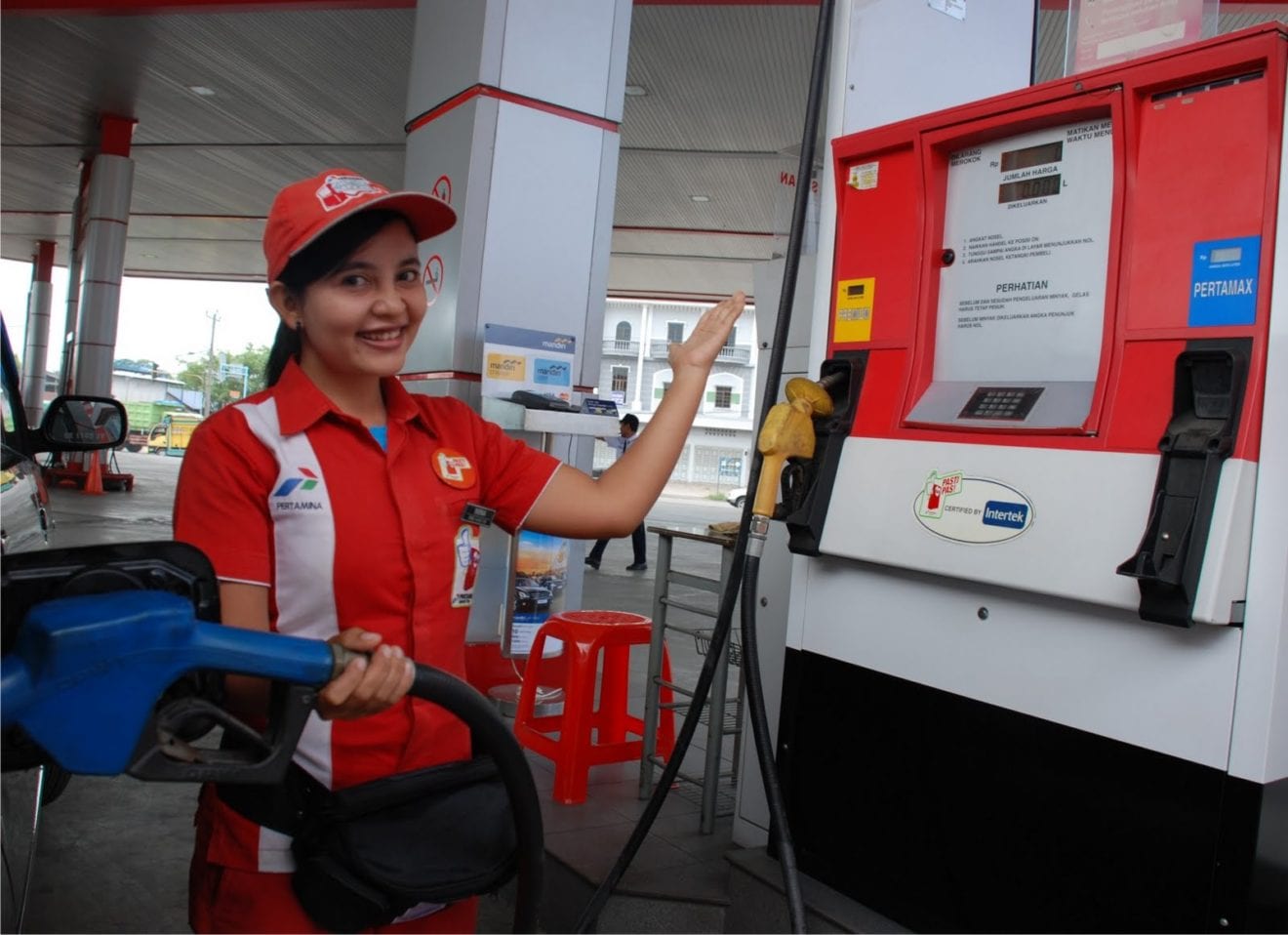
    PT Pertamina reported US$1.83 billion (Rp23.8 trillion) in net profit in the first half of the year, or an increase of 221 percent from the same period last year.

    Chief Executive of the state-owned energy company Dwi Soetjipto attributed the increase in profit to improved performance of its business units and efficiency in operation.

    “We are grateful that efficiency and increase in performance in the upstream and downstream operations have resulted in an increase in net profit to US$1.83 billion,” Dwi said.

    He said in the first half of the year, the company was still confronted with declining prices of oil in the world market.

    The condition served a big blow to oil companies in the world though the impact was less damaging on Pertamina, he said.

    The prices, however, began to pick up in the following three months, he added.

    Pertaminas Finance Director Arief Budiman said in the first half of 2016 the company recorded US$17.19 billion in income, down 21 percent from US$21.79 billion in the same period last year.

    Its operating income rose 110 percent from US$1.56 billion in the first six months of 2015 to US$3.28 billion in the same period in 2016.

    “We are strong in cash flow with balance reaching US$5 billion. Therefore, we are strong enough to carry out corporate action when necessary,” he said.

    He said the company produced 640,000 barrels of oil equivalent per day consisting of 305,000 barrels of crude oil and 1,938 mmscfd of gas.

    Investment in a number of upstream projects have been implemented such as in the 1×55 MW geothermal power project of PLTP Ulubelu 3, and 2×55 MW PLTP Lumut Balai now 45 percent completed .

    The company also continued to develop infrastructure both for gas transport and processing and marketing.

    Among gas pipe projects such as Arun-Belawan-KlM-KEK, Muara Karang-Muara Tawar, Gresik-Semarang, and Porong-Grati gas pipes have been more than 80 percent completed.

    Development of processing infrastructure is being accelerated such as Refinery Development Masterplan Program (RDMP) of Kilang Balikpapan, which is now in the final phase of “Basic Engineering Design”, and RDMP of the Cilacap refinery now in the phase of “Front End Engineering Design”.

    Meanwhile, a number of marketing infrastructure projects have been in the final phase of development such as Pulau Sambu and Tanjung Uban oil fuel terminals, procurement of oil fuel and crude oil tankers of the General Purposes (GP) and Medium Range (MR) types with delivery expected this year.

  • Singtel full-year profit grows 2% despite forex hit

    Singtel full-year profit grows 2% despite forex hit

    Singtel has reported a 2% increase in net profit for the financial year ending in March to S$3.87 billion ($2.81 billion), despite negative foreign exchange movements.

    But operating revenue declined 1.5% to S$16.96 billion, the operator revealed. Excluding the impact of forex fluctuations, net profit would have grown 6% and operating revenue would have risen 4%.

    Earnings growth for the year was driven by a strong performance at Singtel’s regional mobile associates, particularly increased earnings from Indonesia’s Telkomsel. Pre-tax earnings contributions from these associates grew 5% to S$2.6 billion.

    For the fourth quarter, net profit was flat at S$946 million but would have grown 4% in constant currency terms. Regional associates’ pre-tax contribution grew 12%.

    “Mobile data was the bright spot. Our regional markets are now making their respective transitions from mobile telephony to mobile internet and harnessing the benefits of extensive investments in 3G and 4G networks and services,” Singtel Group CEO Chua Sock Koong commented.

    “We worked with our regional associates to navigate this shift from voice to data. In Singapore and Australia, our businesses were the first to launch innovative data add-on plans and zero-rated music services to meet customers’ increasing demands for OTT content services and data allowances, driving further data monetization.”

    Looking ahead to the current financial year, Singtel said that based on current economic forecasts, the operator expects to report a low single digit growth in consolidated revenue.

  • Unilever Indonesia set to enjoy stronger performance

    Unilever Indonesia set to enjoy stronger performance

    Unilever Indonesia’s net profit fell 1.2%; however, the media outlet predicts that as the economy now picks up, so too will the multinational’s performance in the country.

    Unilever is the “undisputed leader in bath and shower” in Indonesia, according to market research firm Euromonitor International, and it looks set to maintain and strengthen this position.

    “In addition to heavy investment in new variant launches and promotions, Unilever benefits from its brands also having a good reputation in the marketplace, and the company has an extensive distribution network to also reach consumers in rural areas,” Euromonitor observed in its most recent report on the country.

    Seeking opportunities

    According to Euromonitor, the bath and shower category in Indonesia is currently saturated, so innovation will be key to driving future growth for Unilever.

    “New and creative approaches by manufacturers are crucial to retain customers and develop the consumer base, especially in products with more potential to grow such as body wash/shower gel,” the firm asserts.

    It singles out additional formulation benefits and novel packaging formats as key areas for development in the category up ahead.

    Tackling deforestation

    Indonesia is also one of Unilever’s key regions for its focus on reducing its environmental footprint, which forms a central part of its ongoing Sustainable Living Plan.

    Last year, the company announced that along with Brazil, Indonesia would form the key focus of an ongoing, year-long partnership with WWF International to tackle deforestation.

    These two countries have historically had the highest rates of deforestation in the world and have some of the largest areas of intact forest globally.

    “Stopping deforestation is an urgent priority in tackling climate change. Forests are second only to the oceans as the largest global store of carbon and support 80 percent of terrestrial biodiversity across the globe,” says Paul Polman, CEO of Unilever.