Tag: property investment

  • BlackRock in Talks to Sell Shanghai Tower to Rava at 54% Loss

    BlackRock in Talks to Sell Shanghai Tower to Rava at 54% Loss

    BlackRock is in advanced discussions to sell Trinity Place in Shanghai to Hillhouse Investment affiliate Rava Partners for approximately RMB 634 million, taking a 54 percent haircut on the property.

    The prospective deal values the 31,697 square metre tower on Changshou Road at roughly RMB 20,000 per square metre, down from the RMB 1.37 billion the US manager invested in April 2017.

    Trinity Place sits opposite Wuning Road station on metro lines 13 and 14 in Putuo district. Completed in 2006, the asset includes 26,832 square metres of office space across floors 5 through 27, anchored over a 4,865 square metre retail podium occupying the bottom three floors. The transaction remains under active due diligence.

    Rava Plans Residential Pivot

    Rava Partners plans to convert the commercial tower into rental apartments. Claire Tang, now a partner at Rava, oversaw a similar repositioning during her tenure at LaSalle Investment Management in 2022, acquiring a commercial asset in Hongqiao before turning it into multifamily living units.

    Rents in the building currently run between RMB 3 and RMB 5.5 per square metre per day. In 2017, the same space commanded an average of RMB 6.9 per square metre per day. Occupancy inside the tower has dropped to around 60 percent, down from 86 percent at the time BlackRock bought it.

    Yield Pressures Across Fringe Hubs

    Institutional landlords in Shanghai face severe repricing as leasing demand remains concentrated in primary districts. Grade A offices in core Jing An district fetch RMB 258.28 per square metre per month, which works out to about RMB 8.5 per square metre per day. That is nearly double the rental yield achievable at Trinity Place despite the property sitting right on the Jing An district perimeter.

    Peripheral commercial pockets carry vacancy rates hovering near 30 percent, alongside a broader office rent drop exceeding 30 percent across Shanghai since its 2018 peak. Converting older decentralized towers into multi-family housing eliminates dead office stock, but the strategy requires heavy capital expenditure to reconfigure plumbing, fire systems, and floorplates.

    Defaults Preceded Current Divestment

    BlackRock had initially offered Trinity Place for RMB 900 million in March 2025 before lowering its expectations by another 30 percent. The firm originally acquired the property, then known as Shanghai Central Park, from Hong Kong Shanghai Alliance Holdings Ltd.

    The transaction follows earlier distress across BlackRock’s Shanghai portfolio. In January 2018, the asset manager purchased blocks E and G in Waterfront Place from PGIM Real Estate, only to forfeit both office buildings to Standard Chartered in 2024 after defaulting on a RMB 780 million syndicated loan. Standard Chartered subsequently offloaded those Waterfront Place towers to Beijing-based DCL Investment for approximately RMB 695 million in early 2025, a discount of more than 42 percent relative to BlackRock’s initial purchase price.

    Terms to Watch

    Final execution hinges on completion of technical due diligence and local planning sign-offs required to convert commercial zoning into residential operations. Property investors are watching whether closing values fall below the RMB 20,000 per square metre threshold as other institutional owners review decentralized commercial holdings across Shanghai.
  • Knight Frank and CBRE|WTW Market 55-Storey Menara Tun Perak

    Knight Frank and CBRE|WTW Market 55-Storey Menara Tun Perak

    Knight Frank Malaysia and CBRE|WTW have been jointly appointed to advise on the proposed investment opportunity in Menara Tun Perak, bringing the landmark 55-storey commercial tower in central Kuala Lumpur to market.

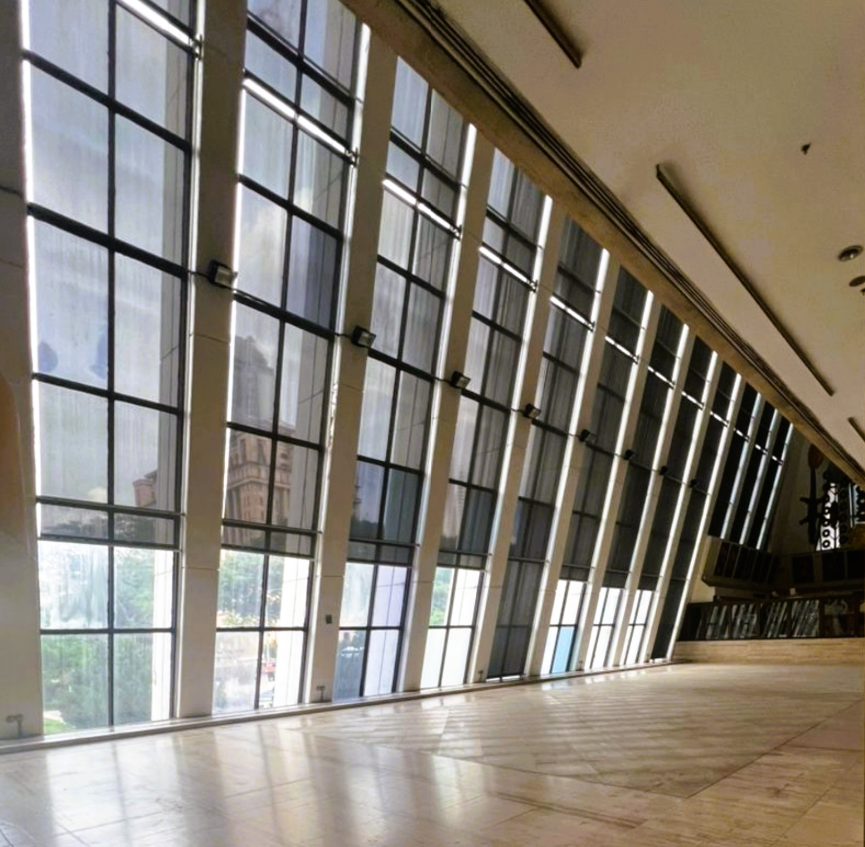
    Completed in 1988, the 244-metre building along Jalan Tun Perak previously served as the headquarters of Malayan Banking Berhad (Maybank). The former Menara Maybank sits near Merdeka 118, Chinatown, Petaling Street, Central Market and Dataran Merdeka, giving investors exposure to commercial, heritage and tourism precincts.

    The advisory team is marketing the skyscraper for partial or full investment structures. Prospective plans include ongoing commercial use, asset enhancement or repositioning into hospitality, serviced accommodation and mixed-use development, subject to feasibility assessments and regulatory approvals.

    Structure and Conversion Options

    Transit access anchors the property’s location. The site sits roughly 450 metres from Masjid Jamek LRT Station and 550 metres from Plaza Rakyat LRT station, connecting commuters to three RapidKL train lines, Kelana Jaya, Ampang and Sri Petaling, across the Klang Valley.

    Surrounding blocks have seen an emergence of boutique hotels, hospitality concepts and lifestyle destinations, supported by growing tourism activity and the revitalisation of Chinatown and its neighbouring streets.

    “Menara Tun Perak represents a unique opportunity to invest in a property that has played an important role in shaping Kuala Lumpur’s skyline and commercial history. Landmark assets of this nature, particularly those located within the city’s historic core, are rarely made available for investment.

    With the continued revitalisation of central Kuala Lumpur and growing interest in the surrounding heritage and tourism precincts, the property offers considerable potential for investors with a long-term vision to preserve and enhance its legacy while exploring opportunities to unlock further value.”

    James Buckley, Head of Capital Markets at Knight Frank Malaysia, noted that the asset allows buyers with a long-term vision to explore opportunities to unlock further value as downtown rejuvenation proceeds.

    “Menara Tun Perak’s strategic location within Kuala Lumpur’s historic city centre, coupled with its architectural prominence and established identity, presents an interesting proposition for investors. As the surrounding precinct continues to evolve, we see opportunities for the property to benefit from the ongoing rejuvenation of the city centre and increasing demand for well-located assets with the flexibility to accommodate a variety of potential uses.”

    Next Steps for Bidders

    For further enquiries, prospective investors can contact jointly appointed agents James Buckley at Knight Frank Malaysia and Marcus Yeo at CBRE|WTW as marketing outreach progresses.

  • Pakistan Construction Growth Surges to 19.2% as Subsidised Loans Spur Housing

    Pakistan Construction Growth Surges to 19.2% as Subsidised Loans Spur Housing

    Pakistan’s construction sector reached 19.2 per cent growth in the first quarter of FY26, rebounding from a negative 3.3 per cent reading recorded in the first quarter of FY25, according to State Bank of Pakistan data. Builders credit the turnaround to a surge in domestic liquidity following the introduction of a federal housing scheme and declining capital outflows to Dubai.

    Hassan Bakhshi, chairman of the Association of Builders and Developers (Abad), noted that middle-class buyers who were previously priced out have returned to the market. This renewed purchasing activity has enabled builders across urban centres to recover capital that had remained locked in unbooked apartments.

    The growth comes despite strict lending constraints from commercial banks, which continue to withhold financing from applicants who lack full documentation or proper approvals from the Sindh Building Control Authority. Even with these documentation hurdles, the State Bank reported that construction expanded 14.6 per cent in the first half of FY26.

    Financing Terms Clear Stalled Inventories

    The state-backed Ghar Ho Tu Apna programme rolled out in September last year to offer loans capped at Rs10 million on extended instalment structures. Markup subsidies absorb borrowing costs above the baseline rate to pull middle-income buyers into the market.

    Property firms used the influx of bank liquidity to recover capital locked in unbooked apartments. Hassan Bakhshi, chairman of the Association of Builders and Developers, confirmed that the release of purchasing funds allowed builders to restart stalled balance sheets across major urban centres.

    Commercial banks continue to enforce strict paperwork requirements, rejecting applications lacking formal clearance from agencies such as the Sindh Building Control Authority. Most self-built residential developments fail those compliance hurdles, keeping retail lending volumes below developer expectations despite broader sector gains.

    Capital Shifts from Dubai Drive Karachi Land Values

    Regional instability, including military conflict involving the United States and Iran, halted retail investment outflows from Pakistan into Dubai real estate. Domestic investors redirected liquidity into home markets, triggering sharp price jumps in prime Karachi neighbourhoods.

    Defence Society property valuations climbed as much as 60 per cent during the initial capital flight before settling. The market underwent a 20 per cent price correction over the past month as initial transaction spikes normalised.

    For retailers, materials suppliers and real estate operators, the shift re-establishes Karachi as the primary repository for private wealth during Gulf market downturns. The domestic concentration of funds provides steady consumer liquidity for local retail developers, even as general inflation strains lower-income households.

    Infrastructure Budgets Accelerate Allied Trades

    Development momentum also stems from central government infrastructure spending. Public Sector Development Programme outlays grew 41.8 per cent during the first half of fiscal 2026, bouncing back from a 1.1 per cent contraction during the prior comparative period.

    Building materials pricing remains disputed between suppliers and contractors. While official figures point to falling wholesale material rates, developer groups maintain that actual project input costs remain historically elevated.

    The broader market faces a nationwide structural shortfall of 10 million housing units, with 48 per cent of the domestic population living below the poverty line. Bank mortgage compliance rates under the 5 per cent financing facility remain the immediate metric to watch as secondary city developers prepare second-half unit releases.

  • Mirvac Sells Brisbane Office Complex to Alceon for A$124 Million

    Mirvac Sells Brisbane Office Complex to Alceon for A$124 Million

    Mirvac has agreed to sell a twin-tower office complex and adjoining public car park on the northern edge of Brisbane’s city centre to local investment manager Alceon for A$124 million ($87 million).

    Alceon announced on Wednesday that contracts have been exchanged for 410 Ann Street and the neighbouring Cathedral Square car park at a fully leased yield of 11 percent. The transaction prices the asset at about A$6,000 per square metre, falling below A$4,000 per square metre once the excess car parking is stripped out. Mirvac is exiting the property through a separately managed account.

    Yields Split Between Prime and Secondary Stock

    Marking Alceon’s 15th Brisbane office purchase, the deal expands its bet on secondary-grade buildings as city-centre vacancy dropped to 10.2 percent in July. Prime space in the city saw gross effective rents rise 11.8 percent in the third quarter from a year earlier, lifting cumulative gains since 2022 to 47 percent.

    The pricing gap between institutional prime towers and secondary stock in the city has widened sharply. Institutional buyers have paid roughly double the square-metre rate for premium assets, while secondary properties trade at heavy discounts to replacement cost. With 10-year bond rates hovering near 5.35 per cent, buyers of older stock rely on double-digit yields and hands-on leasing turnarounds to make underwriting hurdles pencil out.

    For office landlords and commercial operators, the transaction demonstrates that capital liquidity remains selective rather than frozen. Private syndicators and high-net-worth capital pools are absorbing secondary buildings that institutional funds are paring back. The core risk rests in capital expenditure demands, as incoming landlords must commit fresh funds to older floorplates to compete against premium stock offering stronger sustainability credentials.

    Car Park and Transit Connections

    The Ann Street property occupies a 4,052 square metre freehold parcel containing more than 20,000 square metres of net lettable area and 139 internal parking bays. Beside the towers, the Cathedral Square facility adds 572 vehicle bays across an 8,949 square metre site held under a leasehold tenure running until April 2108.

    Commuter access sits close to the asset, located 375 metres from Brisbane Central Station and near works on the subterranean Cross River Rail network. The complex holds a 5.5-star NABERS Energy rating and a 3.5-star NABERS Water rating under national benchmarking standards.

    “This is a well-located asset that has been under-managed for some time,” said Todd Pepper, managing director and head of Alceon’s Queensland business. “Our plan is hands-on: invest in the building, lift the tenant experience and lease it up into a market where good space is getting harder to find.”

    Planned Capital Works and Lease Expiries

    Alceon intends to refurbish the entrance lobbies, shared amenities and empty office floors to lift the asset to a contemporary B-plus grade. Existing leases run across an occupancy level of roughly 90 per cent with a four-year weighted average lease expiry, anchored by the Public Trustee of Queensland, First Parking, Mipac, Sonic Healthplus and Dye & Durham.

    The transaction follows a comparable secondary deal completed in September, when Quintessential Equity purchased 133 Mary Street from ESR Group for A$81.8 million, or roughly A$6,200 per square metre. That asset also included retail space targeted for a refurbishment program. By contrast, Barings paid A$700 million for 480 Queen Street in July at A$12,727 per square metre, while GPT Group acquired Central Plaza II at 66 Eagle Street for A$400 million in April at A$12,561 per square metre.

    Brokers Peter Chapple and Bruce Baker of CBRE handled the transaction alongside Paul Noonan and Jack Sullivan of JLL. Alceon financed the purchase via its network of wholesale and high-net-worth backers, pushing its Queensland commercial property portfolio past A$1.25 billion under management.

    Near-term performance now depends on tenant retention, with almost half the total floor space at 410 Ann Street scheduled for contract renewal across 2028 and 2029.

  • China Expands Public REIT Framework to Include Hotel Assets

    China Expands Public REIT Framework to Include Hotel Assets

    China is advancing reforms this week to incorporate hotel properties into its domestic public real estate investment trust market. The expansion opens an institutional exit route for hotel owners seeking to shift toward asset-light operational models.

    Regulators in Beijing are broadening the scope of domestic public REITs beyond 3 traditional asset classes: industrial parks, toll roads, and logistics facilities. Commercial hospitality assets can now access exchange-listed equity capital under the expanded framework.

    Opening Listed Capital to Hotel Portfolios

    The pilot program for infrastructure REITs originally restricted listings to municipal utilities, industrial parks, and affordable rental housing. Expanding the eligible asset pool to hospitality properties allows hotel owners to securitize income-generating developments through domestic exchanges.

    To qualify for a public listing, properties must demonstrate stable operating cash flows, clear land ownership rights, and compliant operational histories. Asset managers package selected hotel real estate into closed-end funds sold to institutional and retail investors.

    Shifting Hospitality Owners to Asset-Light Models

    Hospitality groups operating across mainland China have historically carried heavy balance sheets loaded with freehold real estate. Public hotel trusts provide a domestic vehicle to offload physical properties while retaining long-term management contracts.

    For international and domestic hotel operators, the reform creates an avenue to scale footprint without borrowing heavily from state banks. The capital recycled from asset sales goes directly into brand development, technology platforms, and management operations.

    Pricing Risk and Operational Volatility

    Hotel revenues fluctuate with seasonal travel patterns, corporate spending cuts, and tourism demand far more than standard industrial warehouses or rental housing. That volatility directly affects dividend payouts to public unit holders.

    Trust managers face the challenge of structuring lease and operational agreements that absorb cyclical downturns without breaching minimum yield thresholds. Investors will price these instruments against prevailing corporate bond yields and existing consumer infrastructure trusts.

    Broadening Beyond Traditional Infrastructure

    Chinese financial regulators initiated the domestic REIT market to unlock capital tied up in state and private infrastructure projects. Authorities subsequently expanded the program to shopping centers and consumer infrastructure to support domestic consumption.

    Extending the framework to hospitality assets marks the next phase in establishing a comprehensive commercial property trust market in mainland China. Market participants are monitoring the first batch of hotel trust filings submitted to domestic stock exchanges for indicative valuation multiples and target distribution yields.

  • Investors Bet on Japan and Australia Rental Housing as Rates Rise

    Investors Bet on Japan and Australia Rental Housing as Rates Rise

    Higher mortgage rates and elevated home prices across Tokyo and Sydney are pushing buyers out of the sales market. Institutional capital is flowing into rental housing instead.

    Australian home values have dropped 5.2 per cent nationally from their March 2026 peak. In Japan, buyers are opting for compact rental units to avoid borrowing costs.

    That split reflects the sharpest monetary tightening cycle across major Asia-Pacific economies in over a decade. Tokyo professionals are turning toward compact apartments with shared amenities, choosing rent over long-term debt as yields shift. Across Australia, the Reserve Bank raised its cash rate from 3.6 per cent to 4.6 per cent over four hikes in February, March, May and September 2026. Borrowing costs now sit at their highest point since 2011.

    Squeezed Borrowers and Dropping Valuations

    Price drops have hit Australia’s major metropolitan centers hardest over the past six months. Sydney values fell 8.6 per cent from their February high. Melbourne prices dropped 7.2 per cent since November.

    Top-tier properties are absorbing the brunt of the downturn. Cotality data shows values in the top quartile across Sydney and Melbourne dropped more than 10 per cent from peak valuations. Seven of Australia’s eight capital cities are recording price declines. Darwin is the lone market where values still rise.

    Household debt has amplified the downturn, standing at roughly 178 per cent of annual disposable income. Most Australian borrowers hold variable-rate loans. That transmits interest rate hikes directly into monthly budgets.

    Tax Overhauls Shake Investor Demand

    Policy changes in Canberra are speeding up the shift away from speculative residential buying. From July 2027, the Australian government will restrict negative gearing deductions strictly to newly constructed dwellings. Buyers will no longer write off rental losses on existing homes against taxable income.

    Federal authorities are also eliminating the 50 per cent capital gains tax discount on investment properties. An indexation system will replace the flat deduction, adjusting initial purchase prices for inflation before calculating taxable profit on a sale.

    Lending data already reflects cooling sentiment among private landlords. Australian Bureau of Statistics figures show lending commitments to property investors fell 8.6 per cent between March and June 2026. That pullback hits a segment of more than 2.2 million individual property owners nationwide.

    Diverging Capital Flows Across the Region

    In Tokyo, institutional operators are scaling up build-to-rent formats and small-footprint units for single-person households in central locations. Shared community spaces help operators preserve net effective rents. Individual unit costs also remain accessible for young tenants.

    Rental housing offers regional real estate funds stable cash generation while residential sales volumes drop. Westpac Banking forecasts Australian home prices will fall 7.3 per cent from peak to trough as tighter credit works through the banking system.

    Developer balance sheets will face pressure across both markets through the rest of the year. Attention now turns to whether the Reserve Bank of Australia holds rates steady at 4.6 per cent, and how quickly private investors recalibrate their portfolios before the July 2027 tax changes take effect.

  • Hong Kong Prime Office Rents Outpace New York as Central Vacancy Falls to 7.8 per Cent

    Hong Kong Prime Office Rents Outpace New York as Central Vacancy Falls to 7.8 per Cent

    Morgan Stanley sees stronger upside in Hong Kong prime office towers than in New York. Central district rents rose 7.3 per cent.

    Vacancy in the core financial hub fell to 7.8 per cent in August from 11.2 per cent a year earlier. Prime office vacancy across the wider city dropped to 12.5 per cent from 13.5 per cent over the same period.

    This pattern mirrors shifts in Manhattan, where top properties tighten ahead of secondary districts. Both hubs share monetary conditions. Hong Kong pegs its currency to the US dollar, which forces local borrowing costs to track US Federal Reserve policy.

    Central leads the recovery

    Tenant demand in Hong Kong clusters in core financial quarters. Towers in Central took the bulk of new leasing. That gave landlords room to lift asking rents after years of post-pandemic stagnation.

    A split between premium and secondary districts is widening. Central posted sharp vacancy drops. Outlying hubs like Kowloon East struggle with oversupply, capping rent recovery outside the core.

    Quality and location drive uptake across the market. Financial institutions and global firms use lower baseline rents to upgrade into Grade A assets. They avoid adding space in decentralized areas.

    Manhattan parallels and rate pressures

    Manhattan data reveals a similar divide. Vacancy in Class A office towers fell 2.1 percentage points year on year to 10.6 per cent in the second quarter of 2026. Rents rose 4.3 per cent, returning leasing activity to pre-pandemic volumes.

    Prime Manhattan submarkets operate at 5 to 10 per cent vacancy, while weaker pockets sit in the mid- to high teens. Commercial capitalization rates reached roughly 8.5 per cent in the second quarter. That touches the upper band of the city’s historical range since 2003.

    Land scarcity gives Hong Kong landlords an advantage over US peers. Tight site supply in Central provides floor pricing as space absorbs. This protects prime assets against overbuilding.

    Capital values lag cash flows

    Asset pricing in Hong Kong still lags operating gains. Prime office capital values remain 50 per cent below earlier peaks. That leaves a wide gap between rental yields and transaction prices.

    Cash flows are recovering faster than capital values in both cities. The trend favors established landlords with low debt over developers reliant on quick land sales and rapid project turnarounds.

    “Higher rates transmit differently into these two cities,” said a team of authors led by Praveen Choudhary, head of Hong Kong and India property research at Morgan Stanley. “Scarcity matters more than rates. We prefer Hong Kong landlords over New York City office owners or Hong Kong developers.”

    Kowloon East oversupply risks

    Hong Kong’s primary risk sits outside the main business district. Kowloon East holds a large pipeline of vacant space. Secondary landlords must discount terms and study alternative land uses.

    Divergence between core towers and outer hubs will sharpen as new supply delivers. Landlords in Central retain pricing power, while secondary owners face sustained cash flow pressure.

    Attention turns to fourth-quarter leasing figures and debt refinancings to see if Central holds its sub-8 per cent vacancy into 2027.

  • Myanmar Property Prices Quadruple Since 2021 Coup as Capital Flees Inflation

    Myanmar Property Prices Quadruple Since 2021 Coup as Capital Flees Inflation

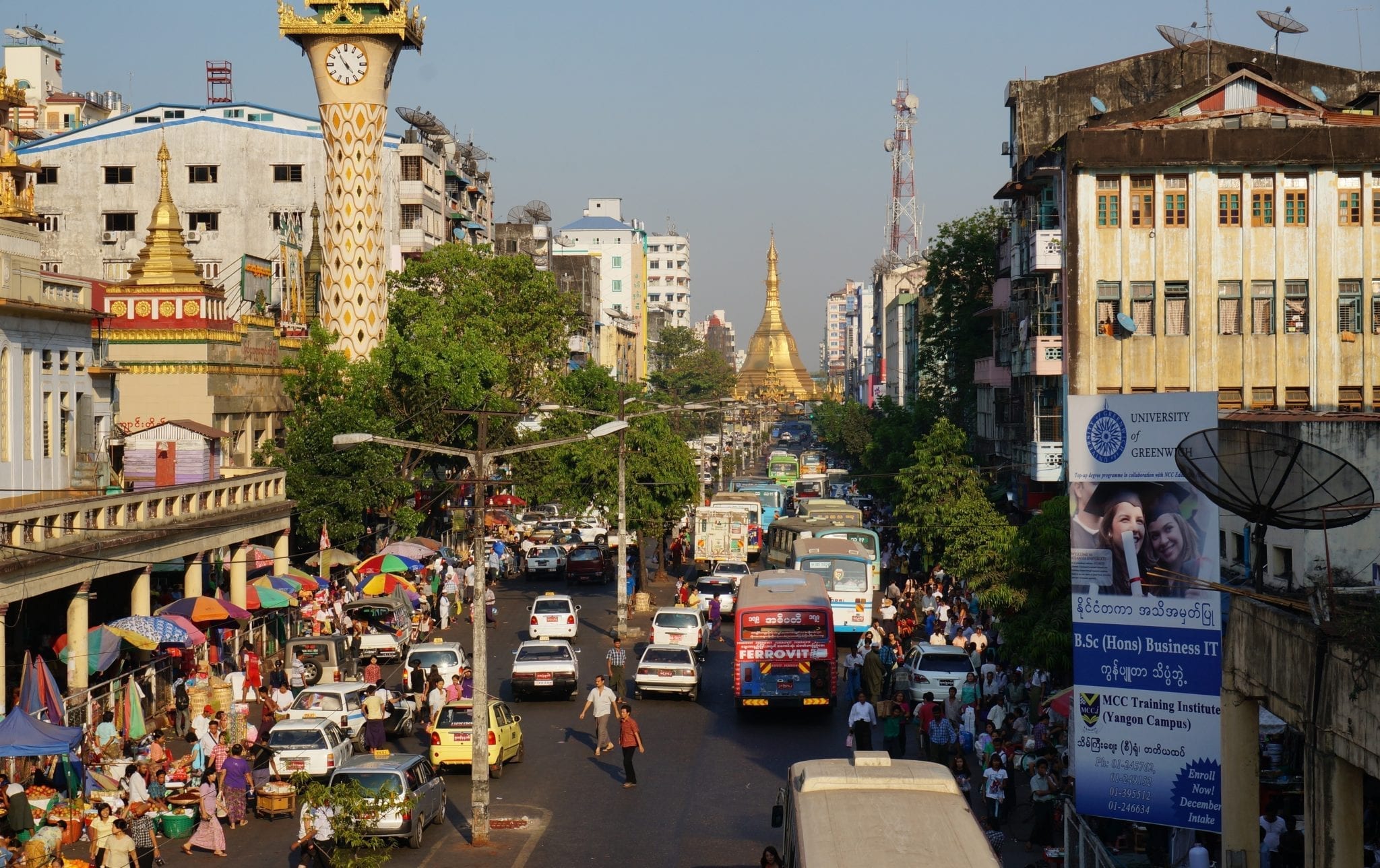
    Residential property prices in Myanmar have quadrupled since the military took power in 2021, World Bank estimates show. Housing has become a primary refuge against severe currency depreciation.

    Inflation and volatility in assets such as gold drove buyers to funnel capital directly into physical real estate across commercial hubs like Yangon.

    Authorities have introduced administrative measures to cool the market and restrict speculative deals. Domestic savers face dwindling options as the kyat slides, turning property into the default tool for capital preservation.

    Capital Shifts Away From Gold and Cash

    Local investors previously rotated savings into foreign currency and precious metals. Now, they concentrate funds in residential land and housing developments. Shifting trade rules made physical gold volatile, sending buyers toward assets that resist sudden shocks.

    Yangon absorbed the bulk of this domestic capital flight. Deals remain concentrated in residential subdivisions and standalone plots with secure title deeds, keeping cash out of depreciating bank accounts.

    “But we have found that property is less vulnerable to price swings in Myanmar. So we just stay in real estate now.”

    Implications for Commercial Landlords and Developers

    This residential boom masks distortions across commercial real estate. Retailers, store operators, and commercial tenants face steep rent hikes pegged to land values, even as consumer purchasing power falls.

    Developers with completed residential units find steady cash buyers. Commercial landlords, meanwhile, struggle to maintain occupancy. High material import costs and regulatory barriers restrict new supply, channeling incoming capital into existing stock.

    Inflation Hedges Across Emerging Asia

    Using property as an inflation shield mirrors patterns seen in other distressed frontier markets across Asia. When stability weakens and exchange rates fall, investors routinely pull capital from financial instruments and shift it to fixed assets.

    Concentrating domestic savings in Yangon property elevates long-term risk. Owners hold illiquid assets that depend on local capital recycling, leaving them exposed if regulatory curbs tighten or secondary-market sales stall.

    Roots of the Fourfold Surge

    The price rally began after February 2021, when the military seized control and foreign exchange limits multiplied. Over the next three years, curbs on currency trades, bank withdrawals, and gold trading steadily narrowed options for private wealth holders.

    With alternative investment channels restricted by authorities, residential property emerged as the least regulated option for large-scale wealth storage.

    Enforcement and Transaction Rules to Watch

    Market watchers are tracking the enforcement of recent property transaction curbs introduced by Yangon municipal and fiscal authorities. Upcoming directives on deed registrations, wealth declarations, and transfer taxes will determine whether domestic capital stays locked in real estate or seeks fresh outlets.

  • Bangkok Luxury Home Prices Surge 75% over Past Decade

    Bangkok Luxury Home Prices Surge 75% over Past Decade

    Bangkok luxury home prices climbed 75 percent over the past decade. That outpaced value gains across premier residential markets including Singapore, Hong Kong and Los Angeles.

    Data compiled by Savills Research shows the Thai capital delivered faster ten-year capital appreciation than gateway cities like Sydney, Paris, Berlin and Miami.

    Prime residential prices in Bangkok average roughly $12,000 per square metre, or 404,000 baht. That sits far below Singapore at $25,400 per square metre and Hong Kong at $51,300 per square metre. Tokyo averages approximately 1.13 million baht per square metre, while Seoul stands near 703,000 baht.

    Valuation Gaps Across Asian Gateways

    This pricing spread keeps Bangkok accessible for regional capital seeking prime assets at a discount to traditional financial centres. A high-end condominium in Bangkok trades at less than half the square-metre rate of comparable real estate in Singapore. That gives private wealth desks room to pitch value plays to overseas buyers.

    Yield profiles also support the market. Bangkok luxury properties generate an average gross rental yield of 3.8 percent, ranking second across the Asia-Pacific region. This gives institutional landlords an income cushion that higher-priced gateway cities cannot match.

    Mid-Year Correction Tests Developer Pricing

    Market momentum hit resistance during the first half of 2026. Luxury residential sale prices and rents in Bangkok both dropped by more than 5 percent during the six-month period, according to Savills data.

    The pullback followed price adjustments across several large development completions, alongside softer purchasing demand from domestic buyers facing broader economic headwinds. Developers that loaded pipelines with ultra-luxury units now face prolonged inventory absorption cycles. That is forcing selective discounting in core central business district locations.

    Foreign Wealth and Tourism Inflows

    Recent softening follows an aggressive run for prime rental stock. Luxury residential rents in Bangkok jumped 15.4 percent in 2024. That surge was driven by incoming foreign high-net-worth individuals, expatriate relocations and a full-scale rebound in Thailand’s hospitality and tourism industry.

    Cross-border demand has kept occupancy steady in branded residences and prime riverfront projects. That shielded institutional landlords from the steeper occupancy drops seen in mass-market suburban condominium blocks.

    Inventory Pipeline and Absorption Targets

    Asset managers are now tracking second-half 2026 sales transaction figures to assess whether the 5 percent price slip represents a temporary correction or a broader structural reset. The key test arrives as major mixed-use developments along Rama IV and the Chao Phraya riverfront deliver their final residential phases through early 2027.

  • Casino Tycoon Angela Leong Sells Sai Kung House for $8.9M

    Casino Tycoon Angela Leong Sells Sai Kung House for $8.9M

    Macau casino billionaire Angela Leong On-kei has sold her detached house in Hong Kong’s Sai Kung district for HKD70 million ($8.9 million).

    The sale closes a 14-year holding period with a nominal capital gain of HKD1.2 million. It follows years of asking-price cuts.

    Fourteen Years for a Marginal Gain

    Located within the Royal Castle development on Pik Sha Road, the detached home covers 210 square metres. The layout includes four bedrooms, a private garden, a swimming pool, and a rooftop terrace. Leong originally bought the property through a corporate vehicle in early 2012 for HKD68.8 million. She is co-chairwoman and the largest individual shareholder of Macau casino operator SJM Holdings.

    Initial listings put the property on the market several years ago at HKD168 million. Securing HKD70 million represents a steep cut from that target. It reflects the concessions wealthy vendors now accept to exit non-core residential holdings in secondary luxury enclaves.

    Discounting Drives Volume in Sai Kung

    Sellers across Sai Kung have adjusted expectations downward to clear stock. Price cuts of up to 10 per cent helped lift deal numbers across high-value residential brackets in recent months as opportunistic buyers moved in.

    Frankie Liu, sales director at Century 21 Goodwin Property, said: “With the batch of discounted luxury homes now cleared, I expect luxury residential transaction activity in the area to slow down in the fourth quarter.”

    Super-Prime Demand Splits Across Districts

    Pricing trends in Sai Kung contrast with demand patterns in traditional top-tier neighbourhoods. Buyers in The Peak and Southern districts continue to focus on established luxury estates. Local business owners there are trading up to consolidate family holdings, according to Centaline Property district sales director Joseph Yan.

    Deutsche Bank ranked Hong Kong as the world’s most expensive residential property market this year, trailing only Dubai in overall super-prime transaction volume. Knight Frank data shows that sales of homes priced at $10 million or higher surged 75 per cent quarter on quarter to $1.67 billion in the second quarter. Purchases in core prime postcodes drove those gains rather than deals in outlying districts.

    Borrowing Costs Loom Over Next Quarter

    Financing conditions remain a headwind for broader turnover. On September 17, the Hong Kong Monetary Authority lifted its base rate to 4.25 per cent in lockstep with the US Federal Reserve. Hong Kong’s three note-issuing lenders held their prime lending rates steady after that adjustment. Another Federal Reserve rate decision in late October could force local commercial banks to increase mortgage borrowing costs before year-end.

  • Japan Benchmark Yield Tops 3.1% as Tokyo Property Prices Drop

    Japan Benchmark Yield Tops 3.1% as Tokyo Property Prices Drop

    Japan’s benchmark government bond yield topped 3.1 percent on Friday morning. The rise accelerated a regional debt sell-off and pushed Tokyo residential property prices lower.

    Average asking prices for existing condominiums in central Tokyo dropped for four straight months through August. Higher borrowing costs chilled buyer demand.

    Sovereign debt selling spread across Asian trading desks as investors factored in prolonged monetary tightening. Energy markets added pressure. Elevated crude oil prices reinforced inflation expectations across importing economies.

    Central Tokyo Condo Market Cools

    Central Tokyo apartment valuations have dropped for four straight months, reversing years of steady price growth. Domestic buyers face higher monthly mortgage payments. Long-term lending rates continue to track government bond yields higher.

    Commercial landlords and retail operators face a similar squeeze on debt refinancing. Property developers that relied on ultra-cheap bank credit are lowering sales targets. Both institutional and retail purchasers are reassessing yield spreads.

    Central Bank Rate Tightening

    Yields surged after the Bank of Japan lifted its policy rate to 1.25 percent. Governor Kazuo Ueda pointed to a formal shift in monetary policy. Currency authorities also conducted foreign exchange rate checks, steadying the yen in the upper-156 range against the US dollar.

    US policy expectations amplified the pressure on Asian debt. Under Chair Kevin Warsh, the Federal Reserve raised interest rates and signaled further tightening. The moves pushed the greenback toward a two-month peak.

    Funding Pressures Mount for Corporates

    Higher sovereign yields are driving up corporate borrowing costs across Tokyo. Prime Minister Sanae Takaichi’s administration faces rising debt-servicing costs. The government is trying to fund fiscal initiatives without issuing fresh deficit-financing bonds.

    Corporate issuers are testing market appetite with higher coupons. SoftBank Group prepared an $11 billion bond offering to fund its investment commitments in artificial intelligence firm OpenAI.

    Asian Real Estate Outlook

    Japanese developers can no longer depend on zero rates to support capital values. Institutional asset managers are demanding wider capitalization rates on central Tokyo assets. That push is forcing a price discovery phase across residential and retail properties.

    Traders are watching upcoming economic data and Tokyo condominium sales figures for September. The numbers will show whether secondary housing prices stabilize or slide further into the fourth quarter.

  • Shorea Capital Buys Sheung Wan Tower as Amazon Adds Fanling Sites

    Shorea Capital Buys Sheung Wan Tower as Amazon Adds Fanling Sites

    Singapore private equity firm Shorea Capital acquired The Pemberton in Sheung Wan, while Amazon Data Services bought two data centres in Fanling. Shorea plans to convert the 24-storey commercial tower into residential accommodation after buying the 58,000-square-foot asset for an undisclosed sum.

    Conversion plans in Sheung Wan

    Colliers brokered the sale of the mixed office and retail property, which spans 5,388 square metres of gross floor area. Shorea will submit planning applications to convert the commercial space into high-quality living units, targeting sustained residential demand across Hong Kong Island.

    The building last traded in 2010, when AEW Via HK 1 Limited bought the tower for HK$344.34 million (US$43.9 million), Land Registry records show. That transaction established an entry valuation of roughly HK$5,937 per square foot before the current repositioning plan.

    Foreign capital targets alternate uses

    Institutional buyers from Singapore continue to reallocate capital into Hong Kong real estate, favouring conversions to student housing, serviced apartments and long-stay residential property over standard office leasing. Converting commercial assets allows operators to escape elevated office vacancy rates while tapping rental yields supported by incoming professionals and cross-border students.

    Meanwhile, Amazon Data Services expanded its physical footprint in the New Territories by acquiring two industrial facilities in Fanling. Cloud operators and data centre providers face tight power allocations and limited industrial land across the territory, forcing direct asset acquisitions to secure operational capacity.

    Tracking commercial repositioning

    Hong Kong commercial property values have adjusted downward following multi-year shifts in corporate leasing demand and higher financing costs. Those discounted capital values created room for regional private equity funds to purchase whole buildings below replacement cost and change their end use.

    Planning filings for The Pemberton’s change of use will now go before town planning authorities, setting the timeline for construction and eventual residential leasing.

  • Greystar Appoints Tom Livelli to Run $3.9 Billion Asia-Pacific Living Portfolio

    Greystar Appoints Tom Livelli to Run $3.9 Billion Asia-Pacific Living Portfolio

    Greystar has appointed former EQT partner Tom Livelli as head of Asia Pacific. He will run a $3.9 billion living-sector portfolio across four regional markets.

    Based in Sydney, Livelli takes up the executive director post in early 2027. He will direct roughly 250 staff managing more than 11,500 rental apartments and student beds across Australia, Japan, South Korea, and mainland China. He replaces Adam Pillay, who has left the firm.

    Executive reshuffle across regional markets

    Livelli spent the past three years in Madrid as head of living strategies for Europe at EQT Real Estate. Before that, he built Greystar’s South American operations between 2017 and 2023. That expansion took the platform past $800 million in assets across 19 investments, alongside eight management contracts covering roughly 6,000 units. His earlier career includes tenures at Boston Andes Capital and Clark Realty Capital.

    The leadership change puts Livelli in charge during a regional shift toward residential formats. Institutional investors across Asia-Pacific have pulled capital from secondary offices and speculative logistics. They are targeting cash-generating living assets instead. Livelli must now consolidate operations and reallocate equity across the firm’s living formats.

    Pivot to purpose-built student beds

    Capital has flowed directly toward Australian student housing. In April 2025, the firm completed its largest deal in the region to date: an A$1.6 billion ($1.1 billion) buyout of a 5,662-bed student portfolio from Singapore sovereign fund GIC and Wee Hur Holdings.

    Student housing offers immediate rental indexation and counter-cyclical cash flows. Pure-play multifamily developments struggle to match those returns under current construction costs. Student accommodation also brings faster tenant turnover and flexible rate adjustments, providing a stronger inflation hedge than multi-year commercial leases.

    Pruning industrial sites and rental developments

    Greystar has simultaneously stepped back from other property sectors in the region. It wound down an Australian infill industrial drive launched in 2022, selling a Sydney logistics development plot to Gateway Capital for A$78 million ($55.9 million) in May 2026.

    Traditional build-to-rent projects have faced similar pruning. Warburg Pincus-backed Kio Investment Management recently acquired a former Greystar development site in Melbourne’s Collingwood neighbourhood. In Japan, Greystar put several apartment assets on the market to test institutional liquidity.

    Expansion in Seoul and regional funds

    The manager first entered Asia-Pacific in 2017 through a partnership with Macquarie Capital. Over the next nine years, it opened six offices across the region. Growth has since expanded beyond Australia and Japan into mainland Asia.

    In May 2025, the group recruited former Samsung SRA Asset Management executive Junghwan Kang to launch its South Korea platform. Around the same time, the Teacher Retirement System of Texas allocated $25 million to the manager’s Asia-Pacific value-add vehicle.

    When Livelli takes over in Sydney in early 2027, the focus shifts to execution. The firm faces decisions on whether to deploy fresh capital into Korean residential assets or accelerate divestments across its Japanese apartment holdings.

  • Southeast Asian Buyers Lead Hong Kong Commercial Property Inflows with HK$3.37 Billion

    Southeast Asian Buyers Lead Hong Kong Commercial Property Inflows with HK$3.37 Billion

    Southeast Asian investors spent HK$3.37 billion on Hong Kong commercial property this year, overtaking mainland Chinese buyers as the city’s largest source of non-local capital.

    The capital injection represents over 11 per cent of the HK$30.36 billion recorded across commercial transactions above HK$50 million so far in 2026, according to transaction data compiled by Savills. Local Hong Kong capital generated HK$25.25 billion, or 83.2 per cent of the total, while mainland Chinese buyers accounted for HK$1.75 billion, representing 5.8 per cent.

    Singaporean groups drove the bulk of the cross-border activity across three distinct profiles: corporate occupiers, private family capital, and specialized accommodation operators. DBS Bank Hong Kong completed the largest corporate transaction, paying HK$2.62 billion for 152,000 square feet across several floors at The Center. In Tai Kok Tsui, Wee Hur Holdings acquired One Bedford Place, an office property measuring 184,041 square feet, for HK$748.8 million.

    Repurposing Commercial Assets for Living Sectors

    Operator capital is targeting conversion opportunities rather than traditional office leasing. Centurion Holdings provisionally agreed to purchase Yan Wo Building in North Point for HK$364 million under a deal registered on August 25. Outside commercial zoning, private vehicle The Style Limited, backed by Singapore directors Luk Kwok Wing and Wee Teng Yuan, paid nearly HK$1.17 billion for the 30-unit luxury residential enclave Jadebeach Villa in Chung Hom Kok.

    Both Wee Hur and Centurion run purpose-built student accommodation platforms across Singapore, Australia, and the UK. Their entry into Hong Kong relies on the government’s Hostels in the City policy, which permits landlords to convert commercial properties into student housing without individual planning approval while retaining existing gross floor area.

    Displacement of Mainland and Western Funds

    This pattern marks an outright reversal of the regional capital hierarchy. Mainland Chinese and Western institutions previously dominated large-ticket transactions in the city, but their deployment has ground to a halt as balance-sheet distress and high debt costs keep them on the sidelines.

    For retailers, hospitality operators, and institutional landlords, Singaporean capital brings operational expertise in managing high-density living spaces rather than speculative office plays. The primary risk sits in execution: commercial conversions carry structural limitations, and returns hinge on sustained non-local student arrivals rather than corporate tenant expansion.

    Resetting Asset Valuations

    Last year, mainland Chinese buyers topped all non-local investors with HK$16.06 billion, or 34 per cent of the HK$47.32 billion total transaction volume. Investors from the United States and Canada deployed HK$7.58 billion, or 16 per cent, while European buyers spent HK$940 million. Southeast Asian capital ranked third in that period at HK$1.74 billion.

    “Pricing has reset far enough for buyers without legacy Hong Kong exposure to underwrite assets that local owners are having to release,” said Nicholas To, senior associate director for investment at Savills Hong Kong.

    The next metric to monitor is the conversion velocity of Yan Wo Building and One Bedford Place as developers test final yields against the government’s expanded 50 per cent quota for non-local university admissions.

  • Australia CBD Retail Vacancy Rises to 10.8% on Melbourne Supply Wave

    Australia CBD Retail Vacancy Rises to 10.8% on Melbourne Supply Wave

    Australia’s central business district retail vacancy rate rose 40 basis points to 10.8 per cent in the first half of 2026 as fresh retail completions in Melbourne added new space.

    A survey of 5,669 retail tenancies across five state capitals by real estate services firm CBRE showed that shop vacancies declined in four of the five cities, leaving Melbourne as the lone driver of the national increase. Melbourne’s CBD vacancy rate climbed 160 basis points to 8.1 per cent following the launch of two retail centres. Sydney held the tightest retail core in the country, with vacancy standing at 5.3 per cent.

    State Capital Breakdown

    Adelaide posted the sharpest improvement among metropolitan centres, where retail vacancy dropped 130 basis points to 10.4 per cent. Brisbane recorded an 80-basis-point decline to 16.7 per cent, while Perth edged down 10 basis points to 18.5 per cent.

    Physical retail space in Australian city centres remains structurally tight over the long term. CBD retail stock accounted for just 4.2 per cent of total new retail supply built across the country over the past decade, limiting the risk of prolonged oversupply even as consumer budgets tighten.

    Luxury and Experiential Demand

    Foot traffic gains from returning office workers, inbound tourists, and major events have kept cash registers moving in primary shopping strips. Luxury brands and premium apparel retailers continue to take prime floor space in Sydney and Melbourne, competing directly against dining and wellness concepts that landlords rely on to anchor footfall.

    For retail property operators across the Asia-Pacific region, Australia’s low single-digit prime core vacancies mirror similar supply squeezes in Tokyo and Singapore. Landlords in secondary locations, however, face longer leasing cycles as retail groups focus their capital expenditure almost exclusively on high-traffic street corners and flagship malls.

    Leasing agents now turn their attention to absorption rates in Melbourne’s two newest downtown complexes over the second half of 2026, which will determine whether the city’s vacancy rate stabilizes before next year’s development pipeline delivers.