Tag: quick commerce

  • Zepto Delivers 14,000 Gold and Silver Coins an Hour in Festive Shift

    Zepto Delivers 14,000 Gold and Silver Coins an Hour in Festive Shift

    Indian quick-commerce platform Zepto delivered more than 14,000 gold and silver coins per hour at peak demand during Dhanteras, signalling a rapid move away from traditional physical markets.

    Co-founder and chief executive Aadit Palicha revealed that purchases reached nearly 298 precious metal coins in a single minute, demonstrating how instant logistics networks are capturing high-ticket holiday retail alongside everyday staples.

    Competitor Swiggy Instamart witnessed a parallel surge in consumer spending throughout the festive week, logging a 23-fold increase in gold coin orders and a sevenfold increase in silver purchases ahead of Dhanteras.

    Surging Volumes Across Traditional festive Goods

    The rush extended far beyond precious metals into household items tied to Hindu festive rituals. Broom sales climbed 38.6 times compared to an ordinary day, while steel utensil orders rose 20 times and decorative light volumes multiplied by 18.2 times.

    Shoppers also turned to instant delivery for ritual accessories and apparel. Zepto moved roughly 6,000 units of rangoli colours and cotton wicks per hour during peak windows, while men’s kurta orders increased 5.4 times.

    Rival Platforms See High-Ticket Dhanteras Orders

    Rival operator Swiggy Instamart recorded a parallel spike in consumer spending during the festive week. Orders for gold coins surged 23 times in the seven days leading up to Dhanteras, while silver coin transactions expanded sevenfold.

    Basket values reflected immense consumer trust in delivery riders carrying high-ticket goods across Indian metros. One customer spent Rs 1.73 lakh on gold coins in a single checkout, while a shopper in Noida completed nine separate orders totalling nearly Rs 5 lakh.

    Instant Delivery Rewires Indian Festive Commerce

    For neighborhood jewellers and bazaar merchants, the Dhanteras numbers point to an immediate structural challenge. Indian families traditionally visited neighborhood jewellery stores to examine hallmarked coins and purchase brass or steel kitchenware in person, treating the outing as an essential holiday ritual.

    Dark store networks have broken that habit by delivering physical commodities to doorsteps in ten minutes flat. Quick commerce operators now hold high-value inventory in temperature-controlled suburban micro-warehouses, bypassing traditional showroom overheads while offering rapid doorstep fulfilment.

    Dark Store Economics Expand Beyond Groceries

    Grocery orders historically gave quick commerce operators low gross margins, forcing platforms to search for higher-margin merchandise to offset courier fuel and warehouse labour. Precious metals, fashion apparel, and kitchen appliances generate higher basket values that improve order economics instantly.

    The logistical risk shifts squarely to shrink control and rider security. Couriers transporting lakhs worth of bullion through crowded holiday traffic create distinct operational liabilities that ordinary milk and snack deliveries never presented.

    The Trajectory of Ultrafast Retail Diversification

    The pivot into seasonal bullion follows months of aggressive category expansion by quick commerce operators like Zepto and Swiggy Instamart. Platforms initially tested electronics, beauty, and small home appliances before attempting high-security precious metals.

    As platforms compile final order volumes from the broader Diwali shopping window, the key metric remains return rates and inventory turnover across non-grocery categories as dark store operators prepare their merchandise mix for the upcoming wedding season.
  • RedMart Now Orders Grow Sixfold in Singapore

    RedMart Now Orders Grow Sixfold in Singapore

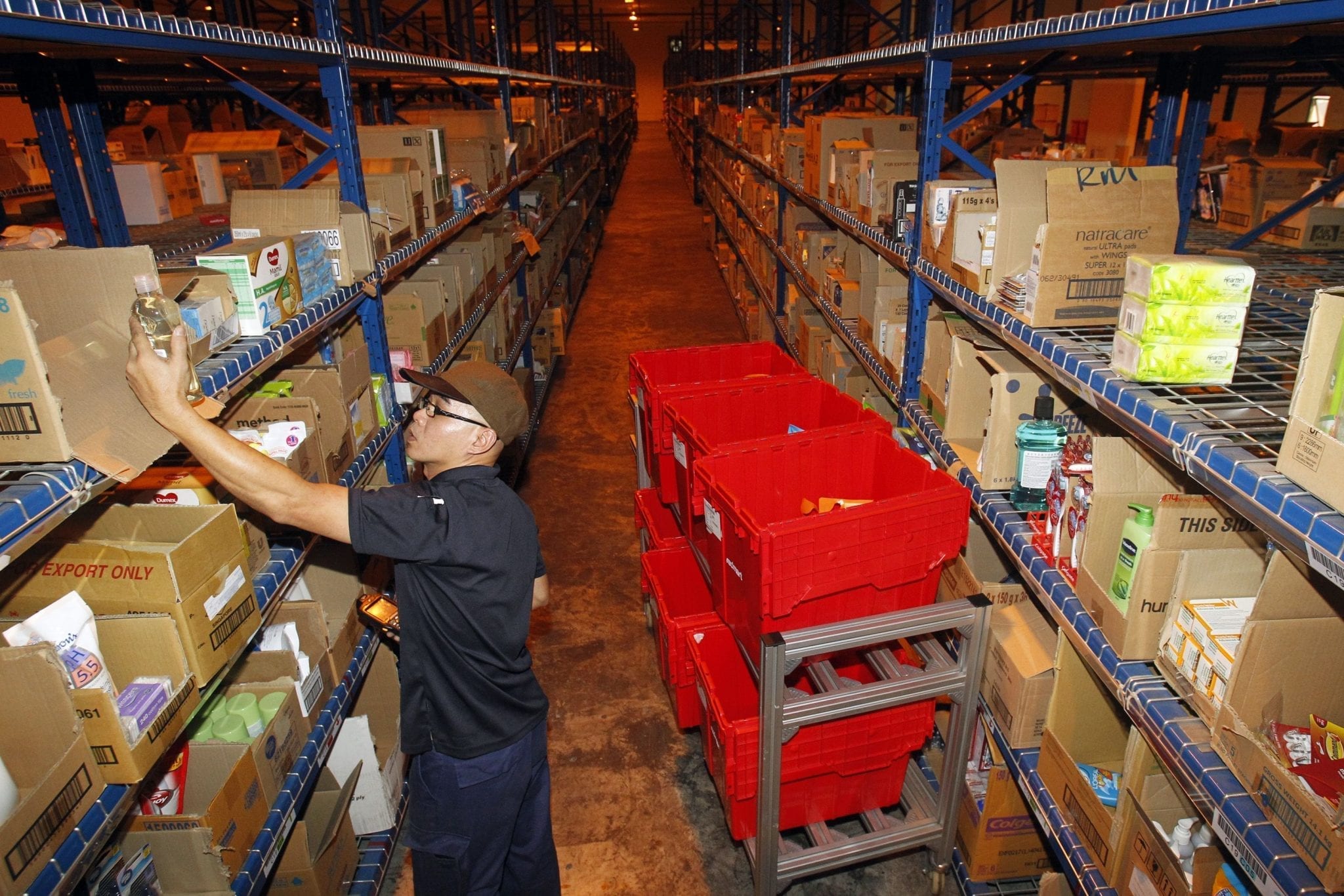
    RedMart expanded its express grocery delivery network across Singapore after daily orders for RedMart Now jumped sixfold following its February launch.

    The supermarket arm of Lazada Group S.A. Quadrupled its delivery fleet and launched three fulfilment centres to handle the surge in quick-commerce volume.

    Service expanded into northern and north-eastern Singapore in August and the east in October, while same-day capacity for scheduled deliveries tripled this year under RedMart head Martin Daney.

    Express Logistics and Fresh Food Demand

    RedMart Now operates on delivery windows starting from 30 minutes, relying on localized inventory nodes rather than single centralized warehouses. The express catalogue holds a fraction of the broader platform inventory, which stocks more than 120,000 items.

    Chilled food, meat, dairy, fresh vegetables and seafood represent a larger proportion of express purchases than scheduled runs. Morning shopping begins at 7 a.m. Each day, driven by shoppers seeking recipe ingredients and daily replenishment rather than bulk pantry restocking.

    Delivering groceries in as fast as 30 minutes requires having inventory positioned closer to customers, efficient picking and packing, and having sufficient delivery capacity, including at peak times.

    The Unit Economics of Fast Fulfilment

    Quick commerce models across Southeast Asia routinely struggle with delivery density and high labour overheads. By using existing Lazada warehouse infrastructure and logistics software built over a decade, RedMart limits the steep capital outlays that broke earlier standalone grocery startups in the city-state.

    For brick-and-mortar supermarket chains, faster online fulfilment puts pressure on local store margins. Physical grocers must balance counter service with picking staff in aisles or build costly mini dark stores of their own.

    Capitalizing on Singapore’s Quick Commerce Base

    Singapore’s quick commerce sector reached a valuation of $368.03m in 2025 and projections place it at $502.86m by 2031, according to data from Mordor Intelligence. The expansion follows months of testing routing software to sustain order accuracy as route volumes grew.

    RedMart has not disclosed the precise share of revenue that express drops contribute against its planned grocery run. The scheduled delivery service continues to handle the bulk of overall sales volume.

    The Final Pockets of Island Coverage

    Coverage remains uneven across Singapore, with multiple central and western postal codes still outside the 30-minute delivery zone. The company is directing fleet capacity toward those remaining gaps to complete nationwide reach.

  • Flipkart Promotes Renuka Singaram to SVP as Revenue Reaches ₹1,45,880 Crore

    Flipkart Promotes Renuka Singaram to SVP as Revenue Reaches ₹1,45,880 Crore

    Flipkart promoted Renuka Singaram from vice-president to senior vice-president in October 2026, placing its quick commerce arm Minutes, non-large supply chain, and design organisation under her expanded leadership. Flipkart Group chief executive Kalyan Krishnamurthy announced the promotion amid several leadership elevations across the business.

    Singaram joined Flipkart in October 2014 following a five-year tenure at Dell India between 2009 and 2014. Her remit includes non-large shipment logistics alongside Minutes, which competes against quick commerce rivals Blinkit, Zepto, and Swiggy Instamart.

    Flipkart Internet, which houses the group’s e-commerce operations, posted an 18 per cent year-on-year increase in revenue from operations to ₹1,45,880 crore in FY26. Consolidated net loss narrowed to ₹8,468 crore from ₹8,646 crore in FY25, according to regulatory filings.

    Building Out Dark Stores in Top Metros

    Minutes operates in an aggressive segment that demands localized dark-store networks, tight picking windows, and sub-15-minute couriers. Handling standard non-large parcel delivery alongside rapid fulfilment gives Singaram direct use over inventory flow and local warehousing costs.

    Quick commerce operators burn working capital on micro-hubs situated within expensive residential catchments. By integrating quick deliveries with its broader non-large parcel network, Flipkart aims to sweat existing urban nodes and cut fulfilment overheads per parcel. Rival platforms run dedicated, standalone dark stores that face rising lease renewals across Tier 1 cities.

    Balance Sheet Pressures and Market Share

    Flipkart Internet reported an 18 per cent increase in revenue from operations to ₹1,45,880 crore for FY26. Consolidated net loss narrowed to ₹8,468 crore from ₹8,646 crore in FY25, according to regulatory filings.

    The margin for error in quick fulfilment remains thin. Quick commerce platforms in India face escalating customer acquisition costs as incumbents discount staple groceries and consumer tech accessories to defend basket share. Singaram faces the task of scaling Minutes without widening operating losses at the core marketplace entity.

    Employee Equity Liquidity Disputes

    Separately, more than 1,000 former Flipkart staff submitted an appeal to parent company Walmart and the Flipkart board demanding access to employee stock option liquidity programmes. The petition challenges current eligibility windows that restrict ex-employees from monetising equity accumulated during their tenure.

    Employee equity serves as a primary retention tool across Indian technology companies, yet privately held platforms often restrict buybacks to current staff. With unlisted equity locked until secondary sales, structured buybacks, or an initial public offering, former staff are pushing the board to open liquidity access uniformly.

    Krishnamurthy must balance rising capital allocation for Minutes with investor returns and employee equity expectations ahead of any eventual public listing filing.

  • Blinkit Adds 308 Stores as Net Order Value Surges to ₹20,940 Crore

    Blinkit Adds 308 Stores as Net Order Value Surges to ₹20,940 Crore

    Blinkit increased net order value by 79.3 per cent year on year to ₹20,940 crore in the September quarter, lifting dark store numbers across India to 2,751.

    The quick-commerce unit added 308 net facilities during the three-month period and turned an adjusted EBITDA profit of ₹184 crore, reversing a ₹156 crore loss reported twelve months earlier.

    Parent group Eternal revealed the operational shift in its Q2FY27 shareholder letter, where Albinder Dhindsa raised Blinkit’s network expansion trajectory. The company now plans to cross 3,500 dark stores by March 2027, up from an earlier target of 3,000, with internal blueprints aiming for roughly 5,000 locations by March 2028. Its adjusted EBITDA margin reached 0.9 per cent of net order value for the quarter.

    Inventory Swells Past Pure Grocery

    Assortment depth is driving the physical footprint expansion. In the Delhi-NCR market alone, Blinkit increased its available catalogue from roughly 80,000 stock-keeping units in Q4FY26 to about 100,000 SKUs by the end of the September period.

    The inventory push moves far past packaged food and household staples. Dark stores are stocking consumer electronics, phone chargers, premium beverages, branded diapers, and gaming consoles, with Dhindsa pointing toward household appliances and gifting items for ten-minute dispatch.

    Handling bulkier merchandise changes the operating mechanics inside each depot. Heavier white goods require dedicated storage racking and altered handling procedures, while high-value electronics mandate tighter packaging controls and loss-prevention security. Sourcing arrangements and consumer return processing also differ fundamentally from non-perishable groceries, forcing local managers to balance slow-turning goods against high-velocity essentials.

    Smaller Cities Match Metro Velocity

    Internal network data from the operator contradicts the long-held industry assumption that rapid dispatch models function exclusively inside affluent tier-one metro districts.

    New fulfillment hubs in smaller regional cities reached 1,000 daily orders at speeds identical to metro openings, with several ramping faster. Average order values in these secondary markets tracked between 85 per cent and 90 per cent of metropolitan baskets, supported by repeat purchasing patterns that mirror core capital zones.

    For regional retail ecosystems, quick commerce serves an availability function rather than simple convenience. Shoppers in tier-two and tier-three hubs turn to dark store apps to secure branded goods that organized physical retail distribution never placed on regional store shelves. Sourcing and transport overheads remain high, however, and management conceded that smaller cities with low population density will stay subscale.

    Mature Hubs Cross Profit Threshold

    Financial durability rests on dark store maturity profiles across specific municipal clusters. Hubs generating roughly 96 per cent of Blinkit’s total net order value are now contribution-positive, while municipal zones accounting for about 70 per cent generate positive adjusted EBITDA.

    Established cities in the network operate above a 5 per cent adjusted EBITDA margin. Group management projects that expanding profits from these older operating zones will absorb the start-up losses generated by new store openings, keeping consolidated margins positive throughout the rollout.

    Discount hunters are receiving less attention in the network allocation model. Dhindsa noted that coupon-dependent buyers consume the same finite dark store packing capacity as regular shoppers but disappear once subsidised incentives stop. Current software algorithms prioritize consumers who generate repeat weekly baskets across multiple categories.

    Working Capital and Rival Retailing

    RetailNews Asia notes that Blinkit’s aggressive category broadenings pit it directly against horizontal marketplace leaders. Amazon and Walmart-owned Flipkart stepped up quick-delivery investments in June, pushing ultra-fast fulfillment networks into regional Indian cities using their existing logistics muscle and supplier balance sheets.

    Holding broader stock lines carries immediate balance sheet friction. Eternal’s cash reserves contracted by ₹1,813 crore during the quarter to settle at ₹16,475 crore, dragged down by seasonal inventory build-ups before peak autumn festive consumption and settlement cycles inside its restaurant delivery arm. The corporate entity also reported 76 per cent growth in consolidated adjusted revenue, beating a 58 per cent like-for-like rate as it assumed direct merchandise ownership across its dark store supply chains.

    Private labels remain off the platform roadmap for now. Blinkit decided against introducing house brands, with Dhindsa concluding that own-label items fail to create incremental basket demand once brand-building expenses are factored in. The firm plans to protect supplier advertising income rather than undercut third-party manufacturers.

    Network eyes now turn to the execution of the 749 additional dark store openings required to hit the 3,500-unit threshold before the close of fiscal 2027.

  • Asian E-Commerce Dominates Global Sales as China Hits 13 Trillion Yuan

    Asian E-Commerce Dominates Global Sales as China Hits 13 Trillion Yuan

    China recorded 13.09 trillion yuan in online retail sales of physical goods in 2025, cementing its position as the world’s largest digital market at roughly $1.82 trillion. Physical goods accounted for 26.1 percent of total national consumer retail spending, expanding 5.2 percent year on year.

    Total online transactions across China reached 15.97 trillion yuan when including digital products and consumer services. That scale leaves the world’s next largest digital economy, the United States at $1.23 trillion, well behind in overall volume.

    Asian Markets Pull Away in Scale and Growth

    South Korea generated 272 trillion won, or about $191 billion, across digital checkouts in 2025. Services comprised a heavy portion of that total, with food delivery contributing 15.3 percent and travel and transport booking taking 12.5 percent, leaving physical goods at less than $140 billion.

    Japan generated 15.2 trillion yen, roughly $100 billion, in physical product sales online during 2024. That represented 9.8 percent of all Japanese merchandise sales, up from 9.4 percent a year earlier. Digital services and media expanded total Japanese consumer e-commerce to 26.1 trillion yen.

    India expanded faster than any of the mature East Asian retail hubs. Indian e-retail sales jumped roughly 20 percent to reach between $65 billion and $66 billion in 2025, driven by an online shopping pool that reached up to 300 million people.

    Southeast Asian Platform Volumes Climb 20 Percent

    Southeast Asia reached $191 billion across ten regional markets in 2025, according to e-Conomy SEA data. The six largest economies in the bloc generated $188 billion in gross merchandise value, up 20 percent on the previous year.

    Indonesia led the Association of Southeast Asian Nations with $71 billion in digital platform sales. Thailand posted $33 billion, while Vietnam booked $25 billion in gross merchandise volume. The Philippines and Malaysia followed with $24 billion and $20 billion, respectively.

    Fast logistics formats are accelerating that uptake across developing Asian retail markets. Quick-commerce operators promising deliveries under 30 minutes captured between 16 percent and 17 percent of all e-retail volume across India in 2025. Video-led selling channels similarly represented a quarter of all Southeast Asian digital transactions.

    The Balance Between Phone Checkouts and Store Networks

    Mobile checkouts dominate customer habits throughout the Asia-Pacific territory. South Korean shoppers conducted 211 trillion won of their purchases on mobile phones in 2025, securing a 77.6 percent smartphone share of total online retail spending.

    Japan saw smartphone orders for physical products climb 9.0 percent in 2024, advancing at more than double the pace of overall online merchandise turnover. Globally, mobile devices generate roughly 60 percent of online shopping turnover, creating sharper operational demands on checkout speeds and payment gateways.

    Physical store operators throughout Asia face diverging challenges depending on local channel maturity. In markets such as China and South Korea, where digital penetration sits near saturation, merchant acquisition costs are rising as brands shift budget toward buyer retention and targeted messaging. In India, where online transactions represent only 6 to 6.5 percent of gross retail receipts, traditional distribution networks retain considerable running room.

    Maturing Curves Reshape Capital Allocations

    Western benchmark markets illustrate the saturation ceilings facing Asian retailers. British online sales peaked at 30.7 percent during pandemic disruptions in 2021 before settling between 26.6 percent and 27.5 percent through 2025, suggesting a structural resistance band for pureplay e-commerce penetration.

    Chinese expansion rates reflect a similar cooling trend. Physical goods sales online across China grew 4.3 percent during the first eight months of 2026, moderating after a 5.2 percent rise in 2025. South Korean digital expansion dropped to 4.9 percent in 2025, marking the slowest annual increase recorded since current national accounting began in 2017.

    Regional platform operators now look toward second-tier cities and automated fulfillment to maintain transaction momentum. Projections from Bain and Flipkart place Indian online retail penetration at 10 to 12 percent of gross consumer spending by 2030, targeting a total market size between $170 billion and $180 billion.

  • Gen Z Shoppers Drive Twofold Surge in Korean Beauty Orders on Myntra

    Gen Z Shoppers Drive Twofold Surge in Korean Beauty Orders on Myntra

    Gen Z shoppers accounted for 55 per cent of Myntra’s beauty growth over the past year, driving a 200 per cent surge in Korean beauty orders and a 78 per cent increase in men’s skincare.

    Spend per customer within the 14-to-29 age bracket climbed 1.2 times year on year, while repeat purchases among these buyers rose roughly 70 per cent, according to data from the Bengaluru-based e-commerce platform.

    The findings, drawn from order data between August 2025 and August 2026, show younger consumers allocating 75 per cent more of their personal care wallet to beauty compared with millennial shoppers. Beauty and personal care now accounts for approximately one in every five units shipped across the marketplace. Myntra expects Gen Z to generate more than half of its beauty customer base over the next three years.

    Active Ingredients and Smaller Regimens

    Younger shoppers are consolidating their daily routines while demanding clinical formulations. Around 80 per cent of Gen Z buyers limit their daily regimen to three products, and 30 per cent buy only one or two items per order. Sales of ingredient-focused derma products climbed 75 per cent, led by targeted searches for active ingredients including Centella asiatica, copper peptides, azelaic acid and panthenol.

    Sun protection has shifted into a year-round staple rather than a seasonal purchase. Orders for sun protection products rose 60 per cent year on year among younger shoppers. Searches for sunscreen sprays increased 80 per cent, ingredient-led formulations rose 70 per cent, and tinted sunscreen varieties climbed 60 per cent, with consumers favouring gel-based and fragrance-free textures.

    Haircare orders reflect a similar turn toward treatments over basic cleansing. Demand for hair masks jumped 110 per cent, outpacing conditioners at 59 per cent growth. Searches for scalp serums rose 50 per cent, dry shampoo searches gained 68 per cent, and styling appliances grew 55 per cent.

    Regional Demand and Premium Sample Formats

    Tier II and tier III cities now generate half of all Gen Z beauty purchases on the platform and account for half of total international brand orders. Urban centres such as Ludhiana, Patna, Bhopal, Indore, Guwahati, Surat, Varanasi and Imphal are driving category expansion. The northeastern states recorded particularly strong volume in masstige and prestige makeup, alongside rising appetite for gourmand fragrances in smaller cities.

    Entry into prestige brands is increasingly happening through travel and trial sizes. Approximately 53 per cent of luxury makeup transactions include a miniature format, representing 14 per cent of all luxury units sold. Prestige labels including M.A.C, Kayali, Smashbox and Salvatore Ferragamo now secure more than half of their new customer acquisitions through mini formats.

    Men’s grooming has expanded beyond basic shaving supplies. Total men’s grooming orders climbed 70 per cent so far in fiscal 2026, while fragrance purchases rose 50 per cent. Among Gen Z men, fragrance demand increased 60 per cent, with bundled gift sets up 125 per cent.

    Catalogue Scale and Fast Fulfilment

    To capture demand, Myntra added more than 30 Korean brands over the past 12 months, taking its K-Beauty catalogue past 1,000 stock keeping units across 90 labels. Platform searches for Korean skincare and cosmetics rose more than 300 per cent over the same period.

    Direct-to-consumer brands are also taking market share. The platform’s domestic portfolio covers 700 dedicated D2C brands and 3,000 emerging labels, with the segment growing 68 per cent in the current fiscal year. Gen Z shoppers proved 25 per cent more likely to purchase an indigenous or D2C product than older demographics.

    Speed of delivery is becoming a decisive channel differentiator. The marketplace’s quick-commerce arm, M-Now, stocks roughly 600 beauty brands, including 107 foreign labels. The rapid delivery service recorded its peak order value at Rs 61,750, with beauty volumes concentrating heavily between 11 am and 2 pm.

    Room for Market Growth

    India’s overall beauty and personal care market is projected to expand from $23 billion to $40 billion over the medium term. Annual per-capita spending on beauty in India stands at approximately $15, compared with $38 in China and $383 in the United States.

    For multi-brand retailers and beauty platforms, the immediate battle lies in capturing younger consumers outside the major metropolitan areas before regional retail chains or dedicated beauty specialists establish physical footprints there. Brand discovery has largely shifted to social channels, where Myntra maintains an active roster of 82,000 beauty creators and saw user-generated content increase 40 per cent year on year.

    Myntra is targeting M-Now to fulfill more than 50 per cent of total beauty order volume in cities where the rapid delivery service currently operates.

  • Baemin and Coupang Eats Target Olive Young with 30-Minute Beauty Runs

    Baemin and Coupang Eats Target Olive Young with 30-Minute Beauty Runs

    South Korean food delivery platforms Baemin and Coupang Eats are now dispatching couriers with discount cosmetics in roughly 30 minutes. They are using local retail store networks to beat market leader CJ Olive Young on speed.

    Baemin added warehouse outlet chain Off Beauty to its app last week. The partnership covers roughly 4,000 products shipped from 30 outlets across Seoul, Busan and other major cities. Orders arrive faster than Olive Young’s average 55-minute express tier.

    How the Off Beauty Model Works

    Off Beauty buys surplus manufacturer stock, cosmetics in pre-redesign packaging, and near-expiry goods directly from brand owners. This supply chain keeps shelf prices low. In turn, it gives delivery apps a catalog of deeply discounted goods.

    In June, Coupang Eats listed Off Beauty with free delivery for its Coupang Wow subscribers. The discount chain runs about 50 stores today and plans to reach 100 nationwide. That expansion will give couriers more local pickup hubs across metropolitan areas.

    Filling the Gaps Between Meal Orders

    Food delivery platforms suffer predictable order slumps between the lunch and dinner rushes. Cosmetics orders flow in steadily throughout the day. These purchases smooth out rider demand during quiet hours without requiring cold storage or fast expiration controls.

    For couriers, makeup items are light and compact compared to hot meals or grocery bags. Fulfilling a lipstick or moisturiser order costs the same as delivering lunch. Crucially, the inventory does not spoil if a rider hits traffic.

    Taking on the Olive Young Monopoly

    Online channels generated 41.4 percent of South Korea’s cosmetics sales last year, according to government data. CJ Olive Young booked 2.94 trillion won ($2.2 billion) in first-half revenue across its online and offline operations. That gave the chain a 21.5 percent share of the country’s 13.72 trillion won beauty market.

    Back in 2018, Olive Young launched its Oneul Deurim three-hour delivery service from 1,360 stores and urban logistics centres. The service handled 19.35 million orders last year. It also drove nearly half of Olive Young’s total shipments in the first half of this year.

    Mounting Rivalry Across Platforms

    Rapid 30-minute delivery changes the battleground for specialist retailers. Olive Young relies on curated selections, ingredient advice, and AI skin diagnostics. Delivery apps are betting that lower prices and instant drop-offs will win impulse shoppers instead.

    Pressure is building from outside the food delivery sector as well. Other non-traditional competitors are eating into beauty sales across Korea. Online grocer Market Kurly, discount chain Daiso, and fashion marketplace Musinsa, which is opening dedicated beauty flagships, are all chasing market share.

    Whether Baemin and Coupang Eats can take 30-minute cosmetics delivery beyond major hubs hinges on Off Beauty hitting its 100-store target across provincial cities.

  • Diet Coke Cans Reach Record 70 Rupees in India as Aluminium Squeeze Bites

    Diet Coke Cans Reach Record 70 Rupees in India as Aluminium Squeeze Bites

    Coca-Cola bottlers and retailers across India have raised Diet Coke prices to 70 rupees for a 330 ml can, up from 50 rupees, as metal packaging costs climb.

    The 40 per cent jump hits major urban territories, including Delhi-NCR, Mumbai, Bengaluru and Goa. Local stores there charge the new rate even on inventory printed with the earlier 50-rupee maximum retail price.

    Metal costs squeeze bottler margins

    Can-grade aluminium prices surged 30 per cent year-on-year after conflict in West Asia disrupted supplies earlier this year. That inflation forced independent packaging partners to pass costs down the distribution chain.

    Bottlers say packaging economics collapsed under higher procurement tabs for beverage cans. One independent Coca-Cola bottler stated:

    “Yes, we are selling 330 ml cans of Diet Coke at ₹70 now. The increase in prices of aluminium cans is unsustainable,”

    Divergence between store shelves and apps

    Offline retailers and neighborhood grocers applied the 70-rupee price tag across metro markets, triggering consumer pushback on social media. Quick-commerce apps like Blinkit and Zepto still fulfill customer orders at the official 50-rupee price printed on the 330 ml packs.

    This pricing split creates friction across urban retail channels. General trade grocers and supermarkets face customer disputes at billing counters. App-based delivery platforms hold to official price tags to defend basket sizes.

    Coca-Cola stated that company guidance remains tied to package labeling. A company spokesperson said:

    “In line with Indian regulations, our recommendation to all trade partners is to charge the MRP printed on the pack.”

    Surging demand outstrips can availability

    Consumer demand for zero-sugar soft drinks doubled over the past 12 months, draining bottling lines of inventory. High demand and tight can supply allowed distributors to hike rates without hurting sales volumes.

    Independent bottlers operate with separate cost bases from company-owned plants. That makes localized price hikes hard for the brand owner to rein in. A senior beverage industry executive noted:

    “Pricing being taken by independent bottlers and retailers is beyond the company’s control. The decision to hike prices is a direct consequence of demand for the zero-calorie drink having doubled over the last year,”

    The shift from smaller pack sizes

    The latest jump follows a packaging transition that began in July. Coca-Cola phased in 330 ml cans at 50 rupees to replace older 300 ml cans priced at 40 rupees, standardizing can sizes while adjusting price realization per unit.

    Attention now turns to whether quick-commerce platforms raise listing prices to match general trade as new inventory reaches warehouses. Aluminium raw-material prices heading into the next bottling cycle will decide if the 70-rupee level sticks.

  • Target Lists 25,000 Items on Uber Eats for 60-Minute Delivery

    Target Lists 25,000 Items on Uber Eats for 60-Minute Delivery

    Target has expanded its fast-delivery options by offering more than 25,000 products on Uber Eats ahead of the holiday shopping period.

    As the first fashion retailer in Australia to partner with Uber Eats, Target expects orders to arrive within 60 minutes. The service will initially launch at 20 Target store locations in high-demand areas before expanding nationally.

    Store Shelf Pricing and Rapid Fulfilment

    Shoppers can order apparel, beauty products, homewares, toys, baby gear, and everyday staples directly via the Uber Eats app. Prices match in-store shelf tags, with standard Uber Eats service and delivery fees applied at checkout.

    Local stores will act as urban fulfilment hubs to support the service. Bypassing central warehouses lets the retailer turn existing shelf inventory into immediate digital supply.

    Bernard Wilson, chief commercial officer for Kmart and Target, said shoppers increasingly want flexible fulfilment that fits shifting daily schedules without advance planning.

    Expanding Department Store Reach

    Traditional department store operators face heavy competition from pure-play e-commerce platforms offering same-day parcel drop-offs. Using on-demand couriers cuts transit times from days to minutes. It also saves retailers from investing in dedicated last-mile transport fleets.

    This arrangement puts products directly in front of millions of active app users. Still, platform commission costs and service fees push final basket prices higher for consumers.

    Hardware and Discount Precedents

    Bunnings set an earlier precedent this year after adding more than 30,000 hardware products to the Uber Eats catalogue. Target has also integrated its clothing line into Kmart digital channels to capture cross-brand online traffic.

    Lucas Groeneveld, managing director of Uber Eats for Australia and New Zealand, noted that fast delivery is moving well beyond food into general merchandise. “Bringing Target onto Uber Eats means more of those everyday needs can arrive at their door in under an hour, making on-demand delivery useful for even more moments in their day,” said Groeneveld.

    Next Steps for National Expansion

    Service is now live across the initial 20 retail locations in metropolitan centres. Target plans to expand the delivery service to additional regional and suburban stores across Australia over the coming quarters.

  • Amazon Commits $3 Billion to India Quick Commerce Expansion by 2030

    Amazon Commits $3 Billion to India Quick Commerce Expansion by 2030

    Amazon will invest $3 billion to expand its Indian quick commerce operations through 2030. The outlay funds a direct push into instant urban delivery. Currently, the company holds a 6.2 percent share of India’s $19 billion instant delivery market. It trails domestic operators who pioneered sub-hour fulfillment.

    Under the spending plan, $1 billion will roll out by the end of 2027, followed by another $2 billion through 2030. Capital flows straight to the Amazon Now network. The platform will grow its neighborhood distribution footprint from roughly 750 hubs to 1,300 locations by April next year. Funds will also back automated store-level inventory management, artificial intelligence forecasting tools, and wider selection across fast-moving consumer lines.

    Internal sales data shows Amazon Now generated over $1 billion in annualized gross merchandise value during the past three months. The platform still faces entrenched competition. Eternal’s Blinkit, Swiggy, and Zepto command a combined 77 percent market share across more than 4,500 dark stores. Walmart-backed Flipkart controls 11 percent through a network exceeding 1,000 facilities.

    Dark Store Economics and Inventory Strategy

    Hub designs center on repeat grocery orders rather than high-ticket goods. Domestic rivals stock smartphones and appliances for delivery within minutes. Amazon Now focuses strictly on household essentials, dairy, and fresh produce. Each site uses dedicated cold storage rooms instead of commercial refrigerators to limit spoilage.

    That product mix brings real financial trade-offs. Brokerage Bernstein noted in July that grocery-only models struggle to cover fulfillment expenses because average order values stay low. Non-grocery merchandise provides the margins needed to offset courier wages. By skipping high-value electronics, Amazon avoids inventory depreciation, but it sacrifices basket size.

    Suppliers must navigate a fractured distribution channel. Staple brands gain access to automated replenishment systems. Yet rapid fulfillment forces vendors to split inventory across hundreds of localized micro-warehouses instead of central regional hubs. This dispersion drives up working capital requirements for packaged food makers and distributors across tier-one cities.

    Regulatory Pressure and Platform Conversion

    Indian regulators are tightening scrutiny across the quick commerce sector. In January, authorities ordered platforms to pull marketing campaigns touting 10-minute delivery guarantees following traffic safety concerns for two-wheeler couriers. Platforms must now compete on product range and pricing instead of raw speed.

    Foreign ownership rules create another hurdle. Marketplace regulations bar foreign-funded platforms from holding direct inventory. At the same time, Amazon is contesting a 2024 antitrust finding from the Competition Commission of India over alleged preferential treatment given to select sellers.

    Price cuts are the opening weapon against entrenched domestic rivals. Amazon is running discounts directly inside its main smartphone app. The platform offers 20 percent cashback on first orders above 499 rupees ($5.20), alongside free delivery on purchases over 99 rupees ($1) for select customer cohorts.

    “It took some time for Amazon to commit. There appears to be a realization that this is a model they have to invest in,” said Satish Meena, founder of Datum Intelligence. “They are doing discounts, which can help lure current Amazon customers to quick commerce.”

    Market Projections and Operational Milestones

    Growth in India’s instant delivery sector took off from localized grocery networks in 2022. Datum Intelligence projects the market will expand from $19 billion to $41 billion by 2030. The shift has transformed consumer habits across Mumbai, New Delhi, Bengaluru, and secondary metros. It continues to pull transaction volume away from traditional neighborhood kirana stores and scheduled e-commerce routes.

    Flipkart launched its own counter-offensive earlier this year, expanding sub-hour delivery into suburban clusters ahead of a planned public listing. Amazon arrived late. It is banking on its core Prime subscriber base converting to Amazon Now once local fulfillment hubs are in place.

    April next year brings the first major operational deadline, when Amazon targets completing its 1,300-store footprint across Indian metros. Hitting that network target will decide how much market share the Seattle retailer captures before the $41 billion sector structure hardens.

  • Zomato and Blinkit Help 210,000 Delivery Partners Claim Rs 33.6 Crore

    Zomato and Blinkit Help 210,000 Delivery Partners Claim Rs 33.6 Crore

    Zomato and quick-commerce subsidiary Blinkit processed income tax returns for 210,000 delivery partners this year, recovering Rs 33.6 crore in tax refunds. Three out of four riders who used the service filed a return for the first time in their lives.

    Each delivery partner who completed the filing received an average refund of approximately Rs 1,600. The filings resolved tax deducted at source withheld at a standard rate of 1 per cent on platform payouts.

    Chatbot filings inside the partner app

    Filing took place entirely inside the Zomato and Blinkit delivery partner mobile applications. A dedicated chatbot guided riders through a automated process managed by an external tax service provider at a subsidised fee.

    The workflow removed manual paperwork and tax consultant visits, which previously prevented informal workers from claiming withheld earnings. Riders verified identity details and payout histories directly against tax records before submitting their forms.

    Credit history for gig workers

    Establishing an official tax record gives platform workers formal documentation that banks require for consumer loans, two-wheeler financing and rental agreements.

    “For many delivery partners, this may be their first experience with formal financial services,” said Aditya Mangla, CEO of Zomato. “The aim is to make that experience useful and accessible, and help delivery partners get easier access to credit and become more financially secure over time.”

    Platform retention and worker churn

    Fleet turnover remains the single largest operational cost for instant delivery operators across India. Zomato, Swiggy and Zepto compete constantly for riders across major metropolitan areas, where monthly churn routinely exceeds double digits.

    Value-added services such as tax recovery give platforms a retention tool that does not increase base delivery payouts. When riders recover withheld earnings directly through the company app, platforms build worker stickiness while positioning themselves as responsible employers ahead of pending gig-work labor regulations in states like Karnataka and Rajasthan.

    Tax deductions at source

    Indian tax regulations mandate e-commerce operators to deduct 1 per cent TDS on gross sales and contractor payouts. Most delivery workers earn below the basic taxable income exemption threshold, meaning the entire deducted balance is refundable upon filing an annual return.

    Unclaimed withholding balances previously stayed with the government when delivery personnel lacked the paperwork to submit formal claims. Zomato and Blinkit plan to maintain the automated tax integration for the upcoming assessment cycle as fleet sizes expand across tier-two and tier-three Indian cities.

  • Flipkart Minutes Reaches 1,000 Dark Stores Across India

    Flipkart Minutes Reaches 1,000 Dark Stores Across India

    Flipkart has expanded its quick commerce arm Minutes past 1,000 dark stores across 120 to 130 Indian cities. Dark stores operational for five to six months handle between 1,000 and 1,500 orders daily, according to research from investment bank UBS.

    Across the entire network, average daily volume sits at 800 to 1,000 orders per store. The rapid rollout has allowed the Walmart-backed e-commerce operator to challenge pure-play instant delivery platforms on order size and distribution density.

    Electronics Drive Higher Basket Values

    Excluding mobile phones, Minutes records a net order value of Rs 500 to Rs 530, matching Blinkit’s benchmark of Rs 518. When mobile devices are included, Minutes generates a higher average basket value than Blinkit, aided by Flipkart’s long-established vendor relationships and supply chains in consumer tech.

    The service has also helped Flipkart defend customer spending. In operational markets, between 40 and 45 per cent of existing Flipkart marketplace shoppers now use Minutes, recovering transaction volume previously lost to specialized instant delivery apps in fresh produce and personal care.

    Indian e-commerce platforms are increasingly using 10-minute delivery networks to shield high-margin categories from encroachment by grocery startups. While gross margins at Minutes trail Blinkit, per-order fulfillment costs have narrowed to match levels at Swiggy Instamart and Blinkit, though operational throughput is still catching up.

    Network Growth and Metro Demand

    Metropolitan areas generate 60 to 65 per cent of total orders on Minutes. North India accounts for just under one-third of overall volume, while southern cities are expanding quickly and eastern hubs such as Kolkata show strong adoption.

    Flipkart is planning to add roughly 1,000 more dark stores by the middle of next year. That expansion schedule aims to support peak demand ahead of the group’s annual Big Billion Days sale, provided backend warehouse construction keeps pace.

  • China Instant Retail Reaches 1.2 Trillion Yuan as Platforms Trade Subsidies for Warehouses

    China Instant Retail Reaches 1.2 Trillion Yuan as Platforms Trade Subsidies for Warehouses

    China’s instant-retail market will reach 1.2 trillion yuan (US$178 billion) this year as Alibaba, Meituan and JD.com pivot from discount subsidies to physical logistics networks.

    Ministry of Commerce data projects the sector to expand at an average annual pace of 12.6 per cent through 2030, driven by consumer demand for one-hour delivery on non-food goods including cosmetics, electronics and pharmaceuticals.

    The shift follows heavy margin erosion across the sector last year, when billions of dollars spent on consumer coupons and merchant incentives drove Meituan into a net loss and sharply reduced earnings at Alibaba and JD.com. Market regulators intervened with multiple summons and levied 3.6 billion yuan in penalties in April over safety violations, halting the aggressive discounting cycle.

    Shifting Shares and Margin Pressure

    Merchant earnings reveal the fallout from the promotional pullback. Luckin Coffee reported a 5.3 per cent drop in same-store sales at self-operated outlets for the April to June quarter, reversing a 13.8 per cent gain a year earlier when platform subsidies artificially lifted order volumes.

    Market share numbers have tightened as a result. Data from Analysys for the second quarter shows Alibaba’s Taobao Instant Commerce leading the market with 45.7 per cent, closely followed by Meituan at 45.3 per cent, while JD.com holds 7.7 per cent. That represents a sharp retreat for Meituan, whose meal-delivery share stood between 75 and 80 per cent before the latest price war began, according to Goldman Sachs estimates.

    The operational pivot is already repairing platform balance sheets. Instant-retail revenue at Alibaba jumped 45 per cent year on year to 53.3 billion yuan in the second quarter, while Meituan returned to profitability for the first time in nearly a year as subsidy budgets shrank.

    Dark Stores Replace Cash Handouts

    Platform operators are now spending their capital on property and fulfillment networks instead of digital vouchers. Meituan is constructing dedicated supermarkets to support grocery operations, while Alibaba and JD.com are rolling out urban dark stores and neighborhood lightning warehouses to guarantee sub-60-minute dispatch times.

    For retailers across the Asia-Pacific region, China’s quick-commerce evolution demonstrates that high-frequency food delivery functions primarily as an expensive customer acquisition tool. The sustainable profit pool sits in converting those app users into repeat buyers of higher-margin general merchandise through dedicated local fulfillment hubs.

    Platform operators now face the task of defending order volumes in the third quarter as promotional discounts expire completely across tier-one cities.

  • Swiggy Instamart Enlists 400 Partner Brands for Exclusive Assortment

    Swiggy Instamart Enlists 400 Partner Brands for Exclusive Assortment

    Swiggy Instamart partnered with more than 400 alternative brands to offer platform-exclusive pack sizes and cleaner product formulations across its Indian dark-store network.

    Datum Intelligence estimates Instamart held a 22 percent share of India’s quick-commerce sector in 2025, trailing market leader Blinkit at 47 percent and Zepto at 24 percent.

    Targeting Clean Formulations and Custom Packs

    Instamart launched the push under its ‘Switch to Better’ program, which started in June. The campaign guides online shoppers toward partner labels that manufacture preservative-free items or use cleaner ingredient lists.

    Suppliers are also developing custom pack sizes and distinct product variations built exclusively for Instamart. Those unique stock-keeping units make the platform’s catalog harder for competing rapid-delivery apps to replicate directly.

    Rivals Squeeze Delivery Differentiation

    India’s quick-commerce platforms previously competed almost entirely on delivery speed and basic grocery availability. With 10-minute drop-offs now standard across major metro areas, operators need product exclusivity to keep customers from toggling between rival apps for identical items.

    Established e-commerce operators are intensifying that pressure. Both Amazon India and Flipkart have expanded their own rapid-delivery setups, adding capital and warehouse density to an already crowded field.

    The next metric to monitor is whether dedicated SKU partnerships can help Instamart close the market-share gap with Zepto and Blinkit as new dark stores open across secondary cities.

  • FirstCry Targets 10 Percent Quick Deliveries to Lift Multichannel Sales

    FirstCry Targets 10 Percent Quick Deliveries to Lift Multichannel Sales

    FirstCry plans to route 10 per cent of its online orders through its rapid-delivery service FC Qwik after multichannel revenue in India rose 17.7 per cent in the first quarter.

    The retailer expanded the service from five cities in March to 12 cities by June, doubling quarterly quick-delivery shipments to 125,000 orders.

    Orders on FC Qwik arrive within two to three hours. Founder and chief executive Supam Maheshwari said the company intends to cut transit times further as the network expands into more urban markets. The service handles urgent replenishment goods like baby formula and diapers, but also ships bulky items including strollers, car seats and ethnic wear.

    Expanding RocketBees across Indian cities

    Deliveries rely on RocketBees, FirstCry’s internal logistics operation that grew from 62 to 72 cities over the past 15 months. The in-house network now handles more than half of the company’s online parcel volume, delivering a 20 per cent performance improvement over third-party couriers.

    The company built RocketBees on an asset-light model using leased vehicles for long-haul routes and local contractors for final deliveries. Maheshwari said managing parcel weights ranging from 10-gram diaper pins to 40-kilogram toy cars forced the retailer to build its own technology after struggling with third-party logistics providers.

    Specialist vertical retailers across Asia are increasingly building dedicated logistics instead of relying on horizontal quick-commerce apps or legacy parcel carriers. By fulfilling orders directly from local hubs and brick-and-mortar shops, FirstCry protects its product margins while defending against fast-delivery aggregators that stock narrower inventories.

    Balancing costs and physical store expansion

    Building the internal courier network and rapid-dispatch service added roughly 60 basis points to operational costs. Maheshwari expects unit costs to normalize once RocketBees captures between 70 per cent and 75 per cent of order volumes within each target city.

    Physical outlets remain central to the fulfillment model. Online orders accounted for 78 per cent of FirstCry’s gross business value in India during fiscal 2026, while physical retail generated 22 per cent. In the top 50 cities, shoppers using both store and digital channels drove 36 per cent of gross sales.

    Store-level gross merchandise value climbed 15 per cent year-on-year, and FirstCry is preparing to open between 90 and 100 physical stores during fiscal 2027.