Tag: quick commerce

  • Indian Quick Commerce Expands to 477 Cities as Dark Store Networks Multiply

    Indian Quick Commerce Expands to 477 Cities as Dark Store Networks Multiply

    India’s quick commerce platforms now operate dark stores across 477 cities, pushing 10-minute grocery and essentials delivery well past the country’s primary metropolitan hubs.

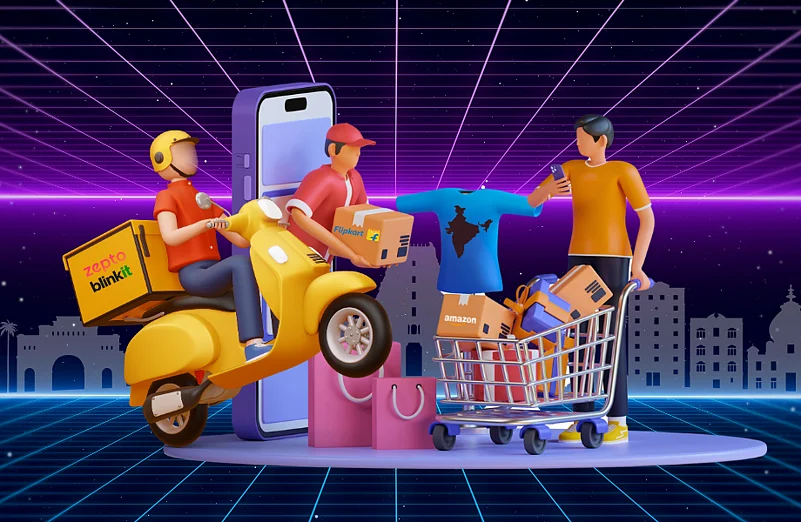
    A study by brokerage CLSA shows 3,536 dark stores active across India’s top 10 cities alone, excluding operations run by Amazon and JioMart. Blinkit holds the largest footprint with 969 locations, followed by Zepto with 828, Flipkart Minutes with 627, Swiggy Instamart with 615 and BigBasket with 497.

    Blinkit Extends National Lead

    Blinkit accounts for 30 per cent of all dark stores across the top 10 metropolitan markets and more than 34 per cent nationwide. The platform maintains the top store count in six of those 10 urban centres, while operating without direct rival competition in more than 180 smaller cities.

    Newer entrants are setting up smaller dark store footprints in secondary markets to evaluate unit economics and local basket sizes before committing capital. Established operators plan to enter those same territories later, capitalising on initial consumer habits built by early movers without absorbing early customer acquisition costs.

    Rivalry Shifts in Tier-1 Metros

    Competition among the largest platforms is recalibrating inside major cities. Flipkart Minutes has overtaken Swiggy Instamart in dark store numbers and postal code coverage across the top 10 urban markets.

    Swiggy countered by opening the highest number of dark stores among the top three operators over the past month to increase neighborhood density. Denser hubs reduce delivery times, widen product assortment and improve courier route efficiency.

    The race among Indian delivery platforms mirrors previous logistics turf wars in Southeast Asia and mainland China, where early land grabs in top-tier cities eventually gave way to a contest over suburban route efficiency and average order values. While platforms in China folded rapid delivery into broad e-commerce ecosystems, Indian operators are building standalone micro-warehouses to defend grocery margins.

    Network additions by the top three operators have trailed overall sector expansions in new pincodes, leaving smaller regional platforms to test untapped territories before the next wave of consolidation begins.

  • Alfamart Pushes Quick Commerce and Targets 100 Stores in Bangladesh

    Alfamart Pushes Quick Commerce and Targets 100 Stores in Bangladesh

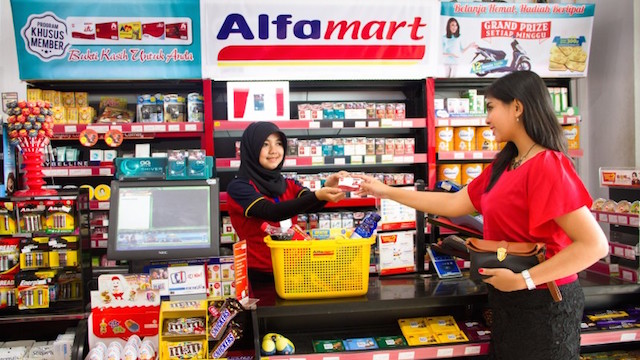
    Indonesian minimart chain Alfamart is expanding its Alfagift delivery network and preparing a 100-store entry into Bangladesh to counter slowing domestic convenience store expansion.

    The Jakarta-based operator, PT Sumber Alfaria Trijaya, is turning to digital ordering and dedicated fulfillment hubs as traditional store density approaches saturation across its home market.

    Dark stores and digital ordering

    President Director Anggara Hans Prawira confirmed that the Alfagift mobile application and loyalty platform have become central to maintaining transaction volumes. Urban shoppers increasingly order household staples and groceries through the digital channel instead of visiting neighborhood brick-and-mortar checkouts.

    To support faster fulfillment, the company is integrating dark stores into its distribution setup. These dedicated micro-warehouses shorten delivery windows and relieve pressure on standard retail outlets in crowded metropolitan areas where finding viable new retail real estate has become harder.

    South Asian expansion

    Slowing domestic retail growth has also pushed Sumber Alfaria Trijaya to seek greenfield opportunities abroad, led by a planned 100-store rollout in Bangladesh. The move marks an aggressive geographic push outside Southeast Asia as domestic store growth tapers.

    Convenience operators across the Asia-Pacific region are confronting the same ceiling. Rapid physical rollouts that drove earnings for two decades across Indonesia, Thailand, and the Philippines now deliver tighter margins, forcing traditional grocers to fight app-based delivery services on speed while exporting their store models into emerging consumer markets.

    The retailer now faces the rollout of its initial 100 Bangladesh sites while testing how deeply quick commerce can defend its domestic basket sizes against dedicated delivery platforms.

  • Indian Gen Z Spends Three Times More on Quick Commerce Than Older Shoppers

    Indian Gen Z Spends Three Times More on Quick Commerce Than Older Shoppers

    Indian Gen Z shoppers spend three times more on quick commerce platforms for groceries than consumers over 30, allocating 2.6 per cent of their wallet share to instant delivery.

    By contrast, traditional supermarket chains such as D-Mart capture just 0.85 per cent of their spending, according to transaction data from credit-on-UPI fintech platform Kiwi. Consumers aged 30 and older continue to direct the bulk of their grocery budgets to physical stores and neighbourhood kirana shops.

    Shifting priorities in grocery and credit

    Younger shoppers in India are bypassing traditional discount hunting in favour of speed. Kiwi, which analysed 25,000 users between June and July 2026, found that Gen Z cardholders use credit selectively for high-value items while relying on app-based delivery for routine supplies.

    They also spend 20 per cent more on rental and education payments compared to older age groups, pointing to heavy reliance on credit for essential recurring living costs. When financing larger transactions through equated monthly instalments, Gen Z users consistently choose longer repayment windows to reduce monthly outgo, accepting higher overall interest charges in exchange for immediate budget flexibility.

    “Gen Z is not necessarily using credit more frequently; they are using it differently,” said Siddharth Mehta, co-founder and chief operating officer at Kiwi. “Our data shows that convenience is playing a much bigger role in how younger consumers make payment and credit decisions.”

    Everyday essentials dominate digital wallets

    The pivot toward speed over pricing rewards mirrors broader consumer shifts across South Asia, where instant delivery platforms like Blinkit, Zepto and Swiggy Instamart have eroded market share from established hypermarkets. A separate study of 520,000 users by payroll fintech SalarySe confirmed that Gen Z spending remains concentrated on essential living costs, utilities and recurring digital subscriptions managed through automated UPI mandates, rather than discretionary lifestyle splurges.

    Kiwi, which has issued more than 200,000 RuPay credit cards over the past two years, reported a 10 per cent higher wallet share among Gen Z users compared to millennials on its platform. Retailers and card issuers now face the challenge of retaining young consumers who show little loyalty to multi-card cashback schemes, focusing instead on whether quick commerce operators can sustain current delivery speeds as order volumes rise into the festive quarter.

  • China and India Lead Global Quick Commerce with Adoption Past 80 per Cent

    China and India Lead Global Quick Commerce with Adoption Past 80 per Cent

    Quick commerce adoption in China reached 83 per cent and 82 per cent in India, creating a multi-trillion-yuan grocery delivery market that outpaces Western peers. The channel is on track to surpass 1 trillion yuan in China this year, backed by a logistics network that handled 199 billion parcels in 2025.

    Data compiled by consumer intelligence firm NIQ shows ultra-fast delivery has become standard consumer behavior across major Asian economies. The global average adoption rate sits at 48 per cent, dragged down by Western markets where 34 per cent of European shoppers and only 3 per cent of North American consumers use quick commerce platforms.

    India Builds Dark Store Networks

    India represents the fastest-accelerating market for ultra-fast delivery. The sector grew 68 per cent year over year in the fourth quarter of 2025, powered by operators expanding an urban dark-store network projected to exceed 5,000 facilities. Individual micro-fulfillment hubs in the country now process up to 1,800 transactions per day.

    Shoppers in India are also changing how they use the apps. Instead of relying on 10-minute delivery purely for emergency top-ups and late-night snacks, consumers are migrating toward full grocery baskets, driving higher repeat purchase frequencies and larger ticket sizes.

    The structural divergence between Asia and the West comes down to city density, cheap local couriers, and deeply entrenched super-app ecosystems. In China and India, retail platforms solved local delivery economics early by pairing dark stores with dense residential zoning, whereas Western operators struggled with high labor overheads and sprawling suburban delivery routes that broke unit economics after 2022.

    Profitability Lags Channel Expansion

    Surging transaction volumes do not guarantee profitable sales for consumer brands selling through rapid channels. While brand manufacturers allocate an average of 27.4 per cent of their marketing spend to social commerce and related rapid channels, 58 per cent still report a return on investment of less than $1 per dollar spent.

    Growth is accelerating, but sustainable value will come from understanding which consumer missions truly benefit from immediacy.

    Suppliers are now overhauling their inventory allocations to defend margins. The key metric to watch across Asian platforms this year is whether operators can push average order values high enough to offset rising fulfillment costs as dark store networks reach saturation in tier-one cities.

  • Amazon Expands Quick Commerce Fashion Delivery to 300 Indian Cities

    Amazon Expands Quick Commerce Fashion Delivery to 300 Indian Cities

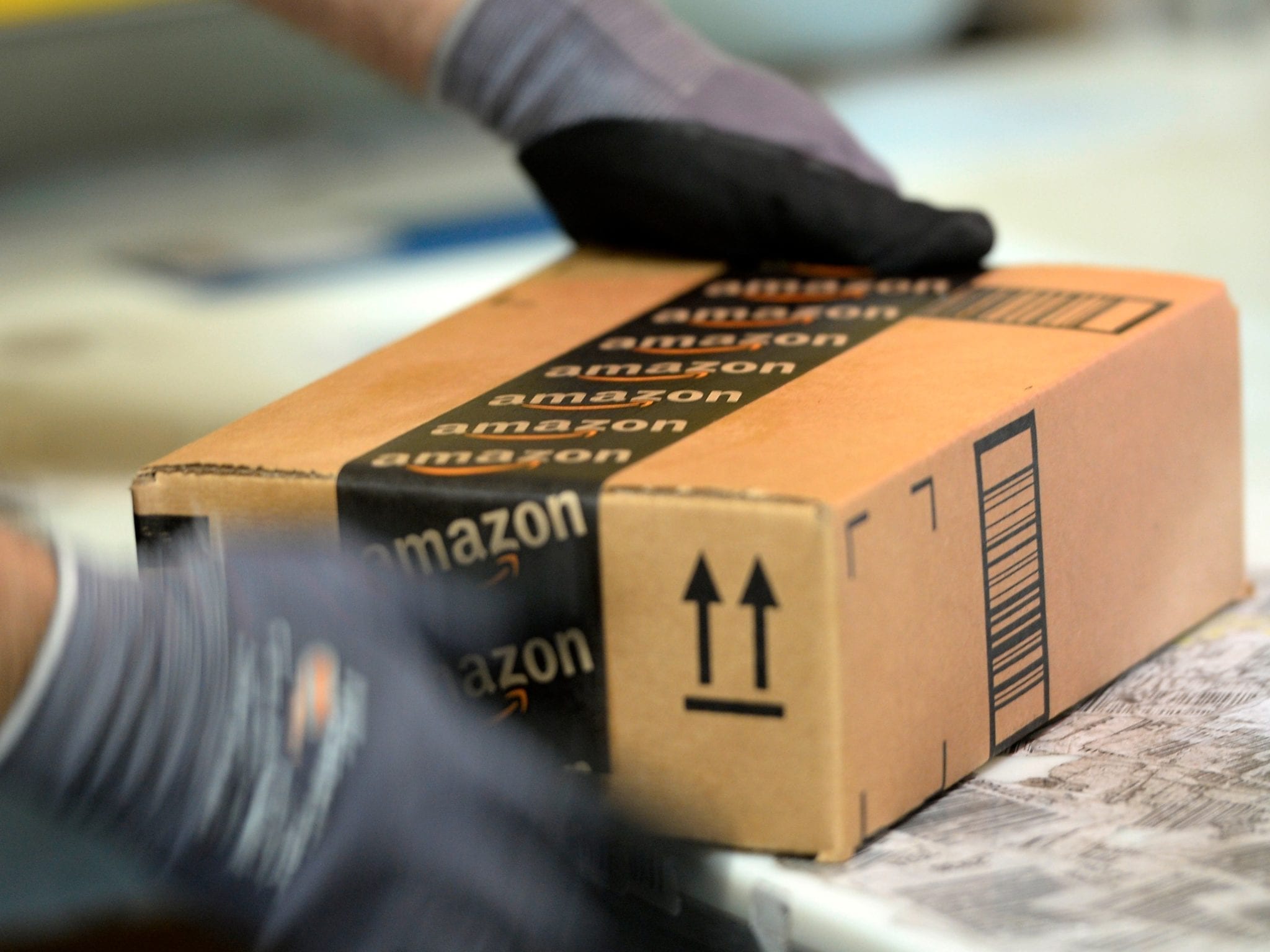
    Amazon plans to expand its Amazon Now quick delivery service for fashion to 300 cities across India. Orders on the platform doubled every quarter since launch, while Prime members who adopt the rapid option purchase three times more frequently.

    Micro-Fulfilment and Event Demand

    The service uses compact, technology-enabled micro-fulfilment centres placed close to residential clusters. Inventory algorithms position stock according to neighbourhood demand patterns rather than broad regional forecasts.

    Amazon is directing the rapid delivery network toward sudden, occasion-led purchases instead of planned wardrobe restocking. During the T20 World Cup, cricket jersey sales rose 2.5 times before match days and spiked eightfold on match days.

    Demographic Shift Toward Gen Z

    Younger shoppers are driving the platform’s fastest gains. Gen Z consumers now account for more than half of Amazon Fashion’s customer base in India, up from 30 per cent two years ago, with order volumes in Tier 2 and Tier 3 cities expanding at double the national pace.

    Premium labels now account for nearly 20 per cent of fashion spending on the platform and are expanding at twice the broader category rate. The company channels this traffic through its Gen Z portal SERVE, an influencer network of over 100,000 creators, and digital sizing tools including virtual try-on and Rufus.

    Across India, quick commerce operators such as Blinkit, Zepto, and Instamart have pushed aggressively into apparel and lifestyle items, forcing traditional e-commerce marketplaces to compress delivery windows from days to hours. Amazon is relying on its micro-hub density and Prime ecosystem to defend fashion market share against those dedicated hyper-local rivals.

    The company has not disclosed the completion schedule for the 300-city rollout, making the pace of micro-hub deployment the key operational figure to track across the country.

  • Dingdong Lifts Second Quarter Profit to $40 Million Ahead of Meituan Deal

    Dingdong Lifts Second Quarter Profit to $40 Million Ahead of Meituan Deal

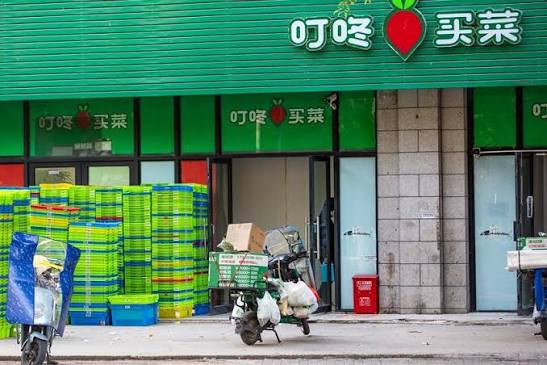
    Dingdong boosted second-quarter net income by 153 per cent to $40 million, lifted by higher domestic order frequency and an accounting adjustment on assets designated for sale.

    Revenue rose 8.6 per cent to $956.1 million for the three-month period, while gross merchandise value increased 11.8 per cent to $1.07 billion.

    Accounting Shift Drives China Earnings

    Net profit from operations in China surged 155 per cent. That increase stemmed primarily from the cessation of depreciation and amortisation charges on long-lived assets classified as held for sale under US GAAP rules. Overseas operations moved in the opposite direction, with net losses widening 166 per cent despite a 36.2 per cent rise in international revenue.

    The divergent performance comes as Dingdong prepares to hand over its domestic operations. In February, the grocer agreed to divest its China business to on-demand delivery giant Meituan. That transaction remains pending regulatory and closing conditions.

    Summer Peak Drives Daily Volumes

    Chief executive Song Wang credited higher order frequency among loyal members for driving the gains. Dingdong has now recorded non-GAAP profit across 15 consecutive quarters, alongside 10 straight quarters of year-over-year revenue expansion and positive GAAP net income.

    Trading accelerated further as the platform entered its summer peak in July. Monthly gross merchandise value hit a record high, with single-day sales exceeding RMB 100 million multiple times during the month.

    China’s instant-grocery sector has shifted decisively toward consolidation after years of heavy cash burn, forcing independent warehouse networks to integrate into larger delivery ecosystems or redirect resources abroad. Dingdong’s run of GAAP profitability shows the frontline warehouse model can deliver positive margins once promotional subsidies recede.

    Market attention now centers on the completion date for the Meituan transaction, which will determine how quickly Dingdong pivots its core focus toward international expansion.

  • India Quick Commerce Discounts Ease to 20% as Rivals Add Dark Stores

    India Quick Commerce Discounts Ease to 20% as Rivals Add Dark Stores

    Average discounts across India’s quick-commerce platforms have dropped to between 19 and 20 per cent, cooling from early-year peaks as operators focus on unit economics. The pull-back comes even as larger e-commerce rivals prepare to roll out up to 1,500 new dark stores over the next 12 to 18 months, according to research by UBS.

    Price discounting reached its height in early 2026 when Amazon Now raised discount rates from 26 per cent in November 2025 to 57 per cent two months later. Competitors responded in kind. Flipkart Minutes and incumbent platforms increased promotional discounts by 200 to 300 basis points across key retail categories before the pricing war settled over the past four months.

    Dark Store Land Grab

    The total addressable market for quick commerce across India is projected to reach $59 billion by FY30, upgraded by UBS from an earlier forecast of $34 billion. Quick-commerce networks now operate across more than 100 towns and are expected to capture roughly half of all incremental growth in online retail across the country.

    Network footprints are widening beyond standard grocery lines. Dark stores increasingly handle consumer electronics, personal care, and apparel, directly competing with traditional parcel delivery networks. To contest this volume, conventional e-commerce groups are setting up 400 to 600 micro-warehouses each, with plans to scale their combined networks to between 1,200 and 1,500 facilities.

    Unit Economics and Margins

    Incumbents enter this new round of competition with substantial cash reserves. Blinkit and Swiggy’s Instamart hold roughly Rs 18,000 crore each on their balance sheets, while Zepto holds about Rs 7,000 crore. Blinkit posted positive adjusted EBITDA margins in the first quarter alongside rapid net order value growth. Instamart reached contribution-margin break-even in May, lifting its sequential quarterly margin by 160 basis points to negative 0.2 per cent. Zepto cut promotional pricing and removed more than four million unprofitable customer accounts before restarting growth spending in July.

    Across Asia’s instant-delivery markets, platforms in South Korea and Southeast Asia experienced a similar shift once order density matured: headline subsidies gave way to monetisation through merchant advertising, platform fees, and branded marketing tie-ups. In India, UBS reduced its steady-state operating margin forecast for the sector by 250 to 300 basis points, reflecting the lower margins found in non-grocery merchandise and higher fulfilment costs outside top-tier metros.

    Attention now shifts to food-delivery user activation, where platforms report that more than 70 per cent of accounts transact less than once a month. Zomato and Swiggy are rolling out smaller basket sizes, tighter delivery radiuses, and reduced restaurant commissions to draw those dormant accounts into regular ordering cycles.