Tag: recovery

  • Cebu Pacific Raises $250 Million As Gokongwei’s Airline Prepares For Travel Recovery

    Cebu Pacific Raises $250 Million As Gokongwei’s Airline Prepares For Travel Recovery

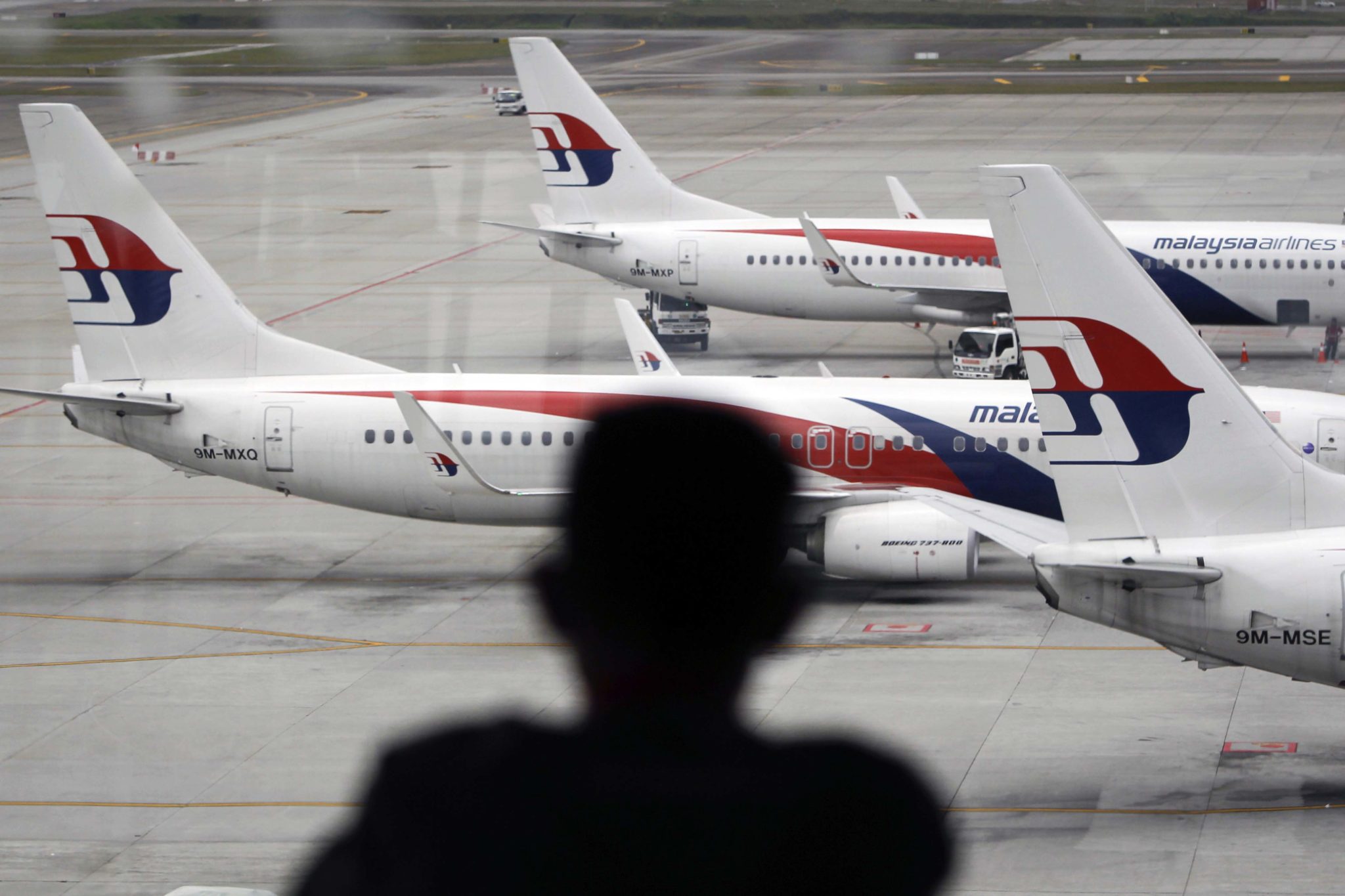
    Cebu Pacific Air, the low-cost airline controlled by Philippine tycoon Lance Gokongwei and his siblings as part of JG Summit Holdings, said it has raised $250 million through the sale of convertible bonds to the International Finance Corp. and U.S. private equity firm Indigo Partners.

    The bonds can be converted into 318.75 million common Cebu Pacific shares at 68 pesos a piece, according to a filing with the Philippine Stock Exchange. The company didn’t disclose the specific investments made by IFC through its IFC Emerging Markets Fund and by Indigo partners through its Philippine subsidiary.

    The funds will provide the carrier some much-needed capital. Cebu Pacific, just like most travel-related businesses, suffered a net loss of 22.2 billion pesos ($459.4 million) last year as passenger traffic dropped 78% to 5 million. Both international and domestic travel came to an abrupt halt as the Philippines grappled with the Covid-19 pandemic. The country is among the hardest hit by the deadly virus in Southeast Asia.

    “At Cebu Pacific Air, our focus has been on bringing the vaccine into the country and getting back to regular travel,” Gokongwei told attendees to the 2021 Forbes Asia CEO Webinar late last month.

    The funds raised from the convertible bond issue form part of the the $500 million the airline aims to raise as it restructures operations in preparation for a vaccine-led recovery in the travel industry.

  • Singapore retail sales show first signs of retail recovery

    Singapore retail sales show first signs of retail recovery

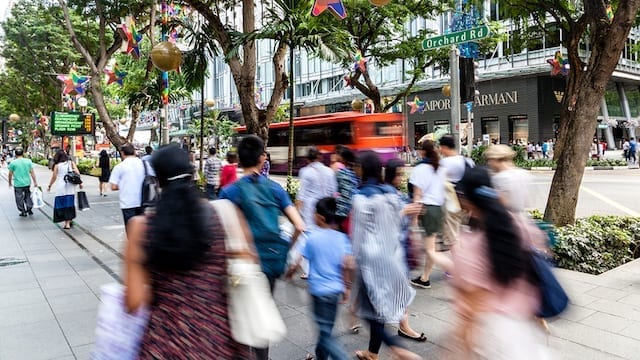
    Singapore retail sales rebounded in July as social-distancing rules were relaxed, but there was still a year-on-year decline of 7.7 percent, excluding motor vehicle sales. That was significantly better than June’s fall of 24.2 percent and May’s 52 percent.

    Month on month, seasonally adjusted retail sales increased by 19.5 percent.

    Online retail sales comprised about 11 percent of the monthly total, accounting for 49.1 percent of computer and phone sales, 21.8 percent of furniture and household equipment, and 11.4 percent of supermarket sales.

    In July, sales in department stores and of apparel, footwear and jewelry and watches declined by between 21 percent and 32.1 percent year on year, with those categories most affected by low tourist arrivals due to Covid-19 restricting international travel.

    In contrast, sales in supermarkets rose by 28.6 percent, and of computers and phones by 27.4 percent.

    Food and beverage services turnover fell by 25.4 percent, which was an improvement over June’s decline of 43.6 percent. Statistics Singapore says sales of food and beverage services reached US$486.9 million for the month, with online orders accounting for 21.1 percent of that.

  • Malaysia Airlines’s progress in line with recovery plan

    Malaysia Airlines’s progress in line with recovery plan

    Although relatively little is being said and publicised about Malaysia Airlines Bhd’s (MAB) recovery plan, a substantial amount of progress has actually been achieved in its business operations in line with the plan, which aims to revive the country’s national carrier and sustain its profitability.

    Group CEO Captain Izham Ismail said improvements in terms of cost base, productivity, information technology (IT) systems and customer experience were among the achievements chalked up by the company, thanks to the five-year Malaysia Airlines Recovery Plan.

    In an interview with Bernama, he said plans had been put in place to address the airline’s performance going forward and this had yielded improved performance for the first half of this year.

    The airline performed stronger in the first six months of this year than in the same period of 2017, adding that the key focus for the airline in financial year 2018 included driving revenue.

    “This will be underpinned by continuous improvement in customer experience, product quality and operational excellence while maintaining a productive and competitive cost base,” he said.

    According to Izham, MAB’s cost base has been significantly changed to bring it in line with its peer network airlines.

    As of today, the group has one of the lowest cost bases among its peer network airlines on a cost per available seat kilometre basis.

    The company has also seen material gains in productivity with a more competitively sized workforce, which is further complemented by a commitment towards continuous talent development.

    “A stronger local talent pool has now been established,” he said.

    On the group’s IT system, which is an integral part of overall airline operations, Izham said the complete overhaul had now been completed.

    He said the new Passenger Service System and migration to a cloud-based data centre had improved reliability and cyber security, as well as enhanced agility and better time-to-market.

    He said customer experience had also improved with market-driven metrics based on the company’s customer survey and net promoter measures showing significant positive gains over the last two financial years.

    On the operational front, Izham said the supply chain in engineering had been significantly tightened, which had helped the airline’s on-time performance, although it was still impacted by external factors beyond its control.

    “Since the set up of NewCo (MAB, which took over the operations, assets and liabilities of Malaysian Airline System Bhd or MAS) in 2015, we are showing progress and have recorded a double-digit compound annual growth rate growth (of 21%) over the last three years.

    “That is improvement straight to the bottomline,” he explained.

    MAB managed to record “steady year-on-year (y-o-y) performance” in the second quarter of 2018, with a marginal yield improvement, while revenue per available seat kilometre remained steady with a growth of 2% y-o-y.

    Going forward, Izham said MAB would continue to focus on the customer while making sure to deliver a strong schedule and great service for its customers.

    The airline also aimed to build a diverse Asia-Pacific network with a simplified fleet structure and operations to ensure consistency, and removing complexity in service delivery as well as pursuing a gradual and progressive growth strategy across markets, he said.

    Commenting on Khazanah Nasional Bhd’s plan to relist the national carrier as part of the recovery plan sometime from now until 2020, he said “the plan has always been to re-list Malaysia Airlines”.

    “We are working hard to stabilise the company and return it to profitability before any initial public offering plans can be considered,” he added. Khazanah owns 100% equity interest in MAB.

    In 2014, the sovereign wealth fund had injected investments amounting to RM6 billion to support the airline’s five-year turnaround plan with the aim of returning MAB to profitability by late 2017 and to relist the company by 2018 or 2019.

    Khazanah de-listed MAS from Bursa Malaysia on Dec 31, 2014.
  • Malaysia Airlines’ recovery plan on track

    Malaysia Airlines’ recovery plan on track

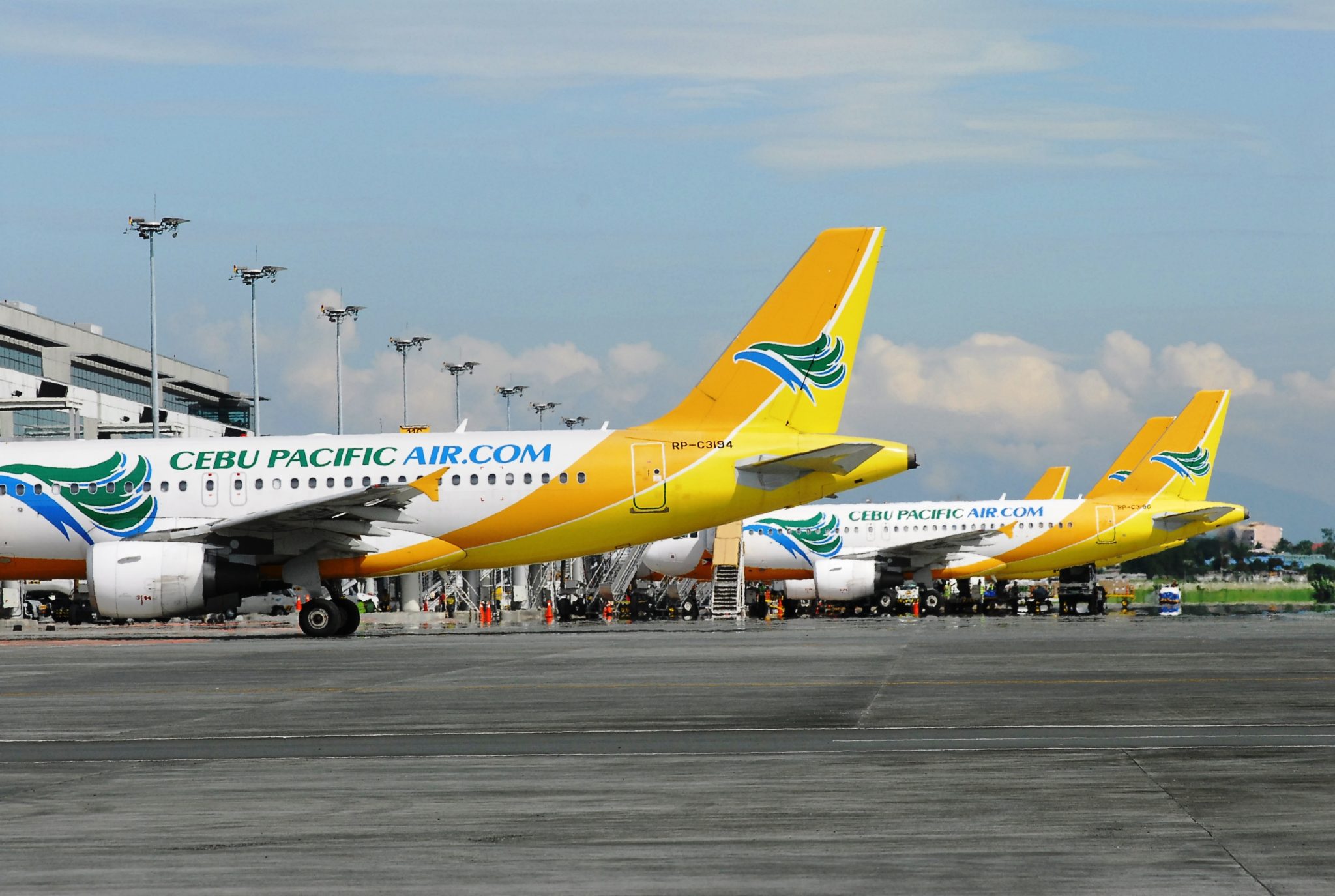
    Malaysia Airlines Bhd (MAB) has performed well in 2016 and the momentum is expected to continue in the year ahead, backed by its 12-point MAS Recovery Plan (MRP), said Khazanah Nasional Bhd.

    Managing director Tan Sri Azman Mokhtar expressed confidence that the five-year recovery plan, after its 28 months of implementation, was on track and on schedule.

    “They (MAB) are making good progress. Insya Allah (God willing), next year or the year after, (even MAB) have come out publicly to say they are on track to break even and be profitable,” he told a press conference on Khazanah’s financial and strategic performance for 2016 and outlook for 2017 in Kuala Lumpur on Friday.

    Khazanah is the sole shareholder of MAB.

    In August 2014, the Government investment arm unveiled its RM6bil MRP in the quest to return MAB to sustained profitability and revive the flag carrier of Malaysia.

    The plan included cutting 30 per cent of its workforce of 20,000 employees and introducing a new restructured entity which is now called MAB.

    On July 1, 2016, MAB appointed its chief operating officer, Peter Bellew, to replace Christoph Mueller as chief executive officer.

    On the ringgit performance throughout 2016, Azman believes that the currency is “clearly undervalued”.

    “Whether (the depreciation rate is) 10%, 8% or 12%, we believe that our ringgit is undervalued,” he said, adding that Khazanah had also undertaken internal research on the currency performance.

  • Latest results show Indonesian recovery still patchy

    Latest results show Indonesian recovery still patchy

    The earnings of Indonesian companies as of September has revealed a patchy recovery in local firms as they continue along a bumpy road with persistently weak demand. However, efficiency and currency gains are compensating for financial pressures.

    The mixed results of the January to September financial performance of publicly listed firms is reflected in the performance of the benchmark Jakarta Composite Index (JCI), which has hovered around the 5,400 level for the past two weeks during corporate earnings announcement season.

    “The 50:50 result, by which half of the listed companies announced higher-than-expected earnings while the other half were bad, brought the index nowhere,” Recapital Securities analyst Kiswoyo Adi Joe said on Tuesday.

    Indonesia’s economy is expected to recover this year and reach a 5 percent growth rate from a six-year low level of 4.79 percent last year.

    But sluggish global demand and a slump in commodity prices are hampering sectors such as trade, mining and agribusiness, while consumer goods, infrastructure and financial companies are showing resilience, according to the JanuarySeptember financial reports submitted to the Indonesia Stock Exchange (IDX).

    Diversified conglomerate Astra International, whose miningrelated business is being hit by low prices this year, saw net profits contract by 6 percent to Rp 11.28 trillion (US$865.3 million). Revenues were 4 percent lower in the January-September period year-on-year (yoy).

    “Astra’s performance is a reflection of our domestic economy. If it’s good, we can hope the economy will move faster,” Kiswoyo said. The second largest listed Indonesian company by market value has seven business lines from automotives and palm oil to finance and heavy equipment.

    Cigarette maker HM Sampoerna, Indonesia’s largest company by market value, saw net profits surge 20 percent to Rp 9.1 trillion on the back of huge financial revenues and a 7.3 percent rise in sales to Rp 70.3 trillion in the January to September period yoy.

    Another consumer goods giant Unilever saw its net sales and net profits grow by 9.5 percent and 14.3 percent yoy, respectively. The company’s efforts to lower operating costs included lowering advertising and promotions spending in the third quarter of this year from the previous quarter.

    Instant noodle maker Indofood CBP saw its sales increase by 10 percent while its net profit jumped by 19.1 percent.

    Overall, consumer goods stocks on the IDX rose by 0.57 percent during the earnings announcement season in October as the benchmark stock index flat-lined.

    In the telecommunications sector, a stronger rupiah has helped XL Axiata reverse its losses although its revenues dropped by around 5 percent.

    Financial revenues from interest on time deposits and plunging costs have also helped state-owned miner Aneka Tambang (Antam) prop up its earnings. The state-run miner reversed its losses amid sales that contracted by more than 28 percent and costs that dropped by almost 30 percent.

    In the financial sector, banks booked varying results. State-owned lenders mostly recorded positive performances across the board, but private companies recorded gloomier results as their credit growth was still floating around or even below the industry average.

    Going forward, banking remains the overweight sector for First Asia Capital analyst David Sutyanto.

    “Banking will perform well because they’ll get fresh funds from the tax amnesty,” David said. “Second, the mining sector will get a windfall from rising commodity prices.”

    The government’s ongoing tax amnesty runs from July this year to next March and has seen nearly Rp 3.9 quadrillion in assets declared, of which Rp 143 trillion have been repatriated from overseas.