Tag: recycling

  • 10 Ways to Save Money Using Free Apps and Online Tools

    10 Ways to Save Money Using Free Apps and Online Tools

    Saving money doesn’t always mean giving up the things you enjoy. Whether you’re shopping online, streaming your favorite content, or exploring digital entertainment such as Jili games, making smarter financial choices can help you get more value from your budget. Thanks to a wide range of free apps and online tools, it’s easier than ever to track expenses, find discounts, and manage everyday spending.

    The best part is that many of these solutions are completely free to use. Whether your goal is to reduce monthly expenses, stay on top of your finances, or simply spend more wisely, these practical tools can help you save money without sacrificing convenience. Here are 10 effective ways to make the most of free apps and online resources.

    1. Track Your Spending with a Budgeting App

    One of the easiest ways to save money is to know where it is going. Budgeting apps that are free help you keep track of your income and expenses, categorise purchases, and monitor your monthly spending habits.

    When you can see where your money goes, you can spot expenses you don’t need to be paying and make better financial decisions, but still be free. 

    2. Search for Coupons Before You Buy

    Take a few minutes to look for coupon codes or promotional offers before you buy something online. Many free browser extensions and coupon websites automatically find and apply available discounts at checkout.

    Even small discounts add up over time, especially if you shop online regularly. 

    3. Compare Prices Across Multiple Stores

    Never jump at the first price you see. Price comparison websites are useful for comparing different retailers before you buy.

    If you’re shopping for electronics, household goods or everyday necessities, price comparisons can help you get better deals and not overpay. 

    4. Set Price Alerts

    Thinking about buying something but waiting for a better deal? Many shopping sites and price-tracking tools let you set alerts for specific products.

    No need to check prices every day, you’ll get a notification when the price drops, this helps you to buy at the right time. 

    5. Use Cashback and Rewards Platforms

    Cashback sites and rewards apps allow you to earn points or a cut of your purchase back when you shop with participating retailers.

    Even if the savings on one purchase seem small, the regular use can result in considerable savings over the year. 

    6. Organize Bills and Payment Reminders

    Late payment fees are an avoidable expense that you can often avoid.

    Free calendar apps and reminder tools help you remember when to pay bills, subscriptions and recurring payments: This means you can better manage your monthly finances and not get charged penalties. Being organized… 

    7. Cancel Unused Subscriptions

    There’s still a lot of people paying for streaming services, software or memberships they hardly ever use.

    Subscription management apps can help you find recurring charges and see what you’re actually using. Cancelling one or two unnecessary subscriptions can release some extra cash every month. 

    8. Use Free Cloud Storage and Productivity Tools

    Use free cloud storage, document editors, spreadsheets and collaboration tools online instead of paying for pricey software.

    These services provide everything many users need for work, school, or personal projects without the need for expensive subscriptions. 

    9. Take Advantage of Free Learning Resources

    You don’t have to pay for expensive courses to learn new skills.

    There are many trustworthy sites that provide free tutorials, online courses, educational videos, and digital libraries on topics such as personal finance, technology, design, business, languages, and more. You could even get better career opportunities without any additional educational costs by improving your skills. 

    10. Choose Entertainment That Fits Your Budget

    Entertainment is important, but it doesn’t have to be a financial burden.

    Many digital entertainment platforms offer welcome offers, loyalty programmes, free content, or special promotions that enable users to get more value. So before signing up for any platform, be sure to compare available features, understand the terms and select services that fit your interests and your budget.

    For online gaming and digital entertainment, it is also worth choosing licensed platforms that encourage responsible play via functions such as deposit limits, time management tools and self-exclusion options. Responsible entertainment ensures that having fun stays fun and affordable. 

    Tips for Saving Even More Money Online

    Free apps are only part of the equation. Building smart financial habits can help you maximise your savings over the long term.

    Here are some simple practices to adopt:

    • Review your monthly expenses.
    • Look up prices before you buy something big.
    • Avoid impulse buying by waiting 24 hours before making non-essential purchases.
    • Instead of running after every bargain, look for legitimate promotions.
    • Protect your personal information using trusted websites and strong passwords.
    • Don’t fall for deals that sound too good to be true.

    Small changes to your daily habits can add up to the biggest savings over the long run. 


  • Recycling fees in Vietnam higher than in Europe

    Recycling fees in Vietnam higher than in Europe

    Fourteen business associations have petitioned nine ministers to complain about Vietnam’s unusually high recycling fees, which are several times higher than that in Europe.

    The associations, which include American Chamber of Commerce in Vietnam, Vietnam Association of Seafood Exporters and Producers, and Vietnam Textile and Apparel Association, said that a recent draft bill on recycling required fees higher than in developed countries.

    Vietnam’s recycling fee for aluminum packaging is 1.26 times higher than the average of 14 countries in Western Europe, they said.

    The fee for recycling glass is 2.12 times.

    The ideal cost should be 30-50% of that in European countries as workers’ salary in Vietnam is only 10% of their counterparts in European countries.

    The associations estimate that their combined recycling fee for paper, plastic and metal is at VND6.13 trillion ($257.35 million) annually.

    This is unusually high as it does not take into account the profit that recycling companies get from the materials they receive.

    Recyclers of aluminum cans, for example, post profits between VND700 billion and 1.29 trillion annually.

    It is unreasonable that manufacturers and consumers are paying trillions of dong every year to support recyclers, the associations said.Recycling

  • Unilever Vietnam implements approaches towards net zero future

    Unilever Vietnam implements approaches towards net zero future

    Unilever has started a range of programs and initiatives for a net zero value chain by 2039, contributing to Vietnam government’s net zero carbon emissions vision by 2050.

    In 2021, Unilever published its Climate Transition Action Plan, an ambitious and transparent roadmap to help reduce its operational emissions by 100% by 2030 and reach net zero emissions across its value chain by 2039.

    First, Unilever Vietnam is replacing all fossil fuel use in the factories’ boilers with renewable energy source – biomass recycled from damaged pallets, shredded wood, etc. The company is also committed to using entirely renewable electricity at all factories and offices in Vietnam.

    Secondly, Unilever aims to halve its use of virgin plastic by 2025 to help lower the value chain emissions. Unilever Vietnam has reduced 55% virgin plastic in its packaging production, three years earlier than the global target, through absolute reduction and post-consumer recycled plastic use.

    Thirdly, the company is now replacing fossil fuel-derived chemicals with renewable or recycled carbon. In Home Care, Unilever estimates this will reduce its product’s greenhouse gas emissions by up to 20%.

    In Vietnam, Unilever implemented “Clean Future” campaign for Home Care product line early this year, aiming to develop product formulation with water efficiency and biodegradability, and utilize 100% renewable or circular feedstocks. Currently, a number of products from Omo, Comfort, Sunlight, Cif, Lifebuoy have met the criteria of product formulation driving water efficiency and biodegradability.

    Next, Unilever Vietnam is working with their partners and suppliers in the value chain to cut down the GHG emissions as more than 75% of the carbon footprint in Unilever Vietnam’s supply chain derives from input materials and outsourced activities.

    Until now, the company has eliminated CO2 emissions and carton waste in packaging transportation from Dynaplast; converted to 100% electric forklifts, contributing to a reduction of 1,999 tons of CO2 emissions at all distribution centers by the end of 2021 in comparison with 2020; and implemented the circular economy model in the waste management, turning waste into sources of energy and fertilizers to serve manufacturing activities.

    Unilever globally will be calling on countries to deliver policies that accelerate energy and food system transitions at COP27 on the horizon.

  • Ororo commences operation of $25m glass recycling plant in SA

    Ororo commences operation of $25m glass recycling plant in SA

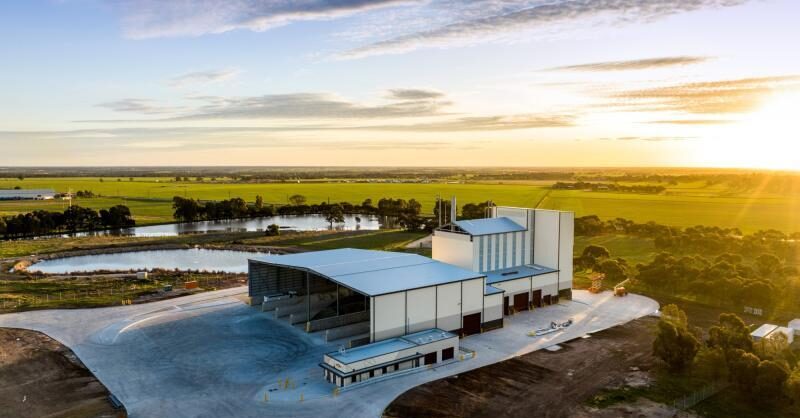
    The new Orora glass beneficiation plant in South Australia has begun operations, with the $25m facility set to recycle 150,000 tonnes of post-consumer glass each year, which will go into the company’s glass manufacturing plant next door.

    Orora CEO Brian Lowe and South Australia Deputy Premier Susan Close officially opened the highly automated plant this morning. The SA and Commonwealth governments provided some $8m of the funding for the new plant.

    With just 12 staff and the latest optical technology, the highly automated plant will remove impurities from used broken glass through crushing, cleaning and sorting, to deliver crushed contaminant-free glass, ready for manufacture into new products.

    The company says the new plant will enable the 900 million glass bottles manufactured at the company’s Gawler plant to have an average of 60 per cent recycled content by 2025. All the recycled glass will be used by Orora for its beverage products, which includes bottles for wine, beer, carbonated soft drinks, kombucha, water and olive oil.

    The new plant took just a year to build, overcoming supply chain issues, and bringing in the latest European technology for its automated sorting process.

    Orora CEO Brian Lowe described the beneficiation plant as a major milestone in the company’s sustainability journey. “Our new world-class beneficiation plant is a significant achievement as it will increase the amount of recycled glass used in our manufactured products, allowing us to process up to 150,000 tonnes each year – that’s equivalent to approximately 330 million wine bottles or 750 million beer bottles. Not only does this progress Orora’s sustainability agenda, it enhances our ability to support our customers’ sustainability goals, in turn contributing to the circular economy and the sustainability of the Australian glass industry.”

    Lowe said, “Together with our new oxygen fuelled furnace at Gawler, we are offering our customers a low emission, highly recycled product.”

    Close said, “Consumers are increasingly demanding recycled packaging, and this project makes a significant contribution to the circular economy and the sustainability of the glass industry in this state.

    “We value the investment of the Commonwealth and SA government – it aligns to the government’s focus on increasing Australia’s capacity to generate high value recycled commodities, investing in recycling and waste infrastructure, as well as creating new opportunities to recover and reuse resources.”

    Lowe said that the company saw plenty of opportunity for growth in the domestic glass business, saying, “Australia is still a net importer of glass bottles, which could be manufactured here, and would save on emissions in transport.”

    Lowe also said the beginnings of rapprochement in Australia’s trading relationship with China was good to see, but said Orora was not counting on a resumption of the wine trade, for which the company was a major glass bottle supplier. Since the wine tariffs came into play, which ended most of Australia’s wine exports to China, Orora has pivoted into new business areas, and has replaced all the lost business. Lowe said, “Any easing of restrictions would be good news, and we would be ready to supply winemakers, but we will have to wait and see.”

    A transition away from plastic bottles has not yet begun, with Lowe saying if it does happen it will more likely be to aluminium cans rather than glass bottles. The company is investing some $200m in can production over the next three to four years.

  • Watsons and L’Oreal launch Hong Kong-wide recycling program

    Watsons and L’Oreal launch Hong Kong-wide recycling program

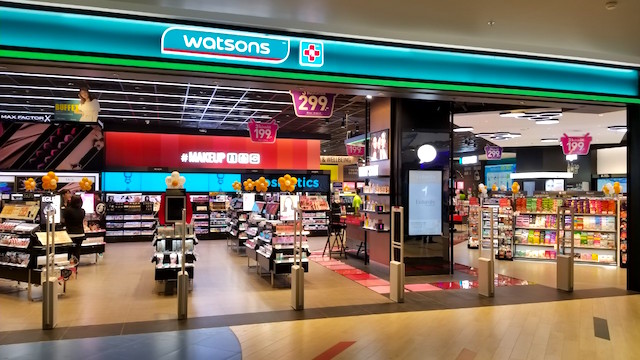
    L’Oreal Hong Kong has partnered with Watsons and recycling social enterprise V Cycle to launch the recycling program ‘Beauty for the Future’.

    The campaign aims to encourage customers to recycle their empty cosmetics and skincare containers – from any brand – at Watsons stores.

    Customers can hand over their washed beauty containers including foundation bottles, mascara wands, skincare tubs, and lipstick tubes, at any Watsons store in Hong Kong in exchange for rewards on the platform MoneyBack.

    People can also return the empties to any of L’Oreal Hong Kong’s more than 100 free-standing outlets or department store counters. V Cycle will break down the wastes, sort them by material, and work with local partners to turn them into new raw materials once they’ve been gathered.

    The scaled-up campaign’s target is to collect 250,000 containers in the year following the formal launch – equal to the height of two Mount Everests when piled.

    “Our goal is to meet it head-on with the first cross-brand recycling programme involving 18 of our beauty brands in 2021,” said Eva Yu, president & MD of L’Oreal Hong Kong.

    “With the scaled-up recycling campaign as part of our ‘L’Oreal for the Future’ sustainability program, we want to further inspire and influence how our consumers think and what they do about packaging wastes – not as something to toss out, but as a resource that can be recycled and used again, and sustainably, reducing the impact on our environment. Our partnership with Watsons and V Cycle will help make this a reality.”

    L’Oreal Hong Kong and Watsons have collected over 6300 beauty containers and diverted them from landfills during the trial program launched between April to May.

  • Nespresso to reward consumers who return pods for recycling

    Nespresso to reward consumers who return pods for recycling

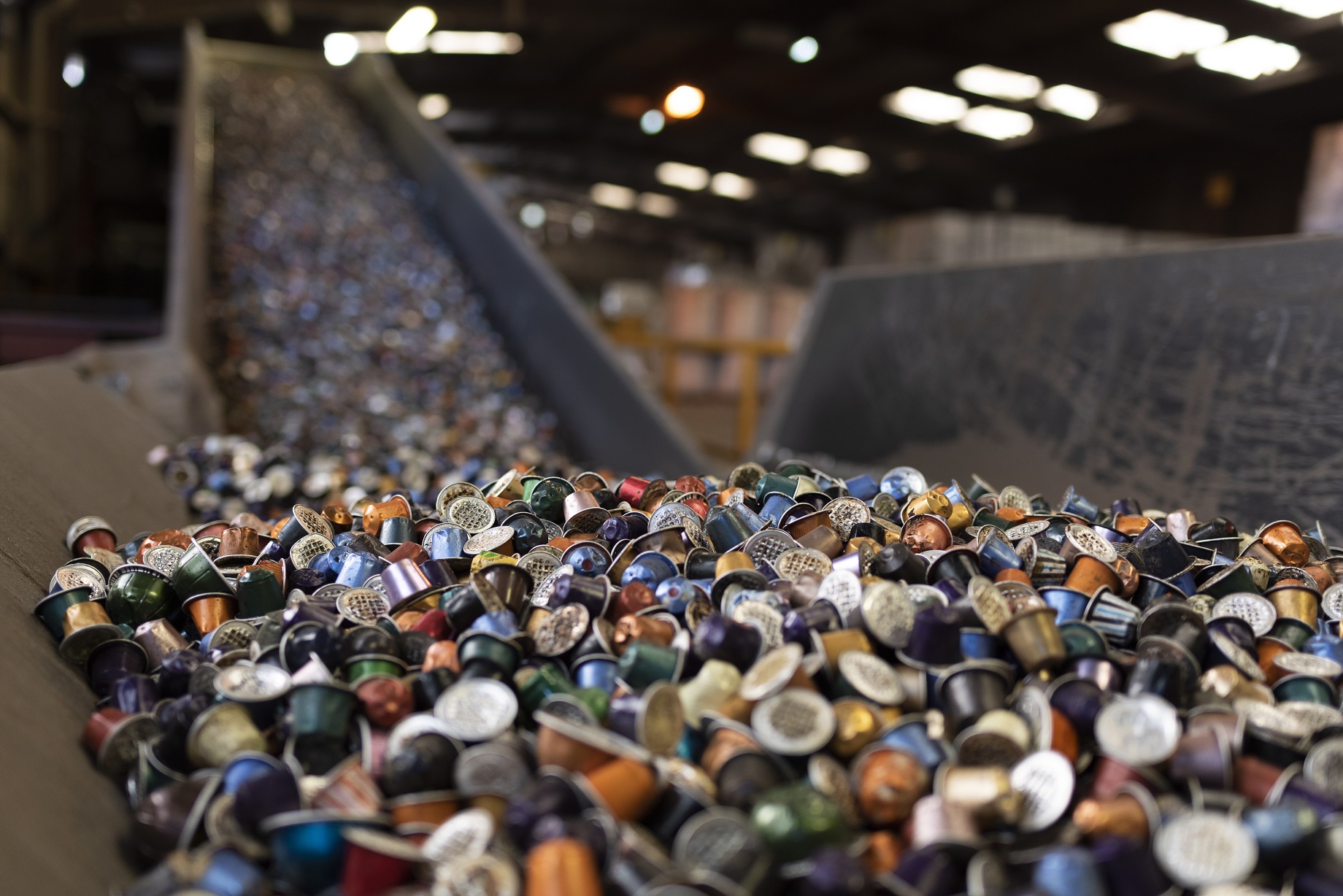
    Nespresso has launched a new Recycling Rewards scheme, offering consumers incentives to recycle their used aluminum coffee capsules at Nespresso boutiques.

    From 16 to 30 June, anyone who returns a full bag of 100 used aluminum coffee capsules of any kind to a Nespresso Boutique can receive a free gift in return.

    Rewards include a free sleeve of Nespresso coffee, a notebook made with recycled coffee grounds, and a beach towel. To claim their gift, participants must register their recycling via a QR code in-store.

    “Over the last decade, our recycling program has evolved to ensure convenient access to every customer in Australia, with multiple channels for involvement. Now, we are exploring new ways to accelerate participation, starting with [Nespresso] boutiques,” says Jean-Marc Dragoli, General Manager at Nespresso Oceania.

    “The Recycling Rewards trial is part of a broader strategy which seeks to better understand recycling behavior, raise awareness of and engagement with our recycling program, and give more aluminum coffee capsules a second life.”

    The two-month trial is part of Nespresso’s commitment to creating a sustainable, circular coffee economy. It aims to accelerate participation in the company’s coffee capsule recycling program while gathering valuable insights into whether incentives have a role to play in driving recycling behaviour in the future.

    Once returned to Nespresso, used capsules are taken to a dedicated recycling facility in New South Wales where the coffee grounds and aluminium are separated. The recovered coffee grounds are sent to another local facility and used as soil in landscaping applications or compost. The aluminium component of the capsule is compacted and sent for smelting and refining. Aluminum is recyclable and can be used to make a range of products from bicycles to mechanical pencils.

    The Recycling Rewards trial is boutique-based only, however, Nespresso’s broader recycling program currently offers three additional ways for customers to recycle, including dropping capsules off at a participating collection point, posting capsules back to Nespresso using a special Australia Post satchel, and the option to participate in a bulk recycling collection initiative where workplaces or community locations can become a recycling point.

    To find out more about the Recycling Rewards initiative, visit www.nespresso.com/au/en/recycling-rewards.

  • New Recycling Techniques Set To Make Electric Vehicles Greener

    New Recycling Techniques Set To Make Electric Vehicles Greener

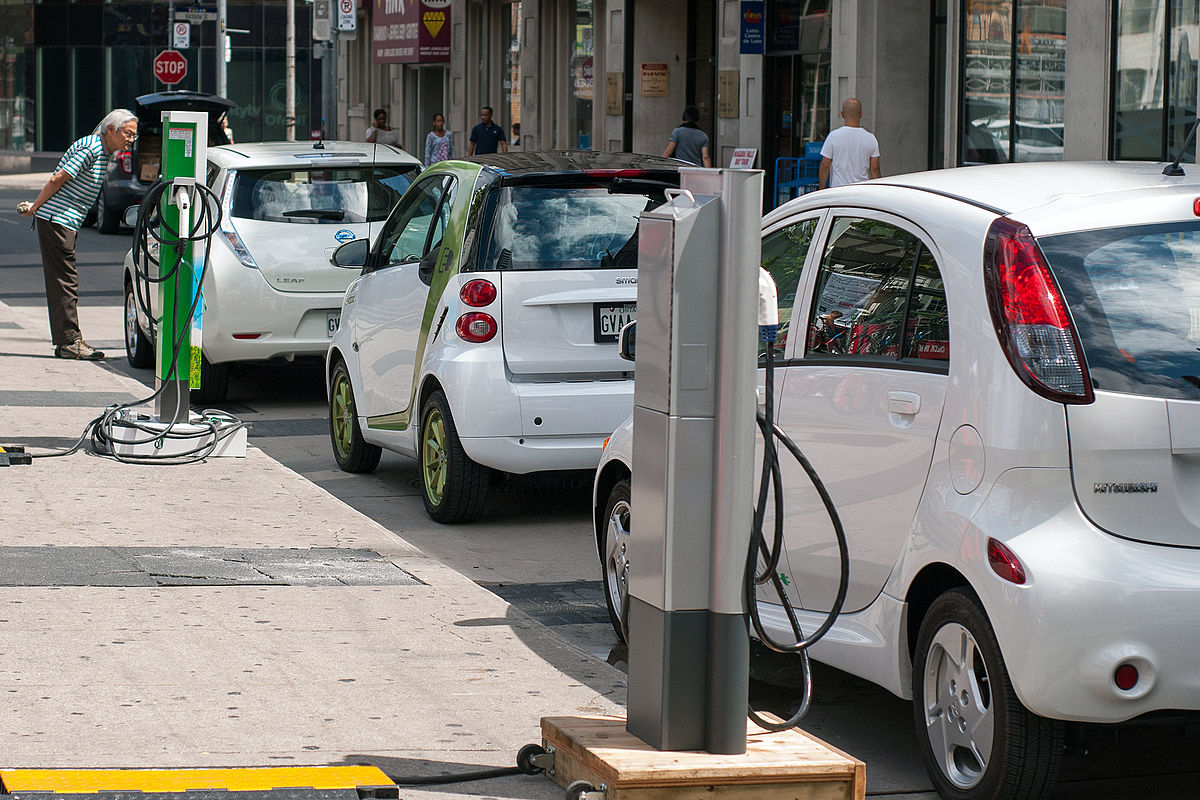
    Researchers in Britain and the United States have found ways to recycle electric vehicle batteries that can drastically cut costs and carbon emissions, shoring up sustainable supplies for an expected surge in demand.

    The techniques, which involve retrieving parts of the battery so they can be reused, would help the auto industry tackle criticism that even though EVs reduce emissions over their lifetime, they start out with a heavy carbon footprint of mined materials.

    As national governments and regions race to secure supplies for an expected acceleration in EV demand, the breakthroughs could make valuable supplies of materials such as cobalt and nickel go further. They would also reduce dependence on China and difficult mining jurisdictions.

    “We can’t recycle complex products like batteries the way we recycle other metals. Shredding, mixing up the components of a battery and pyrometallurgy destroy value,” Gavin Harper, a research fellow at the government-backed Faraday Institution in Britain, said.

    Pyrometallurgy refers to the extraction of metals using high heat in blast furnaces, which analysts say is not economic.

    Current recycling methods also rely on shredding the batteries into very small pieces, known as black mass, which is then processed into metals such as cobalt and nickel.

    A switch to a practice known as direct recycling, which would preserve components such as the cathode and anode, could drastically reduce energy waste and manufacturing costs.

    Researchers from the University of Leicester and the University of Birmingham working on the Faraday Institution’s ReLib project have found a way to use ultrasonic waves to recycle the cathode and anode without shredding and have applied for a patent.

    The technology recovers the cathode powder made up of cobalt, nickel and manganese from the aluminium sheet, to which it is glued in the battery manufacture. The anode powder, which would typically be graphite, is separated from the copper sheet.

    Andy Abbott, a professor of physical chemistry at the University of Leicester said separation using ultrasonic waves would result in cost savings of 60% compared with the cost of virgin material.

    Compared with more conventional technology, based on hydrometallurgy, which uses liquids, such as sulphuric acid and water to extract materials, he said ultrasonic technology can process 100 times more battery material over the same period.

    A switch to a practice known as direct recycling, which would preserve components such as the cathode and anode, could drastically reduce energy waste and manufacturing costs.

    Abbott’s team has separated battery cells manually to test the process, but ReLib is working on a project to use robots to separate batteries and packs more efficiently.

    As supplies and scrap levels take time to accrue, Abbott said he expected the technology to initially use scrap from battery manufacturing facilities as the feedstock and the recycled material would be fed back into battery production.

    In the United States, a government-sponsored project at the Department of Energy called ReCell is in the final stages of demonstrating different but also promising recycling technologies that refurbish battery cathode to make it into new cathode.

    ReCell, headed by Jeff Spangenberger, has studied many different methods, including ultrasonics, but focused on thermal and solvent-based methods.

    “The U.S. doesn’t make much cathode domestically, so if we use hydrometallurgy or pyrometallurgy we have to send the recycled materials to other countries to be turned into cathode and shipped back to us,” Spangenberger said.

    “To make lithium-ion battery recycling profitable, without requiring a disposal fee to consumers, and to encourage growth in the recycling industry, new methods that generate higher profit margins for recyclers need to be developed.”

    There are challenges for direct recycling, including continuously evolving chemistries, Spangenberger said. “ReCell is working on separating different cathode chemistries.”

    Early electric vehicle battery cells typically used a cathode with equal amounts of nickel, manganese, cobalt or 1-1-1. This has changed in recent years as manufacturers seek to reduce costs and cathode chemistries can be 5-3-2, 6-2-2 or 8-1-1.

    The approach at Faraday’s ReLib project is to blend recycled with virgin material to get the required ratios of nickel, manganese and cobalt.

  • PepsiCo commits to recycled packaging across entire snacks range

    PepsiCo commits to recycled packaging across entire snacks range

    PepsiCo will convert to 100-per-cent recyclable packaging across its Smith’s, Red Rock Deli, Sakata, and Doritos brands.

    The company has also partnered with the sustainable organization, Clean Up Australia, to increase soft-plastic recycling in Australia.

    By the end of the year, all the packaging will be changed out and will sport the Australasian Recycling Logo. Consumers will be able to recycle all of their snack packagings via curbside recycling for cardboard and plastic trays, and through the Redcycle collection bins for soft plastics.

    “Increased recycling rates are critical to the success of a circular economy for soft plastics,” said PepsiCo Australia and New Zealand chief marketing officer, Vandita Pandey. “Key to this is making packaging recyclable and easy to recycle.

    “We are proud to have achieved the first step – designing 100 percent of our snacks packaging to be recyclable – meeting Australia’s 2025 National Packaging Target four years ahead of schedule.”

    PepsiCo pledged $650,000 at the Australian Government’s National Plastics Summit last year for the Greening the Green program developed by Clean Up Australia. The company partnered with Redcycle and Replas to work with local sporting facilities to streamline rubbish separation and collection as well as increase soft plastics recycling.

    Greening the Green is a 12-week program that targets to improve littering and rubbish collection via an interactive online learning experience.  A pilot testing is underway at the ELS Hall Park in Ryde, NSW and there are an additional 19 sporting grounds that have signed up, bringing the number to a total of 110 sporting facilities joining them for the next two years.

    Facilities can either collect recyclables like soft plastics and beverage containers via specific bins, which will be collected by Redcycle. These will be shredded and delivered to Replas so they can be moulded into seats, bollards, signage and sports trophies., and the end product will be given to each sporting group.

  • The rise and rise of retailer recycling, repurposing and reusing schemes

    The rise and rise of retailer recycling, repurposing and reusing schemes

    Just 3.4 percent of consumers globally are using retailer recycling schemes, according to a report by GlobalData – but the trend is on the rise as leading players find new ways to reduce waste, use fewer resources and even adopt circular business models.

    Fashion is recognized as one of the largest polluters on the planet, and growing awareness of that is encouraging retailers to make innovative and sustainable changes to their manufacturing and production processes to lessen waste.

    Adidas has introduced the second generation of its first 100-per-cent-recyclable performance running shoe. The FutureCraft Loop Generation 2 is made using a mix of new raw materials and recycled components of the initial shoe – and is expected to be 100-per-cent recycled in the product’s next iteration.

    Meanwhile, Hong Kong brand Dyelicious creates color dye out of organic waste such as coffee, red cabbage, sweet potato and ginger in its garments.

    Reducing resources

    Outdoor apparel brand Patagonia has established a new ReCrafted collection where each item has been made from donated pieces, upcycled and repurposed into a “one-of-a-kind” piece. Each ReCrafted jacket, shirt, vest and bag is upcycled from three to six used pieces of clothing.

    Hong Kong’s very own label curated from The Mills in partnership with H&M foundation – Alt: – also uses a garment-to-garment recycling system to create new knitted pieces from the repurposed yarn of former old pieces which would otherwise have been discarded. Professor Edwin Keh, founder of Alt:, was crowned Inside Retail Hong Kong’s most Innovative Retailer in 2019.

    While many brands have launched programs to take in used garments to deconstruct – and some may even offer incentives for consumer’s donations – research from GlobalData shows that just 3.4 percent of consumers use a retailer’s recycling scheme to get rid of unwanted textiles. That could present a challenge to scaling up such schemes.

    “The practice of both repurposing and restoring post-consumer goods has the potential to help the fashion industry operate in a more sustainable manner, moving away from the traditional ‘take-make-waste’ model,” says Beth Wright, GlobalData apparel correspondent.

    “However, while both trends ultimately mean fewer items are being produced and keep products out of landfill, they still represent just a drop in the ocean compared with the amount of new clothing that continues to be made.”

  • Uniqlo Introducing clothes made from recycled plastic bottles

    Uniqlo Introducing clothes made from recycled plastic bottles

    Japansese fashion retailer Uniqlo and Toray Industries have created apparel made from recycled down and fabric from polyester fibres made with recycled PET bottles.

    The technology partnership will lead to clothes made from recycled plastic bottles going on sale next year in Singapore and other Asian markets.

    Used Ultra Light Down pieces will be collected by Uniqlo stores and go through extraction process run by Toray-developed system. Materials then will be cleansed for use in new down merchandise. The collection program started this month initially only in Japan. Some down products from the 2020 Fall/Winter season will use the recycled material.

    “Uniqlo is committed to improving the sustainability of society,” said Tadashi Yanai, Uniqlo’s founder and chairman.

    “To this end, we will soon begin our new initiative with Toray that promotes the use of recycled materials. Through such an important partnership, we can continue to offer high-performance, high-quality, and sustainable clothing to all customers around the world.”

    President of Toray Industries, Akihiro Nikkaku said that the companies challenged themselves to seek solutions for global social issues as they believe that ‘materials can change our lives’.

    Next year, Uniqlo will produce Dry-Ex pieces of clothing that combine high-value-added polyester fibers derived from reclaimed PET bottles – clothes made from recycled plastic.

  • The Body Shop launches plastic recycling Endeavor

    The Body Shop launches plastic recycling Endeavor

    Beauty and body care retailer The Body Shop is stepping up its sustainability efforts with the launch of its new recycling scheme that helps consumers recycle their empty packaging. The new initiative, which will launch in Australia on June 10, allows customers to return their empty bottles, jars, tubs, tubes, and pots in The Body Shop stores for recycling.

    The scheme, established in partnership with recycling company TerraCycle, was introduced in the UK, Canada, and France on May 10. It will be introduced in Germany soon.

    In a bid to tackle plastic pollution, the global personal care brand has also announced it plans to purchase 250 tonnes of community-trade recycled plastic from Bengaluru, India, and use them in nearly three million 250ml haircare bottles by the end of 2019.

    According to The Body Shop, it has already started using community-trade recycled plastic in 250ml haircare bottles in partnership with Plastics for Change and soon, the retailer said it will include its bestselling Ginger Shampoo. The bottles will contain 100 percent recycled plastic, excluding the bottle caps.

    Fifteen percent of that will be community-trade recycled plastic; the remainder will be recycled plastic from European sources.

    “The Body Shop will increase the amount of community trade Recycled plastic over time,” the retailer said. “Working with a start-up company and small waste picker communities means starting small and scaling up in a responsible and sustainable manner.”

    This move marks the start of a wider ambition for The Body Shop, which is to introduce community-trade recycled plastic across all plastic used by The Body Shop within three years.

    The company said over the course of three years the program will scale up to purchasing over 900 tonnes of community-trade recycled plastic and help empower up to 2500 waste pickers in Bengaluru.

    The retailer’s new campaign uses experiential marketing to tell people about the plight of waste-pickers in India and how it aims to help them by paying a fairer price for their work.

    “They will receive a fair price for their work, a predictable income and access to better working conditions,” The Body Shop announced. “They will also get help in accessing services such as education, financial loans and healthcare services, and the respect and recognition they deserve.”

    As part of their campaign, The Body Shop has commissioned a portrait of a female waste-picker made from 1500 recycled plastic items hand-collected by waste-pickers in Bengaluru. The installation was on display in London’s Borough Market from May 10 to 11.

    “As a company, we’ve always had the conviction to stand up for our principles when it comes to helping empower people, especially women while protecting our planet,” said Lee Mann, Global Community Trade manager for The Body Shop.

    “Our new partnership with Plastics for Change and our other partners will not only help support waste pickers but also champion plastic as a valuable, renewable resource when used responsibly.”

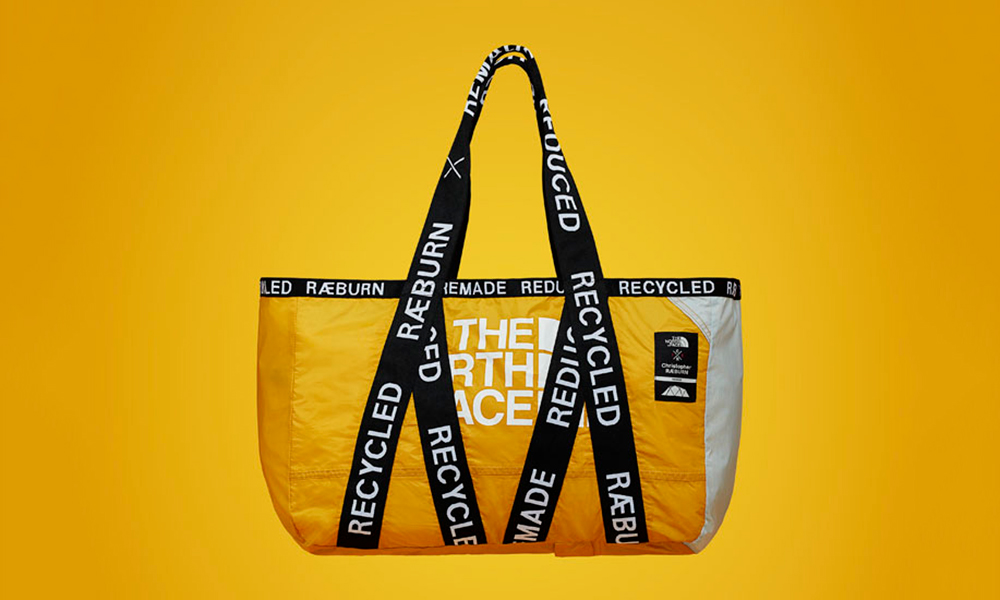
  • The North Face Showcases bags made from recycled tents

    The North Face Showcases bags made from recycled tents

    Outdoor gear firm The North Face is teaming up with British eco-designer Raeburn to make designer bags from recycled tents.

    The bags are currently available for purchase online as well as at The North Face’s Urban Exploration store on Carnaby Street in London.

    “The North Face has been inspiring a global movement of exploration and conservation for over fifty years,” said fashion designer Christopher Raeburn, “and we couldn’t be prouder to be collaborating on this special project, applying our said ‘Raemade’ ethos to transform surplus tents into unique bags.

    “At Raeburn we’re motivated to work with brands, other designers and individuals to drive positive change in our industry, and it’s been fantastic to work alongside the talented team at The North Face to bring this project to fruition.”

    Every product will have a distinct aesthetic based on the varied colours of source tent materials used in creating the bags.

    Raeburn has previously collaborated with Timberland and other international brands on products made from recycled materials. Likewise, The North Face has engaged in a number of closed-loop initiatives, including its “Renewed” program to sell refurbished returned products as well as its carbon “net-negative” product line.

  • Adidas Test to Sell Shoes Made of Ocean Plastic was So Successful

    Adidas Test to Sell Shoes Made of Ocean Plastic was So Successful

    Adidas has spent the last four years curbing ocean pollution by recycling plastic beach waste into shoes – and because their customers have been so eager for the product, the company is kicking it up a notch. Adidas produced more than five million pairs of recycled plastic waste shoes in 2018, and they plan to incorporate the waste into at least 11 million this year.

    The upcycled plastic waste is made into a yarn which has since become a key component of the upper material of Adidas footwear. In addition to shoes, the company has also used it to make the first ever football jerseys made from recycled materials.

    The sporting goods manufacturer first started making the shoes in collaboration with environmental group Parley for the Oceans back in 2015. They developed the slick kicks using plastic waste intercepted on beaches, such as the Maldives, before it can reach the oceans. The Parley shoes are recreated from editions of their UltraBoost shoe, and a new version of their Adidas Originals shoe.

    And, in 2016, Adidas stores stopped using plastic bags.

    “We also continue to improve our environmental performance during the manufacturing,” said Gil Steyaert, who is responsible for global operations. “This includes the use of sustainable materials, the reduction of CO2 emissions and waste prevention.

    “In 2018 alone, we saved more than 40 tons of plastic waste in our offices, retail stores, warehouses and distribution centers worldwide and replaced it with more sustainable solutions.”

    Additionally, Adidas is committed to using only recycled polyester in every product and application where a solution exists by 2024. As a founding member of the Better Cotton Initiative, Adidas meanwhile sources only sustainably produced cotton.

    Recently, Adidas signed the Climate Protection Charter for the Fashion Industry at the UN Climate Change Conference in Katowice, Poland—and agreed to reduce greenhouse gas emissions by 30% before 2030.

  • 8 Easy Startup Ideas For Asia

    8 Easy Startup Ideas For Asia

    We live in the times of so many possibilities. Therefore starting a new business to earn some extra money could be very easy and done very quickly wherever you are – it could even be Asia. People are really into new technologies there at the moment, especially mobile payments through various apps, so you could use the benefits of  this trend for your business idea.

    If you love the idea of making some money on your own, here you’ll find some original ideas you could use for your startup and maybe even start today.

    Specialist Of Education Progress Tracking

    Every parent wants their kid to do well at school and gain the best education possible. That’s why there are so many freelance tutors that help kids and students learn the subjects that they are failing at.

    An education progress tracking will help you reach the best result possible. This is done by tracking the progress of your child and comparing it to other students who are moving up to a similar goal. For example, the same degree in business management or biotechnology. Many criteria need to be evaluated and compared, like grades, honors, certificates, additional skills, and so much more.

    Develop An App For Coworking

    Coworking apps are in demand both for teams in creative and non-creative agencies and also for study groups. Therefore if you are not completely new to coding, you could build an entire network where people could work together on a digital platform. Surely there are already some apps that allow you to share, comment files, and work on projects together, but you can always research your competitors and make an even better product. Simply detect what’s lacking in these apps.

    Print On Demand Business

    Print on demand businesses are getting really popular lately. That is because it doesn’t require any investments and therefore is a perfect startup idea for young people like students. The best part is that you don’t need to be responsible for keeping items in stock, producing it or putting logos on it.

    One of the most popular forms of print on demand business is selling t-shirts. All you’ll need to do is come up with the design. If you want to learn more about how to sell t shirts online – there are POD platforms like Printify that are very easy to use and offer you articles that help improve your business.

    App For Acting

    This could be a similar idea to SnapChat or Instagram Stories, but with a completely different concept. Friends would be able to create short videos with specific timing, for example, 20 seconds. And other friends would have to continue the story. After finishing a story, you could watch it as a single movie clip. To access a group, you should have a special code, link or different kind of key to access. Some groups could be open to everyone thought.

    Job Interviews On Video

    Image credit: Seth Doyle

    Wasting time always means wasting money. Companies and their hiring specialist waste tons of time trying to find the best candidates for one or another job position. It’s hard to imagine, how many time has been wasted on candidates that weren’t a good fit for the company.

    And you could be the one to offer these companies a solution and create a platform with already prepared video interviews. They would be short and very specific – candidates would be asked a few questions and answer it on camera. This could be a really good filter for the hiring specialists.

    Local Social Media Network

    Social media is extremely popular nowadays. But what if you were to create a new platform that would be based only on location? You would be capable of connecting with people, see events and other information related only to the place you are currently in. This would filter out a lot of unnecessary information that we see on our Facebook every day.

    Create An App For Recycling

    Image credit: Paula Brustur

    A lot of people today care about nature and recycling, but really lack knowledge about ecology and how it works. It’s hard to determine what is truly toxic for us and our environment and sometimes we just don’t know how to properly utilize specific products.

    If you were to create a recycling app, it could help people understand recycling more, especially with all the pollution is Asia. For example, if someone would be thinking how to recycle one or another item the right way, they could type the product in your apps search and quickly find an answer.

    Sell Your Own Crafts

    If you have some skills for crafting, you should know that it’s a very trendy thing to do at the moment. Especially things like handmade jewelry and gifts. You could sell your crafts on Etsy, but you can also create your own e-store. All you need is to buy a domain, choose the design and add all needed forms for orders and contacting.

    To save some money, don’t pay the programmers for creating the forms for you, simply use CaptainForm wordpress form plugin that will offer you all the forms your website might need.


  • BMW, Northvolt, Umicore team up on battery recycling

    BMW, Northvolt, Umicore team up on battery recycling

    BMW will team up with Northvolt, which is building Europe’s largest battery factory in Sweden, and Belgium’s Umicore to develop a process for electric car batteries to be recycled, the automaker said in a statement. BMW had a funding investment of undisclosed size in the venture, the Swedish startup, which plans to build a factory in Sweden to produce 32 gigawatt hours (GWh) of battery capacity a year by 2023, said on Monday.

    The partnership could indicate that BMW will source batteries from Northvolt, giving investors confidence to fund the project that is expected to raise debt and equity next year.

    The project aims to create a “closed life cycle loop” for battery cells, which will be manufactured using a recyclable design and used in electric vehicles, then possibly as stationary storage devices before finally being recycled and reused.