Retail News CRM

Tag: recycling

  • H&M invests in ‘new unique’ recycling technology

    H&M invests in ‘new unique’ recycling technology

    H&M Group has also invested in new unique recycling technology, after partnering with Swedish company re:newcell whose unique technology recycles used cotton, viscose and other cellulosic fibers into a new, more sustainable dissolving pulp.

    The pulp can be turned into new textile fibers and be fed into the textile production cycle.

    H&M said the partnership is another step towards H&Ms goal to use 100 per cent recycled or other sustainably sourced material by 2030.

    “Re:newcell´s technology has the potential to become a commercial and scalable solution for the industry and accelerate the journey from a linear fashion industry towards a circular one”, said Cecilia Brännsten, acting environmental sustainability manager and circular economy lead, at H&M group.

    Earlier this month, the fast fashion giant reported a quarterly earnings drop after reduced footfall in stores and increased competition in the fashion sector.

    Net profit for the three months to end-August, the third quarter of the retailer’s financial year, came in at 3.84 billion kronor ($470 million), a drop of 20 percent. Sales grew 4.6 percent to 51.23 billion kronor.

    The fast fashion giant recently  confirmed it will open its first Wellington store at Queensgate Shopping Centre in Lower Hutt on October 26.

    Queensgate will be the site of H&M’s third store in New Zealand and span 2,700sqm over two levels.

  • Singtel, SingPost launch e-waste recycling program

    Singtel, SingPost launch e-waste recycling program

    Singtel has teamed up with SingPost to launch a nationwide e-waste recycling program in conjunction with World Environment Day.

    As part of the ReCYCLE initiative, Singtel will deploy e-waste recycling bins at selected Singtel shops and Singtel exclusive retailers for consumers to dispose of their obsolete mobile or internet-related devices. SingPost will also deploy the bins at post offices across Singapore.

    Singtel will also be providing special envelopes at all its eight shops and 58 Singtel exclusive retailers to allow residents to mail their recycleables.

    “E-waste is one of the fastest growing categories of waste as consumers dispose of electronic equipment even faster these days. According to the National Environment Agency, Singapore generates more than 60,000 tons of e-waste every year,” Singtel VP for group sustainability Andrew Buay said.

    “Most e-waste is still finding its way into landfills which pollutes the environment. With our partnership with SingPost, we’ve gone a step further to bring greater convenience to everyone by doubling our reach and touchpoints. We hope this will encourage more people to recycle and think twice before disposing their electronic devices down the rubbish chutes.”

  • Unilever to Test New Packaging-recycling Tech in Indonesia

    Unilever to Test New Packaging-recycling Tech in Indonesia

    Consumer goods giant Unilever on Wednesday said it has opened a new facility in Indonesia as part of a pilot project for introducing a new technology for recycling sachets used to hold shampoos and other products.

    Single-use sachets are widely sold in developing and emerging markets such as Indonesia. The Anglo-Dutch company said billions of such packages — including its own — are sold every year, but that recycling them has long been a problem due to technological hurdles.

    To address this, Unilever said it has developed a technology it calls the CreaSolv Process together with the Germany-based Fraunhofer Institute for Process Engineering and Packaging IVV.

    “With this innovative pilot plant we can, for the first time ever, recycle high-value polymers from dirty, post-consumer, multilayer sachets,” said Andreas Maurer, head of the plastic recycling department at Fraunhofer.

    The facility, in Sidoarjo, East Java, will “test the long-term commercial viability of the technology.” If successful, it will be applied in other developing markets, especially in Southeast Asia, said Sancoyo Antarikso, director for governance and corporate affairs at Unilever Indonesia.

    The company plans to work with local waste collectors, waste banks and retailers to help collect used sachets. “Using this approach, we’ll be able to reduce our environmental footprint, while creating economic value and potential additional incomes for the communities, the recycling industry and other stakeholders,” Antarikso told reporters.

    Unilever Indonesia hopes the Indonesian government will promote the concept of separating household waste to make collecting sachets easier. Currently, most Indonesian households do not separate their recyclable and nonrecyclable waste, as the country’s outdated waste management system is not yet capable of accommodating the practice.

    Indonesia produces an estimated 0.5 million to 1.3 million metric tons of plastic marine debris every year, making it the second-largest producer of plastic waste polluting the world’s oceans after China, according to a study published at the Science journal in 2015.

    The new recycling facility will initially be able to process 3 tons of plastic sachets every day. Antarikso said once the operations prove viable from the business side, Unilever will let a “business partner” take over to handle commercial-scale production. He added that Unilever will use the end products as materials for packaging, which is expected to reduce costs.

    David Blanchard, chief R&D officer at the parent company, said: “We intend to make this tech open-source and would hope to scale the technology with industry partners, so others — including our competitors — can use it.” Unilever said it wants all of its plastic packaging to be “fully reusable, recyclable or compostable” by 2025.
  • How does electronic waste get recycled?

    How does electronic waste get recycled?

    The life cycle of electronics and electrical equipment (EEE) does not end when they stop working.If recycled properly, the precious metals found in electronic waste can go towards new EEE products.Discarded consumer electronics such as mobile phones, for instance, contain small amounts of precious and rare earth metals such as gold and silver.Scrapped cars and home appliances such as fridges and air conditioners also contain these rare metals, along with base metals of iron and zinc.In Singapore, there are several e-waste recycling initiatives for consumers.

    StarHub, for instance, partners recycling company Tes-Amm and logistics company DHL Delivery to place 328 specialised recycling bins in 277 locations under its Renew programme.Singtel has recycling bins placed at three of its shops for consumers to discard their used gadgets.Under the Project Homecoming initiative led by Canon and Epson, those with ink and toner cartridges can also drop them off at selected National Library Board locations.SORTED

    Once collected, the e-waste is sorted, labelled and dismantled according to their types – wires, LCD screens, hard disks and more.Measures, such as demagnetising hard disks, are taken to ensure data security.The e-waste is then exported to countries equipped to separate the metals through chemical processes.Once extracted, the metals are used in the manufacture of new products.

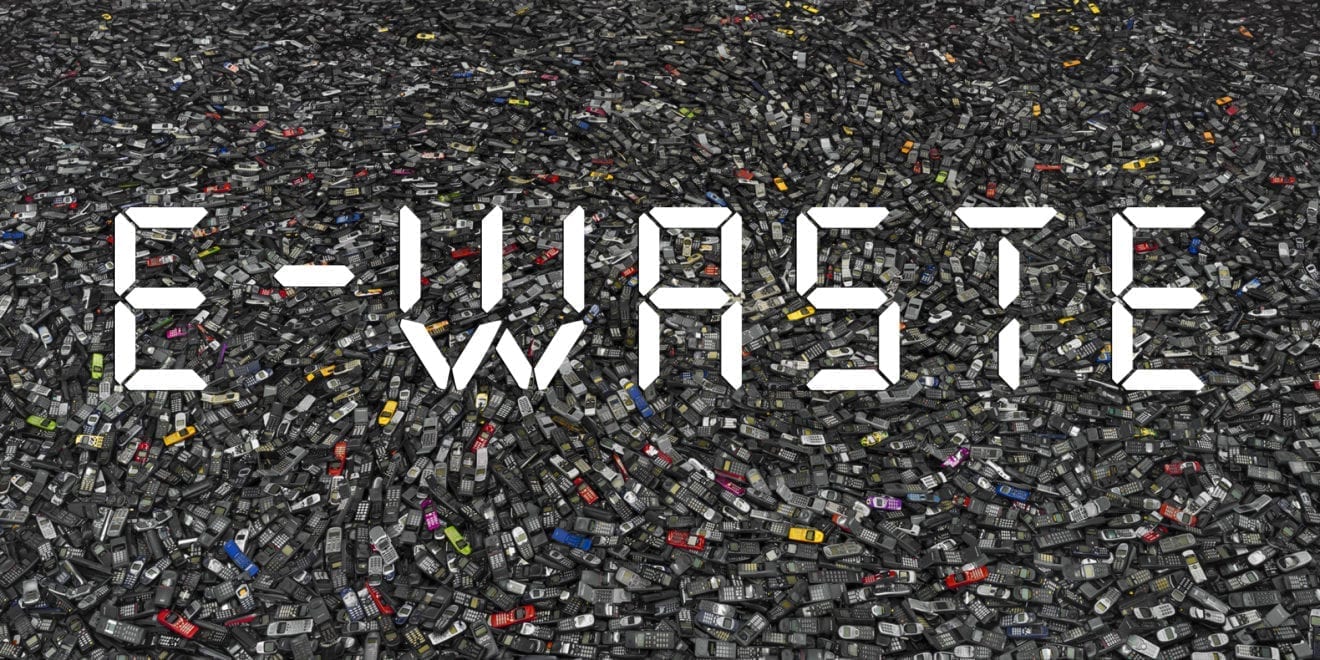
    Why recycle e-waste?

    When electronic waste is not disposed of properly, both the environment and public health suffer.This is because e-waste is very heterogeneous, National University of Singapore’s Associate Professor Tong Yen Wah explained.Apart from being made up of many types of components and materials, discarded electronics are also assembled in many ways, from simple devices like batteries to complex ones like smartphones.
    “All of these make e-waste very difficult to handle and recycle, and if their disposal is not done properly, these materials can get out and be circulated in the environment,” said the co-director of NUS’ Energy and Environmental Sustainability Solutions for Megacities programme.For instance, toxins from e-waste in landfills can seep into the groundwater that flows into rivers, causing water pollution.