Tag: Reebok

  • Facer Revolutionizes Smartwatch World: New Partnerships Expand Customization Options to Reebok and Affordable Brands

    Facer Revolutionizes Smartwatch World: New Partnerships Expand Customization Options to Reebok and Affordable Brands

    Facer, the leading platform for smartwatch customization, has made significant announcements at CES 2026. The company unveiled three major partnerships aimed at extending smart functionality to watch faces and broadening its colossal library to millions of cost-effective devices.

    Facer’s Expansion

    Facer is a well-known platform for those who enjoy personalizing their smartwatches. It’s a popular choice for Apple Watch and Wear OS users. At the 2026 CES, Facer shared plans for a massive expansion. Specifically, the company revealed a collaboration with LVGL, a graphics library employed by numerous embedded devices.

    What does this mean for consumers? Facer’s extensive library of over 500,000 watch faces will soon become available to RTOS (Real-Time Operating System) watches. These watches, known for their battery efficiency and cost-effectiveness, come from brands like Xiaomi and IDO. These brands traditionally offer limited customization options.

    Furthermore, Facer is set to become available on the new Reebok watch. Vitalist, the creator of the wearable, has engaged Facer for its VitalOS platform. This means that the new Reebok watch will directly support Facer’s comprehensive customization options.

    Transforming Watch Face Functionality

    Facer isn’t just broadening its availability; it’s redefining what a watch face can do. The company is teaming up with Citizen to incorporate “Riiiver” technology. This innovative technology enables watch faces to trigger actions, such as controlling smart home appliances, or showcasing live data from external services like the stock market. This development moves watch faces far beyond simple aesthetics.

    This represents a notable shift in the smartwatch field. Previously, when purchasing a budget-friendly RTOS watch, consumers were limited to a few pre-installed faces. Facer’s partnerships with LVGL and Vitalist mark a significant step towards democratizing customization. Now, there’s no need for an expensive Apple or Galaxy Watch to express individual style.

    Moreover, for those desiring more functionality from their watches, the Citizen Riiiver integration offers a solution to a longstanding issue. Generally, watch faces have been limited to displaying time and step counts. By transforming them into interactive hubs that communicate with other devices, they become genuinely useful, not just aesthetically pleasing.

    Personal Experiences

    RTOS watches have always evoked mixed feelings. While their battery life is commendable, their software often feels rigid and impersonal. Facer’s introduction to these devices is exactly what the platform needed to feel premium.

    Personally, the integration of Riiiver technology is the most exciting prospect. The possibility of having a custom button on a watch face that performs a specific action—like switching on living room lights—without having to navigate an app menu, is a revolutionary development. It marks a significant maturation in the capabilities of watch faces.

    Questions & Answers

    What does Facer’s partnership with LVGL imply for consumers?
    Facer’s collaboration with LVGL means that its extensive catalog of over 500,000 watch faces will become available to RTOS (Real-Time Operating System) watches. These are typically cost-effective, battery-efficient watches from brands like Xiaomi and IDO.

    How will the integration of “Riiiver” technology change watch faces?
    In partnership with Citizen, Facer is integrating “Riiiver” technology into watch faces. This will enable watch faces to trigger actions like controlling smart home devices, or display live data from external services like the stock market.

    What is the significance of Facer’s expansion in the smartwatch landscape?
    Facer’s expansion is democratizing customization in the smartwatch industry. The partnerships with LVGL and Vitalist mean that consumers no longer need to purchase expensive watches to access a wide array of customization options. Additionally, the integration of “Riiiver” technology transforms watch faces into interactive hubs, making them more functional rather than just aesthetically pleasing.
  • Reebok Unveils Playstation Inspired Footwear Collection To Mark Console’s 30th Anniversary

    Reebok Unveils Playstation Inspired Footwear Collection To Mark Console’s 30th Anniversary

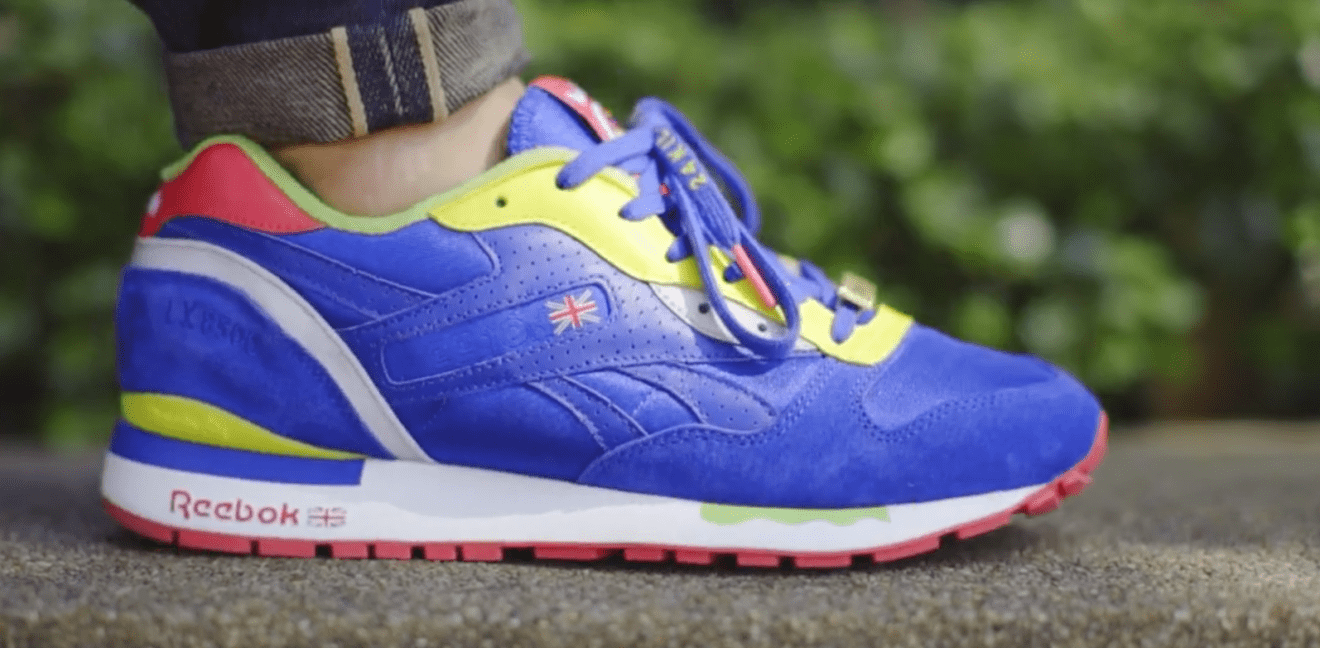
    In commemoration of PlayStation’s 30th anniversary, Reebok has crafted an exclusive footwear collection in collaboration with Sony Interactive Entertainment. The Reebok x PlayStation collection, which boasts three distinctive sneakers, is a tribute to the gaming console’s founding regions: Japan, the United States, and the United Kingdom.

    Elements of Gaming Captured in Footwear Design

    The footwear line is steeped in nostalgic design elements that evoke the first PlayStation console. The nostalgic grey palette, vintage logos, and button-style accents capture the spirit of the console’s launch era. Each sneaker model is linked to a specific founding region, with unique designs and features that pay homage to these locations.

    The InstaPump Fury 94, priced at US$251, is associated with Japan. It incorporates memory card tongue labels, a “Press Play” pump ball, and discreet text that indicates Japan’s PlayStation launch date of December 3, 1994.

    The US model, Pump Omni Zone II, retailing for US$220, features a PlayStation-colored pump ball, alternative laces with metal tips, graphics inspired by memory cards, and a hidden note of the console’s US launch date, September 9, 1995.

    Lastly, the UK-version Workout Plus, priced at US$176, flaunts PlayStation’s circle, triangle, and square button motifs, as well as subtle text marking the UK launch date of September 29, 1995.

    A “Time Machine” Collection

    Mubi Ali, the global senior product marketing manager at Reebok, described the collection as a “time machine.” Ali elaborated on the nostalgia-driven inspiration behind the collection, stating, “It’s for the after-school music TV kids: Grunge in their headphones, wheels at their feet, and a dial-up world that feels wide open. We’ve brought those memories to life in every stitch, lace, and pump.”

    The collection, launching this month, will be available in limited quantities through select retailers in each of the represented markets.

    Questions & Answers

    What is the inspiration behind the Reebok x PlayStation collection?
    The collection is designed to celebrate PlayStation’s 30th anniversary and is inspired by the console’s launch-era aesthetic and its three founding regions: Japan, the US, and the UK.

    What are some of the unique features of the sneakers in this collection?
    Each sneaker model incorporates design elements such as a grey palette, vintage logos, button-style accents, and region-specific features. These include PlayStation-colored pump balls, memory card tongue labels, and hidden launch dates.

    When and where will the Reebok x PlayStation collection be available?
    The collection will launch this month and will be available in limited quantities through select retailers in Japan, the United States, and the United Kingdom.

  • Reebok adaptive range designed for people with restricted mobility

    Reebok adaptive range designed for people with restricted mobility

    Adidas-owned Reebok has launched a range of adaptive trainers for people with restricted mobility. Called Fit to Fit, the sneakers can be easily put on and removed.

    The shoes were created in partnership with Zappos’ adaptive department, the two companies aiming to create shoes that are inclusive in performance and lifestyle. They interviewed people with mobility issues as part of the product development process.

    “We created the Reebok Fit to Fit adaptive footwear collection to champion Reebok’s mission of inspiring human movement for all,” Reebok product manager Dan Buonomo said in an interview with Dezeen.

    “The collection’s goal is to provide functional products for everyone, while still holding true to Reebok’s iconic design heritage.”

    Key to the range is the absence of buttons and buckles which can be a challenge for people with restricted mobility. A zip on the side ensures the shoe fits, but the laces remain so the shoes retain the style and look of those made for typical consumers. Once tied to fit, they don’t need to be retied each wearing.

    Removable insoles accommodate prosthetics and a low-cut design aids mobility. A sports shoe based on Reebok’s Nanoflext TR features a pull tab in the heel making it easier for people using wheelchairs to remove the shoes from behind.

    Another shoe, the Club MEMT Parafit, based on the tennis shoe of the same name, has a removable insole and comes in wider sizes to accommodate prosthetics.

    Initially available in pairs, Reebok and Zappos plan to sell single shoes for people who have only one foot.

  • Central Retail becomes Reebok’s sole Thai distributor

    Central Retail becomes Reebok’s sole Thai distributor

    Sports brand Reebok has appointed CRC Sports, a subsidiary of Central Retail, as its sole distributor in Thailand.

    According to CRC Sports, it will take responsibility for e-commerce operations and the wholesale distribution of Reebok, pushing growth opportunities and aims to make Reebok one of the top five sports brands in Thailand.

    CRC Sports plans to expand Reebok’s network to more than 100 locations this year and enhance Reebok’s online presence through websites and e-commerce marketplaces like Lazada, Shopee and Central.

    “The heritage and potential of Reebok and its product portfolio support our efforts to offer even more of the best sporting trends to the new generation,” said Tony Morton, president of CRC Sports Company.

    “To have a world-renowned sports brand like Reebok in our portfolio helps to solidify our position as the go-to destination for sports apparel, shoes and sports equipment.”

    Other channels such as Click & Collect, Personal Shoppers, Call & Shop, Line Chat & Shop, and Facebook Live events are used to offer retail experiences for Reebok’s customers in Thailand.

  • Adidas sells Reebok to Authentic Brands

    Adidas sells Reebok to Authentic Brands

    Authentic Brands has cemented its position as a major player in American retail after what one analyst described as a “massive acquisition” – the successful $2.456 billion bid for Reebok.

    Adidas confirmed the sale overnight after six months of negotiations with prospective bidders.

    Neil Saunders, MD of GlobalData, said Authentic Brands has proven its ability to turn around struggling brands like Aéropostale and so it will be confident that it can achieve a similar result with Reebok.

    But he warned the new owner needs to take a different approach to ensure Reebok’s future success.

    “If, under Authentic Brands, Reebok focuses less on competing with Nike and more on developing a credible brand that can be offered via its various stores and other third-party retailers it should be able to build sales. However, the market remains extremely competitive so coming up with a differentiated offer that has clear customer focus and a strong distribution strategy will be key to future success.”

    Reports emerged in May that Authentic had lodged a bid for Reebok. At the time the New York Post said the $1 billion fell far short of the $3.8 billion Adidas paid for Reebok five years ago and the $2.4 billion Adidas was thought to be seeking.

    Adidas CEO Kasper Rorsted said he believed the change in ownership would position the brand well for long-term success.

    “As for Adidas, we will continue to focus our efforts on executing our ‘Own the Game’ strategy that will enable us to grow in an attractive industry, gain market share, and create sustainable value for all of our stakeholders,” he said.

    Adidas acquired Reebok back in 2006. Saunders said the German company originally saw it as a vehicle with which to take on the might of Nike, especially in the US.

    “While Adidas did manage to restore Reebok to profitability it was far less successful in building a brand that was able to steal share and capture the hearts and minds of consumers. Part of the issue was a lack of clarity around what Adidas wanted Reebok to be. As a result, it was neither seen as the go-to brand for sporting professionals nor for those looking for athleisure fashion and style,” said Saunders.

    Adidas’ sale of Reebok for less than it paid for it – and after years of difficulty and disappointment – underlines the degree to which the brand’s equity has been eroded, he said.

    “The decision to sell should not solely be chalked up to the pandemic. Indeed, the footwear and sports apparel market has performed extremely well over the past 18 or so months.

    “However, the market is becoming much more competitive, with Nike and others doubling down on direct-to-consumer sales, brands like Lululemon eating up large slices of growth, and retailers launching a multitude of sporting own labels,” said Saunders.

    Jamie Salter, founder, chairman and CEO of Authentic Brands Group described it as “an honour” to be carrying Reebok’s legacy forward.

    “This is an important milestone for ABG, and we are committed to preserving Reebok’s integrity, innovation, and values – including its presence in bricks and mortar. We look forward to working closely with the Reebok team to build on the brand’s success.”

    The closing of the transaction is subject to customary closing conditions and is expected to occur in the first quarter of next year. Adidas intends to share the majority of the cash proceeds from the sale with its shareholders.

    When Adidas bought Reebok in 2006, the brand came along with the Rockport, CCM Hockey and Greg Norman brands, which were subsequently divested for €400 million (US$470 million at today’s exchange rate).

    In 2016 Reebok initiated a turnaround plan called ‘Muscle Up’ which saw the label significantly improve its growth and profitability prospects, according to Adidas.

    In March of this year, Adidas unveiled its 2025 ‘Own the Game’ strategy designed to significantly increase sales and profitability and build market share. As part of the process of developing that strategy, the company assessed options for Reebok, which in February led the company to opt to divest Reebok, rather than dilute its focus across two brands.

  • Adidas expects strong rebound, takes Reebok hit

    Adidas expects strong rebound, takes Reebok hit

    German sportswear maker Adidas AG predicted a strong rebound in sales in 2021, particularly in China, the rest of Asia, and Latin America, although its profits will be trimmed by costs associated with divesting the Reebok brand.

    The outlook for 2021 is part of a five-year strategy that Adidas is due to present on Wednesday.

    Fourth-quarter sales rose a currency-neutral 1 percent to €5.55 billion ($6.59 billion), while operating profit slipped slightly to €225 million, ahead of the €5.47 billion and €202 million expected by analysts.

    About half of its stores were closed in Europe in the period, but online sales grew 43 percent.

    Now that more than 95 percent of its stores have reopened after lockdowns, Adidas expects sales growth at a mid-to high-teens rate on a currency-neutral basis in 2021, rising by up to 30 percent in greater China, the rest of Asia, and Latin America.

    Rival Puma said last month it expects the financial impact from lockdowns to last well into the second quarter but believes global growth in running should help to support a strong improvement after that.

    As part of its new strategy, Adidas will manage greater China as a separate market from the rest of Asia, and has integrated Europe, Russia and emerging markets into a new Europe, Middle East and Africa (EMEA) region.

    For EMEA, Adidas expects sales growth in the mid-to high-teens, but only a high-single-digit rate in North America.

    Net income from continuing operating is set to rise to between €1.25 billion and €1.45 billion.

    However, Adidas said it expects a hit of around €250 million to the operating profit level and €200 million to net income due to costs to set up Reebok as a stand-alone company, with a third of that in 2022, but none in 2023.

    Adidas said last month it plans to sell or spin-off the underperforming brand, 15 years after it bought the U.S. fitness label to help compete with arch-rival Nike Inc .

  • Adidas exploring strategic options for Reebok – including sale

    Adidas exploring strategic options for Reebok – including sale

    German sportswear maker Adidas AG said on Monday it is considering strategic options, including a potential sale, for Reebok, 15 years after it bought the U.S.-focused brand to take on archrival Nike Inc on its home turf.

    The decision will be announced on March 10, when the company officially presents its new strategy, Adidas said.

    The company bought Boston-based Reebok for $3.8 billion in 2005, but a lack of progress in turning it around led to repeated calls from investors to dispose of the brand.

    It might be an attractive target for a private equity firm or another smaller sports retailer that will use it, like Adidas did, to break into the U.S. marketplace, said Michael Faherty, a portfolio manager at Adidas and Nike investor Seilern Investment Management.

    Adidas said the strategic alternatives it is considering include both a potential sale of Reebok as well as the brand remaining a part of the company.

    “There is still a material chance that nothing will come out of it,” Colin Wong, a portfolio manager at Nike shareholder Mawer Investment Management, said.

    Wong said some potential options for Adidas include spinning Reebok off as a stand-alone public company, or selling the brand to private equity, another major sports retailer or a multi-brand player like VF Corp.

    Reebok’s net sales fell 7% in the third quarter of 2020 to 403 million euros ($489.40 million), after falling as much as 44% in the preceding quarter. In 2019, Adidas wrote down Reebok’s book value by nearly half, compared with 2018, to 842 million euros.

    Recent collaborations with celebrities like Cardi B and a refreshed focus on women’s apparel have put the brand in a better place, said Jessica Ramirez, retail analyst at Jane Hali & Associates.

    “Reebok won’t be much of a burden for whoever takes it on if there is a sale,” Ramirez added.

    Adidas said earlier in November that it was expecting a drop in overall sales for the last three months of the year as the reimposition of lockdowns in Europe would likely offset a return to growth in China and strong demand for running gear and products designed by singer Beyonce.

  • Adidas in talks to lay off Reebok

    Adidas in talks to lay off Reebok

    For some sneakerheads who may be unaware, Reebok is owned by Adidas. Back in 2005, the brand was bought by the Three Stripes for a large sum of $3.8 billion and they have been sharing warehouses and website assets, ever since. Now, however, this business relationship could very well be coming to an end, based on a brand new report from Manager Magazin.

    This publication is based out of Germany and typically has the inside track when it comes to what’s happening over at Adidas Headquarters. Based on the report, it noted that the brand is putting together a team that will try to have Adidas sell-off Reebok by early 2021. This news comes in the midst of a disappointing Q2 sales report that showed Reebok’s revenues dip by 42 percent as a result of COVID-19.

    As for potential buyers, Manager Magazin claims Anta Sports in China or the VF Corporation are suitors. The VF Corporation is certainly an interesting candidate as it boasts properties such as Timberland, Vans, and The North Face.

    So far, Adidas nor Reebok has commented on this story. Keep it locked to HNHH as we will be sure to keep you updated on this story. Also, stay tuned as plenty of other sneaker content is coming down the pipeline.

  • Reebok to launch Aztrek pop-up in Singapore

    Reebok to launch Aztrek pop-up in Singapore

    Reebok will launch a Aztrek pop-up store at Suntec City next month.

    Set to open from May 1 to 7, the pop up brings the retro Aztrek line back with ‘90s-inspired colours and designs, along with cult-classic arcade games and Instagram-worthy corners.

    Visitors will get free token to play arcade games such as Tetris, Mario Kart, Mortal Kombat, Space Invaders, Pacman and Street Fighters, with every purchase.

    Other Reebok Classic favorites such as the Instapump Fury, Club C, Classic Nylon, Pyro and Classic Leather Alter The Icons will also be available at the pop up.

    There will be a photo contest for participants to share their pictures on their Instagram stories with the hashtags #Aztrek, #ReebokClassic and #ReebokSG and tag Reebok’s Instagram handle @Reebok_Sg.

    Originally launched as an all-terrain shoe in 1993, the Aztrek is designed for wearing on mountains.

    This year, the Aztrek returns with three silhouettes including a collaboration with supermodel, Gigi Hadid, called Aztrek Double x Gigi Hadid.

  • Puma pips rivals, becomes top sportswear brand in India

    Puma pips rivals, becomes top sportswear brand in India

    German sportswear major Puma on Monday claimed that it has become the top sportswear retailer in India, surpassing rivals such as Nike, Adidas, Skechers and Reebok in terms of yearly sales. Puma, the third-largest sportswear manufacturer in the world, has reported sales of Rs 1,157 crore for the 12-month period ending December 2018 against Rs 958 crore reported in the year ago period.

    The company follows the January-December calendar year, while its Nike, Adidas, Skechers and Reebok go by the April-March financial year (FY) cycle.

    In FY 2017-18, Puma’s compatriot Adidas had registered sales of Rs 1,132 crore, up from Rs 1,100 crore reported in FY 2016-17.

    During the same period, American sportswear giant Nike reported sales of Rs 828 crore against Rs 807 crore reported in the previous fiscal.

    Reebok, which is owned by Adidas, saw its sales drop from Rs 416 crore in FY 2016-17 to Rs 391 crore in FY 2017-18.

    Another American brand Skechers, which is relatively new in the Indian market, reported sales of Rs 440 crore in FY 2018-19, up from Rs 282 crore reported in FY2016-17.

    “We are making strong progress in both sports performance and sport style categories,” Puma India Managing Director Abhishek Ganguly was quoted as saying.

    Interestingly, India is the only country where Puma’s sales have crossed the sales of other sportswear giants such as Adidas and Nike.

    Over the past few years, India has rapidly caught up with the wider global fitness trends. From 2015 to 2016, the Indian sportswear market grew 22 per cent, outpacing the segment’s global increase of 7 per cent, according to Euromonitor International. By 2020, it is expected to grow an additional 12 per cent CAGR (compound annual growth rate) with sales expected to reach $8 billion.

    The bitter rivalry between Puma and Adidas goes beyond mere corporate competition. It was in fact a sibling fallout that created two of the world’s biggest sportswear brands.

    In the 1920s, German brothers Adolf and Rudolf Dassler launched a shoe company together. Their business picked up after Dassler shoes were used by medal-winning Olympians through out the 1930s.

    But along with sales, tension also spiked between the Dassler brothers, which reached a boiling point during World War II. While it was not clear what exactly caused the rift, it was said to be a result of miscommunication.

    The brothers eventually split in 1947 with Rudolf forming a new firm that he called Ruda – from Rudolf Dassler – later rebranded Puma, while Adolf, who preferred to be called Adi, named his business Adidas.

  • US sports apparel firm mulls ditching China for Vietnam

    US sports apparel firm mulls ditching China for Vietnam

    U.S. sports apparel company Brooks Running is considering shifting its manufacturing operations from China to Vietnam to avoid trade war tariffs. The firm’s CEO Jim Weber said Monday that the impact of President Donald Trump’s trade war with China is going to put a 45-percent tariff on his company’s running shoes.

    “We’re preparing for a 25 percent tariff on our business and that’s on top of 20 percent already on running shoes. It’s really going to be upsetting for us,” Weber said.

    Vietnam will be a “possible” new supply chain for Brooks, Weber said, adding that the transition will likely cost “millions” of dollars.

    Weber said he was confident that the move will allow his company to be more competitive in the U.S. and in the world as the tariffs are lower in Vietnam.

    He added that the transition, if it happened, would likely to be permanent.

    The U.S.-China trade war escalated last month as the U.S. levied new tariffs of 10 percent on about $200 billion worth of Chinese products, with the tariffs to go up to 25 percent by the end of this year.

    China retaliated immediately with 5 and 10 percent tariffs on $60 billion worth of U.S. products.

    The announcement by Brooks, which sells sports footwear, apparel, bras and accessories in 50 countries worldwide, came after Adidas CEO Kasper Rorsted said in May that his company is shifting footwear sourcing from China to Vietnam.

    Vietnam has in fact overtaken China as Adidas’ top supplier, with Vietnamese factories producing 44 percent of its shoes by volume last year against 19 percent by Chinese manufacturers, according to the company’s data.

    This is also true of Adidas’rival Nike, which had 46 percent of its footwear made in Vietnam last year, against 27 percent in China.

    Vietnam’s footwear exporters seem to be benefiting from the ongoing trade war.

    In the first nine months this year, Vietnam’s footwear exports were worth $11.74 billion, a 10.2 percent year-on-year increase.

    Vietnam is the second biggest exporter of footwear to the U.S. behind China, shipping 404 million pairs of shoes last year.

    Last year, Vietnam’s footwear exports were worth $14.65 billion.

  • Vietnam footwear exports benefit from US-China trade spat

    Vietnam footwear exports benefit from US-China trade spat

    Vietnamese footwear exporters seem to be benefiting from the ongoing trade war between the U.S. and China. According to customs statistics, Vietnam’s footwear exports in the first nine months of this year were worth $11.74 billion, a 10.2 percent year-on-year increase. Its exports to China in the period have risen by 28.5 percent, to Japan by 14.7 percent, and to the U.S. by 13.5 percent.

    Vietnam is the second biggest exporter of footwear to the U.S. behind China, shipping 404 million pairs of shoes last year.

    The upward trend is likely to continue, too, as rising wages in China increase the cost of goods produced there and the country is thus directing more of its manufacturing resources toward higher-priced goods like electronics, according to the global footwear news outlet Footwearnews.

    Foreign companies are moving to other countries like Vietnam to cut cost.

    Adidas CEO Kasper Rorsted said last May that his company is shifting sourcing of footwear from China to Vietnam.

    Vietnam has in fact overtaken China as its top supplier, with Vietnamese factories producing 44 percent of its shoes by volume last year and Chinese manufacturers supplying 19 percent, according to Adidas.

    This would help shield the company from potential tariffs or supply chain disruptions if President Donald Trump’s trade war with China continues to escalate, a fact its competitors also seem to be taking notice of.

    Vietnam may see export orders surging as footwear importers shun China to avoid high U.S. tariffs and choose the Southeast Asian nation instead, local media quoted Diep Thanh Kiet, vice chairman of the Vietnam Leather, Footwear and Handbag Association (Lefaso), as saying.

    “Vietnam’s leather and footwear export can reach $19.5 billion or slightly higher this year depending on the situation,” he said. Vietnam’s footwear exports were worth $14.65 billion last year.

  • Reebok names new global creative director

    Reebok names new global creative director

    U.S. sporstwear brand Reebok has recruited Nike alumni Karen Reuther to be its global creative director.

    The Adidas-owned Reebok has tapped Reuther to replace Thomas Steinbruck, who exited the company earlier this year.

    With 12 years brand creative experience at Nike, Reuther was appointed global creative director at the rival U.S. sports company during her multi-year tenure. She has also served as VP creative at VF Corporation and director of consumer insights and trends at Ziba Design.

    Most recently, the executive served as creative director and brand psychologist at Cast Collective, a Boston-based group of consultants specialising in design, innovation and technology.

    Clients included Puma, Vans, Timberland, Pantone, Piaggio Fast Forward, TJX Cos. Inc., Everybody Fights and Ideo.

    “Karen brings a wealth of experience, both in our industry and from the outside,” commented Reebok President Matt O’Toole.

    “Her expertise, clear vision and leadership skills will guide our design excellence, inspire creative rigor and craft and deliver a unified global design strategy for Reebok.”

    Reuther will lead all aspects of design and brand identity across all of Reebok’s brands and channels, working in conjunction with the company’s product and marketing teams.

    “I am incredibly excited to join Reebok,” said Reuther in a release. “

    “This is a brand with a heritage that is unmatched, with some of the most iconic footwear silhouettes in the industry. But beyond this great heritage is an authentic fitness brand, with a unique and powerful purpose. I am particularly excited to help Reebok merge the past and the present–bringing fitness and fashion together to create the very best products on the market.”

    In its latest earnings release in early May, Adidas said sales at loss-making fitness brand Reebok fell 3% due to declines in the training and running categories.

    Overall, Adidas said group sales rose 26% in greater China for the same period.

  • Footwear giants shift outsourcing from China to Vietnam

    Footwear giants shift outsourcing from China to Vietnam

    Major brands in the footwear industry are shifting their outsourced work to Vietnam instead of China, but experts doubt this will be a good thing in the long run.

    Sneaker giant Adidas last year had 44 percent of its footwear produced in Vietnam, more than double the 19 percent made by suppliers in China. This figure also marked a 31 percent increase from 2012 for Vietnam and a 30 plus percent decrease for China.

    A similar move can also be seen at Adidas’ rival Nike, which had 46 percent of its footwear made in Vietnam last year, against just 27 percent in China.

    While China remains the top supplier in the fashion industry, Vietnam is now seen by major brands as a solid and critically important supplier in second place, according to survey results released by the United States Fashion Industry Association.

    “We are reporting a change in the sourcing trend, from ‘China Plus Many’ to ‘China Plus Vietnam Plus Many,’” the association said.

    The typical sourcing portfolio today is 30-50 percent from China, 11‑30 percent from Vietnam, and the rest from other countries, it added.

    According to experts in the industry, China manufacturing has become more focused on high value, and with workers’ wages rising, low-cost manufacturing is no longer its priority.

    This explains why Vietnam, Indonesia and Bangladesh are producing more shoes and apparel for export.

    However, while this trend can yield short-term benefits to Vietnam, long-term consequences will be severe, Professor Nguyen Van Nam, former director of the Institute of Trade Research under the Ministry of Industry and Trade said.

    Since advanced technology is not widely applied in Vietnam, the manufacturing sector exploits labor and pollutes the environment, he said.

    “Vietnam needs to push for the newest technologies in manufacturing, otherwise we will be a ‘landfill’ of other countries,” he added.

    Nguyen Duc Thuan, president of the Vietnam Leather Footwear and Handbag Association (LEFASO), highlighted another challenging aspect of the shift at a conference earlier this year.

    As workers in other countries are assisted by machines in the production process, each of them can make 1.2 pair of shoes in an hour, while their Vietnam peers can only manage 0.7, he said.

    “Labor productivity obviously increases when technology and high management skills are used, and this is a challenge that Vietnam needs to meet,” Thuan said.

    Vietnam’s footwear export value has been growing in recent years, from $8.4 billion in 2014 to $14.65 billion in 2017, a 42 percent increase. The country contributed a billion pairs of shoes to the 27 billion pairs produced globally last year.

  • Tmall and Intersport launch interactive megastore in Beijing

    Tmall and Intersport launch interactive megastore in Beijing

    Tmall and Intersport unveiled a co-branded store in Beijing yesterday, complete with interactive features that offer consumers in China a more engaging and informative shopping experience.

    Under the new name “Tmall x Intersport,” the two-story, 1300sqm space that sits in Beijing’s tourist hotspot Qianmen has been transformed into a futuristic megastore. The revamp underscores that more global brands are recognising the power of New Retail—tech-driven retail model pioneered by Alibaba that captures the best of online and offline shopping experiences.

    “We believe Tmall is the ideal partner in our endeavour to further our engagement with Chinese consumers by providing them the best-quality and most-fashionable sports goods in the market,” said Victor Duran, CEO of the Switzerland-based sportsgoods retailer Intersport.

    Established in 1968, Intersport has more than 5000 branches in 44 countries. It sells sports brands such as Nike, Puma, Reebok, Adidas, North Face and Dynatour. Intersport made its foray into China in 2013 and opened its Tmall flagship store in September 2016.

    “These new in-store technologies provide consumers in China an unprecedented shopping experience that is both entertaining and educational so they can have fun while shopping for the exact products that meet their unique demand,” the CEO said.

    Currently, Intersport has 24 stores in China with the goal of expanding to at least 100 – a combination of larger flagship stores in major cities and smaller specialty stores – during the next couple of years. “It makes sense to have Tmall technologies to be the link to connect all the stores together,” Duran said.

    New Retail is the new solution

    Many industry watchers have pointed to New Retail as the solution for brick-and-mortar retailers feeling the squeeze from e-commerce. By harnessing engaging technologies, store owners can attract more customers through both online and offline channels. Moreover, these technologies can generate insights to help businesses gain a more-precise view of China’s market trends and customer preferences.

    “We are excited to see an extensive range of Tmall’s New Retail technologies and features under one roof in Intersport’s store,” said Jessica Liu, president of Tmall Fashion and Luxury. “What’s even more encouraging is to see our merchants embracing the New Retail concept and exploring its potential. When customers try out these features firsthand, we are confident that they will see the convergence of online and offline shopping as the future of retail.”

    The Tmall and Intersport store is the latest example of how Alibaba’s New Retail technology is helping brands build up and reimagine their business in China since the push began in late 2015. To date, Tmall Fashion has collaborated with over 400 brands, including top names such as Burberry and Zara, and upgraded more than 50,000 storefronts all over China. Liu said the goal is to increase the collaboration to 1000 brands and help digitise 200,000 storefronts nationwide in the next year.

    Educate your customers

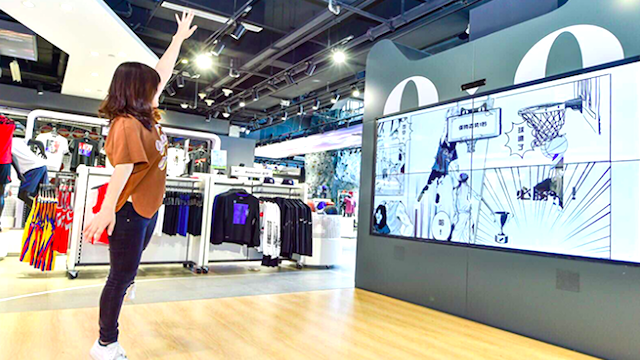
    At the grand reopening yesterday, customers were welcomed by an array of state-of-the-art technologies and augmented reality-powered interactive games. For example, the Smart Shelf and the Smart Shoe Mirror can instantly tell customers all the information they need about a certain shoe they pull from the shelf. This way, the customer can make a more-informed decision on whether or not the products fit their individual demands.

    Education on how a product suits an individual’s needs is an especially crucial element in the sportswear and gear market in China, said Tom Birtwhistle, director of China digital strategy at PricewaterhouseCoopers.

    With a government-led mandate to become more physically fit, and as China gears up to host the 2020 Summer Olympic and the 2022 Asia Games, Chinese customers are becoming more interested in adopting an active lifestyle, he added.

    “Chinese consumers are massively curious in learning about new brands and products. For new sports they want to be educated on the activity and understand how technical features can enhance their performance,” said Birtwhistle.

    His research indicates growth in the athletic fashion category is outpacing China’s overall fashion market. The segment is forecast to see 9 per cent growth annually in sales between 2017 to 2020, versus just 4 per cent for men’s and women’s fashion.

    At the smart megastore, shoppers can also get wardrobe tips from an AI Shopping Assistant – an interactive mirror that recommends related accessories or items that complement the article of clothing they are trying on.

    Can’t find what you want in the store? No problem. The megastore is equipped with Cloud Shelf technology, a virtual shelf that quadruples the volume and production selection customers can choose by simply tapping on the touchscreens, according to Tmall.

    A 24-hour interactive window display at the store’s main entrance means people can shop at the megastore around the clock. By using motion-sensor technology, the giant screen wall can distinguish the gender and approximate age of the passersby and recommend the best type of shoes for that person.

    Those who don’t want to lug heavy shopping bags or bulky shoe boxes around the streets of Beijing can opt to have their purchases delivered to a designated address anywhere in the country. Cainiao, Alibaba’s logistics service, can make the delivery in as quickly as two hours for locations within 5km of the store. Next-day delivery is also available for locations outside of Beijing.

    By scanning the QR code of a product on their phones, customers of the Tmall and Intersport store can also place the products in their Virtual Shopping Bag, so they can still buy the item online after they leave the store.