Retail News CRM

Tag: Reebok

  • Neo Investment to Fund $40 million for Victoria Beckham

    Neo Investment to Fund $40 million for Victoria Beckham

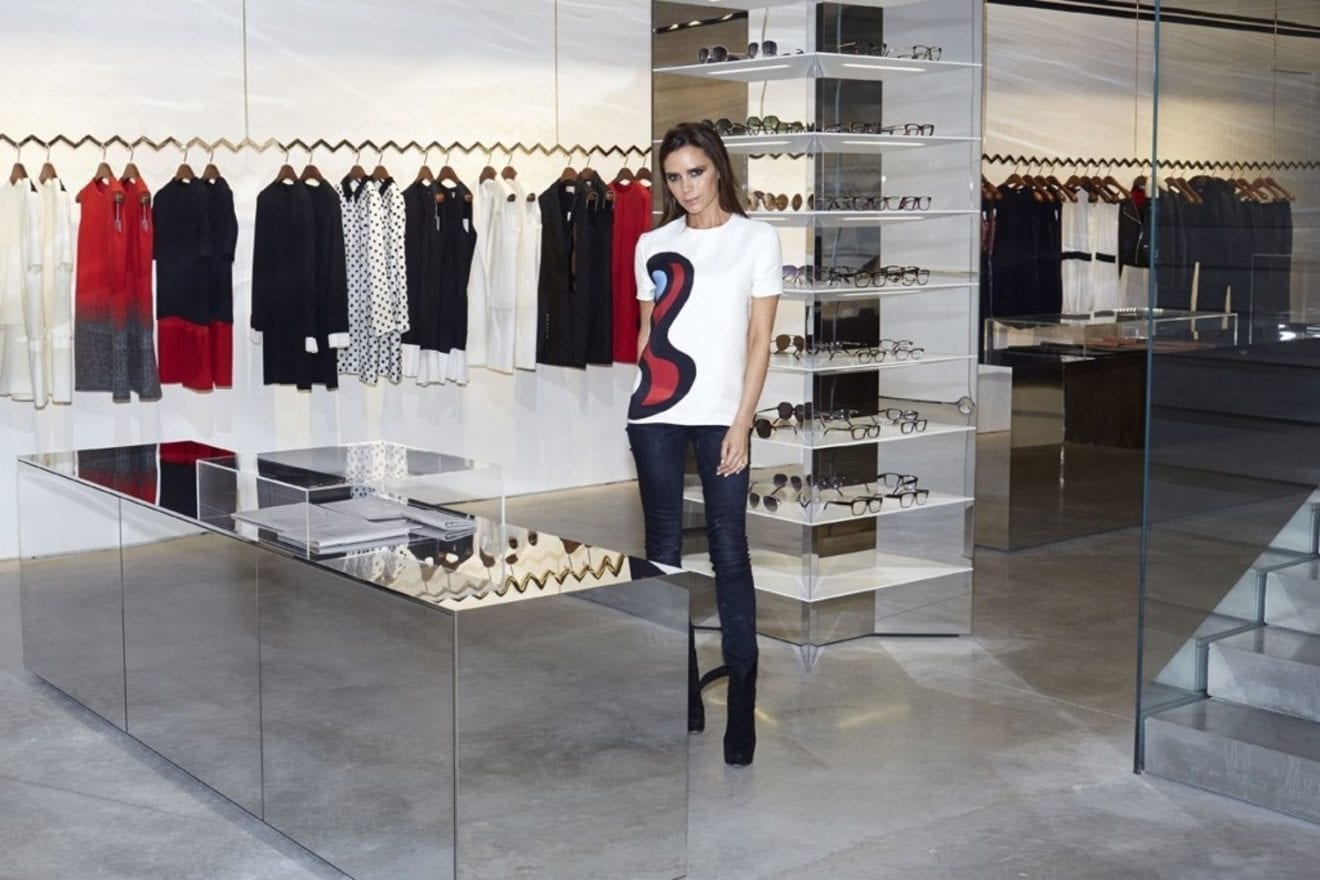
    Fashion entrepreneur Victoria Beckham has raised £30 million (US$40 million) from growth equity firm Neo Investment Partners in exchange for a minority stake in her namesake luxury label.

    While the terms of the transaction have not been disclosed, market insiders say the deal values the business at £100 million.

    “As the business continues to grow, I appreciate the need for external investment which, in turn, would bring external expertise,” says the former Spice Girl. “Neo has shown it can take founder-led businesses with a global outlook to new heights. Our focus is on building a sustainable, profitable luxury brand.”

    Neo Investment Partners founder/managing partner David Belhassen says Beckham is an inspiration to millions of women around the world. “She has built a unique, differentiated luxury brand with a strong identity and very high potential.”

    Beckham plans to use the funding to expand the luxury womenswear brand’s physical retail and e-commerce presence, as well as drive growth of core product categories.

    After a series licensing deals for eyewear, denim and fragrance, Beckham launched her own luxury womenswear line in 2008 with a range of dresses. Initially shunned by the fashion industry, she has since expanded into handbags, eyewear and shoes and currently employs 180 people with stores in London and Hong Kong as well as an e-commerce site.

    Beckham teamed with Target last year for a capsule collection, and is now working on a collaboration with Reebok expected to launch late next year. “To challenge the traditional notions of fitness wear within a fashion context is something I have always wanted to do,” she says.

    The Victoria Beckham label is controlled by Beckham Brand Holdings, a holding company that also owns the licensing of the former football star’s name. The company is owned by the husband-and-wife team of David and Victoria Beckham as well as Simon Fuller, the entertainment impresario who created the Idol franchise.
  • Reebok to accelerate China expansion with 500 new stores by 2020

    Reebok to accelerate China expansion with 500 new stores by 2020

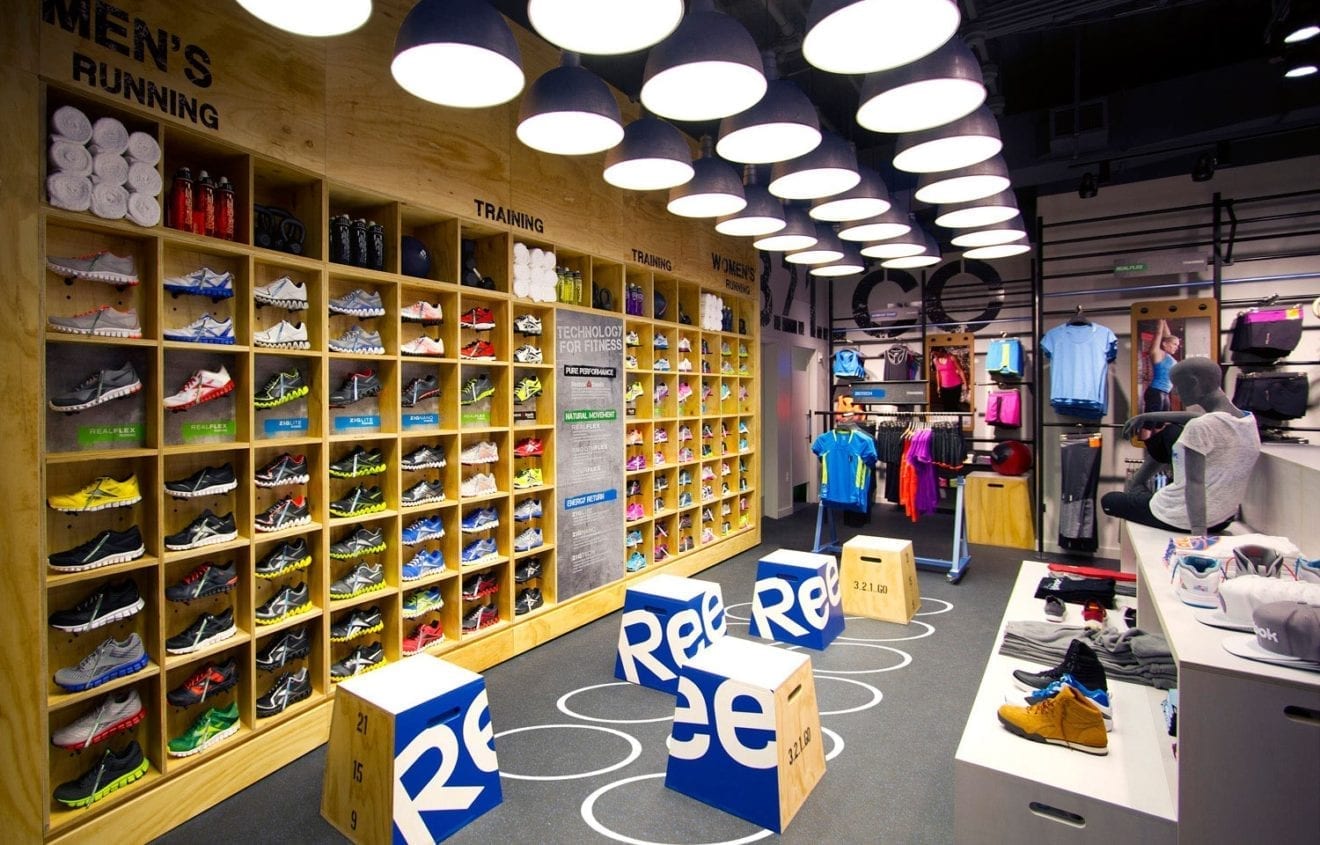
    Global fitness and lifestyle brand Reebok has unveiled plans to open 500 FitHub stores in China by 2020 as part of a major push to become the region’s leading fitness brand.
    The label, owned by Adidas, aims to expand its physical presence in China where it says the market for fitness is growing fast.

    The FitHub concept is an extension of the brand’s new positioning as a fitness-focused label and offers customers an integrated store experience with in-store classes, events and a team of product experts who can provide advice on the right gear for every workout.

    Reebok has already opened seven FitHub stores in China in the last few months, including locations in Wuhan, Qingdao, Hangzhou and Beijing.

    And 50 further stores are scheduled to open this year to meet the target of 500 FitHubs in China by 2020, according to local media reports. Reebok is collaborating with its retail partner Belle International Holdings Ltd to drive the rollout.

    “For a fitness brand, there is no better country to invest in right now than China,” said Chad Wittman, general manager of Reebok Greater China to China Daily.

    “We’ve spent a lot of time and energy putting together a China strategy that meets the specific needs of Chinese consumers in terms of product, messaging and experiences.”

    Wittman said the strategy of offering events in stores will resonate in China, where consumers “want to do fitness activities to be more healthy and more successful. There are lots of opportunities to offer Chinese consumers a better life through fitness activities.”

    In addition to its global range of fitness apparel, footwear and equipment, the brand will be working with teams based in China to design and manufacture products that meet the specific needs of Chinese shoppers.

    Reebok, a 120-year-old brand, has been shifting away from celebrity athletes and repositioning itself as a brand for fitness lovers in the past few years. It is currently focusing on three key categories: running, training and classics, and this year running will be a key category according to Wittman.

  • Octogenarian new ambassador for Reebok China

    Octogenarian new ambassador for Reebok China

    Octogenarian Wang Deshun, a silver-haired actor known as “China’s hottest grandpa”, is Reebok China’s newest brand ambassador.

    Wang, who was born in Shenyang in 1936, stars in the sports brand’s latest Chinese video campaign “Be More Human” alongside actress Yuan Shanshan and actor Wu Lei.

    The senior citizen first caught attention in 2015 when he strutted bare-chested down the runway for a local designer in Beijing Fashion Week.

    “Only seriously getting into fitness at the age of 70, Wang’s example has helped reshape China’s views on aging and shown you’re never too old to pursue your goals,” says Reebok, which aims to become “China’s best fitness brand”.

    It is expanding its new lifestyle retail concept FitHubs, which integrate retail, fitness and other activities for customers. There are locations already in Hangzhou, Qingdao and Wuhan, with 50 scheduled to open this year. Reebok, owned by Adidas, plans to have 500 FitHubs by 2020.

    Its focus is on three key categories: running, training and classics. This year it is especially promoting its running line.

    “With running in particular experiencing an unprecedented surge in popularity in China in recent years, the category is a key focus for this year,” says the company.

  • Adidas sales soar on reformation plan

    Adidas sales soar on reformation plan

    Adidas sales have soared 18 per cent last year as the German sportswear brand plays catch-up with America’s Nike.

    For the first time in its history, Adidas’ net income topped euro 1 billion.

    In Greater China, sales soared 28 per cent year-on-year.

    “These results are proof positive that our strategy ‘Creating the New’ is paying off,” said Adidas CEO Kasper Rorsted. “2016 was an exceptional year for Adidas. We have improved the desirability of our brands and products around the globe. Building on our 2016 performance, our momentum continues and we will again achieve strong top- and bottom-line improvements in 2017.”

    Total sales reached euro 19.3 billion with operating margins up 1.3 percentage points to 7.7 per cent. Net income soared 41 per cent to euro 1.019 billion, allowing the company to promises shareholders a two euro per share dividend.

    The company is projecting another sales increase during 2017 ranging from 11 to 13 per cent, another increase in operating margin to between 8.3 and 8.5 per cent and net income up between 18 and 20 per cent to euro 1.225 billion.

    Even the troubled Reebok brand gained ground in 2016, currency-neutral sales up 6 per cent year-on-the-year, reflecting double-digit sales increases in its Classics range as well as mid-single-digit growth in the training and running categories.

    The Adidas group achieved double-digit revenue growth in nearly all market segments. In Western Europe, sales increased by 20 per cent, in North America by 24 per cent, in Russia by 3 per cent, in Latin America by 16 per cent and in Japan by 16 per cent. Revenues in Middle East and Africa also grew 16 per cent on a currency-neutral basis, reflecting double-digit growth in almost all of the region’s countries.

  • US investor buys into Mitra Adiperkasa

    US investor buys into Mitra Adiperkasa

    US private-equity company General Atlantic has made its first investment in Indonesia by buying into lifestyle retailer Mitra Adiperkasa (Map).

    It has subscribed for Rp1.08 trillion (US$80.5 million) in bonds issued by Map which are convertible into shares in its F&B subsidiary Map Boga Adiperkasa (MBA), which runs Cold Stone Creamery, Godiva, Krispy Kreme, Pizza Express and Starbucks in Indonesia. It has more than 300 stores across 24 cities, and has more than doubled its store count over the past five years.

    Map runs multi-channel retail concepts in Indonesia across a diversified portfolio of department stores, sportswear, specialty fashion, F&B, and lifestyle products. It has nearly 2000 retail stores.

    “We believe the rapid rise in Indonesia’s middle and young working classes, the increase in this population’s disposable income, and the continued rural-to-urban migration represents an opportunity for us to strengthen our international food brands and cement our leadership position in the F&B market,” says Map CEO V.P.

    Sharma. A portion of the investment money will be used to accelerate the F&B division’s network expansion.
    “Indonesia’s domestic consumption comprises more than half of gross domestic product, and consumption patterns are increasingly shifting toward modern and aspirational lifestyle brands,” says General Atlantic Southeast Asia head Wai hoong Fock. “These secular trends position MBA’s food & beverage portfolio well for further expansion.”

    Regional commitment

    The partnership, General Atlantic’s first investment in Indonesia, indicates its commitment to long-term market prospects in South-east Asia,” says Fock, who joined General Atlantic from CVC Capital Partners last year to lead its South-east Asia investing program. He is based in the firm’s Singapore office.
    General Atlantic has 18 investment professionals in Asia, based in offices in Beijing, Hong Kong, Mumbai and Singapore. The firm opened its Singapore office in 2011, investing three years later in Singapore-based online mobile entertainment/communication Garena platform. It has also supported the growth of retail and F&B companies including lifestyle brand Tory Burch, luxury fashion brand Zimmermann, restaurant group Barteca Holdings, urban juice-bar concept Joe & The Juice, community accommodation marketplace AirBNB and transportation network company Uber.

    Map has 1921 retail outlets in 68 cities throughout Indonesia. Its retail concepts include department stores (Debenhams, Galeries Lafayette, Seibu and Sogo), fashion and lifestyle (Crabtree & Evelyn, Kipling, Lacoste, Marks & Spencer, Massimo Dutti, Nautica, Sephora, Swarovski, Topman, Topshop and Zara), sports (Converse, Golf House, Oakley, Payless ShoeSource, Reebok, Rockport, Skechers, The Athlete’s Foot and The Sports Warehouse), F&B (Burger King, Cold Stone Creamery, Domino’s Pizza, Godiva, Krispy Kreme and Starbucks), kids (Kidz Station and Oshkosh B’Gosh) and bookstore Kinokuniya.

  • Reebok restructure to be fast-tracked

    Reebok restructure to be fast-tracked

    The new CEO of Adidas says he plans to streamline and restructure the ailing Reebok business as a priority under his watch.

    CEO Kasper Rorsted, in a conference call with business media, also promised a completion of the sale of the Adidas TaylorMade golf business by the end of this year, even if that meant booking a loss.

    While its core Adidas brand business is performing well enough to prompt four raises in the company’s financial outlook this year, a Reebok restructure is necessary while the unit continues to struggle.

    “We’ll give Reebok more freedom to operate globally, and more responsibility in the US,” Rorsted said. “We’ll get a more focused organisation, and that will enable us to continue the momentum we have right now of Adidas in the US and it will make Reebok stronger.”

    Rorsted will move Reebok’s headquarters from Canton to new premises in Boston where the team will be 100 per cent Reebok, with about 150 jobs cut. At least one US factory will be closed and the US store network cut back to focus on wholesale. Restructuring is estimated to cost $33 million.

    Adidas has been converting Reebok from a traditional sports shoe maker into a fitness brand. Top-line sales growth has grown for the last 14 quarters, but it still lags its parent.

    “We have to be realistic. Reebok is growing slower than Adidas and our competition, and we have seen no growth in North America in the past three years. And lastly, the profitability is significantly below the group average. It’s time to get back to the gym and redouble our efforts on Reebok.”

    So strong is Adidas performing the costs of restructuring and  a potential loss on the sale of the golf business is unlikely to impact on group profit. And Rorsted indicated there was no sign of any slowing in Adidas’ growth.

    “The consumer centric approach has increased our brand desirability and relevance with the consumers. You can see that not only in our markets or in our revenue numbers, but also in the market share gains in the key categories and markets where we are active.”

  • New Balance India return

    New Balance India return

    New Balance India is to make a comeback – and says it aims to open about 50 stores within the next few years.

    The US sports shoes brand’s first foray into India was in the early 2000s, but it shut its shops after a few years. Now its VP for Asia Pacific Darren Tucker says it plans outlets across shopping malls and high streets in Delhi, National Capital Region (NCR), Mumbai and Bengaluru.

    “We were ahead of time,” says Tucker. “We did not have such a wide brand presence globally then, and the retailing experience was poor. Now, the market looks more mature.”

    Its first store this time around opened yesterday – an 1100 sqft (102 sqm) New Balance Athletic Shoes standalone outlet at DLF Mall of India in Noida, near New Delhi. The company has a distribution agreement with The Major Brands Group in Mumbai for retailing New Balance products in India.

    “It’s not about the number of stores,” says Tucker. “We would prefer to have a profitable retail presence and grow at a relatively slower pace this time.

    “All our global competitors are here. The market is built. We know our competitors, and that’s an advantage.”

    With an average selling price of Rs.7000 (US$105) for shoes, New Balance will be a premium offering. Tucker says apparel is a promising segment, so lifestyle will be a focus area. The company has also tied up with online retailer Jabong for e-etailing, and is negotiating with global partner Amazon for the Indian market.

    “Considering the growth of eCommerce in India, that’s a must,” says Tucker. The company will continue to leverage its global marketing properties across sports and athletics, and plans to develop local properties. “For India, it’s going to be cricket first.”

    At the moment, the sports shoe and apparel market in India is dominated by Adidas, Nike, Puma and Reebok. Japan’s Asics Corp. opened its first standalone store in Delhi last July.

    A report by Images F&R Research estimates India’s active sportswear market at Rs.6000 crore, growing at 13 per cent a year.

    New Balance, which reported $3.3 billion in sales worldwide in 2014, was founded in 1906 by British immigrant William J. Riley to sell arch supports to police officers and waiters. The company was bought by Jim Davis, the son of a Greek immigrant, in 1972 and from its base in Boston now sells athletic shoes, apparel and accessories for men, women and children across 5000 outlets worldwide under brands such as Aravon, Brine, Dunham, PF Flyers and Warrior Sports.

  • Reebok Launches Tuk Tuk Inspired Sneakers

    Reebok Launches Tuk Tuk Inspired Sneakers

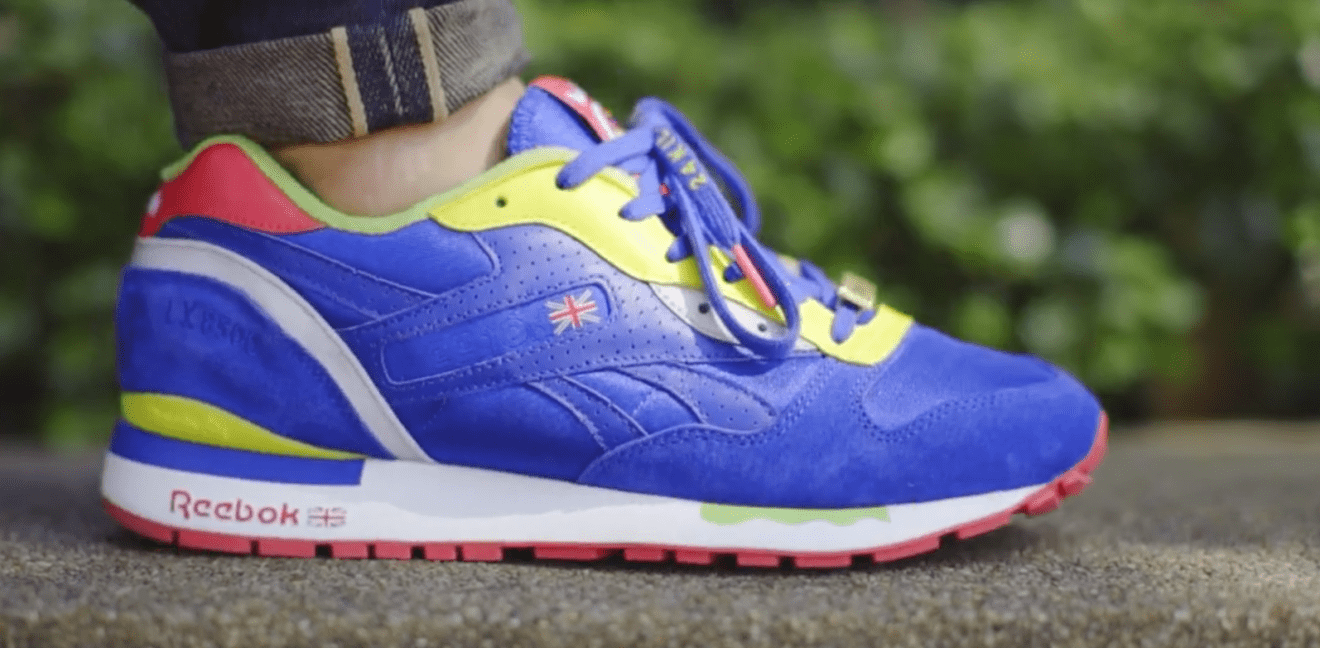
    A new sneaker collaboration between Reebok and international sneaker destination store 24 Kilates in Barcelona pays homage to Bangkok and, even more specifically, to the bright colors of the city’s iconic tuk tuk.

    The video, released a few days ago in advance of the sneaker’s March 12 drop date, plays out like a two minute-long love letter to Bangkok.

    The clip opens with a sunrise over Bangkok and the ambient traffic noise that is the never-ending soundtrack to life in the city. The viewer follows the sneakers as they visit many of Bangkok’s key sites: the Chao Phraya River, the Grand Palace, Wat Arun, the Giant Swing, Asoke intersection and what appears to be Soi Cowboy. The entire homage is set to the driving line of a morlum tune.

    And how does the dude wearing the sneakers get from place to place around our giant city? In a tuk tuk that matches the shoes, of course.

    The sneaker design is the brainchild of the owners of 24 Kilates. The two men come to Bangkok often, saying they have fallen in love with the city and also plan to open their second 24 Kilates location in the capital in the not-too-distant future.

    Whether you care about sneakers or not, seeing the city through their eyes in this video is a worthwhile way to spend a few minutes.

  • Yue Yuen sales rise on retail rollout

    Yue Yuen sales rise on retail rollout

    The world’s largest branded athletic and casual footwear manufacturer and retailer Yue Yuen Industrial says retail and wholesale sales of sportswear in Greater China rose 19.6 per cent in the first nine months of this year, due to an expanding store network.

    Yue Yuen operates more than 6000 retail stores and concessions across Greater China under its own name as well as the international brands it manufactures for.

    Total sportswear sales reached US$1.7 billion compared to US$1.456 billion in the same period last year. Other factors in the growth were the company’s efforts to increase efficiency and a better merchandise selection.

    Sales of athletic shoes were up by 3.4 per cent and sales of casual shoes were down by 5.6 per cent. The total volume of shoes sold increased by just 1.1 per cent to 231.4 million pairs for the period.

    Hong Kong listed Yue Yuen designs and makes shoes for brands including Nike, Crocs, Adidas, Reebok, Asics, New Balance, Puma, Timberland and Rockport as well as operating its own network of retail stores under the YY Sports brand, through subsidiary Pou Shen.

    The increased athletic shoes and sportswear sales helped boost Yue Yuen’s overall revenue by 5.8 per cent to US$6.3 billion and gross profit by 9.1 per cent to $1.422 billion. Total net profit attributable to owners of the company was $285.6 million, up 36.6 per cent year on year, according to figures filed with the stock exchange.

    Pou Shen, which opened 771 new points of sale during the nine months, increased its gross profit by 32.5 per cent to $566.5 million due to management’s strategy to concentrate on the retail business, improved operating efficiency, and better procurement of inventory.

    YY Sport instore wide