Tag: regulation

  • Abu Dhabi’s Financial Regulator Issues Urgent Advisory Amid Market Concerns

    Abu Dhabi’s Financial Regulator Issues Urgent Advisory Amid Market Concerns

    The Abu Dhabi Global Market (ADGM), the capital of the UAE’s thriving financial sector, recently hit 23 resident firms with fines totaling 610,000 dirhams (around 166,000 dollars). While the amounts may seem minor, the implications behind them are anything but.

    According to the Financial Services Regulatory Authority (FSRA), these penalties stem from breaches of accounting standards introduced back in 2017. Moreover, several of the firms involved also neglected to meet foreign tax compliance regulations put forth in 2022, underscoring a potentially troubling trend.

    No Tax Haven Here

    The FSRA has taken a firm stance, clearly stating on its website that the regulations were designed to align with international frameworks requiring entities to report information about foreign account holders. This is all part of a broader effort to combat tax evasion on a global scale. The regulator highlighted violations related to both the Common Reporting Standard (CRS) and the Foreign Account Tax Compliance Act (FATCA).

    The Common Reporting Standard, created by the OECD, aims for the efficient exchange of financial account data for tax purposes worldwide. In tandem, FATCA mandates U.S. financial entities to identify and report on accounts held by American taxpayers, ensuring that no one slips through the cracks when it comes to tax obligations.

    “Robust Regulations” in Play

    Emmanuel Givanakis, CEO of the FSRA at ADGM, emphasized the authority’s dedication to tackling tax evasion. He stated, “We are committed to identifying and addressing practices that fall short of our efforts to combat tax evasion by implementing robust and effective regulations in line with leading global compliance and reporting standards.” This is a wake-up call for firms operating in a landscape increasingly wary of tax dodgers.

    In a world where financial transparency is becoming the norm, it seems the days of tax havens are fading faster than a mirage in the desert. Will companies heed the warning and adjust their sails accordingly?

    Questions & Answers

    What is the total amount of the fines imposed by the FSRA? The FSRA imposed fines totaling 610,000 dirhams (approximately 166,000 dollars).

    What regulations did the fined firms violate? Firms were penalized for violating accounting standards established in 2017 and failing to comply with foreign tax compliance regulations introduced in 2022.

    What two major frameworks are mentioned in the article? The Common Reporting Standard (CRS) and the Foreign Account Tax Compliance Act (FATCA) are the two frameworks highlighted.

  • Tencent posts slowest-ever sales rise; regulation impact set to ease

    Tencent posts slowest-ever sales rise; regulation impact set to ease

    Chinese social media and gaming giant posted its slowest ever growth since going public in 2004. The company grew just 8 percent in the fourth quarter. This is reflecting regulatory scrutiny which has affected has hurt its gaming and advertising sales.

    China has frozen game approvals since August last year and curtailed gaming time for under-18s, part of Beijing’s move to strengthen control over its society and industries including technology, after years of unbridled growth.

    This has also led to a slowdown in advertising as businesses have cut spending.

    Tencent Holdings, which gets much of its revenue from gaming and develops games such as ‘Honour of Kings’ and ‘Call of Duty Mobile’, said domestic gaming sales grew 1% in the quarter ended Dec. 31.

    The restrictions on minors were effective as the total time spent by minors on its games sank 88%, Tencent said, adding that the impact of this factor on revenue growth would ease later in the year.

    “As we move into the latter half of 2022 it should cease to impact the revenue growth rate,” Chief Strategy Officer James Mitchell told reporters on a call on Wednesday, referring to the minor-protection measures.

    Tencent President Martin Lau said regulators were still supportive of the gaming industry, adding that the company had a ready pipeline of games for when approvals resumed.

    The company, which also posted its slowest ever annual revenue growth at 16%, said revenue in its online advertising business fell 13% in the fourth quarter.

    It expects its ad business to resume growth in late 2022 after companies adjust to regulatory requirements.

    Total revenue rose to 144.2 billion yuan ($22.63 billion) in the quarter, below an average of 147.6 billion yuan expected by 17 analysts, Refinitiv data showed.

  • Binance Halts Singapore Products

    Binance Halts Singapore Products

    Cryptocurrency exchange Binance has responded to a warning by Singapore’s regulator by removing some of its offerings in the city-state.

    Binance will cease Singapore dollar trading pairs and payment options, according to a blog post over the weekend, alongside the removal of its app from Singapore’s online stores.

    The halt will begin as of Friday and users have been advised to complete all related peer-to-peer trades and remove related trade ads by Thursday to avoid disputes.

    Consumer protection is important to all of us, Binance.com said in a statement. We are ready to assist regulators from around the world and together find the optimal way to set a fair playing field.

    The latest move only relates to Binance.com with no services changes on Binance.sg, Binance’s Singapore entity, according to a spokesperson.

    Binance Asia Services, which operates Binance.sg, recently submitted a license application to the Monetary Authority of Singapore. It is currently exempt from holding a license for the provision of digital payment token services until the review of its license application is completed.

  • China to Step Up Fintech Regulation

    China to Step Up Fintech Regulation

    The People’s Bank of China will introduce new standards in 17 areas, including blockchain, cloud services and artificial intelligence.

    China has plans to step up regulation in 17 areas of fintech to «guide the application of new technologies» applied across the financial industry, according to an article published by state news portal Xinhua.

    Speaking at the 2019 working conference of the National Financial Standardization Technical Committee on Wednesday, Fan Yifei, deputy governor of the People’s Bank of China, said the introduction of new standards is urgently needed to fill shortcomings in key areas, with a particular focus on data security, the publication reported.

    Fan noted that China currently has 65 national financial standards and 252 financial industry standards, which include mobile financial payment client technical specifications, voiceprint identification and more, but financial services and management standards are still weak.

    Explaining the rationale behind the regulatory push, Fan said that high-quality financial development requires high-quality financial standards.

    He also highlighted the need to expedite the internationalization of financial standards, actively carry out financial standardization research, cultivate a new generation of regulators savvy in this field, and to use fintech regulation to modernize financial governance systems and governance capabilities, the report said.

    China recently passed a new law on cryptography aimed to facilitate development concurrently with the country’s central banking efforts to launch its own digital currency, which will be effective January 1, 2020.


  • Foreign e-tailers must have registered entity in India: Draft policy

    Foreign e-tailers must have registered entity in India: Draft policy

    E-commerce sites or apps available for download in India must have a registered business entity in the country, according to latest draft e-commerce policy, which also proposes regulation of cross-border flow of data collected by sector players in India.

    According to analysts, the move to make it mandatory for foreign online retailers to register entities in India follows the relatively recent spread and expansion in the country of Chinese e-commerce platforms which do not have an Indian presence.

    These include Chinese portals such as Shein, Romwe and AliExpress and the proposed registration norms come after complaints made to the government by traders’ bodies like the All India Online Vendor Association about Chinese online operators shipping cheaper products to Indian customers as gifts in order to avoid customs duty.

    As per the proposed norms, all foreign e-commerce sites must have a registered business entity in India as the importer on record or as the entity through which all sales in India are transacted.

    The draft policy has also proposed a ban on all parcels designated as gifts, with the exception of life-saving drugs.

    Moreover, as per the draft policy, all data collected by e-tailers in India and stored abroad should not be made available to other business entities outside the country, for any purpose, even with customer consent.

    However, the government will have the right to access the data of Indian consumers stored abroad.

    Restrictions on cross-border flows of data would not apply to data which is not collected in India, business-to-business (B2B) data sent to India as part of a commercial contract between a business entity located outside India and an Indian business entity.

    Software and cloud computing services involving technology-related data flows, which have no personal or community implications and multi-national companies, moving data across borders, which is largely internal to the company and its ecosystem, would not have to follow the regulations.

    New foreign direct investment (FDI) norms, which prohibit the e-tailers from selling products of companies in which they have stakes, came into effect on February 1 despite both Amazon and Walmart seeking a six-month delay in their implementation.

    The second e-commerce draft policy has been welcomed by sector players like Snapdeal and trader associations such as the Confederation of All India Traders (CAIT).

    Snapdeal said the draft policy’s rejection of inventory based e-commerce must be followed by effective implementation of FDI norms to ensure marketplaces do not own or control inventory, directly or indirectly.

    “The recognition of data as a strategic national asset is well-timed and will lead to the development of required regulation in this regard,” a Snapdeal spokesperson said.

    US giants Amazon and Walmart, which recently acquired a 77 percent majority stake in the Indian e-retail major Flipkart, said they are reviewing the draft e-commerce policy and will share their inputs on the proposals in course of time.

    Amazon has been forced to remove an array of products from its India website in order to comply with the new FDI regulations in e-commerce.

  • Vietnam prosecutors support Grab appeal against Vinasun

    Vietnam prosecutors support Grab appeal against Vinasun

    Prosecutors in Ho Chi Minh City have appealed a verdict ordering Grab to pay compensation to domestic taxi firm Vinasun. They want the appeal court to quash the order requiring the Singapore ride-hailing firm to pay VND4.8 billion ($206,000) in compensation for alleged losses and reject all of Vinasun’s demands. Grab violated a pilot transport ministry scheme and government decree for ride-hailing services, according to the verdict.

    But the prosecutors argue this is groundless since Grab is a passenger transport firm licensed by competent authorities under the pilot scheme and its activities did not violate the law.

    They also dismiss the contention that Grab had caused Vinasun losses of nearly VND42 billion ($1.81 million) as one-sided with no practical or legal basis since it was based solely on an assessment by the court-appointed Cuu Long Inspection Company.

    “In reality, Vinasun’s decline in revenue involves many factors such as the corporate governance capability and the government’s policies and laws.”

    “Therefore, Vinasun’s demand for compensation from Grab is completely groundless.”

    They say Grab’s business activities are legal and Vinasun’s decline in revenues and profits have been partially due to consumers switching to Grab as they found the ride-hailing firm’s services to be superior to those provided by Vinasun and other traditional taxi firms.

    “Grab did not violate the law, there is no causal link between Grab’s allegedly illegal activities and Vinasun’s losses, Grab is not at fault.”

    Vinasun filed the suit against Grab at the HCMC People’s Court in June 2017, accusing it of abusing the Ministry of Transport’s pilot scheme and committing violations.

    The trial began last February, but was adjourned several times before the court last December accepted parts of Vinasun’s demands and ordered Grab to pay the compensation. Grab has appealed.

  • Walmart may exit Flipkart due to new FDI rules: Morgan Stanley

    Walmart may exit Flipkart due to new FDI rules: Morgan Stanley

    Retail giant Walmart may exit Flipkart after India’s new Foreign Direct Investment (FDI) norms for e-commerce companies came into force, US investment banker Morgan Stanley has warned. “An exit is likely, not completely out of the question, with the Indian e-commerce market becoming more complicated,” the report by Morgan Stanley said late Monday.

    According to the report, Walmart-Flikkart saga might turn out to similar to what happened with Amazon in China in late 2017.

    “There is a precedent for an exit as Amazon retreated from China in late 2017 after seeing that the model no longer worked for them,” the report read.

    “We estimate that Flipkart derives 50 per cent of its revenue from this category, meaning Flipkart could face meaningful disruption and top-line pressure in the near term,” it added.

    The new FDI rules may require Flipkart to remove as much as 25 per cent products from its platform including smartphones and electronics that constitute a bulk of sales, said Morgan Stanley.

    On February 1, disruption was caused in the e-commerce operations in India of the two companies after the new FDI norms for the e-commerce sector came into effect.

    The norm prohibited the online retailers from mandating any company to sell their products exclusively on its platform.

    In the new policy, the Commerce Ministry also noted that the online retail firms would not directly or indirectly influence sale price of goods and services and would maintain a level playing field.

    Amazon India had to withdraw many of its products and they were listed as “currently unavailable” as the new norms prohibit the e-retailers from selling products of companies in which they have stakes.

    The two companies have together lost market capitalisation of $50 billion.

    Amazon lost market capitalisation of over $45 billion on Nasdaq while Walmart lost over $5 billion on the NYSE.

  • Snapdeal bats for new FDI policy in e-commerce from Feb 1

    Snapdeal bats for new FDI policy in e-commerce from Feb 1

    Leading Indian e-tailer Snapdeal on Tuesday supported the implementation of revised Foreign Direct Investment (FDI) policy on e-commerce from February 1. “Snapdeal supports the immediate implementation of the current FDI policy on e-commerce so that marketplaces are not misused to run inventory operations,” Delhi-based Snapdeal told IANS in a statement.

    The Ministry of Commerce and Industry on December 26 issued revised policy guidelines on FDI in e-commerce.

    The policy revision, which will be in force from February 1, dictates that e-commerce platforms providing a marketplace will not exercise control or ownership over the inventory.

    E-tail majors Flipkart and American online retailer Amazon’s Indian arm, however, sought an extension on the implementation of the new norms, amid protesting voices from retail traders’ bodies against granting the extension.

    “Government policy changes will have long-term implications in the evolution of the promising sector and the whole ecosystem,” American retail giant Walmart-owned Flipkart told IANS through a statement earlier.

    The new norms also barred e-tail firms from allowing any company to sell its products exclusively on their e-commerce platforms alone.

    While Amazon India had said in a statement to IANS that “it has always operated in compliance with the laws of the land”, it did not respond to queries on the changes it may have to make to its business model to suit the new norms.

    On the other hand, the Confederation of All India Traders (CAIT) has asserted that delaying the execution of the policy will allow the e-tailers to continue with their “dominance over retail trade”.

    “The modus operandi of these e-commerce companies for seeking extension (on implementation of new FDI norms) is to keep delaying fair execution of the policy,” CAIT wrote in a letter to the Ministry of Commerce and Industry this month.

    “They (e-commerce platforms) may continue with their sinister designs of operating all kinds of malpractice including predatory pricing, deep discounting and exclusivity, in order to ensure their control and dominance over retail trade and wipe out the competition,” the letter said.

    The Ministry, however, has not indicated any possible extension of deadline to implement the new norms.

  • Global business leaders raise concerns over e-commerce policy changes in India

    Global business leaders raise concerns over e-commerce policy changes in India

    Several global business leaders have raised concerns over the evolving regulatory challenges concerning the e-commerce sector in India and said they want a stable policy regime to help this space achieve its robust growth and investment potential. According to a report, multiple business leaders attending the World Economic Forum Annual Meeting here said there are confusions in their mind in the backdrop of recent policy changes for e-commerce players having FDI in India.

    They did not want to be named, given the sensitivity of the subject and the evolving nature of the proposed rules, but said they have directly, or through their representatives, raised their concerns with the Government. They wanted to raise the issue directly with Commerce and Industry Minister Suresh Prabhu in Davos, but his plan to come here got changed at the last moment.

    At a session here at the WEF meeting, WTO Chief Roberto Azevedo also said there was a need for a global multilateral framework on e-commerce business.

    India’s FDI policy allows 100 percent foreign direct investment in marketplace model, but investors also want a stable policy and regulatory regime, a senior official of a leading online retailer said.

    An industry lobby group official said there is a fear that certain new rules proposed by the Government could lead to discrimination against investors as this policy is only for foreign players and not for domestic ones in the e-commerce sector.

    Another executive claimed it is being seen as a non-consultative approach even with investors who bring in huge foreign direct investment.

    However, Government officials rejected these allegations and said the new changes seek to safeguard competition and the interest of domestic players. The rules have been made after due consideration and consultations with concerned stakeholders, they added.

    The Commerce and Industry Ministry brought certain changes to Press Note 2 on December 26, 2018 which prohibited e-commerce companies from entering into an agreement for exclusive sale of products along with tightening norms for firms having foreign investment.

    The Government has also barred online marketplaces like Flipkart and Amazon from selling products of companies where they hold stakes and banned exclusive marketing arrangements that could influence product prices.

    The revised policy on foreign direct investment in online retail also requires these firms to offer equal services and facilities to all its vendors without discrimination. The policy would be effective from February 2019.

    In India, the policy as such does not permit FDI in inventory-based model of e-commerce.

    Companies have been seeking more time to implement the changes even as some of them have warned that these substantial modifications in the way they do business pose risks of derailing the e-commerce sector that has been a big job creator.

    Executives from another global retail major said the impact could also be felt by several connected sectors such as advertising, logistics, warehousing and manufacturing.

  • Walmart, Amazon India seek extension of Jan 31 deadline on e-commerce compliance

    Walmart, Amazon India seek extension of Jan 31 deadline on e-commerce compliance

    There is trouble in paradise. The Government’s drastic intervention in e-commerce at the behest of vested domestic interests and the powerful traders lobby has created consternation in the bulge bracket world of e-commerce in India. With the big players having reached out to the Government to give them breathing space on the new compliance measures beyond the January 31 deadline, the Industry ministry has not responded, leading to panic attacks across the board.

    Powerful stakeholders led by Walmart and Amazon from the e-commerce eco system have sought a six-month extension since lakhs of sellers – small and medium-sized – in the market place need to be educated, IT-enabled and connected to meet the statutory audit requirements. Moreover, contracts have to be re-negotiated so that the compliance measures remain ongoing with time being of the essence.

    It is believed that the DIPP or Industry Secretary Ramesh Abhishek, who was earlier encouraging the major players to ramp up their investments in India, has not responded to their pleas and petitions.

    The situation has become precarious primarily because the clarification to press note 2 was even more confusing. On a granular level, the market place cannot have any equity in the seller.

    Hence, Amazon which has five percent equity in Shoppers Stop has to comply with the new standards. The new government directive does not allow private labels, nor does it allow big brands to have commercial tie-ups with the market place. Basically, the rules of engagement have been turned on their head.

    Bain Capital reckons that the heavy lifting e-com players have generated three lakh jobs in India. Over and above this, there are lakhs of vendors.

    Further, the eco system has multiple spin-offs like advertisements, courier companies, logistics companies, supports innumerable manufacturing operations and caters to large scale supply chains. Flipkart has 80,000 employees, 80 fulfilment centres (warehouses), nearly one lakh plus sellers and artisans of all hues across the land. Ditto for Amazon, which has similar numbers across its business spectrum.

    Walmart paid US$ 14 billion for Flipkart stock with a promise of an additional US$ 2 billion in physical structure investment. So, there is a lot riding on these heavy lifters for both know that this is the last frontier in terms of a consumption market, since India consumes 67 percent of its own US$ 2.6 trillion GDP. Interestingly, Walmart runs Flipkart as a stand-alone entity.

    For Walmart this is a priority market and it is keen that the January 31 compliance window deadline is extended. Its commitment to the Indian market can be gauged from the fact that it recently got 100 acres in Bengal for warehousing as a pivot to the northeast market. Hence the size of the commitment is seeing enlargement almost daily.

    It is on the verge of closing another 100 acre fulfilment centre in Telengana to service the southern market. Remarkably, the Indian retail market is estimated to be US$ 650 billion, of which 90 percent is the kirana stores while nearly eight per cent is made up of Indian retail players and only two percent is e-commerce. However, since the biggies in e-com are global behemoths, impediments are being placed in their path.

    At the kernel of the government notification and clarificatory statement is the targeting of e-commerce giants who are quick to retort that they helping small sellers with a channel that is tech-enabled to put their products on the marketplace.

    At the time same time, even as they try and get the government to listen to their litany of woes on immediate compliance, the process of evaluation of sellers will continue and remain ongoing so that they are effectively compliant every single day. The government’s intervention is perceived to be through a non-consultative process and the global giants want more time for compliance and enhanced level of dialogue.

    The audit requirement on the sellers by opening their books to the marketplace in such a short time is reminiscent of the haste in the launch of GST, which threw small businesses out of gear.

    Many of the sellers will now have design IT systems and the marketplace cannot be liable for this. In parallel, there is no clarification on how to conduct the private label business.

  • BMW Korea announces recall of 99,000 additional vehicles

    BMW Korea announces recall of 99,000 additional vehicles

    BMW on Wednesday announced another recall of an additional 99,000 vehicles, with 20,000 of them recalled immediately on concerns of engine fires. The remaining 79,000 will be recalled if replacement parts are found to be faulty. The Ministry of Land, Infrastructure and Transport on Wednesday announced that it has told the German carmaker to follow up with a recall plan that it submitted last week.

    The recall plan followed the investigation results announced by a joint investigation team on Dec. 24 in regard to BMW vehicle catching fire in Korea.

    The investigation team at the time announced that the fires were not only caused by the emission reduction system, or exhaust gas recirculation (EGR) system, but also by the intake manifold.

    The 20,363 vehicles that were in the first recall in July last year will be the first in line to be re-recalled, this time to check the intake manifold.

    These are vehicles with EGR modules that have not been replaced.

    The government said it will also inspect 80,000 BMWs to see if they have any leakage problems.

    Last year, BMW recalled 106,000 vehicles after they began bursting into flames last summer.

  • Samsung spent $3.12M lobbying in U.S. last year

    Samsung spent $3.12M lobbying in U.S. last year

    The American subsidiary of Korean tech giant Samsung Electronics spent $3.12 million on lobbying U.S. politicians and officials last year, the second-largest amount following 2017, data from a Washington-based research group showed Monday. Samsung Electronics’ lobbying expense was the ninth largest among electronics companies operating in the United States, moving up two notches from a year earlier, according to the Center for Responsive Politics (CRP).

    Microsoft spent the most with $7.18 million, followed by Qualcomm with $6 million, Oracle with $5.47 million and Apple with $5.09 million, said the nonprofit research group, which tracks the effects of money and lobbying on elections and public policy.

    Among foreign companies, Samsung Electronics was the second-biggest lobbying spender after German engineering group Siemens.

    The Korean tech conglomerate has been intensifying its lobbying efforts in its key market since U.S. President Donald Trump took office in 2017 and advocated more protectionist trade policies.

    Samsung’s lobbying expenses over the past two years amounted to $6.62 million, far surpassing $6.04 million spent during former President Barack Obama’s second term from 2013-16, data showed.

    Trade-related issues were Samsung’s main lobbying target in the United States last year, with 13 cases out of 81 total in this area.

    The company also made extensive lobbying efforts for the telecommunication sector as it has been exploring ways to expand its foothold in the 5G network equipment market.

    Last month, Samsung and American telecommunication company Verizon announced their plan to launch 5G-compatible smartphones in the U.S. market in the first half of 2019.

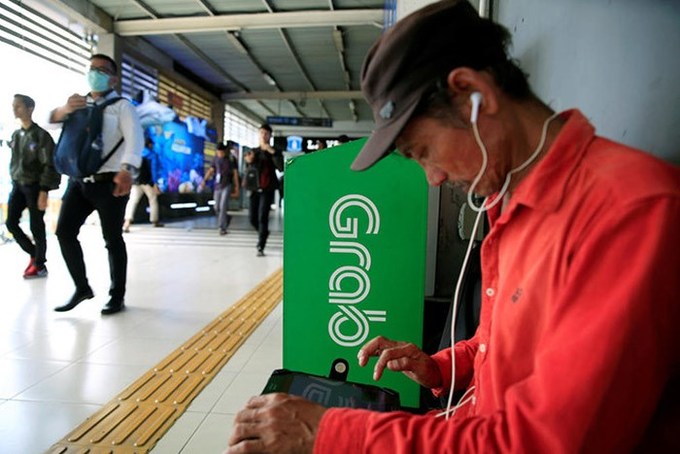
  • Indonesia to Regulate Ride-Hailing Rates Threatens Grab, Go-Jek Expansion

    Indonesia to Regulate Ride-Hailing Rates Threatens Grab, Go-Jek Expansion

    The government is preparing to launch regulations fixing the rates drivers and riders for ride-hailing services such as Grab and Go-Jek receive, two officials said this week, creating potential obstacles for the companies’ expansion. The regulations would meet drivers’ demands for more oversight and higher rates but there are concerns that the rising costs to the companies could stifle their development as they battle to dominate the ride-hailing market in Southeast Asia’s biggest economy.

    Singapore-based Grab and homegrown Go-Jek have been locked in price wars in Indonesia, part of a wider fight to bring banking, e-commerce, ride-hailing, food-delivery and other services to every corner of Southeast Asia.

    However, since 2018, motorcycle taxi drivers working for Grab and Go-Jek in Jakarta have held protest rallies calling for higher fares and better conditions.

    The Ministry of Transportation plans to implement minimum and maximum tariffs for car and motorbike ride-hailing that will be “higher than Go-Jek and Grab’s current rates” and impose limits on promotional price cuts, said Budi Setyadi, director general of land transportation at the ministry.

    “This is for the safety and protection of drivers,” he said.

    Ahmad Yani, public transportation director at the ministry, said dependency on incentive-driven payments and low fixed rates per kilometer created a safety risk as it led to drivers overworking.

    He said Grab paid Rp 1,200 (8 US cents) per kilometer with a focus on bonuses, while Go-Jek’s rate was Rp 1,400 per kilometer.

    The officials said fixed fare ranges for motorbikes were still being finalized but would be implemented from March.

    Fixed rates for ride-hailing cars will start in June and be set at between Rp 3,500 and Rp 6,000 per kilometer on the islands of Java, Sumatra and Bali.

    The drivers were pushing for increases to a standard fare of Rp 3,000 to Rp 4,000 per kilometer.

    New Rules

    The firms said they welcomed the new rules, though they had not seen details of the motorbike regulations.”Grab believes the government will develop the best regulatory framework and hopes that all stakeholders will be included in the process,” said Tri Sukma Anreianno, the company’s head of public affairs .

    A Go-Jek spokesman said: “We support the government’s spirit to encourage our driver partners … and hope the regulation will have a positive impact on the sustainability of drivers’ income … and fair business competition.”

    However, both transportation officials said the companies are worried about the pending regulation since they have spent heavily on driver subsidies to slash their customer rates and build their businesses.

    “Grab and Go-Jek have told me they would prefer there was no regulation,” Ahmad said. “Due to the competition between them … they are scared what could happen if they don’t keep up with each other.”

    The Supreme Court blocked a previous attempt in 2017 by the transportation ministry to fix ride-hailing rates after drivers sued, saying the rules favored the taxi firms.

    Both ministry officials said the new regulations met anti-competition standards and followed extensive discussions with driver syndicates.

    Grab and Go-Jek drivers welcomed the prospect of standard fares.

    “I have been working for Grab since 2015. Before, I could earn Rp 300,000 to Rp 400,000 per day. Now, I can only get Rp 150,000,” said Hermansyah, a Grab motorcycle driver partner.

    Another driver, who had worked for both companies, said neither provided much protection, leading drivers to bear operational costs. He asked not to be identified since he had a role in organizing protests.

    The fixed rates will be a challenge to a business model that has depended on cheap passenger prices for growth and could undermine innovation.

    “Cheap fares has been the firms’ main way to attract customers,” said Yayat Suprityatna, urban and transportation observer at Trisakti University in Jakarta.

  • Indonesia to put tax on e-commerce transaction

    Indonesia to put tax on e-commerce transaction

    The Ministry of Finance said on Monday that it will impose new rules requiring e-commerce sellers to share data with the authorities, while also stressing that they must pay taxes. Surging smartphone use and a rising middle-class income in Indonesia, home to 260 million people, has made its e-commerce industry a battleground for foreign investors.

    Global consultancy McKinsey projects spending in the Indonesian e-commerce market to rise to as much as $65 billion by 2022, from $8 billion last year, similar to the growth trajectory experienced in China between 2010 and 2015, and the government is trying to squeeze more from a market that traditional retailers have alleged avoids taxes.

    From April, all operators of online marketplaces will have to detail each seller’s turnover and report this to the authorities, the ministry’s tax spokesman Hestu Yoga Saksama said.

    The rules would apply to all online marketplace operators in Southeast Asia’s largest economy, including Lazada and Tokopedia, which are both backed by Chinese e-commerce giant Alibaba, and Bukalapak, which counts China’s Ant Financial among its investors.

    The Directorate General of Taxes said an online seller that makes at least Rp 4.8 billion ($340,000) in turnover must charge value-added tax to customers and pay this to the authorities.

    A seller must also pay income tax of 0.5 percent of turnover if it is a small or medium business, or a 25 percent corporate tax of profit if it is big enterprise, bringing the sector in line with requirements for conventional retailers.

    There were no new taxes being applied, but the rules were put in place to clarify what taxes each player in a marketplace is obliged to pay and to “create an equal treatment with conventional businesses,” the tax office said.

    The Indonesian E-Commerce Association (idEA) criticized the new rules, saying online sellers would instead choose to sell their products through social media, CNBC Indonesia reported.

    Tokopedia and Bukalapak both said they are still studying the possible impacts caused by the rules.

  • Frost & Sullivan calls for strong incentive policy for electric vehicles in Malaysia

    Frost & Sullivan calls for strong incentive policy for electric vehicles in Malaysia

    Frost & Sullivan which is “mildly positive” on growth of total industry volume (TIV) for vehicles in 2019, said a strong incentive policy is required for electric vehicles (EVs) to take off in Malaysia. “Currently what we are waiting for is if the (NAP) National Automotive Policy mentions anything about EV. Unless there is a strong policy coming up focused on EV, otherwise we will not see any major uptake in EV sales in Malaysia,” said associate partner and senior vice president of mobility at Frost & Sullivan, Vivek Vaidya.

    He said the uptake for EV will also depend on factors such as incentives for manufacturers, forward distributors and customers coupled with the development of infrastructure for charging stations. Vivek added that there is a possibility of the new national car being an EV given leads of it being low energy and technology neutral.

    A survey carried out by Frost & Sullivan found that 30% of its respondents were willing to consider EVs even though such vehicles are yet to make a presence in Malaysia, signaling a latent demand for EVs.

    On the overall automotive market, Vivek expects Malaysia to registers vehicle sales of 609,700 units in 2019, 1.4% growth against 601,300 units in 2018, driven by growth in domestic consumption, private investments and new model launches.

    The passenger vehicle segment is expected to perform better than the commercial vehicle segment, which is likely to be impacted by low public spending.

    The passenger vehicle volume is projected to grow to 544,121 units in 2019 from 536,371 units in 2018, while the commercial vehicle volume is estimated to rise to 65,579 units from 64,929 units.

    Worth noting is that demand for vehicles went up by 4.2% during the tax holiday period last year.

    “Usually after a tax break period, the volume shrinks in the subsequent quarter but in 2018, strong consumer sentiment ensured Q4 volume matched last year figures to end the year on a positive note,” Vivek said.