Retail News CRM

Tag: regulation

  • New e-commerce policy draft may curb deep discounts by India online retailers

    New e-commerce policy draft may curb deep discounts by India online retailers

    Any group company of an online retailer or marketplace may not be allowed to directly or indirectly influence the price or sale of products and services on its platform, a recommendation in the initial draft of a national e-commerce policy suggests.

    The policy draft has been circulated among stakeholders for discussion and could completely restrict e-tailers from giving deep discounts. The draft has also suggested to introduce a pre-set timeframe for offering differential pricing or deep discounts by e-commerce players to customers.

    The suggestions are part of the strategy to address anti-competitive issues in the e-commerce sector effectively, says a report.

    “The restriction imposed on e-commerce marketplace, to not directly or indirectly influence the price of goods and services, would be extended to group companies of the e-commerce marketplace.

    “A sunset clause, which defines the maximum duration of differential pricing strategies (such as deep discounts) that are implemented by e-commerce platforms to attract consumers, would be introduced,” the draft reads, according to a report.

    Further the draft recommended to permit 49 per cent foreign direct investment (FDI) in inventory-based business-to-customer model of e-commerce. Currently, FDI in such businesses is prohibited and it is allowed only in marketplace model.

    It stated that sale of country-made goods through online platforms would be promoted by permitting limited inventory-based business-to-customer model, where 100 per cent made in India items would be sold through Indian owned e-retail companies.

    The initial draft has also talked about adopting a common definition of e-commerce for the purpose of domestic policy making and international negotiations as currently there is no commonly accepted definition.

    At present, industry ministry, consumer affairs, department of IT, WTO, OECD and UNCTAD have separate definitions.

    The draft has proposed that “e-commerce may be understood to mean buying, selling, marketing, selling, marketing, distribution, or delivery of goods, services and digital products (like e-music, e-books, software) through electronic means”.

    It also called for steps to develop capacity for and incentivise data storage in India though creation of facilitative data infrastructure.

    The incentives could include according infrastructure status to data centres and server farms besides extending tax benefits and rebate in customs duties.

    The draft, said that the development of cutting-edge and innovative technologies in India would be promoted by ensuring access to data.

    In context of international trade negotiations, policy space for granting preferential treatment and imposing customs duties on e-transmission to digital items created in India would be retained.

    Further, it recommends steps for increasing use of Rupay. The steps could include identifying deficiencies in infrastructure, providing budget, branding, and addressing quantitative deficiencies in service for wider use of Rupay.

    It suggested to set up a ‘social credit database’ through PPP to promote digital lending and use of blockchain technology for further financial inclusion.

    To enhance participation of MSMEs in e-commerce, it has called for several steps including setting up of e-retail platform, addressing issues of financing for online participation, incentivising platforms and aggregators to engage MSMEs.

    The initial draft has recommended the Competition Commission to consider amending some threshold rules to mandatorily examine competition-distorting M&As below the existing ‘de minimis’ level.

    E-commerce companies may be asked to mandatorily make full disclosure to the consumer regarding the purpose and use of data in a simplified way, and also share main features of their terms and conditions besides disclosing clauses governing their arrangement with the vendors.

    It has also suggested setting up of a central consumer protection authority to act as a nodal agency for intra-government coordination, mandatory registration of all e-commerce operators, registration of complaints.

    “The legal framework governing unsolicited commercial SMSs and calls would be strengthened. A law/regulation to govern unsolicited commercial e-mails would be framed,” the draft stated.

    It said that the grounds for seeking disclosure of source code to government would be expanded to include situations of unfair trade practise, fraud.

    “The policy space to seek disclosure of source code would be retained, by not taking any commitments on this issue in international trade negotiations,” the draft said.

    The relevant GST provisions would be modified to create a level playing field between online and offline delivery of goods and services, besides providing GST refund for goods exported by courier would be considered.

    “A single legislation to address all aspects of ecommerce would be enacted and a single regulator would be set up to consider issues like FDI implementation,” the initial draft said.

  • Decision time for Malaysia’s fintech regulators

    Decision time for Malaysia’s fintech regulators

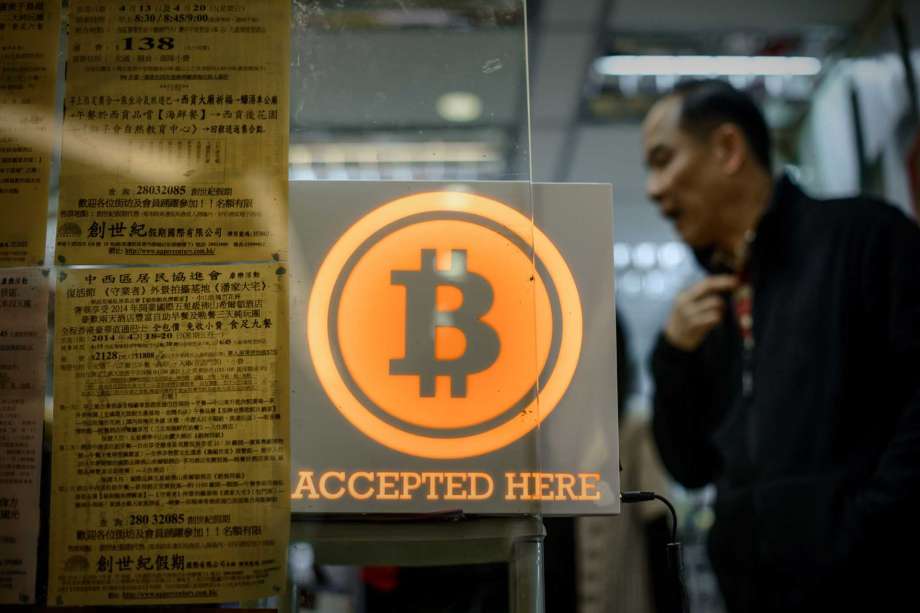
    Just as Kuala Lumpur hosted the opening of what claims to be the “largest blockchain centre in Asia,” a newly published report has urged the Malaysian government to hone and relax the regulations covering blockchain technology.

    The 242-page report, entitled “Tailoring Malaysian blockchain regulations for the new digital economy”, was published yesterday by the University of Malaya’s Faculty of Law.

    While it aims to be a “starting point to synthesize some of the [existing] legal viewpoints into collective practical solutions which will benefit Malaysia,” it also calls on the country’s central bank and securities commission to work together to define and provide better clarity, especially in regard to crypto-related taxation.

    The legality of crypto-currency trading in Malaysia remains somewhat unclear, as it is not formally illegal but remains unregulated. Report project director Nur Husna Zakaria said the current government stance was “promising” because, as yet, “none of the regulators in Malaysia has banned any transaction related to blockchain,” but she urged all government stakeholders to work alongside the country’s blockchain community to “ensure whatever regulation is [put] in place … is comprehensive.”

    According to the Malaysia’s Sun Daily, the country’s Inland Revenue Board is now studying the country’s crypto-currency market but has given no timeline on the release of any guidelines or legislation.

    The University of Malaya report was published the day after international technology developer NEM Foundation opened its new Southeast Asian HQ in Kuala Lumpur. The 11,000-square-foot facility, that NEM claims is the biggest blockchain-focussed facility in Asia, will act as a learning centre, incubator and accelerator for blockchain related startups.

    The centre aims to serve as an R&D facility for NEM related developers, business users and crypto exchanges and already Appsolutely Inc, a crypto-based rewards and loyalty business from the Philippines, has based its regional operations at the NEM centre, as has Indonesian crypto retail startup Pundi X and Singaporean mobile settlement solution Dragonfly Fintech.

    Singapore-based NEM, that gained global notoriety after its own digital token was at the centre of a $530 million hack in January 2018, announced earlier this month that it had devoted $40 million to an on-going global expansion program. NEM says $5 million of this fund has been allocated to support blockchain companies based at the new Kuala Lumpur centre.


  • Vietnam to revise automobile industry laws

    Vietnam to revise automobile industry laws

    The Ministry of Industry and Trade (MoIT) has asked the Ministry of Finance to remove the special consumption tax for locally-manufactured auto parts.

    This is part of a recommendation document that MoIT sent to the finance ministry in order to revitalise domestic automobile industry in the future and reduce the import of autos.

    The MoIT said that it is needed to have more measures to help local automakers cut production cost and accelerate the product’s competition capacity as well as revising policies on tax and fees.

    The ministry wanted the finance ministry to exempt the import tax on materials for part and components manufacturers who invest in Việt Nam, which should be in association with their commitment on long-term investment, volume of products, technology transfer and use of local labour force.

    The MoIT also recommends the application of a tax payment guarantee for a period of eight months instead of the current 30 days.

    The MoIT expected the finance ministry to study to amend and supplement a number of the above contents, which were proposed by Thành Công Group, with regard to laws on value-added tax, special consumption tax, and corporate income tax, in addition to personal income tax and natural resources protection tax.

    Earlier, at the review conference of the industry and trade sector held in Hà Nội on January 15, General Director of Hyundai Thành Công Lê Ngọc Đức proposed that the MoIT, in co-ordination with the finance ministry, consider several recommendations as those mentioned above.

    According to Đức, in order to achieve the goal of developing the automobile industry in Việt Nam, the Government has issued decrees such as Decree 116 on conditions for production, assembly, import and business of warranty service, car maintenance, and Decree 125 that regulates the roadmap for import duty exemptions of parts and components for manufacturers who meet conditions such as emission standards, engine displacement capacity for the car with nine seats and less, passenger car and truck.

    However, he said such privileges were not strong enough to be of significant priority for locally-assembled autos to help them compete with complete built-up units imported from ASEAN.

    Under the ASEAN Free Trade Agreement (AFTA) commitments, a zero per cent tax has been applied on cars imported from the bloc with a localisation rate of 40 per cent or more in the country of origin from January 1.

    A MoIT report showed that the price of an automobile in Việt Nam is currently high in the region but its quality is lower than an imported one.

    “Locally-assembled autos in Việt Nam have a similar price doubling as those seen in regional countries and much higher than other countries which have a stable automobile industry such as Japan and the United States,” said the report.

    “The domestic automobile industry has not yet reached the standards of the real automobile industry because most are at the level of simple assembly; the production line mainly consists of four key stages including welding, painting, assembly and inspection. There is no co-operation, linkage and specialisation between automakers and assemblers and part suppliers. There is no such system used by material suppliers and large-scale parts and components makers.

    “The localisation rate of new autos is only between 7 per cent and 10 per cent on average (compared to the target of 40 per cent in 2005 and 60 per cent in 2010). Currently, locally-produced products with very low technological content are tubes, tires, chairs, mirrors, cables, plastic products and batteries,” the report pointed out.

    MoIT has on numerous occasions warned that if such privileges and incentives were not approved, the domestic automobile industry would find it difficult to compete with imported cars.


  • Coal buyers spooked by Indonesia’s new shipping rules

    Coal buyers spooked by Indonesia’s new shipping rules

    Buyers of Indonesian coal are holding back orders of the fuel after the government issued new shipping rules for coal and crude palm oil that would restrict exports to Indonesian vessels, an industry association said today.

    Jakarta issued rules in October requiring coal and palm oil exporters to use Indonesian-flagged vessels and Indonesian insurance companies, to boost the role of the archipelago’s shipping industry in its export market.

    However, guidelines on implementing the rules and possible exemptions have not been released, raising concerns among shippers in Indonesia, the world’s top thermal coal exporter and palm oil producer.

    The regulation will take effect at the end of April.

    “There was some information, several potential buyers from abroad put on hold making any new contracts,” Hendra Sinadia, executive director of the Indonesia Coal Mining Association said.

    Describing the new rules as “dangerous”, Sinadia said they could affect export volumes and state revenues if shipping contracts had to be renegotiated to shift to so-called cost,
    insurance and freight (CIF) contracts from free-on-board (FOB) contracts.

    Under CIF contracts, the seller is responsible for the shipping arrangements and must buy insurance to protect the cargo against losses during the voyage. Under FOB contracts, the buyer procures the vessel and is responsible for all shipping costs.

    The industry is worried that time is running out to make adjustments before the rules come into effect, Sinadia said, noting that it would be difficult to do so without the
    guidelines.

    Indonesia Palm Oil Association secretary-general Togar Sitanggang said in an interview on Jan 24 that there were several problems with the new rules, noting there were not enough Indonesian-flagged food-grade tankers, and that Indonesian insurers may lack capacity.

    “If we’re selling CPO (crude palm oil), free-on-board at Belawan port, does this mean our buyer has to use Indonesian vessel? That is ridiculous.”

    The palm oil industry is awaiting guidance on when foreign vessels can be used if local vessels are unavailable, he said. “There should be no obstacles, but if we must do this and that, it could hold up exports.”

    The new rules could add to freight costs, Sitanggang said, if shipping companies were unable to find cargo for their return trips to Asia. “If their ships are empty, of course they’ll ask for a higher price from us.”

    According to Oke Nurwan, director-general of foreign trade at the Ministry of Trade, while most domestic shipping uses Indonesian-flagged vessels very little is exported on Indonesian ships.

    “It can’t be like that any more,” Nurwan said on Jan 25, adding that the government wanted the domestic shipping sector to compete more with multinationals.

    “If (the government) didn’t intervene there would be no trigger, so we made it mandatory,” he added.

  • Indonesia to Start Implementing Stricter Regulation for Ride-Hailing Services in February

    Indonesia’s Transportation Minister Budi Karya Sumadi confirmed on Thursday (25/01) the government will start implementing its newly-revised regulation for app-based ride-hailing services in February.

    The new ministerial regulation for services like Uber and Grab was set in October last year. It has been trialled in some major cities including Jakarta, Bandung (West Java), Semarang (Central Java), Surabaya (East Java) and Medan (North Sumatra).

    The new regulation will impose operational area limits for app-based taxis and require their drivers to obtain a public transportation driver’s license. Each driver will also have to join up with a company or a co-operative with at least five members.

    Cars used by app-based taxis will have to undergo regular test to keep their certificate of roadworthiness, or KIR, and each car should have a sticker saying it is being used as a ride-hailing cab.

    “In England, Uber cars have that kind of sticker, that’s easily seen on the street,” Budi told reporters at Kuningan City Mall in Jakarta on Thursday (25/01).

    “The ultimate goal for this regulation is to provide better safety for passengers,” he said.

    Many online taxi drivers have been complaining about the new regulation since it was first introduced in October.

    According to them, the hardest requirement to meet in the new regulation is re-registering the car as a public transportation vehicle and doing the KIR test regularly.

    “The regulation has to be fair,” Budi said. “It’s for everyone’s benefit. But public safety is our top concern. The regular KIR test, for example, is to make sure the cars are in tip-top shape,” Budi said.

    Last Monday, hundreds of online taxi drivers marched to the Transportation Ministry headquarters in Jakarta.

    The drivers promised a bigger street protest next Monday, Jan. 9, in front of the presidential palace.

    The government has also said it will impose tiered sanctions for drivers who disobey the rules, from suspending their license, fines of up to Rp 500,000 ($37) to a two-month jail sentence.

  • China targets cryptocurrencies in online pyramid scheme crackdown

    China targets cryptocurrencies in online pyramid scheme crackdown

    China will crack down on online pyramid schemes, including speculation masked as cryptocurrencies and online games, the public security ministry said on Friday.

    The ministry will act jointly with the industrial and commercial department to stamp out pyramid-type schemes, besides punishing those who swindle students and vulnerable groups, the ministry said in a statement on its website.

    Chinese regulators have moved to rein in financial risks associated with virtual currency trades and pyramid schemes.

    A court this month sentenced two people to life imprisonment for fraud in a pyramid scheme involving 15.6 billion yuan ($2.44 billion) that sucked in more than 200,000 people.

  • Airbnb pushes back on Singapore’s tough home rental rules

    Airbnb pushes back on Singapore’s tough home rental rules

    Short-term home rental service Airbnb on Friday called Singapore’s regulatory framework “untenable” as authorities said they planned to hold discussions with home-sharing platforms and resident groups soon on how such accommodation may be allowed.

    The reaction by Airbnb to the latest regulatory hurdle came amid its efforts to work with authorities around the world keen to minimize its impact on private housing and the hotel industry.

    While Singapore has been an early adopter of the sharing economy, it has strict rules regarding property rentals in the city-state and charged two men with unauthorized short-term letting of apartments earlier this week.

    “The current framework is untenable and does not reflect how Singaporeans travel or use their home today,” Airbnb said on Friday in a statement addressing Singapore’s regulations.

    “Nearly three years since the URA’s first public consultation, it’s disappointing that the discussion has not moved forward,” it said, referring to the Urban Redevelopment Authority.

    Private homes in Singapore are subject to a minimum stay of three consecutive months, under rules revised earlier this year, and cannot accommodate transient occupants.

    While saying there was space for short-term accommodation in Singapore, the URA told Reuters the government will review and consider safeguards to ensure it does not negatively affect the “amenity” of residential estates.

    It said it would soon start a public consultation on the matter. A previous consultation in 2015 did not reach a clear consensus on short-term rentals.

    Airbnb may be conscious of the knock-on effect that Singapore’s tough stance may have on other cities in the region, said Brian King, associate dean of the School of Hotel and Tourism Management at Hong Kong Polytechnic University.

    “They may be feeling like they need to take a slightly more aggressive stance this time to avoid this leading to crackdowns elsewhere,” King said.

    This week, Singapore charged two men with unauthorized short-term letting of four apartments in the first such prosecution. If found guilty, the two are liable to a fine of up to S$200,000 ($148,150) per offence.

    The rentals were arranged through Airbnb, which was not referred to in court documents.

    In a message seen by Reuters, Airbnb this week alerted hosts in Singapore to the court case and asked them to “share” their reason for hosting and why it is important the government pass laws that permit short-term home sharing.

    Airbnb, which matches people wishing to rent out all or part of their homes to temporary guests, said it has 8,700 listings in the city-state. Singapore has high population density, and its limited land area means a majority of the 5.6 million people live in apartments.

    Hunreds investigated

    The URA said part of the public consultation will involve working with key stakeholders such as representatives of home-sharing platforms, resident groups and other accommodation providers.

    The planning agency said it investigated 985 cases of unauthorized short-term accommodation in private homes in 2015 and 2016, and about 750 cases in 2017’s first 11 months.

    The firm, founded in 2008 in San Francisco, has clashed with hoteliers and authorities in cities including New York, Amsterdam, Berlin and Paris, which in some cases are limiting short-term rentals. Critics accuse Airbnb of exacerbating housing shortages and driving out lower-income residents.

    One host in Singapore, who has listed on Airbnb for the past two years after failing to find a long-term tenant and uses the income to pay the mortgage, is considering pulling the apartment from Airbnb’s website due to the authority’s increased scrutiny.

    “I am worried that I will have an empty apartment sitting there, that is not going to generate any income,” said the person, who spoke to Reuters on the condition of anonymity. “Any income that I earn doesn’t justify this kind of risk.”

  • China moves to regulate e-commerce

    China moves to regulate e-commerce

    Chinese top legislature is deliberating a draft law that will regulate and facilitate e-commerce in the country.

    The draft law was tabled for review by legislators at the bimonthly session of the National People’s Congress (NPC) Standing Committee, which runs from Monday to Sunday. It is the first reading of the draft by the top legislature.

    Explaining the draft to lawmakers on Monday morning, Lyu Zushan, deputy director with the NPC’s Financial and Economic Affairs Committee, said booming e-commerce in recent years had served to reveal loopholes in China’s legal system and commercial rules.

    The draft law will facilitate e-commerce growth, help maintain market order and protect consumer rights.

    The draft law said the nation should put online and offline commercial activities on an equal footing, and protect the safety of e-commerce transactions.

    All e-commerce operators have an obligation to pay taxes and should acquire the necessary business certificates, under the draft.

    Operators must also ensure personal information security for consumers. Those that fail will face fines up to 500,000 yuan ($72,000) and could have their business certificates revoked.

    They must also work to protect intellectual property, the draft said.

    The draft requires third-party e-commerce platforms to offer technical support for “law enforcement activities by relevant authorities.”

    China is the world’s largest e-commerce market. According to Lyu, e-commerce trade amounted to over 20 trillion yuan ($2.87 trillion) in 2015, with online retail sales totaling 3.88 trillion yuan.

    Last month, Chinese e-commerce giant Alibaba saw 120.7 billion yuan in gross merchandise volume during its 24 hour Singles’ Day event, an annual online shopping spree on November 11.

  • Politics could add to forces working against Korean cosmetics industry

    Politics could add to forces working against Korean cosmetics industry

    Last week the Korean government announced plan to impose duty free limits to stop third party sales of cosmetics in China, and now, in an unrelated move, the China government’s threats to retaliate over Korea’s deployment of new military defence technology seems to be adding to investor fears.

    Korea has taken a decision to deploy a Terminal High Altitude Area Defence (THAAD) battery, which some experts believe is one of the reasons why investors a dumping shares in Korean companies, a sector that is heavily reliant on exports to China.

    Raising the bar on visas and sanitary regulations

    In the first move, perceived to be a retaliatory step by China authorities, officials recently closed a visa agency catering to Koreans, something that will make it harder for Korean companies to obtain multiple entry visas for doing business in China.

    On top of this, the China trade authorities have also stepped up sanitary regulations governing Korean beauty products, a move that is also likely to put a damper on exports of certain products and make the whole process more difficult.

    “Cosmetics and entertainment stocks have plummeted as China has begun taking steps against Korean companies and individuals doing business on the mainland,” said Daniel Cho, head of research at Daishin Securities, speaking to the Korean Times.

    “The recent decline was largely engineered by the potential THAAD backlash.”

    Those duty free regulations

    Simultaneously, speculation has been growing about the impact of proposed duty free regulations, which are being drawn up to protect the industry, but some experts say this has already had an impact on investors and the value of shares in the country’s big beauty players.

    Last week the Korean customs authorities notified all Korean duty-free retail operators, which include three major operators, that each customer would be limited to buy no more than 50 cosmetic and fragrance products.

    The main objective behind the clamp down is to cut out on the emerging market for cosmetics then be sold on to third-party brokers, and then resold on to other retail channels.

    News of the limit was leaked on the previous Friday and when the Korean Stock Exchange re-opened for trading on Monday, stock prices dropped significantly, with Amore Pacific share prices falling over 2% and LG Household & Health falling 6%.

    In the last few years the rise and rise of Korean cosmetics companies has been attributed to a huge appetite from the China market, but with prices of the products being much higher in China, consumers have taken to shopping holidays in Korea to stock up.

    China drives duty-free cosmetics sales

    Sales of Korean cosmetics have been boosted by chic advertising campaigns, Korean pop and a product innovation pipeline that boasts some of the most cutting edge products available anywhere in the world.

    A large part of this success has been the huge influx of tourism from China, many of whom are going on ‘shopping holidays’ with the main aim of buying up their favourite Korean cosmetic products at a cheaper price than they would pay in China.

    Current figures show that cosmetics make up the lion’s share of Korea’s largest duty free retail chain, Lotte, accounting for 58.9% of sales in the first quarter of this year, and that 70.8% of the company’s overall sales came from Chinese visitors. This up from 63.3% compared to the previous year.

  • Government fine watch shop over Aishwarya Rai photo

    Government fine watch shop over Aishwarya Rai photo

    The photograph below is from a Longines advertising campaign, and features arguably India’s most famous Bollywood star, Aishwarya Rai.

    Some might consider it elegant, others “hi-so” in certain parts of Southeast Asia. But in Malaysia, religious zealots have fined a non-Muslim watch retailer for displaying a poster in-store featuring this same Aishwarya Rai photo.

    According to Malaysian mainstream media, someone from the Kota Baru Municipal Council considered the photograph too “sexy” – an “offence” the beleaguered retailer has supposedly committed more than 10 times since the 1990s.

    Aishwarya-Rai-Longines

    Swee Cheong Watch & Pen Co owner Lee Kum Chuan’s latest bureaucratic punishment came to light when he went to obtain a business licence from the council to open a new store in Aeon Mall, his third outlet in Kota Baru.

    “When I went to MPKB to apply for a business permit for the new shop, I was told to settle the fines for the offence committed in KB Mall,” he told The Star in Kuala Lumpur.

    “I was hit with a total RM2000 (S$668) in fines, but the amount was reduced to RM400. I had to pay the sum before I could get the new permit,” he said.

    In a nation where family members of the Prime Minister are allegedly siphoning off hundreds of millions of dollars of state funds to spend on luxury goods, movie productions, condominiums and aircraft, prompting investigations in a dozen or so countries, law-enforcement officials consider it damaging to community standards for a fully dressed Bollywood actress to promote watches. At least that’s how it seems.

    Shop ‘raid’

    MPKB enforcement officers “raided” the new Swee Cheong Watch & Pen shop in Aeon Mall on Monday, ordering the “offensive” posters be removed from display.

    “The posters were supplied by our manufacturers,” Lee told The Star.

    The issue has sparked wider concerns about the application of a dual justice system in Malaysia in which hudud laws – and their applicable punishments – apply to Muslims, and more conventional laws apply to Chinese, Indian and other ethnicities. (In Malaysia, ethnic Malaysians are born Muslim and face physical punishment if they try to renounce their religion). Hudud is defined by Wikipedia as “an Islamic concept: punishments which under Islamic law (Shariah) are mandated and fixed by God”.

    Kelantan Malaysian Chinese Association secretary Datuk Lua Choon Hann says the harassment of the watch retailer follows the council taking action against hairdressers for attending clients of a different gender.

    “The government has proved yet again that its repeated claims that the hudud enactment will have no bearing on non-Muslims are nothing but mere fallacy,” he said in a statement this week.

    “Based on the summonses issued by local councils (in Kelantan), MCA wants to raise awareness of the motives to remove clauses in the Federal Constitution that protect the rights of non-Muslims and Muslims against punitive criminal actions based on religious precepts,” he said.

  • Foreign Investment into Tobacco Industry Banned in China

    Foreign Investment into Tobacco Industry Banned in China

    The Ministry of Industry and Information Technology (MIIT) has recently issued regulations regarding retail of tobacco products in China. The new regulations stipulate that foreign invested commercial enterprises or individual business households are not permitted to engage in tobacco wholesale or retail business, nor engage in trading of tobacco monopoly products in alternative forms such as franchise, absorption of franchise stores or other re-investment, etc. The Measures for Administration of the Tobacco Monopoly License and Measures for Administration of Shipment Permit of Tobacco Monopoly Products will both become effective as of July 20, 2016.

    Shanghai Issues Notice on the List of Automatic Preferential Tax Policies

    Shanghai Municipal State Tax Bureau and Shanghai Municipal Local Tax Bureau has released a notice outlining and clarifying eight preferential tax policy matters which do not require additional materials to apply for. They are as follows:

    • Deduction/reduction of VAT for purchase of special equipment for the VAT control system.
    • Exemption of small sized and micro profit enterprises from VAT.
    • Exemption of ticket income of science halls, natural museums, science & technology education bases and science & technology education activities from VAT.
    • Exemption/reduction of enterprise income tax on qualified small sized and micro profit enterprises.
    • Accelerated depreciation or remuneration for fixed assets or software purchased.
    • Accelerated depreciation or one-off deduction of fixed assets.
    • Preferential stamp tax during the restructuring process of an enterprise.
    • Preferential stamp tax on loan contracts concluded between small sized and micro enterprises.
    State Council Issues the Guiding Opinions on Cutting Overcapacity in the Non-Ferrous Metal Industry

    The General Office of the State Council issued “Guiding Opinions on Creating a Favorable Market Environment to Promote Structural Adjustment, Transformation and Increases in Benefits in the Non-Ferrous Metal Industry (Opinions),” which addresses dealing with overcapacity problems in the non-ferrous metal industry. The Opinions consists of 15 articles, making detailed directives for key tasks and policy assurance, stressing that work should be done to cut overcapacity and disposal of surplus material in accordance with the laws and regulations, and guide the transfer of non-competitive capacity.

    The Opinions states the key tasks as including: strict control of newly-added capacity and investigation and management of newly-built electrolytic aluminum projects in violation of the regulations; quickening of disposal of excess material, dealing with overcapacity in accordance with the laws and regulations and guiding the transfer of non-competitive capacity; stepping up technological innovation, pushing forward intelligent manufacturing and development of refined processing; expanding market applications, enhancing upstream and downstream cooperation and improving relevant product standards; improving reserves systems; actively promoting international cooperation, etc.

  • Myanmar businesses want policies

    Myanmar businesses want policies

    There are concerns the new government, which took office in April, has not yet revealed its economic policies. Businesses are also concerned that if the policies further open up the economy, some companies would not be ready for potentially intense foreign competition.

    At a panel discussion of the Economist Events’ Myanmar Summit 2016, Sai Sam Htun, executive chairman of Loi Hein Co, the No 1 beverage firm in Myanmar and the producers of Alpine drinking water, said local business were showered with optimism and challenges.

    “Currently, local business people are worried,” he said. “We expect the government to come up with the road map, model and vision for the country. We expect that as soon as possible. Otherwise, we are in the dark and do not know where to go, what to do and what will happen in the future.”

    He welcomed the national agenda to achieve reconciliation, but that should not be the single priority.

    “The new government brings us to the road to democracy, but that doesn’t guarantee that everything will be smooth,” he said. “We are expecting our leader Daw Aung San Suu Kyi to say something about the future economy of Myanmar.”

    Kyaw Win, planning and finance minister and chairman of the Myanmar Investment Commission, said the policies should be revealed by the end of this month.

    Win Win Tint, chief executive officer of City Mart Holdings, the nation’s largest retail chain, noted that Myanmar needed to consider whether foreign investment should be allowed in trading, the services industry and retailing.

    Currently, Myanmar’s retail industry is fragmented. Modern trade accounts for only 10 per cent of the retail industry, compared to 45 per cent in Thailand and 25 per cent in Vietnam.

    There is a huge growth potential, but poor infrastructure and low consumption may hold back the potential growth. Suppliers are still unable to support retailers, pushing the ratio of imported products to 80 per cent.

    “One thing we always tell our policy-makers is that local businesses are not on a level-playing field,” Win Win Tint said. “If the MIC allows foreign players in these industries, they will enjoy tax incentives and access to overseas financing.”

    She added that the old foreign investment law did not take local business interests into consideration.

    Sai Sam Htun, however, is not afraid of foreign players. He recalled the situation a few years ago when all businesses fretted about the entry of foreign players.

    “I was quite scared that I would be out of business. But I aggressively worked on the branding aggressively,” he said. “If you are in the market, you just have to be consistent. Then you can compete with any competitor and face any challenge.”

    He noted that foreign and local businesses could have win-win strategies. Foreign companies like Coca-Cola, PepsiCo and multinational beer companies have successfully forged partnership with local players.

    Loi Hein has formed four joint ventures with foreign companies – two each with Japanese and Thai counterparts.

  • Marine Gold reaping benefits of 2013 losses as shrimp production rebounds

    Marine Gold reaping benefits of 2013 losses as shrimp production rebounds

    In 2013, Marine Gold Products, one of the largest shrimp exporters in Thailand, lost big money on meeting its export commitments.

    As early mortality syndrome (EMS) caused Thai production to dive, raw material prices rocketed. EMS caused production to dive under 200,000 metric tons, compared to the peak of over 600,000t.

    This left packers fighting for shrimp for orders.

    “I shipped every container in 2013, so we lost $10 million,” Choopong Luesukprasert, Marine Gold’s managing director, said.

    The aim of continuing to ship containers at a crisis time for the Thai shrimp sector, was about maintaining business contacts, he said, during the Thaifex: World of Food Asia show in Bangkok.

    “But, since, we have kept this business and gained more, as we reliable,” Choopong Luesukprasert, Marine Gold’s managing director said.

    For 2016, shrimp production in Thailand is rebounding and prices for raw material are competitive with other sources, such as Indonesia, India and Vietnam.

    Production in 2015 is said to have been around 240,000t, up from 210,000t in 2014.

    For 2016, forecasts range from 260,000t, up to 300,000t.

    The later is attainable, said Luesukprasert.

    “I think 300,000t is realistic. Production hasn’t started like we expected, as we have had such a long drought in Thailand. But, we think it will start picking up from now,” he said.

    Selling shrimp to the US is the main export market for Marine Gold, with the export target for 2016 at 45 million pounds, he said.

    Due to the forecasted increase in Thai raw material output in 2016, Luesukprasert hopes Marine Gold can expand its output by 20-25%. This is ahead of the forecasted increase in production.

    The company has also launched a ready-to-eat brand for the domestic market.

    Luesukprasert said he plans to export the product range in the future, however.

    The range is being sold in Thai retail under the brand “Yummy Tale”; featuring products such as shrimp pad Thai and shrimp green curry with jasmine rice.

  • Indonesia Revises E-Commerce Regulation

    Indonesia Revises E-Commerce Regulation

    Indonesia has one of the biggest economies in the Asia-Pacific region and its rate of internet adoption is one of the fastest in the world. So naturally, e-commerce in the region is starting to boom.

    According to Alibaba Group Executive Vice Chairman Joseph Tsai, Indonesia’s per capita GDP is about the same as China’s was in 2009, when Alibaba’s marketplaces really began to take off. Alibaba has taken steps to get a stake in the region, investing US$1 billion in Southeast Asia e-commerce platform Lazada, a Singapore-based company with extensive operations in Indonesia.

    To help help drive e-commerce growth in Indonesia, the government has made moves to open the country up to foreign e-commerce investment and expertise.

    Indonesia’s Investment Coordinating Board (BKPM) is finalising guidelines for foreign e-commerce investment. The new BKPM regulations will allow 100 percent foreign ownership for e-commerce businesses with a minimum investment of Rp100 billion (about AU$10.3 million) or businesses that create 1,000 jobs.

    The guidelines, however, limit foreign ownership to 49 percent for businesses investing below the Rp100 billion mark. The moves are designed to encourage big e-commerce investment from major players, while offering some protection to Indonesia’s local SMB e-commerce players.

    The removal of e-commerce businesses from Indonesia’s ‘negative investment list’ (which outlines business activities that are either entirely closed or conditionally open to foreign investment) provides a significant opportunity for foreign investment into one of South-East Asia’s fastest growing e-commerce markets.

    “I think this is the right time for Indonesia to aim to become the largest digital nation in Asia,” said Rosan Roeslani, Chairman of Indonesian Chamber of Commerce and Industry.

    “What this country needs is not only money but also know-how, which is why we invited incubators to come to Indonesia,” he said.

    “We have also talked about how we can get more start-ups to go through seed stage. One of the possibilities is to encourage big e-commerce players to spin their people off their company… We have not come out with the conclusion yet, but the government is very open for solutions,” he said.

    Indonesian President Joko Widodo is looking to make the country South-East Asia’s largest digital economy by 2020. The lifting of foreign ownership restrictions has been praised by those in the industry who welcome the injection of foreign capital and expertise.

    The removal of e-commerce from the negative list is part of Indonesia’s e-commerce roadmap, which was released earlier this year. The roadmap includes a list or proposals aimed at making it easier for e-commerce firms to operate in the country. Key elements of the roadmap include:

    • Government financied developments of logistics facilities and improvements to communication infrastructure
    • Government financing for start-ups in the form of grants and funds, as well as regulation for crowdfunding
    • Streamlining business licensing processesand increasing consumer protection regulationE-Commerce Regulation
    • Tax breaks for tech start-ups
    • Increased cyber security
  • China changes the tax rules on purchases from overseas e-retailers

    China changes the tax rules on purchases from overseas e-retailers

    In some cases consumers will owe more tax, and in other cases less.

    Foreign online retailers and brands have benefited in recent years from China’s relaxed rules on purchases by Chinese consumers on overseas websites. China’s new rules on import duties and taxes will hurt some of those overseas online sellers, while helping others.

    The new rules, to take effect in April, provide an exemption from import duties for purchases from foreign websites of up to 2,000 yuan ($306) but add a sales tax of 11.9% that consumers don’t pay today. That sales tax is still less than the 17% value-added tax consumers pay when shopping in stores in China.

    The existing rules, which mirror the regulations for consumers bringing in purchases from abroad or receiving them by mail from friends overseas, allows a consumer to import up to 1,000 yuan ($153) worth of products at a time for personal use, up to 20,000 yuan in a year. Those purchases are subject to import duty—which generally vary from 10% to 50% of the purchase price, depending on the type of product—but the tax is waived if it’s under 50 yuan ($7.65.) That 50-yuan exemption will be eliminated in the new rules.

    The new policy will benefit sellers of products for which the duty is high, such as cosmetics, which are hit with a 50% duty tax, says Li Pengbo, CEO of China Cross-border E-commerce Research Center, a consulting company. But other items for which the duty is low, such as children’s products, the new rules will make it more expensive for Chinese consumers to buy from overseas websites, Li says.

    Here are some major product categories, with the duty tax percentage:

    • Food, 10%
    • Alcohol, 50%
    • Apparel, 20%
    • Cosmetics, 50%
    • Electronics, 20%

    Thus, under existing rules a Chinese consumer who buys a shirt for $50 on a foreign e-commerce site pays a fee of $10 (20% duty on a $50 purchase), whereas under the new rules he would pay only $5.95 (no duty, but a sales tax of 11.9%.) However, a consumer buying $30 of powdered milk today would pay no duty or sales tax (the duty would be $3, 10% of $30, but that is waived because no fee is charged if the duty is below 50 yuan ($7.65)), whereas under the new rules she would pay $3.57 (no duty, but a sales tax of 11.9%.)

    Both the new rules and the old ones also apply to foreign companies that sell on Chinese marketplaces under the relaxed cross-border e-commerce rules that China has adopted in recent years. Such major Chinese e-commerce operators as Alibaba Group Holding Ltd., JD.com Inc. and the Amazon China subsidiary of Amazon.com Inc. have created special sections of their online shopping sites featuring imported goods sold under the special cross-border rules. Those rules allow foreign companies to store items in 10 free-trade zones without clearing customs, and then send them through an expedited customs process when a Chinese shopper places an order.

    They also allow the sale, up to the limit for personal use—1,000 yuan today and 2,000 yuan when the new rules take effect in April—of goods that have not been authorized for sale in China, as long as they have been found safe in their home country. That’s a big deal for sellers of products like cosmetics and food that can take years to gain approval from the Chinese government for domestic sale.

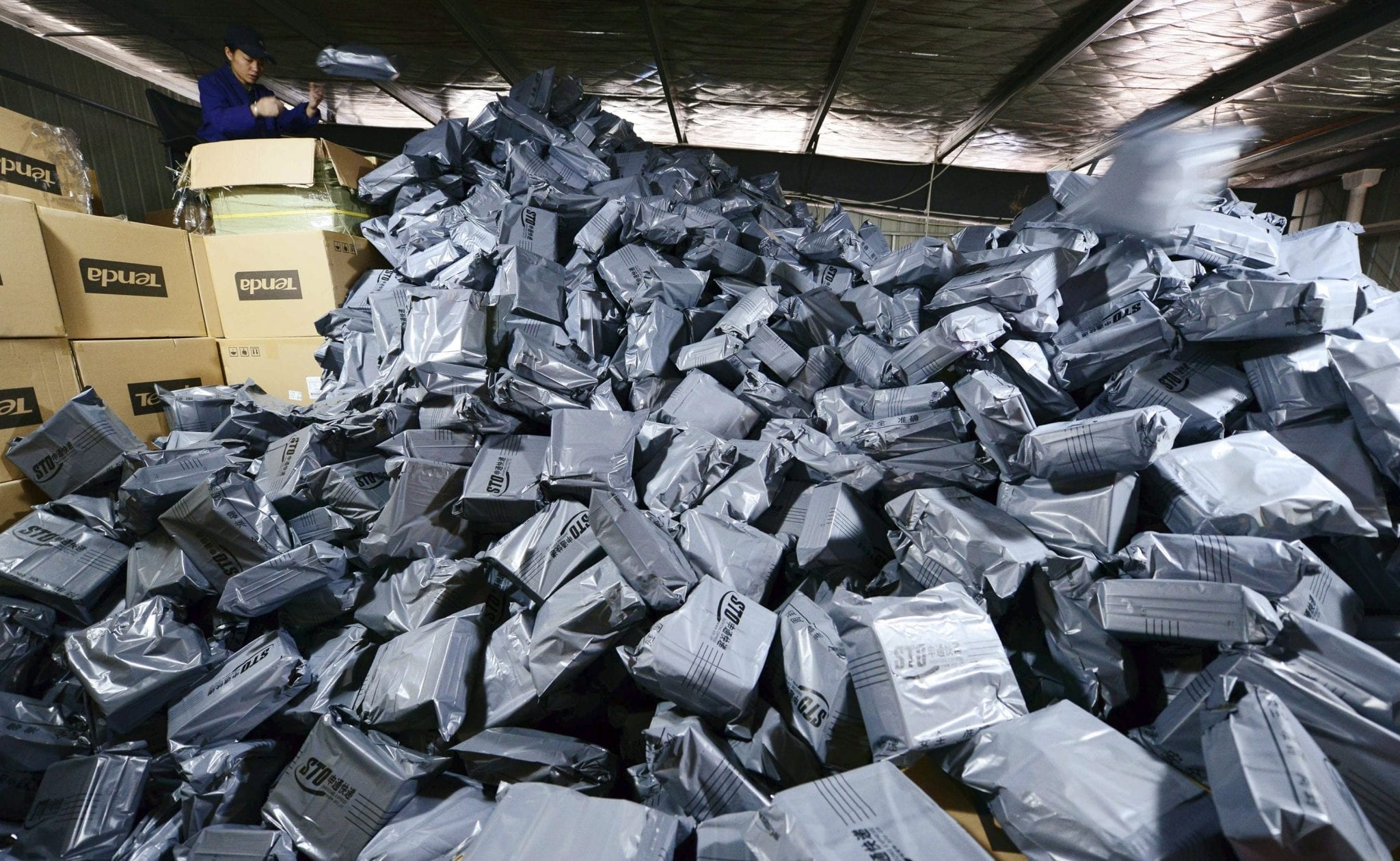
    Chinese consumers have taken advantage of the cross-border e-commerce rules to buy significant quantities from foreign web merchants. China’s customs authority reported this month that the first seven of the free-trade zones established in China since late 2013 handled 100 million inbound parcels purchased from foreign e-retailers with a total value of $2 billion.

    The relaxed rules on purchases from foreign websites have drawn protests from domestic retailers who say they have to pay import duties on all goods they bring into the country and charge consumers the national 17% value-added tax.

    Gong Dingyu, founder and chief operating officer of Chinese children’s product retail chain Leyou, tells Internet Retailer, that the new rules represent of a different way to tax goods purchased from overseas e-retailers.

    “The old policy is unfair because traditional trading companies and physical stores don’t have the same favorable policy as cross-border e-commerce,” Gong says. “Also, without products being monitored and inspected by the Chinese government, online consumers could buy imported products with quality issues.”

    JD.com is No. 1 in the Internet Retailer 2015 China 500 and Amazon China No. 5. While Alibaba’s big online marketplaces Taobao and Tmall account for about three-quarters of online purchases in China, Alibaba is not ranked because it is a marketplace operator and not the merchant of record for any sales on its sites.