Tag: report

  • Singapore December retail sales drops 3 per cent

    Singapore December retail sales drops 3 per cent

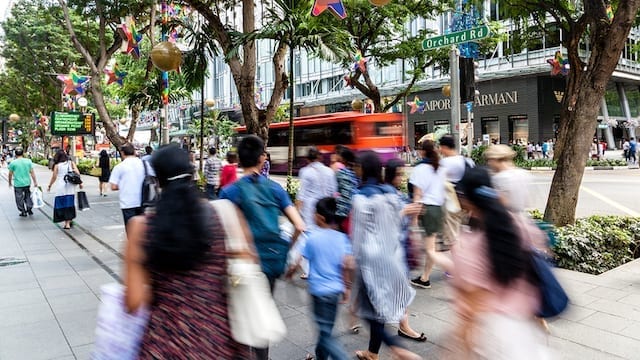
    Singapore retail sales in December slipped 3 per cent year on year. Including motor vehicles in the data, they fell by 6 per cent. There was a month-on-month decline of  4.1 per cent excluding vehicles, largely due to the online-sales boom driven by Singles Day and Black Friday in November.

    Online retailing continues to eat into traditional channels, accounting for 5.5 per cent of total sales in December, which compares favourably with the festivals-driven 6.6 per cent in November.

    The main drivers of change in monthly data was a 20.7 per cent slump in motor vehicle sales, and a 16.8 per cent fall in sales of computer and telecommunications equipment, largely down to  new product releases in December 2017.

    Singapore retail sales in December of recreational goods, watches and jewellery and furniture and household equipment decreased between 3.9 per cent and 5.8 per cent. Statistics Singapore attributed that to lower demand for sporting goods, jewellery and furniture. Conversely, sales of medical goods and toiletries increased 1.8 per cent.

    Sales of food and beverage services increased 4.5 per cent in December, compared to the same month last year.

    Sales by food caterers, fast-food outlets, restaurants and other eating places (such as cafes) all increased, by between 2.5 per cent and 6.6 per cent year on year.

  • Malaysia to post 4.4% GDP growth for Q4 2018: StanChart

    Malaysia to post 4.4% GDP growth for Q4 2018: StanChart

    Standard Chartered has projected Malaysia’s gross domestic product (GDP) to remain at 4.4% in the fourth quarter (Q4) of 2018. However, full-year GDP is expected to come in lower at 4.6% compared with 5.9% in 2017. Bank Negara Malaysia will release Q4 GDP data on Thursday.

    “We estimate GDP growth of 4.4% y/y, similar to Q3. Private consumption may have eased from the 9% y/y growth in Q3 as the boost from the tax holiday in June-August 2018 likely faded. Nevertheless, a rebound in mining and agriculture activity may have supported growth,“ Standard Chartered said in a research note.

    It added that private consumption was the main growth driver in 2018, accounting for 92% of GDP growth in the nine months (9M) of 2018 versus 64% for the same period of 2017, benefiting from the “tax-holiday” boost and strong labour market conditions.

    Meanwhile, private investment eased (primarily on lower investment in residential and commercial properties in the first quarter) and public investment extended its decline in 9M 2018.

    “Our GDP growth tracker suggests downside risk to our Q4 GDP growth forecast, with our tracker being reliant on more readily available externally driven activity data, such as IP, and less reflective of strong domestic consumption,” it said.

    Standard Chartered forecast 4.9% GDP growth for 2019, saying that private consumption is likely to remain the main growth pillar.

    “Beyond the consumer sector, we are slightly cautious on growth, especially given weak external demand. However, we see two one-off supportive factors. First, goods and services tax (GST) and income tax refunds amounting to RM37 billion (2.5% of GDP) may support spending (but these refunds have not been disbursed yet, posing downside risk to our growth forecast). Second, resumption of production capacity in the mining sector may also help.”

    On monetary policy, Standard Chartered said the latest meeting of Bank Negara Malaysia’s Monetary Policy Committee in January suggested that it is more dovish on the global outlook but still comfortable on domestic growth, underpinned by private consumption and private investment.

    “We maintain our call for Bank Negara Malaysia to keep rates on hold in 2019, with risks skewed towards a cut, especially if external demand worsens further and affects domestic activity.”

  • Ralph Lauren showing good progress

    Ralph Lauren showing good progress

    After a long run of fairly mediocre performance, Ralph Lauren has finally delivered a solid set of numbers. The 5 per cent net revenue growth announced last week is pleasing as are the various regional outcomes. These were supported by a respectable increase in underlying comparable sales. It would be remiss not to note that the good figures have been delivered off the back of a very weak prior year performance, but this should not take away from the fact that the brand is now headed in the right direction.

    Away from the top line, the bottom line has also strengthened with operating income up by 12.9 per cent over last year. Much of this is down to far lower rates of discounting, especially in the wholesale channel. We also see this as a sign that Ralph Lauren’s more disciplined and focused approach to producing collections is allowing more product to be sold through at a fuller price. All of this suggests that the company is doing a much better job at connecting with consumers.

    Our own data backs this up. Brand affinity to Ralph Lauren was the strongest in over five years this holiday season; brand recall and awareness were also higher, including among younger consumers. Some of this is the result of increased marketing spend but a lot of it also comes down to a more targeted approach. Initiatives like the launch of the Palace label have provided the brand with greater visibility among consumers looking for edgier, contemporary designs. There is clearly more work to be done, but this progress represents a good platform on which to build.

    That said, Ralph Lauren needs to remain disciplined; it should not revert to past form by launching rafts of sub-brands and spin-off labels which create confusion.

    Digital was the star channel this quarter with sales up by 20 per cent over the prior year. Some of this is a consequence of the investment in online platforms which are now much improved and delivering higher conversion. However, traffic to websites has also risen as Ralph Lauren has created more visibility around its products and brands. In North America, the slight downside is the imbalance in growth. Online comparable sales rose by 21 per cent, but store comparables were flat. While this is not necessarily surprising, it underlines that Ralph Lauren has more work to do in persuading customers to visit its shops – something that should, in theory, become easier as it pulls back from the wholesale channel.

    For all of this positivity, we are still cautious about the trajectory of the brand. While there is no doubt that Ralph Lauren is now in a much stronger position, a lot of work remains to be done on carefully defining the various parts of the offer and ensuring they remain targeted.

    Because of the vast array of brand elements, this is a challenging task that could easily falter – especially as the economy tightens and the company laps some tougher comparatives.

    Overall, however, Ralph Lauren is on the right track, it just needs to stay on course as it accelerates.

  • Japan’s Zozo expects profit fall, cuts outlook

    Japan’s Zozo expects profit fall, cuts outlook

    Online fashion store Zozo reported its firs-ever profit decline since its launch, adding to the announcement that it plans to discontinue its innovative Zozo suit, as it moves away for custom-fit fashion. One of Japan’s fastest-growing start-ups, Zozo said it expects full-year for the fiscal year ending March 2019 to fall 12%, dipping to 17.8 billion yen ($164 million).

    Zozo said it expects full-year operating profit of 26.5 billion yen, down around 19% from a year earlier. It previously forecast profit to rise to 40 billion yen.

    Sales are still predicted to reach double-digit growth, up 20% to 118 billion yen. However, that’s much lower than an initial forecast of 247 billion yen.

    By category, private-brand revenues are forecast to total 3 billion yen, just 15% of the 20-billon yen prediction made last year. Profits at the new apparel brand will also be negative, registering a loss of 12.5 billion yen.

    Zozo holds close to a 50 percent share of Japan’s e-commerce market for mid to high-end fashion. The Tokyo-based retailer had tried to branch out by launching its private brand and a made-to-measure service. Dubbed the ‘Zozosuit’, a black-and-white spotted body suit that allowed user to take and upload personal body measurements, the suit was overhauled after complaints on how long the suits took to arrive, with some customers complaining the suit did not fit, causing more delays.

    “By distributing the ‘Zozosuit’ for free so that people could take measurements, we were hoping to create demand for the Zozotown business, including the private brand. But the impact did not have the scale that we had hoped for,” the company said in a statement.

    Zozo said it now expects to pay a year-end dividend of 10 yen per share instead of an original forecast of 22 yen.

  • Mercedes back in No. 4 spot on E-class sales in Korea

    Mercedes back in No. 4 spot on E-class sales in Korea

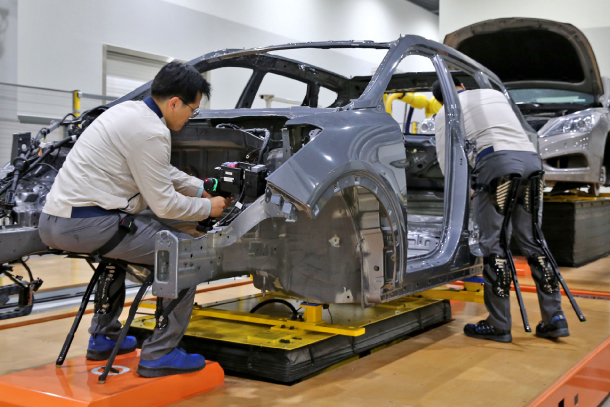
    Mercedes-Benz outsold local carmakers in Korea to finish fourth in domestic sales in January, industry data showed Monday. The Korean unit of the German automaker sold 5,796 vehicles last month, equal to 4 percent of the total 114,632 vehicles. The sum places it fourth after Hyundai Motor (31.2 percent), Kia Motors (22.8 percent) and SsangYong Motor (6.1 percent).

    January sales for Mercedes-Benz Korea shrank 22.8 percent compared with the month before, but they were still higher than the monthly sales by Renault Samsung Motors (3.5 percent) and GM Korea (3.1 percent).

    The last time that the German brand reached No. 4 in monthly sales was back in April last year, a ranking that followed the closure of a local assembly plant by GM Korea two months earlier. Mercedes-Benz defended the ranking for three months before slipping to No. 6 in May last year.

    In yearly sales, Mercedes-Benz Korea sold 70,798 units for a market share of 4.5 percent last year, behind Renault Samsung (5.7 percent) and GM Korea (5.5 percent).

    Industry watchers attribute the sales increase to the success of the E-Class. January sales of the lineup were the 12th highest at 3,392 units, a number meaning that one E-Class vehicle was sold for every three Grandeur autos from Hyundai Motor purchased.

    The E-Class cars outsold Genesis, an independent brand launched by Hyundai that is pitted as its domestic rival, last year.

    The “diesel-gate” scandal that pounded German brands also helped promote the E-Class, which are mostly gasoline cars,

    “This year, BMW and Audi are scheduled to release new sedans, and a full-change Genesis G80 is also due soon,” one source noted. “This will likely affect the sales of the E-Class.”

  • Samsung to pay its biggest tax bill ever as profits rise

    Samsung to pay its biggest tax bill ever as profits rise

    Samsung Electronics is expected to pay 16.8 trillion won ($15 billion) in corporate taxes this year, up 20.1 percent from a year earlier, due to its record earnings, its regulatory briefing showed Monday. It is expected to cough up 28.6 percent of its operating profits, which reached an all-time high of 58.9 trillion won in 2018, according to its consolidated financial statement.

    The estimated tax amount is the highest amount ever for the company, 2.4 times the number from 2015 and over 14 times from 2009, its past reports showed.

  • H&M profit drops due to online investment

    H&M profit drops due to online investment

    H&M profit dropped in the year to November 30, the Swedish fast-fashion retailer blaming investment in its online business for the decline. The world’s second largest clothing retailer embarked on a transformation program last year, investing heavily in logistics and digital technology aiming to improve the shopping experience and product range. This included an upgrade in its mobile app, faster deliveries and the rollout of click-and-collect.

    The company is also working on a new H&M concept store.

    In the last three months of its financial year, the company spent around US$48.5 million on logistics and technology, including resolving problems it flagged earlier last year.

    H&M CEO Karl-Johan Persson said the upgrade in the company’s logistics systems inevitably resulted in increased costs but will lead to a range of improvements for customers.

    “Against a backdrop of rapid changes in the fashion industry, in 2018 we accelerated our transformation to future proof our business, ending a challenging year for the H&M Group and the sector with strong signals that we are on track,” he said.

    Persson said it may have been a challenging year for H&M and the industry but after a difficult first half, there were signs the company’s transformation efforts were beginning to take effect.

    H&M posted a 5 per cent increase in full-year revenue to $22.7 billion, while in local currencies, net sales rose by 3 per cent. Profit fell by 21.8 per cent to $1.36 billion from the same period last year.

    Online sales rose 22 per cent to SEK 30 billion ($3.2 billion) and now comprise 14.5 per cent of the company’s total revenue.

    “With a stronger customer offering and the ongoing improvements in buying and logistics, we expect this trend to continue,” Persson said.

    “While this performance is still some way off the targets that we set at the beginning of 2018, these positive signals confirm we’re making progress across all our strategic focus areas: to create the best customer offering; a fast, efficient and flexible product flow; a stable scalable tech foundation; and adding new growth through store and online expansion.”

    According to Persson, the company opened three new fulfilment centres in the fourth quarter with a total of around 230,000sqm so it can offer customers faster deliveries and a wider assortment while reducing the capacity constraints that slowed them down in some markets in 2018.

    “We have also completed our online transition with investments in 2018, enabling us to successfully migrate online in Germany to the new platform earlier in January 2019,” he said. “With this, all H&M online markets are now on the new platform.”

    Persson said the difficulties with the logistics upgrade in some of their markets earlier in 2018 led to additional costs in the fourth quarter.

    “Applying lessons learned, we have not increased investments to secure upcoming transitions.”

    He added that while these initiatives have a short-term impact on margin, they will lead to continued improvements for their customers, driving increased profitability in the long term.

    “With the transformation now underway, capital expenditure will reduce this year compared to last and we will continue to shift the balance of our investments towards digital.

    “Changing consumer behaviour and technological innovation will continue to transform how and when people shop, we are building a business with the flexibility to respond to this constant evolution.”
  • Courts Asia continues negative trend as Malaysian sales tank

    Courts Asia continues negative trend as Malaysian sales tank

    Group sales fell 6.2 per cent to $175.3 million, largely due to a 22.2 per cent decline in Malaysian sales measured in ringgit with lower consumer demand for goods and services.  Singapore sales, which account for three-quarters of the business’ overall sales, slipped a negligible 0.7 per cent, while the company’s Indonesian woes continued. Although the market accounts for just 3.4 per cent of Courts Asia’s sales, revenue fell 7.3 per cent in local currency. Courts Asia is already taking steps to stem losses in Indonesia, recently announcing the closure of one of its megastores and the downsizing of another.

    Japanese electronics retailer Nojima Corp lodged a takeover bid for Courts Asia last month, conditional only on the formal acceptance by Courts Asia’s majority shareholder  Singapore Retail Group, which has already indicated its acceptance. The Japanese company plans a strategic review of the business and will consider delisting it.

    Meanwhile, Courts Asia says it will continue to endeavour to improve efficiencies in its Malaysian business to improve productivity and return to profit. Twelve underperforming stores have already been closed reducing the network to 54.

  • Korea automobile production falls for 3rd year in 2018

    Korea automobile production falls for 3rd year in 2018

    Korea’s auto production tumbled for a third consecutive year in 2018 amid weaker domestic and global demand, data showed Sunday. According to the data by the Korea Automobile Manufacturers Association (KAMA), Korea produced 4.03 million vehicles last year, down 2.1 percent from the previous year. The figure has been decreasing over the past three years from 4.56 million in 2015 to 4.23 million in 2016 and 4.12 in 2017.

    The 2018 figure put Korea as the seventh-largest car manufacturing country in the world, down one notch from the previous year, according to the association.

    Korea became the world’s fifth-largest maker of cars in 2005 and retained the ranking until 2015. But India edged out Korea to stand at the world’s sixth in 2016 and 2017. Last year, Korea fell behind Mexico.

    China was found to produce the largest number of vehicles in 2018, with 27.81 million followed by the United States, Japan, Germany and India.

    Korea’s total car exports also fell to 2.45 million vehicles last year from the previous year’s 2.53 million, the KAMA said, adding that the country accounted for 4.1 percent of the world’s car production in 2018, down 0.1 percentage point from a year earlier.

    “Contentious labor-management relations, as well as stiff labor market conditions, among others, appear to negatively affect local carmakers’ competitiveness,” the association said in a release, calling for state support and business innovation.

  • Asia-Pacific boosts Estee Lauder revenue

    Asia-Pacific boosts Estee Lauder revenue

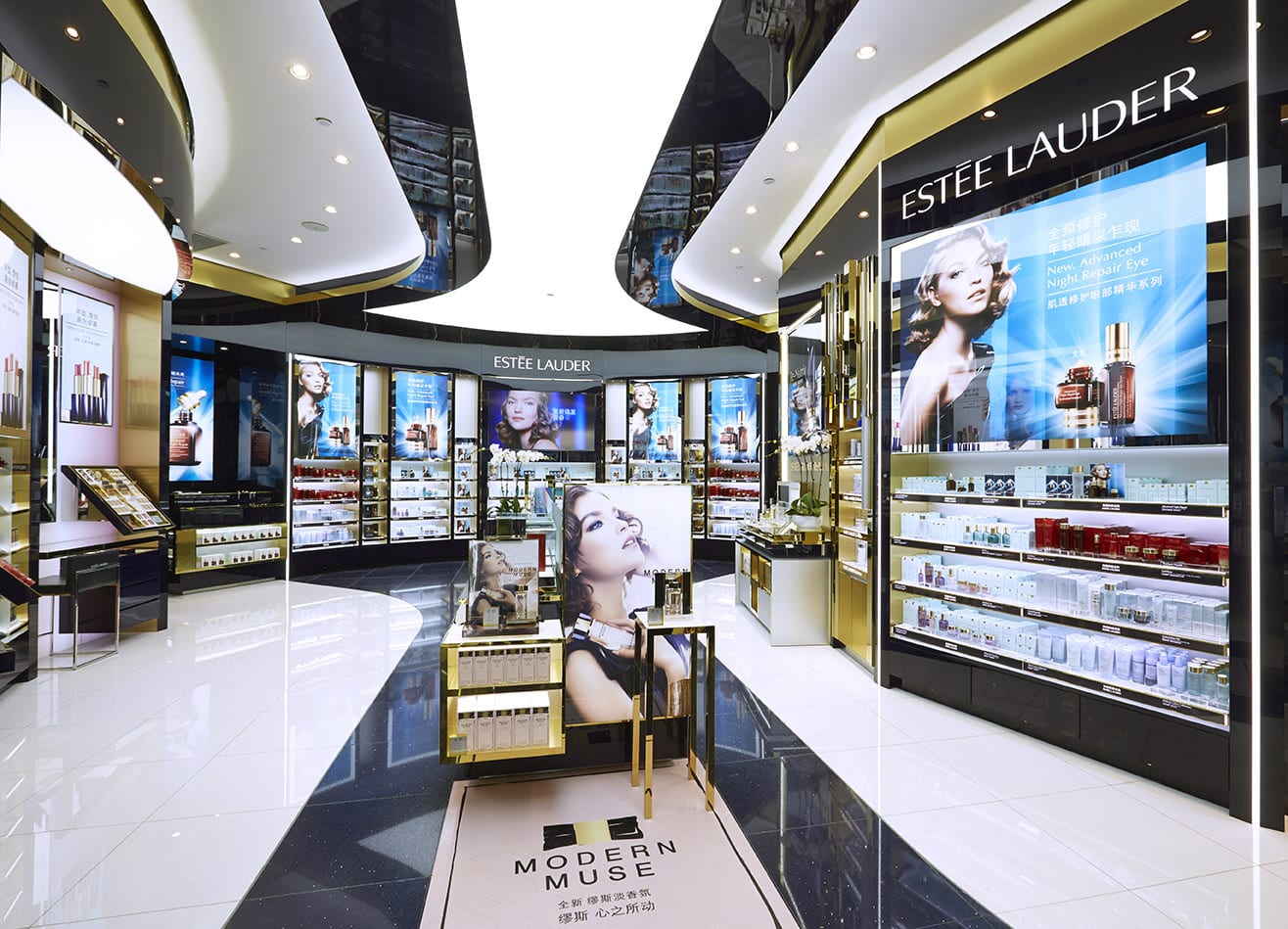
    Estee Lauder Asia-Pacific sales achieved double-digit growth in the December quarter. The beauty giant says the growth was broadbased, with nearly half of the markets in the region growing by double digits. “China, Hong Kong and Japan continued to deliver strong growth, and Korea net sales accelerated. Prestige beauty in China accelerated and the company continued to build share,” the company said in a statement.

    “[We] generated double-digit net sales growth in virtually every major product category and channel. Operating income increased, primarily due to higher net sales.”

    Globally, Estee Lauder sales exceeded US$4 billion for the first time, up 7 per cent from the same time a year earlier. Net earnings rose to $573 million compared with $123 million last year.

    “We delivered an excellent performance in our fiscal second quarter,” said president and CEO Fabrizio Freda. “Importantly, this was our eighth consecutive quarter of impressive net sales growth that met or exceeded our long-term goal, all while navigating many global macro issues.

    “Our sustained progress is the result of our multiple engines of growth strategy, and demonstrates our agility in moving resources to the best global opportunities,” he said.

    The strongest growth engines during the quarter included the skin care category globally, the Estee Lauder Asia-Pacific business, online and travel retail channels, and most brands, including Estee Lauder, La Mer, Mac and the company’s artisanal fragrance brands.

    “Despite a volatile and challenging backdrop, we are optimistic about our company’s long-term outlook. We are very well-positioned to build share in global prestige beauty,” Freda said.

    “We plan to increase our investments during the next six months behind our successful innovations, high-quality products, compelling digital advertising and effective commercial execution, while also enhancing our capabilities to strengthen our industry leadership and deliver long-term profitable growth.”

  • Report urges auto industry to go electric

    Report urges auto industry to go electric

    Korea needs to give equal emphasis to the development of battery electric vehicles and fuel cell cars, considering the estimated future demand and the country’s competitiveness, a report said Thursday. “It’s a well-known fact that our car manufacturers have the mass-production technology for fuel cell automobiles,” the report from the Korea Institute for Industrial Economics & Trade (KIET) said. “However, the accumulated sales of fuel cell electric vehicles (FCEVs) worldwide stopped at 10,000 as of the end of 2018. The demand for fuel cell vehicles in 2030 will be less than 2 percent of the global sales of new automobiles.”

    In comparison, sales of battery electric vehicles (EVs) are estimated to exceed the demand for hybrids this year, 10 years since their commercialization, and show fast-paced growth, the report argued. Global rivals are due to market more than 100 different EV models by 2022, it noted.

    Korea’s high competitiveness in EV batteries is another reason why the government should not neglect investment in electric cars, the report said, warning that the relative weaknesses in the availability of charging stations and other networks could drag down the industry, despite efforts by local automakers to diversify their EV models. The report responded skeptically to the government announcement in December to give 2 trillion won ($1.79 billion) in assistance to reform the car parts industry.

    “If the auto industry, the recipient, is unable to fully accommodate, it could be difficult for the assistance to have the desired effect,” it said.

    The same report predicted hard times ahead for local auto companies, affected by the global slump in the car industry.

  • Habeco Vietnam reports another year of falling profits

    Habeco Vietnam reports another year of falling profits

    Habeco’s profits fell by 23 percent last year to VND667 billion ($28.71 million), the fourth straight year of decline. Hanoi Beer Alcohol and Beverage Corp, as it is formally known, one of Vietnam’s biggest brewers, also reported a 5 percent fall in revenues to VND9.4 trillion ($404.67 million). There was a sharp increase in operating expenses, especially cost of sales.

    After falling for four years profits are now less than half of the 2014 figure of VND1.44 trillion ($62.12 million).

    Habeco’s decline is contrary to the general growth trend as Vietnam remains one of Asia’s biggest beer consumers. According to Euromonitor statistics, while global beer consumption volume remains unchanged last year, the figure for Vietnam soared.

    According to data from the Vietnamese Beer, Alcohol and Beverages Association, on average a Vietnamese person drank nearly 45 liters of beer in 2017, an almost 50 percent jump in two years.

    Many securities firms believe that though Habeco still leads the beer market in the north, it faces challenges like changing consumer tastes and competitive pressure from foreign brands. It has only been able to maintain market share in the low-priced segment, ceding ground in the premium segment to brands such as Heineken, Saigon Beer (now a subsidiary of ThaiBev) and other foreign brands.

    Ban Viet Securities Company’s latest data shows Habeco’s share in the beer market has fallen continuously in the last six years, from nearly 20 percent in 2010 to 18 percent by the end of 2017.

    The reason for this is that the low-cost segment, its strength, is shrinking, said the securities company. The cheap beer segment now makes up of only 8 percent of the market compared to 14 percent seven years ago.

    Vietnam is famous for its beer drinking culture, and it is widely believed that business deals go more smoothly over a few drinks.

    The country is the biggest beer market in Southeast Asia, consuming nearly four billion liters in 2017. It spends on average $3.4 billion on alcohol each year, or $300 per capita, while spending on health averages $113 per person, according to the Ministry of Health.

  • China retail earnings up 8.5% during new year holiday – ministry

    China retail earnings up 8.5% during new year holiday – ministry

    China’s retailer and catering enterprises earned over 1 trillion yuan ($148.3 billion) during the Lunar New Year holiday, defying an economic slump to rise 8.5% from last year, the country’s commerce ministry said late on Sunday. The increase was down to the rapid growth in sales of new-year gifts, traditional foods, electronic products and local speciality products over a six-day holiday period ending on Saturday, the Ministry of Commerce said in a notice on its website.

    Domestic tourism during the new year break generated total revenues of 513.9 billion yuan, up 8.2% on the year, with the number of trips rising 7.6% to 415 million, the official Xinhua news agency said on Sunday, citing official data. ($1 = 6.7426 yuan)

  • The shares of Lululemon athletica have risen 90% in 2018

    The shares of Lululemon athletica have risen 90% in 2018

    Over the past 12 months, shares of lululemon athletica have risen 90%. The most recent surge came after an upgrade on 2018 holiday season guidance, helping the athletic-wear stock rebound from a slump brought on by a broad stock market sell-off at the end of the year. Lululemon has enjoyed several tailwinds. Athleisure (that is, activewear and sports-inspired clothing for all situations) has continued to grow in popularity, and consumers have been generously spending — to the tune of 4.9% more on clothing alone in 2018, according to the U.S. Census Bureau. After a blockbuster run, though, Lululemon may have a difficult time repeating that same success in the new year.

    It is easy to see why shares of the clothing company have come roaring back. During the all-important holiday shopping season, management updated revenue guidance to between $1.14 billion and $1.15 billion, up from previous guidance of $1.12 billion. Earnings per share also got an upgrade to a range of $1.72 to $1.74, up from a range of $1.64 to $1.67.

    The results are impressive, but Lululemon has been measured by how it approaches expansion. Through the third quarter of 2018, there were 426 physical stores, up a net 22 from the start of the year. Instead of growing primarily by new openings, the company has instead benefited from a surge in same-store sales at existing stores — which increased 6% during the third quarter — as well as directing traffic to the online store. Direct-to-consumer sales were 25.3% of revenue in the third quarter, compared with 21.2% in the same period in 2017.

    Lululemon is not alone in the athleisure-wear category, though. Gap and its Old Navy and Athleta brands continue to grow their presence in sportswear, and the largest sports-only chain, Dick’s Sporting Goods, has also launched its own branded lines of clothing. Yet in spite of the competition, Lululemon has continued to resonate with new and existing buyers, both here in the states and abroad.

    The maker of stretchy pants and other sports-inspired clothing could nevertheless continue to run higher. After all, Lululemon has momentum on its side, both on the top and bottom lines. Even should sales growth take a breather, management has said it thinks gross profit margin on product sold could continue to expand, especially as a result of the emphasis on direct selling online and new higher-margin products such as coats and sweaters.

    On the other hand, there is reason for investors to give pause before jumping on the bandwagon. Even after earnings nearly doubled in 2018, the stock still trades at a premium, largely because share performance matched that of earnings. The trailing-12-month price-to-earnings (P/E) ratio currently sits at 52.5, a metric that only slightly improves to 43.2 when using free cash flow — a better measure of profitability, as it factors only for basic operating expenses and capital expenditures and excludes items such as depreciation and amortization.

    On a one-year forward basis, the P/E is currently at 40. Paying for decades’ worth of profits that haven’t yet been realized only makes sense if the bottom line continues to expand at breakneck speeds, and that’s what is implied in the rich valuation. Thus, there’s little room for error, and if there’s any slowdown at Lululemon, the stock could suffer losses at current levels.

    Of course, for those looking to the long term, Lululemon looks like a solid bet on the apparel industry of the future. Nevertheless, after renewed investor optimism over new fourth-quarter guidance, the stock is too rich for my taste.

  • Malaysian banks to maintain earnings potential this year

    Malaysian banks to maintain earnings potential this year

    Analysts believe that the banking sector will be able to maintain its earnings potential this year, as margin pressure is expected to ease and continued loans growth with stable asset quality. MIDF Research said while the industry’s loans growth moderated to 5.6% year-on-year (y-o-y) as at December 2018 due to moderation in business loans and loans for the purchase of residential properties, the growth was still slightly above its expectations.

    “As for CY19, we expect a moderation in loans growth to 4.7% y-o-y due to the high base effect. We also believe that deposits growth will moderate to 5.3% y-o-y due to lower growth in fixed deposits growth this year,” the research house said in a note.

    “This also means that there will be accretion in value for banks’ book value. Hence, we maintain our ‘positive’ view on the sector,” it added.

    Overall, MIDF Research said it is cautiously optimistic of the banking sector continuing its solid performance in 2019.

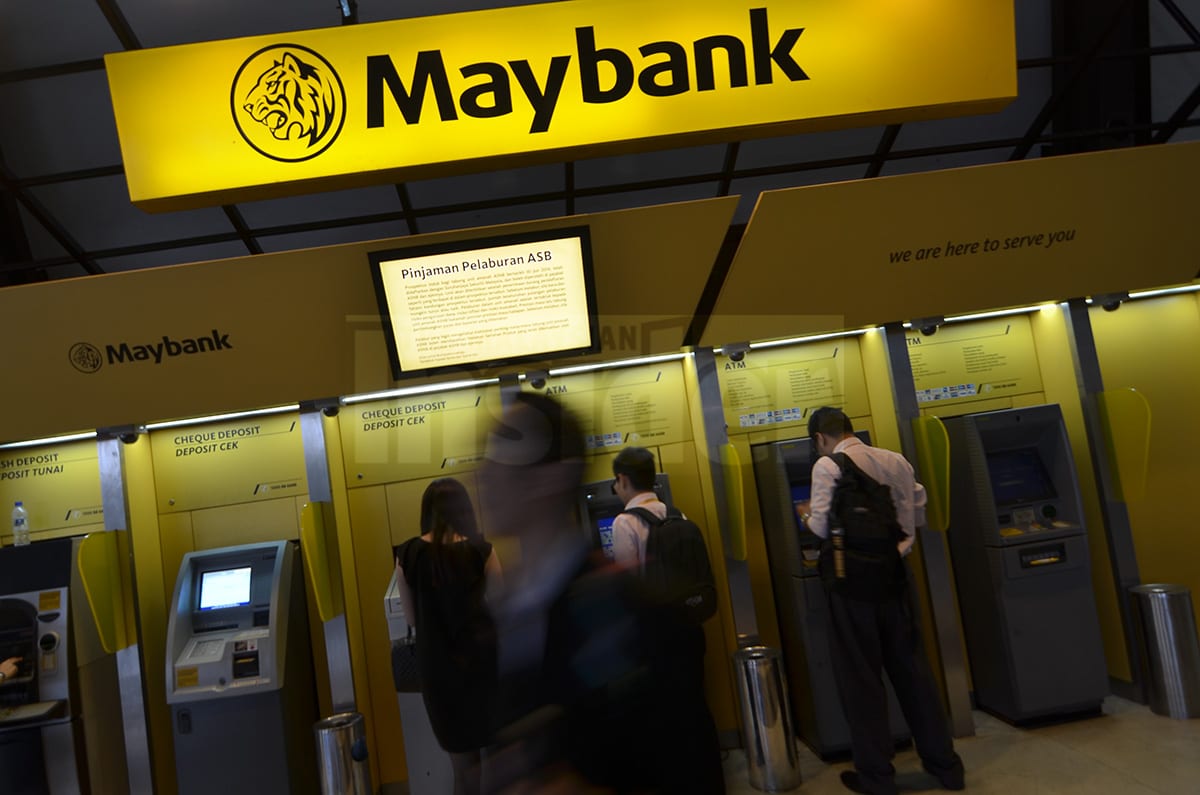
    Given the current market conditions, the research house said its top picks for the sector are Maybank, CIMB and Public Bank.

    In a separate note, AmBank Research said it expects that the foreign fund inflows into emerging markets would benefit the share prices of the liquid banking stocks as the US Fed rate hike is tapering off.

    Therefore, the research house said it maintained its “overweight” stance for the sector with “buy” calls on RHB Bank, Public Bank, Alliance Bank, BIMB Holdings, Maybank as well as MBSB. Its tops picks include Maybank, Public and RHB Bank.

    AmBank Research noted that Maybank’s earnings are well diversified and the bank is still recording positive JAWs (a technical term that denotes income growth exceeding that of expenses) with growth in total income outpacing expenses.

    It added that Maybank’s net interest margins could also improve further ahead with the lowering of its funding cost as the group releases the excess liquidity built-up in the first half of financial year 2018 (1HFY18).

    “Meanwhile, dividend yield for the stock continues to be attractive relative to peers with its high payout ratio while potentially offering investors higher returns with the reinvestment of their dividends into additional shares under the DRS (dividend reinvestment scheme),” it added.