Tag: report

  • V-Mart reports 27 percent growth in topline, reaches 200-store milestone

    V-Mart reports 27 percent growth in topline, reaches 200-store milestone

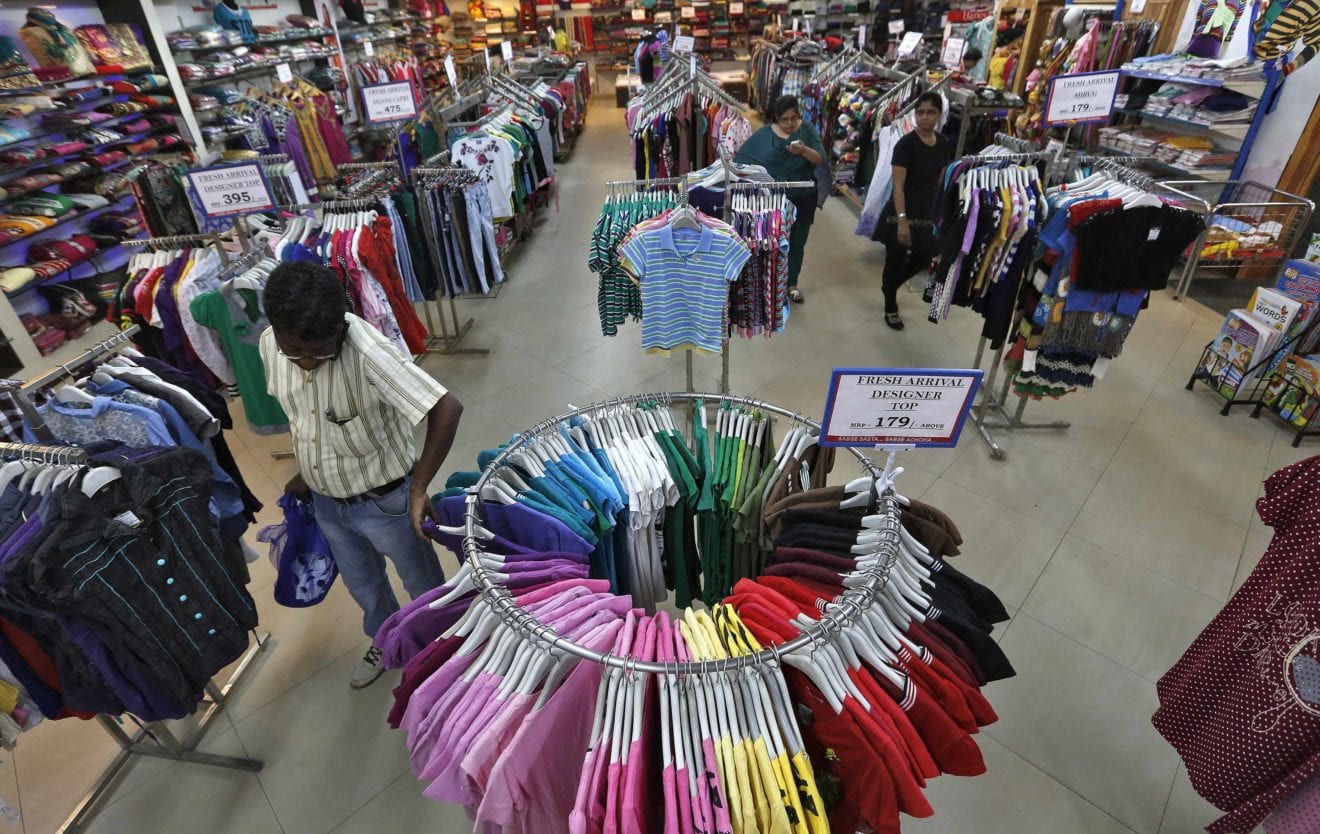
    V-Mart Retail, India’s leading value fashion retailer,  announced its unaudited financial results for the quarter and nine months ended 31st Dec,2018 whichwere approved by the Company and Board of Directors at its meeting held on 5th Feb, 2019. The company posted robust numbers for the third quarter, recording 27 percent YoY growth in revenue from operations, 15 percent increase in EBITDA and same store sales growth (SSSG) of 11 percent. The quarterly revenue and EBITDA stood at Rs 4658 million and 733 million, respectively, up from Rs 3680 million and 640 million in the previous year. The strong topline growth was also mirrored in PAT, which at Rs 417 million, delivered 14 percent YoY growth.Festive season shopping – comprising Durga Puja, Diwali and Chhath – in the company’s main geographic markets was the primary growth driver for the quarter. In the 69-day duration from 6th Sep – 13th Nov spanning the three festivals, the company registered overall and like-to-like growth of 49 percent and 27 percent, respectively. This was achieved through revamped product assortment, supply chain, and marketing and sales strategies that the company executed effectively. The company has invested in ramping up its warehousing capacity and strengthening the talent pool at all levels.

    Riding on the back of healthy numbers in Q3, V-Mart continued to strengthen its performance for the fiscal year. On a YTD basis, revenue stood at Rs 10,892 million for the nine months ended 31st Dec, growing at 18 percent YoY, while EBITDA and PAT, at Rs 1127 and Rs 625 million, grew at 3 percent and 1 percent, respectively.

    Commenting on the company’s performance in Q3, Lalit Agarwal, CMD, said “There has been a great execution of fresh product ideas and customer connect which was amplified by strong festive demand in all our markets. V-Mart was well prepared and well-positioned to tap into this opportunity in all its key markets, delivering its value fashion promise with a wider and deeper assortment that resonated with the fashion aspirations of our customers. Launch of stores in Assam and Meghalaya further added the growth momentum for the company and the company witnessed its best ever Durga Puja sales during the quarter especially from the Bengal region. We thank all our valued customers for their trust and belief in V-Mart and look forward to their continued support.”

    While driving a strong execution focus during the festive season, the company maintained its consistent pace of retail network expansion, reaching the 200-store milestone in December. V-Mart opened 10 new stores during thequarter, andon a YTD basis, has added 29 stores with more launches planned in the last quarter. While the company took 12 years to open its first 100 stores, the journey to the next 100 has taken less than 3 years. Looking ahead, the company is building a strong pipeline of locations for targeted store expansion in the next fiscal year.

    For the upcoming Spring-Summer 2019 collection, the company shall be launching a new range of Indigo collection denims, camouflage, high fashion t-shirts, joggers, ladies tops, salwar suits, gowns, solid woven skirts for girls and kurti’s along with a new kids summer collection. The launch of summer collection and the special marriage range, with an emphasis on vibrant colors and silhouettes willgive shoppers a wide choice of fabricsand form key customer-centric highlights of the next quarter.
  • Korean export decline picks up speed in January

    Korean export decline picks up speed in January

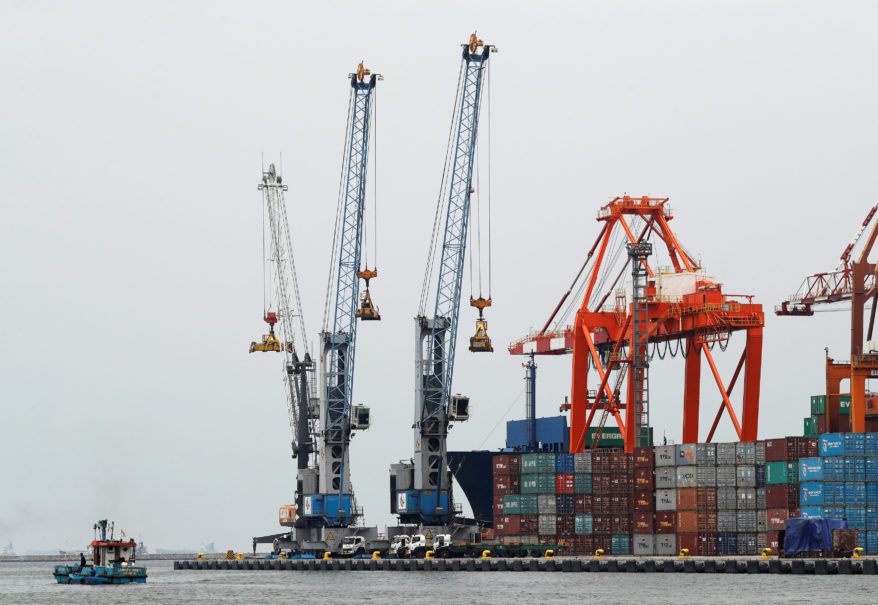
    Exports have continued to fall for a second month, but at a steeper rate, confirming concerns raised by Finance Minister Hong Nam-ki earlier this week. Although Korea succeeded in posting a trade surplus for the 84th consecutive month, a new record, exports in January fell 5.8 percent, sharper than the 1.2 percent drop recorded in December.

    This is the first time since September and October 2016, when exports fell for two consecutive months.

    According to the Ministry of Trade, Industry and Energy on Friday, Korea’s exports in January amounted to $46.4 billion.

    Imports also retreated, losing 1.7 percent to $45 billion. As a result, Korea’s trade surplus in January was $1.3 billion, which is one-third of the $3.4 billion surplus reported a year ago.

    The ministry, however, said the decline of Korea’s exports wasn’t exclusive to Korea as other countries have also been falling as well.

    In December, China’s exports retreated 4.5 percent while Japan was down 3.2 percent, Taiwan lost 3 percent and Singapore fell 4.1 percent.

    The ministry said the decline was largely the result of external factors including the trade dispute between the United States and China, uncertainties resulting from Brexit, falling prices of semiconductors and crude and the slowing growth of the Chinese economy.

    Semiconductors, which were the largest contributor to last year’s thriving exports, played the biggest role in pulling down the number in January and December. Exports fell 23 percent compared to a year ago to $7.42 billion. Semiconductors account for roughly 20 percent of all Korean exports. Semiconductor exports have been shrinking after reaching a high of $12.4 billion in September 2018. The figure fell below $10 billion in December for the first time since April last year.

    The ministry blamed the falling price of semiconductors as global IT companies have been delaying additional purchases since the second half of last year. The price of an 8 gigabyte DRAM chip nosedived 36.5 percent from $9.60 a year ago to $6.10. The price of a 128 gigabyte NAND memory has fallen 22.4 percent from $6.7 to $5.2.

    Falling crude prices was another factor that drove down exports. Petroleum product exports fell 4.8 percent to $3.47 billion, while petrochemical goods slipped 5.3 percent to $3.98 billion. International oil prices have been falling since October last year. Last month, the price of a barrel of oil was down 10.7 percent on year.

    But these weren’t the only export items that struggled.

    Mobile telecommunication goods exports, including smartphones, have fallen 29.9 percent while computers exports are down 28.2 percent. Exports of ships fell 17.8 percent and displays were down 7.5 percent.

    Mobile telecommunication exports to the United States fell 9.7 percent, while the figure for member countries of the Association of Southeast Asian Nations (Asean) saw a steeper drop of 21.9 percent.

    On the contrary, automotive exports, which struggled throughout 2018, appeared to recover, growing almost at the same rate as a year ago.

    Automobile exports in January were up 13.4 percent to $3.67 billion, largely thanks to growing demand in the United States, Europe and the Commonwealth of Independent States (CIS). Exports to the United States in the first 20 days of January were up 43.4 percent to $820 million, Europe grew 20.7 percent to $350 million and the CIS surged 104.1 percent to $150 million.

    Thanks to positive growth in automotive exports, automobile parts exports grew as well, increasing 12.8 percent.

    Steel was another export good that saw an increase thanks to rising prices. When compared to a year ago, it grew 3.3 percent to $2.8 billion.

    By country, China, which is Korea’s No. 1 export market, tumbled 19.1 percent. China, as of last year, accounts for 26.8 percent of Korea’s exports.

    While the majority of the goods exported to China all fell last month, semiconductors, petroleum and petrochemical goods were hit especially hard. Semiconductor exports plummeted 40 percent in the first 20 days of last month to $1.61 billion, while petroleum exports fell 36.4 percent. Petrochemical exports lost 13.7 percent. The three products account for 44 percent of exports to China.

    Exports to the United States rose 20.4 percent to $6.21 billion, largely thanks to import of Korean automobiles, particularly SUVs, which saw an uptick of 43.4 percent.

    EU exports also grew in the double digits at 11.9 percent to $5 billion.

    The ministry said the situation will likely turn around in the second half when semiconductors and crude prices go up. The ministry said that when excluding semiconductors, petroleum and petrochemical goods, Korea’s exports in January only dipped 0.7 percent to $31.5 billion.

    The ministry also noted that new growth engine products like rechargeable batteries are doing well.

    It said that rechargeable battery exports have been rising over the last three years and are now expected to surpass exports of electronic consumer goods, which amount to $7.22 billion.

    Last year, secondary battery exports amounted to $7.23 billion, up 21.5 percent.

    Last month, it grew 14.5 percent year on year to $660 million.

    Biohealth exports have been growing in double-digits for four consecutive years. Last year, they reached a record of $8.15 billion, up 13 percent. Last month, however, biohealth exports fell 1.6 percent to $560 million. The ministry said that it still expects exports of biohealth goods to rise over the course of the year.

    OLED panels and electric vehicles are also seeing an increase in exports. OLED panels last month grew 12.8 percent to $800 million, while electric cars saw a surge of 184.7 percent to $280 million.

    The finance minister said the government will be coming up with measures to help small- and medium-sized exporters that may struggle from the recent turnaround, while Trade, Industry and Energy Minister Sung Yun-mo on Friday emphasized that the government will do its best to revitalize all exports.

    “Our plan will not be concentrated on short-term measures, but committed to all 365 days so that we can achieve $600 billion of exports by the end of this year,” Sung said.

    Korea, last year, reached a new milestone with exports exceeding $600 billion. However, with the global economy expected to shrink, there have been concerns that, this year, Korea’s exports may fall back below that threshold.

    “In a Jan. 21 export strategy meeting, we initiated a pan-government and a private-government joint support system, and since Jan. 30, we started a program of consulting on export difficulties in 15 cities starting with Changwon in South Gyeongsang,” the minister added.

  • Fashion to contribute Rs 70,000 crore to revenue in 7 years: Future Group India

    Fashion to contribute Rs 70,000 crore to revenue in 7 years: Future Group India

    Kishore Biyani, Chairman, Future Group says his company is planning to step up its focus on men’s footwear retail since the category is becoming an important accessory for the Indian consumer. According to Biyani, footwear today is no longer category defined for just women. It’s equally important for men – almost as important as buying trousers. With brands like Koovs, Lee Cooper, Clarks, Converse under one roof, Future Group claims to be the number two footwear retailer in India.

    “We aim to be number one footwear retailer in India,” he says, adding, “Men are equally inclined towards buying footwear and on an average have at least 20 pairs to go with different trousers. This is the reason why we are expecting footwear to contribute approximately 18 percent to the overall revenue, an increase from the current 11 percent,” he says.

    “We are expecting the share of footwear to increase from Rs 1,600 crore to Rs 2,500 crore by next year and we aim to be the number one footwear retailer in the country very soon,” he adds at the re-launch of Central at Ambience Mall, Vasant Kunj. The contribution of private labels to the group’s revenue is around 40 percent presently.

    At Central, Hyderabad, the footwear section spans across 30,000 sq. ft. and even in Central, Vasant Kunj, footwear occupies a major space covering 15,000 sq. ft. Area.

    Exploring Central Vasant Kunj

    The re-launched Central Vasant Kunj, spanning across 44,000 sq.ft area, is a high-definition store offering luxury experiences while keeping the price of the products at masstige level.

    “Many online brands like Koovs, Craftsvilla have come offline with us. We are expecting an average ticket size of Rs 4,000 here and plan to take this up to Rs 8,000,” Biyani states.

    With state-of-the-art décor, minimalistic fixtures and an aspirational fashion boutique feel, Central aims to provide a delightful shopping experience to its customers right from the time they enter the store to the time they reach the billing section. The space has subtle displays that compliments the store design and aesthetics. The store is designed and specialized to offer an enhanced and a more customized service to shoppers as per international standards.

    The outlet showcases a premium mix of national and international brands in various categories like Men’s and Ladies Formal Wear, Casual Wear, Ethnic Wear, Cosmetics, Fragrances, Handbags, Watches, Men’s and Ladies Footwear, Toys, Kids Apparel, Lingerie and more. From brands like Tommy Hilfiger, Guess, Gucci, FCUK to acclaimed designer like Micheal Kors, Giorgio Armani, Ferragamo, Calvin Klein, Diesel, Roberto Cavalli, Versace, Dolce & Gabbana, Central serves as the one stop shop for fashion-conscious customers of the capital.

    Central, which has at present no plans to go Omnichannel, has always believed in redefining the fashion and lifestyle retailing concept in India. Offering world class designs, with over 500 brands displayed in high definition and latest trends, the stores offer an enhanced and a more customized service to customers as per international standards.

    According to Vishnu Prasad, CEO, Central, “Every brand and its products have their own story to connect with customers and indulge in the latest in fashion. We also have exclusive brands in store resulting in a new and improved shopping experience.”

    “We intend to make next-gen Centrals ‘experience-savvy’ stores rather than ‘tech-savvy’ stores, s all services and features that we are offering will be in that direction,” he adds.

    Highlighting the services that set Central apart from others, Prasad says, “We have features like WhatsApp shopping – i.e. if a shopper likes something in our store but is not sure about the purchase, we can reserve the product for them and they can Whatsapp us once they have made up their mind to buy and we deliver the item to their doorstep.”

    Loyalty, cashback, wallets and HD services are some areas where Central has been focussing and has seen better results with technological advancements.

    “With the help of technological advancements, we have observed a hike in business contribution from loyal customers and payment wallets to overall customers,” Prasad says, adding, “A few other features that we offer at Central include priority billing counters for our customers, introduction of many unique services like automated wheel chairs in store for special customers.”

    Currently, the company is operating 44 Central stores in large cities (including Mumbai, Bengaluru, Hyderabad, Pune) and some in smaller cities such as Indore, Patna, Baroda and Surat.

    “We shall be touching 50 stores in just a few months from now,” says Prasad. “Our focus is towards nurturing and identifying the relationship with loyal patrons along with using digital wallets and digital medium as an overall means to enhance the formats footprints,” he adds.

    At present, Future Group – which is selling 30 crore garments annually – occupies a 35 percent market share in the fashion segment.

    “We are expecting fashion to contribute Rs 70,000 core to the company revenue in the next seven years,” says Kishore Biyani.

  • Australia’s December sales slump below expectations

    Australia’s December sales slump below expectations

    Monthly retail figures from the Australian Bureau of Statistics have shown a somewhat dismal December trading period performance, having fallen 0.4 per cent to $27 billion, compared to the 0.5 per cent increase seen in November. While online retail turnover made up 5.6 per cent of the total figure, this figure fell from 6.6 per cent enjoyed in November, indicating the increasing importance of the pre-Christmas sales events such as Black Friday and Cyber Monday.

    The results show that, over the course of the holiday period Australians spent $48.7 billion on retail sales, below the $51 billion projected by the Australian Retailers Association (ARA) and Roy Morgan, though above the corresponding turnover of $47.5 billion from 2017.

    National Retail Association chief executive Dominique Lamb pointed out that these figures should serve as a warning, to both sides of the political landscape, that sectors of the retail industry are struggling.

    “Retail is the second biggest sector in the Australian economy, so when it goes through a challenging period there is a knock-on effect throughout the economy,” Lamb said.

    “While the retail community certainly doesn’t look to government for all the answers, it is during slow periods such as these that measures are required that assist small business.”

    Household goods fell 2.8 per cent, and clothing and footwear saw a 2.4 per cent decline in spending over the month, while department store turnover decreased 1.1 per cent. However, cafes, restaurants and takeaway food services rose by 1.1 per cent over the month.

    ARA executive director Russell Zimmerman pointed out that, while the monthly figures were depressed, annually the industry achieved a 3 per cent growth in sales, compared to the 2.76 per cent seen the previous year.

    “Although these figures are disappointing, it is important to note that there are a variety of factors that have contributed to these soft figures, including the decrease in consumer sentiment caused by rising household costs and low wage growth, which continues to plague the industry and overall economy,” Zimmerman said.

    These sentiments were echoed earlier in the month by NAB chief economist Alan Oster, who noted that these factors had led to consumers becoming reluctant to spend on non-essentials, having observed a 1.4 per cent decrease in online spending over the December period.

  • Ralph Lauren continues momentum in Asia

    Ralph Lauren continues momentum in Asia

    Premium lifestyle brand Ralph Lauren increased gross profit across its third quarter period by 6 per cent to  $1.46 billion (US$1.05 billion), compared to $1.37 billion (US$996 million) the year prior. The growth was driven by a 90 bps increase in gross margin to 61.6 per cent, as a result of reduced promotional activity and improved pricing.

    “Solid execution on our key initiatives, especially during the important holiday period, delivered better-than-expected results for the third quarter as we drove higher average unit retail and continued to improve quality of sales overall,” Ralph Lauren president and chief executive Patrice Louvet said.

    “These results give us confidence that our strategic investments in brand-building, product, digital, and global expansion are on the right track, while the strength of our balance sheet will continue to be a competitive advantage as we manage through an increasingly volatile global environment.”

    The business saw momentum in Asia continue, with 11 per cent revenue growth to $379.65 million (US$275 million) led by 19 per cent constant currency growth in Greater China, and strength across Japan, South Korea and Australia.

    North American sales increased by 3 per cent to $1.25 billion (US$909 million), and enjoyed flat comparable bricks-and-mortar sales and a 21 per cent increase in digital sales for the region.

    Global revenue for the brand’s digital offering improved 20 per cent over the last year, with growth in the brand’s directly-operated digital flagships exceeding expectations.

    Net income for the period grew to $165.67 million (US$120 million), or $2.04 per diluted share (US$1.48).

    Looking toward the final quarter of fiscal 2019, Ralph Lauren expects net revenue to drop slightly due to a planned reduction in off-price sales, though predicts net revenue for the fiscal year will be up slightly, though didn’t provide concrete figures.

  • E-commerce share to rise to 12pc from 2pc in 10 years: Walmart India CEO

    E-commerce share to rise to 12pc from 2pc in 10 years: Walmart India CEO

    Share of e-commerce is set to rise, despite the growth in brick and mortar or physical retail from 2 percent to 12 percent over the next 10 years, aided by pick up in Omnichannel format, said Krish Iyer, President & CEO, Walmart India and Chairman of India Food Forum, at India Food Forum 2019 on Tuesday. Gap between physical and digital needs to be bridged as the consumer is going digital in terms of experience as also his touchpoints, he said delivering the inaugural address at the two-day India Food Forum 2019.

    Sharing his insight at Walmart, Iyer said that by enriching customer experience, the consumer started buying Rs 180 over Omnichannel instead of buying Rs 100 from the store itself and later the ratio in the store was Rs 70 while digital was Rs 110. Calling for technology adoption as key to retail growth, Iyer enumerated four key challenges led by food security, safety & nutrition, food wastage and sustainability.

    “Feeding a rising world population of 10 billion from 7 billion amid rising death of infant children due to malnutrition, changing climatic conditions are key challenges. In India, phenomenal efforts are made on the regulatory front for safety and nutrition that will follow with awareness, compliance and enforcement of law. Significant investment amounting to Rs 92,000 crore in food processing in catchment areas is needed to overcome the wastage of 30 percent of all food and 40 percent of fruits and vegetables,” he said.

    Earlier, speaking at the forum, Ajay Macaden, Executive Director, Nielsen said, “Consumers have evolved now for omni-channel even for specific categories like milk and bakery. Increased internet and smartphone penetration has led to multiple shopping channels and change in consumer behaviour.”

    In markets around the world categories such as travel, entertainment (books, music, events) and durable goods (fashion, IT/mobile, electronics) are the front runners for consumers to enter the online retail sphere. Consumers are, however, also looking for e-commerce options for an increasing range of categories, as their more immediate needs for convenience and ease expands, Macaden said.

    Consumers in APAC (Asia Pacific) have even evolved to fresh grocery and packaged goods with China, India, Japan and Korea leading the market. In fact, packaged grocery food and fresh groceries are showing the highest percentage growth of all categories in 2018 in this region, he said.

    Other key speakers at the forum included Damodar Mall, CEO, Reliance Retail (Supermarketwala), Sadashiv Nayak, CEO Food business, Future Group, Mohit Kampani, CEO, Aditya Birla Retail, C. Gopalkrishnan, Founder, N. Supermarkets, Ramesh Menon, Former CEO, Hypercity, Mohit Anand, MD, Kellogg, India and South to name a few.

  • Petrovietnam reports 26 percent hike in revenues last year

    Petrovietnam reports 26 percent hike in revenues last year

    Vietnam National Oil and Gas Group has announced its 2018 results, which show it exceeded its revenue and state budget contribution targets. The state-run giant (Petrovietnam or PVN) reported revenues of VND626.8 trillion ($26.92 billion), 18 percent higher than the target and a year-on-year rise of 26 percent. As of December 10 it had achieved its domestic crude oil production target of 11.31 million tons. Total oil and gas output reached 23.98 million tons (gas converted into oil equivalent).

    The group contributed VND121.3 trillion ($5.22 billion) to the state coffers, exceeding the target by 64.3 percent and 24.3 percent more than the previous year.

    “These achievements came at a time when global oil price movements were difficult to predict, production in mature fields were in rapid decline while new fields brought on stream were small and marginal and there was pressure to minimize costs per barrel,” CEO Nguyen Vu Truong Son said in the company’s 2018 business performance report.

    These are large enterprises with the state equity estimated at VND89 trillion ($3.83 billion), according to auditors’ conclusion.Last year the group wrapped up equitization of three of its subsidiaries: PetroVietnam Power Corporation (PV Power), Vietnam Oil Corporation (PVOIL) and Binh Son Refinery and Petrochemical Joint Stock Company (BSR).

    The proceeds from their IPOs reached VND16.5 trillion ($710 million). Petrovietnam managed to raise VND18.6 trillion ($801 million) from the three firms’ equitization and state divestments.

    With a capacity to process 200,000 barrels of crude a day, it, along with Dung Quat, can meet more than 80 percent of the country’s petroleum demand, reducing dependence on imports.In late last year, the $9 billion Nghi Son Refinery and Petrochemical Complex, one of the key national oil and gas projects, began commercial operation.

    Situated in the Nghi Son Economic Zone, 200 km south of Hanoi in the central province of Thanh Hoa, Nghi Son is invested by Idemitsu Kosan Co, Kuwait Petroleum, Petrovietnam and Mitsui Chemicals Inc.

  • US retail sales expected to grow at slower rate in 2019

    US retail sales expected to grow at slower rate in 2019

    US retail sales are expected to climb between 3.8 per cent and 4.4 per cent to more than US$3.6 trillion ($4.97 trillion) in 2019, according to data from the National Retail Federation (NRF). The predicted rise in retail sales, which is excluding automobile dealers, gasoline stations and restaurants, however, would be less than the 4.6 per cent growth in 2018, citing threats from an ongoing trade war, the volatile stock market and the effects of the government shutdown.

    NRF said in August of last year it expected 2018 retail sales to be up at least 4.5 per cent.

    The retail industry group says the 2018 figure is its preliminary estimate for retail sales last year, pending the release of December data from the Commerce Department that was stalled from being announced during the government shutdown.

    Matthew Shay, NRF president and CEO, said the biggest priority is to ensure that the economy continues to grow and to avoid self-inflicted wounds.

    “It’s time for artificial problems like trade wars and shutdowns to end, and to focus on prosperity not politics,” Shay said.

    Shay said despite fears in the industry that a trade war in China or an economic slowdown might impact consumer spending, they believe the underlying state of the economy is sound.

    “More people are working, they’re making more money, their taxes are lower and their confidence remains high,” he said.

    Preliminary estimates, according to the NRF, show that retail sales during 2018 grew 4.6 per cent over 2017 to US$3.68 trillion ($5.08 trillion), exceeding NRF’s forecast of at least 4.5 per cent growth.

    The figures include online and other non-store sales, which were up 10.4 per cent to US$682.8 billion ($942.6 billion). That met NRF’s forecast of 10-12 per cent online growth, and online is expected to grow in the same 10-12 per cent range again this year. The numbers exclude automobile dealers, gasoline stations and restaurants.

    Growth of between 3.8 per cent and 4.4 percent would result in total 2019 retail sales of between US$3.82 trillion and $US3.84 trillion ($5.27 trillion to $5.3 trillion). Based on growth of 10-12 per cent, online sales would total between US$751.1 billion and US$764.8 billion ($1.03 trillion and $1.05 trillion), which are included in the total.

    The 2018 results are based on Commerce Department data up through November but include NRF estimates for December because the agency was closed during the recent government shutdown and has not yet released December figures.

    The NRF said the results are subject to revision once December numbers become available, and government numbers are revised again each spring regardless of the shutdown.

    “We are not seeing any deterioration in the financial health of the consumer,” said Jack Kleinhenz, NRF chief economist.

    “Consumers are in better shape than any time in the last few years,” Kleinhenz said. “Most important for the year ahead will be the ongoing strength in the job market, which will support the consumer income and spending that are both key drivers of the economy.”

    Kleinhenz said the bottom line is the economy is in a good place despite the ups and downs of the stock market and other uncertainties.

    “Growth remains solid,” he said.

    NRF said it expects the overall economy to gain an average of 170,000 jobs per month, down from 220,000 in 2018, and that unemployment – currently at 4 per cent – will drop to 3.5 per cent by the end of the year. Gross domestic product is likely to grow about 2.5 per cent over 2018.

    Kleinhenz said inflation and interest rates are expected to remain low this year and that retail sales have been helped by recent reductions in gasoline prices.

  • Jubilant FoodWorks Q3 net profit up 46 pc to Rs 96.5 cr

    Jubilant FoodWorks Q3 net profit up 46 pc to Rs 96.5 cr

    Jubilant FoodWorks Limited (JFL) has reported its financial results for the quarter and nine-months ended December 31, 2018. Operating revenue for Q3 FY19 stood at Rs 9,291 million, representing an increase of 16.8 percent over Q3 FY18, and a sequential growth of 5.4 percent over the preceding quarter. The growth was driven by a strong 14.6 percent same store growth (SSG) in Domino’s Pizza.

    EBITDA for Q3FY19 was Rs 1,706 million, or 18.4 percent of revenue, a growth of 24.6 percent over Q3FY18 and a margin expansion of 120 bps. This is the highest EBITDA margin in seven years.

    Profit after Tax in Q3 FY19 stood at Rs 965 million, or 10.4 percent of revenue, a growth of 46.2 percent over Q3 FY18 and a margin expansion of 210 bps.

    During the quarter, the company added new products to its portfolio. Domino’s launched ‘Multigrain Crust’ with an objective of offering a wider range to the customers. In addition to this, the company also introduced four new side dishes viz. Potato Cheese Shots, Crunchy Strips, Crinkle Fries and Brownie Fantasy.

    The store opening momentum accelerated during the quarter, with 35 new Domino’s stores being opened during the quarter.

    Dunkin’ Donuts delivered break-even in Q3 FY19 on the back of strong growth in the core portfolio of Donuts and Beverages, as also disciplined cost management.

    Commenting on the performance for Q3 FY19, Shyam S. Bhartia, Chairman and Hari S. Bhartia, Co-Chairman, Jubilant FoodWorks Limited said, “I am delighted to share that we have once again delivered healthy earnings growth during the quarter which stood in-line with our expectations. Performance was driven by consistent progress made across each of the growth pillars.”

    Commenting on the performance for Q3 FY19, Pratik Pota, CEO and Whole time Director, Jubilant FoodWorks Limited said, “We have demonstrated strong all-round performance in Q3 FY19, led by robust same-store sales growth (SSSG) of 14.6 percent reported in Domino’s Pizza. This was accompanied by a tight control on operating costs that led to EBITDA margins improving to a seven year high of 18.4 percent. In addition, Dunkin’ Donuts also broke even during the quarter, ahead of the targeted Q4 timeline. We are happy with our performance and confident of the prospects ahead, as evident in the 35 new stores opened in Q3, the highest in eleven quarters.”

  • SsangYong Motor narrows loss in last quarter of 2018

    SsangYong Motor narrows loss in last quarter of 2018

    SsangYong Motor, the Korean unit of Indian carmaker Mahindra & Mahindra, said Thursday its net losses narrowed for the October-December period from a year earlier on a strengthened lineup. Net losses reached 3.99 billion won ($3.59 million) in the fourth quarter from 30.25 billion won a year ago, the company said in a statement. Robust sales of the Rexton Sports sport-utility vehicle (SUV) and the Tivoli SUV helped improve the bottom line, it said.

    Operating losses stood at 3.48 billion won in the final quarter from 2.57 billion won a year ago. Sales rose 17 percent to 1.053 trillion won from 902.16 billion won during the same period.

    For 2018, net losses slightly improved to 61.84 billion won from 65.82 billion won the previous year. Operating losses remained almost unchanged at 64.18 billion won compared with 65.28 billion won.

  • China’s SMCP tops 1 billion euros revenue for first time

    China’s SMCP tops 1 billion euros revenue for first time

    Chinese-owned SMCP Group said that total company sales exceeded 1 billion euros in 2018, marking a revenue-first for the French fashion group. “With double-digit sales growth in 2018, SMCP posted a remarkable performance and continued to deliver on its strategic roadmap,” said Daniel Lalonde, SMCP’s Chief Executive Officer. For the year ending December 31, SMCP recorded sales increasing 13%, in line with its previously upgraded full-year 2018 guidance.

    Lalonde said the achievement signalled rapid sales increase was fuelled by online and digital, with the company working hard to fight market headwinds, which have taken out other European retailers in 2018.

    “Our performance throughout the year, and more particularly over the last quarter, demonstrates that SMCP is built on strong foundations and further illustrates the resilience of our business model in the midst of unprecedented market headwinds,” said Lalonde, in a press release.

    “I would also like to place a special emphasis on our significant progress in digital: it has been growing consistently and strongly over the past years and now represents nearly 15% of our total sales,” he added.

    The sales growth included a solid like-for-like sales growth of 3.7% for the twelve-month period “despite challenging market conditions in the fourth quarter,” which saw sales climb less, up 8%.

    Full-year reported sales were up 11.5%, including a negative currency impact of -1.6% reflecting the appreciation of the euro.
    Over the last twelve months, SMCP net openings reached 134 points of sale, including 102 directly operated stores, surpassing its annual target. By region, 59 stores were opened in APAC alone, the zone receiving the most new outlets compared to the Americas and Europe.

    In APAC, the group posted a strong double-digit sales growth of 18.2% at constant currency, driven by mainland China which generated over 20% of sales growth.

    The operator of French fashion brands Sandro, Maje and Claudie Pierlot said Sandro sales grew 6% in 2018, while Claudie Pierlot recorded a 7% increase. Maje was the biggest grower, up 10% for the year.

    For 2018, SMCP confirmed its adjusted EBITDA margin guidance at around 17%.

    Evelyne Chetrite and Judith Milgrom founded Sandro and Maje in Paris, in 1984 and 1998 respectively, and continue to provide creative direction for the brands. Claudie Pierlot was founded in 1984 by Claudie Pierlot and acquired by SMCP in 2009.

    SMCP was acquired China’s Shandong Ruyi in 2016.

  • Korean Air swings to net loss in 2018 from 2017 profit

    Korean Air swings to net loss in 2018 from 2017 profit

    Korean Air Lines said Tuesday it swung to a net loss in 2018 from a year earlier due to hefty foreign-exchange losses. The Korean flag carrier posted a net loss of 167.59 billion won ($150 million), after a net profit of 801.9 billion won a year earlier. As the dollar rose to 1,118.1 won at the end of 2018 from 1,071.4 won at the end of 2017, foreign-exchange translation losses reached 363.6 billion won and it cut into the annual earnings results, the statement said.

    The won’s weakness also drove up net interest costs to 454.8 billion won, up 55.5 billion won from the previous year, it said. Operating profit fell 28 percent to 676.33 billion won last year from 939.78 billion won a year ago. Sales climbed 7.7 percent.

  • Vingroup reports $25 mln revenue from vehicle, smartphone sales

    Vingroup reports $25 mln revenue from vehicle, smartphone sales

    Vietnam’s largest listed private company Vingroup has reported revenues of VND600 billion ($25.77 million) from car, electric motorbike and phone sales last year. VinFast, a Vingroup subsidiary, became the country’s first indigenous car manufacturer last October and showed off its first two car models at the Paris Motor Show in France. It has begun to accept bookings and deposits for the cars, and will start selling them next August.

    Last November it launched its first two electric scooters, but has not disclosed sales figures.

    VinSmart, the Vingroup unit that produces smart electronic devices, launched four new phones in December in a market of 95 million people currently dominated by Samsung and Apple.

    Its factory in the northern city of Hai Phong is capable of making five million phones a year in the first phase.

    The company also hopes to expand to markets outside Vietnam, and will make smart TVs and other smart products soon.

    Vingroup is a conglomerate with the country’s largest real estate operations and interests in retail, healthcare and resorts.

    The conglomerate reported profit before tax of over VND13.8 trillion ($592.6 million) last year, up 52 percent from 2017, on net revenues of VND122.57 trillion ($5.24 billion).

  • Who visited Korea in 2018?

    Who visited Korea in 2018?

    Chinese visitor arrivals in South Korea rose 14.9 percent year-on-year in 2018 to 4,789,512, according to new Korea Tourism Organization figures. Chinese arrivals in December 2018 rose 25.2 percent year-on-year. The results confirm a sustained recovery in Chinese tourism from March 2018 as Korean-Chinese relationships improved in the wake of the THAAD anti-missile system dispute that had devastated Chinese tourism for the previous year.

    For the first two months of 2018 Chinese arrivals slumped 43.7 percent, heavily influencing the year-end result.

    However, the 2018 performance was still far short of pre-THAAD levels. In 2016, 8,067,722 Chinese visited South Korea, 68 percent more than the 2018 tally and a 46.8 percent share of total arrivals, compared to last year’s 31.2 percent.

    Japanese market buoyant but political concerns rise

    The Japanese tourism market was buoyant in 2018, rising 27.6 percent to 2,948,527, a 19.2 percent share of arrivals. December saw a 33.5 percent rise year-on-year.

    The combination of concerted Japanese visitor growth and a strong yen has been reflected in increased duty free spending. A report by The Korea Herald said that January 2019 sales to Japanese consumers at Lotte Duty Free’s flagship store in Myeong-dong, Seoul (the country’s biggest travel retail door) had surged 31 percent year-on-year, compared to 15 percent for all nationalities.

    The same report said that Shinsegae Duty Free’s Myeong-dong store posted a 53 percent rise in sales to Japanese shoppers during the same period, while overall turnover at the flagship fell 1 percent.

    But prospects for a continued boom in Japanese tourism may be marred by a worsening political dispute, this time between South Korea and Japan. A military row began on 20 December following an encounter between a Japanese plane and a South Korean destroyer.

    The Japanese claimed that the South Korean warship aimed its fire-control radar at the aircraft while the Koreans contend that the ship was rescuing a North Korean ship drifting in international waters.

    Several more ‘fly-buy’ incidents since then have escalated tensions, leading to fears that the row could “snowball into crisis”, as CNN wrote.

    Departures of Korean nationals (along with Chinese and Japanese the key components of the Korean travel retail industry consumer mix) rose 8.3 percent year-on-year in 2018 to 28,695,983 and 3.8 percent in December to 2,495,279. The year ended much weaker than it began – five of the first six months saw double-digit increases, all of the final six months were under 6 percent.

  • Grofers crosses Rs 300 cr sales in single month

    Grofers crosses Rs 300 cr sales in single month

    Grofers, the low price online supermarket, announced the record revenue of Rs 310 crore in January 2019. With this, Grofers became the first online grocer to cross Rs 300 crore in monthly sales and also became the largest e-grocery company in the fast growing space. Aligned with its aim to drive the next wave of growth for e-commerce sector, the company has brought 2.5 lac new customers to its platform in January. The brand is eyeing a revenue target of Rs 2,500 crore for FY 2019.

    On the back of the industry’s biggest grocery sale – Grand Orange Bag Days, Grofers recorded an average of 14 lakh visits per day on the app. During this period, a total of 1.81 crore items worth Rs 207.5 crore were sold. With an average ticket size of Rs 2,640 and 20 items per cart, Grofers recorded highest customer engagement in Delhi NCR followed by Mumbai and Bengaluru.

    Speaking on the success Albinder Dhindsa, Co-Founder and CEO, Grofers said, “We are excited to emerge as India’s favourite e-grocer. We have received a tremendous response in the Grofers Orange Bag Days sale and we will sustain the momentum going forward. We are geared to bringing better priced grocery products to 100 million customers and this is just the start.”

    Customers received jaw dropping offers during Grofers Grand Orange Bag Days sale. Grocery and staples were the highest selling items followed by household items (detergents and dishwash bars) and personal care products. During this time period, Grofers recorded a 80 percent increase sales of Grofers branded products as well.