Retail News CRM

Tag: retail banking

  • StanChart Names Chief Information Officer for Retail Banking

    StanChart Names Chief Information Officer for Retail Banking

    She takes over Paul Macpherson, Chief Information Officer, CPBB since 2018, who will be leaving to pursue opportunities outside the bank.

    Standard Chartered has appointed Anshu Sharma Raja as chief information officer, Consumer, Private & Business Banking (CPBB), the bank announced on Friday.

    Raja joined the bank in 2018 as managing director, global head of Retail Banking Technology and head of Global Business Services and Technology & Innovation Centers, based in Bengaluru, India. She previously worked for Vodaphone, AIG, Goldman Sachs, and consulted with investment banks for technology solutions, according to her LinkedIn profile.

    Raja is based in Singapore and reports to Michael Gorriz, group chief information officer.

    Our ambitious growth plans for our affluent, mass and wealth management business rely on a modern, cloud-based architecture that delivers superior client products and experiences digitally, Gorriz said in the announcement.

  • HSBC Agrees to French Retail Bank Sale

    HSBC Agrees to French Retail Bank Sale

    HSBC has agreed to sell its French retail bank to Cerberus-backed My Money Group, furthering the British lender’s non-Asia retreat.

    HSBC has agreed to sell its French retail bank to the Paris-based banking group in a deal that includes 244 branches, 3,900 staff alongside 21.5 billion euros ($25.5 billion) in customer loans and 18.9 billion euros in deposits, according to a statement.

    If agreed by employees of both firms, as per French law, the deal could be signed off by the second half of this year and completed by 2023.

    According to HSBC, the sale prices will be a nominal 1 euro which will result in a loss of around $2.3 billion. At the time of deal completion, the bank expects net asset value to total $2 billion and it agrees to make up any shortfall should that valuation decline.

    The signing of an [memorandum of understanding] for the potential sale of our French retail banking business represents a significant step in progressing the actions we announced during our strategic update earlier this year, said HSBC group chief executive Noel Quinn.

    It will enable us to dramatically simplify our business in Continental Europe and allow us to accelerate the transformation of our European wholesale banking franchise.

    According to My Money CEO Eric Shehadeh, the firm aims for the newly acquired bank to return to profitability three years after taking control with commitments not to cut jobs until 2024 or 2025.

    The acquisition, if successful, will further add to U.S. private equity firm Cerberus’ portfolio of European banking stakes which includes ownership at Deutsche Bank and Commerzbank.

  • Malaysian banks to maintain earnings potential this year

    Malaysian banks to maintain earnings potential this year

    Analysts believe that the banking sector will be able to maintain its earnings potential this year, as margin pressure is expected to ease and continued loans growth with stable asset quality. MIDF Research said while the industry’s loans growth moderated to 5.6% year-on-year (y-o-y) as at December 2018 due to moderation in business loans and loans for the purchase of residential properties, the growth was still slightly above its expectations.

    “As for CY19, we expect a moderation in loans growth to 4.7% y-o-y due to the high base effect. We also believe that deposits growth will moderate to 5.3% y-o-y due to lower growth in fixed deposits growth this year,” the research house said in a note.

    “This also means that there will be accretion in value for banks’ book value. Hence, we maintain our ‘positive’ view on the sector,” it added.

    Overall, MIDF Research said it is cautiously optimistic of the banking sector continuing its solid performance in 2019.

    Given the current market conditions, the research house said its top picks for the sector are Maybank, CIMB and Public Bank.

    In a separate note, AmBank Research said it expects that the foreign fund inflows into emerging markets would benefit the share prices of the liquid banking stocks as the US Fed rate hike is tapering off.

    Therefore, the research house said it maintained its “overweight” stance for the sector with “buy” calls on RHB Bank, Public Bank, Alliance Bank, BIMB Holdings, Maybank as well as MBSB. Its tops picks include Maybank, Public and RHB Bank.

    AmBank Research noted that Maybank’s earnings are well diversified and the bank is still recording positive JAWs (a technical term that denotes income growth exceeding that of expenses) with growth in total income outpacing expenses.

    It added that Maybank’s net interest margins could also improve further ahead with the lowering of its funding cost as the group releases the excess liquidity built-up in the first half of financial year 2018 (1HFY18).

    “Meanwhile, dividend yield for the stock continues to be attractive relative to peers with its high payout ratio while potentially offering investors higher returns with the reinvestment of their dividends into additional shares under the DRS (dividend reinvestment scheme),” it added.

  • CIMB completes Asean footprint

    CIMB completes Asean footprint

    CIMB Group Holdings Bhd is finally completing its operating footprint in Asean with the launch of its banking presence in the Philippines. It has received regulatory approval from the Securities and Exchange Commission of the Philippines for its investment banking joint-venture in the country, CIMB Bancom Capital Corporation.

    CIMB Group CEO (group ventures and partnerships) Effendy Shahul Hamid said CIMB Bancom will look to deliver value added advisory and cross-border capital market services to Philippine corporates looking to expand and grow across Asean, as well as capitalise on CIMB’s strong presence in the region to originate inbound deals to the Philippines.

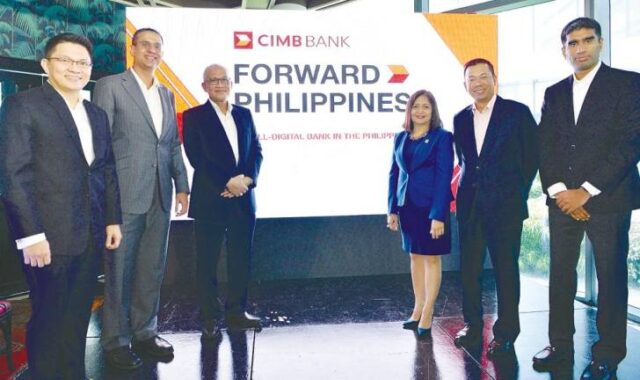
    CIMB Bank Philippines Inc (CIMB Philippines) aspires to be the nation’s first all-digital and mobile-first bank, promising to make banking simpler, more convenient, and hassle-free, according to the group’s statement.

    “We look forward to bringing a differentiated and digital proposition to the market. Internet and mobile penetration in the Philippines remains one of the highest in the world, a clear sign of the progressive and modern society we hope to serve,” said Effendy.

    CIMB Philippines CEO Vijay Manoharan noted that consumers need innovative financial solutions that are relevant to their needs as well as help them get ahead and advance their financial well-being, but they do not necessarily need a physical bank.

    “By offering most of our products via the Octo app securely, we are offering the next-level any day, any time convenience for our customers by enabling them to effectively ‘carry’ our bank branch in the palm of their hands.”

    CIMB Philippines’ partners include 7-Eleven and DragonPay, with a total of 8,000 convenient customer touchpoints nationwide.

    The CIMB Bank Visa-powered Debit Card is accepted at any of the 20,000 Bancnet, Visa, and Visa Plus automatic teller machine (ATMs) nationwide and two million Visa and Visa Plus ATMs worldwide.

    To cater to those who want to really start preparing for what’s ahead and save for the future, CIMB Bank offers the UpSave Account, which allows greater savings with its high interest rate of 2% per annum (eight times higher than other banks).

  • Vietnam’s interest rate rises in the lead-up to biggest national holiday

    Vietnam’s interest rate rises in the lead-up to biggest national holiday

    Banks have hiked deposit interest rates by 0.1-0.5 percentage points as the country’s spending demand surges prior to Tet. Private lender Asia Commercial Bank last Friday introduced a new interest schedule with an increase of 0.2-0.3 percentage points in rates on most deposit terms. It also offers rates proportional to the amount of deposit. Techcombank, another of the larger private banks, since January 21, has hiked rates by 0.2-0.3 percentage points for terms of up to 12 months.

    Earlier, in mid-December most private banks had upped rates by 0.1-0.7 percentage points, while state-run banks increased them by up to 0.5 percentage points.

    However, there are also a few banks that choose to ‘go against the current’ by lowering deposit rates on same products. For instance, BIDV, Vietnam’s biggest lender by assets, has just lowered interest rates on its deposit rate schedule effective from January 22.

    BIDV’s 5-month savings is now 5.2 percent interest, down from its previously 5.5 percent which was its approved ceiling rate.

    Previously, at the end of December 2018, BIDV increased the 5-month term interest rate by 0.5 percentage points per year.

    On the same day, VPBank also reduced the interest rate on their 6-36 months terms by 0.1-0.5 percentage points.

    Specifically, the bank’s regular savings interest rate with 6-11-month terms is lowered by 0.2 percentage points, and is now 7 percent. The 12-month term interest rate is 7.05 percent; both 13 and 15 month terms are down 0.2 percentage points, and are now 7.2 and 7.4 percent respectively.

    However, VPBank still currently holds the highest single interest rate in the market of 8.6 percent for its 18-36 month fixed term savings.

    Experts believe that the negative adjustment of interest rates at some banks such as BIDV and VPBank may be for the purpose of restructuring to meet the banks’ individual capital needs, and does not yet accurately reflect the interest rate trend in the following months.

    In fact, the period before the Tet Lunar New Year holiday is when cash is still in high demand in the economy, as businesses need to withdraw money to pay bonuses and salaries, and people will withdraw cash to spend for Tet which will start from February 5.

    At the conference on tasks for the banking industry in 2019 on January 9, Deputy Governor of the State Bank of Vietnam (SBV) Dao Minh Tu said that banks have recorded a decline in deposits.

    According to him, this is a phenomenon that banks need to keep their eyes on, to determine where the flow of capital has gone, to real estate or production, or another channel in order to make reasonable adjustments to their plans.

    Tu said the SBV had adamantly stuck to its policy to stabilize interest rates despite very high pressure to drive rates upwards in 2018. Many small banks had raised short-term deposit rates to attract capital and improve liquidity, resulting in the central bank having to pump more money into the market or use other measures to limit and keep interest rates stable for businesses.

    The deputy governor said the SBV had to balance between the conflicting interests of banks, savers and businesses to come up with an appropriate interest rate for the whole market.

    The SBV targets credit growth of 14 percent this year, the same as last year. As a result, he noted, commercial banks will have to make better quality loans this year to avoid bad debt.

  • Vietnamese banks report plunge in profits

    Vietnamese banks report plunge in profits

    While profit across the banking sector grew by an estimated 40 percent last year, VietinBank, LienVietPostBank and SaigonBank have reported steep declines. The biggest surprise came from state-owned VietinBank, the country’s second biggest lender by assets, which reported a 25 percent fall in profits before tax to go out of the group of five most profitable banks in the country.

    Le Duc Tho, its chairman, said this was a result of having to restrict operations last quarter to begin restructuring.

    Asset growth, credit growth and capital mobilization grew by 6-10 percent, lower than targeted.

    LienVietPostBank reported a 30 percent decline in profit before tax as a result of losses related to securities investments and low marginal interest rates.

    It achieved losses of nearly VND5 billion ($215,140) from securities investments whereas in 2017 it had made a profit of VND380 billion ($16.35 million).

    SaigonBank’s profit before tax fell by more than 26 percent due to provisioning for bad debts. The bank had to increase provision for bad debts by 22 percent to an amount equivalent to 87 percent of its profit from business operations.

    Its bad debts doubled in the first half of 2018 to nearly VND900 billion ($38.72 million), but by the end of the year it brought the rate down from 6.48 percent during mid-year to 2.2 percent. It involved provisioning of VND287 billion ($12.35 million).

    HSBC Vietnam CEO Pham Hong Hai said from 2019 bad debts could reemerge as a problem for banks after the recent lending spurt and the instability of the global financial markets.

    As a result, banks’ profits would most likely see a downward trend this year, he warned.

    The State Bank of Vietnam targets credit growth of 14 percent this year, the same as last year, and keeping non-performing loans to below 2 percent.

  • Vietnam commercial banks boost retail banking segment

    Vietnam commercial banks boost retail banking segment

    Commercial banks have adjusted their service fees to individual customers since beginning of the year in order to focus on the retail segment.

    For money transfer services in the same banking system, some commercial banks, such as VIB, VietinBank and Techcombank, do not charge for individual customers when using electronic services.

    These banks charge VNĐ8,800 for the maintenance of their accounts. In addition, the fee for money transfer services among different banks is VNĐ9,900 or higher per transaction, or as a percentage of the transaction amount ranging from 0.1 to 0.3 per cent.

    The Joint Stock Commercial Bank for Foreign Trade of Việt Nam (Vietcombank) has increased its service fees since the beginning of this month.

    The monthly fee of its SMS banking service increased from VNĐ8,800 to VNĐ11,000, including VAT (value-added tax).

    Vietcombank has begun charging VNĐ2,200 per transaction from Vietcombank account holders via its mobile banking app from March 1.

    For internet banking service, Vietcombank’s customers will have to pay VNĐ2,200 for each transaction worth less than VNĐ50 million (US$2,196) and VNĐ5,500 for each transaction worth more than VNĐ50 million.

    The fee for an inter-bank transaction of below VNĐ10 million is VNĐ7,700, and when the amount is more than VNĐ10 million, it charges 0.02 per cent of the total amount per transaction.

    Financial expert Bùi Quang Tín said that the competition among bank service fees was quite fierce as some banks offered free of charge inter-bank money transfer services in order to attract more customers.

    “The recent increase in banking service fees at several commercial banks is understandable as the banks must invest more money to ensure security systems to meet stricter requirements from customers,” he said.

    According to the State Bank of Việt Nam, commercial banks issued 132 million cards as of the end of last year.

    Last year, the number of transactions, including withdrawals and transfers, via ATMs was over 206 million transactions valued at VNĐ563 trillion; while there were 43.5 million POS and EDC transactions with a total value of VNĐ95 trillion.

    As for domestic transactions for non-cash payments, bank cards ranked second in terms of the number of transactions.

    Individual deposit account balances increased by VNĐ42.6 trillion to VNĐ325 trillion in the fourth quarter of last year.

    With a population of more than 93 million and rising consumption, Việt Nam is considered a destination in the retail banking segment.


  • Maybank debuts m-banking in Cambodia

    Maybank debuts m-banking in Cambodia

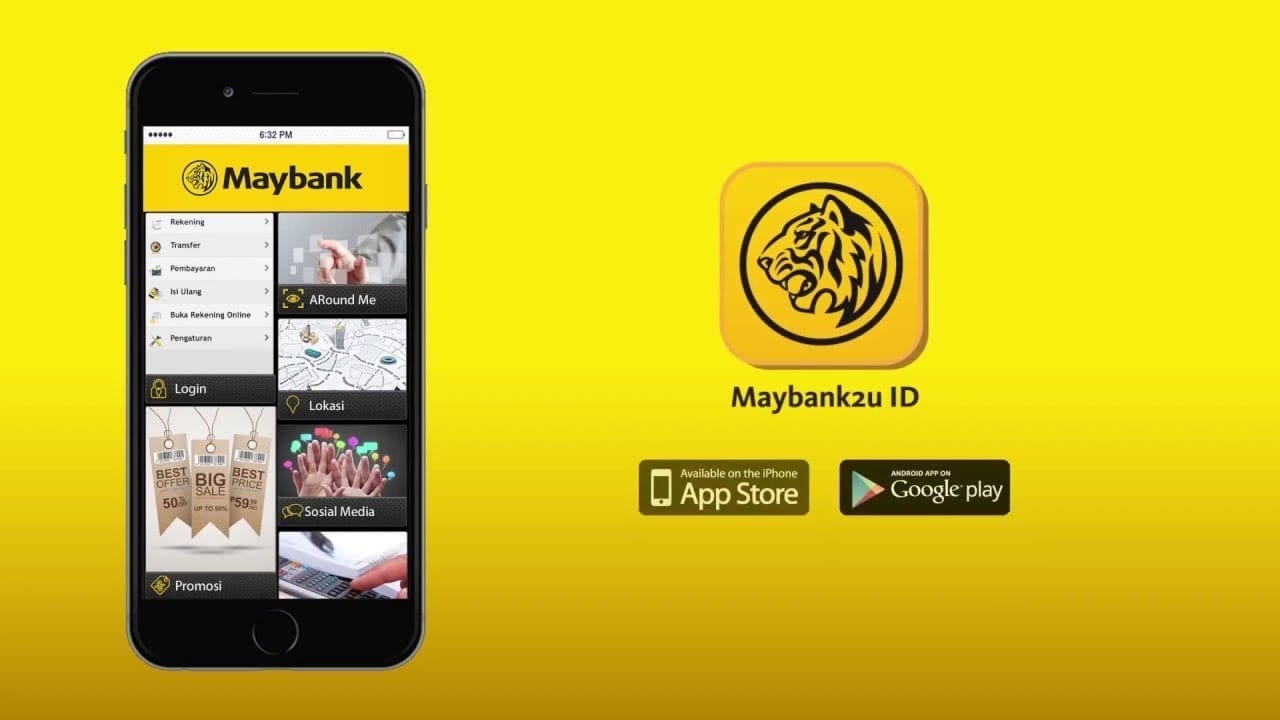
    Maybank has introduced its mobile banking app in Cambodia as part of efforts to strengthen its presence in the country.

    The app is the first in Cambodia to offer augmented reality and a QR code reader. A similar app was launched in Malaysia in 2014.

    Maybank group head of community financial services Datuk Lim Hong Tat, who launched the new app in Phnom Penh, said that internet banking has become a trend for many digitally savvy Cambodians who are increasingly comfortable transacting over this channel.

    Maybank’s online banking channel, namely M2U, which was introduced in Cambodia in 2012, is seeing robust growth with its registered user base increasing by over 50% within a year, and the volume of transactions has also risen by over 50% from 2014 to 2015,” said Lim.

    Lim said that with the launch of mobile banking app, customers in Cambodia will enjoy enhanced customer experience and greater speed when undertaking banking transactions over their mobile phones.

    “With the mobile banking app, Maybank customers can check their account balance, including all debit card purchases and perform simple transactions anytime, anywhere, alleviating the need for trips to our branches,” Lim explained.

    Other features offered by the app include the ability to send money to anyone with a mobile phone number – such transactions allow for cash to be withdrawn at any Maybank ATM without using an ATM card.

    The augmented reality branch locator tool allows customers to scan their surroundings and follow onscreen directions. It also detects nearby ATMs and promotions exclusive to the Maybank customer.

    The in-app QR code reader as well as loan calculator is available for public use, even if they are not yet a Maybank customer.

    Maybank Cambodia currently operates a network of 21 branches throughout the country complemented by 40 self-service terminals.

  • DBS taps digital platform to grow retail banking operations

    DBS taps digital platform to grow retail banking operations

    DBS launched a “mobile-only bank” and said it aims to garner 5 million customers and a deposit base of Rs50,000 crore over the next five years

    On Tuesday, DBS launched a “mobile-only bank” and said it aims to garner 5 million customers and a deposit base of Rs.50,000 crore over the next five years. Named digibank, the DBS mobile application will allow individuals to access a wallet at first and then open a savings deposit account with the bank. The balance in the account will earn 7% interest per annum.

    “We are going to focus outside our affluent banking base and we hope to be a mass consumer banker through this product. We hope to get 5 million customers over the next 3-4 years through digibanking,” said Piyush Gupta, chief executive officer at the bank. Currently, DBS Bank has 35,000-45,000 customers in India, according to Surojit Shome, head of India operations for the bank.

    DBS Bank isn’t the only one to board the digital bandwagon. Large Indian banks such as State Bank of India, ICICI Bank Ltd, HDFC Bank Ltd and Bank of Baroda are building digital channels with an aim to garner new customers and serve existing ones better.

    The rush for digital dominance comes even as 11 payments banks are preparing to launch their operations. These banks will have the infrastructure and technology to provide digital banking from day one.

    Among the most popular digital channels is the use of the smartphone for transactions. Transactions on mobile phones in India have surged in recent months owing to large value transactions being concluded on smartphones by corporate clients besides an increase in retail transactions, Mint reported on 28 March. Data from the Reserve Bank of India (RBI) show that on a year-on-year basis, the amount transacted in December 2015 rose more than fourfold to Rs.49,029 crore from the Rs.11,323 crore transacted a year ago.

    India is estimated to have about 220 million smartphone users in 2015 and a February report by networking solutions firm Cisco forecast this would jump to 651 million by 2019.

    Gupta of DBS said the bank’s digital offering stands out because of an inbuilt dynamic security system that takes away the need for one-time authentications and a natural language interface that allows customers to use voice commands to transact.

    Mobile banking products of most banks require the customer to enter a one-time password to conclude any transaction.

    For the initial authentication of a new customer, DBS has tied up with Coffee Day Enterprises Ltd that runs the Cafe Coffee Day outlets. A customer will be required to carry an Aadhaar or a PAN card to a Cafe Coffee Day outlet and, using a biometric system, will be allowed to open an account.

    Meanwhile, DBS Bank will continue to expand its branch network to service corporate clients and small and medium enterprises, Gupta said. The bank has 12 branches in India and has applied to RBI to move to a wholly-owned subsidiary structure. “The application is pending and we have been told it may take 12-18 months to process. We have not received any negative feedback though,” Gupta said. The bank’s Indian assets form only 5% of its total book. Gupta said the bank is hoping for double digit growth in its India balance sheet.

    The bank will leverage its digital platform to build a retail loan book of Rs.10,000 crore over the next five years. “Right now, we are launching digibank mostly on the liabilities side. We will introduce investments and, later, loans, over the next few months,” said Gupta.

    “If you look at some of the global stories, the broad perspective is that a bank starts excelling in certain things when it begins to focus in some areas. Digital-first banks such as some in the US like Atom Bank, they channelize all their energies into one thing as opposed to existing Indian players who will continue to focus on traditional branch banking and in addition give digital services,” said Vivek Belgavi, partner and leader of financial services technology at PwC.

    Belgavi added that new companies would largely focus on untapped segment such as individuals who do not visit a branch as a target for their digital banking.

    “It is a classic disruptor strategy. It will go after segments which are under-served. There is a segment that does not visit branches and because they don’t visit branches they expect a superior experience; if this is not catered to, this is what the disruptors will focus on,” he said.


  • BNI chalks up Rp2.9 trillion in net profit in first quarter

    BNI chalks up Rp2.9 trillion in net profit in first quarter

    Publicly traded lender PT. Bank Negara Indonesia Persero Tbk reported Rp2.9 trillion in net profit in the first quarter of this year up 5.5 percent year-on-year.

    The profit was attributable mainly to net interest income especially interest on infrastructure credits, Achmad Baiquni, the president director of the state owned bank said here on Tuesday.

    Its net interest income grew 13.3 percent to Rp6.91 trillion in the first three months of 2016 from Rp6.09 trillion in the same period last year.

    “The net interest margin (NIM) of the bank was 6.1 percent in the first quarter of this year,” Baiquni said.

    The NIM of the countrys fourth largest bank in asset, rose with a strong 21.2 percent growth in credits to Rp326.74 trillion in the January-March period of 2016 from Rp269.51 trillion in the same period in 2015.

    Credits for the business and consumption sectors were the largest contributors to its credit expansion, Baiquni said.

    Credits for the business, which grew 22.7 percent (yoy) to Rp234.2 trillion in the first quarter of 2016, accounted for 71.7 percent of the banks total credits.

    Credits for the construction sector surged 127.5 percent to Rp5.99 trillion and credits for the consumption sector rose 9.8 percent to Rp57.56 trillion in the first quarter of 2016.

    The bank also recorded an increase in fee based income , up 16.4 percent to Rp2.22 trillion .

    The third party funds held by the bank rose 21.8 percent (yoy) to Rp371.5 trillion in the first quarter of 2016 .

    Cheap funds accounted for 58.5 percent or around Rp217.5 trillion of the third party funds – or an increase of 12.9 percent (yoy).

    The credit expansion that grew 21.2 percent and the third party funds that increased 21.8 percent resulted in 25 percent rise (yoy) in its assets to Rp509.09 trillion in the first quarter of 2016 .

  • Maybank to grow Singapore retail SME loan portfolio by 40% this year

    Maybank to grow Singapore retail SME loan portfolio by 40% this year

    Maybank is planning to “aggressively expand” its retail small and medium enterprises (RSME) financing across Singapore and the region, it said on Monday.

    The bank will be lending money to more businesses with revenues of up to $20 million, termed “retail SMEs” because they have simpler financing needs akin to those of retail or consumer banking.

    The move follows the implementation of its RSME model in Malaysia, which has seen a compounded annual growth rate (CAGR) of more than 30 per cent in loans since it was fully rolled out in 2013.

    Maybank Singapore said it expects to grow its total RSME loan portfolio by 40 per cent this year.

    In the two years since the RSME business was officially launched here, SME loans have increased by more than 50 per cent and deposits have risen by almost 25 per cent, according to Mr Choong Wai Hong, head of community financial services (CFS) for Maybank Singapore.

    “Our RSME business was a newly created segment which we identified as having great potential in 2011,” said Mr Lim Hong Tat, chief executive of Maybank Singapore.

    Mr Lim added that Maybank will be focusing on building its RSME portfolio regionally as the formation of the Asean Economic Community has resulted in countries placing increasing emphasis on smaller firms. “Asean economies are powered by the SME segment, which generates about 50 per cent of employment and some 40 per cent of GDP on average,” he added.

    “The SME industry itself is growing by between 8 and 28 per cent CAGR in these markets and presents an untapped potential for growth.”

    Maybank has introduced its RSME model in Indonesia, the Philippines, Cambodia, Laos and Brunei.

    The bank also has online capabilities to help small business owners improve their productivity in areas such as payroll, collections and payments. Maybank intends to devise more innovative financing solutions to help business owners manage uncertainties around their cash flow.

    “As the only bank with a presence in all 10 Asean countries, we are well-poised to help more small businesses capitalise on new opportunities to grow their business locally and access new markets in the region,” Mr Choong said.

  • HSBC expanding retail banking business in China’s Guangdong province

    HSBC expanding retail banking business in China’s Guangdong province

    HSBC, the largest bank in Europe and Hong Kong, is planning to expand its retail banking business in China’s Guangdong province in the coming years, with credit cards. securities trading and residential mortgage business in the pipeline, said Asia-Pacific chief executive Peter Wong Tung-shun.

    Wong was in Guangzhou on Wednesday morning with group chief executive Stuart Gulliver and Greater China head Helen Wong to co-host the launch ceremony of HSBC Express, the bank’s first train sponsorship programme. Under the sponsorship deal, 11 out of 22 trains between Guangzhou and Shenzhen will be named HSBC Express.

    “These trains are for mass commute. The programme aims to bring the image of HSBC to the public as we are expanding retail banking in Guangdong, which would provide huge opportunities for HSBC in the coming years,” Gulliver told the South China Morning Post at the launch ceremony.

    “While Hong Kong has 8 million customers, there are over 50 million Cantonese speakers in Guangdong province. HSBC is very strong in retail banking in Hong Kong, which is a big part of our business. Retail banking would be our important business thrust in Guangdong in the years ahead,” he said.

    HSBC now has 64 outlets in Guangdong, accounting for a third of its 177 outlets in China. The lender has traditionally focused on corporate banking in China but Gulliver said the growing wealth in Guangdong makes it the ideal place for retail banking. “On its own, the Guangdong economy is the 16th largest in the world. The middle classes are growing, and so is the demand for retail business services,” Gulliver said.

    Wong told the Post that retail expansion would include launching HSBC credit cards, which received regulatory approval last year but the launch date is yet to be confirmed.

    Securities trading is also in the pipeline. The bank has set up a joint venture with the Qianhai authorities, becoming the first foreign firm to hold a majority stake, of 51 per cent, in a securities joint venture trading stocks for customers from Qianhai special economic zone. It is to commence operation sometime this year.

    Wong said resident mortgage business is anther retail segment in demand, adding that the bank would also like to go into other types of wealth management businesses.

    “When people get wealthy, they like to buy homes. HSBC can offer mortgage and other wealth management services for these customers in Guangdong,” Wong said. “HSBC has a long history in both Hong Kong and Guangdong. We have been in Hong Kong for 150 years and set up our first office in Guangzhou in 1909. We financed Kowloon and Guangzhou railway in the old days. We are here for the long term,” Wong said.

    Gulliver said that with the many train and bridge projects linking Hong Kong with Guangdong, the interconnection between the two would be huge in the future. This is transforming the area from a low-end manufacturing centre into a high-end technology area led by Shenzhen, providing huge opportunities for HSBC.

  • OCBC launches banking app for Apple Watch

    OCBC launches banking app for Apple Watch

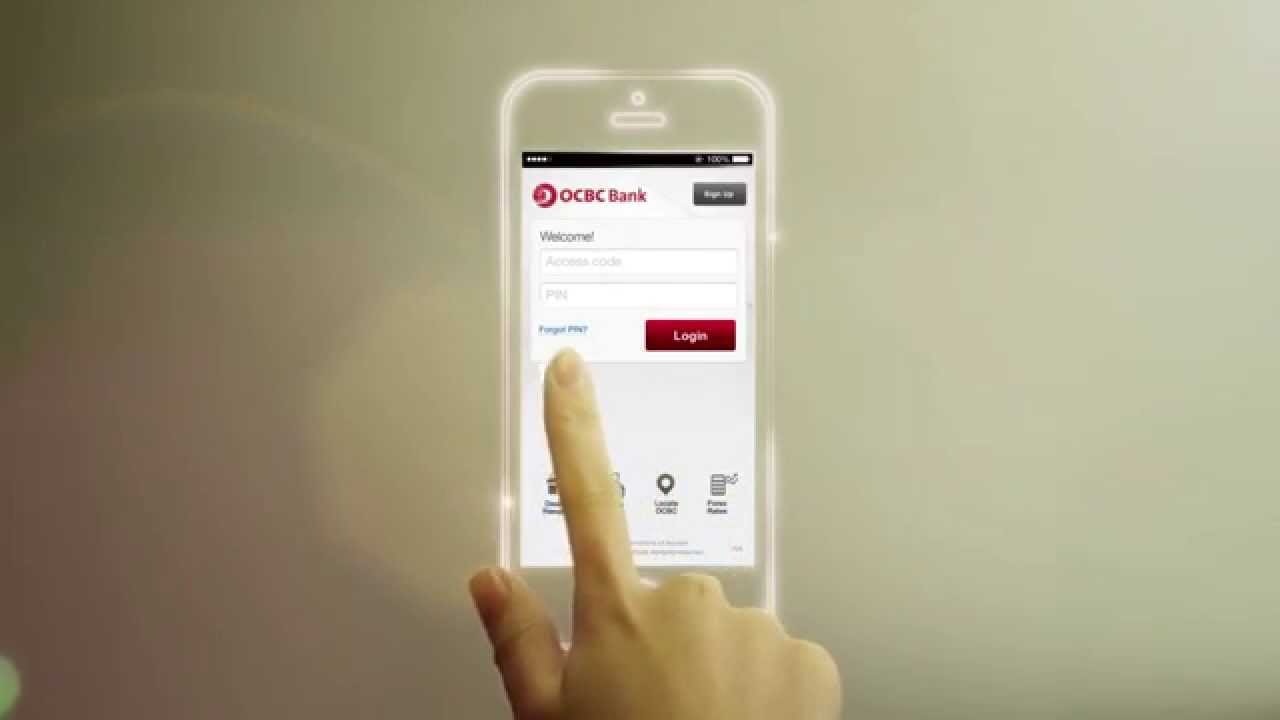
    Singapore’s OCBC Bank has launched a new mobile banking app designed for the Apple Watch.

    With the app, users can have instant access to their personal banking information, including the full list of their balances – bank accounts, cards and investments, recent transactions, and the location of the nearest OCBC Bank branch or ATM, on their Apple Watch.

    Customers must first perform a one-time activation on their OCBC iPhone mobile banking app before using the Apple Watch app. Once activated, account information and recent transactions can be viewed on Apple Watch, without the need to login to mobile banking.

    This service is available for customers using mobile devices such as iPhone 5, iPhone 5S, iPhone 6, iPhone 6 Plus, iPhone 6S or iPhone 6S Plus operating on iOS 9 and Apple Watch devices running on WatchOS2.

    The service can only be activated on a single pair of Apple Watch and iPhone devices at one time and all account numbers displayed on the watch are partially masked with only the last four digits revealed. No information is stored on the phone or watch and for security purposes, customers can choose to set a passcode on their Apple Watch.

    Market intelligence firm IDC estimates the worldwide wearable device market will reach a total of 111.1 million units shipped in 2016, a strong 44.4% increase from the 80 million units shipped in 2015. By 2019, the five-year compound annual growth rate (CAGR) of wearable devices would be 28%, with Apple smart watch devices taking the lion’s share of the market.

    “Smartwatches represent the next generation of personal mobile devices, and our Apple Watch app will offer the convenience, security and choice that customers demand when it comes to everyday banking on-the-go,” said Aditya Gupta, OCBC Bank’s Singapore head of e-business, said.

    “We are confident the Apple Watch app will be a big hit with our fast-growing number of customers who are mobile and digitally-savvy.”

  • CIMB expects more conducive economy for consumer banking in 2H2016

    CIMB expects more conducive economy for consumer banking in 2H2016

    Collaboration between CIMB and Tesco Stores (Malaysia) Sdn Bhd today, the group’s CEO of group consumer banking Renzo Viegas told pressmen that while the current marketplace remains tough for business, the mass affluent community will still continue to invest.

    “It’s a tough environment, so loan growth will be slower than last year for sure (in terms of) investment products, people are really concerned about the global economy and the Malaysian economy; (there are) a lot of volatility, so people are holding back their investment decisions, but the mass affluent customers will still invest, so the second half should pick up a bit,” he said.

    “(In the) second half (of 2016), the whole economy environment should improve to become more stable and predictable; investment by consumers should also grow, and therefore our wealth management would also do well,” he added.

    On the other hand, Viegas said CIMB is also monitoring its credit quality closely, to avoid any deterioration in the group’s consumer portfolio.

    “All in all, there will still be slower growth, and we are watching the credit quality. So far, there is no deterioration to our credit quality in consumer portfolio. But there are still challenges, and there are still going to [be] opportunities like the launch today,” he said.

    Viegas said the partnership will allow CIMB to benefit from Tesco Malaysia’s three million weekly customers, by the increased accessibility to other products offer by the bank.

    “In the next two years, we hope we can garner half a million new card customers,” he added.

    Earlier at the launching ceremony today, CIMB’s CEO Tengku Zafrul Aziz announced an exclusive five-year strategic partnership with Tesco Stores (Malaysia) Sdn Bhd to come out with the new card services.

    The collaboration will also see CIMB set up its consumer banking kiosks at 38 Tesco stores nationwide. Tesco Malaysia currently operates 55 stores, with about 8,000 employees.

    Zafrul said the partnership between CIMB and Tesco Malaysia represents a winning formula in delivering value to both companies’ customers.

    “Being able to bring our vast suite of products through a seamless and paperless process to Tesco stores, make for a truly compelling value proposition to customers, both current and new. We genuinely believe that this partnership is the start of many great things ahead,” he said.

    The new CIMB Tesco MasterCard members will enjoy an annual fee waiver. From April 1, 2016 to March 31, 2017, one Tesco Clubcard point will be awarded for every RM2 spent on CIMB Tesco MasterCard at other retail outlets.

    Tesco Malaysia CEO, Paul Ritchie, also commented that the partnership, which had taken a year to materialise, is the form of bringing the best of two companies to enhance customers’ shopping trip.

    “With Tesco’s variety in range at fantastic promotions and good prices, and CIMB’s strengths in the financial and banking sector, together we will be able to reward our customers and create value to earn their long-term loyalty,” he said.

  • Maldives laments HSBC retail banking loss

    Maldives laments HSBC retail banking loss

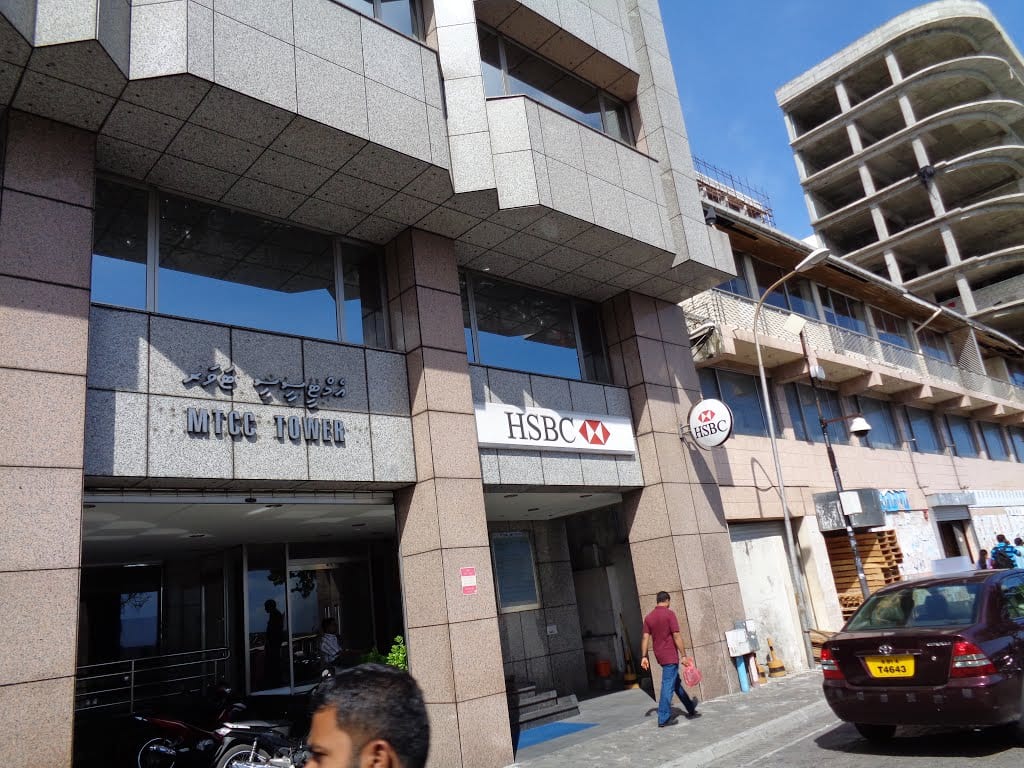
    Maldives central bank on Thursday lamented the decision by Banking giant Hong Kong and Shanghai Banking Corporation (HSBC) to cease retail banking in the Maldives from April.

    Speaking at the parliamentary finance committee governor Azeema Adam insisted that the Maldives Monetary Authority (MMA) does not wish HSBC to cease retail banking services in the Maldives but said the country still needed the bank’s other services.

    Male branch of HSBC had decided to cease retail banking operations from April 28 and is now informing its customers.

    An official from the Maldives Monetary Authority (MMA) also confirmed the plans by HSBC’s Male branch to shift to corporate-only operations. The official, however, did not give details.

    HSBC was not available for comment.

    HSBC operates in Maldives as a trading desk of the HSBC branch in Sri Lanka.

    The governor however, pointed out that HSBC’s decision was not limited to the Maldives.

    “Every bank has its own standards. Certain services that they offer. Instead of forcing something on them we look to find out how it could prosper as a business. We put in a lot of effort to bring HSBC to the Maldives,” Azeema explained.

    “Even when they [HSBC] first came they had sought to serve high net worth customers and individuals. We had given them the operating license knowing that all those years ago.”

    Azeema also revealed that several challenges had prompted the bank to adopt cost cutting measures.

    “It’s not something we also want. But if we look at the services provided by the banks in Maldives, HSBC is the third largest bank in the country. In terms of deposit size and loan size,” she continued.

    HSBC is the second highest banking profit tax payer in the Maldives, she added.

    An account in HSBC has to be opened with an initial deposit of MVR 50,000; the highest initial deposit required of any bank that operates in Maldives. The bank also pays the lowest deposit interest rate at 1 – 1.75 percent. Deposit interest rate on US Dollar accounts is 0.10 percent.

    As the bank charges a high amount in fees, the bank mainly hosts Maldivian businesses.

    In May 2014, complaints mounted over the bank’s decision to close down accounts held by many small and medium businesses citing administrative reasons. The businesses had complained that the move was made without prior notice.

    The decision by one of the biggest banks in the world comes a week after it was revealed that the Maldives had lost a major international banker.

    President Abdulla Yameen Abdul Gayoom told residents of Gaafu Dhaal atoll Gadhdhoo on February 15 that one of the major correspondent banks had dropped Maldives from its client list, while another one is considering a similar move. The reason, according to the president, is false claims made about Maldives, including threats posed by home-grown jihadists.

    “When we make such claims without considering the repercussions, it’s the people of Maldives that has to suffer,” he said, after inaugurating a project to establish a clean water system in the island.

    The president did not identify the bank that had dropped the Maldives. Haveeru, however, understands that US-based JPMorgan Chase had terminated its dealings with Maldivian banks in 2013.

    A correspondent bank is a financial institution that provides services on behalf of another, equal or unequal, financial institution. It can conduct business transactions, accept deposits and gather documents on behalf of the other financial institution.