Retail News CRM

Tag: retail banking

  • BRI records net profit of Rp25.2 trillion

    BRI records net profit of Rp25.2 trillion

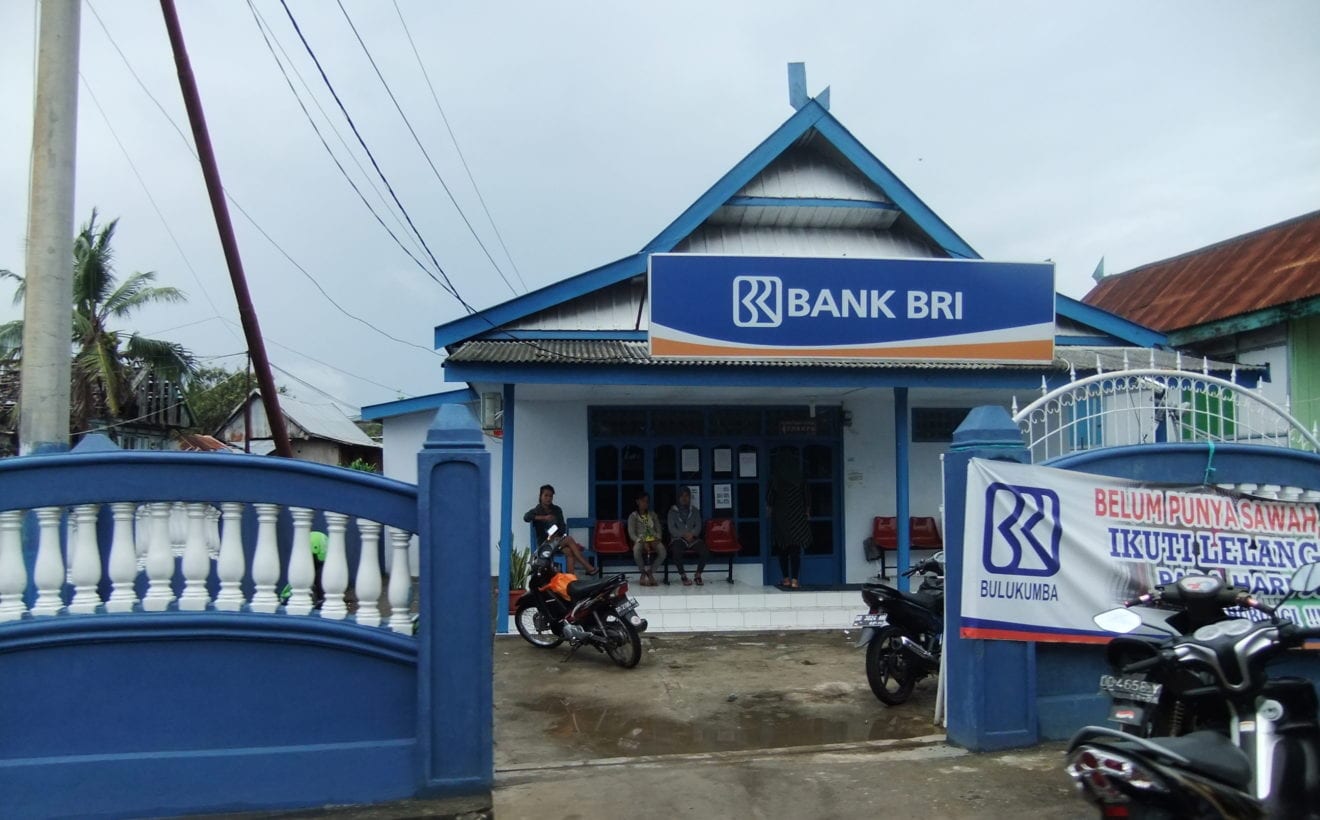
    PT Bank Rakyat Indonesia Tbk. made a net profit of Rp25.2 trillion in 2015, representing a 4.5 percent growth from Rp24.2 trillion it made in the previous year.

    “The growth is driven by an increase in the interest income that reached Rp82.2 trillion, reflecting a growth of 13.5 percent from the previous year,” the state-owned lenders president director, Asmawi Syam, said here on Wednesday.

    The banks non-interest income reached Rp14.2 trillion, up 21.4 percent from the previous years figure, taking the total income of the lender to Rp96.4 trillion, 14.6 percent above the previous figure.

    Outstanding loans distributed by Bank BRI till 2015-end reached Rp558.4 trillion, reflecting a growth of 13.9 percent year-on-year compared to the same period of the previous year. These loans were given across all business sectors.

    Credits to the micro-sector, which is the core business area of the bank, grew by 16.8 percent year-on-year to reach Rp178.9 trillion with the number of customers increasing to 7.8 million from 7.3 million, year-on-year.

    “Credit growth in the micro-sector was driven by the re-launch of a smallholder credit program (KUR) by the government in the middle of August 2015,” he said.

    Since its launch on August 18 2015, Bank BRI has extended Rp16.2 trillion in credits to more than 920,000 businessmen across the country through the KUR program.

    Credits to non-state-owned companies in the corporate segment grew 31.5 percent year-on-year to Rp75.1 trillion while credit to the consumer segment grew 9.8 percent to Rp88.5 trillion.

    Credits to state-owned companies were up 9.6 percent to Rp81.2 trillion and to small commercial and medium businesses rose 7.5 percent to Rp134.7 trillion.

  • German start-up Number26 launches pan-European mobile bank

    German start-up Number26 launches pan-European mobile bank

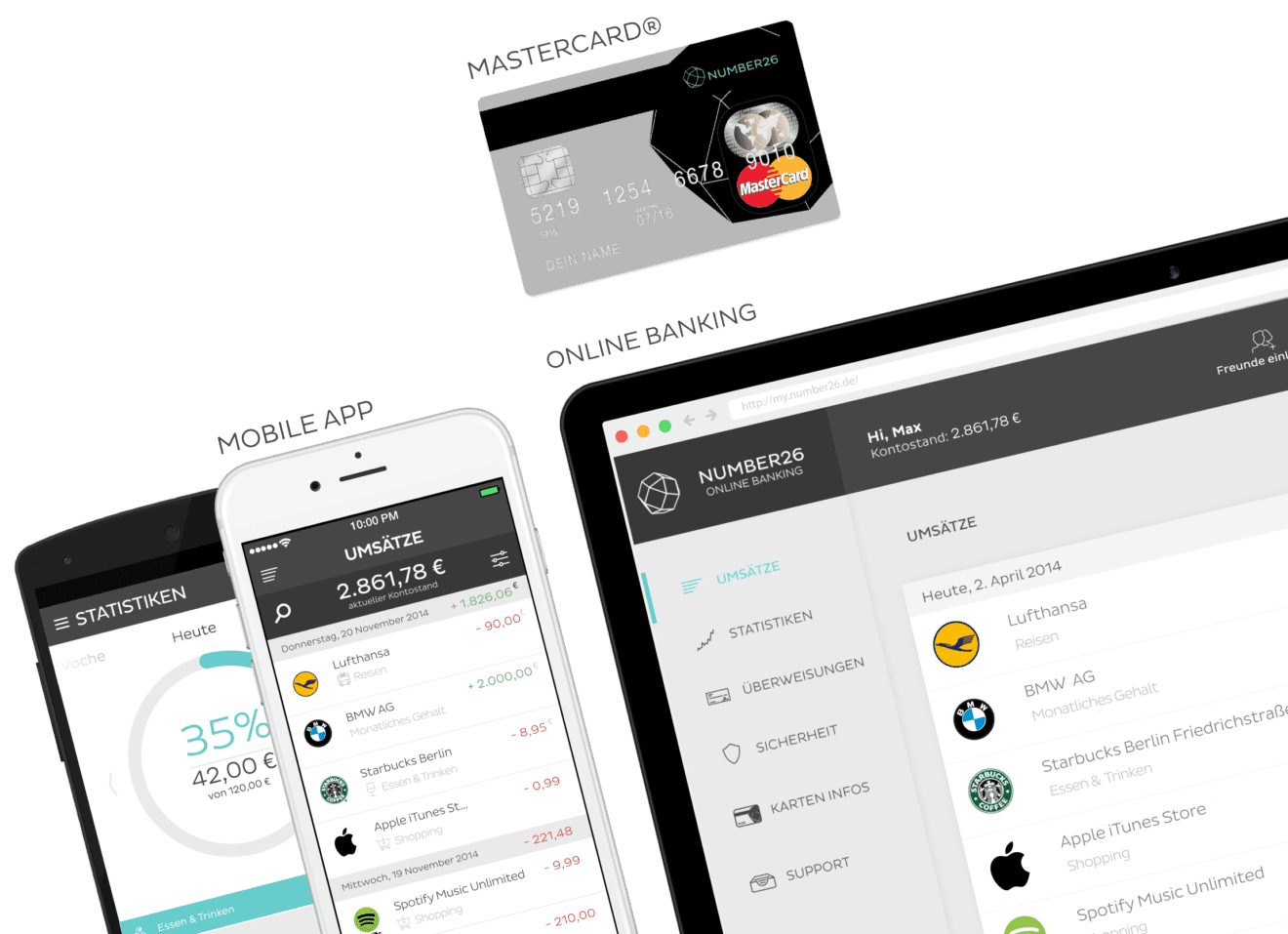
    Number26 is looking to succeed where traditional lenders have struggled, by relying on mobile phones to build a true pan-European bank.

    The German financial services start-up is expanding into six European markets, making it the first mobile phone bank to straddle the region’s borders, it said on Thursday.

    Number26 is entering France, Italy, Spain, Slovakia, Greece and Ireland, the latter being a test for moving into Britain, and eventually plans to develop a continent-wide bank.

    Founded by two Austrians and based in Berlin, the company revealed plans to offer a MasterCard and basic current accounts via a licence from its partner Wirecard Bank of Germany, which guarantees funds using the German Deposit Protection Fund. Its parent, Wirecard, also supplies Number26 with core banking software and transaction processing.

    Without branches, legacy computer infrastructure and by relying on selective outsourcing, mobile-first banks can compete with little up-front capital against big banks, all while promising lower lending rates and higher rates on savings.

    Number26 also has a jump on rival mobile-first banks including Atom Bank which took a UK bank licence in June and Tandem, which received a licence this week. Both plan to start operating in Britain next year. BBVA, Spain’s No. 2 bank, has taken a 29.5 per cent stake in Atom.

    “The model for these mobile start-ups is to compete on fees,” said Andrew Copeman, an analyst with financial research firm Aite Group. “Banks can’t afford to go after those rates because they are saddled with big overhead from branch networks and old systems.”

    Taken by surprise, banks have responded by ploughing more money into fixing creaky systems, rolling out mobile apps of their own and shuttering many branches. Worldwide, banks could cut half their jobs in 10 years as they fight to stay relevant, the former head of Barclays has said. “I don’t see banks at all as my competitors. They just can’t move fast enough,” Number26 chief executive Valentin Stalf, 30, said in an interview.

    The company, which launched this year in Germany and Austria, provides more than 80,000 customers with accounts for cash withdrawals, deposits and overdraft services up to ?2,000 via a slick smartphone app. “We see the current account as just a starting point,” said Maximilian Tayenthal, 35, Number26’s co-founder and chief financial officer. Credit, savings and insurance products will follow, he said.

    It recently began offering a retail checkout-based alternative to ATM machines for cash withdrawals and deposits in Germany.

    It now counts 6,000 cash outlets including supermarket chain Rewe, or more ATMs than Deutsche Bank and Commerzbank combined.

    The Number26 name refers to the optimal number of quarter turns it takes to solve a Rubik’s Cube puzzle and is a play on the most efficient route it can find to reinvent banking.

    Mobile phone-based banks aim to tear up the rule-book of an earlier generation of direct banks, which used online sites and telephone call centres to woo millions of customers away from bank branches starting in the 1990s.

    ING’s DiBa and others are now some of Europe’s biggest retail banks after being spun out of parent banks to offer a wide array of services created within those banks.

    By contrast, Number26 is looking to evolve rapidly into a full-service banking hub, providing not just services of its own but those from third parties. It is in talks to offer money transfers from TransferWise, loans from LendingClub and deposit comparison site SavingGlobal on its platform.

    The 75-employee company has raised ?12.5 million in venture funding. Backers include Peter Thiel, founder of PayPal and one of Silicon Valley’s top investors, Earlybird Venture Capital and Axel Springer Plug & Play, both of Germany, and Swiss-based Redalpine Venture Partners.

  • UOB sells Brunei retail banking business to Baiduri Bank for $46.6m

    UOB sells Brunei retail banking business to Baiduri Bank for $46.6m

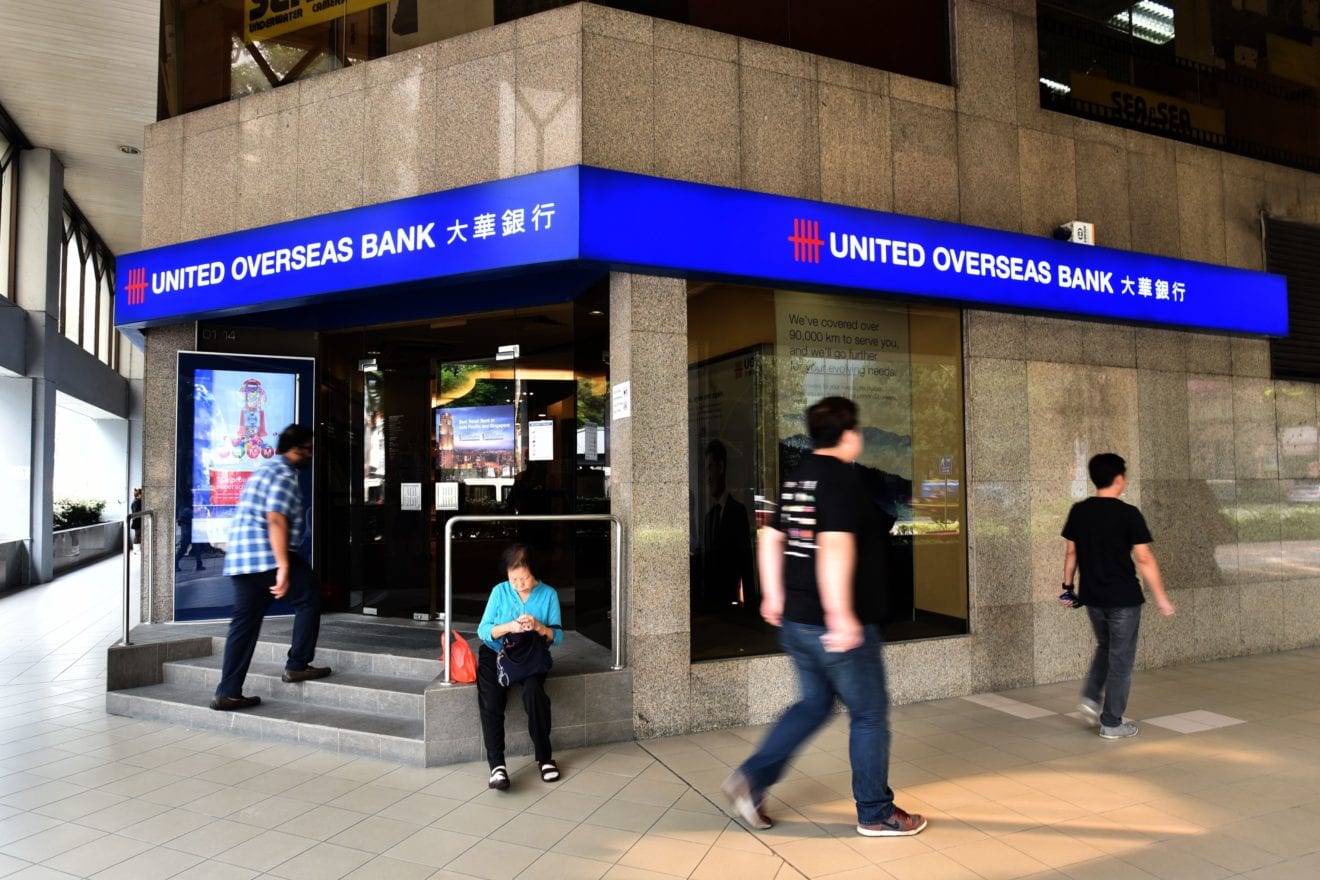
    With the approval of a court declaration, banking and credit facilities made to customers of UOB Brunei and the current, saving and fixed deposit accounts maintained by the clients of UOB Brunei will be transferred to Baiduri.

    According to UOB, the sale consideration of $46.6 million, less the deposits in transferred accounts, will be settled as a cash payment. Arrived at on a willing-buyer-willing-seller basis, it took into consideration account income potential and estimated loan defaults of the retail banking business.

    The sale is part of a move to “rationalise its businesses and operations to achieve cost efficiencies and to focus on building a business platform that is consistent with the business prospects in the country”.

    According to official statements, the sale of its Brunei retail banking unit is also not expected to have any impact on UOB Group for FY2015.

    UOB Brunei will continue to offer wholesale banking services to Brunei clients, as well as continuing its asset management presence there through UOB Asset Management.

    This latest move gels with UOB’s aim of developing itself as a super-regional bank and growing its presence in the Asia Pacific (APAC) region, given the opportunities presented by the growth narrative defining the current economic climate of the region – notwithstanding China’s market turbulence – and the growing middle class of the region.

    In August 2014, Wee Ee Cheong, the CEO of UOB, explained to The Straits Times that due to the acquisition of Overseas Union Bank (OUB) in 2001 and its integration into the UOB Group, the large market concentration in Singapore forced them to take a regional growth approach. Wee had told the Straits Times: “How would the group grow from there? And so we said it would be timely for us to expand regionally to have an effective presence in South-east Asia.”

    Wee explained: “…growing our intra-regional businesses would make our earnings more sustainable and deepen existing relationships. If I have a regional banking relationship with my customer and the banks with me in Indonesia and Thailand because of my footprint, it will be easier for us to grow the banking relationship.”

    Since 2013, its profit growth has become skewed to foreign markets beyond its base and global headquarters in Singapore. The divestment reflects a move to consolidate its holdings in the region, as Brunei is the smallest market in the Southeast Asian region. This move is aligned with its decision to pursue organic growth and M&A opportunities as part of expanding its business operations.

    In June 2015, it disclosed that it was in the process of pursuing a digital revamp, given the recent growth of the worldwide financial technology space. As of 21 October 2015, a Bloomberg quote placed its market capitalisation at S$32.03 billion (US$23 billion).

  • SCB plans to double its retail banking

    SCB plans to double its retail banking

    Standard Chartered Bank (SCB) has planned to double its business size of retail banking in Bangladesh within next five years, a top executive of the bank said.

    “We’re working to double our retail banking business size in Bangladesh by 2020,”  Sebastian Arcuri, regional head for retail banking in ASEAN and South Asia of SCB, said in an exclusive interview with the FE Thursday.

    Currently, Mr Arcuri is overseeing the bank’s retail business in 11 countries such as Singapore, India, Malaysia, Bangladesh, Indonesia, Thailand, Vietnam, Brunei, Nepal, Sri Lanka and the Philippines.

    He arrived in Dhaka Wednesday night on a brief visit to Bangladesh.

    During his stay, Mr Arcuri met senior officials of Standard Chartered Bank. It was his maiden visit to Bangladesh.

    As part of the plan, SCB will put emphasis on small and medium enterprises (SME) sector to help achieve maximum economic growth in Bangladesh.

    “We’ll also extend financing in the SME sector that would help create employment opportunity across the country,” the SCB executive said while replying to a query.

    SCB is celebrating 110 years in Bangladesh this year.

    “We are proud to have the largest high-value segment customer base in the country, and several generations in the same family are banking with us. With continuous innovation in products and solutions, our bank has been the pioneer in retail banking of Bangladesh,” Mr Arcuri noted.

    SCB also plans to keep on bringing new products and services to the existing and potential valued customers to be their bank of choice.

    He said SCB has planned to introduce a new online solution in Bangladesh for opening new account within five minutes by 2016.

    At present, SCB is providing such solution in South Korea for opening accounts.

    “We’re now working to introduce such solution in Bangladesh within the stipulated time,” Aditya Mandloi, head of retail clients of the bank’s Bangladesh operation, told the FE while elaborating preparations in this regard.

    Regarding the latest market activities, the regional retail banking head said emerging markets are moving faster in terms of digital and smartphone adoption, leapfrogging compared to more mature markets.

    “We’re revamping digital platform so that clients can do on mobile phones and online everything previously done in a branch where possible,” he explained.

    Mr Sebastian Arcuri joined the UK-based foreign commercial bank in 2014. Earlier, he worked with HSBC Brazil as an executive director and head of retail banking and wealth management, and president of HSBC Insurance in the country.

    Banking is a cyclical business. Currently facing challenges, but SCB has resilience and diversification to respond, according to the senior banker.

    “Focus on the key clients, the emerging affluent and investment in products, new branches, better technology. Here for good – here for our clients for the long run – this will keep the bank going through the short-term cycles,” he noted.

    SCB is now focused on the fastest-growing cities in the world, which are in footprint of Asia, Africa and the Middle East.

    “We are client-segment focused so we can address clients’ needs from a life-cycle approach. We are investing heavily in technology to be digital by design so we can deliver easy, convenient banking through whatever channel the client prefers, whenever the client wants it. The future can only be better,” Mr Arcuri observed.

    Standard Chartered has already made a series of key hires to step up the growth of its retail client business across the world.