Retail News CRM

Tag: revolution

  • Robotic Revolution: Hong Kong Unveils First 24/7 Convenience Store Operated by Humanoid

    Robotic Revolution: Hong Kong Unveils First 24/7 Convenience Store Operated by Humanoid

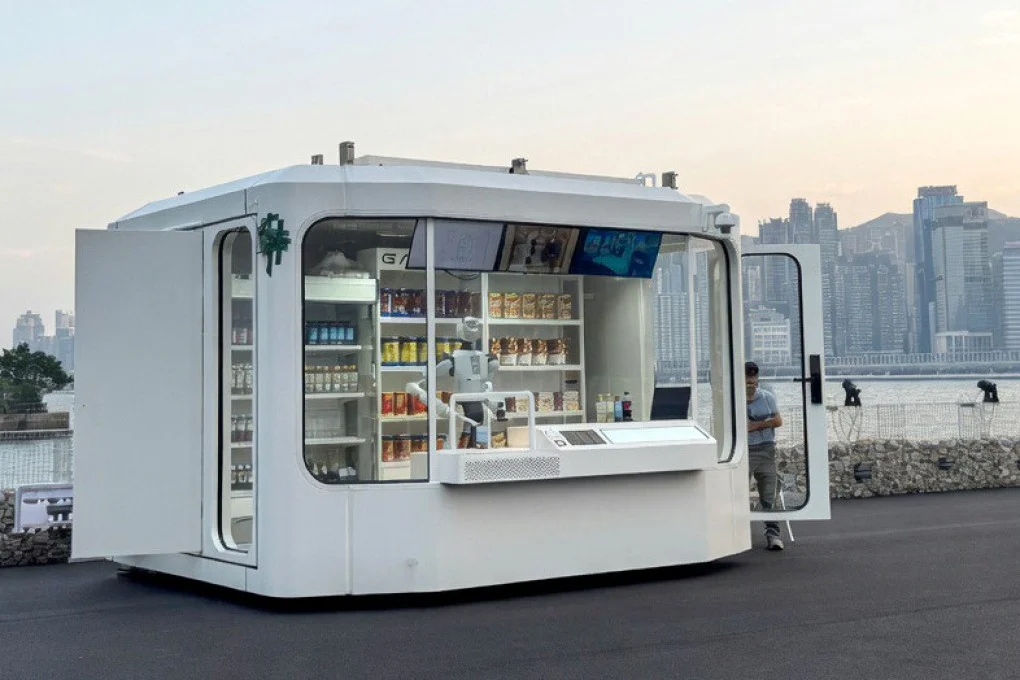
    The bustling city of Hong Kong is all set to welcome its inaugural 24-hour convenience store managed entirely by a humanoid robot. This groundbreaking project denotes the initial venture outside Mainland China for Beijing-based robotics firm, Galbot.

    Situated along the waterfront of Hung Hom, the robotic store is financially supported by the Hong Kong Investment Corporation (HKIC). A 9 square meter capsule store, it will be supervised by ‘Xiao Gai’, a G1 humanoid robot model standing tall at 173cm. The robot is equipped with a 190cm arm span, specifically engineered to restock shelves, select inventory items and manage customer checkouts with ease.

    A New Era of AI in Retail

    The store is designed to cater to high-demand retail categories such as snacks, lifestyle merchandise, and over-the-counter pharmaceuticals. The upcoming launch of this humanoid robot-managed store in Hong Kong highlights a rapidly evolving trend: the integration of artificial intelligence (AI) into our everyday lives.

    As the HKIC stated, their active promotion of AI development extends beyond the goal of enhancing industries and bolstering economic competitiveness. It also aims to provide residents with a unique, AI-enabled convenience experience while simultaneously fostering new areas of growth and opportunity.

    Galbot’s forecasts predict that this automated storefront model could boost local foot traffic by a significant 30 to 40 percent, owing to its novelty factor.

    Global Expansion on the Horizon

    Following the initial pilot in Hong Kong, Galbot reportedly has plans to introduce this innovative capsule store format on an international level. The ambitious expansion plan targets rollouts across ten major cities worldwide.

    Questions & Answers

    What is the size of the Hong Kong capsule store?
    The Hong Kong capsule store spans 9 square meters.

    Who is the humanoid robot managing the store?
    The store will be managed by a G1 humanoid robot model named ‘Xiao Gai’.

    What are Galbot’s future expansion plans?
    Galbot plans to introduce the capsule store format globally, targeting rollouts across ten major cities.

  • Experience Personalized Skincare Revolution at Laneige’s New Flagship Store in Seoul

    Experience Personalized Skincare Revolution at Laneige’s New Flagship Store in Seoul

    Korean beauty giant Laneige has recently unveiled its first worldwide flagship store, located in the heart of Seoul’s Myeongdong district. This landmark opening underscores the increasing significance of technology and personalization in the retail beauty industry.

    The newly reimagined store, Laneige Seoul, comes after an 18-month redesign process. It is a fusion of retail space, beauty services, and on-demand manufacturing, all housed under one roof. The central theme of the store is to provide a tailored beauty experience. Customers can create customized skincare, complexion, and lip products with the help of AI-powered diagnostics and advanced in-store production technology.

    A Unique Shopping Experience

    The president of the Laneige brand, Pilkyung Choi, emphasized that the new Laneige Seoul is more than just a store. According to Choi, it embodies the future of beauty, technology, and design. Each visit to the store will offer a unique experience, and every product purchased will be exclusively personalized.

    Among the store’s product offerings is an exclusive version of Laneige’s Lip Sleeping Mask. This allows customers to select from ten fragrances that can be combined to create 45 different scent combinations. Additionally, the store also presents a Neo Cushion service that is made-to-order. The foundation is color-matched to the customer’s skin tone from a selection of 150 shades and is manufactured on site using robotic technology.

    In terms of skincare, customers are provided with an AI-based skin analysis. Based on the results, they are then matched with a personalized version of Laneige’s Cream Skin toner. This product is mixed in-store using one of 25 formulations and is typically ready within about 20 minutes.

    Laneige Brand and Its Offering

    Founded in 1994, Laneige is a part of the Amorepacific family. The brand has gained recognition for its hydration-focused skincare offerings, including the popular Laneige Lip Sleeping Mask and Laneige Water Sleeping Mask.

    In 2024, Laneige appointed global pop icon and BTS member Jin as its brand ambassador.

    Questions & Answers

    What is the central theme of the new Laneige Seoul store?
    The central theme of the store is to provide consumers with a customized beauty experience through AI-powered diagnostics and advanced in-store production technology.

    What kind of personalized products can customers create at the Laneige Seoul store?
    Customers can create personalized skincare, complexion, and lip products. They can also have foundation that is color-matched from a selection of 150 shades.

    What is unique about the Laneige’s Lip Sleeping Mask at the Laneige Seoul store?
    Customers can select from ten fragrances that can be combined to create 45 unique scent combinations.

  • Manulife Singapore Pioneers Multi-Cancer Screening for Insured, Spearheading Preventive Healthcare Revolution

    Manulife Singapore Pioneers Multi-Cancer Screening for Insured, Spearheading Preventive Healthcare Revolution

    Manulife Singapore is intensifying its commitment to preventative healthcare and lifespan enhancement solutions via a new partnership with Guardant Health, a precision oncology expert. This strategy makes Manulife the pioneer insurance firm in Singapore to provide the Shield™ multi-cancer detection (MCD) blood test, available to eligible customers from May 2026.

    This collaboration is part of a broader Asian alliance between the two companies, covering Singapore, Hong Kong, and the Philippines. The partnership reiterates Manulife’s overarching strategy of amalgamating health protection with long-term wealth and lifespan planning.

    Emphasizing Proactive Detection

    Designed to screen ten prevalent cancers with a single blood draw, the Shield™ MCD lab-crafted test underscores several cancers with high fatality rates in Singapore. The test was recently awarded the “Oncology Product Innovation of the Year” title at the Healthcare Asia Medtech Awards and received the Breakthrough Device Designation by the US Food and Drug Administration (FDA).

    This partnership advances the pre-existing relationship between Manulife and Guardant Health, as the latter already offers the Guardant360® Liquid test for advanced solid tumours to customers in Singapore.

    Longevity as a Focal Point

    The partnership evidences an increasing emphasis on preventative care and healthy ageing among insurers as Asia’s populace demographic shift. “As longevity increases, the primary concern is the quality of those extended years,” stated Benoit Meslet, President and CEO of Manulife Singapore. “Providing customers with early insights into their health enables them to make informed decisions today for a healthier tomorrow.”

    Singapore is one of the fastest-ageing societies in Asia, with healthcare systems prioritising preventative and personalised care. In 2024, cancer was the predominant cause of death in Singapore, accounting for over a quarter of all fatalities.

    Manulife’s initiative aligns with the findings from the 2025 Asia Care Survey, showing that over half of Singapore consumers perceive cancer as the hardest illness to prevent.

    Questions & Answers

    What is the new collaboration between Manulife Singapore and Guardant Health about?

    The collaboration aims to offer the Shield™ multi-cancer detection (MCD) blood test to eligible Manulife customers in Singapore, aiding in the early detection of ten common cancers.

    How does this partnership align with Manulife’s broader strategy?

    This partnership coincides with Manulife’s broader strategy of blending health protection with long-term wealth and lifespan planning. It underscores the insurer’s emphasis on preventative care and healthy ageing.

    What insights does the 2025 Asia Care Survey provide?

    The survey reveals that over half of Singapore consumers consider cancer as the most difficult disease to prevent, indicating the importance of early detection and preventative healthcare.

  • Nutella Unveils Nutty New Flavor Revolution: Introducing Nutella Peanut after Six Decades

    Nutella Unveils Nutty New Flavor Revolution: Introducing Nutella Peanut after Six Decades

    Ferrero, the global confectionery company, has announced an innovative addition to its Nutella product line – Nutella Peanut. This new flavor is the first to be introduced by the brand in over six decades.

    Nutella Peanut: A Groundbreaking Flavor

    Nutella Peanut blends the beloved Nutella cocoa and hazelnut spread with roasted peanuts. Designed for daily consumption, this new blend is perfect for sandwiches and snacks.

    The company notes that the new product maintains the cherished creamy texture of Nutella while incorporating a distinct peanut flavor. Nutella Peanut is currently being introduced across the United States, with promotional events and in-store availability planned.

    Senior Vice President of Spreads for Ferrero North America, Noah Szporn, explained the company’s decision to innovate. “When a jar of Nutella becomes an internet sensation, even making its way into space, it opens a world of possibilities. As such, it was only logical for us to introduce our first new flavor in over 60 years,” said Szporn.

    A Strategic Move for Ferrero

    This launch marks a significant milestone for the global spread brand. Since its inception in 1964, Ferrero has primarily grown its Nutella product line through packaging and format innovations. The introduction of Nutella Peanut is part of the company’s strategic plan to cater to the changing tastes of consumers, especially in the North American market.

    Earlier in the year, Ferrero expanded its offerings with the launch of its frozen bakery range – Nutella Croissant and Nutella Muffin. These items are now accessible to food service partners across Australia.

    Questions & Answers

    What is the new flavor that Ferrero has added to its Nutella range?
    Ferrero has added a new flavor, Nutella Peanut, to its Nutella product line. This is the first new flavor that the brand has introduced in over six decades.

    What does Ferrero’s new Nutella Peanut blend consist of?
    The Nutella Peanut blend consists of the traditional Nutella cocoa and hazelnut spread mixed with roasted peanuts. The company claims the product retains Nutella’s well-loved creamy texture while offering a distinct peanut flavor.

    How does this new product fit into Ferrero’s overall strategy?
    The introduction of Nutella Peanut is part of Ferrero’s strategic plan to respond to evolving consumer tastes. It represents a significant milestone for the brand, which has primarily grown its product line through packaging and format innovations since its foundation in 1964.

  • Misto Holdings Amplifies K-fashion Revolution: 100+ Retail Outlets and New Brand Launches in Greater China on the Horizon

    Misto Holdings Amplifies K-fashion Revolution: 100+ Retail Outlets and New Brand Launches in Greater China on the Horizon

    Misto Holdings is set to broaden its reach in the Greater China region, bringing a multitude of Korean fashion brands to the rapidly growing market. The company’s portfolio consists of brands such as Matin Kim, Marithé+François Girbaud, Raive, and Rest & Recreation. It aims to manage over 100 retail units by mid-year.

    Misto Holdings reports that its brands have shown a substantial early rise. Mardi Mercredi, for example, saw its sales increase by 190 per cent in its second year, while Raive experienced a 200 per cent growth in its first year.

    In terms of digital presence, Misto Holdings oversees platforms like Tmall, Xiaohongshu, and Douyin. It uses a blend of in-house content, live-commerce studios, and influencer collaborations to interact with local consumers.

    Moreover, the company is re-evaluating its Greater China portfolio this year. It aims to diversify into men’s high-end contemporary, women’s casual, and athleisure categories. Commencing next year, the plan is to introduce approximately five new brands in the region.

    Misto Holdings emphasizes that its focus is on sustainable, long-term brand growth across both online and offline channels.

    “We are not just managing brands; we are long-term partners dedicated to building brand value across both online and offline touchpoints,” said a spokesperson for Misto Holdings. “Our focus remains on building sustainable brand equity across the Greater China region.”

    Earlier this month, Misto Holdings also announced a surge in fourth-quarter sales as the company restructured its US operations.

    Questions & Answers

    What is the expansion plan of Misto Holdings in the Greater China region?
    Misto Holdings plans to introduce multiple Korean fashion brands to the market and aims to manage over 100 retail units by the middle of this year.

    What digital platforms does Misto Holdings manage and how does it reach local consumers?
    Misto Holdings manages platforms like Tmall, Xiaohongshu, and Douyin. It reaches local consumers through a blend of in-house content, live-commerce studios, and influencer collaborations.

    What is the focus of Misto Holdings?
    The company is focused on sustainable, long-term brand growth across both online and offline channels. It aims to build brand value across both online and offline touchpoints in the Greater China region.

  • Revolution in Digital Age Verification: Child Safety Advances Amid Global Social Media Clampdown

    Revolution in Digital Age Verification: Child Safety Advances Amid Global Social Media Clampdown

    In recent years, technology firms have been reluctant to constrict minors’ access to their platforms, citing technical constraints, practicality issues, overreach, and security threats. However, an increasing number of governments are now viewing these challenges as surmountable and are moving forward with stringent new age-verification requirements for social media networks, AI chatbots, and adult content providers alike.

    Global Regulatory Shifts

    Following Australia’s notable prohibition on adolescent social media accounts three months ago, regulatory bodies across Europe, Brazil, and several U.S. states are seeking to replicate the move. High-profile political figures such as California Governor Gavin Newsom and former President Donald Trump have also reportedly shown interest in implementing age restrictions.

    The driving forces behind these regulatory changes are mounting anxieties over online abuse and adolescent mental health issues, recent outrage over AI-generated explicit images of children, and a growing faith in the potential of ‘age assurance’ software. Such software can estimate an individual’s age based on facial analysis, parental permission, ID checks, and other digital hints.

    Technological Advancements and the Age Assurance Market

    Recent strides in artificial intelligence have enhanced the efficiency and reduced the cost of age-verification tools. Social media enterprises can now often accurately determine a user’s age group using digital indicators such as the account creation date and the type of content viewed. Meanwhile, an emerging industry of age-verification vendors offers added layers of checks through automated tools like facial scans and machine-based analysis of government IDs.

    App store platforms like Apple and Google have also introduced tools that enable parents to communicate their child’s age range to app developers. This overall improvement in technology and the resultant drop in verification costs have expanded the scope of its application.

    Cost and Effectiveness of Age Verification

    Age-verification vendors usually charge less than a dollar per check for basic machine-only age-assurance tools. Traditional methods that were standard a decade ago, such as human confirmation and triangulation of personal data, are still available at a premium but are needed less frequently. Furthermore, independent evaluations show progress in the accuracy and precision of these tools.

    For example, face-scanning software was off in age estimations by an average of 4.1 years in 2014, while by 2024, this average has dropped to 2.5 years. The latest models from vendors like Yoti and Persona boast of an average error of less than two years for the age range of 13 to 18.

    Challenges and Limitations

    Despite these advancements, there are still limitations. The systems face difficulties with certain skin tones and older phones. Also, they might fail to catch attempts by youngsters to appear older than they are. However, executives believe that facial age estimation can offer a digital equivalent of offline age screening.

    Adding to this, social media services generally require fewer facial scans and ID checks than adult content or gambling sites due to the abundance of personal information they have on users. This allows them to depend more on an age-verification method called ‘inference’.

    Early Implementation Results

    While it’s too early to assess the full impact of Australia’s teen ban, preliminary results are promising. According to Australia’s eSafety Commissioner, companies have blocked 4.7 million suspected underage accounts since the law came into effect. Regulators in other countries are closely monitoring these developments as they consider implementing similar measures.

    Questions & Answers

    What are some of the driving forces behind the implementation of age verification measures?
    Concerns over online abuse, adolescent mental health issues, and the spread of AI-generated explicit child images have all contributed to the push for stricter age verification measures.

    How have technological advancements influenced the age assurance market?
    Advancements in artificial intelligence have improved the efficiency and lowered the cost of age-verification tools. This has broadened the scope of their application beyond high-value transactions.

    What limitations do current age-verification systems face?
    Current age-verification systems can struggle with certain skin tones and older phones. They may also fail to catch attempts by youngsters to appear older than they are. These challenges highlight the need for ongoing refinement and improvement in this technology.

  • Fuel Price Revolution: Vietnam Gasoline Plummets Amid Global Market Fluctuations

    Fuel Price Revolution: Vietnam Gasoline Plummets Amid Global Market Fluctuations

    In Vietnam, gasoline prices experienced a reduction on Thursday afternoon, echoing the recent drop in global rates. The widely used fuel, RON95, underwent a decrease of 0.43%, bringing its cost down to VND18,630 (US$0.71) per liter.

    In a similar trend, the biofuel E5 RON92 also saw a price reduction, decreasing by 0.49% to a new price of VND18,280 per liter. Diesel, on the other hand, experienced a price hike with an increase of 2.43% which resulted in a new price of VND17,700 per liter.

    The change in fuel prices is reflective of the recent fluctuations in the global oil market. This volatility has been brought on by several different factors. These include the possibility of disruptions to oil supplies from Iran and ongoing tensions between the United States and Europe over issues pertaining to Greenland as reported by Vietnam’s Ministry of Industry and Trade.

    In terms of specific fuel types, RON95 saw a decrease of 0.6% to a new price of $72.4 per barrel globally, while the cost of diesel increased by 2.9% taking it to a price of $83.4 per barrel.

    Questions & Answers

    What was the new price of the RON95 fuel in Vietnam?
    The new price of RON95 fuel in Vietnam was VND18,630 per liter, which translates to US$0.71 per liter.

    How did the price of diesel change?
    The price of diesel experienced a hike of 2.43%, which resulted in a new price of VND17,700 per liter.

    What factors have been affecting the global oil market recently?
    The global oil market has been affected by various factors including possible disruptions to oil supplies from Iran and ongoing tensions between the United States and Europe over Greenland-related issues.

  • Wi-Fi 7 Revolution: Ushering in the New Era of High-Speed, High-Capacity Connectivity

    Wi-Fi 7 Revolution: Ushering in the New Era of High-Speed, High-Capacity Connectivity

    The progressive evolution of digital ecosystems and escalating user demands for seamless high-speed connectivity have pushed Wi-Fi technology to new frontiers. The next significant milestone in wireless networking is the emergence of Wi-Fi 7, grounded in the IEEE 802.11be standard. Compared to its predecessors — Wi-Fi 6 and Wi-Fi 6E, Wi-Fi 7 brings to the table appreciable enhancements in speed, reliability, capacity and responsiveness.

    Dissecting the Capabilities of Wi-Fi 7

    Wi-Fi 7, or Wi-Fi CERTIFIED 7™, represents the most sophisticated generation of Wi-Fi technology to date. It builds on the base established by its predecessors, offering capabilities designed to meet the rigours of increasingly demanding digital environments. The prime objective of Wi-Fi 7 is to amplify data throughput, latency, and network efficiency to support a broad range of applications, from immersive media to mission-critical enterprise systems.

    Wi-Fi 7 is distinguished by a range of technological advances, including wider channel bandwidth of up to 320 MHz that doubles the maximum channel width of Wi-Fi 6 and 6E, facilitating significantly higher raw data rates. Multi-link operation (MLO) enables devices to use multiple frequency bands simultaneously (2.4 GHz, 5 GHz, and 6 GHz) to improve throughput, reliability, and latency by dispersing traffic across several links. Wi-Fi 7 uses higher modulation through 4096-QAM to pack more data into each transmission, thereby increasing efficiency and overall throughput compared to earlier standards. Multi-user handling is also improved, enabled by enhanced MU-MIMO and OFDMA techniques that allow more devices to share the network simultaneously without performance degradation. Collectively, these advances can deliver theoretical peak speeds surpassing 30 Gbps, a substantial leap over Wi-Fi 6E, and much lower effective latency suited to real-time applications.

    Implications for the Consumer Market

    For consumers, Wi-Fi 7 has the potential to redefine the home wireless experience by addressing the proliferation of connected devices and the surging demand for high-bandwidth use cases. A key benefit for consumers will be improved support for 4K/8K video streaming, cloud gaming, and immersive media such as augmented reality (AR) and virtual reality (VR). With wider channels and increased throughput, Wi-Fi 7 can stream ultra-high-definition content with fewer buffering interruptions, particularly in homes with multiple users and devices.

    Smart homes are also witnessing a rapid increase in device density, from security cameras to smart appliances. Wi-Fi 7’s multi-user management and deterministic latency ensure these IoT devices can function reliably alongside high-data-rate traffic. Wi-Fi 7 also offers features that reduce power consumption in battery-powered devices by coordinating communication windows more efficiently.

    Wi-Fi 7 and the Enterprise Market

    However, despite the promise, the rollout of Wi-Fi 7 in the consumer market faces challenges. The full benefits of Wi-Fi 7 require both routers/access points and client devices to support the standard. Early products may only implement basic features, and device compatibility remains limited. Upgrading the infrastructure can also be costly, as households may have to replace legacy Wi-Fi equipment to unleash the full potential of Wi-Fi 7 speeds and capabilities.

    For enterprises, Wi-Fi 7 offers opportunities beyond simply improving network performance. It can act as the backbone for digital transformation initiatives that depend on robust, high-capacity wireless connectivity. Modern workplaces often have thousands of connected devices that place heavy demands on network infrastructure. Wi-Fi 7’s increased capacity and advanced interference mitigation ensure stable performance even under heavy load, reducing network bottlenecks common in large offices or campuses.

    Support for IoT and Industrial Systems

    Industries such as manufacturing, logistics, and healthcare increasingly rely on connected devices for automation, inventory tracking, telemedicine, and robotic systems. Wi-Fi 7’s enhanced reliability and scalability make it well-suited for these applications, where deterministic performance is mission-critical. However, enterprises face real challenges in planning for the adoption of Wi-Fi 7. Legacy infrastructure can bottleneck performance and undermine the theoretical benefits of Wi-Fi 7.

    Security and Future Proofing

    Wi-Fi 7 supports enhanced security protocols such as WPA3, providing protection against modern threats. As digital demands escalate, driven by cloud computing, collaboration tools, AI, and immersive content, enterprise networks that adopt Wi-Fi 7 can ensure their infrastructure supports next-generation use cases without compromising performance.

    While Wi-Fi 7 promises to drive digital transformation by enabling scalable, high-performance networks, it’s adoption will be gradual. Compatibility, cost, and infrastructure readiness remain barriers. However, as device ecosystems grow and digital demands intensify, Wi-Fi 7 is set to become the infrastructure backbone for the next era of connected living and working.

    Questions & Answers

    What makes Wi-Fi 7 different from its predecessors?
    Wi-Fi 7 offers substantial improvements in speed, reliability, capacity, and responsiveness compared with previous generations. It’s distinguished by advances such as wider channel bandwidth, multi-link operation, higher modulation, and improved multi-user handling.

    How does Wi-Fi 7 benefit the consumer market?
    Wi-Fi 7 enhances the home wireless experience by supporting a proliferation of connected devices and high-bandwidth uses such as 4K/8K video streaming, cloud gaming, and immersive media. It also improves the functionality of IoT devices and reduces power consumption in battery-powered devices.

    What challenges do enterprises face in adopting Wi-Fi 7?
    Enterprises face challenges in planning for the adoption of Wi-Fi 7, including compatibility and cost issues and the readiness of existing infrastructure. Legacy infrastructure can bottleneck performance and undermine the theoretical benefits of Wi-Fi 7.

  • AI Revolution: The Blossoming Era of Robotaxis Redefining Urban Mobility in Asia

    AI Revolution: The Blossoming Era of Robotaxis Redefining Urban Mobility in Asia

    In Asia, the evolution of urban mobility is accelerating with the advent of robotaxis, which are autonomous vehicles that offer ride-hailing services with minimal to no human involvement. The progress in this field is fueled by advancements in artificial intelligence (AI), machine learning (ML), sensor technology, and supportive regional policies. Due to these factors, Asia is rapidly emerging as a global hub for autonomous vehicle (AV) research, trials, and initial commercial launches.

    Unlike traditional ride-hailing services, robotaxis offer advantages such as reduced operational costs, increased safety, and wider access to transportation. This is especially beneficial for densely populated cities grappling with driver shortage, traffic congestion, and growing transportation needs.

    China: At the Vanguard of Robotaxi Development in Asia

    China is at the leading edge of robotaxi development in Asia, and possibly globally, with substantial governmental support that has elevated autonomous technology to a national strategic priority. As part of initiatives like the 14th Five-Year Plan, Chinese authorities have integrated autonomous vehicles into broader digital economy objectives, promoting pilot programs, regulatory frameworks, and infrastructure development in numerous cities.

    By the middle of 2024, authorities had issued 16,000 test licenses and designated over 32,000 kilometers of public roads for autonomous vehicle testing, marking the largest testing area among all countries.

    Tech behemoths and AV specialists in China, including Baidu, Pony.ai, WeRide, Didi, and others, are fiercely competing to expand robotaxi operations in major cities like Beijing, Shanghai, Guangzhou, Shenzhen, and Wuhan. Baidu’s Apollo Go service has alone completed millions of driverless trips and logged substantial commercial mileage through its app-based ride-hailing service. Similarly, Pony.ai offers commercial robotaxis in multiple Tier-1 cities and has significantly reduced hardware costs for autonomous stacks, a trend influencing scalability.

    The progress of China’s autonomous mobility sector is closely linked to its prowess in AI and data processing. Firms heavily invest in machine learning systems that integrate sensors (LiDAR, radar, cameras) and AI models for perception and decision-making. These systems allow vehicles to navigate complex urban environments, a significant challenge in cities with dense traffic, mixed road users, and variable conditions.

    Singapore: An Incubator for Autonomous Shuttles and Robotaxis

    Singapore is becoming a regional center for autonomous mobility experiments, supporting robotaxi and automated shuttle projects in line with its Smart Nation and sustainable transport strategy. Authorities have teamed up with Chinese robotaxi specialists WeRide and Pony.ai to introduce autonomous shuttle services in residential areas like Punggol, slated to begin in early 2026, pending regulatory approval and mapping preparations.

    These initial services will feature autonomous vehicles navigating fixed routes and providing travel options complementary to existing public transportation. Singapore’s regulatory ecosystem, often viewed as efficient and innovation-friendly, makes the city-state a top pilot zone for AV integration in Southeast Asia.

    Partnerships and Strategic Expansion

    Beyond Singapore, the broader Southeast Asian region is starting to attract commercial robotaxi ventures. Notably, Grab, Southeast Asia’s leading ride-hailing and super app, has revealed a strategic investment in China’s WeRide to expedite the deployment and commercialization of autonomous vehicles across the region, integrating WeRide’s Level 4 robotaxis with its ride-hailing platform.

    The partnership between Grab and WeRide is anticipated to broaden access to autonomous mobility in high-density urban areas, addressing labor limitations and mobility gaps.

    Regional ride-hailing operators are recognizing AI-driven mobility as a supplement to traditional driver-based services, particularly in markets where driver shortages and surging labor costs present challenges.

    Malaysia and Beyond: Commercial Expansion from China

    Key Chinese companies, such as Baidu, are also eyeing cross-border expansion in Southeast Asia. Baidu has declared plans to introduce its Apollo Go robotaxi services to Singapore and Malaysia as early as late 2025, marking the first commercial robotaxi launches in Southeast Asia outside China.

    If executed as planned, these deployments signify crucial milestones in the regional adoption of advanced autonomous mobility services, and illustrate how AI-driven transport can be integrated into existing urban transit networks.

    Japan and South Korea: Testing and Future Markets

    While not as advanced in commercial deployment as China or Singapore, Japan and South Korea are strategically evaluating autonomous technologies and creating ecosystems for future robotaxi operations. In Japan, prominent players like Waymo (operated by Alphabet) have started testing autonomous vehicles in Tokyo, which could be the first step toward commercial robotaxi operations there.

    In South Korea, government-backed pilot initiatives, such as the National Strategic Smart City Program (NSSCP) in Seoul, suggest a growing interest in autonomous solutions, with wider commercialization anticipated in the coming years.

    In Japan, an aging population and robust demand for accessible transportation are driving policy momentum for autonomous mobility solutions, as driverless vehicles can potentially address labor shortages in traditional taxi and delivery services.

    Economic Impact and Challenges

    Market research indicates that the Asia Pacific robotaxi market is poised for substantial expansion. Forecasts predict the sector’s regional value to surge to over USD 60 billion by 2034, growing at a compound annual growth rate (CAGR) exceeding 50%.

    This brisk growth is spurred by strong governmental policy support, particularly in China, coupled with the rise of strategic partnerships between tech companies and ride-hailing platforms. Rising AI capabilities are also reducing hardware costs and enhancing safety, making autonomous mobility more viable. Meanwhile, pressures of urbanization are driving cities toward scalable and efficient transport solutions, whereas labor shortages in driver-based services are hastening the shift toward automation as a practical alternative.

    In spite of the clear momentum, considerable challenges persist across Asia:

    Regulatory Frameworks: Autonomous mobility operates in regulatory gray areas in many jurisdictions. While China and Singapore have established frameworks that encourage testing and limit commercial use, other countries are still formulating safety and liability standards, especially for fully driverless (Level 4/5) operations.

    Safety and Public Perception: AI-powered robotaxis depend on intricate sensor and decision-making systems that must function safely in dynamic urban conditions. Public skepticism about safety, accident liability, and data/privacy concerns can hinder adoption. Effective regulation, robust testing, and transparent reporting will remain key to building trust.

    Infrastructure and Costs: Urban infrastructure, from detailed HD maps to roadside connectivity, must evolve to support reliable autonomous operations. Integration with existing traffic systems and communication networks (vehicle-to-everything technologies) will be crucial for scaling robotaxi services.

    With ongoing progress in AI, machine learning, and regulatory frameworks, robotaxis have the potential to revolutionize how millions of city dwellers commute, creating safer, more efficient, and more accessible transportation networks.

    However, technological advancements must be balanced with inclusive policy development, ethical AI standards, and infrastructure planning to ensure that autonomous mobility benefits society at large. As Asian cities balance swift innovation with public safety and economic impact, robotaxis could not merely reshape transportation, but also redefine urban life in the future.

    Questions & Answers

    What are the advantages of robotaxis over traditional ride-hailing services?
    Robotaxis promise lower operating costs, improved safety, and broader access to mobility, especially in densely populated cities dealing with driver shortages, congestion, and increasing transportation demand.

    Why is China considered a leader in the development of robotaxis?
    With substantial government support, China has integrated autonomous vehicles into its broader digital economy objectives. It has also issued a large number of test licenses and designated a significant amount of public roads for autonomous vehicle testing, which has bolstered its position in the field.

    What challenges do autonomous vehicles face in Asia, and how can they be addressed?</b
  • Audi Teams Up with Revolut: A Fintech Revolution on the Formula One Racetrack

    Audi Teams Up with Revolut: A Fintech Revolution on the Formula One Racetrack

    Audi has officially launched the Audi Revolut F1 Team, an exciting development that firmly establishes the German manufacturer’s presence in Formula One and emphasizes the increasing strategic significance of fintech partnerships in international sports. The team’s name, logo, and Berlin launch date of January 20, 2026, were all announced.

    The partnership with Revolut was officially confirmed in July 2025 and extends far beyond mere logo incorporation. This collaboration places the British fintech firm at the heart of the team’s identity, aligning two brands known for their commitment to innovation, performance, and global influence. For Revolut, this alliance supports its goals to drive global expansion and enhance engagement across one of the most economically potent sports platforms worldwide.

    The Reveal of Brand Identity

    The Berlin launch will represent the first comprehensive public display of the Audi Revolut F1 Team’s identity, including the debut of its 2026 race livery. Designed as an immersive event, the launch aims to exhibit Audi’s design principles of clarity, technical intelligence, and emotion, while also extending access to the public with an opening on the following day.

    Revolut’s role also expands to the team’s business structure. Revolut Business will be incorporated into financial operations, and Revolut Pay will facilitate the team’s online merchandise store. This not only reinforces the commercial rationale behind the partnership but also showcases how fintech solutions can be directly integrated into high-performing organizations.

    Corporate Rebranding Indicates Long-Term Dedication

    Audi Motorsport will replace Sauber Motorsport as part of Audi’s Formula One initiative, and the UK facility in Bicester will be rebranded as the Audi Motorsport Technology Centre UK. These modifications underscore Audi’s goal to function as a fully-fledged factory team while maintaining the Sauber Holding and Sauber Technologies brands to ensure continuity.

    Revolut CEO Nik Storonsky views the partnership as a catalyst for expansion, stating that the team name and logo are the initial signs of a strong alliance that will spur Revolut’s global growth. Audi Chairman Gernot Döllner expressed that the unveiling provides the company’s Formula One dreams a distinct identity, encapsulating a powerful vision and innovative spirit.

    Establishing Reputation Prior to 2026 Regulations Change

    Team leadership emphasized both execution and timing. The Head of the Audi Revolut F1 Team, Mattia Binotto, underscored a culture of “precision and relentless ambition.” Meanwhile, Team Principal Jonathan Wheatley labeled the announcement as a “critical milestone” that concretises the project’s long-term objectives as Formula One braces for new regulations that will increase the electric share of hybrid power units to nearly 50 percent.

    Close Observation by Investors and Strategists

    To astute financial observers, the Audi Revolut F1 Team exemplifies how international brands are utilizing Formula One as a nexus for technology, sustainability, and customer acquisition. As Revolut targets 100 million customers and Audi positions itself at the forefront of electrified performance, the partnership signifies a wider shift: motorsport as a scalable business platform, not just a marketing expenditure.

    Questions & Answers

    What is the aim of the Audi Revolut F1 Team partnership?
    The partnership aims to enhance innovation, performance, and global reach in the Formula One sports platform, while also accelerating Revolut’s international growth.

    How does the partnership impact the business infrastructure of the Audi Revolut F1 Team?
    Revolut Business will be integrated into the team’s financial operations, and Revolut Pay will facilitate the team’s online merchandise store, demonstrating how fintech solutions can be embedded directly into high-performing organizations.

    What changes will take place in Audi’s Formula One programme?
    Sauber Motorsport will be rebranded as Audi Motorsport, and the UK facility in Bicester will be renamed the Audi Motorsport Technology Centre UK. This emphasizes Audi’s intention to operate as a fully-fledged factory team.

  • Vietnam Preps for Gold Trading Revolution: National Assembly Mandates Roadmap for Gold Exchange Amid Surging Prices

    Vietnam Preps for Gold Trading Revolution: National Assembly Mandates Roadmap for Gold Exchange Amid Surging Prices

    The National Assembly of Vietnam has directed the government to construct a strategic plan for establishing a gold trading exchange. This endeavor is in response to the escalating prices of gold and aims to control and regulate the bullion market.

    The Need for a Gold Exchange

    Lawmakers have been emphasizing the importance of such an exchange in order to guarantee transparency in gold trading. This concern arises from the current market situation where the gold price in Vietnam is approximately 15% more than the global rates.

    The State Bank of Vietnam’s Plan

    The State Bank of Vietnam has introduced a plan to instigate a gold trading platform in three successive phases. The first phase involves trading raw gold, followed by trading gold bars in the second phase. The final phase will encompass trading gold certificates and derivatives.

    Current Gold Market in Vietnam

    The Saigon Jewelry Company recently listed the price of gold slightly lower than the highest peak recorded on Dec.1, at VND154.7 million (US$5,873.31) per tael of 37.5 grams. Furthermore, the price of gold in Vietnam has increased by more than 80% since the start of the year.

    In an effort to liberalize the market, the government in October lifted its monopoly on gold production. Private firms meeting specific financial criteria are now allowed to produce bullion.

    Questions & Answers

    What is the new directive given by The National Assembly of Vietnam?
    The National Assembly has directed the government to establish a gold trading exchange to control the bullion market and ensure transparency amid rising gold prices.

    What is the plan of the State Bank of Vietnam regarding the gold trading platform?
    The State Bank of Vietnam intends to set up a gold trading platform in three phases. These include trading raw gold initially, followed by gold bars, and finally gold certificates and derivatives.

    What changes have occurred in the gold market in Vietnam recently?
    Two significant changes have taken place. First, gold prices have risen by more than 80% since the start of the year. Second, the government has lifted its monopoly on gold production, now allowing private firms, that meet certain financial conditions, to produce bullion.

  • Bhutan Pioneers Digital Gold Revolution with Launch of Sovereign-Backed Token: A New Era of State-Led Digital Asset Innovation

    Bhutan Pioneers Digital Gold Revolution with Launch of Sovereign-Backed Token: A New Era of State-Led Digital Asset Innovation

    The Kingdom of Bhutan is preparing to launch one of the first-ever sovereign-backed gold tokens, a groundbreaking move that places it at the forefront of governmental digital asset innovation. This bold step signifies the country’s attempt to combine traditional stores of value with cutting-edge financial infrastructure.

    Introducing TER: A Gold-Backed Token

    Bhutan’s new token, known as TER, is completely backed by physical gold and is expected to launch on 17 December 2025. This marks a significant step forward for Gelephu Mindfulness City, which aims to become a global center for responsible digital finance.

    TER, which is derived from the Dzongkha word for “Treasure,” represents Bhutan’s ambition to preserve its cultural heritage while embracing digital transformation. This token is part of Bhutan’s wider national strategy to incorporate blockchain technology into public and financial systems. The launch emphasizes the country’s commitment to fostering a digital economy that is driven by values and grounded in sustainable, tangible assets.

    Gelephu Mindfulness City: A Hub for Mindful Innovation

    TER, issued by Gelephu Mindfulness City, aims to set a new benchmark for asset-backed digital currencies underpinned by sovereign trust. The initiative is in line with Gelephu’s vision of becoming a hub for mindful innovation, utilizing technology in a manner that is transparent, secure, and in sync with Bhutanese values.

    Board Director Jigdrel Singay has stated that the launch of TER is a foundational move towards building a value-driven digital economy based on real-world assets and sovereign trust.

    Ensuring Security with DK Bank

    DK Bank, Bhutan’s premier digital bank, will function as the exclusive distributor and custodian to ensure utmost security and regulated access. Governed by the Royal Monetary Authority and the Gelephu Mindfulness City Authority, DK Bank provides the necessary infrastructure to reassure both domestic and international investors. The first phase of distribution will allow users to buy TER directly through the bank, with tokens kept in institutional-grade custody.

    Using Solana’s Blockchain Infrastructure

    TER will be issued on Solana’s enterprise-grade blockchain, chosen for its speed, low transaction costs, and minimal environmental impact. This technical foundation fortifies Bhutan’s strategy to deploy efficient, scalable, and eco-friendly digital systems.

    Collaboration with Matrixdock Strengthens Credibility

    Matrixdock, a leading entity in real-world asset tokenization and a Matrixport subsidiary, has been chosen as the technology partner for TER. This partnership strengthens the credibility of Bhutan’s digital asset ambitions by adding institutional weight and adhering to international best practices.

    A Digital Gateway for Gold Investors

    TER provides a modern, tax-efficient alternative to physical gold, offering international investors a secure digital means to access one of the world’s safest assets. It is designed to emulate the trusted experience of buying physical gold through a major financial institution, while improving liquidity, accessibility, and settlement efficiency.

    Bhutan’s Digital Sovereignty

    Bhutan has already made significant strides in digital initiatives. Notable achievements include integrating various digital assets into Gelephu Mindfulness City’s strategic reserves, implementing a national digital identity system based on the Ethereum blockchain, utilizing Binance Pay for crypto-based transactions, and becoming one of the first nations to mine Bitcoin using renewable hydropower. These accomplishments underscore Bhutan’s evolving concept of digital sovereignty and its dedication to merging innovation with sustainability.

    State-Backed Assets: A New Model

    With the introduction of TER, Bhutan showcases how a nation can transition from traditional resource security to digital-era asset management while upholding cultural and regulatory integrity. As the global demand for reliable, gold-backed digital instruments grows, Bhutan’s initiative could serve as a model for other countries looking to combine heritage and advanced technology in the creation of contemporary financial ecosystems.

    Questions & Answers

    What is TER?
    TER is a gold-backed digital token issued by the Kingdom of Bhutan.

    What does the introduction of TER signify for Bhutan?
    The introduction of TER represents Bhutan’s intention to both preserve its cultural heritage and embrace digital transformation.

    Why is DK Bank involved in the distribution of TER?
    As Bhutan’s premier digital bank, DK Bank will ensure robust security and regulated access for the distribution of TER.

  • Stella McCartney Joins Forces with H&M for a Sustainable Fashion Revolution: A Glimpse into the Eco-Friendly Collection

    Stella McCartney Joins Forces with H&M for a Sustainable Fashion Revolution: A Glimpse into the Eco-Friendly Collection

    Swedish multinational clothing-retail company H&M is gearing up for a collaborative venture with renowned fashion designer Stella McCartney. This partnership comes as a celebration of their first collaboration that took place in November 2005, marking two decades of their professional relationship.

    The forthcoming collection, slated for a Spring release in the upcoming year, is designed to resonate with McCartney’s sustained dedication to sustainable fashion. This will be achieved through the use of responsible and recycled materials, embodying a conscious approach to fashion design.

    Audiences had the opportunity to get a first look at the collection during the Fashion Awards held in London on December 1. A line-up of models and celebrities including Amelia Gray, Anitta, Emily Ratajkowski, Yasmin Wijnaldum, Bel Priestley, Alton Mason, and Kiara Nirghin debuted pieces from the much-anticipated line.

    McCartney expressed her views on the collaboration as an opportunity to contemplate the advancements made in areas of sustainability, cruelty-free practices, and conscious design. However, she also acknowledged the substantial amount of work that remains to be done. She further stressed the importance of effecting change from both outside and within the industry, advocating for a comprehensive approach to progress.

    The collaboration is also set to introduce an Insights Board. This initiative is targeted at promoting discourse and innovation around sustainability and animal welfare within the fashion sector. The main goal of the board is to bring together a diverse range of voices from across the industry, fostering an exploration of novel approaches to responsible design and industry transformation.

    Questions & Answers

    What is the aim of the upcoming H&M and Stella McCartney’s collaboration?
    The collaboration aims to reflect Stella McCartney’s commitment to sustainable fashion by featuring responsible and recycled materials in its collection.

    What is the role of the Insights Board introduced in this partnership?
    The Insights Board is designed to promote discussion and innovation around sustainability and animal welfare within the fashion industry. It will bring together voices from across the industry to explore new approaches to responsible design and changes in the industry.

    What is Stella McCartney’s view on the progress of sustainable fashion?
    Stella McCartney views the collaboration as a chance to reflect on progress in sustainability, cruelty-free practices, and conscious design. However, she acknowledges that there’s still a significant amount of work to be done. McCartney believes in effecting real change by pushing from both outside and within the industry.

  • Instagram’s Hashtag Revolution: Limiting Tags Per Post, A Millennial Nightmare or Gen Z Evolution?

    Instagram’s Hashtag Revolution: Limiting Tags Per Post, A Millennial Nightmare or Gen Z Evolution?

    Over the past decade, hashtags have stood as a vital feature of Instagram, rarely experiencing any significant changes since their introduction in 2011. However, Meta, the tech giant behind Instagram, is in the process of testing what could potentially be the most significant change to the platform’s hashtag system to date.

    Testing Hashtag Limitations

    Instagram appears to be experimenting with restricting the number of hashtags users can include in their posts. Some users have taken to online forums to voice their experiences with the new limitations, reporting that the platform is preventing them from adding more than three hashtags to a post’s description. If users attempt to go beyond this limit, they are met with an error message.

    This restriction has not been officially announced by the platform and does not appear to be universally applied to all accounts. It seems that Meta is currently in the process of testing the change on a select number of accounts before deciding whether to roll it out platform-wide. Alternatively, the feature could be in the early stages of a gradual rollout, similar to Instagram’s recent interface redesign.

    Instagram’s Changing Landscape

    When Instagram launched its hashtag feature in 2011, it became one of the most effective methods for users to discover posts related to specific topics. For many users, particularly those looking to reach beyond their immediate follower base, the use of up to 30 hashtags per post was key to expanding their reach.

    However, the perceived importance of hashtags has been diminishing in recent years. Instagram’s ‘Explore’ page now curates posts and reels for users based on a variety of factors, including content and description, rather than just hashtag use. Instagram CEO Adam Mosseri has also publicly stated that hashtags do not contribute to a post’s reach, instead serving as a tool for categorization.

    Hashtag Use and Generational Differences

    For millennials, understanding and strategically using hashtags was a valuable skill in the mid-2010s. Yet, the perception of hashtags has changed, with their use now potentially being seen as outdated or even as an indication of trying too hard. Some have argued that changing the hashtag system is unnecessary and could be seen as an unwarranted critique of millennials. If, as stated, hashtags do not significantly impact the reach of posts, the utility of changing the system is questioned.

    Questions & Answers

    What changes are being tested by Instagram?

    Instagram is currently testing a limitation to the number of hashtags users can include in their posts, restricting them to a maximum of three.

    How important are hashtags in increasing a post’s reach on Instagram?

    According to Instagram’s CEO, Adam Mosseri, hashtags do not significantly increase the reach of a post, instead functioning as tools for categorization.

    What is the perception of hashtag use across different generations?

    While hashtag use was a valuable skill for millennials in the mid-2010s, it is now potentially viewed as outdated or trying too hard, particularly among newer generations of social media users.

  • “Pomelo’s Fashion Revolution: Partnering with FJ Benjamin for Malaysian Market Domination”

    “Pomelo’s Fashion Revolution: Partnering with FJ Benjamin for Malaysian Market Domination”

    The Thailand-based fashion label Pomelo recently entered into an exclusive distribution agreement with FJ Benjamin for operations in Malaysia. The arrangement, set to last an initial five years with an option for a five-year extension, provides FJ Benjamin with the authority to oversee the brand’s operations and store management within the country.

    Online Launch and Physical Stores

    Pomelo plans to make its initial foray into the Malaysian market via e-commerce marketplaces before the year’s end. This digital debut will be followed by the opening of physical stores within major shopping centres in Kuala Lumpur in the early part of next year.

    Collaborative Effort

    David Jou, CEO of Pomelo, highlighted the collaboration’s potential, combining Pomelo’s digital-first fashion and technology-driven retail model with FJ Benjamin’s extensive expertise in brand development and retail operations. He sees this partnership as an opportunity to reshape the fashion retail experience not just in Malaysia, but beyond its borders as well.

    Expansion of Pomelo

    Earlier this year, Pomelo expanded its reach by entering an exclusive distribution agreement with the Kolao Group, marking its first store opening in Laos. In addition to its home base of Thailand, Pomelo has a presence in Singapore, Indonesia, Cambodia, and the Philippines, and plans are underway for a future debut in Vietnam.

    Pomelo, founded in 2013, has carved out a niche for itself as a leading destination offering a curated selection of women’s wear that includes both emerging local designers and international brands. The company had projected an initial public offering (IPO) in 2022, but this plan has not yet been actualised.

    Questions & Answers

    What are Pomelo’s plans for entering the Malaysian market?
    Pomelo plans to launch online on e-commerce platforms before the end of this year, followed by the opening of physical stores within key shopping centres in Kuala Lumpur in the early part of next year.

    What does the partnership with FJ Benjamin entail?
    The partnership gives FJ Benjamin the authority to manage Pomelo’s operations and stores in Malaysia for an initial five-year term, with an option to extend for another five years.

    Where else does Pomelo operate?
    In addition to Thailand, Pomelo operates in Singapore, Indonesia, Cambodia, the Philippines, and Laos, with plans to debut in Vietnam in the future.