Retail News CRM

Tag: richemont

  • Damien Licciardi: From Richemont to Cartiers New MD in Thailand

    Damien Licciardi: From Richemont to Cartiers New MD in Thailand

    Luxury jewelry brand Cartier has announced the appointment of Damien Licciardi as the Managing Director (MD) for its operations in Thailand. This appointment is effective immediately.

    Licciardi’s Professional Background

    Damien Licciardi steps into the role of MD at Cartier with over a decade of experience in the luxury retail industry. Licciardi has spent the past 12 years with Richemont, a Switzerland-based international distributor of luxury goods. During his tenure at Richemont, Licciardi served in various high-ranking roles. He held the positions of General Manager and Chief Financial Officer for the company’s Mexico operations. More recently, he was the Chief Operating Officer of Richemont’s Thailand business.

    Licciardi’s multi-faceted experience with Richemont, from operational roles to senior leadership responsibilities, has provided him with a broad understanding of the luxury retail sector.

    Licciardi’s Remarks on His Appointment

    Expressing gratitude upon his appointment, Licciardi acknowledged the exciting opportunity to be a part of Cartier. He expressed his admiration for the brand, its distinctive culture, unique craftsmanship, and its talented team. Licciardi notes that he is looking forward to continuing his learning and development journey at Cartier.

    He also expressed his heartfelt appreciation to Cartier’s regional and headquarters management for entrusting him with this new role. Licciardi thanked his teams, partners, and colleagues who have supported him in moving into this new chapter in his career. He gave special thanks to his wife and family for their steadfast support and for embarking on this new adventure alongside him.

    Questions & Answers

    Who has been appointed as the new Managing Director for Cartier Thailand?
    Damien Licciardi has been appointed as the new Managing Director for Cartier Thailand.

    What was Damien Licciardi’s previous role before joining Cartier?
    Before joining Cartier, Damien Licciardi was the Chief Operating Officer of Richemont’s Thailand business.

    What are Licciardi’s sentiments concerning his new role at Cartier?
    Licciardi expressed gratitude and excitement for his new role at Cartier, acknowledging the brand’s unique culture and craftsmanship, and expressing his eagerness to continue his learning and development with the company.

  • Damiani Group Acquires Iconic Swiss Watchmaker Baume & Mercier from Richemont

    Damiani Group Acquires Iconic Swiss Watchmaker Baume & Mercier from Richemont

    Switzerland’s luxury conglomerate Richemont has transferred the ownership of the distinguished watchmaker Baume & Mercier to Damiani Group of Italy. The financial details of this transaction remain undisclosed.

    Merging Into Damiani’s Luxury Portfolio

    Following this acquisition, Baume & Mercier will integrate into Damiani’s luxury product assortment. Damiani Group’s current portfolio consists of its own brand along with Salvini, Bliss and Calderoni – all renowned jewellery brands. Additionally, it owns Venini, a glassmaking company, and Rocca, a distributor of multi-brand watches and jewellery.

    Baume & Mercier, a Swiss luxury watch company, was initially established as Frères Baume in 1830. It started operating under its present name from 1918. The brand is globally recognized for its sophisticated and high-end wristwatches that seamlessly blend traditional craftsmanship with modern aesthetics.

    Baume & Mercier was incorporated into the Richemont Group during the latter’s formative years in 1988.

    Unlocking Long-term Potential

    Richemont has expressed that Baume & Mercier’s long-term potential can be best achieved under the Damiani Group, considering the latter’s robust presence in Italy.

    Damiani intends to boost Baume & Mercier’s visibility and market penetration by utilizing its widespread multi-brand distribution network. It also plans to establish exclusive mono-brand boutiques in select strategic locations.

    Ensuring a seamless transition, Richemont will continue to offer operational services for Baume & Mercier, for a minimum period of 12 months after the deal closure.

    The transaction is poised to conclude this summer, subject to certain prerequisites.

    Richemont’s Business Areas

    Richemont’s operations span across three primary sectors – jewellery, specialist watches, and fashion and accessories. The group’s portfolio includes esteemed watchmakers such as A Lange & Sohne, IWC Schaffhausen, Jaeger-LeCoultre, Panerai, Piaget, Roger Dubuis and Vacheron Constantin.

    In the quarter ending on December 31, Richemont reported a sales revenue of 6.4 billion euros, marking an 11% growth at constant exchange rates.

    Questions & Answers

    What is the history of Baume & Mercier?
    Baume & Mercier was originally established as Frères Baume in 1830 and began operating under its current name from 1918. It became part of the Richemont Group in 1988.

    What are Damiani Group’s plans for Baume & Mercier?
    Damiani Group aims to enhance Baume & Mercier’s visibility and market reach by leveraging its extensive multi-brand distribution network and opening select mono-brand boutiques in strategic locations.

    What are the primary sectors of Richemont’s operations?
    Richemont operates mainly in three sectors – jewellery, specialist watches, and fashion and accessories.

  • Richemont Reports 6% Quarterly Sales Rise Thanks To Cartier, Van Cleef & Arpels Jewelry Brands

    Richemont Reports 6% Quarterly Sales Rise Thanks To Cartier, Van Cleef & Arpels Jewelry Brands

    The Swiss luxury conglomerate, Richemont, reported a six per cent increase in quarterly sales, attributing the growth to the continued popularity of its fine jewelry brands, Cartier and Van Cleef & Arpels, among affluent consumers.

    Quarterly Sales Figures

    For the first quarter, ending June, the firm posted sales of 5.4 billion euros. This figure mirrors the projected six per cent growth in accordance with the forecast set by financial analysts.

    The powerhouse behind the group’s expansion was the jewelry division, which reported an 11 per cent sales increase. However, the company’s watch division, which comprises esteemed brands such as Vacheron Constantin and Jaeger LeCoultre, did not perform as well. Watch sales were seven per cent lower on a year-on-year basis, although this represents a minor recovery from the 11 per cent decline witnessed in the preceding quarter.

    Global Market Performance

    The Swiss watch industry, currently grappling with potential tariff threats in the United States, is predicted to report its lowest wristwatch export volumes since the onset of the pandemic in 2020.

    Regionally, sales performance varied. In the Americas, primarily the U.S market, sales improved mildly – up 17 per cent, surpassing the 12 per cent growth forecast. Conversely, sales in Asia remained stagnant, as a seven per cent sales slump in China, Hong Kong, and Macau was counterbalanced by robust business activities in other parts of the continent.

    Questions & Answers

    Which Richemont division led the group’s growth? The jewelry division led Richemont’s growth, reporting an 11 per cent increase in sales.

    How did the watch division perform? The watch sales were seven per cent lower on a year-on-year basis.

    How did sales vary across regions? Sales improved in the Americas, particularly in the U.S, by 17 per cent. In Asia, sales remained stagnant due to a seven per cent sales decrease in China, Hong Kong, and Macau, offset by stronger business in other Asian regions.

  • Cartier and Asia help Richemont quarterly sales rise 5 per cent

    Cartier and Asia help Richemont quarterly sales rise 5 per cent

    Richemont, maker of brands Cartier and Van Cleef & Arpels, on Wednesday posted a 5% increase in quarterly sales led by strong growth at its jewelry brands in Asia Pacific and the Middle East.

    Luxury watch sales have contracted sharply during the COVID-19 pandemic, but the jewelry category led by Richemont’s Cartier brand has fared better, motivating LVMH’s recent acquisition of U.S. jeweler Tiffany.

    Richemont, the world’s second-biggest luxury group behind LVMH, said sales at constant exchange rates grew 5% in the company’s third-quarter, while sales at current rates rose 1% to 4.19 billion euros ($5.09 billion).

    The Geneva-based group did not give an outlook.

    Shares were indicated to open 3.2% higher, according to pre-market data by bank Julius Baer.

    It said it had seen strong growth in Asia Pacific with China up 80%, while Dubai in the Middle East had benefited from resumed tourist spending. Europe declined 20%, hit by the absence of tourism and store closures, and the Americas stagnated.

    Jewelry brands Cartier and Van Cleef & Arpels posted 14% growth, while watch brands were down 4%.

    “Richemont’s Xmas quarter was clearly ahead of expectations, which was mainly due to strong growth in Jewellery Maisons, which is also the main earnings contributor,” Vontobel analyst Rene Weber said, recommending to buy the stock.

    Kepler Cheuvreux’s Jon Cox said declines in Europe were also less than feared. “There is clearly an appetite for luxury given pent-up demand,” he said.

  • Richemont suffers slump in online sales

    Richemont suffers slump in online sales

    After dismal updates from luxury goods groups this week, the company behind Cartier could be forgiven for a 47-per-cent slump in sales in its first financial quarter, writes Bloomberg’s Andrea Felsted.

    More disappointing is that Richemont’s powerful digital platform did a little better.

    Sales at the company’s online distributors, led by Yoox Net-a-Porter, fell 42 percent in the three months to June 30, a much worse performance than analysts had expected.

    That raises questions about Richemont’s strategy to expand its online platform. Now that the Swiss luxury group owns 100 percent of YNAP, it has the option to sell it, if it so desired, and their would-be suitors. But it should stay the course.

    Across the market, the demand for shopping via the click of a mouse or tap of a smartphone is rising strongly. Just look at the performance of mid-market online retailer Zalando SE, which on Wednesday upped its sales and profit forecasts.

    Richemont should clearly learn lessons from how it managed the impact of the pandemic. YNAP was hurt by warehouse closures. The decision not to use heavy discounting to clear unsold stock was risky. Zalando was able to keep all its warehouses operational.

    This doesn’t invalidate the current strategy. When it comes to pricing, Richemont chose to preserve its relationships with the fashion brands that supply YNAP by not slashing the prices of their goods. As luxury houses cut back on distribution via third-party sellers, this could prove wise in the longer term.

    There is also evidence YNAP’s e-commerce know-how is supporting Richemont’s other businesses. Online sales fell by a less-startling 22 percent if the digital arms of Richemont’s brands such as Cartier are included.

    YNAP’s joint venture with digital retailer Alibaba Group and the opening of a dedicated Cartier boutique on its luxury Tmall platform helped sales when stores in China were closed.

    Demand for online shopping is likely to remain strong even when stores reopen. And that is going to apply to the top end as much as mid-market clothes and accessories. Digital’s share of luxury sales could more than double to 30 percent by 2025, according to Bain & Co

    There will always be detractors who question the profitability of online luxury. Logistics expenses, particularly when it comes to product returns, offset the savings of having no rental bill. New warehouses and technology consume ever more investment to meet the demands of impatient, big-spending customers like YNAP’s.

    Even so, Richemont is on the right side of the trend with its online push. Indeed, the lesson from the last few months could be that the group should pare back its collection of fashion houses, such as Dunhill, Chloe and Peter Millar. That would allow it to devote the extra time and capital that the online and core watches businesses seem to need.

  • Hong Kong protests affect Richemont sales

    Hong Kong protests affect Richemont sales

    Protests in Hong Kong have likely contributed to an unexpected drop in revenues for Richemont sales in a key luxury market.

    The Cartier timepiece brand owner saw a 2-per-cent drop in sales in the last quarter and experienced a 3.9-per-cent fall in its stock price.

    The effect has not been across the board within the luxury sector: competitors Burberry and Swatch announced positive results for the period, although Swatch did also note the impact on sales following the highly publicized protests.

    Part of the difference in results lies in a recent inventory glut for Richemont over the past two-to-three years, compelling the firm to buy back unsold products from the market. According to the firm, the measured distribution tactics are intended to make its products scarcer, and that its new watches will be released in the next quarter.

    Shipments of Swiss watches to Hong Kong dropped 27 percent in June, averaging 6.6 percent for the first half. The decline corresponds with a general drop in Swiss watch exports, which fell 11 percent in June, partially set off by a boom in the mainland Chinese luxury industry, shifting sales away from Hong Kong where margins are typically higher due to lower taxes.

    Boosted sales on the mainland did help Richemont post a 9-per-cent rise in comparable revenue for the quarter to June 30, offsetting the effect of the Hong Kong protests.

  • Richemont watch Sales Drops

    Richemont watch Sales Drops

    Richemont has brushed aside the gloom and doom of the global watch market, reporting sales of its watches and jewelry grew by 10 percent in the year to March.

    While figures for Swiss watch exports show sluggish sales to Hong Kong and the US this year, Richemont’s brands, which include Baume & Mercier, IWC Schaffhausen, Jaeger-LeCoultre, and Officine Panerai, seem to have some degree of collective immunity.

    The company says jewelry and watch sales did very well in both the US and Asian markets.

    Richemont has reported net more than doubled to €2.79 billion euros (US$3.12 billion) for the full year, largely driven by a one-off gain of €1.38 billion euros relating to its acquisition of Yoox Net-A-Porter Group (YNAP).

    Sales reached €13.99 billion, 27 percent up on last year when including the recently acquired online businesses YNAP and Watchfinder, and up 8 per cent with those companies excluded.

    By brand, the growth was led by jewelry brands Cartier and Van Cleef & Arpels, with IWC and Jaeger LeCoultre, also posting higher growth.

  • Richemont Group sales soars after YNAP acquisitions

    Richemont Group sales soars after YNAP acquisitions

    Richemont Group sales soared 24 per cent in December quarter, to €3.915 billion. It was largely down to the inclusion of online acquisitions Yoox-Net-A-Porter (YNAP) and Watchfinder, which were consolidated into the group’s accounts on May 1 and June 1, respectively. But even excluding that, the sales growth was still strong at 5 per cent by constant exchange rates.

    By region, European sales accelerated at twice the rate of Asia, up 35 per cent at constant exchange rates, with Asia Pacific – still the company’s largest single geographic market – up by 17 per cent.

    Sales in Europe reached €1.147 billion in the quarter, and in Asia €1.389 billion. Sales in the Americas surged 41 per cent to €801 million and in Japan by 14 per cent to €344 million.

    The only market where Richemont failed to perform was the Middle East and Africa, where sales slipped 3 per cent to €234 million.

    The company’s largest category, jewellery maisons, recorded 8 per cent growth to €1.985 billion, while Richemont said YNAP posted double-digit growth across all regions and solid performances across all its categories. Watchfinder’s sales expanded “more moderately”.

    Excluding the new online business unit, Richemont Group sales grew in all regions, with the exception of the Middle East and Europe. During the latter part of the quarter, sales in Europe were affected by social unrest in France which impacted tourism and led to store closures for six consecutive Saturdays. The disposal of Lancel in June also impacted the year-on-year comparison.

    A 10 per cent increase in sales in Asia Pacific reflected double-digit sales growth in Mainland China and good increases in other main markets. Sales growth in Hong Kong slowed, primarily due to the strength of the Hong Kong dollar versus the renminbi that resulted in lower tourist spending.

    In Japan, a 7 per cent expansion in sales was fuelled by continued domestic and tourist spending as well as the impact of newly opened directly operated boutiques.

    Sales in the Americas rose by 9 per cent, primarily driven by the jewellery maisons.

    Of Richemont’s many brands, Cartier and Van Cleef & Arpels led the way, increasing sales by 8 per cent, driven by jewellery and watches.

    Richemont operates in four business areas: jewellery maisons, being Cartier and Van Cleef & Arpels; specialist watchmakers, being A. Lange & Sohne, Baume & Mercier, IWC Schaffhausen, Jaeger-LeCoultre, Officine Panerai, Piaget, Roger Dubuis and Vacheron Constantin; online distributors, being YNAP and Watchfinder; and other businesses, including Alfred Dunhill, Azzedine Alaïa, Chloe, Montblanc and Peter Millar.

  • How Richemont is plotting Yoox Net-a-Porter’s expansion with Alibaba

    How Richemont is plotting Yoox Net-a-Porter’s expansion with Alibaba

    While 2018 saw several luxury conglomerates consolidating their empires through brand acquisitions, others like Yoox Net-a-Porter looked to strategic partnerships. With the new Richemont and Alibaba deal, the company is now able to better bring its retail offerings to the world’s largest luxury audience: China.

    As Richemont’s takeover of e-commerce giant Yoox Net-a-Porter has come to a completion, the Swiss-based luxury group is mapping out its growth ambitions for the platform and working towards solidifying its leadership position in the online space.

    Among Richemont’s top priorities: Tapping into the China opportunity.

    Yoox Net-a-Porter’s presence in the region has been limited to date, as the company lacks the logistical tools to service the market. But as Richemont is looking to scale YNAP post-takeover, China – which is expected to account for half of the global luxury market share by 2025 – can no longer be ignored and provides a viable avenue to achieve the kind of growth the group is looking for.

    Richemont Partnership

    That’s why Richemont formed a strategic partnership with Alibaba earlier this year, that will enable the company to bring all of Yoox Net-a-Porter’s retail offerings to Chinese consumers.

    As part of the joint venture, Alibaba will provide the technology infrastructure, marketing support and payment logistics to power the launch of two new apps, for Net-a-Porter and Mr. Porter.  In addition, both Net-a-Porter and Mr. Porter will open online stores within Alibaba’s Tmall Luxury Pavilion.

    The venture is focusing on YNAP’s on-season, premium luxury sites for the moment. But the company added that in the future Yoox and the Outnet, which sell off-season, discounted stock, and Watchfinder which sells second-hand watches online, will also be able to benefit from the tie-in.

    Johann Rupert, Richemont’s chairman, said that the venture recognizes the growing importance of Chinese consumers both at home and abroad, and readies the company to build up its China business, which is currently still “in its infancy.”

    “We believe that partnering with Alibaba will enable us to become a significant and sustainable online player in this market,” said Rupert, adding that the investment costs of the deal were relatively small and that the company sees clear potential in the tie-in, despite the stagnation in consumer growth in China and the brewing trade war with the U.S. “We would not have done this deal if we could not see potential in the medium and long-term future. Everybody is excited about China and Chinese travellers, and we thought this was the best way to go. We don’t have the tools for China, but Alibaba is a vast ecosystem and marketplace.”

    “Plug and Play” Approach

    The deal has received positive feedback from retail analysts too, who see potential in the strategic marrying of YNAP’s strong brand relationships and curated approach, with Alibaba’s e-commerce leadership in the region, as well as its logistical, technological and marketing capabilities.

    “It’s a sensible move with an obvious appeal, of tapping into Alibaba’s pool of 600 million potential customers,” said Paul Thomas, retail consultant at the U.K.-based firm Retail Remedy, adding that Alibaba’s anti-counterfeiting efforts across all platforms are also more closely aligned with YNAP’s values than other Chinese e-commerce players.

    According to Thomas, partnering with a local player and adopting a “plug and play” approach into China’s bigger digital ecosystem is the best way to go, even for established e-commerce companies.

    “This deal should accelerate YNAP’s top line development in Asia, which only accounted for the group’s sales in 2017,” added Royal Bank of Scotland retail analyst Rogerio Fujimori, explaining that the company is more likely to see sales growth in the long term, given the increasing competition in the e-commerce space.

    The E-commerce Market in China

    Other players like Farfetch, have also been making waves in China.

    The online marketplace – which was valued at $5.8 billion following its IPO – scored a $397m investment from JD.com last year, to help expand its China business. It also purchased Chinese marketing platform CuriosityChina to add to its branding services and be better positioned to help fashion houses amplify their presence in the Chinese market via local social media platforms and digital marketing initiatives.

    “YNAP’s long-term sales potential looks compelling but the increasing competition in the e-commerce space means that higher investment power will be required,” added Fujimori.

    Mario Ortelli, partner at consultancy Ortelli & Co, seconded his thoughts saying that Richemont’s targets to expand into new territories and become more agile are still “a work in progress” and it will take some time until the group can increase value for its shareholders and ensure YNAP becomes profitable.

    For YNAP, the Alibaba deal will also provide an important new growth avenue that will help outweigh the recent loss of a significant portion of its online flagship business. Kering ­– rival luxury group to Richemont – has pulled out of its joint venture with YNAP, through which the company was powering the online platforms of Kering-owned labels such as Alexander McQueen, Bottega Veneta, Balenciaga and Saint Laurent.

    In the longer term, the deal could also provide a gateway into China for Richemont-owned brands such as Cartier, Piaget, Jaeger-LeCoultre and Vacheron Constantin, which have slowly been embracing the world of online commerce joining the carefully curated fine jewellery and watch hubs of Net-a-Porter and Mr Porter – a new, growing category for the platforms that is also providing another additional means of achieving scale.
  • Richemont joins Alibaba’s IP alliance on brand protection

    Richemont joins Alibaba’s IP alliance on brand protection

    Global luxury group Richemont has joined the Alibaba Anti-Counterfeiting Alliance, a partnership between the e-commerce giant and brands that works to protect intellectual property rights on Alibaba’s platforms. Geneva, Switzerland-based Richemont is now among the 115 members from 16 countries and regions that are a part of the IP alliance, as well as the latest from the luxury sector to partner with the e-commerce giant on brand protection. Richemont said it would share its technology, expertise and other information to support the Alliance’s efforts.

    Richemont owns 17 luxury brands, including Cartier, Montblanc, Piaget, Van Cleef & Arpels, Watchfinder & Co and Chloe, in addition to Yoox Net-A-Porter Group, the online retail platform. YNAP runs four different websites — Net-A-Porter, Mr Porter, lifestyle-goods destination YOOX and affordable-fashion seller The Outnet — as well as online flagship stores for leading fashion brands, such as Armani, Moncler and Valentino.

    The announcement comes a month after Alibaba and YNAP partnered to bring the site’s high-end goods to Chinese consumers. A joint venture between Alibaba and YNAP will launch a mobile app for the Net-A-Porter platform and menswear site Mr Porter, in addition to opening flagship stores for Net-A-Porter and Mr Porter on Tmall Luxury Pavilion, a channel that connects premier brands with China’s digital-first consumers.

    Richemont, along with New Balance, General Motors and McDonald’s, were the latest global brands to join the AACA. The alliance’s membership has more than tripled from the original 30 founding brands at its launch last year, and now includes  names, such as Bose, Canada Goose, Honda, Samsung, Mars, Adobe, Danone, Hasbro and L’Oreal, in 12 industry categories. They work with Alibaba in six key areas — proactive online monitoring and protection, a product test-buy program, offline investigations and enforcement actions, industry-law enforcement workshops, litigation tactics and public awareness campaigns — in the fight against IP infringement.

    In September last year, the AACA established an advisory board so that brands could provide feedback to Alibaba in areas related to IP enforcement. Alibaba has since upgraded its Intellectual Property Protection Portal as well, delivering faster navigation and a better user experience on the site, where rights holders report suspected infringing listing and share information with Alibaba. In addition, Alibaba’s Good Faith program, which is open to brands with a track record of accurate notice and takedown filings, has streamlined the reporting process.

    The IP alliance does not restrict its brand-protection efforts to the online space. Alibaba and its brand partners also work to find and eliminate fakes at their source. In the luxury sector, Alibaba and Louis Vuitton – one of the first members of AACA – conducted an offline investigation that resulted in the seizure in May of approximately RMB 100 million ($14.4 million) worth of counterfeit goods.

    “The protection of intellectual property rights requires all stakeholders to work closely together and share their expertise. The AACA will continue its efforts to establish industry best practices for IP protection by creating effective collaboration among brands, platforms and law enforcement,” said Michael Yao, Alibaba’s senior VP and head of Brand Protection and Cooperation.

  • Yoox Net-A-Porter acquisition boosts Richemont sales

    Yoox Net-A-Porter acquisition boosts Richemont sales

    Richemont sales in Asia Pacific surged 20 per cent in the first half of this year with the region the group’s single-largest market, accounting for 37 per cent of total sales.

    The increase was fuelled by the inclusion of the Yoox Net-A-Porter (YNAP) business into the Swiss-headquartered multibrand luxury retailers figures for the first time. Excluding YNAP and Uk online retailer Watchfinder, sales rose 14 per cent, driven by a net 20 new store openings and “high single-digit growth” in Mainland China and double-digit growth in Hong Kong, Macau and Korea.

    “Both the retail and wholesale channels saw double-digit growth, with strong performances in jewellery and watch sales,” the company said in a statement.

    In Japan, a 14 per cent growth in sales was driven by higher domestic and tourist spending, which benefited from a comparatively weaker yen. Excluding online distributors, sales in the region increased by 8 per cent, led by a double-digit growth in watch sales and the net opening of five directly operated boutiques. Japan represents 8 per cent of overall sales.

    Group-wide global sales rose by 21 per cent at actual exchange rates to €6.808 billion and by 24 per cent at constant exchange rates. Online retail sales, now reported separately following the e-commerce acquisitions, amounted to 14 per cent of group sales.

    Excluding YNAP and Watchfinder, sales rose by 6 per cent at actual exchange rates and by 8 per cent at constant exchange rates.

    Operating profit of €1.130 billion was down €36 million due to acquisition and disposal-related charges of €159 million, the company said. Excluding the impact of first-time consolidation of YNAP and Watchfinder, operating margin improved to 21.1 per cent. Profit for the period rose to €2.253 million primarily due to a post-tax non-cash gain of €1.378 billion on the revaluation of YNAP shares held prior to buy-out.

    Chairman Johann Rupert said offline Richemont sales growth was primarily driven by strong performance of the jewellery maisons and double-digit increases in the maisons’ directly operated boutiques and online stores.

    “Robust retail sales in jewellery and watches more than offset a 2 per cent decline in wholesale sales, which was mainly due to the specialist watchmakers’ ongoing prudent inventory management and upgrade of the wholesale distribution network,” said Rupert.

    “In our jewellery maisons, watch sales grew strongly in Cartier’s stores, benefiting from the successful Panthere and relaunched Santos collections. Jewellery pieces continued to outperform, notably with the iconic Cartier Love and Van Cleef & Arpels Alhambra collections.”

    He said while growth was muted for specialist watchmakers, retail was strong and there was good momentum at Vacheron Constantin, Roger Dubuis and JaegerLeCoultre.

  • Chanel’s recipe for success revealed

    Chanel’s recipe for success revealed

    Last month, Chanel reported its financials for the first time in its 108-year history, lifting the company’s traditional veil of secrecy, in part, to quash speculation that it could be acquired. The disclosure revealed that the French luxury giant generated $9.6 billion in sales last year – just a shade behind LVMH cash cow Louis Vuitton.

    What’s no secret, though, is that Chanel holds immense allure to shoppers.

    In fact, it is one of the most desirable luxury fashion brand in the world fueled by the perception that it is amongst the most exclusive brands of all.

    This is paradoxical when one considers that Chanel is also one of the most accessible luxury brands, as measured by pricing.

    In fact, it has some of the lowest entry-level price points in the business, courtesy of its beauty products. Cosmetics and fragrances allow the middle class to get a whiff of the lifestyles embodied by Chanel’s couture and prêt-à-porter offerings.

    Indeed, Chanel is a master of category segregation.

    This strategy involves confining iconic, core category products to high-end price ranges, while deftly positioning other product categories (lipsticks, for example) at lower price points to address aspirational customers.

    Such segregation has allowed the house to maintain its air of exclusivity.

    It may sound like a simple strategy, but it has helped make Chanel by far the biggest luxury goods mega-brand in retail equivalent terms, and only marginally smaller than Louis Vuittonin reported sales.

    Critical to this success has been Chanel’s leading position in beauty, a category that is heavily dependent on multi-brand wholesale distribution.

    While there are some disadvantages to wholesale distribution, from smaller margins to less control over brand experience, leveraging wholesale also means the company can have a relatively compact retail network.

    Chanel had 338 stores in 2017, or nearly 30 percent fewer than Louis Vuitton.

    As for profitability, Chanel reported an earnings before interest and taxes, or EBIT, margin of 28 percent, compared to 40 percent at Louis Vuitton.

    This suggests Chanel has much room to push its profit margins higher, especially considering its sheer scale and the economics of beauty.

    Chanel seems to be vastly outspending its peers on marketing support and communication, boosting its profile on both traditional and social media.

    All this, and a traditional focus on organic growth rather than acquisitions, means the group boasts returns on invested capital that approach those of Hermès.

    This is despite selling, general and administrative expenses equivalent to nearly half of Chanel’s sales as opposed to roughly a third at Hermès.

    Again, this suggests there is room to rise further.

    When Chanel announced its financials last month, the company said it did so to dispel the notion that it would ever be up for sale.

    While the size of the company means only very large — and ambitious — players might be able to pull off such a deal, that still leaves potential contenders should it ever decide to open its doors.

  • Richemont to buy Buccellati from Chinese owner

    Richemont to buy Buccellati from Chinese owner

    Richemont group is in talks to buy Italian jewellery brand Buccellati from its new Chinese owner, according to reports from the Italian press this week. The italian press has reported the Milanese brand was being negotiated for sale with Richemont.

    The deal had apparently hit problems due to restrictions from the Chinese government regarding investments from overseas.

    Qatari investment vehicle Mayhoola was also interested.

    Bank of America Merrill Lynch was reportedly working on the sale.

    China’s Gansu Gangtai acquired Buccellati from its previous owners Clessidra in 2017, for a reported 270 million euros ($313 million), including debt.

    The news follows reports earlier in the year that Gansu Gantai planned to invest some 200 million euros to develop Buccellati.

    Richemont, which owns Cartier, among other jewellery and watch brands, was previously in talks with former Buccellati owner Clessidra, in 2016 to purchase the high-end jewellery brand.

    Both Richemont and Gansu Gangtai declined commentary on the matter.

    Founded in 1919 by the Buccellati family, the Italian jeweller was sold in 2013 to Italian investment fund Clessidra.

    In August 2017, Chinese group Gansu Gangtai Holding acquired an 85% stake.

    It has opened six stores in China alone this year, with a Beijing flagship store slated to open this month.

    Buccellati currently operates 49 namesake retail outlets between stores, retail corners and shops-in-shop, and is also distributed via 150 multi-brand retailers.

  • Alibaba, Richemont ink deal to bring YNAP to China

    Alibaba, Richemont ink deal to bring YNAP to China

    The partnership will use YNAP’s strong relationship with leading luxury brands, some 950 of them being currently distributed through YNAP in China, and launch the brands on Alibaba’s Tmall Luxury Pavilion.

    “Chinese customers at home and abroad are an increasingly important customer base for Richemont and for the broader luxury industry,” said Richemont chairman Johann Rupert.

    “Our digital offering in China is in its infancy and we believe that partnering with Alibaba will enable us to become a significant and sustainable online player in this market. Alibaba has become the preferred online destination in China, with world-class teams in technology, logistics and marketing.”

    Rupert said the company would work with Alibaba to ensure Net-A-Porter and Mr Porter continued to expand “as neutral, open and sophisticated platforms”.

    YNAP group CEO Federico Marchetti said Alibaba provided “a neutral and powerful platform to maximise China’s immense potential” for the group.

    Daniel Zhang, CEO of Alibaba Group, added: “We believe this announcement is just the beginning of a long-term partnership, and together we are committed to exploring many more opportunities to collaborate in the future.”

  • Richemont in Talks to Buy Buccellati from Chinese Owner

    Richemont in Talks to Buy Buccellati from Chinese Owner

    Swiss luxury holding firm Richemont is in talks to acquire jewellery manufacturer Buccellati from Chinese holding company Gansu Gangtai.

    The Chinese company took an 85 per cent shareholding in the Italian company a year ago for US$226 million, but the brand has performed poorly during the first half of this year. Gansu Gangtai’s initial plans to invest further in the brand have been scuttled by new restrictions in Chinese foreign investment and reported management difficulties.

    The company is currently valued at $313 million under the proposed deal, in which a Qatari investor, Mayhoola, has also expressed interest.

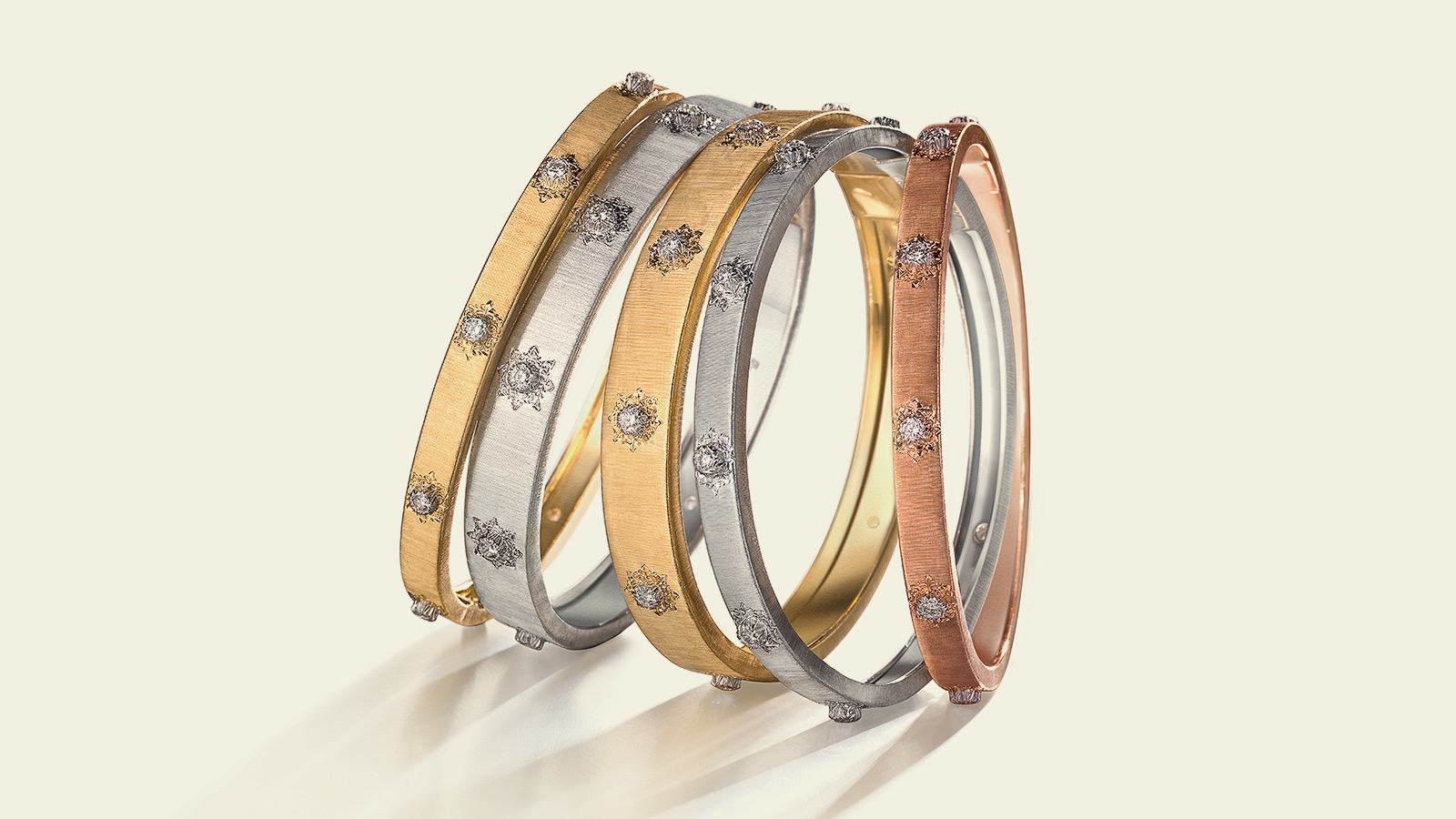
    Buccellati turns 100 next year and is known for its ornate, lush jewellery designs and bejewelled, golden iPad covers.

    It operates physical stores in Shanghai and Beijing, as well as retailing online on JD.com.