Tag: riding

  • Riding the Health Wave: Yum China Doubles Down on KPRO Stores Amid Rising Demand for Low-Calorie Meals

    Riding the Health Wave: Yum China Doubles Down on KPRO Stores Amid Rising Demand for Low-Calorie Meals

    Yum China, the company responsible for managing KFC and Pizza Hut chains across the nation, is broadening its reach by doubling its KPRO stores. The KPRO stores, which specialize in low-calorie meals, are set to reach 600 by the end of this year, following a rise in health-conscious consumer demand. KPRO’s offerings include nutritiously balanced meals such as protein-rich sandwiches and yogurt-based smoothies.

    An Emphasis on Health and Nutrition

    Yum China’s CEO, Joey Wat, emphasized the importance of satisfying meals that are also nutritious during a recent earnings brief. KPRO’s nourishing menu caters to this by providing consumers with clear calorie information, thereby enabling informed decisions. The cost for these healthier meal options varies from CNY30 to CNY50 (US$4.41–7.36) per meal.

    Yum China dedicated seven years to understanding the market for lighter meals before inaugurating its first KPRO store in Guangzhou in late 2024. By 2025, fueled by the escalating demand for healthier alternatives, the number of KPRO stores reached 200, strategically located adjacent to KFC chains.

    Chen Xiao, CEO of Shanghai Yacheng Culture, a provider of marketing and branding services, pointed out that the surge in young consumers keen on nutritionally balanced food offers international brands a significant advantage. These well-established brands can easily attract customers, particularly as restaurant chains can effectively reach out to a wide consumer base.

    The Growing Trend of Light Meals

    According to a report by research firm NCBD and Shanghai Expo Finefood, the number of Chinese consumers opting for light meals has skyrocketed from 2 million in 2017 to over 32.5 million by 2025. The report further stated that 40% of these consumers consume such meals at least thrice a week.

    Chen predicted that China’s light-meal sector could rake in about CNY100 billion in annual sales this year alone. On a similar note, Wat articulated the potential profitability of the segment, stating that the targeted 600 KPRO stores could boost the sales of their parent KFC chains by approximately CNY1 billion ($147.17 million) per year.

    However, Yum China is not the only player in the health food segment. Other chains such as Murvey LF and Moosang, operating about 600 and 400 stores respectively, are also prominent in the light meals market.

    Ending the first quarter of 2026 on a high, Yum China reported a net profit of $309 million, a 6% increase from the previous year. Their first-quarter revenue also saw a 10% rise, amounting to $3.3 billion.

    Questions & Answers

    **What is the expansion target for KPRO stores by the end of this year?**
    Yum China intends to double its KPRO stores to a total of 600 by year’s end.

    **What is the expected annual sales from China’s light-meal market this year according to Chen Xiao?**
    Chen Xiao predicted that the light-meal market could generate about CNY100 billion in annual sales.

    **What was Yum China’s net profit for the first quarter of 2026?**
    Yum China reported a net profit of $309 million for the first quarter of 2026, marking a 6% increase year-on-year.

  • Riding on Risk: The Perilous Reality of Motorbike Travel in Vietnam

    Riding on Risk: The Perilous Reality of Motorbike Travel in Vietnam

    Motorbikes, possessing the rapidity of a car but the simplicity of a bicycle, inherently pose a high risk to safety, particularly when traversed on less than optimal roads. As an individual who has spent a significant time commuting through the city by both motorbike and car, I have come to deeply comprehend a sobering reality: motorbikes, the primary mode of transportation in Vietnam, are also the most perilous. The danger lies not only in their petite, vulnerable structure, but also in the habits and attitudes of the people and a transportation infrastructure that is inadequately equipped to provide adequate protection for riders.

    The Danger Lurking in Motorbikes

    In developed nations, cars are predominantly the preferred choice of transport. This preference is not solely attributed to the affluence of the people, but also to the inherent safety cars provide. The occupants in a car are shielded by a robust metal structure, airbags, seatbelts, anti-lock braking systems, collision sensors, rear-view cameras, and blind spot warnings. Motorbike riders, on the other hand, are left completely vulnerable to the tumult of traffic. A minor brush or an abrupt swerve can easily result in a fall, leading to grave injury or even fatality.

    In my personal observation, most roadway accidents in Vietnam invariably involve motorbikes. They occur on a daily basis, whereby a minor wobble, a sharp brake, or an inattentive pedestrian can rapidly escalate into catastrophe. Although car accidents are not unheard of, the possibility of fatal consequences is significantly less.

    A Closer Examination of the Risks

    Another factor contributing to the danger of motorbikes is their sheer volume. In major cities such as Hanoi and Ho Chi Minh City, it is commonplace for a family to own two or three motorbikes. The narrow city roads, swarming with millions of bikes, generate chaos. Riders are compelled to evade cars, dodge pedestrians, navigate around buses, and occasionally mount pavements when confronted with traffic jams. These behaviors are born out of the necessity for convenience and the habit of seeking shortcuts, yet they continually place riders in precarious situations.

    Further exacerbating the situation is the lack of traffic awareness amongst a subset of riders. Unconventional helmet use, running red lights, driving against the traffic, over-speeding, and phone usage while driving are prevalent practices. As motorbikes are compact and agile, riders often experience a sense of freedom, forgetting the grave implications one moment of negligence can bring about. Unlike car drivers, who are subjected to more stringent licensing procedures and have higher financial liabilities, many motorbike users obtain their license with minimal training. Some even resort to stand-ins for their tests or commence riding before achieving the legal age.

    The Psychological Aspect and Infrastructure Hurdles

    There is also a psychological element at play. Car drivers generally exhibit more caution as even a minor collision can result in costly repairs. Motorbike riders, conversely, often downplay minor incidents and adopt aggressive or reckless behavior to save a few minutes. This overconfidence often results in motorbike accidents that are unforeseen and frequently unavoidable.

    The infrastructure in Vietnam further exacerbates the risk. Numerous roads lack specially designated lanes for motorbikes, exhibit faded lane markings, inconsistent speed bumps, and poorly positioned traffic lights. Rain can render the roads slippery, while manhole covers and potholes, barely noticeable to cars, can easily cause a motorbike rider to lose control.

    Reassessing Motorbike Use

    Motorbikes undoubtedly play an integral role in Vietnamese life, especially in narrow lanes, rural regions, or areas with underdeveloped transport infrastructure. However, as urban areas aspire to more sophisticated transportation systems, it is imperative to alter our mindset. Rather than solely relying on motorbikes, we should consider public transport, small cars, e-bikes, or bicycles as safer and more sustainable alternatives. The authorities must also enact stronger measures: assign lanes for motorbikes, strictly enforce traffic regulations, and educate about road safety from an early age. Riders must comprehend that they are operating a high-risk vehicle and not simply indulging in convenient transportation.

    Observing from the safety of my car, as hundreds of motorbikes jostle under the rain, amid exhaust fumes and blaring horns, the realization is stark: a single wrong move or abrupt stop could swiftly result in tragedy.

    Motorbikes have been an integral part of Vietnamese life for generations, but they also present a significant risk that needs to be reconsidered. Traffic safety is not just the responsibility of the government; it is a personal choice. We can choose to decelerate, to exercise caution, and to opt for safer vehicles to safeguard ourselves and our loved ones. After all, the ultimate objective is not the speed or convenience of the journey, but to return home safely every time.

    Questions & Answers

    Why are motorbikes considered dangerous?
    Motorbikes are considered dangerous due to their small, exposed structure, the riders’ habits and mindset, and a transportation infrastructure that inadequately protects riders.

    What factors contribute to motorbike accidents in Vietnam?
    The sheer volume of motorbikes, lack of traffic awareness among some riders, psychological factors, and infrastructure issues contribute to motorbike accidents in Vietnam.

    What measures can be taken to improve safety for motorbike riders?
    To improve safety for motorbike riders, authorities can assign designated lanes for motorbikes, strictly enforce traffic regulations, and educate about road safety from an early age. Additionally, riders can choose safer vehicles and exercise more caution while driving.

  • Grab Soars Past Quarterly Revenue Projections, Fueled by Consumer Adoption of ‘Superapp’ Services

    Grab Soars Past Quarterly Revenue Projections, Fueled by Consumer Adoption of ‘Superapp’ Services

    Grab Holdings Inc. surpassed projected revenues for the third quarter, thanks to strong consumer spending on its ride-hailing and food delivery services. The increase in user numbers can be linked to the company’s efforts in expanding its platform.

    Grab’s Superapp Transformation

    Grab’s initiative to transform into a “superapp” by integrating food and grocery delivery, ride-hailing, and financial services has proven successful. These integrated services offer consumers a comprehensive solution for their daily mobility and lifestyle requirements amidst an unpredictable economic climate. The concept’s popularity has surged, especially in regions where tariffs have reshaped the economy.

    In addition to offering standard services, Grab has been emphasizing more cost-effective options in ride-hailing and food delivery. This strategy aims to appeal to budget-minded consumers and provide a safety net against potential declines in consumer spending.

    According to CFO Peter Oey, approximately one-third of new monthly users in the deliveries segment are drawn from these affordable channels. Furthermore, about 40% of these users have subsequently upgraded to standard products. Oey noted, “We’re observing increased engagement from these saver platforms or these affordable products, and simultaneously, users are spending more frequently as we successfully upsell them.”

    Expansion into Autonomous Vehicles

    As the service sector in Southeast Asia becomes increasingly competitive, Grab is exploring new avenues for growth. One such venture involves leveraging its ride-hailing platform to penetrate the autonomous robotaxis market. Industry analysts predict that this sector will witness considerable growth in the near future.

    The company has also raised the lower limit of its annual revenue forecast from $3.33 billion to $3.38 billion, while the upper limit remains at $3.40 billion. Grab’s revenue for the period stood at $873 million, marginally beating analysts’ average estimate of $872.9 million.

    Additionally, the company has updated its yearly adjusted earnings before interest, taxes, depreciation, and amortisation (EBITDA) forecast. The new range is set between $490 million and $500 million, up from the previous projection of $460 million to $480 million.

    The third-quarter revenue for Grab’s deliveries segment stood at $465 million, slightly under the estimated $470 million.

    Questions & Answers

    What is Grab’s strategy for attracting cost-conscious consumers?
    Answer: Grab has introduced more affordable options in its ride-hailing and food delivery services to attract budget-minded consumers.

    How is Grab planning to expand amidst increasing competition in Southeast Asia’s service sector?
    Answer: Grab is planning to leverage its ride-hailing platform to expand into the autonomous robotaxis market.

    What has been the impact of Grab’s transformation into a “superapp”?
    Answer: The transformation has been successful, as it provides consumers with a one-stop solution for their daily mobility and lifestyle needs in the midst of an unpredictable economic landscape.

  • Woolworths Sees 2.7% Surge in Sales: Riding the Wave of E-commerce and Food Sector Growth

    Woolworths Sees 2.7% Surge in Sales: Riding the Wave of E-commerce and Food Sector Growth

    Woolworths, a major retail group, has announced a rise of 2.7 percent in its total sales for the first quarter of the current fiscal year. The increase, which pushed the company’s revenue to $18.5 billion, is mainly due to a surge in food sales and the expansion of its on-demand services.

    Growth Powered by E-Commerce and Food Sales

    The company’s e-commerce sales experienced significant growth, rising by 13.2 percent to reach $2.7 billion. Australian food sales also saw an increase of 2.1 percent, amounting to $13.8 billion. This was largely fueled by an increase in the sales of chilled food, meat, and fruits. However, long-life sales experienced slower growth.

    Long-life sales saw a boost from drinks, snacking, and health and wellness products, while sales of baby, pet, and home essentials proved to be a challenge. Additionally, tobacco sales saw a considerable drop, declining by 51.5 percent compared to the same period the previous year.

    Increase in On-Demand Services

    Woolworths’ WooliesX sales in Australia increased by 12.9 percent, amounting to $2.2 billion, primarily driven by same-day and on-demand services. Among all of Woolworth’s e-commerce offerings, Milkrun, a grocery-delivery service, demonstrated the most growth. It is now supported by 628 stores, with 113 new stores added during the quarter.

    New Zealand Sales Performance

    In New Zealand, food sales reached $1.98 billion, marking a 2.5 percent year-on-year increase. This was primarily driven by the growth of e-commerce and sales of fruits and vegetables, meat, chilled, and frozen categories. E-commerce sales in the country grew by 15.8 percent, fueled by consumer demand for convenience and the company’s Same Day services. Milkrun also expanded its reach, extending to 87 stores across the nation.

    Other Notable Performances

    W Living, a division of Woolworths, saw a sales increase of 3.3 percent to $1.35 billion, largely due to the strong performance by Petstock. Petstock’s sales surged by 15.8 percent to $238 million, following the expansion of six stores and the inclusion of wholesale revenue from distributors Big Dog and TimePet.

    Big W saw a moderate increase in sales of 1 percent to $1.13 billion. However, the decline in items due to the cycling of winter clothing and clearance activity was evident. The brand’s e-commerce gross transaction value rocketed by 46.3 percent to $213 million, largely due to a 148 percent growth at Big W Market.

    Futures Outlook

    Woolworths’ group CEO Amanda Bardwell expressed cautious optimism for the key trading quarter ahead. She mentioned robust plans for the festive season, including a refreshed seasonal range. Bardwell concluded by stating that while it might take time for the full benefits of the company’s strategic actions to be realized, they remain confident these steps will lead to meaningful improvements for both their customers and shareholders.

    Questions & Answers

    What led to the growth of Woolworths’ sales in the first quarter?
    The growth was primarily driven by an increase in food sales and the expansion of on-demand services.

    How did Woolworths’ e-commerce perform in the first quarter?
    E-commerce sales rose by 13.2 percent to reach $2.7 billion, demonstrating strong performance.

    What is the company’s outlook for the future?
    Woolworths remains cautiously optimistic about the key trading quarter and has strong plans in place for the festive season, including a refreshed seasonal range.

  • Gojek Co-founder And Ex-education Minister, Nadiem Makarim, Detained In $121 Million Corruption Probe

    Gojek Co-founder And Ex-education Minister, Nadiem Makarim, Detained In $121 Million Corruption Probe

    Former Indonesian Education Minister and co-founder of the ride-hailing company Gojek, Nadiem Makarim, has been detained and named a suspect in a corruption case. The case involves allegations of malfeasance concerning laptop procurement. Makarim will be held for 20 days while the investigation progresses.

    Makarim’s Role in the Alleged Corruption

    Makarim served as the Education Minister from 2019 to 2024 and is accused of misconduct in the procurement of Google’s Chromebook laptops for his ministry and students. According to Nurcahyo Jungkung Madyo, the lead investigator, Makarim is believed to have misused his ministerial authority for personal enrichment or the benefit of a company, in violation of Indonesia’s anti-corruption laws. The damages from this case are estimated to have cost the state around 1.98 trillion rupiah (US$121.85 million).

    Before his detention, local media reported that Makarim stated, “I did not do anything. God will protect me, the truth will come out,” as he was leaving the prosecutor’s office for the detention house. No comment has been received from his legal representative.

    Procurement Specifications and Meetings with Google

    Prosecutors claim that Makarim had issued a directive in 2021, specifying procurement conditions that only the Chromebook laptop could meet. Furthermore, it is alleged that Makarim had six meetings with representatives from Google Indonesia prior to the selection of the Chromebook. Google Indonesia, however, declined to comment on the case involving Makarim, emphasizing that it operates with resellers and partners to provide its technology, and government agencies transact with them, not directly with Google.

    Gojek and the Investigation

    In July, the attorney general’s office conducted a search at the offices of Indonesian tech firm GoTo Gojek Tokopedia as part of the investigation. GoTo’s director of public affairs and communications, Ade Mulya, clarified that Makarim’s duties as education minister, including the procurement of Chromebooks for the ministry, were never related to GoTo’s operations. Makarim had withdrawn from Gojek in 2019 when he was appointed minister. In 2021, Gojek merged with the e-commerce startup Tokopedia to form GoTo Gojek Tokopedia, becoming Indonesia’s largest tech company.

    Questions & Answers

    Who is Nadiem Makarim?
    Nadiem Makarim is the co-founder of ride-hailing company Gojek and former Indonesian Education Minister.

    What are the allegations against Makarim?
    Makarim is accused of corrupt practices in the procurement of Google’s Chromebook laptops for his ministry and students. He is alleged to have misused his ministerial authority for personal or company enrichment.

    What is the potential cost of the alleged corruption?
    The estimated damages from the case are around 1.98 trillion rupiah (US$121.85 million).

  • Leading taxi firm posts first ever annual loss

    Leading taxi firm posts first ever annual loss

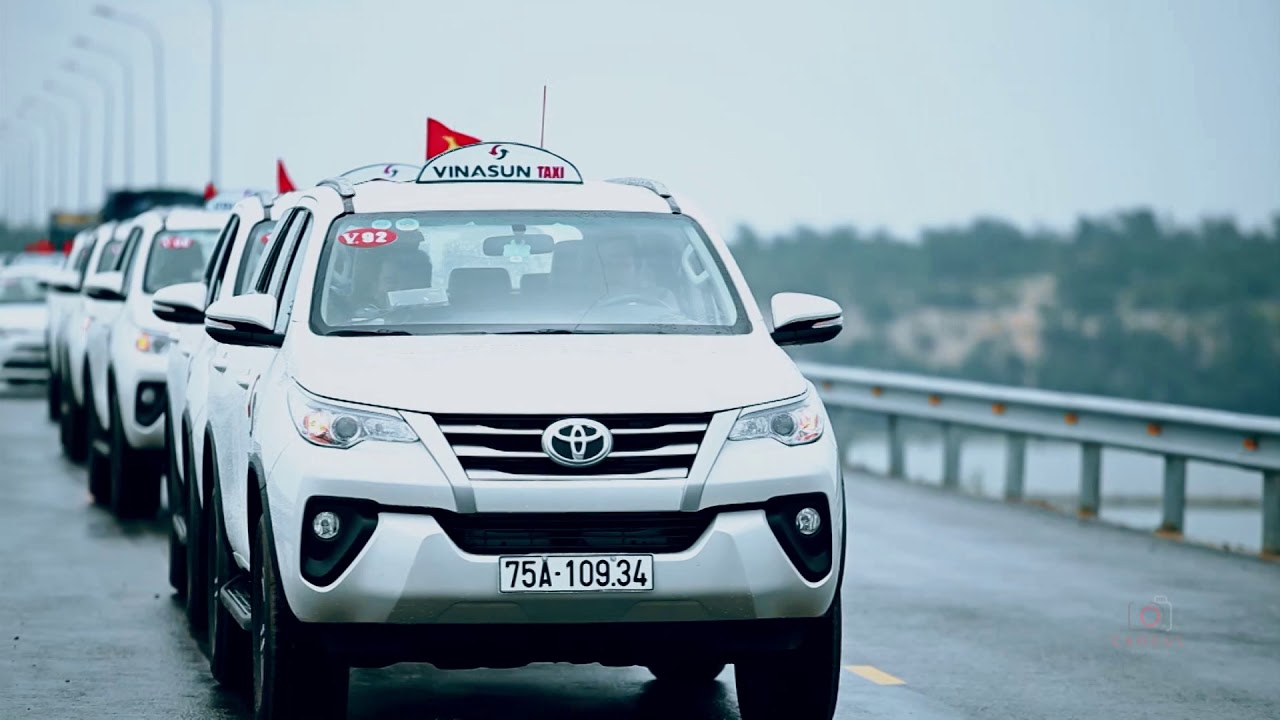
    Vinasun, Vietnam’s second-largest taxi firm, reported its first-ever accumulated loss of VND211 billion ($9.15 million) last year.

    The figure far exceeded the firm’s earlier loss forecast for 2020 at VND115 billion. Vinasun leaders have blamed the loss on the long-lasting impacts of the Covid-19 pandemic.

    The company has already laid off over 1,300 employees and taken other earlier measures to reduce operating costs.

    Vietnam’s second-largest taxi firm after the Mai Linh Group, Vinasun reported that its revenues plunged 49 percent year-on-year to VND1 trillion last year.

    The company leadership had said at an annual general meeting in June that 2020 was the most challenging year for the company since its establishment.

    The company shut down most of its operations in April last year when the country began a social distancing campaign to curb the spread of the novel coronavirus.

    As of December 31, it had total assets of over VND2.05 trillion.

  • Harley-Davidson Suspends US Production Over Coronavirus Crisis

    Harley-Davidson Suspends US Production Over Coronavirus Crisis

    “We recognize the unprecedented nature of this global crisis. In order to best support our employees and following the social distancing guidance issued by public health authorities, we are temporarily suspending the majority of production at our US manufacturing facilities,” said Jochen Zeitz, acting CEO and President, Harley-Davidson. “We will continue to monitor the situation and take necessary steps to prioritize employee health and safety.

    Non-critical employees at Harley-Davidson’s headquarters and Production Development Centre in Milwaukee have also been asked to work remotely till the end of March. The company is also working with dealers to assess individual impacts and is encouraging dealers to follow the public health guidelines in their communities for the safety of its consumers.

    Harley-Davidson has become the latest motorcycle manufacturer to shut down at least some production facilities. In Europe, KTM and Ducati have also extended shutdowns at the two motorcycle brands’ manufacturing facilities, over the coronavirus pandemic. For Harley-Davidson though, the decision to shut down production comes at an already difficult time. Harley-Davidson sales are down, more so, in the US domestic market, and in late February, Harley-Davidson announced the departure of the brand’s CEO, Matt Levatich, who spent more than two decades at Harley-Davidson.

  • Chicago Approves Traffic Congestion Tax On Ride-Hailing Services

    Chicago Approves Traffic Congestion Tax On Ride-Hailing Services

    A proposal to combat traffic congestion in Chicago by increasing taxes on certain ride-hailing trips won city council approval on Tuesday as the city and ride providers accused each other of penalizing low-income passengers.

    Mayor Lori Lightfoot’s plan increases the city’s tax on single-passenger trips and lowers the tax on shared rides while imposing new surcharges on weekday rides in the downtown area to raise $40 million for the fiscal year that begins Jan. 1.

    Ride-hailing companies Uber Technologies Inc and Lyft Inc claimed the move would largely hurt low-income residents.

    Earlier this month, the city’s first female African-American mayor accused Uber of trying to resist any kind of regulation by stirring up racial tensions.

    Uber rejected her claims and said alternative proposals it offered would spare lower-income communities in Chicago’s South and West sides from higher costs while raising more money for the city’s budget.

    Reuters’ analysis of data that ride-sharing companies are required to disclose to Chicago shows fares for shared rides in the city have risen significantly over the past year, while fares for single riders have remained stable.

    The price increases for shared rides predominantly affect Chicago’s low-income neighborhoods where most of carpool rides are booked, the analysis showed. Over this period of increased fares, carpool ridership fell.

  • Honda Deauville Touring Motorcycle May Be Re-Introduced

    Honda Deauville Touring Motorcycle May Be Re-Introduced

    Reports from France suggest that Honda may be working on a new version of its once-popular touring motorcycle with the Deauville name. According to French motorcycle website Motostation.com, the new Honda Deauville will be based on the current Honda CRF1000L Africa Twin. So, according to the report, the new bike will feature the same 998 cc, liquid-cooled engine which puts out under 100 bhp of power and 97 Nm of peak torque and will also feature the automatic dual-clutch transmission (DCT) as well.

    The mid-range touring motorcycle with the Honda Deauville name was in production from 1998 till 2013, and was named after the popular French seaside resort. The old Deauville had a liquid-cooled v-twin engine and featured a shaft drive, with the first generation model featuring a 650 cc v-twin engine. The second-generation model (2002-2005) featured updated bodywork, enlarged panniers and some technical modifications. The third-generation model (2006-2013) got an engine displacement bump to 680 cc, and was eventually discontinued in 2013.

    So far, Honda doesn’t have a pure road-going touring model, apart from the Africa Twin adventure touring model and the Honda Gold Wing at the luxury end of touring. The Deauville could well meet a niche segment which doesn’t seem to have too many models in the touring category from many manufacturers at this stage. So, will Honda go the dedicated touring way and introduce a new model with hard panniers and mini Gold Wing looks? Time will tell. But for now, it’s interesting news to see that Honda is at least looking at possible demand, at least in Europe for now, for such a model, if at all it is introduced.

  • Suzuki, Mazda, Subaru Join Toyota-Softbank Self-Drive Venture

    Suzuki, Mazda, Subaru Join Toyota-Softbank Self-Drive Venture

    Five Japanese automakers including Suzuki Motor Corp and Mazda Motor Corp said they would each invest 2 percent in the on-demand, self-driving car service venture set up by SoftBank Corp and Toyota Motor Corp. Suzuki, Mazda, Subaru Corp, Isuzu Motors Ltd and Toyota’s compact car unit Daihatsu will each invest 57.1 million yen ($530,620) in the venture – dubbed Monet – in return for a 2 percent stake, the companies said in a statement.

    SoftBank and Toyota will each retain their 35% stakes in the company, which is now capitalized at $26.6 million. The latest investors join Honda Motor Co Ltd and Hino Motors Ltd, Toyota’s truck-making operations, which each own 10 percent stakes. Launched in October, the venture plans to roll out on-demand bus and car services in Japan in the next year, and a services platform for electric vehicles in the country as early as 2023 based on Toyota’s boxy “e-palette” multi-purpose vehicle.

    Monet is building up members as it joins the ride-sharing sphere which is dominated by startups such as Uber Technologies Inc, Didi Chuxing and Lyft Inc, as traditional automakers band together to compete in an industry which is placing a growing emphasis on offering vehicle services rather than selling cars to individual drivers.

    Automakers are increasingly joining forces with technology companies as well as each other as they grapple with the massive investment and software expertise required to develop these new services for which demand has yet to be tested. The new investment will see Suzuki, Mazda and Subaru deepen their partnership with Toyota, as they have already agreed to tap the R&D firepower of Japan’s biggest automaker for electric cars and other future vehicle technologies.

  • Honda Files Patents For Variable Riding Position

    Honda Files Patents For Variable Riding Position

    Honda has filed a series of patent applications in Japan for what seems to be a new technology offering two different riding positions on the same motorcycle. The patent images show a Honda CBR1000RR which can have two different riding positions – an aggressive and sporty riding position, as well as a more upright and relaxed riding position. The key elements in the technology are the ability to move the bars and the screen, which provides the ability to raise the handlebars from the normal clip-on height because they are attached to extended tubes that run parallel with the fork legs.

    According to the patent application, the position can be changed by the press of a button. Also movable is the windscreen, which is also a simple operation. The top section of the front fairing is attached to a scissor-style frame that easily allows the rider to move the screen upward and into a more vertical position, if needed, for a more touring friendly riding position from an aggressive, sporty riding position. What is clear from the patent drawings is that this is not a complex mechanism that will require a ground-up re-engineering of the bike.

    It’s still not clear whether Honda will actually introduce a future CBR1000RR Fireblade with this new innovative technology, or if there will be an altogether new model which will showcase this variable riding position. Either ways, expect some sort of concept bike which Honda is likely to display, either later this year, or at one of the motorcycle shows next year which will showcase this unique new feature.

  • Uber announces major Black and Black SUV enhancements

    Uber announces major Black and Black SUV enhancements

    Uber Black and Uber Black SUV, the original luxury experiences, are getting consistent improvements in the United States this week. Apparently, many customers have requested top-notch service and premium comfort when using these experiences, and Uber has decided to finally deliver.

    When you request an Uber Black or Black SUV, you will now be able to access premium phone support with live agents in case you need something else. Also, these luxury services will now offer a little bit more extra time to get to the car when unexpected delays emerge.

    A brand new Quiet Mode is now available as well, which means that if you need to respond to emails or want to simply take a nap (?!), you can select that from within the Uber app and the driver won’t bother you. However, if you’re in the mood to chat, you can select that option too.

    Furthermore, a new Temperature Control feature will communicate your optimal temperature to the driver before you enter the vehicle. Also, if you need help with your luggage, you can let your driver know via the Uber app.

    According to the ride-sharing company, all the premium features including Quiet Mode, help with luggage, temperature control, extended pickup periods and premium support will be available to 100% of US Uber Black and Uber Black SUV riders on May 15.

  • Rynox Introduces Accident Insurance Cover With Purchase Of Riding Gear

    Rynox Introduces Accident Insurance Cover With Purchase Of Riding Gear

    With the growing sale of motorcycles and the awareness and importance of wearing riding gear, more and more motorcyclists choose to invest in the protective apparel beyond purchasing their desired moped. Now, a number of discounts and freebies are commonly given to customers on protective gear, but in an innovative of promoting its product line-up, Indian riding gear maker Rynox is offered accident insurance to its customers. Under the Rynox Wingman initiative, the company will provide a complimentary accident insurance cover of ₹ 50,000 to its customers.

    The Wingman initiative intends to support customers after the unfortunate fall like a wingman would, while it’s protective gear is intended to minimize injuries. The Wingman initiative is available only on the jackets, riding pants or gloves that have a minimum value of ₹ 4000. The insurance will be valid for one year from the date of purchase and covers permanent disability or hospitalization due to an accident. The initiative is applicable to products purchased after May 1, 2019.

    Customers who want to register themselves for the Rynox Wingman initiative need to enter their personal details, purchase invoice details and the 15-digit product code on the company’s website. The Indian gear maker has a variety of products on offer ranging from urban and touring jackets and pants, as well as mesh and leather gloves. Rynox also makes motorcycle luggage including tank bags, saddle bags, utility bags, phone and GPS mounts, protector inserts, and more.

    The initiative is certainly innovative and will be appreciated by many. In fact, as motorcyclists, it is important that you do take an accident policy that helps cover expenses, should there be an unfortunate incident.

  • Two execs quit ride-hailing firm Go-Viet

    Two execs quit ride-hailing firm Go-Viet

    Go-Viet has confirmed that its general director and deputy general director have quit their positions. General director Nguyen Vu Duc and deputy general director Nguyen Bao Linh have resigned from their positions, the Vietnamese ride-sharing firm announced Friday.

    The two would continue to work as advisors for Go-Viet and its Indonesian counterpart Go-Jek from Vietnam, while the management of Go-Viet’s day-to-day work will be handled by the company’s remaining leaders, it said.

    Phung Tuan Duc, Go-Viet’s managing director, said the company would continue working closely with Duc and Linh to help develop the platform.

    According to Deal Street Asia, the news of Duc and another of Go-Viet’s senior directors resigning was already announced internally earlier this week. The news site also claimed the two had demanded large sums of money in compensation upon resigning, but the company did not comment on this.

    Nguyen Vu Duc graduated from Harvard University, the U.S., with a master’s degree in business administration and worked for nearly a decade at a major bank in Vietnam. In 2014, he helped deploy ride-hailing firm Uber’s services in Vietnam and went on to launch a fintech firm in 2015-2018.

    Duc eventually returned to the ride-sharing market as co-founder and CEO of Go-Viet, which began operations last August. At press meetings, he has said that Go-Viet was a Vietnamese startup with funding and technology support from Go-Jek.

    Duc and Linh’s resignations have come at a time when Go-Viet has been stagnating in all its services – ride-sharing, food delivery and package delivery. Since the start of this month, the company has cut its drivers’ revenue to 20 percent, prompting many drivers to consider switching to another ride-sharing service.

    Meanwhile, its main competitor Grab has been expanding its food delivery service and its cashless payment service GrabPay by Moca, which now has new features allowing users to pay electricity, water and phone bills.

    The Be Group, the latest ride-sharing market entrant in Vietnam, has announced it has recruited over 15,000 drivers in just three months and is planning to expand its presence to 22 provinces and municipalities this year.

  • Grabbing Grab’s share a tough question in Vietnam

    Grabbing Grab’s share a tough question in Vietnam

    Local ride-hailing firms lack deep pockets needed to out-incentivize market leader Grab. After Uber Technologies Inc sold its ride and food-delivery businesses in Southeast Asia to bigger regional rival Grab last March, Vietnamese firms have tried to chip away at Grab’s dominance.

    A number of ride-hailing apps have been introduced recently, like Aber, which was developed by a group of Vietnamese students studying in Europe; FastGo, an affiliate of NextTech Group; and MVLchain – a Singapore-based transportation startup; VATO; Didi; and MaiLinhBike.

    Besides competing in the bike- and car-hailing businesses with dominant player Grab, the new entrants also plan to offer good delivery, car rentals and long-haul ride services.

    But, for the moment, none of them have shown the ability to fill the gap left by Uber or to threaten Grab’s supremacy, because they have not differentiated themselves from the competition.

    Newcomers did look for some “killer features” that are absent from previous apps to lure customers. For instance, VATO allows users to bargain with the driver for the most competitive price and Mai Linh Bike says it will collect lower commissions from its drivers and will not increase ride prices during peak hours.

    But such measures are not enough because ride-hailing is a cash burn business and only those with strong financial resources can endure, experts say.

    EasyTaxi has probably learned how tough this fight is. The Brazil-based company came to Vietnam at the end of 2013, six months before Grab and Uber’s presence in this market. Despite being the first comer, it withdrew from the market just two years later. Money, or the lack of it, was the reason, industry insiders say.

    Cash burn strategy

    Even big players like Grab and Uber have reported heavy losses in Vietnam. According to the General Department of Taxation, Grab, with a total registered capital of only VND20 billion ($881,057), has incurred losses of nearly VND1 trillion in three years of operating in Vietnam.

    But this cash burn strategy is how Grab and Uber are eating up traditional taxi firms’ market share. In 2014-2015, they launched intense promotional programs including free rides and discounts to lure customers. They also expanded their driver networks by providing them with subsidies and big rewards based on performance.

    Limited funding limits the budding competitors’ ability to offer incentives the way the big players can, so the former are always playing catch up. They can’t offer discounts, and can’t expand their network of drivers in order to offer faster, better rides.

    In a price-driven market, customers are always looking to choose the cheapest possible ride. And they have complained that it is not easy to book a ride with the new apps even in downtown areas.

    Duc Huy, a senior student at the Academy of Journalism and Communication in Hanoi, told VnExpress that he found it difficult to get a ride on MaiLinhBike as there are not many drivers around North Tu Liem District where he lives.

    “I have to wait for 10 minutes to get on a MaiLinhBike ride because the river is 2-3 km away,” he said.

    Drivers too see Vietnamese ride-hailing platforms as backup options. They are not ready to switch despite Grab cutting back on drivers’ incentives.

    Taxi driver Duy Ngoc said he operates on both Grab and VATO apps, but gets just two or three rides booked on the VATO platform a day.

    “So, I mainly drive on the Grab platform to ensure my income,” he said.

    “New apps do not have a large customer base. Drivers just sign up to get incentives, so their main driving service remains the previous one (Grab),” said 25-year-old Grab motorcycle driver Quoc Anh.

    Market niches

    With Go-Jek about to set foot in Vietnam with its Go Viet app, competition is only get tougher for local firms. The Indonesian ride-hailing firm is a heavyweight competitor to Grab in the Southeast Asian region. Will local apps stand a chance? The answer is, unlikely, in a head-to-head fight.

    “Capital shortfall is a disadvantage for Vietnamese ride-hailing apps, so they should not enter the cash burn race,” said Dr Nguyen Duc Thanh, head of the Vietnam Institute for Economic and Policy Research.

    He said going head-to-head with bigger rivals is not the right path to follow. There are other ways to succeed, he added.

    “They can enter niche markets like good delivery, car rentals or long-distance ride services. Instead of trying to divide market share in the beginning, newcomers should think of a long-term strategy to build a solid foundation,” Thanh added.

    It was not a fluke that even a well funded Uber lost to a more localized opponent, he said.