Tag: robots

  • Revolutionizing Data Centers: The Rise of Autonomous Robots in Asia Pacific Operations

    Revolutionizing Data Centers: The Rise of Autonomous Robots in Asia Pacific Operations

    Data centers in the Asia Pacific region are undergoing a significant transformation as they move away from conventional staffing models, typically made up of engineers conducting nightly rounds, to environments that are increasingly autonomous where robots take on crucial operational duties.

    Immediate Advantages of Robotic Systems

    Robotic systems offer immediate benefits to data centers, including the swift identification of thermal hotspots and leaks, a reduced dependence on routine staff, improved visitor management, and accurate remote operation capabilities at edge sites.

    Catalysts for Robotic Adoption in Data Centers

    Three primary trends are fueling the ongoing increase in data center robotics integration. Firstly, advanced hardware such as LiDAR, thermal cameras, and compact robotic arms allow the machines to safely navigate the aisles and gather detailed data. Secondly, advancements in computer vision and edge AI convert video feeds into actionable alerts for problems such as overheating, flooding, or loose cables, helping to reduce false alarms. Lastly, potent local networks, like private 5G and reliable LANs, empower robots to swiftly transmit large data volumes to analytics platforms and remote operators.

    Fujitsu’s private 5G robot trial in Yokohama and NTT Data’s Ugo inspection robots in Tokyo are examples of how advanced networks and robotics can work in tandem to achieve real-time remote inspections. Similarly, SK Telecom demonstrated autonomous robot technology using its Telco Edge AI infrastructure, focusing on crucial technologies for data centers and delivery robots requiring high-precision positioning.

    The Ecosystem and Solution Landscape of Robotics Vendors

    Data Bridge Market Research’s recent studies for 2024 indicate that modular robotics is being increasingly adopted across significant Asian markets, particularly in China, Japan, India, and Southeast Asia. The global modular robotics market is projected to grow at a CAGR of 14.1% from 2025 to 2032.

    Rapid industrialization and the growing need for automation are compelling manufacturers to seek flexible, scalable solutions. In 2024, Asia was responsible for 74% of new factory robot deployments, in contrast to 16% in Europe and 9% in the Americas. This trend is being fueled by increased investment in sectors such as automotive, electronics, pharmaceuticals, and precision engineering as businesses strive to enhance output and reduce labor risks.

    Meanwhile, robotics-as-a-service (RaaS) models are assisting in overcoming steep initial costs. RaaS allows companies to rent modular robotic systems and modify usage as needed, thereby lowering the entry barrier and enabling smaller facilities and regional operators to benefit from automation. This shift is anticipated to expedite the adoption of modular robots across the Asia Pacific in the coming years.

    Limited Use of Robots in Data Centers

    Despite the apparent benefits, robots are not a blanket solution for data center efficiency. Practical hurdles continue to impede widespread deployment. These obstacles include integration challenges with legacy DCIM and building management systems, privacy and security concerns related to cameras and facial recognition, and economic factors for small colocation facilities where capital and integration costs may prolong payback periods unless robotics are offered through RaaS models.

    Questions & Answers

    Why are robots being increasingly integrated into data centers?
    Robots bring immediate benefits to data centers, including accelerated detection of thermal hotspots and leaks, lessened reliance on routine staff, enhanced visitor management, and precise remote operation capabilities.

    What are the primary trends driving the rise in data center robotics integration?
    Three key trends are fuelling this rise: better hardware, improvements in computer vision and edge AI, and strong local networks.

    What are the challenges to broader deployment of robots in data centers?
    Challenges include integration issues with legacy systems, privacy and security concerns around cameras and facial recognition, and economic factors, particularly for smaller facilities.

  • Amazon Reaches Milestone: 1 Million Robots Now Match Workforce in Warehouse Operations

    Amazon Reaches Milestone: 1 Million Robots Now Match Workforce in Warehouse Operations

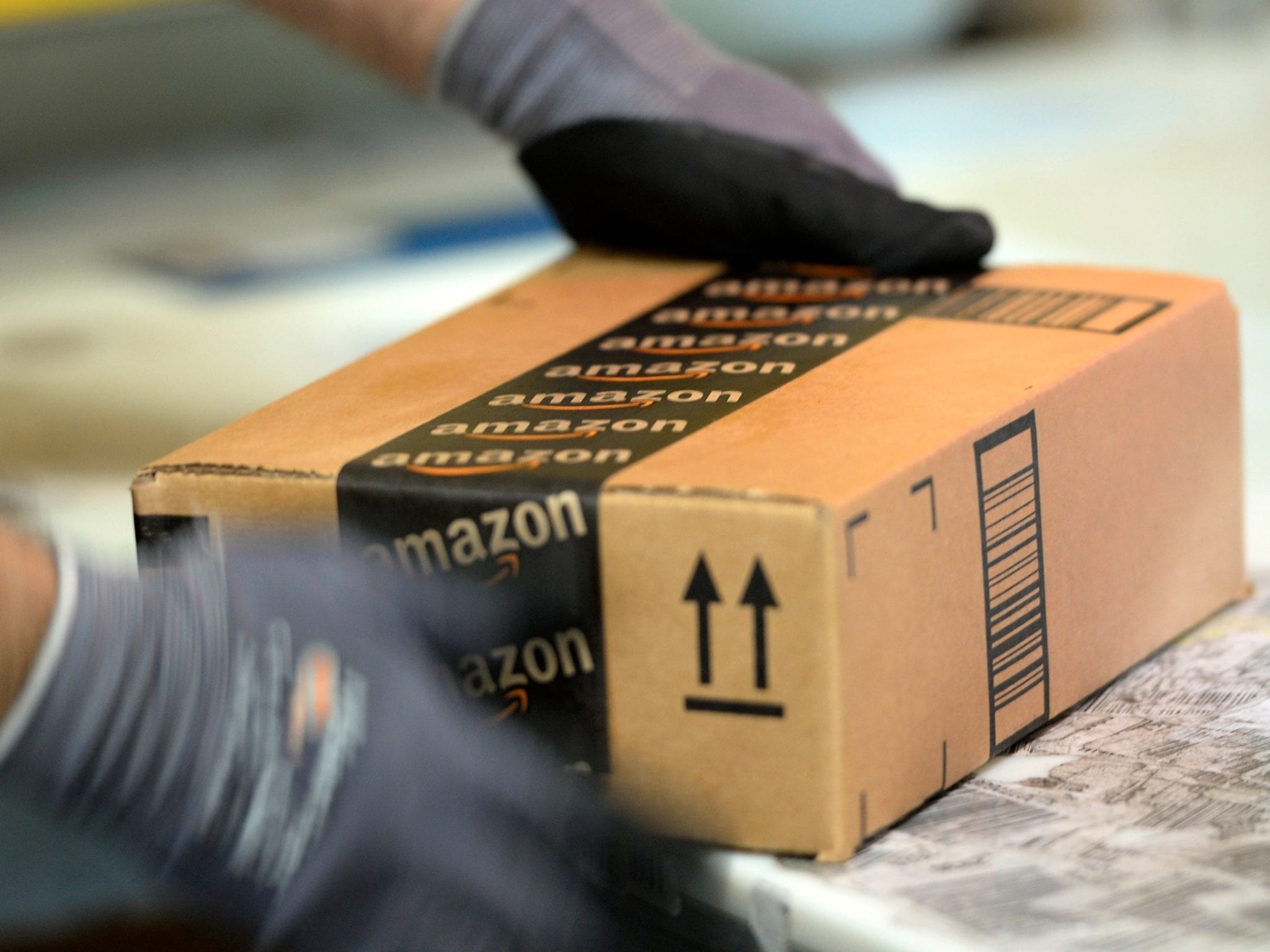
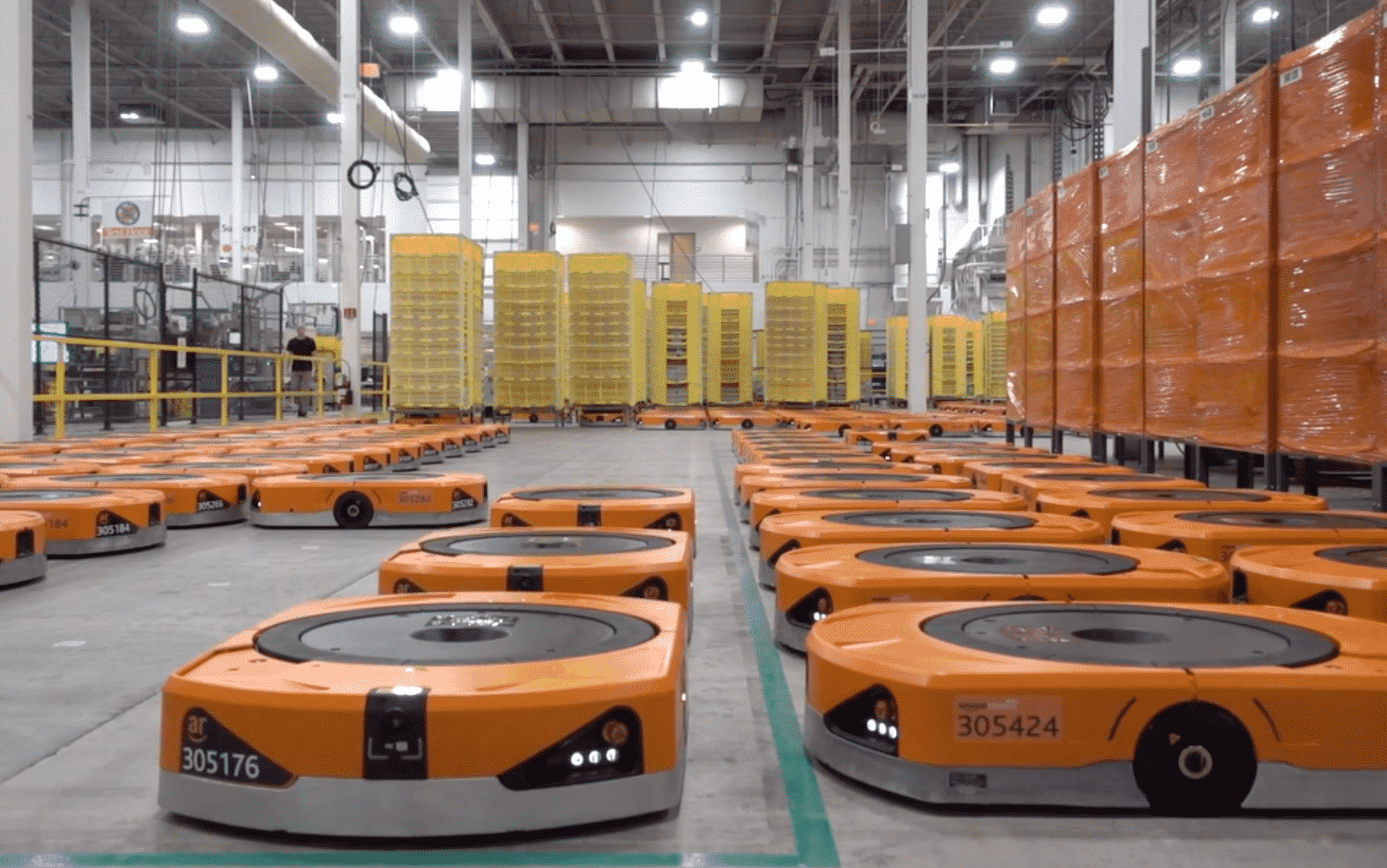
    Amazon’s relentless quest for automation has reached a remarkable milestone, as the number of robots deployed in its Japanese warehouses has soared to one million. This achievement underscores the company’s commitment to revolutionizing logistics and factory operations while positioning Japan as a critical hub in its global strategy.

    These robots work in tandem with Amazon’s workforce, which exceeds 1.5 million human employees worldwide. In fact, the robotic workforce is also on track to match that figure, approaching a remarkable 1.5 million units worldwide, illustrating an unprecedented synergy between human ingenuity and machine efficiency.

    Currently, Amazon has integrated robots into over 300 facilities across the globe, forming an increasingly sophisticated automated delivery network that redefines efficiency in the retail space. Imagine a robotic ballet, orchestrating the flow of products with precision as they navigate their bustling warehouse environments.

    Adding to this innovation is Amazon’s introduction of DeepFleet, a cutting-edge generative AI model designed to enhance the performance of its robotic fleet by an impressive 10%. This advancement optimizes their movements throughout fulfillment networks, ultimately leading to faster deliveries and lower operational costs.

    But Amazon’s ambitions extend far beyond warehouse duties. This milestone is just the beginning, as the company eyes future developments that will encompass delivery solutions and even home robotics, further integrating technology into daily life.

    Questions & Answers

    What milestone has Amazon achieved in Japan?
    Amazon has reached one million robots deployed in its warehouses across Japan, highlighting its commitment to advanced automation in logistics.

    How does the number of robots compare to human workers at Amazon?
    The number of robots is nearing the 1.5 million mark, which closely matches Amazon’s global workforce of over 1.5 million human employees.

    What is DeepFleet and how does it benefit Amazon?
    DeepFleet is a generative AI model designed to enhance the efficiency of Amazon’s robotic fleet by 10%, optimizing product movement through the fulfillment network to speed up deliveries and lower costs.

  • Investors warned about AI multilevel marketing schemes

    Investors warned about AI multilevel marketing schemes

    Multilevel marketing schemes (MLMs) calling for investment in artificial intelligence (AI) robots said to be capable of making money on their own are illegal, authorities have warned.

    The Vietnam Competition & Consumer Authority under the Ministry of Industry and Trade has put some AI robot related MLM websites and applications on a warning list, including snowai (snowaiapp.com, snowai.cc, snowai.net) and the inb.network (ai.marketing, and aimarketing).

    The websites claim that AI robots will conduct affiliate marketing on the Internet to advertise brands or carry out transactions on virtual and digital currency trading floors.

    Depending on investment packages involving AI robot rentals, investors can enjoy different kinds of commissions when orders are placed for branded products or transactions in virtual currencies are made. The income includes commission from investments made by subsequent investors in the multilevel marketing scheme.

    If investors pour money into such schemes, they face the risk of losing money because they have to hand in real money but their earnings are in virtual or digital money that are not officially recognized.

    The competition authority warned people not to invest in or develop AI robot related multilevel marketing schemes so as to avoid financial and legal losses.

    Doing business using the multilevel marketing mode without a license can fetch sentences of up to 5 years in prison under Vietnamese laws, the authority said.

  • Country Garden builds world-first robotic restaurant

    Country Garden builds world-first robotic restaurant

    Chinese property-development company Country Garden has launched the world’s first robotic restaurant, in Guangdong.

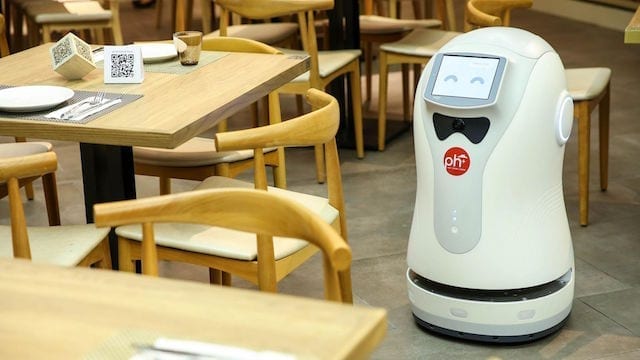
    Built by Country Garden’s subsidiary Qianxi Group, the restaurant occupies a 2000sqm area, featuring sections including Chinese food, hot pot and fast food. Diners are served by more than 20 in-house robots designed for different tasks including cooking and serving food.

    “The Qianxi robot restaurant has innovatively achieved both software-hardware integration and man-machine cooperation,” said Zhao Chunsheng, mechanical engineering specialist, and academician at the Chinese Academy of Sciences.

    “It helps to better run a smooth operation through the practical application of robots. Qianxi has the most advanced technology with a vast product lineup. It fills the market gap and will have a significant impact on benchmarking in adding value to industry development as well,” he said.

    According to the company, the Qianxi robotic restaurant can serve some 600 customers with 200 menu items thanks to fast serving time. The launch of the robotic restaurant is in line with efforts to reduce physical contact between people during the Covid-19 pandemic.

    Meanwhile, Qianxi Group says it aims to build centralized kitchens in Hong Kong and Macau.

  • Robots replace staff in South Korean chain Genesis BBQ

    Robots replace staff in South Korean chain Genesis BBQ

    Genesis BBQ, a major South Korean fried-chicken chain, opened a new ‘smart store’ in Seoul’s Songpa District this month.

    There are no employees to take orders at the store. Instead, there are tablet PCs on each table that are used to order food.

    The food made in the kitchen is then served by food bots, self-driving robots that deliver the food to the customers.

    A map of the store is programmed into the food bots, which deliver food to each table based on pre-mapped destinations included in the program.

  • CITIC Launches Robo-Advisor in Hong Kong

    CITIC Launches Robo-Advisor in Hong Kong

    China CITI Bank International launches its robo-advisory offering in Hong Kong which was co-developed with fintech firm Quantifeed.

    The new goals-based advisory offering, «Robo 360» is a goal-based advisory service made available through CITIC’s mobile banking app, «inMotion». Investors will be able to access 8-20 portfolios with a minimum investment amount as low as $100 and fees of just 1 percent. The portfolios are constructed with up to eight funds each by leveraging smart analytics and quantitative research capabilities.

    The launch makes CITIC the first bank in Hong Kong to offer a goals-based robo-investment advisory solution.

    We believe this will revolutionize wealth management in Hong Kong by ensuring that professionally managed investment products, previously only available to a limited wealth segment, are now available to retail customers, said Alex Ypsilanti, CEO, and co-founder of Quantifeed.

    Quantifeed has successfully developed scalable and highly customizable digital wealth and robo-advisory solutions for banks, brokers, insurers and wealth planners across Asia.

    These include DBS’s ‘digiPortfolio’ platform in Singapore, Cathay United Bank’s ‘CathayRobo’ service in Taiwan and Everbright Sun Hung Kai’s ‘EBSHK Direct AI-Portfolio Investing’ system in Hong Kong. The firm has a strong footprint in the region, with offices in Hong Kong, Singapore, and Sydney, and has recently expanded its services into Japan.

  • Rakuten Japan Testing autonomous delivery robots

    Rakuten Japan Testing autonomous delivery robots

    A Japanese collective including Yamato Transport and Rakuten will partner with the Japanese government in a road test of autonomous delivery robots.

    A government-appointed team will monitor the testing to identify potential issues, with a special focus on safety concerns, as well as considering new operating rules for inclusion in the Road Traffic Act. The team includes representatives from Mitsubishi Estate, Japan Post, Panasonic and self-driving tech firm ZMP, as well as officials from the National Police Agency, Ministry of Land, Infrastructure, Transport and Tourism, Ministry of Economy, Trade and Industry and local governments.

    Japan’s logistics sector, under pressure from burgeoning online sales, is currently experiencing a shortage in labour that could be answered with robot delivery units equipped with cameras and GPS capabilities, giving rise to industrial opportunities for robotic systems developers.

    The tests are expected to be wound up by March next year.

  • Ford Partners With Robots Maker Agility Robotics In Mobility Service Push

    Ford Partners With Robots Maker Agility Robotics In Mobility Service Push

    Ford Motor Co said on Wednesday it is partnering with walking robots maker Agility Robotics to assist self-driving delivery vans to drop packages at the doorsteps of people’s homes. Ford’s move into robotics comes as the No.2 U.S. automaker looks to expand into autonomous driving and mobility services. The company, which launched a self-driving pilot with delivery partners including Domino’s in Miami last year, said Agility Robotics’ two-legged robot, Digit, is capable of lifting packages that weigh up to 40 pounds.

    The robot can walk up and down stairs and through uneven terrain, while maintaining its balance after being bumped, Ford said bit.ly/2Jy47T5.

    “It’s not always convenient for people to leave their homes to retrieve deliveries,” Ken Washington, Ford’s chief technology officer, said.

    “If we can free people up to focus less on the logistics of making deliveries, they can turn their time and effort to things that really need their attention.”

    In 2017, Ford bought Argo AI, a Pittsburgh-based self-driving startup, but with spiraling development costs for autonomous cars in recent years, the company and other carmakers have sought alliances and outside investors.

  • Meet Scout, Amazon’s new delivery robot

    Meet Scout, Amazon’s new delivery robot

    Amazon is field testing a new delivery robot called Scout, which the company describes as a “fully-electric delivery system” designed to safely get packages to customers using autonomous delivery devices.

    Six robots are initially being tested in a Snohomish County neighbourhood in the U.S. state of Washington, where they’ll be delivering packages Monday through Friday during daylight hours. The devices will autonomously follow their delivery route but are initially being accompanied by an Amazon employee.

    Customers in Snohomish County order just as they normally would and their Amazon packages will be delivered either by one of Amazon’s partner carriers or by Amazon Scout.

    The robots, which are the size of a small cooler box, were created at Amazon’s research and development lab in Seattle. They’re designed to roll along sidewalks at a walking pace and safely navigate around pets, pedestrians and anything else in their path.

  • Amazon looks to expand check-out free concept without cashier

    Amazon looks to expand check-out free concept without cashier

    Amazon appears set to open its second and third queue free grocery stores in Chicago and San Francisco, a sign that the e-commerce giant is ready to start scaling up its wildly successful supermarket concept.

    After launching its first Amazon Go store in Seattle earlier this year the company has begun posting job openings for store managers in both cities, US media reported overnight.

    An Amazon spokesperson confirmed to Geekwire that the company is opening the locations, although no timetable was provided.

    The grocery concept garnered global attention when it was unveiled in late 2016, primarily because the store has no check-out and instead uses a range of intelligent cameras to charge customers automatically when they pick up items and walk out of the store.

    It has been dubbed as Amazon’s attempt to re-invent the supermarket amid the company’s ongoing efforts to claim a greater share of the global grocery pie.

    Expansion is a signal that Amazon believes it is ready to start scaling up the concept after navigating a range of technical challenges to open the store in 2017.

    Last year the Seattle-based business purchased grocery giant Whole Foods in the US to supercharge its efforts in the category, but it appears the Go concept is being kept separate from that investment.

  • Robots the future of customer service?

    Robots the future of customer service?

    When consumers walk through physical aisles of a supermarket or browse online catalogues these days, it is easy to overlook a vital and emerging trend – robots in retail.

    Robotics play a crucial role in cultivating a holistic retail experience for consumers in ways that have not been seen or thought of before. In warehouses, robots boost productivity and speed up the shipping of goods to stores and customers. Robots have also been drafted in stores, ready to serve customers with efficient inventory management. As the role of robotics in retail advances, we will see the same increase in speed and efficiency apply to the shopping experience as it has for industrial applications.

    Robots are making a timely appearance in the retail landscape as businesses today face pressure from multiple angles. Besides facing intense competition, they are also having to cater to a business environment that is being turned topsy-turvy as e-commerce grows.

    Consumer preference is also going through rapid transformation as shoppers become accustomed to e-commerce experiences that allow for cross-site comparisons, competitive prices and the convenience of shopping anytime, anywhere as they are connected via a computer or mobile device.

    The retail industry stands to gain as a whole with the entrance of robotics technology. Robots are being deployed, both in e-commerce businesses and brick-and-mortar establishments, to enhance efficiency and strengthen logistical and operational functions. Indirectly, this should translate to improved service levels and shopping experiences, and perhaps even lower costs.

    Workers in the retail industry too stand to benefit as robots can take on menial, mundane or dangerous tasks, freeing them up for knowledge-driven work.

    “Can.I.Help.You.Mdm?… Beep”

    Robots in retail can take on frontline, customer-facing roles too. As artificial intelligence capabilities grow, robots are emerging from beyond behind-the-scenes operations. Retailers have started to accommodate in-store robot assistants, able to direct traffic and perform important roles such as inventory management, freeing staff to handle more complex tasks.

    One such retailer is Walmart, which has installed robots into 50 of its stores across the US. These robots cruise along supermarket aisles checking shelves for items that need to be restocked, as well as merchandise that is misplaced or incorrectly priced. This vital information is then communicated to store staff who take necessary action. Equipped with cameras, these robots scan shelves three times faster than humans and are more accurate in picking irregularities. The engagement of robots is a pivotal component of Walmart’s plan to boost efficiency and accessibility of shoppers.

    Warehouses and delivery: hardwired for efficiency

    To satisfy today’s customer expectations of receiving goods faster, and with low or no delivery charges, retailers must develop an effective logistics system. Robots can help ease the pressure on retailers by improving logistical functions that are otherwise time-consuming. One example is how automation and robotics are used in smart warehouses to move large volumes of items through storage systems in a quick and reliable fashion, while still monitoring the exact location of each item at all times.

    Global retail stalwart Amazon built its success on automating its warehouse operations while maintaining its top-10 status in the ranks of the biggest employers. Fuelled by the support of the 55,000 robots employed last year, Amazon offered quicker deliveries at lower costs and led the retail industry in sales growth.

    Closer to home, robots have progressively proven themselves at Alibaba. The company recently introduced ‘Steel Soldiers’, a film about human and robots fighting shoulder-to-shoulder together. Its renowned smart warehouse is laden with sensor-charged robots who perform 70 per cent of tasks and can each carry up to 500kg of goods.

    Its competitor JD.com has also started using robots for the transportation of goods within 20km. Using robots has reduced JD’s unit delivery cost by 80 per cent and it’s fully automated sorting centre handles 9000 online shopping orders per hour – an operation previously performed by 180 human sorters.

    Alibaba and JD are testament to the idea that robotics can add value to shoppers by reducing delivery costs and speeding up logistical processes, even if they never meet them.

  • APAC robotics market set to reach $66b in 2017

    APAC robotics market set to reach $66b in 2017

    Asia-Pacific’s robotics – including drones – and related services market is estimated to reach $66 billion this year, according to IDC.

    IDC expects spending to accelerate over the five-year forecast period of 2017-2021, reaching $162 billion in 2021 with a CAGR of 25.2%. This represents more than a projected 70% of the world’s total robotics market.

    “The convergence of robotics and artificial intelligence technologies are accelerating the development of the next generation of intelligent robots for industrial, commercial, and consumer applications,” said Jing Bing Zhang, research director of robotics at IDC Manufacturing Insights.

    “Intelligent robots with innovative capabilities such as cognitive interaction, self-diagnosis, and learning are emerging and driving wider adoption of robotics in many industries including manufacturing, resources, healthcare, retail, and so on.”

    China dominates the Asia-Pacific robotics market, with spending on robotics and related services expected to reach $74 billion in 2021. This represents 45.7% of Asia Pacific’s total spending in the next five years.

    From a technology perspective, Asia-Pacific spending on robotic systems is expected to grow to $92 billion in 2021.This includes industrial, service and consumer robots and after-market robotic hardware.

    Meanwhile, services-related spending, which encompasses application management, education and training, hardware deployment, system integration, and consulting, will grow to over $44 billion in 2021.

    In the telecoms sector, operators in multiple markets are trialing using drone technology to improve network maintenance and fault detection capabilities. Vendors such as Nokia are meanwhile testing applications for drones including the instant establishment of LTE public safety networks.

  • Wärtsilä and DHL deploy mobile robots to streamline warehouse operations

    Wärtsilä and DHL deploy mobile robots to streamline warehouse operations

    Wärtsilä and DHL deploy cutting-edge mobile robots from Fetch Robotics to streamline warehouse operations

    The technology group Wärtsilä and DHL have completed a successful pilot, where the companies tested mobile robots of Fetch Robotics. The pilot was carried out in Wärtsilä’s central distribution centre in Kampen, the Netherlands, where the entire logistics chain of Wärtsilä’s spare parts, from order intake to customer delivery, is managed. As Wärtsilä’s partner, DHL runs the warehouse operations.

    The aim of the project was to investigate possibilities to utilize the latest technology innovations in the daily operations of the warehouse. Wärtsilä and DHL also wanted to gain more understanding of the added value of robotics in a warehouse environment and to learn about the human–technology interface between robots and employees.

    The mobile robot system simplifies point to point material handling. Workflows at Wärtsilä’s warehouse can be set up and modified very quickly to accommodate today’s dynamic environments, without the need for complex programming. Workers can interact with the robots via touchscreen and send them on their journeys with a push of a button.

    “Our colleagues took center stage during the trial. The robots are designed to work alongside employees and to relieve them from physically strenuous tasks. The robots alone took over a walking distance of more than 30 kilometers per day, thereby increasing productivity and safety within the warehouse working environment,” says Denis Niezgoda, Robotics Accelerator Lead, DHL Customer Solutions & Innovation.

    The autonomous mobile robots have a loading capacity of 78 kilograms and can cover a distance of two meters per second. When the battery life of maximum nine hours comes to an end, the freight robot independently makes its way to the charging unit. The intelligent robots recognize their location and surroundings, and can differentiate between dynamic and static obstacles, thus enabling evasive action to work safely with and around people.

  • Robots outgrowing factory roles in China

    Robots outgrowing factory roles in China

    While it has become common to see robots on factory assembly lines, in China the machines have already begun providing the elderly with care and helping raise children at daycare centres.

    At one of China’s largest daycare centres, in Sanhe, Hubei province, three white and round-bodied robots help give classes.

    The children, aged around four or five, each approach Keeko the robot, and speak to it, which then arranges what the children told it to musically narrate the story.

    At the centre, where the children can also learn kung-fu and calligraphy, the goal is to “combine tradition with modern advancements”, one of the professors, Gao Haiyan.

    Keeko also dances with the children, solves mathematical problems and supports artificial intelligence so that it can even understand in the future.

    “If everyone said negative things to it, Keeko would think they were correct, which would not be good for the kids, therefore we intervene a lot to make the lessons as positive as possible,” said Chen Xiaodong, official at Xiamen Zhitong, the firm that made Keeko.

    Keeko’s role in helping educate children contrasts to that of a robot known as A-Tai, which is 1200km away in the eastern city of Hangzhou.

    A-Tai is in charge of taking care of the elderly at an age care home with more than 1300 old people.

    It is slightly taller than Keeko, is equipped with two blue antennas and is capable of singing traditional Chinese opera, known to be popular among elderly Chinese people, can also make calls to residents’ relatives, and remind the residents to take their medicine.

    Its designer, Shen Jianchun, believes that someday his robots will replace the nurses at such institutions.

    Although China entered the realm of robot manufacturing later than other countries, it has quickly become the world leader, mainly through the Made in China 2025 campaign, which hopes to spur China to become the leader in all areas of technology production and development.

    In 2016, China installed 90,000 new robots – a third of all robots in the world – in factories, a 30 per cent increase from 2015.

  • GreyOrange Butler robots selected for japan’s largest home furnishing chain

    GreyOrange Butler robots selected for japan’s largest home furnishing chain

    GreyOrange and GROUND have been awarded the contract to supply robotics solutions to the Nitori Holdings Group, Japan’s largest furniture and home furnishing chain with over 400 stores. The robotics system will be deployed at Home Logistics which is a logistics subsidiary of Nitori Holdings, operating 34 distribution bases and an efficient logistics network for product delivery to stores and e-commerce customers across the country.

    GreyOrange is a multinational technology company that designs, manufactures and deploys advanced robotics systems for automation at warehouses, distribution and fulfilment centres. GreyOrange, headquartered in Singapore, specialises in the design, manufacture and deployment of advanced robotic systems for distribution and fulfilment centres.

    Manabu Matsuura , corporate officer of Nitori Holdings and CEO of Home Logistics said, “We were impressed to find that the GreyOrange Butler is an entirely new robotics concept for warehouse automation unlike automated storage and retrieval systems. Also, Butler satisfies our corporate philosophy that we always pursue ideal workplaces for everyone. For example, we have been an early adopter of technology solutions and were the first user in Japan to leverage robotic storage systems in our warehouses last year.”

    Hiratomo Miyata, CEO of GROUND, the exclusive provider of GreyOrange Butler in Japan said, “We are really happy to announce that Home Logistics has become the first user of the Butler in Japan . They have evaluated several options and are glad to use the Butler as they believe the Butler goods-to-person technology will be a driving force in their strategy to increase productivity in their warehouse operations through robotics.”

    The GreyOrange Butler system will be installed at the Home Logistics Osaka distribution centre, to handle automated inventory storage (putaway) and picking. The Butler software adapts in real-time to changing inventory profiles and order fulfilment patterns, resulting in high productivity and accuracy. This system will be capable of delivering a far higher throughput.

    Nalin Advani, CEO – APAC, GreyOrange said, ” Japan has one of the world’s most mature distribution infrastructure and it is the fourth largest e-commerce market. Over 75 percent of consumers regularly shop online and e-commerce is forecasted to grow to US$200 billion by 2020. We are honoured to work with Nitori Group , including Home Logistics, to deploy our Butlers. The Nitori Group is far-sighted in anticipating the challenges of warehouse operations and addressing it with robotics. We are also excited to be selected for the Japan market where specifications for technology are among the most demanding in the world.”