Tag: Russia

  • As western retail brands exit, Russia looks east for replacements

    As western retail brands exit, Russia looks east for replacements

    Russia is looking to China, India, Iran and Turkey to plug the gap created by an exodus of western retail companies, an industry body said on Friday, as Moscow grapples to find ways to combat its growing isolation in the face of sanctions.

    The Russian Council of Shopping Centres (RCSC), an organisation representing developers, shopping centre owners and retail chain operators, said it was negotiating with its corresponding representatives in the four countries about finding alternatives to western brands.

    “A list of foreign companies that have temporarily ceased operations in Russia was sent to them so that appropriate equivalents can be found,” a statement on the RCSC website read.

    “Over time this will help supplement or completely replace goods of the defunct brands with ones of a similar quality and design.”

    Dozens of big brands have temporarily shuttered operations or exited the country since Russia sent tens of thousands of troops into Ukraine on Feb. 24 in what it calls a special operation.

    Sanctions have hampered supply chains and fuelled panic buying among some Russians, with medicine and sugar shortages reported, and accelerating inflation is set to send prices higher.

    During an RCSC meeting of more than 100 market participants, the challenges facing Russian retailers were discussed.

    RCSC cited Igor Maltinsky, director of development at Melon Fashion Group, as saying that the main challenge facing domestic retail firms was the uncontrollable growth of production costs, due to huge increases in procurement and logistics costs, as well as many other related factors.

    Melon owns four, mainly women’s, fashion brands – Zarina, Befree, Love Republic and Sela and had 846 stores across Russia and CIS at the end of 2021. It had been planning to hold an initial public offering (IPO) this year.

    On Thursday, Swedish real estate firm Eastnine, a minority shareholder in Melon, said the planned IPO had been postponed. It said western sanctions had negatively affected the company, making valuing it very difficult.
  • Travel firm temporarily stops Russia tourist services

    Travel firm temporarily stops Russia tourist services

    The largest Vietnamese travel agency for Russian tourists has temporarily suspended its services for the market as a fallout of Western sanctions imposed on Russia.Anex Vietnam Travel and Trading announced the suspension after taking more than 300 Russian tourists home Thursday.

    Bui Quoc Dai, Deputy Director of Anex Vietnam, said they made the decision after Russian authorities advised the country’s airlines to halt all international flights (except from and to Belarus) following Western sanctions.

    “We will stop conducting tours for customers from Russia at least until March 28, when Russian authorities are scheduled to announce further changes,” Dai said.

    Earlier this month, the Russian federal agency for aviation transport FAVT told Russian airlines “which have planes registered abroad under leasing contracts with foreign partners” to halt most international flights between March 6-8. It cited the “high level of risk for planes to be detained abroad” as a reason for the recommendation.

    Dai noted that the number of Russian tourists had fallen sharply since the end of February after Russia launched its “special military operation” in Ukraine. He said his firm has racked up losses despite receiving nearly 6,000 Russian visitors since last December, as they were unable to fill charter flights.

    Vietnam tour operators specializing in Russian and Eastern European markets have also warned that the devaluation of the Russian ruble would affect the inbound market.

    In 2019, Vietnam received a record 646,000 tourists from Russia, making it the sixth-largest tourism market after mainland China, South Korea, Japan, Taiwan, and the U.S.

  • McKinsey Moves Moscow Staff to Kazakhstan

    McKinsey Moves Moscow Staff to Kazakhstan

    Like many banks, consultancy firms have announced they are pulling out of Russia in response to the country’s attack on Ukraine.

    McKinsey is the next audit firm to announce that it is moving its Russia-based staff out of the country. It will be relocating them to its existing Almaty office in Kazakhstan, citing people familiar.

    Along with KMPG, PricewaterhouseCoopers and EY, McKinsey announced that it was severing ties with Russian business partners soon after the war broke out in Ukraine.

    McKinsey, whose clients included Rosneft and Gazprom, has over 700 staff in Russia, according to the report. Its Almaty office is also strongly focused on the energy sector, it said.

    Furthermore, Boston Consulting Group is looking at relocating staff to Azerbaijan, the report added, citing a person familiar.

  • Netflix pauses streaming in Russia indefinitely

    Netflix pauses streaming in Russia indefinitely

    Netflix is the latest giant to take a stand in the Russia-Ukraine crisis, as the company announced last night that it is cutting off all of its streaming services to Russia. This is certainly no small decision, as Russia makes up nearly one million of Netflix’ massive 222,000,000 user base.

    Тhe decision was made public on Sunday, March 6, when the company announced that “Given the circumstances on the ground, we have decided to suspend our service in Russia.” While Netflix is still allowing current Russia-based subscribers to enjoy the streaming services until the end of their billing cycle, starting March 7, nobody will be able to sign up for a new membership within the country.

    This isn’t the first move Netflix has taken to make its position in the ongoing crisis clear. When Russia first began to invade Ukraine, Netflix immediately put a stop to all four of the Russian-language series it had been working on—all of them significant investments that had already reached mid- or post-production.
    One of them was the much-anticipated first-ever Russian Netflix original series, a neo-noir drama and mystery series called “ZATO.” After dropping all production work on ZATO, Netflix said it doesn’t plan to create any new Russian content indefinitely.
    Netflix is also far from the only company in the Big Tech that took such a drastic step against Russia in the current crisis. Other companies that have taken measures to sanction Russia in favor of war-torn Ukraine include Apple, Facebook, Microsoft, Google, TikTok, Intel, and AMD—and others are sure to follow suit.
    Plenty of streaming companies have joined in the fray alongside these tech giants as well; Disney, Paramount Pictures, Universal Pictures, Warner Bros, and Sony have all put new film releases in Russia on hold for an undetermined period of time.
    It is still unclear how Netflix’s decision to boycott Russia will impact its stock prices. Last month, the company reported a massive drop in Netflix’ stock value, to the disappointment of investors, despite recent U.S. price hikes and new original releases.
  • Russia’s large holdings of foreign exchange could pose a problem for financial markets.

    Russia’s large holdings of foreign exchange could pose a problem for financial markets.

    Russia holds vast foreign exchange reserves, a large chunk of which are held offshore, having the potential to upend money markets.

    The country had international reserves totaling $630 billion at the end of January, consisting of $467 billion in foreign exchange and $132 billion in gold. The rest consists of special drawing rights (SDRs) and IMF reserves, Bank of Russia data showed.

    With the country’s invasion of Ukraine Thursday, a critical question is how much of these reserves are outside of Russia.

    Credit Suisse strategist Zoltan Pozar, crunched the numbers to determine just that. The resulting figure using Bank of Russia data with that from financial markets was that $300 billion is being held offshore, according to the report.

    Pozar estimates around  $200 billion is held in swap agreements with an additional $100 billion in overseas bank deposits, a sum more than enough to cause a shift in funding markets.

    If things escalate, it’s hard not to see a direct impact on FX swaps and U.S. dollar Libor fixings given Russia’s vast financial surpluses and where those surpluses are deployed, he said.

    On Thursday, the Bank of Russia announced emergency measures to maintain financial market stability, including intervening in the foreign exchange markets.

    Markets are likely hoping the mountain of cash doesn’t turn out to be an erupting volcano.

  • Pork imports nearly triple

    Pork imports nearly triple

    Frozen pork imports nearly tripled in the first 10 months of this year to 332,000 tons, according to the General Department of Vietnam Customs.

    Also imported were 350,000 pigs on the hoof from Thailand, a 50 percent increase year on year.

    Together they cost US$617 million. Its five biggest pork suppliers were Russia, Germany, Brazil, the Netherlands, and Canada.

    Vietnam also imported 50,000 tons of beef worth $220 million, half of it from Australia, the department added.

    Over 800 enterprises from 19 markets have been allowed to export pork to Vietnam, according to the Ministry of Agriculture and Rural Development.

  • Google Maps faces a new Russian rival on Android Auto

    Google Maps faces a new Russian rival on Android Auto

    Earlier this spring, Google made the smart move to permit its Android Auto app-mirroring dashboard display software to become compatible with third-party apps. This was after it was fined $123 million in Italy, for its monopolistic actions in refusing to allow Italian navigation app JuicePass (which directs electric vehicle drivers to the nearest charging station) access in favor of Google’s own Maps app.

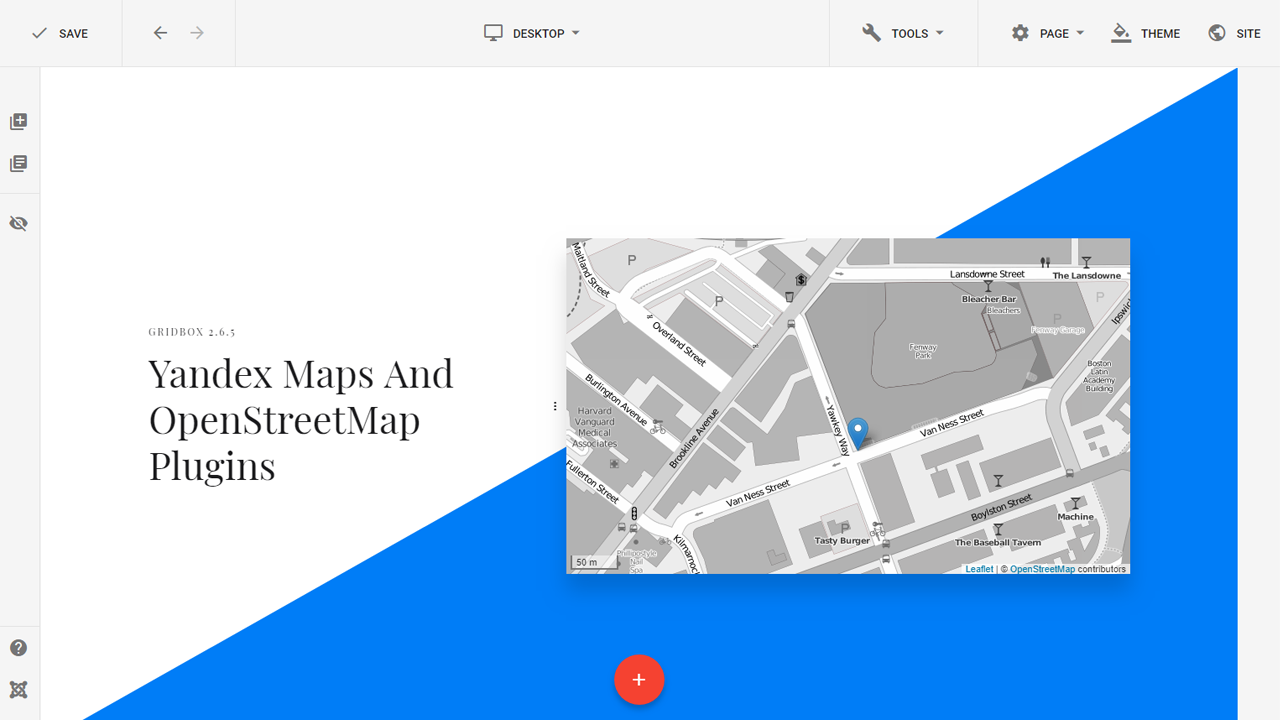
    Once the gates were open, naturally, there was an influx of navigational and other car experience-enhancing apps rushing in to compete with Google’s native navigational offerings. It was finally all healthy, fair competition, and Russia has joined the fray with one particular recent candidate: Yandex.Maps.

    Yandex is a Russian machine-learning navigational tech company, which seems to have created a perfect alternative to Google Maps, with its 10 years of experience in navigation and transportation services. Yandex.Maps offers it all to rival Google Maps, including voice prompts, alerts for upcoming speed limits and traffic cameras, and traffic congestion info updated in real-time.

    The new software even has the option to download directions into an offline mode, for when you run out of data or venture out on an off-road adventure in the bush somewhere.

    Yandex.Maps is currently only available in Russia, and requires a paid “Yandex Plus” subscription if drivers want to make use of the novel dashboard-navigation experience.

    The company does offer Russians a three-month free trial to test it out before buying, though. And for all we know, the $2.30 equivalent of the 169 Russian rubles that are charged as a monthly usage fee may just be worth it if it outperforms Google Maps in precise road mapping and route calculation.

    Google Maps isn’t always updated to reflect the opening up or blocking off of smaller streets, or acknowledge the existence of some legitimate off-road routes, for example, especially outside the USA—so it’s possible Yandex.Maps could be a truly worthy alternative.

    Even if it’s only a Russian breakthrough at the moment, it’s also a breakthrough in the sense that more developers are showing an interest in taking advantage of the free Android Auto app market and looking for ways to compete with Google in the car-optimized navigational software sphere.

  • Russia fines Apple $12 million for antitrust violation

    Russia fines Apple $12 million for antitrust violation

    Apple has just been fined $12M by Russian antitrust authorities, according to a report from The Moscow Times. The tech giant has been sued by Kaspersky, a large cybersecurity company, for unfair treatment and an antitrust violation—something that’s been getting Apple into hot water quite a bit lately, it seems.

    Apple was found to have abused its dominant position in the distribution of mobile applications on the iOS operating system through a series of actions that led to a competitive advantage for its own products, and at the same time worsening the distribution conditions for competing products.

    The information was originally released in a statement from Russia’s Federal Antimonopoly Service, or FAS.

    It turns out that back in 2018, Kaspersky was updating its Safe Kids parental control app, but was unjustly blocked from Apple. At the exact same time, however, Apple released its own competing feature called Screen Time as part of iOS 12.

    Now that Kaspersky has won the lawsuit, the Russian court is ordering the Cupertino giant to do more than shell out twelve million dollars.

    In addition, Apple will be forced to change their own terms and conditions that allow them to “reject third-party applications from the App Store for any reason, even if they meet all requirements.” The court has also ordered that Apple make sure that “in-house apps do not take precedence over third-party apps.”

    Apple is currently appealing the fine, arguing that its reason for blocking Safe Kids had nothing to do with competing services. Rather, the company said that Kapersky’s app was putting “users’ privacy and security at risk” using highly invasive technology.

  • Citigroup to exit consumer banking in Vietnam

    Citigroup to exit consumer banking in Vietnam

    America’s Citigroup will exit 13 international consumer banking markets, including Vietnam, to shift its focus to four wealth centers.

    The move is part of the bank’s strategic decision to direct investments and resources to businesses with the greatest scale and growth potential, it stated, adding its main markets will include Singapore, Hong Kong, the United Arab Emirates and London.

    Apart from Vietnam, 12 other markets to be affected are Australia, Bahrain, China, India, Indonesia, South Korea, Malaysia, the Philippines, Poland, Russia, Taiwan and Thailand.

    “While the other 13 markets have excellent businesses, we don’t have the scale we need to compete. We believe our capital, investment dollars and other resources are better deployed against higher returning opportunities in wealth management and our institutional businesses in Asia.”

    The bank has not specified when it would leave Vietnam.

    Citigroup in 1994 became the first U.S. financial institution licensed to open a branch in Hanoi. It opened its second branch in Ho Chi Minh City in 1998.

  • Honda To Pull The Plug On Car Sales In Russia In 2022

    Honda To Pull The Plug On Car Sales In Russia In 2022

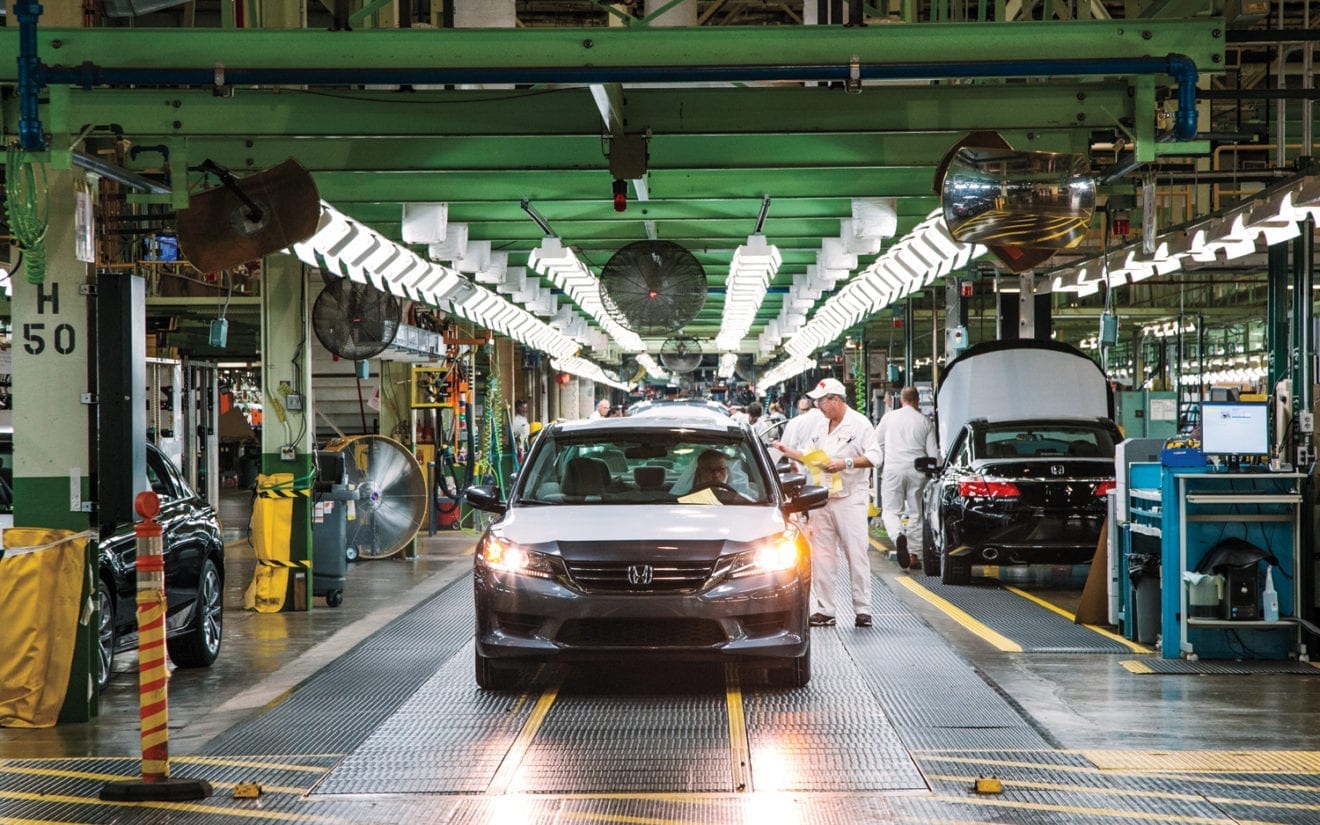
    Honda Motor Company has said that it won’t be supplying new cars to its authorized dealers in Russia in 2022 as the company is trying to restructure its operations. The Japanese automaker has confirmed that it would keep its presence in the Russian market with motorcycle and power equipment sales only. The news comes after a drastic drop of 50 percent in its sales operations last month in Russia.

    Even in India, Honda has shut down its Greater Noida plant and has shifted its entire production unit to the company’s other facility in Tapukara, Rajasthan. The carmaker has said that it has realigned its production operations “to maintain sustainability by leveraging production and supply chain efficiencies.” To that effect, from this month, the manufacturing operations for vehicles and components will happen at the Tapukara plant for all domestic sales and exports. Until last month, the Greater Noida plant produced models like the Honda City sedan, CR-V SUV, and the Civic sedan. While the transition will see the production of the City move entirely to the Tapukara unit, at present, the company has also stopped the production of its flagship models, the Civic sedan and CR-V SUV.

    As far as the Russian market is concerned, Honda does not have any manufacturing unit in Russia unlike its other Japanese counterparts like Toyota and Nissan. All Honda models are sold as CBUs in the Russian market and the carmaker sold just 79 units last month. Its sales from January to November were down by 15 percent at 1,383 units, while over 1.3 million new cars were sold in Russia during that period.

  • Russia seeks to replace Wikipedia as it accelerates ‘sovereign internet’ plans

    Russia seeks to replace Wikipedia as it accelerates ‘sovereign internet’ plans

    Russia is reportedly seeking to replace Wikipedia with a state-run online encyclopedia as it accelerates plans for a “sovereign internet”.

    According to a Reuters report, Russia plans to spend around $30 million setting up the Wikipedia replacement and creating a department to keep it stocked with manipulated verified content.

    Russian president Vladimir Putin is said to believe that Wikipedia contains misinformation. Given Putin’s background as a foreign intelligence officer in the KGB, and the alleged disinformation campaigns spread by Russia’s infamous “troll farms,” it’s likely he knows a thing or two about the subject.

    Being a community-driven resource, Wikipedia has certainly found itself hosting misinformation from the amusing to the dangerous. Of course, rights campaigners are concerned it’s just an excuse to control what information Russian citizens can access – especially given Russia already has a history on this issue.

    Back in 2015, Roscomnadzor – the branch of the Russian government which polices media and the internet – ordered ISPs to block Wikipedia. The offending article was about charas, a form of marijuana. Roscomnadzor claimed the page constitutes instructions on how to make the drug.

    That same year, Russia blocked the entirety of Reddit over a post about hallucinogenic mushrooms.

    Russia is once again clamping down on web access in the country and even intends to create a “sovereign internet” that can still function cut off from the outside world if needed.

    Russia was going to temporarily unplug from the global internet as part of an experiment to ensure that the nation can still function without it.

    Russia’s fear is that – due to organizations that maintain the international DNS system is based around the world, but none in Russia itself – the nation could be disconnected from the web in an extreme scenario.

    A draft law called the Digital Economy National Program would require Russian ISPs to ensure they’re able to operate if foreign powers isolate the country.

    The second experiment in Russia tasked ISPs with redirecting traffic to government routing points to filter and censor it similar to China’s so-called Great Firewall. It’s likely this approach that will be used by Russia to redirect Wikipedia traffic to the state-run alternative.

    While there’s been relative physical peace between Russia and other world powers for decades, cyberwarfare has been ongoing and increased in recent years amid high-profile attacks on critical infrastructure linked to Russian state hackers and the aforementioned disinformation campaigns.

    International coalitions such as NATO have threatened Russia over allegations of cyberattacks and political interference. NATO allies are drawing up cyber warfare principles for more robust future responses to attacks.

    NATO has even said a cyberattack may trigger Article 5 which stipulates an attack on one member is seen as an attack on all, and commits to a joint response. To date, it’s only been triggered once following the September 11th terrorist attacks in the US.

  • Alibaba signs deal for AliExpress Russia

    Alibaba signs deal for AliExpress Russia

    Alibaba Group has formed a US$2 billion joint venture AliExpress Russia to create a major e-commerce venture in the Russian-speaking market.

    Alibaba and the Russian government-backed RDIF sovereign wealth fund will each invest US$100 million in the venture which will absorb Alibaba’s existing AliExpress business. Russian mobile phone network Megafon will sell its 9.97 per cent interest in internet group Mail.ru to Alibaba in return for a 24.3 per cent stake in the new JV.

    In return, Mail.ru will roll its Pandao e-commerce business into AliExpress Russia and contribute $184 million in cash for a 15 per cent share.

    AliExpress Russia has been created to expand the three companies’ e-commerce offer in both Russia and neighbouring countries.

    Documents to create AliExpress Russia were signed last week. The company will be jointly run by Alibaba and Mail.ru, each of which will appoint a CEO.

    “This partnership will enable the AliExpress Russia JV to accelerate the development of the digital consumer economy of Russia and CIS countries in ways that no one party could accomplish alone,” said Daniel Zhang, CEO of Alibaba Group. “Together, we are uniquely positioned to offer consumers in Russia and neighbouring countries an innovative shopping experience by combining social platforms with commerce, as well as enabling regional brands and SMEs to sell their products locally and globally.”

    He said Alibaba’s mission is to make it easy to do business anywhere. “This JV is an important part of Alibaba’s international expansion and step toward our goal of supporting 10 million small businesses reach profitability and serving 2 billion consumers around the world.”

  • VinFast Preparing for Russian Sales

    VinFast Preparing for Russian Sales

    VinFast’s sedan and SUV Lux images were found in the database of the Russian Federal Service for Intellectual Property (Rospatent).

    “Clearly, the Vietnamese automobile brand with BMW’s platform is approaching really close to the Russian market,” the news site said, suggesting that VinFast’s plans to sell its products in Russia might have been some time in the making.

    According to a VinFast source, the company is in the process of completing necessary procedures to start selling cars in Russia. The source did not reveal a time frame for when it would happen.

    Right from the beginning, VinFast had aimed at making cars that meet European standards, so they could be exported, apart from being sold in the domestic market. Russia was one of the first foreign markets targeted.

    The sedan and SUV Lux are both equipped with turbocharged 2-liter 4-cylinder engines. The sedan has a 174 horsepower engine and a maximum torque of 300 Nm, while the SUV has a 228 horsepower engine with a maximum torque of 350 Nm.

    Currently, the Lux model is scheduled to reach Vietnamese customers in the third quarter of this year, following the Fadil car, which would be introduced to the domestic market in the second quarter.

    VinFast is shipping 155 of its cars to 14 countries across Asia, Europe, Africa and Australia to test them for safety and endurance against standards in those countries.

    VdinFast, the car manufacturing unit of Vietnam’s largest private conglomerate Vingroup, showed off its first two car models, a sedan and an SUV, at the Paris Motor Show in France last October just a year after the company’s incorporation, grabbing the attention of the local and international media.

  • JD.com Could Be Returning to Russia

    JD.com Could Be Returning to Russia

    JD.com, the second largest e-commerce player in China, could be returning to Russia soon according to a recent Kommersant report. JD previously entered the Russian market in 2015, but retreated a year later after struggling with cross-border logistics issues, merchant partnerships, and high marketing expenses.

    JD’s previous effort featured partnerships with payment providers Qiwi and Yandex’s Yandex Money, logistics provider SPSR-Express, and online retailer Ulmart. This time around, JD.com could partner with AlfaGroup’s X5 Retail Group, which owns a nationwide network of Pyaterochka discount stores, Perekrestok supermarkets, and Carousel hypermarkets.

    JD will let Russian customers purchase products online, and those goods will be delivered to Pyaterochka, Perekrestok, and Carousel stores for pickup. The partnership seems like a win-win deal for both companies — JD can piggyback its online operations off X5’s network of stores instead of launching new logistics services, and X5 adds more non-food products to its stores.

    The deal should also lower marketing costs for JD with co-marketing campaigns: Ads for JD’s products are appearing in Pyaterochka stores, and will likely appear in Perekrestok and Carousel stores in the near future. The partnership could also revive JD’s previous relationships with Yandex and Qiwi, which both hold partnerships with X5.

    Why does JD.com need the Russian market?

    JD and its bigger rival Alibaba have been looking for growth opportunities beyond the Chinese market. The two companies are already clashing across Southeast Asia, where JD’s marketplace faces stiff competition from Alibaba-backed Lazada.

    Both companies are also targeting Western markets. JD recently announced its plans to expand into Western Europe, and a new partnership with Alphabet’s Google will help it sell products to American shoppers. JD also lets Chinese shoppers buy overseas products from various countries through its cross-border e-commerce platform, JD Worldwide.

    Alibaba’s AliExpress platform, which lets Chinese sellers reach overseas buyers, is popular in Russia and Eastern Europe. 14% of European shoppers (including 69% of Russian shoppers) bought goods on AliExpress last year. That makes it the second biggest e-commerce platform in Europe after Amazon, which controlled a quarter of the market. Alibaba also recently launched a dedicated version of Tmall for Russian shoppers.

    Alibaba’s popularity in Russia is troubling for JD, which seemingly surrendered the market to its rival with its premature exit. It’s also bad news for JD’s top investor, Tencent, which also reaches some Russian users with WeChat, the top mobile messaging app in China. In China, JD relies heavily on its integration with WeChat — which has over a billion monthly active users — to display ads, sell products, and accumulate shopper data.

    The Russian market is trickier. Its mobile messaging market is dominated by apps like VK, WhatsApp, Skype, and Viber, which don’t have comparable relationships with JD.

    Russia has a relatively high internet penetration rate of 71%, and about half of Russians shop online. Yet e-commerce transactions could only account for 3% of the country’s retail market this year, which suggests that many shoppers still rely on brick-and-mortar retailers.

    Those numbers suggest that the Russian market is still ripe for a major e-commerce disruption. Alibaba will be a tough competitor for JD, but partnering with X5 Retail is a smart move since Russian shoppers still rely on brick-and-mortar stores. If JD can attract more partnerships, its second attempt could prove more fruitful than its first.

  • Japan Tobacco buys Russia’s fourth-largest cigarette maker

    Japan Tobacco buys Russia’s fourth-largest cigarette maker

    Japan Tobacco has agreed to buy Donskoy Tabak, Russia’s fourth-largest cigarette maker, for $1.6 billion in a bid to reinforce its leading position in the country.

    One of the world’s biggest tobacco companies, whose global brands include Winston and Camel, Japan Tobacco (JT) has set its sights on international markets to counter slowing sales at home and intensifying competition in the e-cigarette market.

    JT on Friday said the deal would boost its Russian market share to about 40% from the current 33%, which was already the largest in the country.

    The acquisition of Donskoy Tabak, whose brands include Donskoy Tabak, Kiss and Play, will be completed later this year, it said.

    “This acquisition demonstrates our commitment to reinforce our number one position in Russia,” JT executive vice president Mutsuo Iwai said in a statement.

    The deal will also include JT’s purchase of Greek cigarette maker SEKAP, it said, adding that it has no plan to revise its earnings forecast following the announcement.

    Last year JT spent some $2 billion on acquiring major tobacco manufacturers in Asia, including Mighty of the Philippines.