Tag: samsung electronics

  • Samsung Electronics shares jump on sale

    Samsung Electronics shares jump on sale

    Samsung Electronics shares shot up 2.42 percent on Thursday over the previous day to close at 50,700 won ($47), largely due to two of the chaebol’s financial affiliates selling their stakes in the tech giant on Wednesday.

    The market sees the sale as a step toward changing Samsung’s complicated governance structure. Samsung Group has been under pressure to reform its governance structure, which relies on webs of cross-shareholding ties among its affiliates.

    Financial Services Commission Chairman Choi Jong-ku repeatedly stressed that it would be best if Samsung Life Insurance, the de facto financial holding company of Samsung Group, sold off its stake in Samsung Electronics.

    Fair Trade Commission Chairman Kim Sang-jo, in a meeting with executives of the top 10 conglomerates in Seoul on May 10, also warned that Samsung could face big consequences if it does not change its governance structure.

    “The worst decision [Samsung Vice Chairman Lee Jae-yong] can make is allowing time to go by without making any decision,” Kim said.

    In response, Samsung Life Insurance on Wednesday sold 23 million Samsung Electronics shares valued around 1.18 trillion won. Samsung Fire & Marine Insurance sold 4 million Samsung Electronics shares valued around 210 billion won on the same day.

    J.P. Morgan and Goldman Sachs were in charge of selling the shares. Although neither company disclosed who purchased the shares, it is believed that foreign institutional investors were the buyers.

    The insurance companies sold their shares in Samsung Electronics because of a regulation that prevents financial affiliates of conglomerates from owning more than 10 percent of a nonfinancial company.

    Samsung Life Insurance had an 8.27 percent stake in Samsung Electronics and Samsung Fire & Marine Insurance owns 1.45 percent stake. The combined stakes of the insurance companies was below the 10 percent threshold, at 9.72 percent.

    The sales reduced Samsung Life’s stake in the electronics company to 7.92 percent while the Samsung Fire & Marine Insurance’s stake dropped to 1.38 percent.

    Samsung Electronics has been retiring its own shares since last year. The company has canceled almost 18 million common shares and 3.23 million preferred shares, which is about half of the shares the company issued. Samsung Electronics plans to cancel an additional 8.99 million shares that it owns, worth around 40 trillion won, by the end of the year. The company announced the cancellation at the beginning of the year as a move to increase shareholder value.

    If the stock cancellations go as planned, the combined stakes that the two insurers have in Samsung Electronics would have been 10.45 percent, which would have violated the maximum 10-percent regulation.

    It’s estimated that the selloff on Wednesday will bring down the stake the insurers have to 9.99 percent when Samsung Electronics’ share cancellations go through.

    “Because of the stakes that the insurers have in Samsung Electronics, it is inevitable that they will have to sell the shares,” said Lee Byung-gun, a DB Financial Investment analyst. The selloff on Wednesday reduces the risk of Samsung running afoul of the law.

  • Seoul shares close slightly lower on geopolitical concerns

    Seoul shares close slightly lower on geopolitical concerns

    South Korean stocks closed 0.13 percent lower Tuesday on concerns over North Korea’s nuclear provocations, but the decline slowed compared to previous sessions as investors engaged in bargain hunting, analysts said. The Korean won sharply fell against the US dollar.

    The benchmark Korea Composite Stock Price Index dropped 3.03 points, or 0.13 percent, to 2,326.62. Trade volume was moderate at 317 million shares worth 4.81 trillion won ($4.25 billion), with losers outnumbering gainers at 569 to 239.

    On Monday, the main bourse sank more than 1 percent as retail investors dumped local shares after North Korea claimed a day earlier that it successfully tested a hydrogen bomb that can be mounted on an intercontinental ballistic missile.

    While the main bourse continued to lose ground on Tuesday, analysts said the downward pressure was limited as institutions scooped up underappreciated shares.

    Based on past examples, foreigners and institutions tend to consider the North Korean risk an opportunity to purchase bargain shares,” said Byun Joon-ho, a researcher from Hyundai Motor Investment & Securities Co.

    Institutions scooped up a net 242 billion won, while individual investors offloaded a net 65.5 billion won. Foreigners sold more shares than they bought at 213 billion won.

    Tech shares closed bullish, with Samsung Electronics moving up 1.56 percent to 2,338,000 won. Leading chipmaker SK hynix shot up 2.64 percent to 69,900 won. LG Electronics also jumped a whopping 4.59 percent to 86,500 won.

    Carmakers closed mixed, with Hyundai Motor backtracking 1.43 percent to 138,000 won while its auto parts arm Hyundai Mobis closed unchanged at 238,500 won. Kia Motors, the country’s second largest automaker shed 2.29 percent to 34,100 won.

    No. 1 steelmaker POSCO shed 0.72 percent to 342,500 won, while Korea Zinc climbed 1.37 percent to 517,000 won. Hyundai Steel moved down 1.55 percent to 57,000 won.

    The local currency closed at 1,131.10 won against the US dollar, up 1.90 won from the previous session’s close.

    Bond prices, which move inversely to yields, ended higher. The yield on three-year Treasurys shed 0.2 basis point at 1.780 percent and the return on the benchmark five-year government bonds also lost 0.5 basis point to 1.996 percent.

  • South Korea worries about growing economic risks, amid impeachment push for President Park

    South Korea worries about growing economic risks, amid impeachment push for President Park

    South Korea’ finance ministry said on Thursday it is concerned about further risks to the economy from “domestic issues”, as parliament prepares to hold an impeachment vote on South Korean President Park Geun-hye.

    The ministry did not explicitly point to the deepening political scandal surrounding Park in its monthly assessment of the economy, but said it was concerned domestic issues may result in weaker consumption and investment at a time when many global uncertainties persist.

    That would put more pressure on an economy that is grappling with record household debt, dozens of zombie companies under restructuring and weak exports, which have been further dampened by Samsung Electronics Co’s decision to scrap its fire-prone flagship smartphone Galaxy Note 7 and a strike at Hyundai Motor Co.

    South Korea is bracing for another possible hit to trade if President-elect Donald Trump follows through on his protectionism rhetoric once he takes office in January, while its financial markets – like other emerging economies – have been roiled by expectations of more U.S. interest rate hikes starting as soon as next week.

    South Korea’s manufacturing activity shrank for the fourth straight month in November and export orders also fell, albeit at a slower pace than in October, a private survey showed last week.

    “We’re seeing a pause in investment and policymaking in general due to political uncertainties,” said Jung Kyu-chul, an economist at state-run Korea Development Institute.

    While the think tank forecasts the economy will grow 2.4 percent next year, down from 2.6 percent estimated for 2016, “it could easily be cut to just above 2 percent in 2017 if this scandal drags on and takes steam out of everything from consumption to investment to job market,” he said.

    The ministry report came a day after Finance Minister Yoo Il-ho cited the uncertain outlook for leadership in Asia’s fourth-largest economy as a risk to growth.

    Consumers already have turned the glummest since the global financial crisis.

    A Bank of Korea survey showed consumer sentiment last month fell to its lowest since April 2009, on the same week that Park’s approval rating sank to an all-time low of 4 percent.

    Park’s embattled presidency faces a critical juncture, with parliament expected to hold an impeachment vote on Friday.

    But even if the motion is passed, it must be upheld by the Constitutional Court, a process that could mean the political crisis will drag on for months.

    Park is accused of colluding with a friend and a former aide to pressure big business owners to pay into two foundations set up to back policy initiatives. She has denied wrongdoing but apologized for carelessness in her ties with the friend, Choi Soon-sil.

    Kwon Young-sun, a Hong Kong-based economist with Nomura Securities, sees the Bank of Korea cutting interest rates only once in 2017 if an early election is held.

    “We now expect only one 25 basis point policy rate cut to 1 percent in the fourth quarter of 2017, after a likely early presidential election in the first half of 2017,” Kwon said in a report released on Thursday.

    Previously, he had expected the bank to make two cuts to 0.75 percent, but said the country isn’t likely to see “any significant macro policy changes in the first half of 2017 until after the election,” he said.

    The ministry said private consumption has rebounded in recent months but largely due to government-led retail promotions.

  • Internet Retailing Expo Indonesia Gears Up to Connect Indonesia’s Stakeholders

    Internet Retailing Expo Indonesia Gears Up to Connect Indonesia’s Stakeholders

    The Internet Retailing Expo (IRX) Indonesia, is gearing up to return with a loud bang. The 2ndedition of IRX Indonesia, to be held from 18 to 19 January next year at the Pullman Jakarta Central Park, will once again become the meeting place for marketplaces, multi-channel retailers and online retailers to meet their key suppliers and learn through peer knowledge sharing and best practice implementation case studies.

    IRX Indonesia was launched due to the huge potential of the internet retailing market, as it has started to grow significantly within Indonesia in the recent years.

    In 2017, IRX Indonesia is expected to attract 2000 visitors to an even more diverse exhibition with plenty of value-packed on-floor sessions and 75 leading solution providers in the areas of digital infrastructure and innovation, digital payments, last mile fulfilment and many others. More than 80 multichannel and ecommerce retailers will be sharing knowledge and experience during the six conferences sessions, workshops and clinics at IRX Indonesia 2017. All these under the themes of Connected Store of the Future, Payments & Security, Insight & Experience, Digital Sales & Marketing, Digital Merchandising, Multichannel Operations & Fulfilment.

    “IRX is the leading multichannel event in the retail calendar and takes place every March at the NEC Birmingham, United Kingdom. The UK is the most sophisticated internet retailing market globally. With over 200 exhibitors and 5000 visitors to the show, IRX welcomes retailers and technology providers from across the multichannel landscape,” said Richard Ireland, Managing Director, Asia, Clarion Events Pte Ltd. “Following its great success in 2016, IRX will be running its second show in Jakarta, Indonesia in January 2017 and plans to bring some of the expertise gained from the UK to Indonesia. Our event plans to help retailers looking to establish, along their journey to grow their online retail strategies.”

    Visitors to the event can expect industry tracks featuring a distinguished speaker panel of local and international industry who’s who, including, among others, Roy N. Mandey, Chairman, APRINDO; Ravi Kumar, COO, PT. MAP; Catherine Sutjahyo, CEO, Alfacart.com; Adrian Suherman, CEO, Lippo Digital Group; Aruni Therese Abeyesundere, Chief Marketing Officer, Pizza Hut;; Simon Torring, Regional Head of Merchandising (Digital), Sephora Digital SEA, Ankit Porwal, Business Director, L’Oreal Paris Indonesia; Ashley Amanna, Head of ECommerce, L’Oreal Indonesia; Pankaj Khushani, Head of Media Technology Solutions – SEA, India & Korea, Google; Rizkie Maulana Putra, Head of ECommerce Development, Samsung Electronics Indonesia; Tabah Yudhananto, Marketing Technologist, Digital Marketing, CRM Senior Manager, Blibli.com; and Cam Walker, CEO Indonesia, iflix.

    The conference will feature 6 streams alongside e-Commerce clinics and workshops on the exhibition floor. Special highlights for the event include SME Forum: “Building capabilities in a digital age”; CMO Forum: “The way marketers engage customers”; CEO Panel Discussion: “Omni Channel retailing: Digital Transformation, Customer First”; E-Commerce University; E-Commerce Clinics; Start-up & Innovation Zone: “Enabling Business value with Digital Transformation”; Indonesia – China Cross-Border Ecommerce Pavilion; and 3D VR Shopping Experience.

    IRX Indonesia will feature 50+ exhibitors including 8Commerce, Asian Delker Logistics, ATEX, Cashlez, Detrack, E2Pay, Egentic, ICUBE, Innovecto, Midtrans, MooCommerce, PaketID, Priceza, PT Kam and Kam, PT Kioson Komersial Indonesia, and SAP, and sponsors including BCA, Accenture, Telkom Indonesia, PT Pos Logistics Indonesia, Akamai, Anchanto, Go-Jek, Magento, Manhattan Associates, At Internet, aCommerce, Alto, FedEx, Gift Card Indonesia, Intramega Global, netCORE, Sprooki, and JNE.

  • Samsung offices in South Korea raided over corruption scandal

    Samsung offices in South Korea raided over corruption scandal

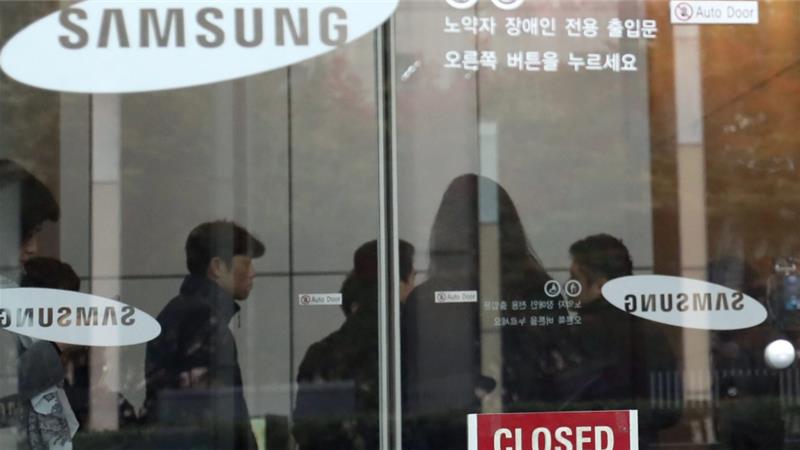
    South Korean prosecutors investigating a confidante of President Park Geun-hye for corruption have searched the offices of Samsung, according to local media.

    Samsung, the world’s largest manufacturer of smartphones, televisions and memory chips, is suspected of having secretly funded the sporting activities of the daughter of Choi Soon-sil, Park’s friend, it was reported on Tuesday.

    Samsung, which is already reeling from the disaster surrounding its Galaxy Note 7 smartphone, confirmed that its offices had been raided but gave no further details.

    The company is suspected of having transferred $3.1m to a company owned by Choi in Germany.

    The money was allegedly used to pay for daughter’s training as a dressage rider.

    Growing scandal

    Tuesday’s raid also came just as Park agreed to cede some control of state affairs as the result of the damaging corruption scandal that has engulfed her administration.

    In what is being considered a major political concession, Park told the speaker of the National Assembly that she would accept a prime minister chosen by the opposition-controlled legislature “and let him control the cabinet”.

    The prime minister is normally a largely symbolic post in South Korea, where power is firmly concentrated in the executive.

    It was a double surrender by Park – effectively jettisoning her own nominee for prime minister and relinquishing some of her extensive powers to whoever parliament chooses.

    It was reported from Seoul, said that Park’s concession “doesn’t go perhaps as far as some opposition members were demanding – that all affairs should be handled by the prime minister and that the president should simply step back altogether – but it does allow some ground for work to start on some agreement”.

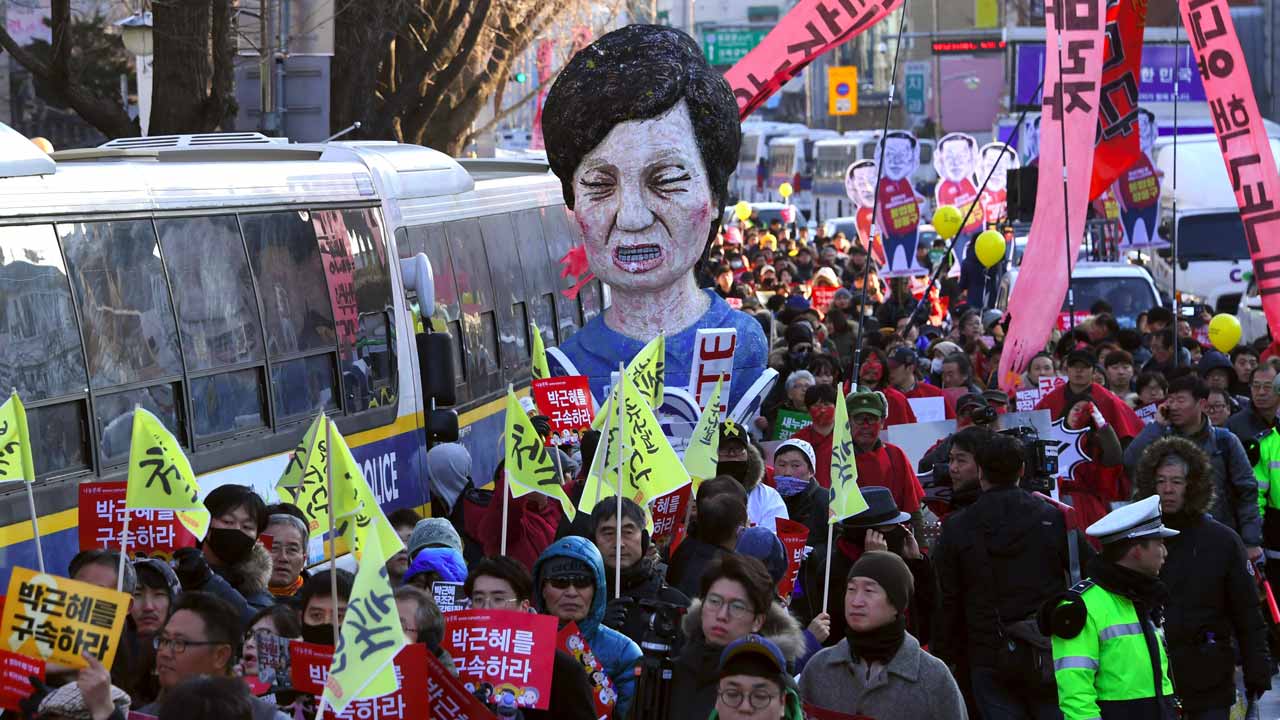
    Park is facing a growing scandal over Choi’s alleged influence on state affairs despite her having no official position in the government, with tens of thousands of protesters in Seoul demanding Park’s resignation over the weekend.

    Choi has been arrested on charges of fraud and abuse of power.

    The charges relate to allegations that Choi used her personal relationship with Park to coerce donations from large companies like Samsung to non-profit foundations she set up and used for personal gain.

    She is also accused of interfering with government affairs, including the nomination of senior officials.

    Unhealthy influence

    Reports of the unhealthy influence Choi wielded over Park have sent the president’s approval ratings plunging to record lows and led to mass street protests calling on her to resign.

    In a bid to restore public trust, Park reshuffled her advisers and senior cabinet members, and nominated a liberal candidate for prime minister from outside her conservative Saenuri Party.

    But opposition parties had pledged to block her nominee on the grounds that they were not properly consulted.

    During their meeting, Chung Sye-kyun, the parliamentary speaker, told Park that her biggest priority should be to alleviate widespread public concern and anxiety.

  • Samsung to compensate suppliers hit by Note 7 crisis

    Samsung to compensate suppliers hit by Note 7 crisis

    Samsung Electronics said Tuesday it would compensate suppliers hit by the decision to scrap its Galaxy Note 7 smartphones because of safety fears with exploding batteries.

    The South Korean electronics giant announced a week ago that it was discontinuing the Note 7 after a chaotic recall that saw replacement phones also catching fire.

    Samsung said the affair would cost the company an estimated $5.3 billion in lost profits over the three quarters beginning July.

    The crisis also hit its numerous suppliers — who produce everything from camera modules to casings — with their losses estimated at up to $1.7 billion.

    “We will offer full compensation for remaining inventories of Note 7 components among our suppliers,” the firm said in a statement.

    “We feel sorry for causing concern among our suppliers due to discontinuation of the Galaxy Note 7…we will complete the compensation quickly to minimise difficulty faced by them,” it said.

    The statement provided no specific figures, but said the payout would be calculated according to the different suppliers’ inventory volumes.

    Given the Samsung Group’s stature within Asia’s fourth-largest economy — it accounts for around 17 percent of GDP — the Note 7 debacle has had a national impact.

    The central Bank of Korea said it had taken the crisis into consideration when it trimmed South Korea’s 2017 growth outlook to 2.8 percent last week from its previous 2.9 percent forecast.

  • Alibaba Group now Asia’s richest company

    Alibaba Group now Asia’s richest company

    Alibaba Group Holding has surpassed Tencent Holdings and China Mobile in market capitalisation to become Asia’s richest company.

    Alibaba’s market value rose to US$261 billion in New York last week, overtaking Tencent’s US$255.98 billion capitalisation in Hong Kong on Thursday during a trading week shortened by a public holiday.

    China Mobile was the region’s third-largest company, valued at $249.38 billion.

    Alibaba’s shares have risen 28.8 per cent this year to $104.64, making the owner of Taobao.com and Tmall eCommerce platforms the world’s 10th-largest company by value, according to Bloomberg data. The world’s five most valuable companies now gain their revenue from technology or the internet – Apple, Alphabet, Microsoft Corp, Facebook and Amazon.com.

    In Asia, technology and internet-related businesses have displaced oil refineries, manufacturers and banks in the top three spots.

    Samsung Electronics of South Korea is the other technology company among Asia’s 10 most-valuable corporations, valued at $191.76 billion.

    As well as eCommerce, Alibaba has businesses in internet finance, cloud computing, film investment and logistics. The Hangzhou-based company’s second-quarter revenue rose 59 per cent, the strongest since its 2014 initial public offering in New York.

  • South Korea Market May Remain Stuck In Neutral

    South Korea Market May Remain Stuck In Neutral

    The South Korea stock market gave up just a pair of points on Tuesday – but that was enough to snap the four-day winning streak in which it had advanced more than 25 points or 1.2 percent. The KOSPI settled just shy of the 1,970-point plateau, and the market is looking at another narrow trading range on Wednesday.

    The global forecast for the Asian markets remains roughly flat with a touch of weakness ahead of the Federal Reserve interest rate decision later today. The European markets were down and the U.S. bourses were mixed but little changed – and the Asian markets figure to split the difference.

    The KOSPI finished slightly lower on Tuesday as losses from the technology stocks were mitigated by support from the industrials.

    For the day, the index slipped 2.30 points or 0.12 percent to finish at 1,969.96 after trading between 1,966.44 and 1,979.46 on volume of 3.8 trillion won.

    Among the actives, Hyundai Development spiked 4.77 percent, while POSCO added 0.48 percent, Samsung Electronics shed 0.16 percent, Hyundai Motor fell 1.01 percent and AmorePacific spiked 2.45 percent.

    The lead from Wall Street is slightly negative as stocks were mostly lower Tuesday as falling crude oil prices remained a key driver of the markets – skidding 2.3 percent.

    The Dow added 22.40 points or 0.13 percent to 17,251.53, while the NASDAQ slipped 21.61 points or 0.45 percent to 4,728.67 and the S&P 500 eased 3.71 points or 0.18 percent to 2,015.93.

    The listless trading came as traders looked ahead to today’s monetary policy decision from the Federal Reserve. The Fed is widely expected to leave interest rates unchanged, but traders will pay close attention to the wording of the accompanying statement.

    Traders reacted to several key economic reports, including a Commerce Department report showing a modest drop in retail sales in February. A separate report from the Labor Department showed a modest decline in producer prices in February.


  • E-commerce will boost smaller South Korean brands

    E-commerce will boost smaller South Korean brands

    As growth indicators such as commodities and oil test their lowest price levels for more than 10 years, the fear of deflation that gripped Japan for many decades is quickly becoming a global phenomenon. Even in the U.S., where economic growth is relatively strong, there is a noticeable lack of wage inflation in the face of strong employment reports over the past 12 months.

    While we can blame part of this problem on the aftermath of the global financial crisis of 2008, I place at least some of the blame on the rapid proliferation of Internet technology. A clear example is the loss of traditional retail jobs to ballooning online sales.

    South Korea is a good leading indicator on this issue because of its heavy Internet penetration and dense population, making it a good market sample for other economies to track. South Korea’s retail industry is also an interesting case of being both a victim and beneficiary of the creative destruction of traditional retail channels caused by the onset of e-commerce.

    South Korean retail businesses are dominated by large corporations, often part of one of the country’s huge conglomerates known as chaebols. The scale these corporations enjoy at the group level gives them a huge cost advantage over small to medium sized enterprises, which need to build from the ground up. Right now, e-commerce is killing retail businesses through intense price competition that is driving down margins.

    In South Korea, traditional retailers are hurt not just by domestic online sales but also overseas Internet purchases. In 2014, the value of purchases from overseas websites delivered to South Korean homes reached more than $1.5 billion, from $274 million five years earlier. This figure slipped slightly in 2015 because of government restrictions on purchases, but will continue to rise in the coming years at the expense of traditional retailers and their workers.

    For decades, chaebols operating in domestic retail and consumption industries enjoyed outsized margins due to protectionism against imported goods. In the last decade, however, the South Korean government has forged trade agreements with 52 nations far and wide, including one with China just last year.

    The combination of e-commerce and trade deals has driven the rapid rise of overseas online purchases, especially from the U.S., where a much broader selection of products is available, often at huge discounts to local prices. South Korean shoppers have become so successful at arbitraging this pricing gap that the South Korean government has placed an unofficial limit on cross-border online transactions that qualify for exemption from customs duties.

    Viable competitor

    Another driver of online imports is cheap and efficient delivery, made possible by a growing logistics industry. Strong growth in e-commerce has allowed for rising efficiency in deliveries, which now makes it a viable competitor to offline retailers.

    Overseas online purchases hurt all South Korean retail and consumer brands, but they hurt the large corporations most. For two decades, the chaebols have enjoyed government support through import protection and distribution networks built over many decades of lobbying and cooperating with myriad regulatory hurdles.

    South Korean SMEs never benefited from this because they were usually niche players in crowded markets. As a result, the flood of foreign brands coming into South Korea through online purchases threatens the profitability of large corporations more than the SMEs. A good example is Samsung Electronics’ 60 inch LED TVs, which South Korean shoppers have been buying from U.S. e-commerce shopping sites. Even after delivery and customs duties, prices are up to 20% cheaper than in South Korea.

    But these developments are not all bad news for South Korean retailers. The advent of technology will also allow South Korean SMEs to penetrate a much bigger market: China.

    Historically, when South Korean companies wanted to expand overseas, they would spend years investing in distribution channels and learning how to deal with customs and local regulations. As a result, expansion outside South Korea was a high-risk strategy that yielded patchy results for smaller companies. But the rapid development of e-commerce in China is making the expensive and time-intensive task of establishing distribution channels as quick as the click of a mouse. Already we are seeing companies that have rocketing China revenues, driven by online sales that would previously have taken years of investment and experience to achieve.

    The speed at which China’s online giants are making e-commerce accessible to outsiders will help companies from South Korea that have a good following at home but lack the scale to expand overseas. As South Korea continues to attract millions of mainland tourists annually, recognition of domestic-oriented brands will spread through China and create follow up demand.

    Right now, investors seeking to benefit from Chinese interest in South Korea are focusing on duty free stores. But the next phase of investor attention will be consumer brands that attract attention from Chinese customers seeking to buy outside duty-free channels. E-commerce and information distribution via the Internet will accelerate that process.

    As China tries to promote domestic consumption to compensate for the declining economic growth coming from falling investments, the tax incentives that duty free stores attract will have to decline. That will put brand owners in pole position in the China market rather than traditional retailers such as department stores, hypermarkets and duty free channels.

    Peter S. Kim 

  • Question mark hangs over South Korea’s discount spree

    Question mark hangs over South Korea’s discount spree

    People love bargain deals. Clearance sales with 80 percent or more off can even lure customers in to buy things they don’t need.

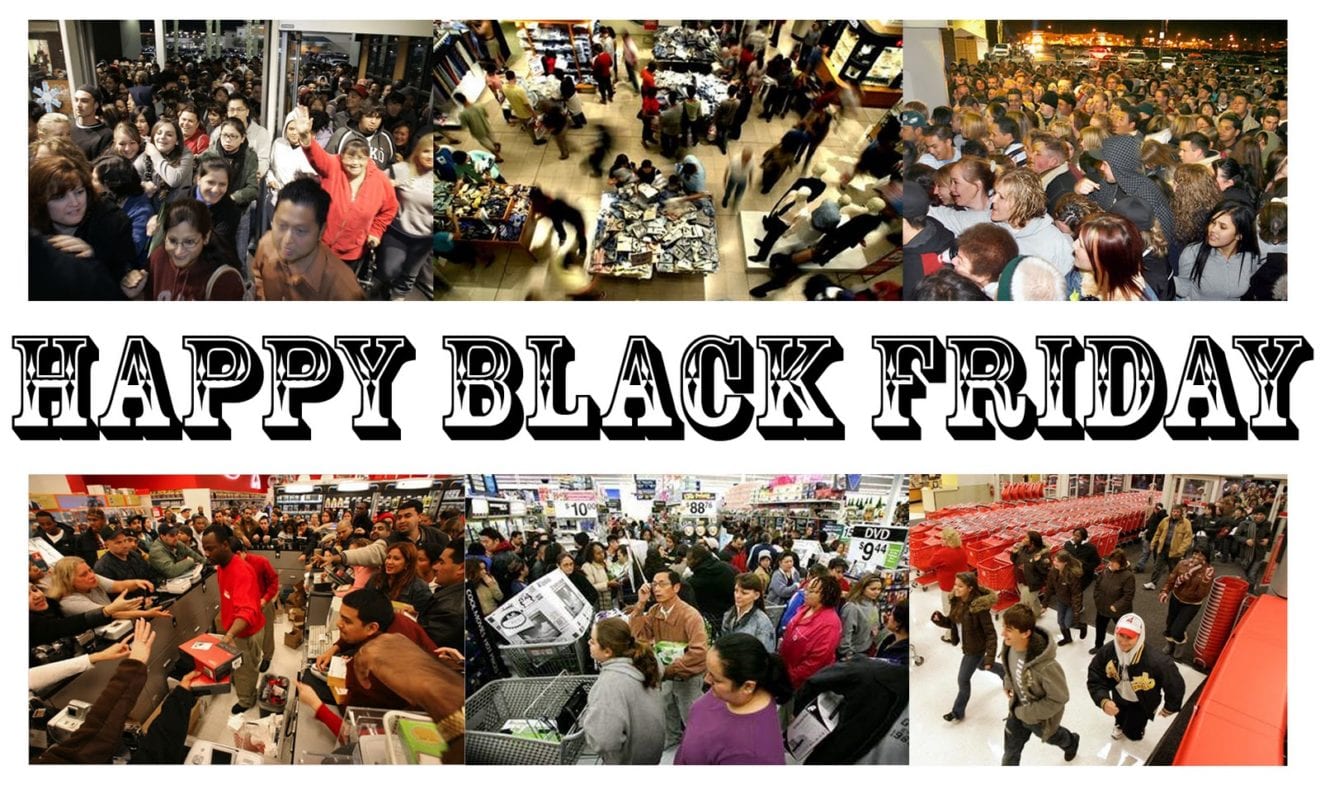
    That’s why retailers offer “door buster” deals when they need to handle rising stockpiles or attract customers during holiday shopping seasons, such as “Black Friday”, the biggest shopping day of the year in the United States.

    On top of seasonal sales and occasional promotions, major South Korean retailers have been holding a series of big discount events since summer to create an intense, promotion-heavy atmosphere through the Christmas season and beyond.

    The discount binge has indeed given a fillip to consumer spending here, but market watchers question its long-term effect as a slowdown in Asia’s fourth-largest economy has led to lower incomes for many people, prompting them to tighten their purse strings.

    Most recently, “K-Sale Day” kicked off last week to run for 26 days nationwide, led by major department stores and outlets that hope to grab shoppers’ attention ahead of the original Black Friday.

    It came just a month after “Korea’s Black Friday”, a nationwide shopping campaign initiated by the government during the first two weeks of October to jack up the stagnant domestic consumption.

    The government-led event even overlapped with “Korea Grand Sale”, during which retailers knocked down prices from early September to mid-October to woo back both domestic consumers and Chinese travelers during the long-haul national holiday.

    One of the main reasons for the deluge of sales is the summer slump following the outbreak of Middle East Respiratory Syndrome (MERS) in late May, which poured cold water on domestic spending and dented tourist numbers.

    More fundamentally, however, the seemingly never-ending sale is seen as an early sign that South Korea is heading into a recession.

    “Although the domestic economy has long grappled with sluggish consumption, the government is ever more concerned about weak spending after exports showed signs of slowing,” Ko Ga-young, a researcher at LG Economic Research Institute, said.

    “Exporters in the manufacturing sector had propelled the growth until the 2008 global financial crisis, but their prospects remain bleak due to slowdown in the Chinese economy and tougher global competition in the low-end manufacturing sector.”

    Although policy makers had expected that low oil prices and record-low interest rates would boost the economy this year, the fallout from the MERS outbreak prompted the government to lower its 2015 growth forecast from 3.8 percent to 3.1 percent in June.

    The discount events, held both online and offline, did not create much buzz like Chinese e-commerce giant Alibaba’s “Singles Day”, which recorded a blockbuster $14.3 billion in sales on Nov. 11, but the steep discounts did serve as the spending trigger for pent-up demand in a short period of time.

    According to the data compiled by the industry ministry, the 22 retailers that joined the Black Friday Korea campaign saw their sales rise 20.7 percent on-year to 719.4 billion won (US$634.9 million) during the two-week period.

    While the government touted its “successful effort” in reviving the consumer sentiment, the market remained skeptical over the growth from last year’s low base during the extended holiday season.

    “Large department stores and discount chains face an unfavorable business environment because massive sales events and permanent discount policy produced a limited effect despite last year’s low base,” said Nam Sung-hyun, a researcher at Kiwoom Securities.

    Unlike a one-off factor like the viral disease, market watchers worry that the tight labor market and rising household debt could continue to discourage people from spending on concerns over their unstable future.

    The youth jobless rate reached the highest level in 15 years at 10.1 percent in June with more college graduates landing at temporary positions, while the average consumption propensity dipped to a record low 71.5 percent in the third quarter, according to Statistics Korea.

    “The consumption propensity is expected to further decline because households are managing their spending schedule in line with the bleak long-term growth prospect and extended life span,” Ko said.

    Brick-and-mortar shops face an even dimmer outlook as more consumers are hunting for bargains from online marketplaces abroad.

    Traditional retailers not only have to compete with each other but also counter challenges from international online marketplaces stealing their customers with easier delivery and transaction procedures.

    “As more consumers learn they can easily buy products at a much cheaper price via online vendors, offline shops are more frequently conducting discount events to retain their customers,” said Jun Mi-young, a professor at Seoul National University and co-author of Trend Korea 2016.

    “The experience of buying foreign brands at discounted prices has created a healthy dose of cynicism about department stores’ pricing policy.”

    According to U.S. No. 1 retailer Walmart’s Black Friday advertisement, South Korean tech giant Samsung Electronics’ 55-inch HDTV was discounted to $498, less than half prices for similar models sold at Korean department stores.

    Some deals even raise questions over whether retailers set a higher price from the beginning to look like they are giving discounts.

    Lotte Department Store’s K-Sale Day promotional leaflet shows that the price of German kitchenware maker Henkel’s five-star knife block set was reduced from 550,000 won to 229,000 won.

    Sounds like a good deal. But you can buy the same product below 200,000 won at several online shopping malls on any given day. The desperate efforts to grab customers with lower prices, however, come at a price.

    As sales start earlier and last longer, they become less important and easier for consumers to ignore. When every day is special, none is.

    “I used to wait for the discount season to buy off-season clothes or other things at cheaper prices,” Lee Su-jin, a 35-year-old office worker in Seoul, said. “These days, I use mobile applications to buy refurbished products or find good deals at overseas websites.” While the discount pricing strategy is useful in driving traffic and sales for a short term, marketing professionals worry repeated sales could negatively affect the retail industry in the long run.

    To survive in the borderless digital commerce world, they advise brick-and-mortar shops to come up with differentiated services to increase customer loyalty.

    “As the rise of digital shopping has become an inevitable trend in the retail industry, offline sales channels should seek ways to provide better in-store experiences and quality service,” Jun said. “Squeezing margins is not a sustainable business model.”

    Experts emphasize the government’s role in setting a long-term policy to manage the record-high household debt and steer the economy clear of such economic uncertainties as China’s slowdown and market jitters over a U.S. rate hike.

    “The government should control the pace of the household debt growth so it does not rise faster than the income growth, which could further contract spending,” Ko said. “Structural reforms are also needed to foster new value-added service sector for healthier growth.”

     

  • Apple’s India test: how to gain volume and meet aspiration

    Apple’s India test: how to gain volume and meet aspiration

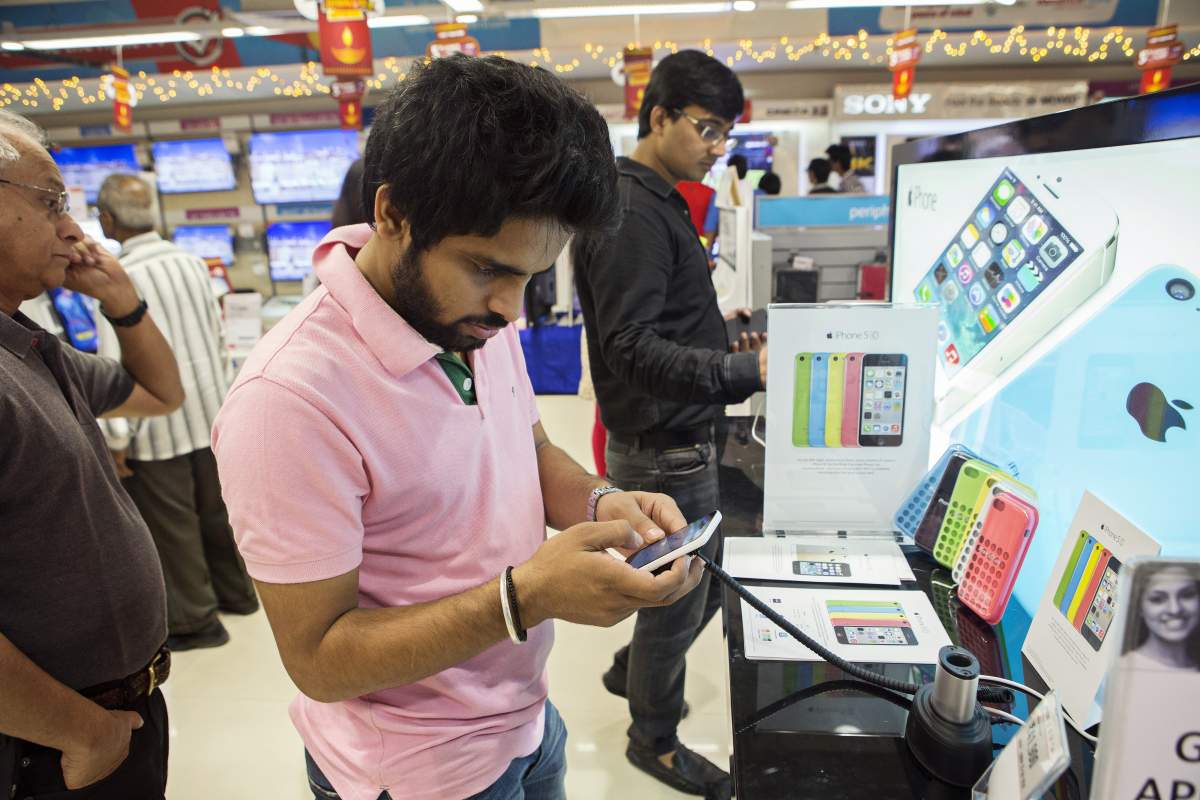
    With only a tiny share of the world’s fastest-growing major smartphone market, Apple Inc is stepping up its push into India, with a first targeted TV advertising campaign, expanded retail network and promotional financing schemes.

    For years, India has been a low priority for Apple as spending power is weaker than in China, where the company’s iPhones swiftly became must-have devices after their 2007 launch.

    But Apple is now looking to build on a 93 percent increase in its iPhone sales in India in April-June, which for the first time outpaced growth in China, of 87 percent – albeit from a low base. Apple has just a 2 percent share of India’s smartphone market, while South Korean rival Samsung Electronics accounts for around one third of volume sales with its range of Android phones.

    The India push coincides with Apple missing elevated expectations when it reported earnings earlier this week, prompting some investors to question how long double-digit growth can continue.

    “Apple is consciously expanding its distribution in India and pushing its products aggressively. The marketing spend too is a part of that,” said Jaideep Mehta, managing director for India and South Asia at tech research firm IDC.

    Executives at several electronics retail chains and Apple distributors said the Cupertino-based firm was chasing shelf space to make its gadgets more visible, and has more than doubled the number of distributors to five.

    Apple has also brought in a new senior executive to take charge solely of the Indian market, industry sources said, and has placed advertisements for a policy adviser to help it work with New Delhi’s bureaucracy.

    The company declined to comment on its India strategy.

    “Apple’s single-minded focus for India is on volume,” said a senior executive at an electronics chain store, who declined to be named. “They have increased distributors and want to reach out to smaller cities.”

    BALANCING VOLUME, ASPIRATION

    Analysts say much of the high growth in iPhone sales in India has come from earlier models such as the 4S, 5S and 5C, which are sold more cheaply.

    “Apple is an aspirational brand. They will (have to) balance their volume push with that to get growth,” said IDC’s Mehta.

    That could be tough in a market where you can buy around eight basic-level smartphones for the upwards-of-50,000 rupee (US$785) price of a new iPhone.

    Taking to Indian TV screens for the first time, Apple plays up the aspirational appeal of its phones, showing a glamorous Indian bride using Facetime, Apple’s video calling feature, to send coy flashes to her groom of a henna-ed hand or skirt hem before their wedding.

    In addition, Apple offers financing schemes where buyers of its latest iPhone 6 can pay in monthly instalments, and has launched Apple Music, a cloud-based music streaming service, for just 120 rupees (US$1.88) a month in India – a fifth of the price in the United States.

    The company has offered easy financing schemes in India before, but retailers say the focus on operations and marketing show Apple is now more seriously targeting the market.

    And there’s plenty of market for it to aim at.

    “The premium smartphone market will be close to 8 million units in 2015,” said Neil Shah, analyst at Counterpoint. “Apple has a lot of room to grow and capture a significant share of that,” he added, noting Apple sold just over a million iPhones in India in the year to April.