Retail News CRM

Tag: sector

  • Singapore’s Shopee disrupts the Brazil’s e-commerce sector

    Singapore’s Shopee disrupts the Brazil’s e-commerce sector

    Shopee took just two years to become Brazil’s most downloaded shopping app, winning users to its low-cost marketplace with its game-changing approach to e-commerce: in-app mini-games offering coupons to winning users.

    The Singapore-based company has combined online shopping with the gaming nous of its separate mobile game arm Garena – creator of “Free Fire”, Brazil’s most downloaded title for eight consecutive quarters – to generate sales analysts estimated at almost a third of local champion Magazine Luiza.

    Back home, Shopee only needed five years to become Southeast Asia’s most-visited e-commerce website, overtaking the likes of Lazada, backed by China’s Alibaba Group Holding, and Tokopedia, backed by Japan’s SoftBank Group.

    “Shopee has a track record in Southeast Asia of coming into the market late, looking at how others have solved existing problems and then building a system to leapfrog those issues,” said analyst Jianggan Li at advisory firm Momentum Works.<

    Shopee’s early surge highlights the space left for foreign entrants to grow in a sector once dominated by regional firms like Magazine Luiza and Argentina’s MercadoLibre.

    To be sure, the startup’s timing was fortuitous, launching in Brazil just as the COVID-19 pandemic drove consumers away from physical stores, pushing up 2020 e-commerce sales by 44% to $42 billion, showed data from Brazilian payments company EBANX.

    Shopee – akin to Alibaba’s AliExpress, carrying Chinese-made knick-knacks – emerged as Brazil’s top app by downloads and time spent in use, showed data from analytics platform App Annie.

    Yet, in pursuit of growth, Shopee is still losing money, propped up by Sea’s profitable gaming division. In the second quarter of this year, Garena posted adjusted earnings before interest, tax, depreciation and amortization (EBITDA) of $740.9 million even as the e-commerce arm lost $579.8 million.

    “Money being generated by one side of the business, which is a cash cow, is being reinvested aggressively in Brazilian e-commerce – with success,” said Itau BBA analyst Thiago Macruz.

    Sea’s Brazil foray is just one element of its global ambition. Investment arm Sea Capital is also considering putting money into startups in Latin America and beyond, said a person with knowledge of the matter, who was not authorized to speak with media and so declined to be identified.

    The firm has also taken Shopee to Chile, Colombia and Mexico where, unlike Brazil, it has no locally based staff and so has partnered social media influencers to increase brand awareness, said two people familiar with the matter.

    Sea, whose shareholders include Chinese gaming leader Tencent Holdings, declined to comment.

    The firm has disclosed little data about Shopee Brazil, but Itau BBA analysts estimated the value of goods and services sold on the platform last year hit 12 billion reais ($2.27 billion).

    The average price on its marketplace is 40 reais, other estimates showed, less than a third that of e-commerce leader MercadoLibre, which often carries higher-value branded products.

    Sea’s biggest challenge for Shopee Brazil is delivery in such a vast country. It reduced its reliance on the local postal system this year in favor of private carriers, but is still competing against rivals with proprietary delivery services.

    Shopee aims to have one main logistics partner per country in the region, a company source said.<

    The company itself expects e-commerce growth in the region to spawn more delivery partnerships, as happened in Southeast Asia, Sea executives told analysts on a call this month.

    On the same call, Group Chief Corporate Officer Yanjun Wang called Brazil “a good market for continued investment.”

    Competition in Latin America’s largest economy stepped up this month when Shopee’s nearest rival in terms of product offering, AliExpress, opened up its marketplace to domestic sellers charging a single-digit commission. AliExpress had been in Brazil for 11 years; Shopee did similarly after its first year.

    Small-business owner Luciana Carvalho began selling plastic packaging products on Shopee in February, attracted by the free shipping and 6% commission – compared with MercadoLibre’s 17%.

    “It’s easy to sign up, calculate your commission, get your delivery tags, your receipts. It makes us invest more in the platform,” she said.

    In a move toward profitability, Shopee has since raised commission to 18% – as much as twice marketplaces can charge in some Southeast Asian countries, indicating Latin America’s potential profit margins. Carvalho continues to use Shopee, though she prefers MercadoLibre for its “unbeatable” delivery.

    To further improve profitability, Goldman Sachs analysts said Shopee could start selling higher-ticket items, as it has in Southeast Asia. Momentum Works’ Li expects Shopee to add financial services to its Brazil app as it has in Indonesia.

    “I wouldn’t be surprised,” if they reached number one, said Li, “Given what they have done in Singapore, Indonesia and Malaysia, Thailand.”
  • Positive outlook for Singapore retail leasing sector

    Positive outlook for Singapore retail leasing sector

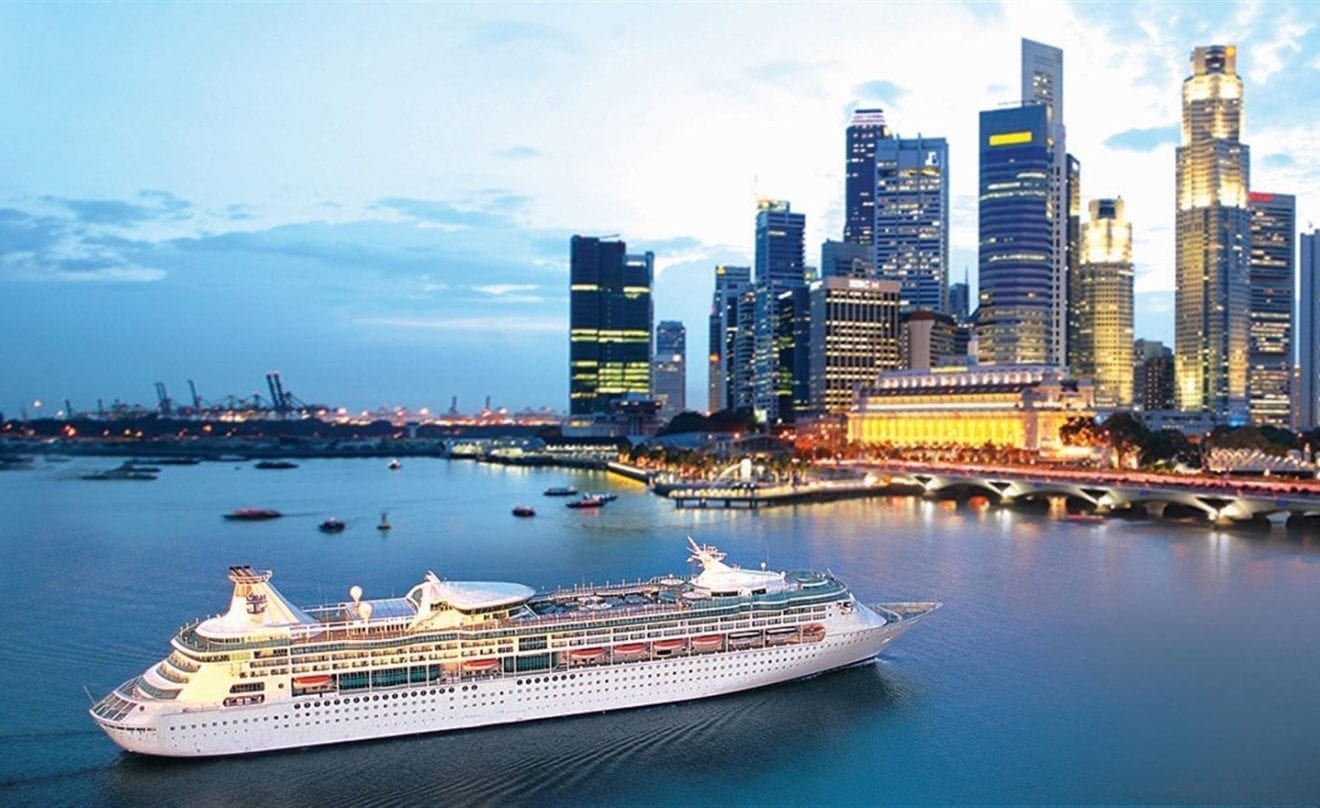
    Ongoing investment-sale activity for malls suggests a positive outlook for the Singapore retail leasing sector, reports Edmund Tie & Company – especially for properties well connected to public transport and offering experiential and activity-based retail options.

    In a report Q2 2019 Real Estate Times for the Singapore market, the property company projects islandwide rental growth will be mixed, ranging from a 2 per cent decline to a 2 per cent increase this year. The low supply pipeline from next year onwards is likely to provide some underlying support to occupancy rates and rental levels.

    Investment market 

    For the second consecutive quarter, investment transaction value (of properties valued above S$100 million) jumped more than 52 per cent quarter on quarter with two transactions totalling $961 million. The largest sale was Chinatown Point for $520 million to a foreign institutional investor.

    The net supply of space fell by about 78 per cent as fewer projects were completed. As such, islandwide occupancy declined slightly by 0.4 percentage points to 90.1 per cent in the first quarter, however, the opening of Funan mall with 325,000sqft net lettable area – with 95 per cent of space pre-leased – is not expected to significantly impact occupancy rates in the second quarter.

    Rental rates 

    Singapore retail leasing rates across the different market segments remained largely flat, as occupancy rates remained high for malls located in prime positions. Upper-storey retail in the Orchard Road/Scotts Road area likely fell slightly due to weakened tourist spending, while the prime malls in the suburban areas continue to attract major brand retailers and new-to-market brands.

    The net demand and supply for retail spaces in suburban areas slowed in the first quarter, with the occupancy rate down marginally.  Prime-located malls with easy transportation access and a diverse and well-managed tenant mix continued to perform relatively well.

    New openings included Cafe Amazon outlets at Jewel Changi and Jurong Point Shopping Centre, and Xing Fu Tang (a Taiwanese bubble tea chain) opened a permanent store at Century Square in the second quarter.

    New space supply pipeline 

    From the third quarter of this year through to 2022, some 1.1 million sqft of retail space is expected to come onstream, with the majority of that to be completed in the second half of this year. The largest will be the Paya Lebar Quarter mall of about 313,000sqft.

    The average annual pipeline of known projects from next year through to 2022 is less than 150,000sqft, which is substantially below the three- and five-year average.

  • Outlook for local banking sector remains challenging: Kenanga Research

    Outlook for local banking sector remains challenging: Kenanga Research

    The banking sector’s outlook is challenging due to external concerns while clarity and direction on the domestic front remain murky, according to Kenanga Research, which maintained a neutral stance for the sector as no fundamental change is expected, and the sector lacks concrete catalysts. “We view the industry with caution as uncertainties and headwinds still prevail. The industry remains unexciting, dragged by moderate loan growth and soft capital markets. Prevailing negative sentiment both globally and domestically will continue to drive volatility and uncertainty in the industry. Caution will still prevail due to the soft economy outlook globally,“ the research house said in a note today.

    It said banks with healthy asset quality (hence low impairment allowances) will still be the favour due to their defensive quality.

    “As such, selective asset growth will still be the focus for the banks. Despite stable economic outlook in the domestic environment coupled with low unemployment, we opine that cautiousness and selective assets growth will still prevail in the industry,“ Kenanga Research explained.

    It said loan growth moving forward will still be moderate as uncertainties prevail with fee-based income expected to be soft as a result of the volatile capital market. However, with the stable outlook, this will support a moderate and stable credit charge for the industry.

    “We expect impairment allowances (credit costs) to be stable and consistent (as it had been generally in 2018) which will lend support to the banks’ bottom line. We do not discount another potential up-cycle of impairment allowances, especially those highly exposed to the energy sector (CIMB, Maybank and RHB Bank) as energy prices have been under pressure due to the perceived economic slowdown both domestically and globally.”

    Kenanga Research expects mild compression for net interest margin (NIM) as most of the banks’ loan-to-deposit ratio and loan-to-fund ratio are over 90% and 80%, respectively, as compression will be mitigated by soft credit demand. The deferment of NSFR (net stable funding ratio) into 2020 plus the absence of high credit demand will support the outlook for a stable to mild compression in NIM.

    “However, looking at the slowing momentum in household demand, we do not discount the likelihood of competitive lending rates in the short term as banks strive to achieve their loan growth target. This competition will ultimately lead to further downside pressure on NIM.”

    The research house has revised downwards the 2018/2019 earnings estimates by 80bps/30bps to +6.7%/+5.6% respectively.

    “For 2019, earnings are slower at +5.6% year-on-year (yoy) as we based from these assumptions of credit charge at 0.33%; and slight compression on NIM by 3bps and a higher pace from fee-based income (+6.6% yoy due to a lower base).”

    It also toned its outlook on loan growth for FY18 at +4.7% (from +4.9% previously) on account of revision of prevailing headwinds.

    Kenanga Research reiterated its outperform call for BIMB Holdings Bhd, as its financing portfolio (70% of total financing) is skewed towards household (75% first-time buyers for residential property) with focus on growing its personal financing will minimise NIM compression.

    Another preferred pick is Malaysia Building Society Bhd (MBSB), which is expected to achieve 3-4% growth driven by corporate loans/financing as another RM950 million is expected to be disbursed in Q4 18.

  • World Bank approves loan for Indonesia`s logistics sector

    World Bank approves loan for Indonesia`s logistics sector

    The Executive Board of the World Bank has approved a US$400 million Development Policy Loan for the Indonesias Logistics Reform, which will be used to improve the countrys logistics system and connectivity.

    “These reforms will help Indonesia in achieving higher inclusive growth,” World Banks Country Director in Indonesia Rodrigo Chaves said in a statement received by ANTARA here on Thursday.

    Chaves explained the US$400 million loan will support Indonesia to overcome obstacles in the supply chain, such as dwelling time and trading permits.

    The inefficient dwelling time has resulted in Indonesias logistics costs accounting for 25 percent of the total costs, while Thailand is only 15 percent and Malaysia is 13 percent.

    Currently, the cost of container shipping of oranges from Shanghai, China to Jakarta is cheaper than the cost of similar items shipping from Jakarta to Padang, West Sumatra.

    Though, the distance between the two cities in Indonesia is only a sixth of the distance between Jakarta and Shanghai.

    “Logistics efficiency will improve connectivity and provide a significant impact on the competitiveness of the country. Improved logistics can reduce the cost of goods and services flows, especially in remote and underdeveloped regions in Indonesia,” Chaves said.

    The Development Policy Loan will support Indonesia over a transition period from the commodity-dependent economy to manufacturing-based economy with high competitiveness.

    World Banks Senior Economist Massimiliano Cali added that the high cost and unreliable logistics are obstacles in improving national competitiveness.

    “Managing these problems will increase production and export, thus lifting economic growth,” he said.

    The three main objectives of this funding is increasing the performance of the ports, improving the competitiveness of logistics services and strengthening trade facilitation.

    World Banks support for the logistics reform is an important part of the Partnership Framework of World Bank Group States, which is centered on the governments priority to bring significant changes.

  • Great Potential in Indonesia’s Modern Retail, Food & Beverage Sectors

    Great Potential in Indonesia’s Modern Retail, Food & Beverage Sectors

    In 2017 turnover in Indonesia’s processed food and beverage industry is expected to grow by 8 percent (y/y) to IDR 1,400 trillion (approx. USD $108 billion) from an expected IDR 1,300 trillion in 2016. Meanwhile, the nation’s modern retail industry is projected to expand in the range of 10 – 15 percent (y/y) to IDR 225 trillion (approx. USD $17.3 billion).

    Tutum Rahanta, Deputy Chairman of the Indonesian Retailers Association (abbrev. Aprindo), says the combination of accelerating macroeconomic growth and controlled inflation are the main supporters for growth of Indonesia’s modern retail sector. In 2016 Indonesia’s gross domestic product (GDP) is expected to expand by 5.1 percent (y/y) up from the realization of 4.79 percent (y/y) in 2015. Recently, the World Bank announced it sees the Indonesian economy growing further by 5.3 percent in 2017 and 5.5 percent in 2018.

    Aprindo Chairman Roy Nicholas Mandey added that after several years of economic slowdown, the retail sector of Indonesia has been recovering in 2016 on the back of low domestic energy prices (electricity, gas and fuel), the stronger rupiah exchange rate (versus the US dollar), rising government spending (on infrastructure development), low inflation (around 3 percent y/y), and accelerating economic growth. Due to these factors members of Aprindo have been eager to expand their businesses this year.

    Based on a Bank Indonesia (BI) survey, Indonesia’s retail sales grew 14.4 percent (y/y) in August 2016, supported by sales of non-food items, extending the promising trend recorded in the preceding month (retail sales growth at +15.7 percent y/y). However, this survey also signals that retailers expect retail sales to slow in November 2016 due to rising inflation (a seasonal phenomenon).

    Adhi Lukman, General Chairman of the Indonesian Food and Beverage Association (GAPMMI), agrees and expects the processed food and beverage Industry of Indonesia to rise by at least 8 percent (y/y) provided the government will not implement any policies that could undermine this growth (for example, the government once uttered the idea to implement a plastic excise tax). Besides the five above-mentioned factors, Lukman added that rebounding commodity prices also boost people’s purchasing power.

    Lukman is also optimistic that direct investment in Indonesia’s processed food and beverage industry will surpass IDR 50 trillion in 2016, up 16 percent from IDR 43 trillion in 2015. However, investors urge authorities to lower interest rates as that would make business expansion much more affordable. Lukman emphasized that Indonesian authorities need to be consistent and committed (for example through effective implementation of the economic policy packages) in order to support this industry and thus be able to compete with counterparts in Malaysia and Thailand.

    Indonesian Modern Retail Industry:

    2013 2014 2015 2016¹ 2017¹
    Turnover
    in IDR trillion
     148  168  181  200  225

    ¹ indicates forecast

    Indonesian Food & Beverage Industry:

    2015 2016¹ 2017¹
    Sales
    in IDR trillion
    1,209 1,300 1,404

    ¹ indicates forecast

  • Indian telco sector to be worth over $100b by 2020

    Indian telco sector to be worth over $100b by 2020

    The Indian telecoms services market is on track to pass the $100 billion mark by 2020, maintaining its status as one of the fastest growing markets in the world, a new report predicts.

    Market Research Store forecasts that the market will grow at a CAGR of 10.3% for the period between 2015 and 2020 to reach $103.9 billion.

    Wireless services will grow at a 9.3% CAGR over the same period to reach $39.02 billion, with 4G services achieving a CAGR of a strong 26.6%.

    According to the report, increasing network coverage and shrinking tariff rates due to heavy competition have served as the main drivers of the market in recent years. Due to these factors the market has grown exponentially to emerge as the second largest market in the world.

    Bharti Airtel leads the Indian wireless market, followed by Vodafone, Idea Cellular and Reliance Communications. Reliance Jio Infocomm is meanwhile expected to have a disruptive impact on the market when it fully launches pan-India 4G services.

    The banking, financial services and IT enabled service industries are helping to drive demand for telecoms services as they seek to engage more with customers through mobile applications, the report states. Oil and gas is meanwhile emerging as another key industry segment.

  • Australians benefit from telco sector competition

    Australians benefit from telco sector competition

    Australian consumers are reaping the benefits of competition in the telecommunications sector in the form of increased data allowances, new services, and lower prices, according to a report from competition regulator ACCC.

    “Consistent with the trend in recent years, consumer demand for data is continuing to increase and is affecting both fixed and mobile networks. On fixed networks, data consumption grew by 40% to 1.3 million terabytes (TB) of data. On mobile networks, data consumption increased by 35% to 110,000 TB,” ACCC Chairman Rod Sims said.

    “The increase in demand for data is largely due to the popularity of audio-visual streaming services, including the introduction of subscription video on demand (SVOD) services such as Netflix, Presto, and Stan.

    Industry members have responded to the increase in demand by investing in their fixed and mobile networks to make sure that they have sufficient capacity to meet the data traffic.

    Service providers have also responded by increasing data allowances. During 2014-15, data allowances increased by over 70% for DSL internet services and more than doubled for post-paid mobile services.

    At the same time, overall prices fell by 0.5% in real terms from 2014 to 2015.

    “While a smaller reduction than in the previous eight years, which has seen a 3.3% fall each year on average, this indicates that competition on factors other than price has been a feature of the market,” Sims said.

    “Given this, the ACCC will continue to take a particular interest in ensuring consumers receive accurate information about network performance.”

  • Retail sector woes continue despite New Year festivities

    Retail sector woes continue despite New Year festivities

    Hong Kong’s retail sector woes continued in the second month of this year when sales tumbled by more than 20 percent during the period when the Lunar New Year is celebrated. The value of total retail sales in February, provisionally estimated at HK$37 billion, was down by 20.6 percent compared with the same month in 2015. The revised estimate of the value of total retail sales in January dropp…

    Hong Kong’s retail sector woes continued in the second month of this year when sales tumbled by more than 20 percent during the period when the Lunar New Year is celebrated. The value of total retail sales in February, provisionally estimated at HK$37 billion, was down by 20.6 percent compared with the same month in 2015.

    The revised estimate of the value of total retail sales in January dropped by 6.6 percent compared with a year earlier. For the first two months of this year, retail sales fell by 13.6 percent compared with the same period in 2015.

    January and February retail sales of jewelry, watches and clocks, and valuable gifts dropped by 24.2 percent, the government said.

    Apparel sales fell by 11.4 percent, while commodities in department stores fell by 12.3 percent.
    Sales of electrical goods and photographic equipment were down by 26.7 percent and miscellaneous consumer durable goods dropped by 31.9 percent. Motor vehicles and parts sales tumbled by 21.2 percent.