Retail News CRM

Tag: self-driving

  • Honda to focus on self-driving cars, robotics, EVs through 2030

    Honda to focus on self-driving cars, robotics, EVs through 2030

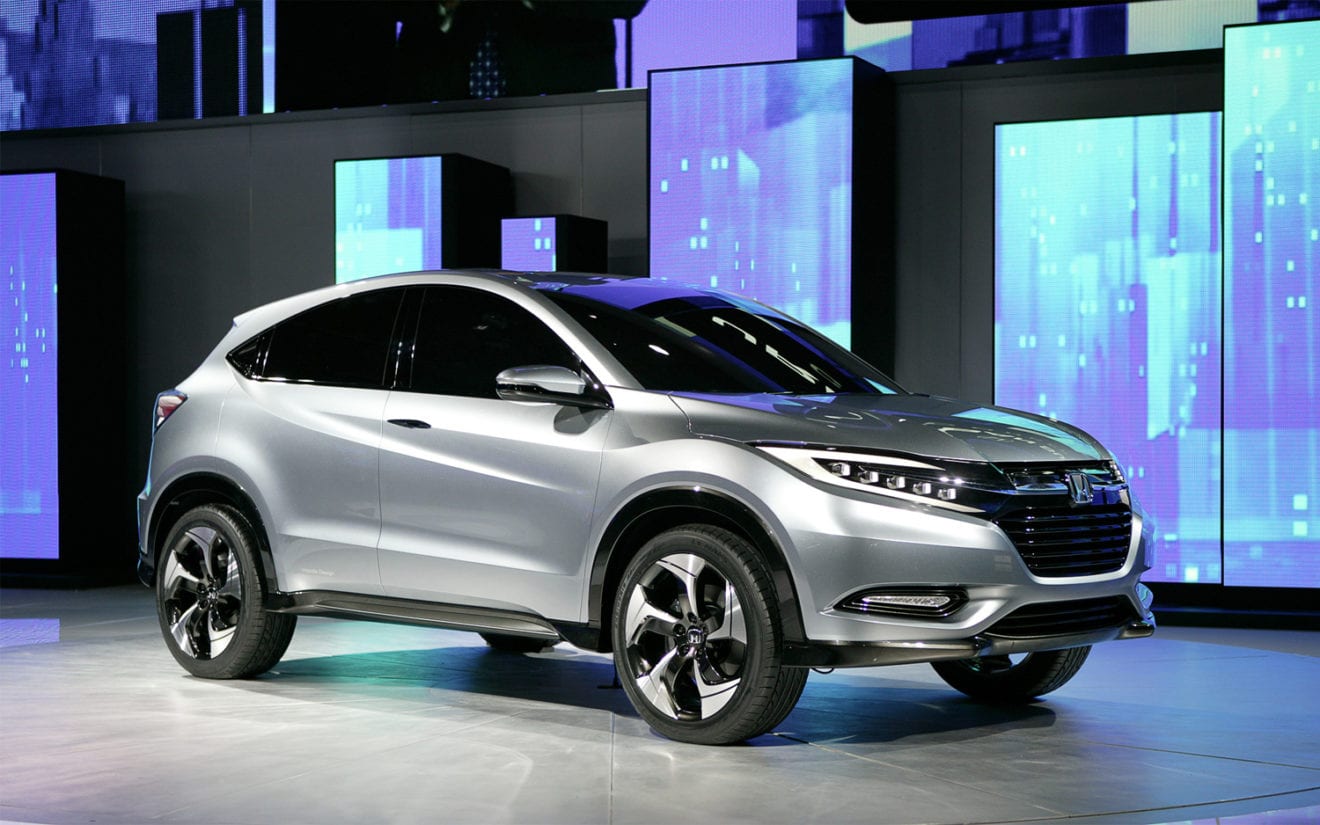
    Japanese carmaker Honda Motor on Thursday spelled out for the first time its plans to develop autonomous cars which can drive on city streets by 2025, building on its strategy to take on rivals in the auto market of the future.

    Unveiling its mid-term Vision 2030 strategy plan, Honda said it would boost coordination between R&D, procurement and manufacturing to tame development costs as it acknowledged it must look beyond conventional vehicles to survive in an industry which is moving rapidly into electric and self-driving cars.

    Honda has already spelled out plans to market a vehicle which can drive itself on highways by 2020, and the new target for city-capable self-driving cars puts its progress slightly behind rivals like BMW.

    “We’re going to place utmost priority on electrification and advanced safety technologies going forward,” Honda CEO Takahiro Hachigo said.

    Developing new driving technologies, robotics- and artificial intelligence-driven services and new energy solutions also would be key priorities for Honda in the years ahead, the company said.

    LEVELING UP

    Honda established a division late last year to develop electric vehicles (EVs) as part of its long-held goal for lower-emission gasoline hybrids, plug-in hybrids, EVs and hydrogen fuel cell vehicles (FCVs) to account for two-thirds of its line-up by 2030, from about 5 percent now.

    By 2025, Honda plans to come up with cars with “level 4” standard automated driving functions, meaning they can drive themselves on highways and city roads under most situations.

    Achieving such capabilities will require artificial intelligence to detect traffic movements, along with a battery of cameras and sensors to help avoid accidents.

    BMW has said it would launch a fully autonomous car by 2021, while Ford Motor has said it will introduce a vehicle with similar capabilities for ride-sharing purposes in the same year. Nissan Motor is planning to launch a car which can drive automatically on city streets by 2020.

    Honda has been ramping up R&D spending, earmarking a record 750 billion yen ($6.84 billion) for the year to March.

  • Car industry players diverge on timescale for self-driving cars

    Car industry players diverge on timescale for self-driving cars

    Carmakers and suppliers gave widely differing timelines for the introduction of self-driving vehicles on Thursday, showing the uncertainties surrounding the technology as well as a split between cautious established players and bullish new entrants.

    Chipmaker Nvidia, facing direct competition with the world’s top chipmaker after Intel’s (INTC.O) $15 billion deal to buy autonomous driving technology firm Mobileye this week, gave the most optimistic predictions.

    Chief Executive Jen-Hsun Huang forecast carmakers may speed up their plans in the light of technological advances and that fully self-driving cars could be on the road by 2025.

    “Because of deep learning, because of AI (artificial intelligence) computing, we’ve really supercharged our roadmap to autonomous vehicles,” he said in a keynote speech to the Bosch Connected World conference in Berlin.

    Germany’s Bosch, however, the world’s biggest automotive supplier, gave a timetable as much as six years longer to get to the final stage before fully autonomous vehicles, and declined even to forecast when a totally self-driving car might take to the streets.

    Progress is fraught by issues including who is liable when a self-driving car has an accident, bringing down the costs of sensor technology and guarding against hacking.

    “Of course, we still have to prove that an autonomous car does better in driving and has less accidents than a human being,” Bosch CEO Volkmar Denner told a news conference.

    Nvidia has applied its market-leading expertise in high-end computer graphics to the intense visualization and simulation needs of autonomous cars, and has been working on artificial intelligence – teaching computers to learn to write their own software code – for a decade.

    “No human could write enough code to capture the vast diversity and complexity that we do so easily, called driving,” said Huang.

    Together with Bosch executives, Huang presented a prototype AI on-board computer that is expected to go into production by the beginning of the next decade. The computer will use Nvidia’s processing power to interpret data gathered by Bosch sensors.

    DEGREES OF AUTONOMY

    On the way to fully self-driving cars, levels of autonomy have been defined, with most cars on the road today at level two and Tesla (TSLA.O) ready to switch from level four to five – full autonomy – as soon as it is permitted to do so.

    Level three means drivers can turn away in well-understood environments such as motorway driving but must be ready to take back control, while level four means the automated system can control the vehicle in most environments.

    Independent technology analyst Richard Windsor wrote in a note this week he doubted automakers would have autonomous vehicles leaving factories by a typical self-imposed deadline of 2020, mainly because the liability issue was unresolved.

    “This is good news for the automotive industry which is notoriously slow to adapt to and implement new technology as it will have more time to defend its position against the new entrants,” he wrote.

    But Nvidia’s Huang said he expected to have chips available for level three automated driving by the end of this year and in customers’ cars on the road by the end of 2018, with level four chips following the same pattern a year later.

    That is at least a year ahead of the plans of most carmakers that have an autonomous-driving strategy.

    The head of autonomous driving at BMW told the conference the luxury carmaker was on its way to deliver a level three autonomous car in 2021, but could produce level four or five autonomous cars in the same year.

    “We believe we have the chance to make level three, level four and level five doable,” he said. He told Reuters the decision on which levels to release would depend in part on the market, and that cars with more autonomy might first be produced in small batches for single fleets.

    Bosch said it saw level three vehicles being released with its on-board computer at the end of the decade, and level four driving not before 2025.

    Uber , Baidu and Google spin-off Waymo are testing self-driving taxis, while carmakers including Volvo, Audi and Ford expect to have level four cars on the road by 2020 or 2021.

    Nvidia’s Huang predicted those plans would speed up: “In the near future, you’re going to see these schedules pull in.”
  • Volkswagen to unveil self-driving car as part of post-dieselgate shift

    Volkswagen to unveil self-driving car as part of post-dieselgate shift

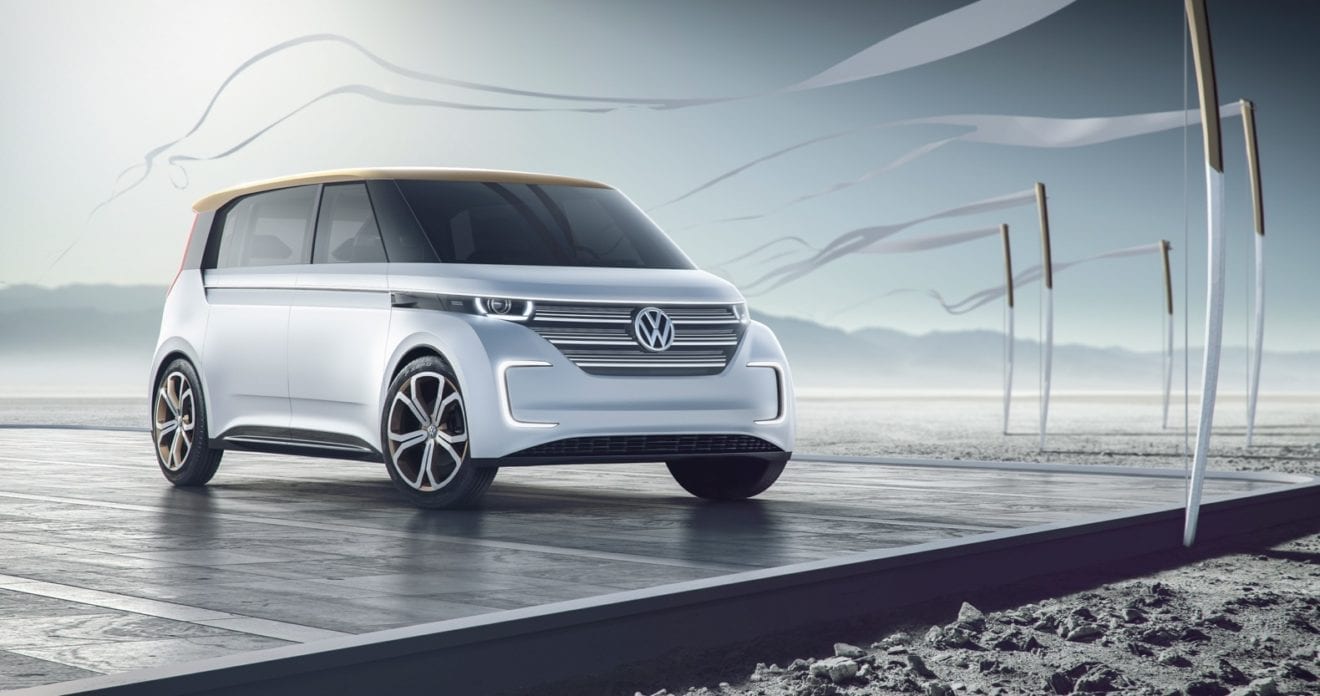
    Volkswagen will show off a fully self-driving car at the Geneva auto show, as part of the German carmaker’s drive to be at the forefront of new technologies in the wake of its diesel emissions scandal.

    Europe’s biggest carmaker has said it will invest billions of euros in electric cars, ride-hailing and automated driving, and launch over 30 electric models by 2025 as it battles to recover from its emissions test cheating.

    The self-driving concept car called Sedric – a so-called Level 5 vehicle capable of fully automated operation – is a precursor for more such models from the Volkswagen (VW) group in years to come, Chief Executive Matthias Mueller said on Monday on the eve of car executives’ annual gathering in Geneva.

    VW is hiring top specialists and plans to spend several billions of euros on automated driving alone, Mueller said, without being more specific.

    Sedric can carry 4 passengers and could be used for ride-sharing fleets as well as for individual consumers, VW said.

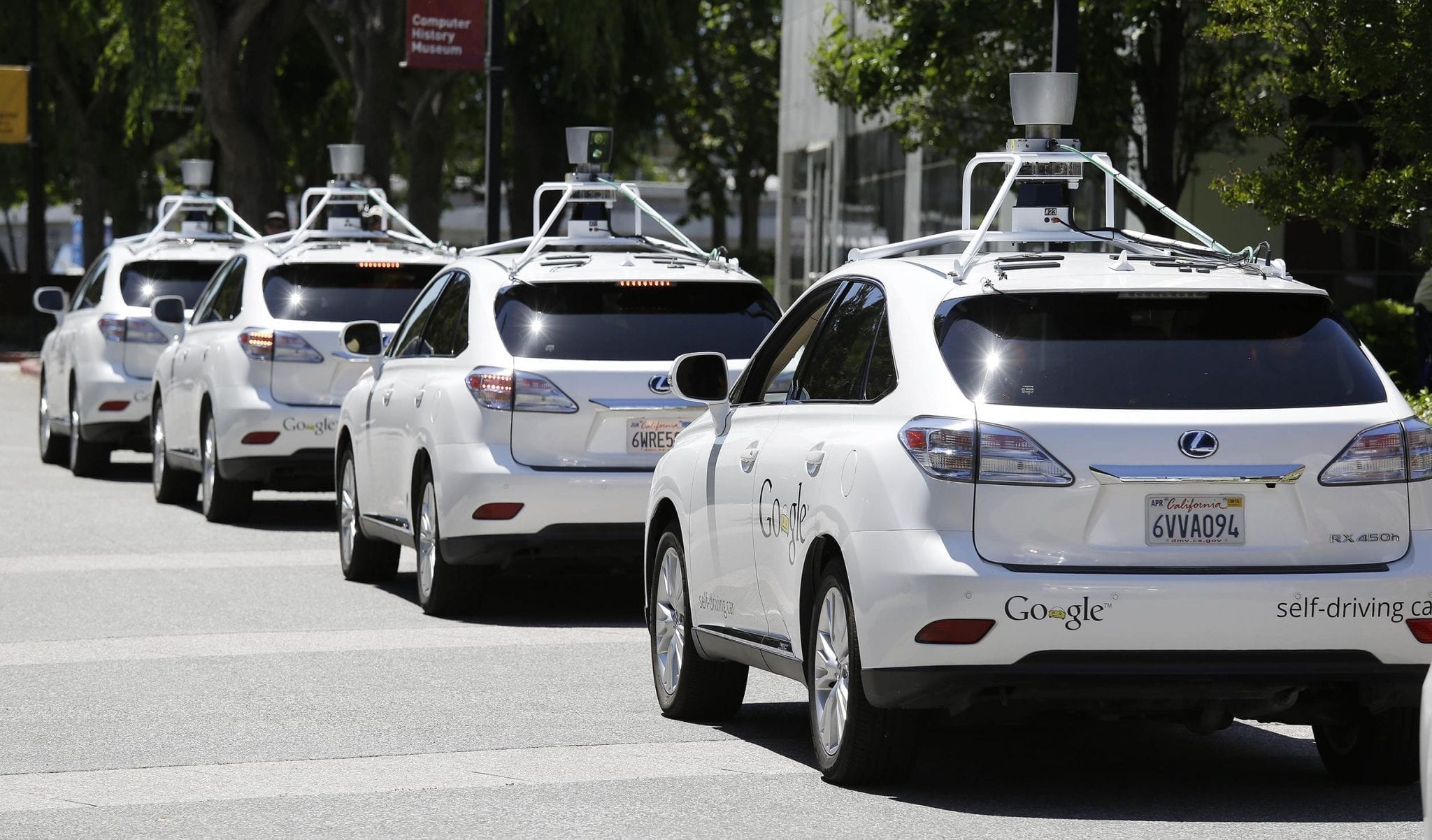
    Internet giant Google was a forerunner in self-driving technology with its 2015 prototype vehicle, but has since been challenged by companies ranging from Uber to Apple, as well as traditional carmakers.

    Manufacturers and their suppliers are working on different technology suites – including cameras, radar and laser imaging technology lidar – to enable vehicles to drive themselves, but it will take years for these vehicles to come to market.

    Mercedes-Benz unveiled its fully autonomous F 015 luxury concept two years ago. But Toyota has said it does not expect to see Level 5 cars in widespread use for another 10-15 years, while Ford does not plan to offer such vehicles for consumers until 2025 or later.

  • Honda, Alphabet’s Waymo in talks over self-driving technology

    Honda, Alphabet’s Waymo in talks over self-driving technology

    Honda Motor Co said on Wednesday it had entered into formal talks with Alphabet Inc’s new self-driving division Waymo to add self-driving technology to its vehicles, marking the second potential customer for the automation software.

    The move comes just one week after Google spun off its self-driving unit into its own company named “Waymo” with a mandate to strike partnerships with automakers and others and commercialize the research it has been developing for over seven years.

    The potential deal illustrates how automakers faced with the high costs of developing the new technology in-house are separating into those betting on developing it alone, such as Ford Motor Co and General Motors Co, and those turning to partnerships with suppliers to spread the costs.

    Honda’s announcement marks Google’s second potential tie-up with an automaker over its self-driving technology. The first came in May, when the technology giant signed a deal with Fiat Chrysler Automobiles NV to incorporate the tech into the carmaker’s minivans.

    Unlike cash-strapped Fiat Chrysler, however, Honda has already committed its own resources to autonomous driving, and it said on Tuesday those efforts would continue.

    While Honda has been less vocal about its plans for self-driving cars than larger rivals like Toyota Motor Corp, the Japanese automaker showed off a self-driving prototype in June it has been testing in Northern California. The carmaker foresees full autonomy on highways by 2020.

    “In addition to these on-going (in-house) efforts, this technical collaboration with Waymo could allow Honda R&D to explore a different technological approach to bring fully self-driving technology to market,” Honda said in a statement.

    Honda said, as part of the collaboration talks, it could provide Waymo with vehicles modified to accommodate Waymo software, such as Fiat Chrysler has done with its Chrysler Pacifica minivans.

    Were a deal to be signed, Honda said its engineers in Silicon Valley and Tochigi, Japan would work closely with Waymo engineers.

    A Waymo representative said the company was “looking forward to exploring opportunities to collaborate with Honda to advance fully self-driving technology and make our roads safer.”

  • Baidu, NVIDIA enter self-driving car alliance

    Baidu, NVIDIA enter self-driving car alliance

    Chinese internet giant Baidu and GPU maker NVIDIA have teamed up to use artificial intelligence in the creation of a cloud-to-car autonomous car platform for local Chinese and global car makers.

    The partnership combines Baidu’s cloud platform and mapping technology with NVIDIA’s self-driving computing platform to develop solutions for HD maps, Level 3 autonomous vehicle control and automated parking.

    “We’re going to bring together the technical capabilities and the expertise in AI and the scale of two world-class AI companies to build the self-driving car architecture from end-to-end, from top-to-bottom, from the cloud to the car,” NVIDIA CEO Jen-Hsun Huang said.

    NVIDIA and Baidu have a long history of working together on AI. Using GPUs, Baidu researchers such as Andrew Ng have achieved some of the key breakthroughs that have made the modern AI boom possible, spawning hundreds of startups over the past few years.

    Amidst the growing excitement over the future of AI, Baidu and NVIDIA continue to share a common goal of using AI for the good of society.

    “We can start applying these capabilities to solve the grand challenges of AI, one of which is intelligent machines. One of the intelligent machines we would like to build in the future is the self-driving car,” said Huang.

    He said that meant making driving safer, significantly reducing the number of traffic fatalities, while making transportation accessible to all — including the disabled, elderly and children.

    Developing a fully autonomous car is an end-to-end systems problem — from the in-car supercomputer, to AI algorithms, to an always-updated 3D map in the cloud, said Huang.

    The solution is expected to be available to local Chinese automakers as well as global brands.

  • Self-driving bus unveiled in Tokyo

    Self-driving bus unveiled in Tokyo

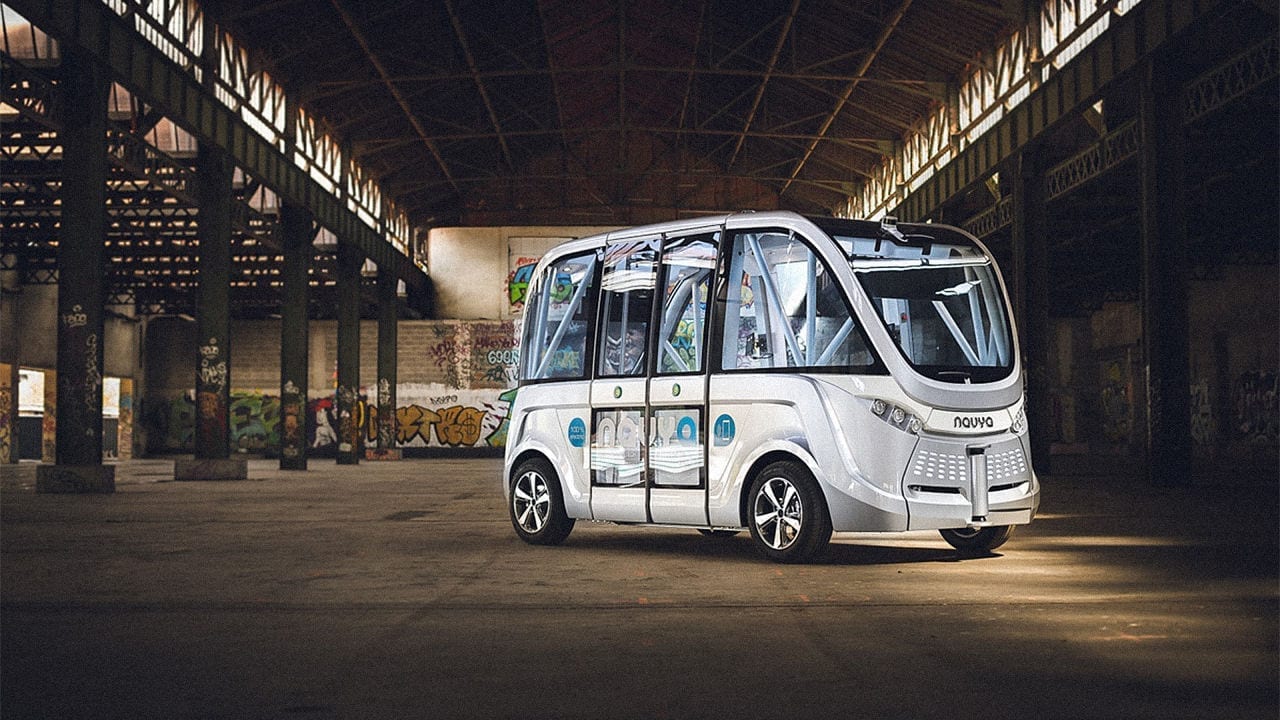
    Japanese technology firm DeNA Co. showcased its first self-driving bus in Tokyo on Thursday, unveiling a vehicle that runs on electricity and can carry 12 passengers.

    The EZ10 Robot Shuttle, developed in conjunction with French company Easy Mile, will first be used at a shopping facility in Japan’s Chiba prefecture next month and has a maximum speed of 40 kilometres per hour (25 miles per hour).

    Last month bus company PostBus unveiled a self-driving electric shuttle in the Swiss city of Sion. Automated driving technology is currently in the spotlight with the U.S. National Highway Traffic Safety Administration investigating a May 7 fatality of a Tesla Model S driver using autopilot technology.

    “We take safety very seriously,” Hiroshi Nakajima, general manager of DeNA’s automotive business, told a news conference. “Because we worry that there may be a serious accident, we take double or triple safety checks and begin from there.”