Retail News CRM

Tag: Services

  • CIMB Expands Wealth Services into Singapore and Thailand, Targeting Southeast Asias Rising Affluent Class

    CIMB Expands Wealth Services into Singapore and Thailand, Targeting Southeast Asias Rising Affluent Class

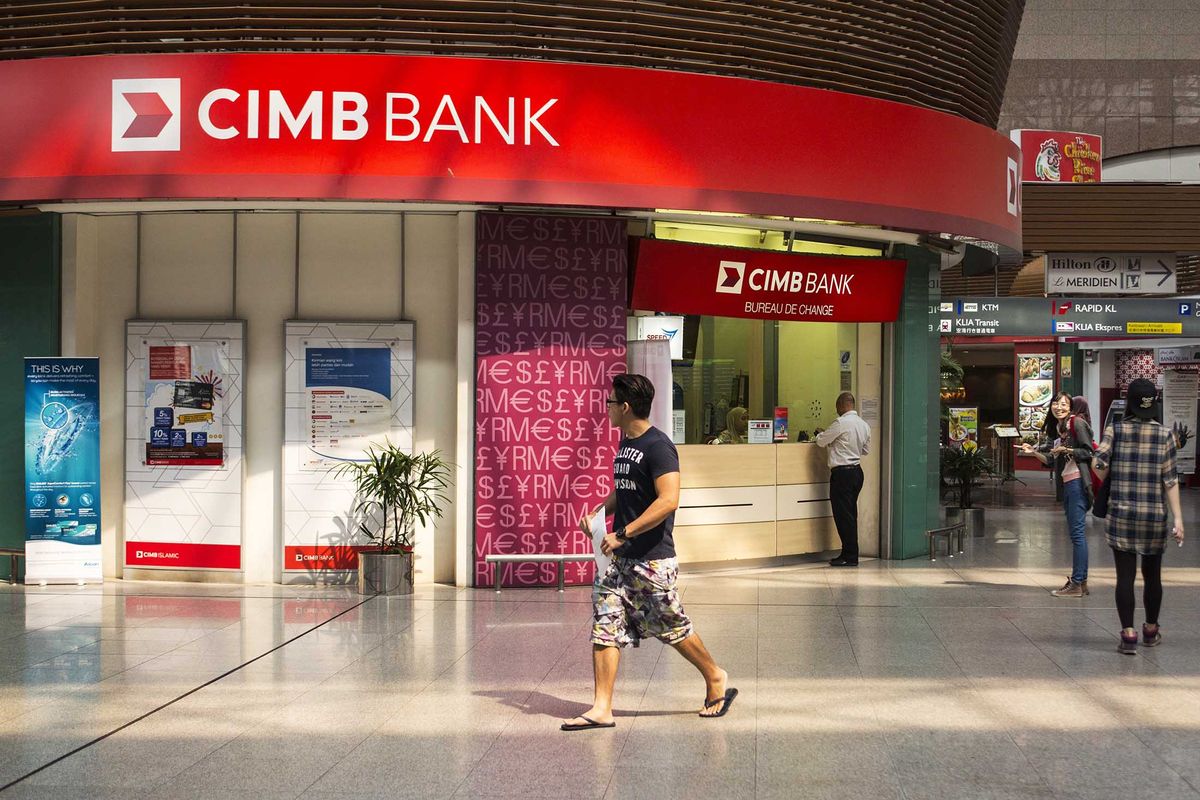
    CIMB Group, Malaysia’s second-largest bank in terms of assets, has announced its intention to expand its private wealth business to Singapore and Thailand by the end of the year. This move is part of a larger plan to double the bank’s wealth assets under management by 2030.

    Targeting Southeast Asia’s Growing Affluent Segment

    Haniz Nazlan, the CEO of group consumer banking at CIMB, revealed on Monday that this expansion activity is targeting the rapidly increasing affluent segment in Southeast Asia. This strategic move follows the successful launch of the bank’s private wealth business in Indonesia earlier in the year and in Malaysia on the same day.

    According to Nazlan, the ASEAN economy, worth US$4 trillion, has been experiencing robust annual economic growth rates of approximately 4%, which is significantly higher than many developed markets. This economic dynamism is expected to stimulate a 5% to 6% annual increase in the region’s affluent population. Furthermore, the middle class is projected to comprise between 65% and 70% of the ASEAN population by 2030.

    Factors such as growing incomes, escalating cross-border investments, and a notable surge in intergenerational wealth transfers are propelling the market.

    A New Service for High Net-Worth Clients

    Daniel Cheong, CIMB’s head of consumer banking for Malaysia, revealed that the new private wealth service is tailored to clients who have at least RM1 million ($244,612) in assets under management. This offering is positioned above CIMB Preferred, the bank’s mass-affluent priority banking segment, which requires a minimum of RM250,000 in assets.

    CIMB’s Private Wealth service offers clients dedicated relationship managers, treasury solutions, investment advisors, customized investment products, succession planning, and digital wealth capabilities.

    Nazlan noted that affluent clients are progressively seeking advice that goes beyond mere investment product selection. He explained that they want guidance on wealth protection, preparation of their children’s futures, access to global opportunities, and making informed decisions in an unpredictable world.

    Nazlan disclosed that CIMB’s wealth assets under management (AUM) were approximately RM250 billion in the preceding year. However, he refrained from providing interim growth targets or customer acquisition figures, stating that it is still the early stages of the Private Wealth proposition’s rollout.

    Questions & Answers

    What is CIMB Group’s plan for its private wealth business?
    CIMB Group plans to expand its private wealth business to Singapore and Thailand by year-end, aiming to double its wealth assets under management by 2030.

    Who are the target clients of the new CIMB private wealth service?
    CIMB’s private wealth service targets high net-worth clients who have at least RM1 million ($244,612) in assets under management.

    What are the key services offered by CIMB’s Private Wealth service?
    CIMB’s Private Wealth service offers dedicated relationship managers, investment advisors, treasury solutions, succession planning, customizable investment products, and digital wealth capabilities.

  • Emirates SkyCargo Boosts Freight Services in East and Southeast Asia Amid Rising Demand

    Emirates SkyCargo Boosts Freight Services in East and Southeast Asia Amid Rising Demand

    Emirates SkyCargo, the air cargo carrier, has unveiled a strategic expansion plan for its freight services throughout East and Southeast Asia. The move is aimed at enhancing the cargo flight frequencies and destinations to meet the increasing demand. Businesses and manufacturers in East and Southeast Asia are seeking comprehensive connections to rapidly and securely transport their goods to high-demand markets in the Middle East, Africa, Europe, and the Americas.

    Facilitating International Trade

    In the FY 25/26, Emirates SkyCargo transported over 439,000 tonnes of cargo via its freighter and passenger flights from 12 markets in East and Southeast Asia. This reflects a 5% increase in cargo tonnage compared to FY24/25, illustrating the thriving demand from businesses and exporters to transport goods across the globe.

    Badr Abbas, Divisional Senior Vice President at Emirates SkyCargo, highlighted the importance of East and Southeast Asia as global manufacturing epicentres. They contribute significantly to the production of high-tech goods, export of perishables, and are a significant origin for global e-commerce flows. He added that by increasing the number of freighter flights and expanding their freighter services, they provide rapid connectivity to ensure swift and safe cargo transportation to customers worldwide.

    Expansion of Freighter Flights

    Emirates SkyCargo plans to double its freighter capacity to Narita Airport in Tokyo, increasing from one to two weekly freighter flights. This expansion will cater to Japan’s robust manufacturing industry, spanning diverse sectors like automotive, electronics, and pharmaceuticals.

    The carrier is also escalating its flights to Hong Kong to 37 weekly freighter flights, offering maximum flexibility and choice to customers in this export-led economic corridor. Moreover, Emirates SkyCargo has broadened its reach into Central China with three weekly flights from Zhengzhou, linking the industrial hub of Henan province to Dubai and other destinations.

    The carrier has also resumed its freighter flights from Singapore, with a weekly flight connecting to Dubai via Mumbai. This forms a vital trade lane across Asia. Furthermore, Emirates SkyCargo plans to double its footprint in Taiwan, enhancing its service from one weekly to twice-weekly freighters to Taipei, to meet the increasing demand for high-tech electronic cargo movement.

    Questions & Answers

    What is the main aim of Emirates SkyCargo’s expansion in East and Southeast Asia?
    The primary objective is to increase the freighter flight frequencies and destinations to meet the surging demand for rapid and secure transportation of goods to high-demand markets.

    How is Emirates SkyCargo responding to the demand in Japan’s manufacturing industry?
    The company plans to double its freighter capacity to Narita Airport in Tokyo, thereby catering to diverse sectors in Japan’s robust manufacturing industry.

    What new development has taken place regarding Emirates SkyCargo’s operation in Taiwan?
    Emirates SkyCargo intends to double its footprint in Taiwan, increasing its service from one weekly to twice-weekly freighters to Taipei, to meet the rising demand for high-tech electronic cargo movement.

  • Tencent Revolutionizes Cross-Border Payments: Expands Remittance Services to Global Audience

    Tencent Revolutionizes Cross-Border Payments: Expands Remittance Services to Global Audience

    Tencent, the Chinese multinational conglomerate, has extended its cross-border payment service, TenPay Global, to non-Chinese citizens. This move allows overseas individuals to send money directly into China and avail themselves of WeChat-related services.

    Enhanced Access to Digital Transactions in China

    Tencent’s newly launched service, “Remit to China for Non-Chinese Citizens,” permits foreign passport holders to transfer funds directly from overseas to beneficiaries in mainland China. This expansion in Tencent’s service offerings is a significant move in making China’s highly digitalized payment ecosystem more accessible to international tourists, students, expatriates, and business travelers.

    With this service, overseas users can transfer funds to beneficiaries in China using mobile phone numbers associated with WeChat accounts. Upon receipt, the funds can be instantly used for a variety of services within the Weixin ecosystem. These include online shopping, mobile top-ups, utility payments, and other everyday transactions.

    This service is particularly beneficial for international students, workers, travelers, and expatriates in China. TenPay Global offers round-the-clock access and allows transfers to be completed within minutes.

    Strengthening Cross-Border Payment Connectivity

    This launch is part of Tencent’s broader strategy to bolster cross-border payment connectivity between China and international markets. The current TenPay Global remittance platform works in conjunction with over 60 international banks and money transfer providers, supporting transfers to China from more than 100 countries and territories worldwide.

    As cross-border mobility begins to recover across Asia, payment providers are concentrating on minimizing friction for international consumers seeking access to local payment networks.

    Tencent’s remittance service is a key component of the internationalization strategy for Weixin Pay, Tencent’s leading domestic payment platform. The company has also advanced its “Pay with Your Home E-Wallet” initiative, enabling foreign visitors to make payments in mainland China using digital wallets issued in their home markets.

    With over 40 global wallet providers, TenPay Global currently has 36 e-wallets from 13 countries and regions connected to Weixin Pay’s network.

    Tencent’s expansion is indicative of the ongoing efforts by Chinese tech companies to merge domestic payment platforms with international financial networks, simplifying transactions within China’s predominantly cashless economy for foreign users. This initiative also strengthens WeChat’s position as a hub for both payments and everyday digital services, extending its reach to a rapidly growing international customer base.

    Questions & Answers

    What services does Tencent’s “Remit to China for Non-Chinese Citizens” allow?

    The service enables foreign passport holders to transfer funds directly from overseas to recipients in mainland China. The funds can then be used for various services within the Weixin ecosystem, like online shopping, mobile top-ups, and utility payments.

    What initiative has Tencent expanded apart from the remittance service?

    Tencent has also expanded its “Pay with Your Home E-Wallet” initiative, which allows overseas visitors to make payments in mainland China using digital wallets issued in their home markets.

    Which countries and regions are connected to Weixin Pay’s network?

    Currently, 36 e-wallets from 13 countries and regions, including the United States, Singapore, Vietnam, Laos, and Mongolia, are connected to Weixin Pay’s network.

  • Singapore Amplifies Integrated Professional Services: A Strategic Alliance Between ISCA and LawSoc

    Singapore Amplifies Integrated Professional Services: A Strategic Alliance Between ISCA and LawSoc

    In an effort to establish itself as a leading regional hub for integrated professional services, Singapore is taking significant strides. This endeavor has been demonstrated through a recent formal collaboration between the Institute of Singapore Chartered Accountants (ISCA) and the Law Society of Singapore (LawSoc). This strategic partnership aims to harmonize the skills of lawyers and accountants to better meet the complex, multi-jurisdictional business needs that are arising as companies expand across borders and the demand for comprehensive advice in legal, financial, and governance disciplines escalates.

    Transition from Compliance to Coordination

    The dynamics of professional services firms are undergoing a structural transformation. Clients are now seeking integrated solutions rather than isolated expertise, especially when it comes to managing risk, facilitating transactions, or expanding into new markets. The alliance between ISCA and LawSoc is a direct response to this shift. The initiative is designed to bring the legal and accountancy professions closer together, to promote multidisciplinary collaboration and to unlock new growth opportunities for firms operating in the region.

    ISCA’s President, Teo Ser Luck, views this collaboration as a vital step towards developing a cohesive ecosystem, saying, “This partnership is of great significance for both organizations. We are in the process of establishing a Professional Services Centre that will connect businesses with the legal and accounting expertise they need to confidently manage the risks associated with operating across borders.”

    Digital Learning as a Cornerstone

    Talent development is a key aspect of this collaboration. ISCA and LawSoc plan to co-develop a digital learning platform tailored to the needs of modern professional workflows. This platform will offer on-demand modules that are accessible at any time and from anywhere. It will also promote cross-disciplinary learning, enabling lawyers to understand more about accounting, finance and governance, and accountants to deepen their knowledge of legal concepts relevant to transactions and advisory work.

    NTUC LearningHub is supporting this initiative by facilitating funding options such as SkillsFuture Credit and the Union Training Assistance Programme (UTAP). They plan to roll out Continuing Professional Development (CPD) courses later this year via NTUC LearningHub’s Learning eXperience Platform.

    A New Professional Services Centre

    Beyond skills development, the partnership between ISCA and LawSoc also has an institutional dimension. They are considering the establishment of a Professional Services Centre in Singapore. This centre would serve as a one-stop platform that connects companies with coordinated legal and accounting expertise. It will be particularly beneficial in assisting foreign investors interested in Singapore, as well as Singapore-based firms looking to expand overseas.

    Strengthening Singapore’s Regional Role

    This collaboration comes at a time of geopolitical uncertainty and economic fragmentation, where Singapore is striving to maintain its position as a reliable and trusted business hub. The Economic Development Board (EDB) views this partnership as a way to reinforce Singapore’s competitive edge in professional services.

    A Model for the Region?

    As cross-border deal flow and regulatory complexity in Asia are expected to increase, Singapore’s integrated approach could serve as a model for other markets. By aligning legal and financial expertise, investing in digital learning, and building institutional support structures, the ISCA–LawSoc partnership signals a broader evolution of the professional services industry—one that prioritizes collaboration over specialization in isolation.

    Questions & Answers

    What is the aim of the collaboration between ISCA and LawSoc?
    The partnership aims to harmonize the skills of lawyers and accountants to better meet the business needs of clients as companies expand across borders and demand for comprehensive advice in legal, financial, and governance disciplines rises.

    What are some key components of this collaboration?
    The collaboration includes aligning legal and financial expertise, developing a digital learning platform for on-demand, cross-disciplinary education, and considering the establishment of a Professional Services Centre in Singapore.

    What does this partnership signify for the professional services industry in Singapore and potentially the region?
    The partnership signifies a broader evolution of the professional services industry, one that prioritizes collaboration over specialization in isolation. It could serve as a model for other Asian markets as cross-border deal flow and regulatory complexity increase.

  • UBS Wins U.S. National Charter: Broadening Services for Wealth Management Clients

    UBS Wins U.S. National Charter: Broadening Services for Wealth Management Clients

    UBS is set to transform its U.S. entity, UBS Bank USA, into a nationally chartered bank following approval from U.S. regulatory bodies. The announcement was made via LinkedIn by Rob Karofsky, President of UBS Americas.

    A Significant Milestone for UBS

    Karofsky hailed this development as a significant achievement, reinforcing the bank’s enduring dedication to the U.S. market and its ongoing efforts to bolster the bank’s position as a global leader in wealth management.

    Expansion of Banking Services on The Horizon

    The new charter will empower UBS to broaden its banking services for its U.S. wealth management clientele. The bank plans to introduce payment services along with checking and savings accounts, among other offerings. The LinkedIn post emphasized that the new charter would reinforce the U.S. banking platform, improve client and financial advisor services, and put the bank in a favourable position for further expansion, all while upholding UBS’s high standards.

    The U.S. as a Crucial Market for Growth

    This move is part of a multi-year strategy by UBS to launch new products, systems, and technologies. The ambition is to create a state-of-the-art core banking platform with a focus on digitalization and artificial intelligence capabilities.

    UBS acknowledges the immense potential of the U.S. market. Despite U.S. clients having significant deposits, they often turn to other financial institutions for regular banking services. By enriching its service portfolio, UBS aims to deepen client relationships and fortify the position of its financial advisors.

    Questions & Answers

    What changes can UBS’s U.S. clients expect following this development?
    Clients can anticipate a wider array of banking services from UBS, including payment services and checking and saving accounts.

    What is UBS’s long-term goal with this transformation?
    UBS aims to fortify its position as a global wealth management leader, deepen client relationships, strengthen the role of its financial advisors, and establish a modern, digital, and AI-driven core banking platform.

    How does UBS view the U.S. market?
    UBS sees the U.S. market as crucial for its growth and plans to capitalize on its potential by expanding its service offerings to U.S. clients.

  • Young Malaysians Ensnared in Debt: The Rising Peril of ‘Buy Now, Pay Later’ Services

    Young Malaysians Ensnared in Debt: The Rising Peril of ‘Buy Now, Pay Later’ Services

    More young Malaysians are finding themselves caught in the cycle of debt as the burden of financial obligations – largely from credit card loans – weighs heavy on their incomes. Among them is 29-year-old Chan Jun Hong, who spends almost MYR3,000 (US$763) each month to service his debts, accounting for over 60% of his salary.

    The Debt Trap

    Chan Jun Hong shares that a significant portion of his income is allocated to repay personal loans he took out a year or two ago. It was a decision made out of convenience, as he was offered the loans, and used them to spend recklessly. Today, he regrets this decision. He also admits to having a sizable amount of debt from the use of “Buy Now, Pay Later” services and credit cards for everyday necessities. His situation deteriorated to the point where he sought help from a debt consolidation service provider, who advised him to take a single extensive loan to pay off all his various debts simultaneously.

    His predicament is not unique. Many young Malaysians are grappling with debts, primarily due to a lack of financial literacy in the face of a surge of credit services targeted at the youth. In Malaysia, about 40% of “Buy Now, Pay Later” transactions are made by those aged 30 and below. This statistic highlights an alarming trend of younger consumers becoming overly dependent on credit for daily expenses.

    Rise of “Buy Now, Pay Later” Services

    “Buy Now, Pay Later” is a financial service that allows consumers to purchase products either interest-free or with a certain percentage of interest, with payment due the following month. A survey involving over 21,000 active “Buy Now, Pay Later” users in 2024 revealed that 69% of users solely depend on this financial tool for their financial support.

    However, this reliance on credit purchases for daily needs has consequences, which many young Malaysians are now realizing. One 29-year-old, using the pseudonym Nixie, revealed that he typically starts the month with no more than MYR1,000 in his bank account, as most of his income goes towards debt repayment. Nixie often resorts to “Buy Now, Pay Later” services due to his tendency to make impulsive purchases of non-essential items, such as collectibles, when they are on sale.

    As an electrical engineer, Nixie can only afford to make minimum monthly payments of between MYR500 and MYR900 on his credit card debt. His outstanding balance has remained at around 90% of its limit for nearly a year, accruing more interest. Nixie shares his growing unease about his financial future, fearing he may be stuck paying the debt for years due to the increasing credit card interest.

    The Hidden Risks

    Financial analysts point out that while bank loans come with clearly documented commitments, the risks of a “Buy Now, Pay Later” scheme aren’t always apparent at the start.

    The number of “Buy Now, Pay Later” users rose from 2.6 million in 2023 to 7.5 million last year. This trend could be risky as financial obligations can often accumulate quietly. Alvin Tan Chin Cherng, Financial Planning Association of Malaysia president, mentioned that such collective repayments could consume a disproportionate share of one’s monthly income, and most people don’t see it coming.

    Many young Malaysians remain ignorant of their credit scores, and missed or late “Buy Now, Pay Later” payments could affect a person’s ability to secure a housing loan or car financing in the future.

    Easy Spending and Consequences

    Financial planner Gunaseelan Kannan also expressed concern over the rise of these services, citing its easy-spending design, which for many youths feels less like borrowing and more like delaying payment.

    The simple approval process, minimal checks, and the seemingly small installments make it very attractive. However, those small installments can quickly add up and affect monthly cash flow. Many young people are still building their financial habits, so without proper budgeting or financial literacy, it can slowly turn into a debt cycle.

    A 29-year-old customer service worker known as Chan admitted that he had never heard of financial strategies. He struggles to manage his spending habits which are affecting his financial stability. He is now juggling his finances while repaying a personal loan taken to settle previous debts.

    Questions & Answers

    What are the causes of the increasing debt among young Malaysians?
    The rise in debt among young Malaysians is mainly attributed to the ease of access to credit services, particularly “Buy Now, Pay Later” schemes, and a lack of financial literacy.

    What are the consequences of the growing reliance on “Buy Now, Pay Later” services?
    The consequences include the accumulation of debts that can consume a significant proportion of one’s income, causing financial instability. Missed or late payments can also negatively impact credit scores, which could affect a person’s ability to secure future loans.

    What is the solution to this growing problem?
    Better financial education is one solution to tackle this issue. Young people need to understand the importance of budgeting, managing their spending habits, and the implications of credit scores. It’s also important to consider the regulation of credit services to ensure they don’t exploit the lack of financial literacy among young people.

  • Great Eastern Unveils Exclusive High Net Worth Services: Tailored Insurance and Elite Lifestyle Perks

    Great Eastern Unveils Exclusive High Net Worth Services: Tailored Insurance and Elite Lifestyle Perks

    Great Eastern, the insurance division of OCBC, has introduced a new service tailored specifically for high net worth (HNW) individuals and families across Asia.

    Great Eastern Private: A Tailored Experience

    The newly unveiled proposition is named Great Eastern Private. This service aims to bring together custom-designed HNW insurance solutions with a curated panel of expert advice and services spanning seven spheres. These domains encompass next-generation leadership, family advisory and trust services, health and longevity, international tax advisory, legal advisory, philanthropy, and global lifestyle concierge.

    In collaboration with Singapore Management University Executive Development, Great Eastern will conduct a cross-generational family program. This initiative will provide a platform for founders and family members to delve into topics like values, enterprise continuity, leadership transition, and long-term legacy.

    The Hewton Fair Suite: An Exclusive Offering

    Great Eastern is also offering HNW clients access to an exclusive area dubbed the Hewton Fair Suite, a nod to the company’s founder Alfred Hewton Fair. This premium space will feature on-site medical services in collaboration with Raffles Medical Group.

    CEO of Great Eastern, Greg Hingston, commented on the new proposition. He noted that as clients successfully amass wealth, the focus is now shifting to the careful and effective preservation and transfer of wealth. Great Eastern Private, he said, is a strategic move to invest in capabilities and services that meet this evolving customer need. He also affirmed the company’s commitment to remain the trusted insurance partner of customers throughout all life stages and generations.

    Questions & Answers

    What is the Great Eastern Private proposition?
    Great Eastern Private is a new service introduced by Great Eastern, the insurance arm of OCBC, designed specifically for high net worth individuals and families. It offers tailored insurance solutions and curated expert services across various domains.

    What are some of the services offered as part of Great Eastern Private?
    Services offered under Great Eastern Private encompass next-generation leadership, family advisory and trust services, health and longevity, international tax advisory, legal advisory, philanthropy, and global lifestyle concierge.

    What is the Hewton Fair Suite?
    The Hewton Fair Suite is an exclusive area offered to high net worth clients utilizing the Great Eastern Private service. It includes on-site medical services provided in partnership with Raffles Medical Group.

  • Bank of Singapore Boosts Ultra-High Net Worth Services with New Alternatives Expert Hire

    Bank of Singapore Boosts Ultra-High Net Worth Services with New Alternatives Expert Hire

    OCBC’s private banking division has appointed Bernard Heng, a seasoned expert in the wealth industry, to bolster its custom solutions for ultra-wealthy clients.

    Appointment of a New Leader

    The Bank of Singapore, the private banking arm of OCBC, has announced that Bernard Heng has joined the team as head of customized solutions. The move took effect from March 2, with Heng now reporting to Lim Leong Guan, the Global Head of Investment Solutions Group. In this capacity, Heng is responsible for spearheading the development, management, and implementation of intricate products and bespoke solutions, primarily for ultra-high net worth clients.

    Industry Veteran

    Bernard Heng brings with him a vast wealth of experience in wealth management and private banking. He has held key positions at global financial institutions such as UBS and Credit Suisse. His previous roles include that of Managing Director and Global Co-Head of the Private and Alternatives Group. Notably, Heng also served as the Principal and Head of Southeast Asia Private Financing at Apollo Management.

    Questions & Answers

    Who has been appointed as the head of customized solutions at the Bank of Singapore?
    Bernard Heng has been appointed as the head of customized solutions at the Bank of Singapore.

    What are Bernard Heng’s responsibilities in his new role?
    Heng is tasked with leading the development, management, and implementation of complex products and custom solutions, with a focus on ultra-high net worth clients.

    What past experience does Bernard Heng bring to his new role?
    Heng has extensive experience in wealth management and private banking. He has held senior roles at UBS and Credit Suisse and was also the Principal and Head of Southeast Asia Private Financing at Apollo Management.

  • SoftBank Innovates AI Infrastructure with Launch of Infrinia Cloud OS: A Game-Changer for GPU Cloud Services

    SoftBank Innovates AI Infrastructure with Launch of Infrinia Cloud OS: A Game-Changer for GPU Cloud Services

    SoftBank Corp., under the leadership of President and CEO Junichi Miyakawa, has unveiled a significant development from its Infrinia Team. This team, specializing in the creation of next-generation AI infrastructure architectures and systems, has designed the Infrinia AI Cloud OS. This is a robust software stack custom-built for AI data centers.

    Capabilities and Advantages of Infrinia AI Cloud OS

    The rollout of Infrinia AI Cloud OS provides AI data center operators with the ability to present kubernetes-as-a-service (KaaS) in multi-tenant environments. It also facilitates inference-as-a-service (Inf-aaS), which offers large language model inference via APIs. These features can be incorporated into operators’ individual GPU cloud services. Compared to custom-made or internally developed options, the software stack is anticipated to decrease total cost of ownership (TCO) and simplify operational intricacies. This facilitates a quicker deployment of GPU cloud services by providers while supporting the entire AI lifecycle, ranging from model training to inference, both flexibly and efficiently.

    SoftBank’s initial strategy is to incorporate Infrinia AI Cloud OS into its own GPU cloud offerings. In the future, the Infrinia Team plans to extend the deployment to overseas data centers and cloud platforms with the aim of achieving global acceptance.

    Meeting the Growing Demand

    The request for GPU-accelerated AI computing is escalating swiftly across various sectors including generative AI, autonomous robotics, simulation, drug discovery, and materials science. As a result, user prerequisites for AI computing have become diverse and complex. These encompass access to fully managed infrastructure with abstracted GPU bare-metal servers, cost-effective inference services which eradicate the need for direct GPU management, and sophisticated operational models where AI training is centralized and inference is deployed at the edge.

    Addressing these diverse needs places significant demands on GPU cloud service providers. Building and operating such environments call for in-depth technical know-how and involve complicated operational procedures. To surmount these hurdles, the Infrinia Team invented Infrinia AI Cloud OS. This solution maximizes GPU performance while easing the deployment and management of advanced GPU cloud services.

    Technical Aspects of the Software Stack

    The software stack’s KaaS capabilities automate the entire infrastructure stratum—from BIOS and RAID configurations to operating systems, GPU drivers, networking, Kubernetes controllers, and storage—on advanced GPU platforms such as NVIDIA GB200 NVL72. Additionally, it supports software-defined, on-demand reconfiguration of physical connectivity and memory, which allows clusters to be created, modified, or removed based on specific AI workload requirements. Automatic node allocation based on GPU proximity and NVIDIA NVLink domains further diminishes latency and enhances GPU-to-GPU bandwidth for large-scale, distributed workloads.

    The Inf-aaS component is crafted to empower users to deploy inference workloads with ease, providing scalable and efficient access to AI model inference via managed services.

    CEO Junichi Miyakawa emphasized SoftBank’s commitment to pioneering the AI era. The company aims to provide essential capabilities required for the large-scale deployment of AI in society through a new GPU cloud service and software business. The Infrinia AI Cloud OS software forms the core of this initiative, designed to seamlessly connect AI data centers, enterprises, service providers, and developers.

    Questions & Answers

    What is Infrinia AI Cloud OS?
    Infrinia AI Cloud OS is a robust software stack custom-built for AI data centers developed by SoftBank’s Infrinia Team.

    What features does Infrinia AI Cloud OS offer?
    It provides kubernetes-as-a-service (KaaS) and inference-as-a-service (Inf-aaS) capabilities. It can also be integrated into operators’ individual GPU cloud services.

    What are the benefits of Infrinia AI Cloud OS?
    Infrinia AI Cloud OS decreases total cost of ownership (TCO) and simplifies operational complexities. This facilitates quicker deployment of GPU cloud services by providers while supporting the entire AI lifecycle flexibly and efficiently.

  • Globe and NCS Seal PHP 1.73B Joint Venture, Boosting Yondu’s Digital Services Capability in Asia Pacific

    Globe and NCS Seal PHP 1.73B Joint Venture, Boosting Yondu’s Digital Services Capability in Asia Pacific

    Globe Telecom Inc. has finalized its business arrangement with Singapore-based company, NCS Pte. Ltd., through their joint venture with Yondu Inc., valued at PHP 1.73 billion. This venture was first established on March 26, 2025, and was made public in a disclosure to the Philippine Stock Exchange by Globe.

    The Deal

    NCS, through its subsidiary NCSI Holdings Pte. Ltd, now holds a 51% majority stake in Yondu, leaving Globe with the remaining 49% shares. Concurrently, NCSI Philippines Inc. was acquired by Yondu from NCSI, making it a wholly-owned subsidiary. Yondu will be rebranded as NCS Philippines.

    Globe’s third-quarter financial report indicates the joint venture’s value sits at about PHP 1.73 billion, encompassing PHP 349.06 million in cash and cash equivalents. This figure is a 7.5% decrease from the initial estimate of PHP 1.87 billion in March 2023.

    Impact of The Joint Venture

    Post the completion of the joint venture, Globe’s President and CEO, Carl Raymond Cruz, expressed confidence in Yondu’s enhanced capability to offer superior solutions to customers. Cruz highlighted that the partnership will facilitate service expansion and help reach more customers across the Asia Pacific, leveraging NCS’s regional presence and partner networks.

    Yondu, functioning as Globe’s information and communications technology division, specializes in wireless products and digital services for clients. It concentrates on custom software development, managed security, e-commerce solutions, cloud services, and pre-built platforms. Joint venture partner NCS, owned by Singtel, views this venture as a crucial step in its regional expansion strategy.

    NCS’s CEO, Ng Kuo Pin, anticipates that the expanded team will enhance the company’s digital, cloud, and data services, including those employing artificial intelligence. The team’s size is expected to increase from roughly 150 employees last year to over 1,200.

    Expected Benefits

    In addition to regional expansion, Juan Carlo Puno, Globe’s Chief Finance Officer, stated that the joint venture will ensure more efficient capital use and provide consistent revenue growth support. He emphasized that the venture’s key objective is to create a platform with financial resilience that can deliver long-term shareholder value while ensuring investment capability for next-generation ICT solutions.

    From January to September 2025, Yondu’s non-telecom revenues were reported at PHP 1.7 billion by Globe, showing a 4% decrease from PHP 1.81 billion during the same months of 2024. During this same period, Globe’s total gross service revenues stood at PHP 121.7 billion, with net income falling to PHP 17.7 billion.

    Questions & Answers

    What is the objective of the joint venture between Globe Telecom and NCS?
    The joint venture aims to enhance Yondu’s ability to offer superior solutions to its customers and to expand services across the Asia Pacific region.

    How will the joint venture impact Yondu?
    Yondu will now become a wholly-owned subsidiary called NCS Philippines, and its workforce is expected to grow from about 150 employees to over 1,200.

    What financial impact is expected from this partnership?
    The partnership is anticipated to facilitate more efficient capital utilization, support consistent revenue growth, and offer long-term value to shareholders.

  • China Mobile Hong Kong Set to Phase Out 2G Services in 2026 to Drive Advanced Network Growth

    China Mobile Hong Kong Set to Phase Out 2G Services in 2026 to Drive Advanced Network Growth

    China Mobile Hong Kong Company Limited (CMHK) has publicized its plans to phase out its 2G services by midnight on June 23, 2026. The aim behind this decision is to sharpen its focus on the development of more sophisticated network technologies.

    Decline in 2G Service Demand

    Following a comprehensive analysis of its services, CMHK has chosen to discontinue its 2G services in response to a slump in demand. By November 2025, less than 2.27% of CMHK’s overall mobile customer base was using 2G. This percentage includes those with service plans, prepaid card products, and mobile virtual network operator (MVNO) products.

    Transitioning to Advanced Mobile Services

    In order to facilitate an effortless transition to next-generation mobile services, CMHK has been proactive in reaching out to impacted customers. Since the fourth quarter of 2023, the company has been advising these customers to upgrade their SIM cards and, where necessary, their mobile phones or devices.

    Commitment to High-Quality Communication Services

    CMHK remains committed to delivering superior quality communication services to both domestic residents and business customers in Hong Kong. The company’s focus is on developing future-ready network technologies.

    Questions & Answers

    Why is CMHK discontinuing its 2G services?
    CMHK is discontinuing its 2G services due to a significant decrease in demand. The company aims to concentrate more on developing advanced network technologies.

    Who will be affected by this discontinuation?
    Less than 2.27% of CMHK’s total mobile customer base, which comprises service plan holders, prepaid card users, and mobile virtual network operator product users, will be impacted.

    What is CMHK doing to ensure a smooth transition for customers?
    CMHK has been in contact with affected customers since the fourth quarter of 2023, advising them to upgrade their SIM cards and, if required, their mobile phones or devices.

  • HSBC Bolsters ASEAN Presence: Ruby Ho to Spearhead Markets and Securities Services in Singapore

    HSBC Bolsters ASEAN Presence: Ruby Ho to Spearhead Markets and Securities Services in Singapore

    HSBC, the UK-based banking institution, recently undertook a strategic shift in its Southeast Asian operations, assigning an experienced professional to spearhead its markets and securities services across ASEAN.

    Ruby Ho Takes the Reins

    Ruby Ho now holds the reins of HSBC’s Markets and Securities Services (MSS) franchise throughout Singapore and the ASEAN region. She will lead the bank’s regional strategy for markets and securities services, poised at a moment when institutional demand, transnational investment, and treasury needs in Southeast Asia are on the rise.

    Ho comes to the role armed with almost three decades of experience in the financial markets. She joined HSBC in 2011 and has since occupied high-ranking roles across a variety of asset classes and markets, most recently serving as the head of MSS in HSBC Taiwan. Her proven ability to build robust institutional relationships is expected to be instrumental in driving client engagement across the region.

    Fostering HSBC’s ASEAN Growth Goals

    HSBC’s management team sees Ho’s appointment as a significant stride towards deepening the bank’s regional footprint. “Singapore is a high-priority growth market for HSBC. We have been consistently enhancing our regional banking and advisory capabilities, catering to the capital and investment requirements of our ASEAN clients”, said Wong Kee Joo, CEO of HSBC Singapore.

    He further remarked on Ho’s “vast expertise across asset classes and her capacity to foster robust collaboration across our wealth and corporate banking sectors, which will assist us in expanding our market share in this region.”

    Prepared for Growth

    With demographic growth, burgeoning capital markets, and increasing intra-regional investment, ASEAN is one of HSBC’s key areas of focus worldwide.

    The appointment of an experienced markets executive emphasises the bank’s intent to augment its MSS portfolio and seize a larger share of the institutional market across Southeast Asia.

    Questions & Answers

    Who has HSBC appointed to lead its MSS franchise in the ASEAN region?
    Ruby Ho has been appointed to oversee HSBC’s Markets and Securities Services in the ASEAN region.

    What is the significance of Ruby Ho’s appointment to HSBC’s growth strategy in ASEAN?
    Ho’s appointment is seen as a key step in strengthening HSBC’s regional presence and providing a boost to the bank’s growth agenda in the ASEAN market.

    What factors make ASEAN a high-priority area for HSBC?
    ASEAN is a key focus for HSBC due to the region’s demographic growth, expanding capital markets, and rising intra-regional investment.

  • Amazon’s Q3 Profit Skyrockets, Thanks to Cloud Services and AI-Driven Sales Boost

    Amazon’s Q3 Profit Skyrockets, Thanks to Cloud Services and AI-Driven Sales Boost

    Amazon recently announced robust profit growth for the third quarter, showing sustained double-digit growth due to advancements across the company.

    Strong Sales and Revenue Growth

    The net income for the quarter ending on September 30 experienced a 13% increase, reaching a total of $180.2 billion. Sales in North America grew by 11%, while international sales saw a 14% rise. AWS sales also experienced substantial growth, increasing by 20%.

    According to CEO Andy Jassy, Amazon’s sustained momentum and growth during this quarter can be attributed to the meaningful improvements brought about by AI across all aspects of the business. “AWS is growing at a rate we haven’t seen since 2022. We are witnessing strong demand in AI and core infrastructure, and our focus has been on boosting capacity,” Jassy remarked.

    Key Business Developments

    The most notable achievement for Amazon this quarter was its ability to sustain the high momentum from the last reporting period. This was driven by broad developments across all business areas, which included a 16.3% increase in service revenue and a 9.6% rise in product sales.

    Despite a $2.5 billion legal settlement with the FTC and severance fees related to layoffs, net income increased by 38.2% to $21.2 billion. However, these extra costs resulted in flat operating income growth. Excluding these costs, operating income would have seen a 24.6% rise.

    The 30.2% growth in technology and infrastructure costs signified Amazon’s increased investment in areas like fulfillment and technology, despite its current success. While these investments are critical to foster new growth avenues and maintain competitive sharpness, there is a need for increased efficiency, which is being partially achieved through the elimination of certain roles and corporate hierarchy streamlining.

    Robust Retail Business

    Amazon’s retail business continues to exhibit strong growth, fueled by the ongoing expansion of fast delivery services into more rural areas and the competitive pricing and convenience of household essentials.

    Considering the broader Amazon ecosystem, the increasing sophistication of seller services is helping drive fee revenue and push up advertising sales, while also ensuring one of the widest possible selections for shoppers.

    For the fourth quarter, the company projects net sales to grow between 10% and 13%. Operating income is expected to range from $21.0 billion to $26.0 billion, compared to the $21.2 billion from the previous year.

    As Amazon looks to the future, potential for growth remains. The company is well-positioned to leverage AI more effectively to personalize customer journeys and decision making, and to drive efficiency savings in operations and logistics.

    Questions & Answers

    What led to Amazon’s growth in the third quarter?
    Amazon’s growth in the third quarter was primarily due to improvements across the business, driven by AI and broad advances in all business areas.

    What challenges did Amazon face in its operations this quarter?
    Operational challenges for Amazon this quarter included a $2.5 billion legal settlement with the FTC and severance fees related to layoffs, which affected operating income growth.

    What are Amazon’s plans and expectations for the fourth quarter?
    Amazon expects net sales to grow between 10% and 13% in the fourth quarter, with operating income estimated to be between $21.0 billion and $26.0 billion.

  • UBS Eyes Nationwide Expansion in US: A Game-Changer in Wealth Management Services

    UBS Eyes Nationwide Expansion in US: A Game-Changer in Wealth Management Services

    UBS, a Swiss multinational investment bank and financial services company, has signaled its plans to significantly expand its footprint in the United States’ financial market. This move demonstrates UBS’s dedication to deepening its presence across the American financial landscape.

    Existing Limitations and Expansion Plans

    With its current state-level charter, UBS has been able to offer its wealth management clients in the US a variety of banking services, including cash management, credit cards, and securities-based lending. However, the state-level charter also imposes certain limitations on the range of services the bank can offer.

    To expand its wealth management arsenal, UBS Bank USA, a subsidiary of UBS, has applied to the Office of the Comptroller of the Currency (OCC). The approval of this application would allow UBS to provide a more comprehensive portfolio of banking and lending services, including traditional checking and savings accounts.

    In essence, UBS is striving to deliver a full suite of banking services to its wealth management clients in the United States. This will make it easier for these clients to manage their finances in one location. The license is expected to facilitate a gradual expansion of the bank’s current range of services.

    A Testament to Long-Term Commitment

    UBS anticipates gaining regulatory approval in 2026, a process which is subject to review by the US authorities. This strategic move comes at a time when UBS is strengthening its status as the world’s largest wealth manager. This followed its acquisition of Credit Suisse and reflects its effort to balance its global scale with a deeper penetration in key markets, including the United States.

    Questions & Answers

    What does UBS’s application to the OCC imply?
    It signifies the bank’s intent to offer a broader range of banking and lending services, including traditional checking and savings accounts, to its wealth management clients in the US.

    What factors have provoked UBS’s decision to expand its services in the US?
    The decision is a reflection of UBS’s strategy to strengthen its position as the world’s largest wealth manager, following its acquisition of Credit Suisse, and to deepen its roots in key markets such as the US.

    When does UBS anticipate gaining regulatory approval for the expansion?
    UBS expects to gain regulatory approval by 2026, a process that is subject to a review by the US authorities.

  • Deutsche Bank Revamps Wealth Management Division for a Dynamic Future in Financial Services

    Deutsche Bank Revamps Wealth Management Division for a Dynamic Future in Financial Services

    Deutsche Bank’s Bold Move to Elevate Wealth Management

    Deutsche Bank is shaking up its wealth management operations in Germany with a strategic reorganization aimed at harnessing growth and capitalizing on lucrative markets. By merging its teams serving affluent and high-net-worth clients, the bank is setting the stage for increased revenue generation within its Wealth Management division.

    The latest restructuring initiative, announced on Monday, is designed to streamline leadership and navigate the complexities of wealth management across Germany. The approach mirrors the bank’s model for corporate clients, creating a regionally structured framework that targets specific client needs.

    As part of this overhaul, Deutsche Bank is enlisting fresh talent from competitors, including notable hires like Nasim Amini. Amini, who previously worked at HypoVereinsbank, will take charge of the Southern Region starting in January. He brings a wealth of experience from a career that includes 22 years at Commerzbank.

    Also joining the team is Naveed Arshad, who comes from private bank Hauck Aufhäuser Lampe. Arshad will focus on catering to wealth management clients seeking innovative digital solutions, tapping into the growing trend towards tech-driven financial services.

    Adding to this dynamic team, Lisa-Marie Wöhrle returns to Deutsche Bank from UBS to spearhead a new unit dedicated to advising wealthy families on retirement and inheritance planning. Wöhrle’s rich history with Deutsche Bank includes a stint as Executive Director at UBS, where she showcased her expertise in wealth planning.

    This newly minted expert team aims to assist clients throughout Germany in managing complex family wealth, crafting retirement strategies, and designing wealth transfer solutions like foundations and executorships. Wöhrle will report to Corrado Palmieri, Head of Advisory & Sales Wealth Management Germany, who is eager to leverage her insights for the benefit of clients.

    “With this new team, we are reinforcing our commitment to holistic advisory services,” said Raffael Gasser, Head of Wealth Management Germany. “We’re offering our clients solutions for one of their most pressing needs: navigating wealth transfer to the next generation.”

    Gasser himself joined Deutsche Bank from UBS not long ago, enriching the firm with his experience managing wealth for private clients in Northern Europe. His arrival marks a strategic shift, as Deutsche Bank aims to bolster its Wealth Management operations to reduce dependency on traditional interest income streams.

    Currently, the bank oversees €632 billion in its private client business, including wealth management and retail banking—still trailing behind heavyweights like UBS and Morgan Stanley, each boasting over one trillion U.S. dollars in assets. Gasser is determined to change that, stating, “With our strategy, we are laying the foundation to grow above the market and gain further market share – positioning ourselves as the undisputed number one in wealth management in Germany.”

    Questions & Answers

    How is Deutsche Bank restructuring its wealth management division?
    Deutsche Bank aims to streamline its wealth management operations by merging teams focused on affluent and high-net-worth clients, thus enhancing leadership and revenue potential.

    What roles have been filled by new hires in this reorganization?
    New hires include Nasim Amini as Head of the Southern Region and Naveed Arshad, who will focus on digital solutions for wealth management clients. Lisa-Marie Wöhrle will lead a new unit for family wealth planning.

    What is the strategic goal behind Deutsche Bank’s restructuring?
    The bank seeks to strengthen its Wealth Management operations to reduce reliance on interest income, aiming to create a more robust and competitive presence in the market amidst competitors managing significantly larger assets.