Tag: sgx

  • SGX RegCo Queries Agribusinesses over Links to 10 Haze-Hit Firms

    SGX RegCo Queries Agribusinesses over Links to 10 Haze-Hit Firms

    Singapore Exchange Regulation issued a fresh round of queries on Oct 28 to listed companies with agricultural operations and plantations in Indonesia, seeking clarity on links to 10 Indonesian companies issued legal notices under Singapore’s haze law.

    SGX RegCo instructed boards to disclose policies and measures implemented to monitor, prevent, and respond to the fires, along with their assessments of whether the fires have a material impact on their businesses.

    The move follows earlier queries sent to eight listed groups, including Wilmar International, Golden Agri-Resources, First Resources, Bumitama Agri, Indofood Agri Resources, Kencana Agri, TSH Resources, and Olam Group, all of which maintained they did not use fire to clear land.

    Tracing Concession Links Across Sumatra and Kalimantan

    The regulatory review targets connections to ten entities singled out by Singapore’s National Environment Agency under the Transboundary Haze Pollution Act 2014. The statutory agency issued preventive measure notices to seven Sumatran forestry operations on Oct 16, followed by three Kalimantan concessionaires on Oct 19.

    Named recipients include pulpwood and palm operators Bumi Andalas Permai, Bumi Mekar Hijau, Paramitra Mulia Langgeng, Sumatera Alam Anugerah, Sebangun Bumi Andalas Wood Industries, Hutan Lestari Raya, Bangakanesia, Buana Megatama Jaya, Mananjung Hayak, and Baratama Putra Perkasa.

    Listed commodity groups must state plainly whether they hold direct equity, joint ventures, or procurement arrangements with any of the sanctioned entities. The directive forces listed boards to look past direct concession boundaries into external supply networks.

    Board Scrutiny Hits Food Commodity Heavyweights

    The regulatory step follows initial inquiries sent on Oct 16 to primary producers and agricultural processors including Wilmar International, Golden Agri-Resources, First Resources, Bumitama Agri, Indofood Agri Resources, Kencana Agri, TSH Resources, and Olam Group.

    Every respondent in that group denied using fire for land clearance, pointing to formal zero-burn standards, internal firefighting crews, and satellite monitoring networks. The market regulator now requires listed boards to document whether those preventative protocols function adequately in practice.

    Corporate boards must also provide formal confirmation on whether foreign or local agencies in Indonesia, Singapore, or elsewhere have launched investigations into their concession sites.

    Supply Chain Risks for Consumer Brands and Processors

    For consumer goods manufacturers and edible oil buyers across Southeast Asia, the regulatory pressure pushes plantation oversight into direct legal exposure. Palm oil and timber products entering consumer supply chains face scrutiny under cross-border clean air statutes that carry civil and criminal liabilities in Singapore courts.

    Institutional investors in regional agribusinesses now face elevated compliance liabilities if listed suppliers purchase raw materials from concession holders named in transboundary enforcement notices. Operational risk shifts from reputational sustainability commitments to formal regulatory non-compliance on the Singapore exchange floor.

    Enforcement Escalates Beyond Voluntary Pledges

    The regulatory exchange notices coincide with parallel enforcement steps by Singapore’s environmental authorities against domestic holding firms. The National Environment Agency served notices on Oct 23 to ten Singapore-registered companies, demanding full concession maps and fire prevention records for Indonesian operations.

    Those separate actions target corporate structures registered in Singapore that retain operational control over Indonesian land parcels. The simultaneous moves by the market regulator and environmental agencies eliminate standard corporate firewalls between offshore holding units and operational plantation sites.

    Agribusiness boards face a tight window to lodge formal written disclosures on the exchange detailing active investigations, concession relationships, and verified impact statements on current crop cycles.
  • SGX Starts Succession Planning Ahead of CEO Loh Boon Chye Contract End in 2027

    SGX Starts Succession Planning Ahead of CEO Loh Boon Chye Contract End in 2027

    Singapore Exchange began planning for a chief executive transition on Friday (Oct 23), after CEO Loh Boon Chye informed the chairman that preparations for an eventual handover should get underway.

    The announcement followed record financial results for the financial year ended June 2026, when adjusted net profit climbed 24.6 per cent to S$759.5 million on net revenue of S$1.48 billion.

    Speaking at SGX’s annual general meeting, Loh, 62, noted that no departure date has been set, and his contract runs through mid-July 2027 while he continues serving as an executive and non-independent director.

    A Decade Leading the Bourse

    Loh took charge of SGX in July 2015 after serving on its board from 2003 to 2012. His financial career started at the Monetary Authority of Singapore in 1989 as an investment officer, following an engineering degree from the National University of Singapore.

    He spent 17 years at Deutsche Bank, rising to head corporate and investment banking for Asia-Pacific. From 2012 to 2015, he ran Asia-Pacific global markets at Bank of America Merrill Lynch as deputy president.

    Beyond the exchange floor, Loh chairs the World Federation of Exchanges and holds a board seat at sovereign wealth fund GIC. That network anchored his tenure as SGX shifted emphasis toward foreign exchange and multi-asset derivatives.

    Capital Market Headwinds in Equities

    The transition arrives while Singapore works to lift liquidity across its stock market and draw corporate listings. While derivatives and fixed income expanded, primary stock offerings faced persistent regional competition from private capital and alternative exchanges.

    Regional equity platforms have struggled with sluggish initial public offering volumes over recent years. Southeast Asian growth companies frequently deferred public debuts or explored dual listings abroad rather than depending solely on local trading desks.

    Retail and consumer issuers in particular watch the bourse closely for valuation depth. A thin domestic trading float raises the cost of capital for regional operators seeking public funds to build out logistics networks or physical store footprints.

    Regulatory Steps and Listing Frameworks

    Last year, Singapore introduced a 20 per cent tax rebate for primary listings to revive interest among regional enterprises. Officials also instituted a dual-listing mechanism with Nasdaq to keep fast-growing tech and consumer firms tethered to the local exchange.

    Net revenue climbed 13.9 per cent in the 2026 financial year, showing that fee income from foreign exchange desks and multi-asset clearing insulated the exchange against softer stock-trading volumes.

    The outgoing chief’s mandate until mid-July 2027 leaves SGX time to identify a successor, test candidates, and hand over control without disrupting trading infrastructure operations.

  • StarHub and Keppel Open Talks over M1 to Shrink Singapore Telco Market

    StarHub and Keppel Open Talks over M1 to Shrink Singapore Telco Market

    StarHub and Keppel confirmed on Sept 23 that they are in active discussions over a potential transaction involving mobile network operator M1 in Singapore. If completed, the deal will reduce the city-state’s mobile network operators from four to three, subject to approval from the Infocomm Media Development Authority.

    Keppel holds a majority stake in M1 and stated in bourse filings that consolidation is necessary for Singapore’s mobile sector. Shares in StarHub climbed to a peak of 1.15 Singapore dollars on Sept 24 before finishing the week at 1.12 Singapore dollars, while Keppel shares peaked at 11.45 Singapore dollars before closing at 11.30 Singapore dollars on Sept 25.

    Consolidation talks after failed Simba bid

    M1 returned to the negotiating table after an earlier 1.4 billion Singapore dollar takeover attempt by Simba Telecom collapsed in May. The telecom regulator suspended its review of that transaction after discovering Simba had used radio frequency bands outside authorised parameters to deliver mobile services.

    Simba, owned by Australian-listed Tuas, confirmed the breach on Sept 23 during an investor call. Company secretary Tony Moffatt stated that the operator used spectrum outside the conditions set by the regulator, effectively ending its pursuit of M1 and opening room for StarHub to step in.

    Market share pressure and network costs

    Singapore’s mobile market remains one of the most crowded in Southeast Asia relative to population size, putting persistent pressure on average revenue per user. Combining StarHub and M1 would consolidate subscriber bases, eliminate duplicate 5G capital expenditure, and leave Singtel and Simba as the remaining standalone mobile competitors.

    Carriers across the region face similar rationalisation pressures as high infrastructure spending collides with mature consumer adoption. The primary hurdle for any StarHub and M1 combination will rest with competition regulators, who must weigh lower industry overhead against diminished price competition for retail mobile contracts.

    Executive buying steadies Grab after Atome deal

    Tech and consumer platforms in the city also saw major capital moves during the week. Grab chief executive Anthony Tan purchased roughly 30 million US dollars in company shares, while president Alex Hungate bought about 867,000 US dollars in stock on Sept 21 following a sharp sell-off.

    Grab stock had dropped to a three-year low of 2.74 US dollars on Sept 18 after the company unveiled a 1.49 billion US dollar acquisition of a 60 per cent stake in buy-now-pay-later specialist Atome Financial. The transaction includes terms to acquire the remaining 40 per cent around the third quarter of 2027, which could value Atome at up to 4.5 billion US dollars. The executive purchases helped lift Grab shares 10.6 per cent across the week to close at 3.13 US dollars on Sept 25.

    Stricter corporate disclosures set for 2027

    Corporate governance requirements across Singapore’s capital markets will tighten under new rules announced by the Singapore Exchange Regulation on Sept 23. Starting Jan 1, 2027, all listed issuers must publish dedicated investor relations policies detailing direct investor communication channels.

    Annual reports will also require clear explanations of the specific factors determining executive director and chief executive pay, along with explicit statements on dividend policies. Companies that elect not to pay dividends will have to disclose their formal reasons for withholding distributions to shareholders.

    The benchmark Straits Times Index ended Sept 25 at 5,711.12, supported by gains across the local banking sector. Attention in the telecom sector now shifts to formal structure filings from StarHub and Keppel, alongside the regulator’s response to the proposed combination.

  • Blackstone-Backed AirTrunk Seeks S$2 Billion Loan for Singapore Reit IPO

    Blackstone-Backed AirTrunk Seeks S$2 Billion Loan for Singapore Reit IPO

    Blackstone-backed data centre operator AirTrunk is in talks with commercial banks in September 2026 to raise approximately S$2 billion in debt to fund the Singapore listing of an asset-backed real estate investment trust.

    The package spans multiple debt tranches ranging from three to seven years, structured in Singapore dollars and Japanese yen to match the underlying portfolio.

    Refinancing Assets and Securing Liquidity

    Proceeds from the loan will go directly to the planned real estate investment trust. The vehicle will use the funds to purchase operational hyperscale assets from AirTrunk and refinance existing credit facilities across its regional footprint. Pricing and final terms remain under negotiation with participating lenders.

    Regional lenders have extended nearly US$29 billion in data centre debt across Asia since the beginning of 2025. As balance sheet limits tighten at major regional institutions, banks have grown stricter on underwriting criteria, favoring sponsors with institutional backing over smaller regional competitors.

    Asset-Backed Structures and Bank Limits

    Carving operational facilities into a publicly traded trust lets AirTrunk release balance sheet capacity while retaining operational control. The transaction also offers regional banks a route to distribute their credit exposure rather than holding long-term project loans to maturity on their books.

    Sponsors across Asia face higher power costs and tighter underwriting requirements for server real estate. Moving cash-generating properties into a yield-focused vehicle provides an alternative pool of public capital, insulating the development pipeline from tightening private credit markets.

    Building Out the Listing Roadmap

    The borrowing plan follows an aggressive regional expansion by the operator. AirTrunk recently completed a US$2.3 billion green loan to fund its hyperscale campus development in Johor, Malaysia, expanding its footprint across Southeast Asia.

    Preparations for the public offering have advanced over recent months, with the company preparing confidential filings for the trust. The planned Singapore listing aims to raise roughly US$1.5 billion in equity once terms and regulatory approvals are settled.

  • Thakral to Spin Off Lifestyle Businesses on SGX Mainboard

    Thakral to Spin Off Lifestyle Businesses on SGX Mainboard

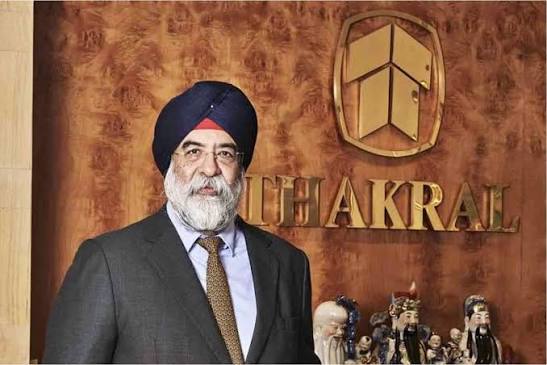
    Thakral Corporation plans to spin off its lifestyle businesses for a separate listing on the SGX Mainboard.

    Thakral plans to retain a majority stake in the standalone business unit following the spin-off, while Thakral Corp shares closed down 0.61 per cent at $1.63 on Sept 7.

    Carving out retail and brand distribution

    The business lined up for the initial public offering handles marketing and retail distribution for beauty and fragrance labels across Asia, particularly Greater China and Japan. The unit also manages South Asian distribution for DJI products alongside retail and distribution of Nespresso products in India.

    RHB Bank and United Overseas Bank have been appointed joint issue managers to structure the transaction. Two other divisions will remain with the parent group. These include property development and asset management operations across Australia, Japan and India. Thakral will also keep its enterprise drone components and software business, alongside strategic venture holdings.

    Pure-play valuation against conglomerate discount

    Brand distributors in Asia often command distinct valuation multiples compared to diversified holding companies. Grouping cosmetics with Australian retirement villages and industrial drone parts created a conglomerate discount on the SGX. That mix obscured cash generation across the retail agency business.

    A spin-off creates a direct play on prestige beauty demand in East Asia and consumer appliance growth in India. For principals like Nespresso and DJI, a separately capitalised distributor with its own balance sheet offers cleaner operational reporting. It also concentrates market risk directly in Chinese and Japanese consumer spending.

    Shareholder vote and regulatory pipeline

    Earnings swings hit the parent level earlier in the fiscal year. Thakral posted an adjusted attributable profit of $3.3 million in the first quarter of fiscal 2026. It then recorded a $6.4 million loss in the first half because of fair-value adjustments tied to its GemLife property venture in Australia. The group also expanded its real estate exposure by taking an additional 81.6 per cent stake in a mixed-use healthcare development in Gurugram, India.

    Completing the listing requires SGX approval, regulatory clearances and a formal vote by Thakral Corporation shareholders.

  • Ex-Credit Suisse Executive Joins Singapore Exchange

    Ex-Credit Suisse Executive Joins Singapore Exchange

    A former executive of Credit Suisse is said to be joining the Singapore Stock Exchange.

    William Gulya, Credit Suisse’s former head of Asia Pacific equity distribution, will join the Singapore Stock Exchange (SGX) Group to serve as the head of the Americas, according to a brief indication by him in a LinkedIn post on Wednesday.

    According to him, he left Credit Suisse on his own accord a couple of weeks ago and will join the exchange in mid-July. Gulya has also spent stints in senior positions at other banks, including executive director at JP Morgan and a director at Merill Lynch.

  • SGX Opens Offshore Office in India

    SGX Opens Offshore Office in India

    The office will kick-start SGX India Connect IFSC, a special purpose vehicle that will facilitate SGX’s upcoming connection with India’s National Stock Exchange (NSE).

    Singapore Exchange (SGX) has opened the SGX-International Financial Services Centre (IFSC) office in India’s Gujarat International Finance Tec-City (Gift City), according to a report on Friday.

    SGX will also be launching Gift Data Connect to provide SGX’s international members with access to real-time trading data of Nifty contracts via its derivatives trading platform and give investors unrivaled insights into India’s equity market.

    The upcoming NSE IFSC-SGX Connect aims to bring together the trading of Nifty products in Gift City and create a larger pool of liquidity comprising international and home market participants.

  • DBS Stalwart Joins OCBC to Head Wholesale Banking

    DBS Stalwart Joins OCBC to Head Wholesale Banking

    A DBS veteran will take on a new key position at OCBC, which is part of the bank’s plans to grow and expand across its key markets.

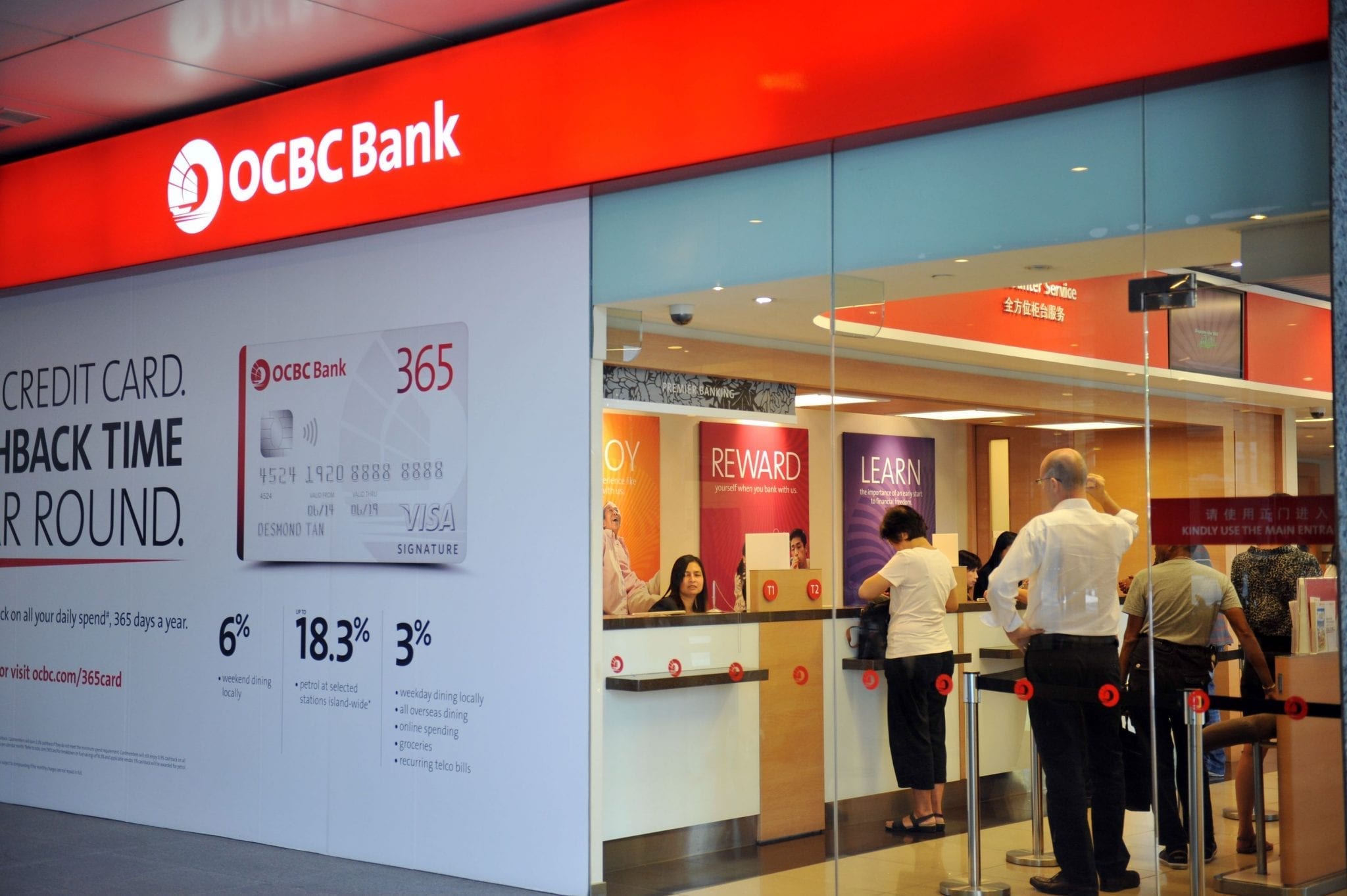
    OCBC has appointed Tan Teck Long as group head of wholesale banking, according to a filing with Singapore Exchange (SGX) on Wednesday.

    Tan joins from DBS Bank, where he has been group chief risk officer since 2018. His previous roles at the bank, which he joined in 2003, include group head of corporate investment banking, China head of institutional banking group based in Shanghai and group head of real estate, building and construction industry.

    In his new role, Tan will have global responsibilities for global corporate banking, global commercial banking, global transaction banking, emerging business, global financial institutions, group investment banking and mezzanine capital unit, the announcement said.

  • SGX Directors to Retire

    SGX Directors to Retire

    Singapore Exchange (SGX), has announced personnel changes to its board of directors.

    Jane Diplock, non-executive non-independent director, will be retiring from the board by rotation at the end of the bourse’s 22nd Annual General Meeting on 7 October, SGX said in a filing on Tuesday.

    Diplock, 72, was also a member of SGX’s audit and risk management committees. She was appointed to her role in 2011.

    Also retiring from office on 7 October is non-executive non-independent director Ng Wai Keng, who is being considered for an appointment that requires him to address any potential conflict of interest. Ng, 54, was appointed to the position in 2018, and was also a member of SGX’s remuneration and staff development committee.

  • SGX to Ease Rules for SPAC Listings

    SGX to Ease Rules for SPAC Listings

    Singapore Exchange is reportedly readying to issue easier rules for the listing of special purpose acquisition companies in the city-state.

    SGX is preparing to be the first major Asian bourse to accept SPAC listings, according to a Reuters report citing unnamed sources.

    The exchange’s regulatory arm is now considering easing a minimum S$300 million ($223.2 million) market value proposal for SPACs and a proposal that warrants cannot be detached from underlying shares.

    SGX is expected to introduce other measures to safeguard investor interests but would simplify proposed guidelines to maintain attractiveness for SPACs.

    The latest report of looser listings rules follows market feedback that some of SGX’s earlier proposals were too strict.

    Singapore is attempting to improve its profile as an IPO destination of choice while Southeast Asian startups have been listing in their home markets or the U.S.Funds raised at SGX fell to a six-year low of $239 million, according to Refiniv data, representing less than 3 percent of Southeast Asia’s total $8.4 billion.

    Within the region, Singapore ranked behind Malaysia, the Philippines, Indonesia, and Thailand in terms of funds raised.

  • SGX Profits Fall on Higher Expenses

    SGX Profits Fall on Higher Expenses

    The bourse attributed its weaker performance to higher expenses increased and declining treasury income amid a low-interest rate environment.

    Singapore Exchange’s fiscal full-year net profit fell 6 percent year-on-year to S$445.4 million ($329.5 million), despite operating revenue growing by 0.3 percent to S$1.06 billion, according to financial statements released on Thursday.

    Operating revenue fell 6.8 percent year-on-year for the six months ending 30 June 2021 to S$535.1 million, with the decline coming from its equities segment, SGX said. Its net profit for this period totalled S$205.6 million, down 20.5 percent from S$258.6 million the previous year.

    FICC revenue, comprising Fixed Income as well as Currencies and Commodities – Derivatives revenues, increased 24 percent to S$211.8 million, or 20 percent of total revenue. Equities revenue, comprising Equities – Cash as well as Equities – Derivatives revenues, declined 8 percent to S$701.1 million, or 66 percent of total revenue.

    Data, Connectivity and Indices revenue increased 18 percent to S$143.1 million, or for 14 percent of total revenue.

    Scientific Beta and BidFX contributed 7 percent to the group’s total revenues in FY2021. Along with recently acquired FX trading platform MaxxTrader, total revenue contribution from SGX’s recently acquired subsidiaries would exceed 9 percent, SGX said.

    While the low-interest rate environment will continue to impact our treasury income, we believe it will also spur demand for our multi-asset offerings as investors seek enhanced returns, CEO Loh Boon Chye said.

    The Board of Directors proposed a final quarterly dividend of 8 cents per share, payable on 22 October 2021, which would bring total dividends in FY2021 to 32 cents per share, up from 30.5 cents in FY2020.

  • SGX RegCo to Expand Enforcement Powers

    SGX RegCo to Expand Enforcement Powers

    The wholly-owned subsidiary of bourse operator Singapore Exchange (SGX) said on Thursday it will broaden its range of enforcement powers and require issuers to implement a whistleblowing policy.

    The move follows a public consultation, in which market participants had broadly supported the changes to listing rules, Singapore Exchange Regulation (SGX RegCo) said in an announcement.

    This will pave the way for swifter enforcement outcomes and reinforce confidence in Singapore’s capital markets, act as a greater deterrent against malfeasance, and enhance the protection of investors, SGX said.

    From 1 August 2021, SGX will be able to issue a public reprimand and require an issuer to comply with specified conditions, which are non-appealable.

    It will also be able to prohibit an issuer from accessing the facilities of the market for a specified period or until the fulfillment of specified conditions, prohibit any issuer from appointing or reappointing a director or an executive officer for up to 3 years, and require a director or an executive officer to resign.

    More severe sanctions, such as fines, will continue to be reserved for the independent Listings Disciplinary Committee

    SGX RegCo will require all issuers to establish and maintain a whistleblowing policy where the identity of the whistleblower is kept confidential and the individual is protected from reprisal.

    Issuers will be required to state in their annual reports that such a policy is in place for financial years commencing from 1 January 2021, as well as an explanation of how they have complied with key requirements such as independent oversight of the policy and commitment to the protection of the identity of the whistleblower.

  • SGX Restores Services After Outage

    SGX Restores Services After Outage

    The bourse’s web pages were discovered to be progressively inaccessible across different network providers from 4:30 p.m. SGT on Tuesday.

    Singapore Exchange’s website and web-based applications were restored on Tuesday night, following an outage that took place in the afternoon.

    Its case was a domain name system (DNS) issue, SGX said on Twitter, noting that it’s trading and clearing systems are separate from the website. It also said that there is no indication that its systems were compromised.

    While it did not affect trading, the outage limited access to SGX price information and SGX-listed company announcements.

    Several mainboard companies were due to release their financial results on Tuesday evening. Users were urged to visit their brokers’ websites or alternative sources during the outage.

  • OCBC Appoints Independent Director

    OCBC Appoints Independent Director

    He previously spent more than two decades at the Monetary Authority of Singapore, and was deputy managing director, corporate development, when he left in 2019.

    OCBC has appointed Andrew Khoo Cheng Hoe as a non-executive and independent director, effective March 8, according to a filing with bourse SGX.

    He will serve as a member of the board audit committee as well as the ethics and conduct committee, the announcement said.

    Khoo, 57, is an adjunct professor at the NUS Business School. He is also a director at the National Environment Agency, as well as at Stroke Support Station.

  • SGX Eyes More M&A for Growth

    SGX Eyes More M&A for Growth

    Singapore Exchange will look to scale up its operations by maintaining focus on mergers and acquisitions.

    SGX chief executive Loh Boon Chye said the city-state’s bourse will remain focused on mergers and acquisitions as a means of growth.

    It fully acquired foreign exchange trading platform BidFX after obtaining the remaining 80 percent stake in June last year. Earlier in 2020, it acquired a majority stake in index provider Scientific Beta.

    We are not stopping our M&A focus,» Loh said in a report. We have said we will bulk up and given that we are now a multi-asset exchange, one of the ways is to also scale up further. We will look at acquisitions.

    According to Loh, SGX is set to achieve the 2025 target of having 50 percent of its revenue generated by its fixed income, currencies and commodities segment, alongside data, connectivity and indices, earlier than expected.

    SGX continues to expand its product offering with plans to roll out infrastructure for carbon credit trading with select partners and the potential introduction this year of blank-check vehicles or SPACs (special purpose acquisition company), according to a separate report.