Retail News CRM

Tag: sgx

  • SGX Launches Singapore Single Stock Futures

    SGX Launches Singapore Single Stock Futures

    In response to growing client demand for a broader suite of Singapore-linked equities products, Singapore Exchange (SGX) will launch 10 Singapore Single Stock Futures (SSFs) on 15 June 2020.

    The list of underlying securities for the SSFs are Comfortdelgro, DBS, Genting, Keppel, OCBC, Singtel, Thai Beverage, UOB, Wilmar and Yangzijiang Shipbuilding, the bourse announced on Tuesday. Most of these securities are also SGX MSCI Singapore Free Index (SiMSCI) stocks.

    SSFs represent a next natural step in the growth of the ecosystem and offer market participants a new shelf of risk management instruments, SGX said, noting that it has observed greater synchronization and correlation between the price of futures and the underlying stocks across various intraday timeframes, indicating growing institutional participation across both markets.

    SGX also signed a license agreement for four products on MSCI Singapore indices, including SiMSCI futures and options and net total return contracts, which will continue to be listed on yhe exchange after February 2021.

    Our Singapore franchise is at the heart of SGX’s pan-Asian access offering and with these latest developments, we are well on track to broaden the continuum of our equities shelf, Michael Syn, SHX head of equities said in the announcement.

    Just last week, SGX said it would discontinue its license agreements with index provider MSCI for equity futures indices and futures contracts when they expire in February 2021. At the same time, MSCI signed an agreement with Hong Kong Exchanges and Clearing (HKEX) to license a suite of its indexes in Asia and emerging markets for the introduction of futures and options contracts in Hong Kong.
  • SGX Reduces MSCI License Agreement

    SGX Reduces MSCI License Agreement

    The bourse said it will continue to broaden and deepen coverage of Asia by developing more derivatives products on its own or in collaboration with its partners.

    Singapore Exchange (SGX) will discontinue its license agreements with index provider MSCI for equity futures indices and futures contracts when they expire in February 2021, SGX announced on Wednesday.

    The two parties will retain their partnership on MSCI Singapore Index products and will both work to extend it well beyond 2021, the announcement said, noting that MSCI Singapore futures and options remain listed. SGX said it will work closely with the relevant stakeholders in managing their open interest during this period.

    While this may have a near-term impact on our equities derivatives open interest, our multi-asset portfolio shelf has reached a critical mass. SGX’s track record in derivatives positions us well to refresh and grow our suite of pan-Asian access products in a new direction, Loh Boon Chye, SGX chief executive, said.

  • SGX Expands Partnership With Citic Securities

    SGX Expands Partnership With Citic Securities

    The collaboration covers fixed income, currencies and commodities (FICC), real estate investment trusts (REITs), and capital raising.

    Singapore Exchange (SGX) and Citic Securities, China’s largest securities firm, will jointly explore the feasibility of developing and listing new bond and risk management products for international participants who are looking to invest in China’s bond market, under a new agreement signed between the two parties on Wednesday at a virtual ceremony.

    The ongoing pandemic has not dampened both parties’ determination in working together to develop new financial products and support China’s continuous internationalization and opening of its financial markets, SGX CEO Loh Boon Chye said about the agreement.

    The partners will also jointly promote SGX’s real estate investment trusts (REITs) and large-cap stocks in the Mainland China and Hong Kong markets, as well as engage and educate Greater China companies on the benefits of raising funds in Singapore’s capital markets, the announcement said.

    Singapore is one of Asia’s largest REIT and property trust markets, with a combined market capitalization of over S$85 billion ($60 billion).

  • SGX Extends Deadline for AGMs

    SGX Extends Deadline for AGMs

    Social distancing measures could make the holding of annual general meetings (AGMs) and the performance of statutory audits for full-year financial results challenging, SGX said.

    Singapore Exchange Regulation will automatically extend by 60 days the deadline for all issuers with financial year-end on or before 31 March 2020 to hold their AGMs, it announced on Tuesday.

    The decision was made in consultation with the Accounting and Corporate Regulatory Authority (ACRA) and the Monetary Authority of Singapore (MAS) in light of government advisories and measures amid the Covid-19 situation.

    ACRA also said it will grant an extension of 60 days for all companies, both listed and non-listed, whose AGMs are due between 16 April to 31 July. It is also giving a 60-day extension to companies whose annual return filing due dates fall between May 1 and Aug 31.

  • SGX Grows Index Business

    SGX Grows Index Business

    The strategic investment will help the growth of its Data, Connectivity and Indices (DCI) business by strengthening its research-based index design capabilities as well as broaden the range of index products and clientele.

    Singapore Exchange (SGX) has paid €186 million ($204.83 million) in cash for a 93-percent stake in independent index provider Scientific Data, it announced in a press release.

    The Singapore-based company, established by EDHEC-Risk Institute (ERI Asia), an affiliate of EDHEC Business School, specializes in smart beta strategies – investment strategies that emphasize the use of alternative index construction rules instead of traditional market capitalization-based indices – with expertise in factor-based and risk-managed solutions.

    Scientific Beta is a well-known brand among asset owners worldwide. Over 60 asset owners and asset managers use its indices to track or benchmark their smart beta investments, which total almost $55 billion. This figure that has grown more than tenfold in less than four years, with 30 percent of these assets under replication integrating ESG dimensions, the announcement said.

    SGX CEO Loh Boon Chye called the acquisition «an important step» in the evolution of the firm’s index business. «Besides being complementary to our existing SGX Index Edge thematic and custom index capabilities, we also see new product opportunities based on Scientific Beta’s indices.»

    In the announcement, SGX noted the «significant growth» in factor investing in recent years. It cited BlackRock data that assets using factor-based strategies are forecast to reach $2.7 trillion by 2020, at a compound annual growth rate of 17 percent between 2011 and 2020.

  • SGX holds carnival at VivoCity this weekend for new investors

    SGX holds carnival at VivoCity this weekend for new investors

    The  Singapore Exchange (SGX) on Thursday said it will be holding its retail education event this weekend (May 26-27) at VivoCity’s Outdoor Plaza Atrium, as part of its ongoing efforts to educate new investors and encourage them to start investing.

    Targeted at NIBIs (not invested but interested) aged between 18 and 35 years old, the SGX “My First Stock Carnival” will take on a hands-on and interactive approach to educate investors on how to embark on their financial literacy journey, the Singapore bourse said.

    CGS-CIMB, iFAST Singapore, Lim & Tan, Maybank Kim Eng, PhillipCapital and RHB Securities will be setting up booths at the carnival to help participants open accounts, or answer any questions they may have about investing.

    An SGX “My First Stock Guidebook” will also be distributed along with a goodie bag at the carnival, and attendees will have the opportunity to interact with industry specialists and retail brokers, as well as familiarise themselves with SGX’s investing resources.

    Chan Kum Kong, SGX’s head of research and products, equities and fixed income, noted that there has been a trend of young investors becoming more active in investing.

    Added Mr Chan: “Our data shows that the traded value per month per investor aged 25 years old and younger saw an increase of 32 per cent in the first quarter of 2018 over the same quarter in 2016; the number of trades per month for the same group also saw an increase of 17 per cent over the same time period.”

    The carnival, which marks its fifth edition this weekend, will also be complemented by a week of investment workshops.

    The “My First Stock Carnival Investment Week” to be held at the SGX Auditorium, will feature speakers from SGX Academy and broking firms in a series of panel discussions held on May 28, May 30 and June 1.

  • Asia stocks hit 9-1/2-year high, markets await BOJ, ECB meetings

    Asia stocks hit 9-1/2-year high, markets await BOJ, ECB meetings

    Shares scaled near-decade peak on Thursday, bolstered by a surge in global stocks to a record high on strong U.S. corporate earnings.

    Asian shares scaled near-decade peak on Thursday, bolstered by a surge in global stocks to a record high on strong U.S. corporate earnings, while investors awaited the Japanese and European central bank meetings for clues on their policy outlooks.

    MSCI’s broadest index of Asia-Pacific shares outside Japan added 0.15 percent, hovering near its highest level since December 2007.

    Japan’s Nikkei gained 0.1 percent. Australian stocks rose 0.3 percent and South Korea’s KOSPI advanced 0.15 percent.

    The MSCI World index rose for its tenth straight session on Thursday and set a record high for the sixth consecutive day, lifted by all-time closing highs on Wall Street on strong earnings reports.

    “In the U.S., the earnings season seems to be surprising a little bit on the upside,” said Bruce McCain, chief investment strategist at Key Private Bank in Cleveland.

    “What we have seen recently in the economic reports suggests it should be even better overseas… So we have come to the point where things look pretty good in the U.S. and it looks even better in prospect overseas, so what’s not to like about equities,” he said.

    The yen was marginally stronger at 111.83 to the dollar early on Thursday.

    The Bank of Japan ends its two-day policy meeting on Thursday and is expected to paint a brighter picture of the economy but cut its inflation forecasts again. It is set to keep policy unchanged and reinforce that it will lag well behind major global central banks in scaling back its massive stimulus programme.

    The euro was up about 0.1 percent at $1.1528 early on Thursday, after scaling a 14-month high this week following seemingly hawkish comments by European Central Bank President Mario Draghi.

    At Thursday’s meeting, the central bank may drop a reference to its readiness to increase the size or duration of its asset-purchase programme before announcing in the autumn how and when it will start winding down its bond buying.

    “The euro has surged enormously on the back of hopes that the ECB is going to start the process of shutting the door on loose monetary policy,” Naeem Aslam, chief market analyst at ThinkMarkets UK, wrote in a note.

    “The ECB needs to be clear about its forward guidance and it should reinforce that in a subtle manner. Coming out of the gates too aggressively would create shock waves in the market.”

    The dollar index, which tracks the greenback against a basket of trade-weighted peers, was steady at 94.762.

    The Australian dollar revisited Wednesday’s two-year high early on Thursday, still heady from the minutes of the last Reserve Bank of Australia meeting, released Tuesday, which showed the central bank had turned more upbeat on the economic outlook.

    The Canadian dollar was flat on Thursday at C$1.2601 to the dollar. On Wednesday, it touched a 14-month high on record domestic factory sales and higher oil prices.

    Oil prices, which hit a two-week peak on Wednesday on a bigger-than-expected weekly draw in crude and gasoline inventories in the U.S., were marginally lower early on Thursday.

    U.S. crude fell less than 0.1 percent to $47.10 a barrel, after jumping 1.6 percent overnight.

    Gold rose about 0.1 percent to $1,241.06 an ounce on Thursday.

  • Investor education vital to attracting more high-growth tech companies to SGX

    Investor education vital to attracting more high-growth tech companies to SGX

    More can be done to make it more attractive for high-growth tech firms to list on the Singapore bourse, including educating retail investors about such companies, said Singapore Venture Capital and Private Equity Association (SVCA) chairman Jeffrey Chi.

    He said the Singapore Exchange’s plans to become the first Asian bourse to allow dual class share listings is a step in the right direction but more can still be done.

    Dr Chi was speaking at the launch of the Southeast Asia Private Equity Report on Friday (Apr 21). The report, released annually by management consultancy Bain & Company and SVCA, tracks private equity and venture capital deal flow in the region

    It showed private equity investments in South-east Asia soared to US$6.8 billion (S$9.5 billion) last year. This was up from US$4.8 billion a year earlier and 14 per cent higher than the average deal value from 2011 to 2015.

    This robust growth is expected to continue this year, but experts flagged longer-term challenges in South-east Asia’s capital markets – such as companies’ reluctance to launch initial public offerings on regional bourses.

     An initial public offering is one way for venture capital or private equity investors to cash out, or exit, from their investments.

    “The institutional investor base understands investing in high-growth tech companies which might not be profitable yet,” said Mr Suvir Varma, who leads Bain’s private equity practice in Asia-Pacific.

    “But many South-east Asian (public) markets are heavily retail investor-oriented. The average retail investor might not understand the concept of strong revenue growth but continuous negative earnings.

    “Retail investors in the region are cash oriented, they want dividends and returns.”

    Dr Chi, who is also the managing director of venture capital firm Vickers Venture Partners, said: “Will our own unicorns necessarily decide to list in Singapore? It’s a big risk for a company to list on an exchange without a track record.

    “Also, is the investor base open to it? That’s a longer term issue which involves education.”

  • SGX Welcomes Dasin Retail Trust To Mainboard

    SGX Welcomes Dasin Retail Trust To Mainboard

    Singapore Exchange (SGX) welcomed Dasin Retail Trust to Mainboard under the stock code “CEDU”.  

    Dasin Retail Trust is the first SGX-listed China retail property trust providing direct exposure to the fast-growing Pearl River Delta region.  Dasin Retail Trust’s principal investment mandate is to own, develop or invest in land, uncompleted developments and income-producing real estate in Greater China, used primarily for retail purposes, as well as real estate-related assets initially focused on retail malls. The Trust has an initial portfolio comprising three retail malls strategically located in Zhongshan City in the People’s Republic of China.

    Yang Bin, Chief Executive Officer of Dasin Retail Trust Management Pte. Ltd., the trustee-manager of Dasin Retail Trust, said, “We are pleased to celebrate Dasin Retail Trust’s successful listing on the SGX-ST as the first mainboard listing in 2017. Our defensive asset portfolio offers a mix of stable and growth assets, which offer investors cash flow stability and strong growth potential. Backed by the vast economic growth opportunities in the Pearl River Delta region, strong consumer spending culture, standard of living in the region and the Sponsor’s strong fundamentals, we are confident of the portfolio’s potential to provide unitholders with attractive returns from regular distributions and long-term income growth.”

    Simon Lim, Head of Equity Capital Market (Sectors), SGX, said, “We are delighted to welcome Dasin Retail Trust as the first Mainboard listing in 2017. This listing offers investors a proxy to invest in China’s growing retail market through our robust business trust framework.”

    The listing of Dasin Retail Trust brings the total number of SGX-listed REITs and property trusts to 43, with a combined market capitalisation of about S$70 billion.

    Dasin Retail Trust opened at $0.805 today.

  • Alibaba Group raising stake in SingPost

    Alibaba Group raising stake in SingPost

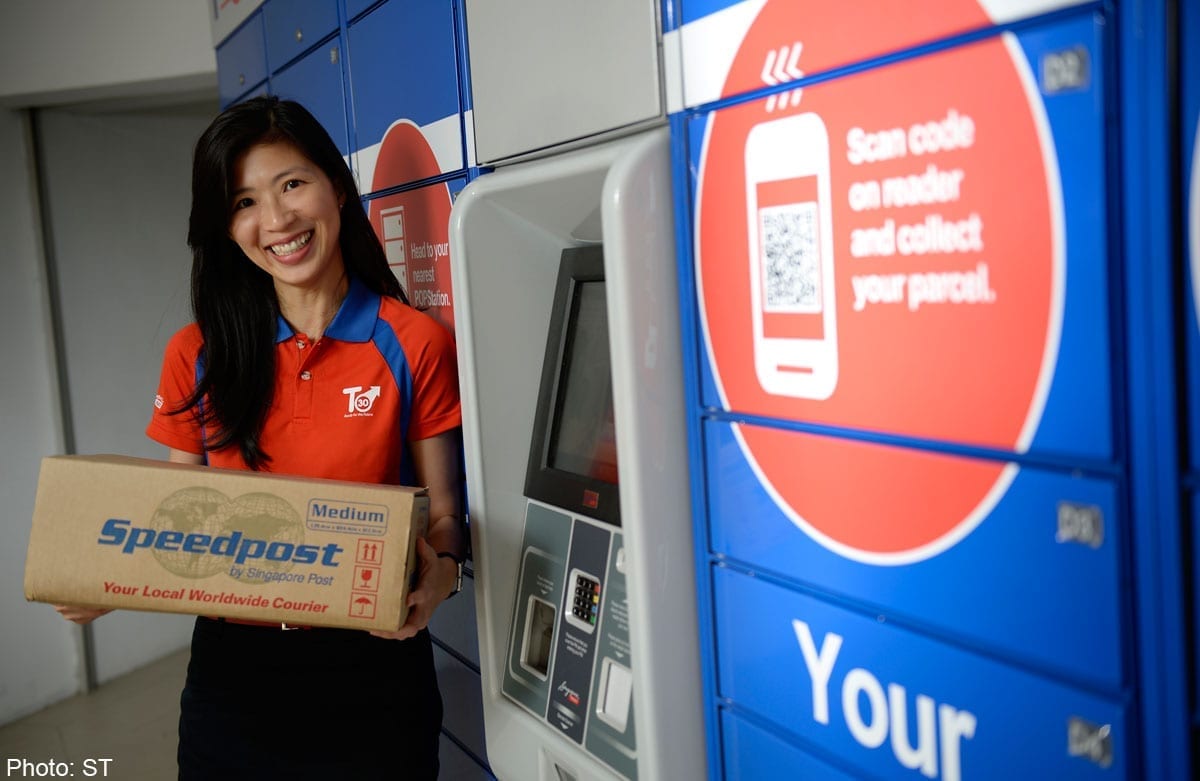
    Chinese eCommerce giant Alibaba Group has been given the go-ahead by Singapore’s stock exchange (SGX) to raise its stake in Singapore Post (SingPost).

    Alibaba Investment, a subsidiary of Alibaba Group Holding, has received in-principle approval from the bourse for the listing and quotation of about 107.6 million new shares in SingPost, says the postal group said in a filing.

    This is subject to compliance with SGX listing requirements, and SingPost shareholder approval.
    Shareholders will be sent a circular with details of the proposed share issuance, and notice of a related extraordinary general meeting.

    The deal aims to be completed by the end of February.

    As Alibaba’s second SingPost investment, it will raise its stake from 10.2 to 14.4 per cent.

  • SGX announces independent research paper on retail sector

    SGX announces independent research paper on retail sector

    The Singapore Exchange (SGX) has launched an independent research report. The research paper covers the retail sector in four Asean countries, namely Singapore, Indonesia, Malaysia and Thailand.

    Titled “Asean Retail: Overview, Trends and Outlook, with a focus on SGX-listed Companies”, the report evaluates the growth potential for ASEAN’s retail industry in response to rising middle-class consumers, increasing spending power and rising e-commerce sales.

    The report is segmented into six retail subsectors and for each, covers an in-depth analysis of the key sector drivers and an overview of the SGX-listed companies that are in these sectors.

    There are currently 43 retail companies listed on the SGX, with a market capitalisation of $30 billion.

    According to the report, retail sales in Thailand, Singapore, Malaysia, and Indonesia are projected to collectively reach US$1 trillion ($1.3 trillion) by 2018. Asean consumers also have higher purchasing power propelled by fast-growing incomes while the e-commerce space has expanded, offering new opportunities for retailers.

    “Despite headwinds facing the retail sector recently, we recognise the need to keep investors informed of the sector’s longer-term growth outlook in ASEAN, which continues to be backed by strong demographic and macroeconomic fundamentals. The emergence of e-commerce also presents an exciting growth opportunity for the sector,” says Simon Lim, SGX Head of Equity Capital Market (Sectors).

    To download a copy of the research report, go to sgx.com/retailcluster.

  • SGX proposes 10% minimum retail tranche for mainboard IPOs

    SGX proposes 10% minimum retail tranche for mainboard IPOs

    The Singapore Exchange is proposing that mainboard companies allocate to retail investors a minimum 10 per cent of shares in their initial public offers (IPOs), up to a maximum of $100 million.

    Between 2010 and last year, market debutantes on average set aside only 8 per cent of their IPO shares for retail investors, the SGX said.

    But over the same period, 90 per cent of IPOs received applications for their public subscription tranches amounting to greater than 10 per cent of the total offer size.

    “SGX’s proposal for a minimum 10 per cent retail allocation for shares of mainboard IPOs is aimed at giving individuals more investing opportunities in the Singapore equities market,” said chief executive Loh Boon Chye.

    “While market conditions may have been uncertain of late, this initiative is for the long term and is part of overall enhancements to the Singapore stock market.”

    This is the second time that the bourse operator has suggested introducing a minimum IPO allocation for retail investors. The first time it did so was in in 2012, when it proposed a 5 per cent retail allocation.

    Yesterday’s proposal is a recalibrated one that takes into account the feedback the SGX received from the 2012 consultation and data from IPOs launched between 2010 and 2015, it said.

  • SGX flags potential trading fraud in Zhongmin Baihui Retail Group

    SGX flags potential trading fraud in Zhongmin Baihui Retail Group

    Over 90% of trading volume came from a small group of investors.

    Singapore Exchange (SGX) urged investors and potential investors to exercise caution when dealing in the shares of Zhongmin Baihui Retail Group Limited (ZMBH).

    The SGX said that the share price of ZMBH remained steady from 26 October 2015 to 4 February 2016, despite a decline in the broad market. In particular, despite the STI falling 11.25% between 4 January 2016 and 4 February 2016 (relevant period), ZMBH’s share price remained relatively stable.

    SGX’s review of the trades in ZMBH shares during the relevant period showed that a small group of individuals was responsible for over 90% of the on-market buy volume of ZMBH shares. This group of individuals appears to be connected to each other.

    SGX is currently reviewing the trades in ZMBH shares and will take the necessary actions.