Retail News CRM

Tag: shopper

  • HKairportshop.com offers ‘world’s fastest airport pickup’ for Ecommerce Shoppers

    HKairportshop.com offers ‘world’s fastest airport pickup’ for Ecommerce Shoppers

    Hong Kong International Airport’s one-stop online-shopping platform HKairportshop.com is making orders purchased via the platform ready for pickup at the airport 90 minutes after the purchase is made – including duty-free hard liquor.

    The e-commerce platform brings together more than 3000 products including popular makeup and fragrances, travel exclusive collections, wines, electronic goods, souvenirs and HKIA’s exclusive smart luggage tag MyTag – which alerts passengers of their arriving bags when paired with the HKG My Flight app.

    The site is now offering travellers who spend more than HKD1000 (US$127.40) on the platform a saving of HKD200 ($25.48) when they use the promo code “UP200” from now till June 30.

  • Vicinity Centres Selects new Board

    Vicinity Centres Selects new Board

    Shopping centre operator Vicinity Centres has revealed that non-executive director Peter Kahan will replace Peter Hay as chair when he retires in August.

    Hay, who has served as chairman since Vicinity was formed in a 2015 merger of Federation Centres and Novion, will retire from the board after the company’s annual results are released in August.

    “It has been a privilege to work with such an exceptional board and management team to navigate through the merger and Vicinity’s formation, to see it become the unified and stronger organisation it is today,” Hay said in a statement.

    Hay said he is delighted Kahan will be taking over as chairman.

    “Peter is a highly experienced and thoughtful director who has made an outstanding contribution to Vicinity’s board during my tenure,” Hay said.

    “His extensive and successful property funds management, financial and business background, complemented by his highly strategic approach and vision, position him to be an excellent chairman through Vicinity’s next chapter.”

    Kahan, who has been a non-executive director of Vicinity since June 2015, also served as chairman of Vicinity’s Remuneration and Human Resources Committee and is a member of Vicinity’s Audit Committee.

    Kahan’s prior roles include The Gandel Group’s executive deputy chair, CEO and finance director.

    “It is an honour to be asked to succeed Peter Hay as chairman of Vicinity,” he said. “I am looking forward to working with the board and management team to continue our relentless focus and commitment to long-term value creation for Vicinity’s security holders.”

  • Ramadan an opportunity for E-Commerce Retailers

    Ramadan an opportunity for E-Commerce Retailers

    Online sales in Malaysia and Indonesia are set to boom in the lead up to – and during – Ramadan, according to an analysis by advertising platform Criteo. Based on data from last year’s festival – which ran from May 15 to June 14, consumer activity typically slowed at the start and end of the period.

    However, while this could be a result of consumers focusing more on the actual festivities during those times, online retail sales surged 10 days into Ramadan and lasted through the two weeks before Eid al-Fitr on 15 June.

    A 57 per cent uplift in online retail sales was observed on June 4, Criteo revealed.

    By comparison, shoppers in the Middle East typically shop early into the season and slow down closer to Eid al-Fitr to focus on celebrations. Online retail sales surged early, reaching a 106 per cent uplift on May 26. The shopping behaviour during Ramadan in Turkey mirrored that in Malaysia and Indonesia, with online retail sales reaching a peak at 50 per cent uplift a week before Eid al-Fitr.

    “Ramadan represents a notable cultural shift in consumer behaviour, with the Middle East and Southeast Asia being key regions,” said Criteo SEA-Pacific MD said Alban Villani. “Moreover, the global Islamic economy is also growing year-on-year, estimated to reach US$3 trillion by 2023.

    “Given the growth potential of the halal industry, retailers should leverage Ramadan to engage Muslim shoppers,” continued Villani. “They should start reaching out to shoppers early with the relevant messaging two weeks earlier, especially when shoppers are thinking of buying gifts for family and friends. As some shoppers might purchase later into the festive season, retailers should continue engaging them with special offers and personalised content throughout Ramadan to optimise their campaign efforts. By doing so, it is easier for retailers to stay top-of-mind when shoppers are ready to buy gifts to share the festive joy.”

  • Harley-Davidson’s New Engine Revealed

    Harley-Davidson’s New Engine Revealed

    Harley-Davidson is working on a new liquid-cooled engine that is expected to power a range of new middleweight models including the production versions of the Harley-Davidson Pan America adventure tourer, Harley-Davidson Custom 1250 and the Harley-Davidson Streetfighter. The engine designs filed with the European Union Intellectual Property Office reveals quite a few details about the new engine, which is expected to be used in several new models to be launched between 2020 and 2022. The new engine will be a 60-degree v-twin which will be fully liquid-cooled, with a compact crankcase and transmission.

    The design images of the new engine shows mounting points behind the transmission and on either side of the cylinder heads, and the concept designs of the upcoming models also suggested that the engine will act as a stressed member of the chassis. The latest design images don’t indicate any engine displacement, but Harley-Davidson has already announced that engine sizes will vary from 500 cc to 1250 cc. But these lack the traditional pushrods and will have double overhead cams.

    The original concept images of the upcoming Harley-Davidson models reveal that the engines on each model are slightly different. The Custom 1250 had different coloured covers for the heads for a two-toned effect. The Streetfighter 975 also had a two-toned engine but with a difference in colours. The latest design filings are a mix of the engine types seen on the concept images. The head covers and cylinder covers are all separate pieces on the engine design images. At least three new models, showcased as concept images, will be launched in the next few years. First up, will be the Harley-Davidson Pan America adventure tourer, which will likely be launched in 2020, as a 2021 model. Next up will be the Streetfighter, which is expected sometime later, followed by the Custom 1250.

  • Lazada Fires Up Growth Of “Super eBusinesses” In Southeast Asia

    Lazada Fires Up Growth Of “Super eBusinesses” In Southeast Asia

    Southeast Asia eCommerce leader Lazada today announced an allen compassing series of products and services that will fire up the growth of its brands and sellers – big or small – to win market share in the region by transforming them into “Super eBusinesses”.

    The offerings, dubbed super-solutions, are aimed at resolving three pain points that brands and sellers face – branding, marketing and sales. These features, which have been rolled out in conjunction with Lazada’s 7th Birthday celebration, are aimed at brands and sellers, of all sizes, to ensure they are well-positioned to ride the eCommerce boom in Southeast Asia.

    “No seller is too small to aspire, and no brand is too big to be a Super eBusiness. That is why we are thrilled to roll out super-solutions to help our brands and sellers become more nimble in digitising their businesses and better reach customers,” said Pierre Poignant, Lazada Group Chief Executive Officer. The “super-solutions” which were unveiled include: – A series of ‘Super’ campaigns in which LazMall brands and sellers can choose to take part to boost

    their brand image and better engage with customers;

    – A new and improved Marketing Solutions Package and Business Advisor Dashboard that can deliver more traffic to their storefronts, and arm brands and sellers with near real-time information to help them make faster and better decisions to sell more effectively and efficiently;

    – New tech tools like Store Builder for brands and sellers to customise their storefronts to differentiate themselves on Lazada, while in-app live streaming, news feed and in-app consumer games can help win the hearts of consumers with higher consumer engagement. (See factsheet for details)

    At the same time, Lazada also formalised cooperation partnerships with 12 leading global lifestyle, technology and fashion companies that will boost collaboration and strengthen their online retail presence. Called Joint Business Partnerships (JBP), these collaborations will enable brands to tap on Lazada’s industry-leading tech and logistics infrastructure, innovation and e-commerce expertise. Lazada today inked Memorandums of Understanding (MOU) with electronics leaders Realme and Coocaa, while the one with Huawei was signed earlier this month. Other brands that are set to join will include several of the world’s biggest FMCG companies.

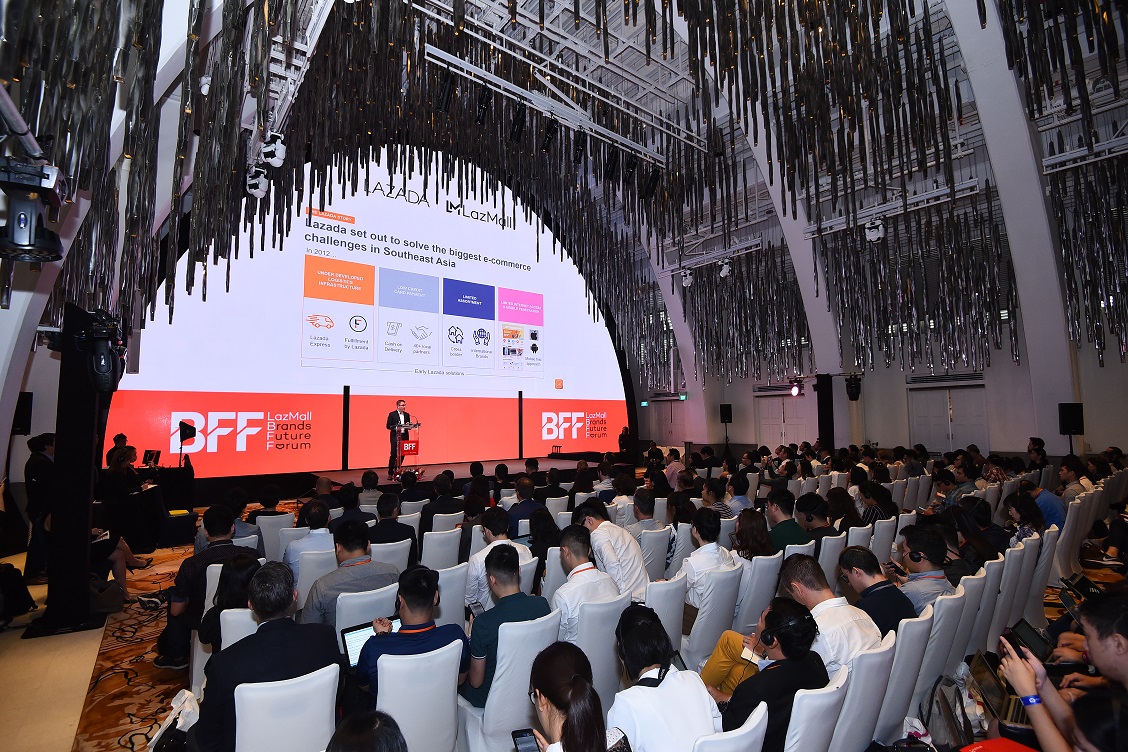
    Backed by Alibaba’s technology and logistics infrastructure, Lazada has been able to launch over the past year industry-leading tech innovations like search-image function, consumer engagement games and in app live streaming to become the region’s only “shoppertainment” platform on which people can watch, shop and play, said Poignant at the inaugural LazMall Brands Future Forum (BFF). The annual summit gathers brands and sellers to discuss growth opportunities and technological advancements that will create

    ‘Super eBusinesses’, shaping the future of Southeast Asia’s eCommerce landscape. Accelerating the growth of Lazada brands and sellers The super-solutions will also make it easier for brands and sellers to open up stores on LazMall. Qualified merchants can now take advantage of the new self-sign up feature, a simplified sign-up process that can now be completed in mere minutes. This is in line with the Lazada’s goal of enabling SMEs to become globally competitive.

    “Since the launch of LazMall in 2018, we have seen tremendous growth among our key pioneer brand partners. We want to extend the benefits of LazMall to even more brands and sellers to elevate their eCommerce operations,” said Lazada Group President Jing Yin. “We want to incubate them so they can grow alongside us and become sustainable and successful e-businesses.”

    Across the region, 60 percent of small and medium enterprises (SMEs) are keen to invest in technologies to achieve sustainable growth in today’s digital economy. Business-oriented tools including online commerce solutions, customer relationship management (CRM) and business intelligence, were identified as the top investment priorities1.

    Further promoting excellence in eCommerce, Lazada also handed out awards to top performing brands that have proven to be shining examples of “eBusinesses”. Five awards were presented to outstanding brands and sellers that have been constantly innovating to drive new ways to reach their customers on

    Lazada. Comprising global and Southeast Asian brands, the winners are Unilever (Best Marketing Innovation), Pampers (Best Social Media Activation), Coocaa (Fastest Growing Brand), Philips (Customers’ Choice Award) and Wardah (Best Product Launch).

    Driving ‘Shoppertainment’ in Southeast Asia Pushing boundaries in eCommerce in Southeast Asia, Lazada is driving ‘shoppertainment’ to provide shoppers with a fun, interactive and entertaining experience. As part of its 7th birthday celebrations, Lazada is hosting a first-of-its-kind concert, called “Super Party”, in Jakarta on March 26, 8 pm (Jakarta time).

    The concert, which features a star-studded lineup including British popstar Dua Lipa, culminates with Lazada’s birthday shopping event on March 27. The one-day sale promises a new online shopping experience that includes a new selection of exciting games for redeeming vouchers and attractive deals for consumers in the region.

  • Shoppers prefer human interaction over bots, says study

    Shoppers prefer human interaction over bots, says study

    New research reveals 75 per cent of shoppers prefer live-agent support for customer service verses 25 per cent support for self service and chatbots. The research, from cloud contact-centre operator NewVoiceMedia, identified consumer concerns about sharing sensitive information, a lack of understanding of bots and their inability to resolve issues.

    “Chatbots can provide customers with quick answers to frequently asked questions or issues, and the survey notes the benefit of chatbots for certain interactions, such as 24-seven service,” the survey’s authors concluded.

    But when it comes to handling sensitive financial and personal information, most customers are more comfortable with a live agent, and just 13 per cent say they would be happy if all service interactions are replaced by bots in the future.

    Foremost among consumer concerns about using chatbots include:

    • A lack of understanding of the issue (65 per cent).
    • The inability to solve complex issues (63 per cent).
    • The inability of chatbots to provide answers to simple questions (49 per cent).
    • The lack of a personal service experience (45 per cent).

    While less than half of the people surveyed (48 per cent) said they would be willing to use chat bots for service – versus the 38 per cent who wouldn’t – 46 per cent also felt that bots kept them from reaching a live person.

    Banks (82 per cent) and medical services (75 per cent) were the businesses that people were least likely to want to deal with bots.

    Customers prefer live agents for technical support (91 per cent); getting a quick response in an emergency (89 per cent); making a complaint (86 per cent); buying an expensive item (82 per cent); purchase inquiries (79 per cent); returns and cancellations (73 per cent); booking appointments and reservations (59 per cent); and paying a bill (54 per cent). However, when asked about buying”a basic item”, 56 per cent would choose a chatbot over a live interaction.

    The top benefit cited for dealing with chat bots was 24-hour service.

    “When a situation becomes emotional or complex, people want to engage with people”, says Dennis Fois, president of NewVoiceMedia. “As businesses add more customer service channels, conversations are becoming more complex and higher value, and personal, emotive customer interactions play a critical role in bridging the gap for what digital innovation alone cannot solve,” he said.

    “For this reason, companies must find the right balance between automation and human support to deliver the service that customers demand. Frontline contact centre teams will continue to be the difference makers on the battlefield to win the hearts and minds of customers, and organisations deploying self-service solutions should ensure that there is always an option to reach a live agent”.

    There is a sense consumers may warm to chatbots in the future, however, given that younger respondents (aged 18-44) were more open to using chatbots overall and across the individual scenarios compared to older consumers (45-60+).

  • Alibaba develops new technology to help the blind shop online

    Alibaba develops new technology to help the blind shop online

    E-commerce giant Alibaba has developed new technology to make it possible for blind and partially sighted people to shop online, according to an article on Alibaba’s news site Alizila. Alibaba plans to launch Smart Touch, an affordable silicone sheet that goes on top of smartphone screens, later this year. The plastic film includes three mini buttons on each side that sensory-enabled. Pressing on each one will trigger a different command, such as “go back”, “return to homepage” and “confirm”.

    Depending on the app, the buttons can lead to different destinations, such as “My Shopping Cart,” “Tmall Global,” and “Tmall Supermarket” in the Taobao app.

    Smart Touch is a joint effort of Alibaba’s Damo Academy and China’s Tsinghua University to improve the smartphone experience for the blind.

    The technology also has an “ear touch” feature, which gives blind and visually impaired users a simple way to listen to text clearly and privately in public, without the need for headphones. It senses when the users is holding the phone to their ear and automatically routes the sound output from the loudspeaker to the earpiece speaker.

    In October last year, Alibaba added Optical Character Recognition (OCR) technology to the pages of its online marketplace Taobao, an artificial intelligence-driven feature that reads text written on images.

    Before adopting OCR, Taobao’s 300,000 daily active users who are blind or have reduced vision would have used screen-reading software that simply announced “image” as it scanned the page. By early December, OCR was being used to read close to 100 million images per day, Alizila reported.

    “Images are becoming ever more important in the shopping experience,” said Wang Yongpan, algorithm specialist who led the OCR upgrade.

    “A typical product page on the site contains about 40 images, and most product specifications and descriptions are often found within images, rather than typed out in plain text.”

    Yongpan said that while Alibaba has been using OCR for many years in various capacities, the technology’s accuracy in reading images has grown exponentially due to advances in machine learning.

    According to Taobao president Jiang Fan, making the platform more inclusive, user-friendly and a home for creativity is part of its larger strategy.

    “If I had to do one thing this year, that would be to make Taobao simpler and bring [us] back to our original purpose,” he said.

    “Alibaba is famously known by its motto, ‘To make it easy to do business anywhere’.”

    The OCR launch was driven by Alibaba’s “Barrier-Free Lab”, which started with a handful of employees in 2011 and has since grown to hundreds of volunteers, ranging from programmers to user-experience designers.

    Now, similar tools can be seen across Alibaba’s ecosystem, expanding from Taobao to B2C e-commerce site Tmall, payments affiliate Alipay, online delivery platform Ele.me, enterprise chat app Dingtalk, navigation firm Amap, music streaming app Xiami and internet browser UC Web, from desktop to mobile.

  • AirPass helps Aussie retailers woo Chinese shoppers

    AirPass helps Aussie retailers woo Chinese shoppers

    Recently, Australia fintech company AirPay Financial Technologies announced its regional collaboration with China leading mobile payment technology company SwiftPass to form a new lifestyle brand “AirPass”. Connecting Australian merchants directly with Chinese consumers, AirPass lets local retailers accept WeChat Pay and Alipay both online and offline, as well as reach overseas markets to make the most of the global Chinese spending boom.

    AirPass is a lifestyle brand backed by Australian fintech startup AirPay Financial Technologies, in partnership with leading Chinese mobile payment provider SwiftPass. The new brand brings China’s most popular ePayment, eStore, eCard, eMarketing and eWallet services to Australia, allowing Chinese tourists, students and migrants to make over the counter purchases by simply scanning a QR code on their smartphone.

    The payment platform can also be integrated into Australian e-commerce websites and mobile apps, taking advantage of AsiaPay’s PayDollar payment gateway. Supporting multiple shopping cart plugins, PayDollar provides a one-stop online payment solution allowing local merchants to accept Alipay, WeChat Pay, Visa, MasterCard, Amex, PayPal and ZipPay

    “AirPass is providing a user-friendly platform for Australian retailers to build their own eStore to facilitate marketing and payment – which is the key to entering the Chinese consumer market,” says SwiftPass Technologies VP Tong Liu.

    Meanwhile, the AirPass app for iOS and Android lets Australian retailers connect directly with Chinese shoppers. AirPass assists Australian retailers and brands with setting up their own WeChat eStore to tap into Chinese social marketing channels. This allows local retailers to sell products via the WeChat ecosystem, reaching new customers in China along with Chinese communities around the globe.

    AirPass’ arrival in Australia comes as Boxing Day saw record high sales to Chinese shoppers across major retailers and shopping centre groups such as Westfield, Chadstone, QVB and Pacific Fair.

    “We are thrilled to announce our regional partnership with SwiftPass and recently launch WeChat Pay and Alipay to Australia’s largest and oldest pearling company Paspaley,” says AirPay Financial Technologies chief executive Jimmy Zhu. “There is huge demand from the market pushing us to deliver more advanced payment and marketing products.”

    Another Australian family-owned luxury retailer, Harrolds recently launched a WeChat Official Account and will soon accept WeChat Pay and Alipay in-store.

    Other luxury brands such as Gucci, Saint Laurent, Bottega Veneta, Balenciaga, Valentino, Mulberry, Givenchy, Off-White, Marais, Furla, Folli Follie and Sneakerboy are also adopting the AirPass platform in order to better reach Chinese shoppers.

  • Almost all Vietnamese internet users shop online

    Almost all Vietnamese internet users shop online

    Up to 98 percent of internet users in Vietnam have made purchases online, up one percentage point over 2017. Increasing effectiveness of the online retail ecosystem in meeting the convenience of its shopper base has strengthened the online shopping habit, according to the 2018 Nielsen Connected Commerce Report.

    Fashion, travel, books and music continue to account for the largest proportion of online transactions in consumer goods, with 59 percent, 52 percent and 51 percent of Vietnamese consumer respondents saying they have purchased goods in the above categories in the respective order.

    These are also considered typical categories for the first-time online shoppers.

    Nguyen Anh Dung, director and head of Retail Measurement Services for Nielsen Vietnam, said that as levels of familiarity, comfort and confidence grow, consumers are likely to move on to purchasing items such as beauty products, personal care, packaged food or fresh groceries.

    For relatively new products, about two in three consumers said that return policies for products not of satisfactory quality have encouraged them to shop online.

    The other concern of consumers is free or same day delivery services.

    Vietnam has targeted that 30 percent of its population shop online between 2016 and 2020, with yearly sales value of approximately $350 per person.

    The country’s e-commerce value climbed to about $4 billion in 2016, becoming one of the fastest-growing markets in the world.

    Revenue from online retail in Vietnam is forecast to hit $10 billion by 2020, accounting for five percent of the country’s retail market.

  • How to get GEN Z?

    How to get GEN Z?

    From a shared workspace in Shoreditch, Threads Styling sells luxury fashion to ultra-wealthy twenty-somethings from around the world the same way they are used to chatting with their friends: via social media messaging platforms like WhatsApp, Snapchat, Instagram and WeChat.

    A recent Instagram Stories posted by Threads, called “Fresh Fendi Finds,” shows a video of a model in a denim logo-covered trench coat posing in a decadent store, a close-up of her white knee-high crocodile-skin cowboy boots and a series of photos of her gold logo earring hoops with the hashtag #hardwareheaven. Swipe up and you are connected to a personal stylist. “Hello! I would love to help you with this enquiry,” a live chat begins.

    “It’s something really personal and really digital and how you can go beyond e-commerce,” says Threads Styling founder Sophie Hill. The company is not yet profitable, but sales growth has doubled annually for the past four years, putting yearly revenue “in the tens of millions of pounds,” according to a source close to the business. Revenues come from “wholesale to commission” partnerships with brands, though the company does not hold inventory, Hill explains. Now, the start-up has secured $20 million in Series A funding from Highland Europe and C Ventures.

    Hill, a millennial herself, launched Threads Styling in 2010 as a personal shopping service that was entirely mobile and social media-based because it was “exciting, convenient and more personal and curated.” She started by partnering with five-star hotels in London to deliver a shopping concierge service to their guests and quickly built up a following with young, Middle Eastern royalty who not only wanted the bag of the season, but also advice on how to style it, serviced exclusively via their phones. Freelance stylists curated a constant stream of looks to post on social media, while personal shoppers offered fashion advice, sourced items and then dispatched them globally. In 2012, Hill hired her first full-time staff member. Today she has 90.

    Powered by algorithmic “chatbots,” messaging-based e-commerce, or “conversational commerce,” was once believed to be the next big thing in online shopping. Facebook was particularly bullish, painting a bright future for chat-based commerce on its Messenger app. But the technology failed to take off and the hype died down. Now, the introduction of Apple Business Chat has rekindled interest in the space. Threads Styling plans to scale its business with chat bots that can handle conversations with demanding luxury customers. It also plans to add offices in the US and Asia.

    Hill had the foresight to see that Generation Z, born post-1996, do most of their shopping research on social media, while their smartphone ownership is close to universal, with an average of 2 hours 43 minutes a day spent on social networks and messaging services, according to GlobalWebIndex, a consumer data analytics firm. Gen Z are also less loyal to retailers, so developing real relationships is key.

    “It’s a relationship we build with the customer. We’re more like an influencer and less like a brand,” says Hill. Their shoppers are “extremely loyal” repeat buyers, who shop at full price and often buy the entire look in one of the company’s social posts.

    The average shopper at Threads is 25 years old. Many of them are also ultra-high net worth individuals, defined as those with assets over $30 million, says the company’s vice president of brand strategy Rachel Reavley. Average basket size is $3,000 with a return rate below 5 percent. That compares with average order size of $373 at Yoox Net-A-Porter, $729 at MatchesFashion and $1,400 at Moda Operandi. No wonder Threads has over 250 luxury brand partners from Fendi to Chopard and Dior.

    Gen Z is growing in importance for luxury brands. Currently, this generation only accounts for 2 to 3 percent of luxury market sales, while millennials make up 30 percent, according to John Guy, luxury analyst at Mainfirst Bank. But the split is set to shift. In China, half of luxury shoppers are under 30, according to research by Secoo and Tencent.

    Threads is certainly not alone in targeting wealthy Gen-Z shoppers. At MyTheresa ultra high net worth individuals account for 30 percent of total revenues, and “the speed with which Gen-Z customers currently show up in this group is faster than any other customer type, although still at a small scale,” says Michael Kliger, president at MyTheresa. “We have seen a progressive increase in the number of young customers shopping with us globally and have to tailor the way we service these customers, particularly with their focus on social and mobile. They react with speed to any social content, in particular pre-launches, new arrivals or exclusives.”

    “One thing we find that sets Gen Z apart from our other EIP customers is their openness to try new designers; they’re not brand loyal and instead they look for the right product and design over the designer,” says Elizabeth von der Goltz, global buying director at Net-a-Porter, referring to high-spenders that the e-tailer calls “Extremely Important People” or EIPs. “Having said that, the brands that consistently perform really well for this audience are those whose collections are more logo-focused or who offer a more streetwear aesthetic: from Gucci and Balenciaga to Vetements and Off-White. And they’re obsessed with newness.”

    But physical stores are anything but dead. Most Gen-Z consumers actually prefer to make purchases in physical spaces though they may be researched, price compared and influenced by friends on social media prior to the actual transaction. That means luxury stores need to be experience-focused, Instagram-worthy, fun and include engaging customer services akin to a VIP experience, according to Tiffany Zhong, the 21-year-old founder of Zebra Intelligence, a Gen-Z consumer insights platform.

    “I think a lot of luxury brands are missing out, they think millennials are more important and they do not know how to target Gen Z,” Zhong says. “For them, luxury is stuff that’s scarce or stuff that others don’t have, limited edition items. Gen Z cares about being unique,” she continues, adding: “The experience is just as important as the product, whether its in-store or online it’s about making it unique and fun.”

  • Korean’s overseas card spending hits record high in first quarter

    Korean’s overseas card spending hits record high in first quarter

    Overseas card spending by Koreans hit a fresh record high in the first quarter on rising outbound tourists, central bank data showed Thursday.

    In the January-March period, a record $5.07 billion worth of purchases were made abroad, up 11.4 percent from three months earlier, according to the data by the Bank of Korea. From a year earlier, the Q1 tally marked a 26 percent increase.

  • Young shoppers’ big, luxurious spending emerges as new trend

    Young shoppers’ big, luxurious spending emerges as new trend

    Shoppers  in their 20s in South Korea have become more prone to spending big on luxury items and services, emerging as a new consumption trend, according to industry data.

    Mobile commerce company Tmon says the sales pattern over the past three months showed that purchases among young shoppers of luxurious products and high-end services in fashion, food and travel categories have significantly surged.

    From 21 October 2017,  Tmon’s overall sales of sneakers from luxury brands like Gucci, Golden Goose, Valentino and Alexander McQueen — which range price between 300,000 won (US$280) and 800,000 won — rose 66 percent, compared to the same period in the previous year.

    The sales increase was particularly high among consumers in their 20s, soaring by 106 percent on-year.

    Over the same period, hotel buffets, particularly dessert buffets, also logged a sales increase of 71 percent on-year among young consumers. The price of a hotel buffet in Seoul begins from 44,100 won per person.

    The company said it had sold over 2,400 entries to such dessert buffets in just two months, portraying young shoppers’ interest in Instagram-worthy food spots.

    “From luxurious goods to upscale brunch bites and private travel products, the tendency of consumers to focus on higher satisfaction is expected to continue throughout this year,” said Han Jae-yeong, Tmon’s chief strategy officer.

    A similar trend can be seen in the popularity of Moleskine, a Milan-based luxury notebook company founded in 1997.

    Its limited edition notebooks — some of which have been inspired by Lego, “Star Wars,” “The Simpsons” and “The Hobbit” — are typically priced from 30,000-40,000 won, but the notebooks quickly sell out.

    “Consumers tend to find high quality and the brand value of Moleskine products worth spending their money on, which also gives them even a sense of ‘achievement’ when they purchase a limited edition, although it’s pricey,” said Yim So-young, a marketing manager for Moleskine in Korea.

    “Korean consumers’ interest in limited edition goods and premium product lineups will only expand in the future,” she added.

    And the trend is more marked among, while not limited to, the younger generation.

    According to Lotte Home Shopping, sales of global premium home electronic appliances such as Blomberg dryers and Balmuda’s steam oven toasters have seen double-digit growth each year since 2015.

    The company said such high popularity is attributable to premium brand products’ high performance and luxurious and sleek design, as well as brand awareness.

    Swiss coffee maker Jura’s E7 automatic coffee machine receives at least 1,000 calls on order each time the product goes on air, the company said. The coffee machine costs nearly 1 million won.

    Among Tmon’s travel products, sales are rising for luxurious accommodation in Japan, such as at ryokan, a type of traditional Japanese inn equipped with Japanese hot springs and private bathing facilities.

    The most expensive ryokan are “Category A+++” which begin at 70,000 yen (US$640) per person. The price for average ryokan begin from 300,000 won per person. Until only recently, ryokan had been considered as accommodations primarily for middle-aged couples or family trips.

    The company, however, said over the past three months, 20-somethings’ purchases of ryokan accommodations through packaged tours or individual trips had soared 166 percent on-year.

    asIndustry watchers say the trend will likely last, as consumers continue to crave satisfactory experiences and pleasures.

    “It is experience that many consumers now prefer, and it’s especially the dominant and preferred choice among those in their 20s, who want to experience the diverse range of the latest, satisfactory products and services,” said Jeon Mi-young, research professor at the Department of Consumer Science at Seoul National University, in an interview with a local daily.

  • The Australian shopper has never had so much power

    The Australian shopper has never had so much power

    As the retail sector evolves, the average customer’s expectations are changing. To stay ahead of the curve, businesses need to adapt.

    The average Australian has been quick to adopt online shopping. In 2016, online sales exceeded $20 billion for the first time. Key emerging trends signify beyond doubt that the retail landscape is changing rapidly. To avoid being left behind, Australian retailers need to act now.

    The recent Salesforce Empowered Shopper report highlights the challenge: “We’re in the age of the customer. They expect personalised experiences everywhere, not just in marketing communications, and physical stores are just one touch-point in their increasingly dynamic retail interactions.”

    So what does this mean for Australian retailers as they develop their approach to e-commerce over the next few years? Uber has created an expectation that when a traveller finishes a journey they simply need to get out of the car. The same shift in expectations is happening in the online retail world. Local e-commerce stores such as The Iconic and Showpo are continuously making the ways their customers engage with them easier, faster and more relevant. Step by step, they are raising the bar for all digital retailers.

    Australia’s e-commerce revenue is sitting at $9.54 billion USD, but it is expected to hit $14.151 billion USD by 2020. For retailers this means focusing on a connected customer experience where competitive advantage can be created, with 66 per cent of customers expecting consistent experiences across every brand interaction.

    Another key insight from the report is the evolving view of privacy as part of the overall customer experience. Consumers expect businesses they deal with to maintain their personal privacy. This means brands that focus on transparency around what data they have and how it is being used are rapidly gaining consumer trust.

    While the Amazon and Apple global giants will always exist, Australian businesses can compete through adopting established customer-centric technologies and processes to ensure you maintain the right focus for your business:

    1. Don’t think about catching up, focus on leading in one area

    You can’t do everything. Maintaining focus on a core brand experience is where you can build momentum and differentiation. It’s the harder path initially as the work may not impact sales results in the short term, but it can pay off in a big way.

    A great example of this is The Iconic, they’re all about providing consistent, amazing customer experience. They do this by delivering on what they say they will; next day delivery and free returns. They back this up by being available via multiple channels to resolve issues efficiently and with autonomy, should they arise.

    Action: Use design research techniques to map the customer experience, identify one customer problem that will have a major impact and differentiate. Focus on addressing that issue to build capability and velocity within your organisation.

    2. The customer is central

    The customer, as always, is king. Each interaction with your customer is an opportunity to understand them better. Transactional data allows you to build profiles so you get to know what makes them tick.

    But now you can build profiles that allow you to understand them in greater detail. This knowledge also gives you great power. But, at the risk of sounding like a superhero comic, with that power comes great responsibility. Misuse turns customers off fast. Used correctly, this information can help you focus on driving value for your customer firstand foremost.

    Action: Use the data you have, and may be able to access, to build rich views of Customer Lifetime Value. This will ensure your organisation can see the impact of action in a more holistic and long term way.

    3. Create experiences that allow the customer to live your brand

    Consumers no longer want to passively watch brands tell stories. They want to be part of the action. Design experiences, in the real and digital world, that allows the customer to experience your brand promise.

    Take a look at Nike, and you’ll see they’ve become much more than a brand that sells shoes and sportswear. Their invention of Nike+, first as a sensor in a shoe, then as a wristband and now as a suite of apps, allowed them to focus on what their brand is really about: athletic performance. In doing so they gathered vast amounts of information about how their customers were using their products and created a very ‘sticky’ digital ecosystem.

    Action: Create user experience projects, with design researchers, data analysts and interaction designers, with the intent of defining how your brand would be experienced as an interaction or digital product.

    4. Focus on a long term competitive advantage

    Marketing through technology is not like delivering passive media. You now have the opportunity to introduce technology to your strategy that can help you communicate with your customer, empower your customer and allow you to build relationships over time. Spend more time on creating long term connections, and less time on flashes in the pan.

    Don’t rely on gimmicks and promotions to create loyal customers, utilise customer data and insights to build relevant, meaningful conversations, and stay focused on what your customer needs. Everything else will follow.

    Action: Use hypothesis based testing to build knowledge of what customers actually want. Then use this knowledge to design and build online experiences that create a long term brand differentiator, and a unique relationship between the brand and each customer.

    While many commentators will say that traditional forms of advertising still have their place, what recent events have shown us is that place is increasingly at the bottom of the pile. What’s clear is that businesses need to ‘become digital’ – simply doing digital marketing won’t cut it. Now is the time to invest seriously in your customer, digital technologies and data-driven communications.

    To win in today’s environment it’s critical that businesses start to create a balance between digital advertising and customer focused digital innovation. They need to make the shift from just making people want things, to creating things and experiences that people want.


  • GSK Shopper Science Lab opens in Singapore

    GSK Shopper Science Lab opens in Singapore

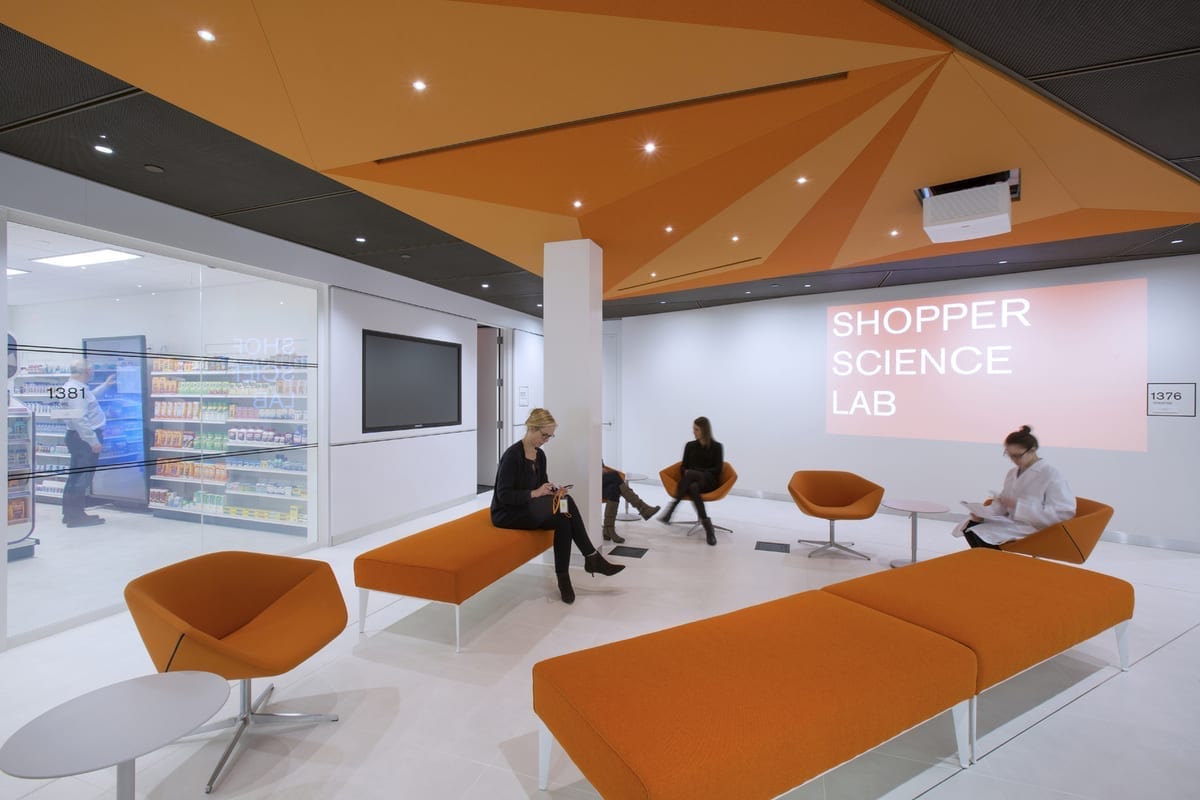
    A new GSK Shopper Science Lab opened in Singapore will help drive business growth across Asia-Pacific, the company says.

    GlaxoSmithKline (GSK) Consumer Healthcare describes the research centre as a “cutting edge facility” which will deliver unique shopper insights and collaborations with retailers.

    “The Shopper Science Lab is a world-class shopper insight facility, equipped with state-of-the-art digital technology. With virtual reality, eye-tracking, facial biometrics, and data visualisation as some of the tools employed in-house, GSK will invite its trade partners, internal business teams and researchers to use the Lab to recreate retail environments; evaluate shoppers’ responses to online and in-store initiatives; and identify winning strategies and initiatives to enhance the shopping experience,” the company said in a statement.

    “As more shoppers join the global middle class, there is an increased demand for trusted, global brands particularly in the emerging markets. The GSK Shopper Science Lab has close proximity to large emerging markets like India and China, enabling GSK and its retail partners to study diverse emerging shoppers closely, with local data collected on the ground.”

    The GSK Shopper Science Lab consists of three labs integrated seamlessly:

    • A 1215 sqft Retail Lab, an immersive retail environment that allows the re-creation of modern and traditional retail environments such as a pharmacy or supermarket, allowing GSK and its partners to quickly test and evaluate shopper responses.
    • A Digital Lab which is a collaborative space which has the ability to test stimuli such as pack designs, point-of-sale materials, brand assets, TVCs, or content across all platforms.
    • A Collaboration Room, which provides a space to convene key decision makers, enabling them to embark on virtual and fully interactive simulations that include relevant data for faster and more informed decision making.

    “Traditional market research is often time-consuming and expensive,” explained Sidharth Singh, VP of commercial excellence, GSK Consumer Healthcare Asia, Middle East and Africa. “By leveraging the latest advances in virtual reality and biometric technology, we are now able to gather insights more efficiently and effectively.”

    An example of such technology is eye-tracking glasses which can be transported to various cities to provide researchers with an indication of how shoppers shop locally. Technology such as virtual reality, tracking sensors and software that can decode the hotspots, can help analyse this highly localised data to understand shopper behaviour in diverse markets.

  • China’s personal shoppers are cashing in

    China’s personal shoppers are cashing in

    Julie Li is laden with Harrods carrier bags full of cosmetics, but they are not hers; the 30-year-old finance graduate from Beijing is a fulltime freelance retail consultant, something known in China as a daigou.

    “I worked as a daigou alongside my day job for about three years, but six months ago, I decided to quit my job to fully concentrate on the business because the profit margin is lucrative and the hours are more flexible,” said Li, who asked to be known by a pseudonym.

    Dressed in a fashionable white Reiss dress and holding a light color Chanel leather handbag, Li is glued to her smartphone. She is using the messaging app Wechat to communicate with clients in China who are willing to pay a premium for authentic luxury goods that are usually relatively cheaper than they are in China.

    Having developed three major wholesale clients, each with around 300 customers, Li buys 10,000 pounds’ worth of top-end lipsticks on behalf of clients every day.

    “The weak pound after Brexit is also giving a boost to my business and sales have doubled in recent months,” Li said.

    Charging 5 percent of the retail price and handling large quantities on a daily basis, she is able to pocket as much as 20,000 pounds in commission during a good month.

    “My clients are usually middle-incomers in China who have a strong appetite for high-quality products,” she said. “I believe the quality standards, the product ranges and the cheaper prices are the main reasons why Chinese consumers look to the West.”

    Li said a high-end daigou has to know about products, prices, colors, range, and availability.

    Experts say the agents have challenges because customers need to be convinced the goods they receive are genuine and that suppliers are reliable.

    “An important issue is the uncertainty faced by consumers who wonder whether products are genuine because, the higher the demand for a product, the more there is a chance it will be a fake or an adulterated product,” said Pervez Ghauri, professor of international business at Birmingham Business School.

    The buyers are mainly from the Chinese mainland and specialize in helping customers in China buy luxury products, including bags and cosmetics, as well as health supplements, such as baby milk formula.

    Business has boomed in recent years, accounting for RMB 34 billion to RMB 50 billion ($5 billion to $7.4 billion) in global sales last year, according to a report from consultants Bain & Company.

    In 2008, the baby milk scandal, in which Chinese milk and infant formula was contaminated with melamine, led to many Chinese parents shopping overseas for milk formula. At the height of the boom in demand for milk formula, retailers in the UK rationed the sale of powdered baby milk to ensure availability for domestic parents.

    Observers note that safety standards are one of the reasons why some Chinese consumers buy Western products.

    Geoffrey Wood, dean of the Essex Business School, said many Chinese consumers believe Western countries have more rigorous production standards, and the will to enforce rules ensuring quality.

    Seizing the opportunity presented by the baby milk scandal, 29-year-old Jimmy Zhen-not his real name-began buying milk powder for his Chinese customers in 2009 while working a fulltime job.

    “In the beginning, I only shopped for family and friends who knew I was abroad and felt the authenticity of the products was assured. Through word of mouth, I developed a large customer base, and built trust with my clients,” he said. After demand rose, he became a fulltime shopper in 2011.

    A restriction brought in by the UK government in 2013 to cap the sales of milk formula at two cans per customer stacked the deck against Zhen’s business, but he managed to find a way out by paying students 50 pence above the retail price for every can they sold him. He currently ships more than 8,000 tins each month.

    Earlier this year, the Chinese authorities tightened regulations around cross-border online shopping. Commentators say the changes, to Chinese customs regulations and ecommerce has dented the daigou’s trade, but Zhen has adjusted by shipping four cans at a time instead of six. It ensures he avoids paying import tax.

    Daigou shoppers admit their industry exists in a grey zone legally and is likely to be short-lived, but Li is cashing in for as long as she is able.