Tag: shops

  • Data-sharing Algorithm launched for Indian rural store owners

    Data-sharing Algorithm launched for Indian rural store owners

    Data platform Next Billion is collaborating with data exchange service Ocean Protocol to pilot a new data-sharing model that gives Indian rural store owners an extra income stream.

    Next Billion, which creates insights to enable companies to expand in high-growth emerging markets, provides free point-of-sale platforms to rural store owners to record real-time inventory and sales data. It is building a data marketplace and piloting a new data sharing model based on Ocean Protocol, the first general platform for borderless data sharing that marries blockchain, data and AI.

    Through the pilot, Indian rural store owners will capture real-time transactions via the POS platform and are incentivised to consistently use this platform to submit verified data. When companies buy their syndicated data, transactions can be traced back to the source via Ocean Protocol, enabling Next Billion to reward these rural store owners with royalties.

    “We believe global companies’ needs for commercial data can unlock sustainable and inclusive business models that empower local data providers to share fair value from their data,” said Next Billion MD Oliver Gilbert. “Ocean Protocol enables Next Billion to monetise data and share it with companies in a safe and secure manner.”

    Despite the lack of digitisation in retail practice in rural Asia, sales are climbing. Driven by the rise of the middle class, the consumption of fast moving consumer goods (FMCG) in rural areas is growing across Asia. From 2009 to 2012, spending by India’s 800+ million rural residents reached $69 billion, some 25 per cent more than their urban counterparts over the same period.

    According to recent estimates, consumption in rural areas is growing at 1.5 times the rate in urban areas. The current $12 billion consumer goods market in rural India is expected to reach $100 billion by 2025.

    FMCG companies are eyeing this new opportunity and have revved up their distribution channels in rural areas.

    This has been reflected by a significant rise in demand for rural market-research data. However, traditional market-research firms lack rural reach, maintain outdated platforms premised on different environments, and their costs remain prohibitively expensive.

    Ocean Protocol is a blockchain-based platform for the safe sharing of data that enables companies and data services to build on top. Its technology allows organisations to put a value on, own and control their data while addressing many frictions around data sharing today – including privacy concerns, trust, and auditability. Ocean also allows algorithms and models to come to the data, get trained and then leave without exposing the data or taking a copy, thereby retaining privacy and freeing up data to advance the economy and society.

    “A lot of data is generated today, yet they are locked up in silos because people are scared of losing control and not getting rewarded. Ocean helps to solve this by giving the tools for people to own and control their data and develop new data-driven business models,” said Ocean Protocol founder Bruce Pon. “Data owners can program the conditions of access which are then executed precisely. In addition, data can be traced back to its source, enabling incentives to be spread across all stakeholders in the data sharing process.”

    “Being incentivised, along with transparency on how data is being used, increases the willingness of people to share data,” Gilbert added. “We hope to provide high quality and agile retail insights at a fraction of what the traditional market research firms would charge while targeting an increase in sustainable livelihoods by 30-50 per cent.”

  • Furla Exceeds 500 Million

    Furla Exceeds 500 Million

    Turnover of the storied Italian leather goods brand increased to 513 million euros. Over the course of the fiscal year, the company made significant investments to strengthen its supply chain and technology – and began 2019 with the launch of its new sneaker collection

    Furla Group continues to grow: over the past four fiscal years, it has doubled its turnover, hitting 513 million euros in 2018, a 5.2% increase at constant exchange over 2017 (or a 2.8% increase at current exchange).

    Analyzing sales by geographic area and at constant exchange, the Asia Pacific region shines, with an 18.2% year-on-year increase in 2018; it now accounts for 26% of total turnover. The United States, meanwhile, saw an increase of 13.2%, and now accounts for 8% of total turnover. Japan remains the brand’s leading market (22% of total sales), and sales there were up 3.6% compared to 2017. The EMEA region, which represents 44% of global turnover, maintains its market position.

    Furla Group continues to seek direct control of its brand distribution through a strengthening of its mono-brand stores, which produced 70% of turnover in 2018. Direct distribution, combined with multi-brand sales points and franchising, allows Furla to have a far-reaching presence in 98 countries worldwide: its 490 mono-brands (285 directly owned, 163 franchisees and 42 travel retail doors) are in the most prestigious international shopping locations. Over 1,200 select multi-brands and department store corners complete the company’s distribution network.

    Of particular note is the travel retail sector, which is in continuous evolution and in 2018 registered a 16.2% increase over 2017, accounting for 7.3% of the Group’s turnover through its sales at 293 doors, from boutiques, corners, shop-in-shops, aircraft and cruise ships, across 64 countries.

    The company paid special attention to its direct e-commerce platform, where, thanks to repeated investments, there was a substantial turnover increase in 2018: 45.7% over the previous year, at constant exchange.

    Furla Group is focused on solidifying the wild growth it has experienced over the past several years. The company has directed major resources toward strengthening the supply chain, as well as systemically integrating countries with direct and indirect distribution networks into Furla’s corporate culture and technology.

    The supply chain, which is key to guaranteeing the quality and timeliness of manufacturing, has recently benefited from the company’s adoption of a more evolved and high-performing computer system, as well as financial tools that free up resources so that suppliers can invest in bettering the manufacturing cycle.

    After years of geographic expansion across the globe, the Group is now focused on a more selective development and on categories of merchandise that are complementary to its core business: in February of this year, during Milan fashion week, Furla introduced its new sneaker collection, supported by a series of important 360° marketing activities.

    Furla has further strengthened investment in its marketing operations, underlining its particular attention to digital communication and social channels, which have shown an important increase of followers (+64% versus 2017 on Instagram and WeChat), while maintaining one of the highest engagement rates (1,59%) within the fashion luxury category.

    Furla Group’s continuing investments in human resources have long allowed it not only to add jobs, but also to provide a better quality work life at the company and incentivize employees through its corporate welfare system “Furla for You.” This initiative has been recognized two years in a row for its excellence, with Furla listed among Italy’s Top Employers.

    “We are highly satisfied with these financial results, which we achieved at a challenging time for the international market,” said Alberto Camerlengo, Chief Executive Officer of Furla Group.  “We’ve invested significant financial resources in managing the unrestrained growth the company has experienced over the last several years, from acquiring total control of our retail distribution network in China, Hong Kong,Macau and Singapore, to strengthening our supply chain. Our single, fundamental goal has always been to guarantee continuity and excellence in all of Furla’s creations.”

  • New retail stores to open at Changi Airport

    New retail stores to open at Changi Airport

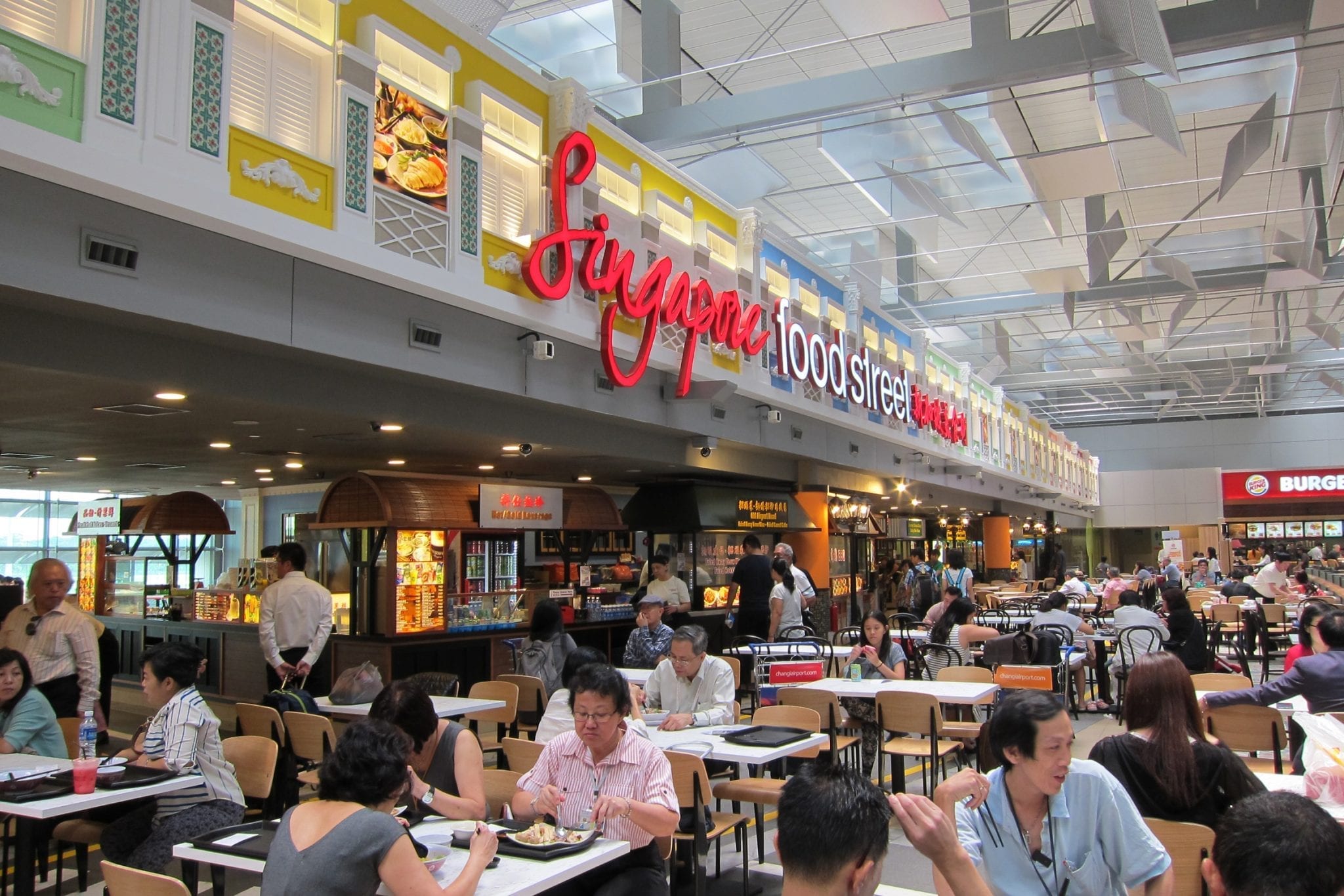
    Changi Airport has added new restaurants and stores to its retail offer. In the transit area, Irvin’s Salted Egg has opened a kiosk at Terminal 1. In the public areas, new eateries have opened at Terminal 3’s basement 2 including three by the Pezzo Group: Crave, Coffee Boy and Stuff’d. Mr Teh Tarik Express and multi-concept gourmet food hall, Terminal M, featuring a mix of Korean, Chinese and Japanese foods, are also available at this terminal.

    Visitors can now shop a new outlet of casual clothing retailer The Blues or confectioner The Cocoa Trees.

    Singapore Changi Airport handled 5.62 million passenger movements in January, a 6 per cent year-on-year increase.

    Passenger traffic growth during January was broad-based with increases recorded for all regions except the Middle East.

  • Indian tobacco company plans 10,000 more 24Seven Stores

    Indian tobacco company plans 10,000 more 24Seven Stores

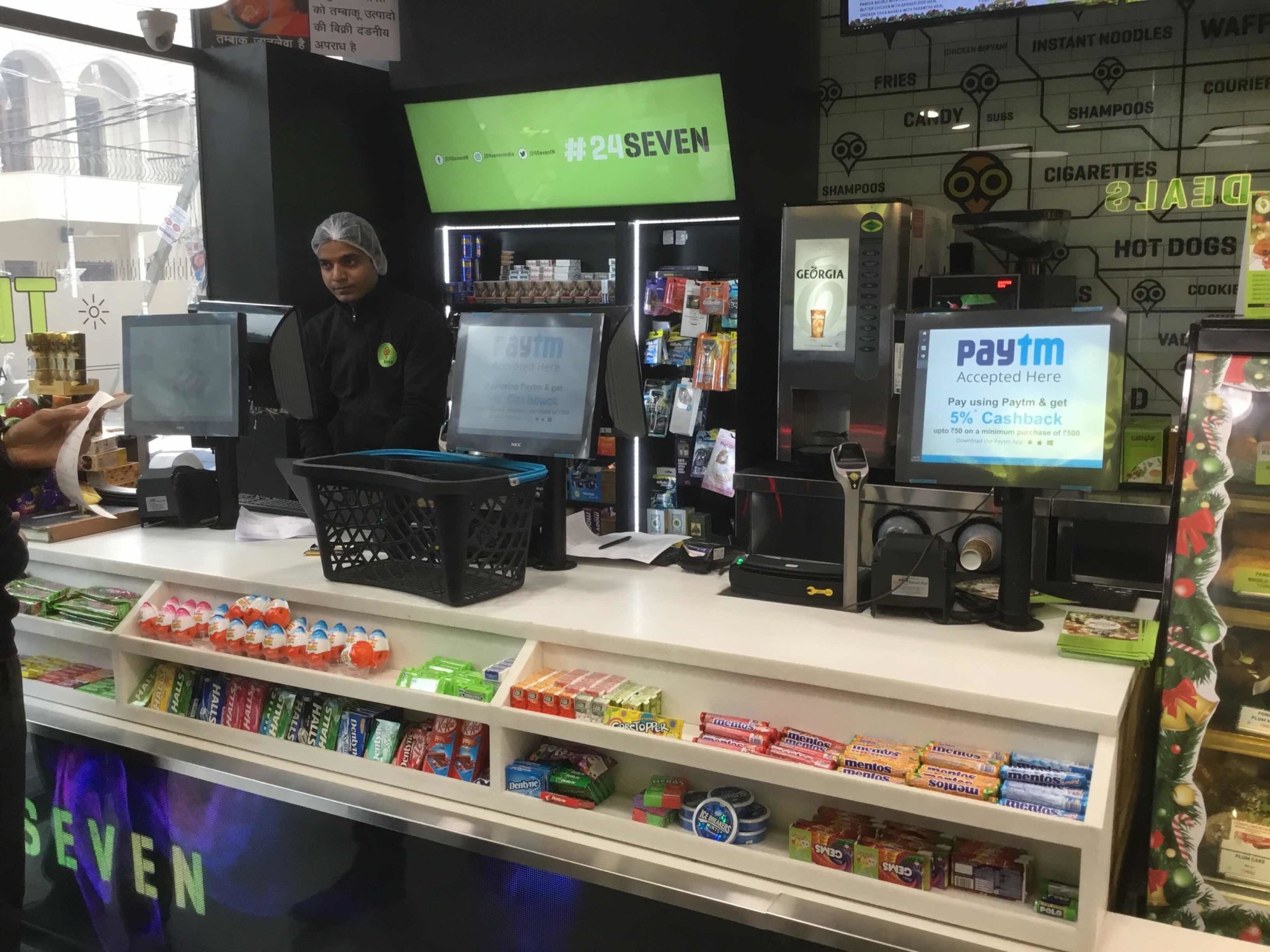
    Indian tobacco company Godfrey Philips is planning to open 10,000 of its 24Seven convenience-store chain nationwide.

    The company plans to treble its network between now and March next year to 170 stores, and expand into new markets from its current National Capital Region base. The first 24Seven store in Mumbai is scheduled to open in April and the company is eyeing early growth in Bangalore, Kolkata and Pune, in the west.

    A further 200 stores are scheduled to open next financial year, which starts on April 1 with a target of 10,000 stores within five years.

    Despite its rapidly rising ranks of middle-class consumers and a proliferation of fresh-food stores, India’s convenience-store network is relatively immature.

    Under a longer-term plan revealed in an interview by Godfrey Philips board member Samir Modi, the company will separate the 24Seven operations into a standalone business once it reaches 1000 stores. The expansion will be funded from internal reserves and use a  franchise business model.

    24Seven stores are typically about 75sqm in size, although some newer flagship stores are nearly double that and the company is looking to larger stores to broaden its product range.

    Modi also revealed plans to boost the number of imported lines on sale in its stores. Confectionery and biscuits, for example, would grow from about 90 lines at present to more than 350.

    Godfrey Philips opened its first 24Seven outlet in 2004. The stores look similar to those of 7-Eleven and, until recently, the company had a group of  former 7-Eleven executives consulting to it.

  • Starting coffee shops gains popularity among young people

    Starting coffee shops gains popularity among young people

    Opening a coffee shop is one of the most popular businesses being pursued by young South Koreans in recent years, data showed, in a sign of growing coffee consumption in the Northeast Asian country.

    The number of coffee shops run by people aged between 15 and 34 stood at 5,000 last year, compared to 2,000 in 2011, according to data compiled by the National Tax Service.

    The data underscores the growing popularity of coffee among South Koreans. In 2016, South Koreans drank 377 cups of coffee per person on average.

    The rate coffee consumption for South Koreans over 20, has grown by an annual rate of 7 percent since 2012, according to the Ministry of Agriculture, Food and Rural Affairs and the Korea Agro-Fisheries & Food Trade Corp.

    The size of the domestic coffee market reached 6.4 trillion won (US$5.68 billion) as of the end of 2016, up 30.6 percent from the 4.9 trillion won tallied in 2014.

    Last year, the number of businesses started by people aged between 15 and 34 came to 226,000, down 2,400 from 2011, according to data compiled by the NTS.

    Among them, the number of businesses started by young men stood at 128,000 and the rest were set up by young women.

    The data showed that the most favored business among young people was selling goods online without offline retail shops. The number of online retail shops run by young people came to 37,000 last year, up 17 percent from 2011.

  • Tesla Model X electric cars to hit Indonesian roads

    Tesla Model X electric cars to hit Indonesian roads

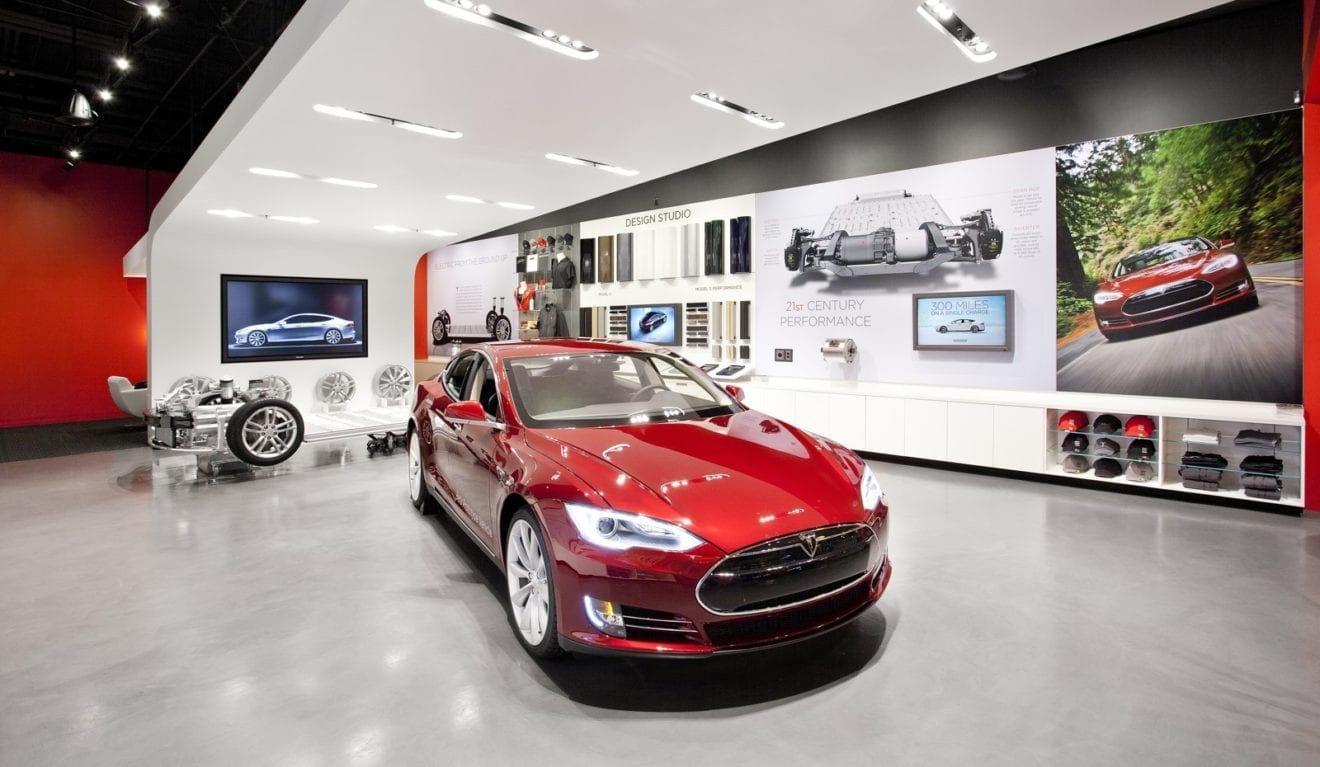
    Indonesians can now purchase US-made Tesla Model X electronic luxury cars with price tags starting from US$200,000. Prestige Image Motorcars, the sole Tesla motor car distributor in Indonesia, began exhibiting one of the cars at its showroom in Pluit, North Jakarta, on Tuesday.

    Prestige president director Rudy Salim said his company started receiving orders for the car in June with deliveries, beginning in September.

    “Tesla cars have good prospects in the Indonesian market, considering they are not the most expensive among the super cars in the country,” Rudy said.

    Each Telsa cars is equipped with a battery that supports up to 350 kilometers of travel, much more than Indonesians generally needed, Rudy said.

    A director of the Association of Indonesian Automotive Manufacturers (Gaikindo), Jongkie Sugiarto, said that Tesla cars would have their own fans in Indonesia.

    However, he said, luxury cars belonged to a specific and limited market, which did not grow significantly.

    According to Gaikindo, the domestic sales of diesel and petrol cars in the first four months of the year increased by 5.71 percent to 373,407 from 352,072 in the same period of 2016.

    Tesla Inc. of the United States was quoted by Reuters as saying in April 2 that its first-quarter vehicle deliveries jumped by 69 percent to 25,000 vehicles compared to the same period last year.

  • Hong Kong’s Swire to double down on Chinese bakery investment

    Hong Kong’s Swire to double down on Chinese bakery investment

    Over the next three years, Swire Pacific will increase the number of its bakery shops in Chongqing, Chengdu and Guiyang to 1,000 through its wholly owned Swire Foods subsidiary.

    The conglomerate believes the benefits from stable, long-term growth from the food market outweigh the small scale of the business, compared with Swire’s aviation and property businesses.

    Last year, Swire Foods took full ownership of Qinyuan, a leading bakery chain, for HK$1.4bn (US$200m). Selling Chinese and Western-style pastries, it added over 500 retail outlets in Southwest China to Swire’s portfolio. The deal also included a 65,000 square-metre factory producing bakery goods in Chongqing.

    “Bakery is a very market fragmented market in China. We have not yet seen any player dominating the market [so] there a a big opportunity there,” said Max Lau, managing director of Swire Foods, told SCMP.

    He said that the demand was due to rise because Chinese per-capita consumption was currently low, with an average spend on bakery goods of around just 140 yuan (US$20) per person per year.

    This is half the amount spent in Singapore, while Hongkongers spend three times as much as the mainland, and Japanese spend close to seven times as much for their baked goods.

    “Food still serves a basic need for everyone despite the economic slowdown in China,” Lau added.

    “Moreover the retail business is being challenged by the rise of e-commerce in China these days, but food retail cannot be replaced by e-commerce just yet,” he said.

  • ‘Affordable’ brands replacing top luxury shops

    ‘Affordable’ brands replacing top luxury shops

    There will be a rise in “affordable luxury,” a manpower agency said yesterday, while predicting a pay rise of 3-5 percent for employees this year, the same estimate as last year.

    Adecco said as mainland tourist numbers and spending fall, some luxury retail shops are being replaced by affordable luxury brands in busy districts. The human resources solutions firm published its Greater China Salary Guide 2017 yesterday.

    From its database of vacancies it received from clients – about 600 companies in accounting, finance and banking, office, sales and marketing, retail, merchandise and logistics, pharmaceuticals, information technology and technical engineering sectors in Hong Kong – Adecco said companies are adopting a relatively conservative approach to employee salaries.

    It found that adjustments tend to fall into the usual range of 3-5 percent this year, which is the same as last year.

    “While hiring more talent who are familiar with new technology to meet the digitalization needs, enterprises have to at the same time bridge the value gap between new and old generation employees,” said Audrey Low, managing director of Adecco in Hong Kong and Macau.

    “This led to a more cautious approach in searching for the right talent. Apart from making the interviewing process more complex and raising the standards for the skills and attitude to work required, this has also led to an increasing number of enterprises choosing not to fill their vacancies.”

    In retail, Adecco said a lot of luxury brands such as Prada and Coach moved from busy districts because mainland tourists are increasingly visiting other destinations and because of weak economic sentiment. Salespeople in some luxury brands who do not meet targets are redundant.

    Henry Chu, practice manager of the retail sector at Adecco, said: “A lot of salespeople in the luxury brands told me in 2016 that they are pressurized into meeting sales targets and some have to meet 2015 targets.” He also said a small number of sales managers in the luxury sector went into insurance.

    Although a lot of luxury brands are closing their stores in business districts, Adecco found that they are being increasingly replaced by affordable luxury brands such as Tory Burch, Michael Kors, Lululemon and Kate Spade as consumers are switching their focus and these brands will need to hire more frontline salespeople.

    “Instead of selling their products through distributors like Lane Crawford, some of these brands have decided to go for their own stores. We have a number of affordable retail brand clients planning to expand in 2017,” Chu said.

    “They are also looking for talent who have experience in e-commerce and customer relations management.”

  • New law to stop minors in Hong Kong buying alcohol from shops

    New law to stop minors in Hong Kong buying alcohol from shops

    Convenience stores and shops across Hong Kong will be banned from selling alcohol to minors under new legislation to be proposed by the government this year as it steps up efforts to tackle a rise in underage drinking.

    The law, if passed by the Legislative Council, will prohibit retailers from selling liquor to anyone under the age of 18 – the same as the current restriction on the sale of tobacco.

    Although the city’s bars and clubs are already banned from serving or selling alcoholic drinks to minors, retailers do not have to follow the rule. Leading retail chains such as 7-Eleven have agreed ­voluntarily to refuse to sell liquor to anyone below 18, but staff seldom bother to check the age of customers. This is a problem that has been confirmed by various studies and demonstrated in a test conducted.

    The new move by the Food and Health Bureau comes amid criticism that Hong Kong is slipping behind other developed cities in its handling of underage drinking, and that it remains easy for teenagers to enjoy a tipsy night.

    “The proposed statutory regulatory regime will cover all forms of commercial sale and supply of alcohol, including internet sale … and from the vending machine,” a spokeswoman for the bureau said, confirming the plan to table the legislation this year.

    Sellers will also have to display signs stating that no alcohol may be sold or supplied to anyone aged below 18.

    A government poll in 2014 found that 56.2 per cent of the city’s students had tried alcohol, with 21.9 per cent of those aged 10 or below saying they had done so.

    Last year the Centre for Health Protection found that 43.1 per cent of 1,630 people polled had taken their first sip of alcohol before the age of 18. It also showed a worrying rise in binge drinking among students.

    The Medical ­Association, the city’s largest doctors’ group, said 77 per cent of the 1,003 people it polled supported banning the sale of alcohol to those below 18.

    Allan Zeman, ­chairman of the Lan Kwai Fong Group, supported the move, saying anti-social behaviour among the young at nightspots might damage Hong Kong’s image abroad.

    “Some of the retail chains are very powerful here. I think we should look at what other cities in the world have done and get tough about this,” Zeman said.

    A 7-Eleven spokesman said the chain supported legislation banning the sale of alcohol to those aged below 18.

    The Hong Kong General Chamber of Wine & Spirits has previously said it supports an age limit on the sale of alcohol, but it should be set at 16.

  • China approves 16 duty free arrivals shops

    China approves 16 duty free arrivals shops

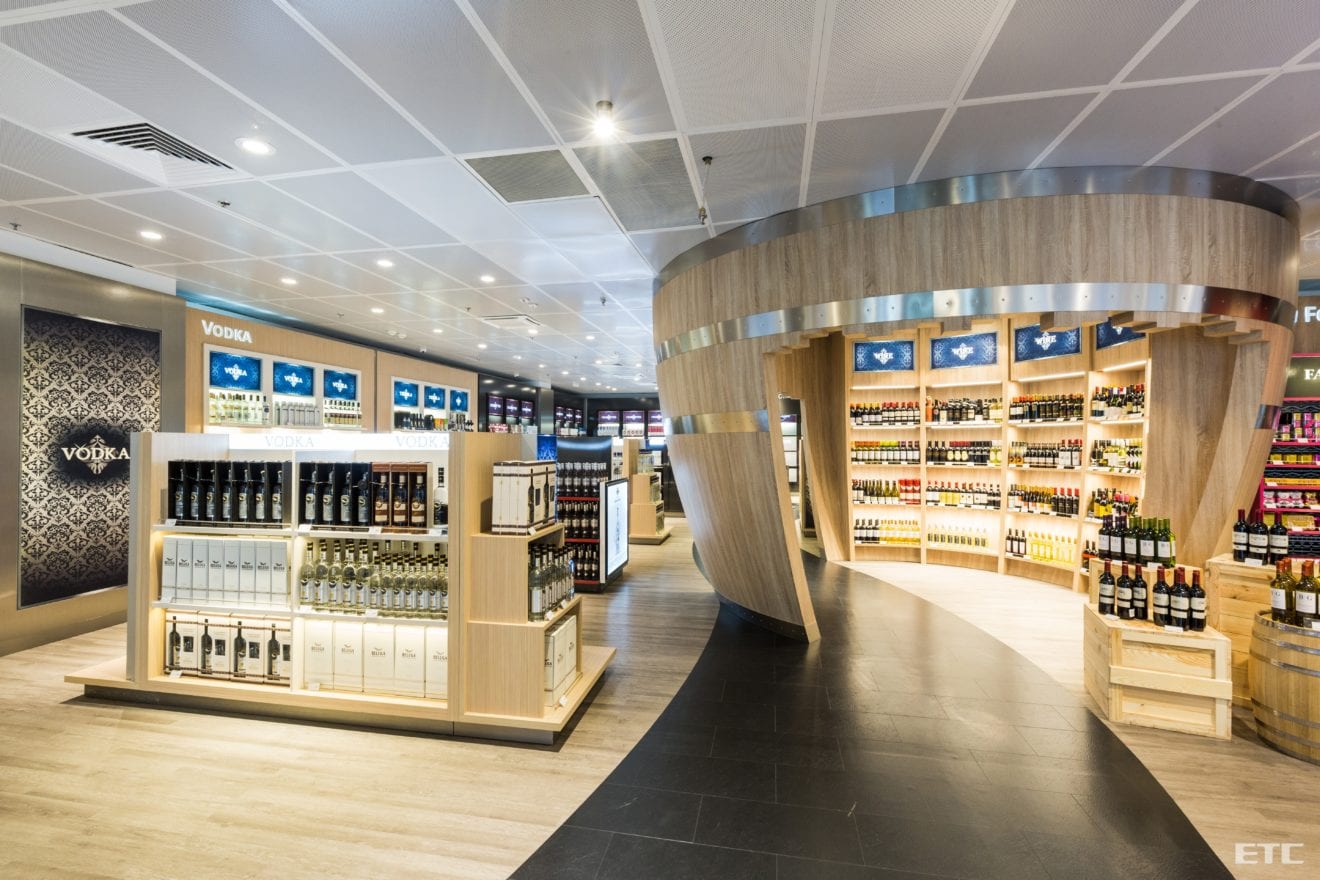
    China’s Ministry of Finance has approved applications to open 16 duty free arrival shops in 10 international airports and at six land border crossing points, introducing limited competition to the nation’s growing duty free market for the first time.

    Four state-backed enterprises with existing duty free retail operations have qualified to bid for the 16 arrival shop licenses that are due to be awarded during the next six months.

    The four companies are: China Duty Free Group (CDFG), China National Service Corporation For Chinese Personnel Working Abroad (CNSC), Shenzhen Duty Free and Zhuhai Duty Free.

    “There is departure, arrival and downtown duty free shopping in China, now arrival shopping will be open to limited competition,” commented a source at one of the operating companies selected to bid for the licenses.

    CDFG AND CNSC HEAD TO HEAD…

    “The four companies are qualified to bid for all the duty free arrival shops. Probably Shenzhen Duty Free and Zhuhai Duty Free are not interested in operating nationally, but will bid for local arrival border shops, so the airport competition will be between CDFG and CNSC as they are the only two national operating companies.”

    The 10 airports approved to open duty free arrival shops include some of China’s top ten airports. The list does not include Beijing Capital International Airport, Shanghai Pudong International Airport and Shanghai Hongqiao International Airport, however, as these already offer duty free arrival shopping services under a special government dispensation issued in 2008 to assist in the preparation of tourist facilities for the Beijing 2012 Olympic Games.

    New airports selected to open duty free arrival shops are believed to include: Chengdu Shuangliu International Airport, Chongqing Jiangbei International Airport, Dalian Zhoushiuzi International Airport, Guangzhou Baiyun International Airport and Tianjin Binhai International Airport.

    Ministry of Finance regulations permit the arrival shops to sell perfume and cosmetics, liquor and tobacco, confectionery, fashion items, accessories and watches.

    MOSTLY L&T AND P&C

    “Airport authorities rely on duty free operators to arrange the merchandise categories,” the source remarked. “The airports will want to sell mostly liquor and tobacco, and perfume and cosmetics. Airports care more about the sales volumes as that’s where their revenue comes from.”

    The largest arrival shop application approved is understood to be Chongqing Airport’s plan to open a 500sq m arrival store while the smallest arrival outlet approved is Tianjin Airport’s 50sq m arrival shop.

    Most airports have applied to open one arrival shop, though several with sufficient arrival halls have received permission to open two arrival stores.

    Under Ministry of Finance regulations each of the 16 duty free arrival shop operator licenses awarded will be for 10 years. All the licenses are required to be tendered and awarded within six months of the date of the arrival shop application being approved.

    TENDERS UNDER PREPARATION

    While results of all the tenders will be registered with the Finance Ministry, China’s General Administration of Customs will be the controlling authority regarding arrival shop retail operations. Selected airport owners and land border crossing authorities are just starting to prepare their arrival shop tender specifications.

    The various licenses are expected to be awarded in March and April 2017 as all 16 applications were approved at the beginning of November.

    Constructing the arrival shops is expected to take about six months after each license is awarded. Consequently most of the new arrival shops are likely to begin trading around September and October 2017.

    SHENZHEN AND ZHUHAI FOR LAND BORDER SHOPS?

    Meanwhile, competition is likely to be fierce between CDFG and local operators Shenzhen Duty Free and Zhuhai Duty Free to win the land border arrival shop licenses as all the locations are busy crossing points.

    Five of the six land border arrival shop licenses are for crossings on Guangdong Province’s southern border – four of these are for crossing points on the Shenzhen-Hong Kong border and one on the Zhuhai-Macau border where Shenzhen Duty Free and Zhuhai Duty Free operate departure duty free shops.

    The other land border arrival shop license is for Heihe in northern China on the border with Russia where CDFG operates a large departure duty free shop.

    The opening of border arrival shops in southern Guangdong also could have important implications for retailers in Hong Kong and Macau who will soon be competing with China’s new arrival border shops for mainland tourists’ custom.

  • SSP wins contract to operate eight F&B concessions at Phuket International Airport

    SSP wins contract to operate eight F&B concessions at Phuket International Airport

    SSP Group, a leading operator of food and beverage outlets in travel locations worldwide, has consolidated its position in the Thai market with a number of new contract wins.

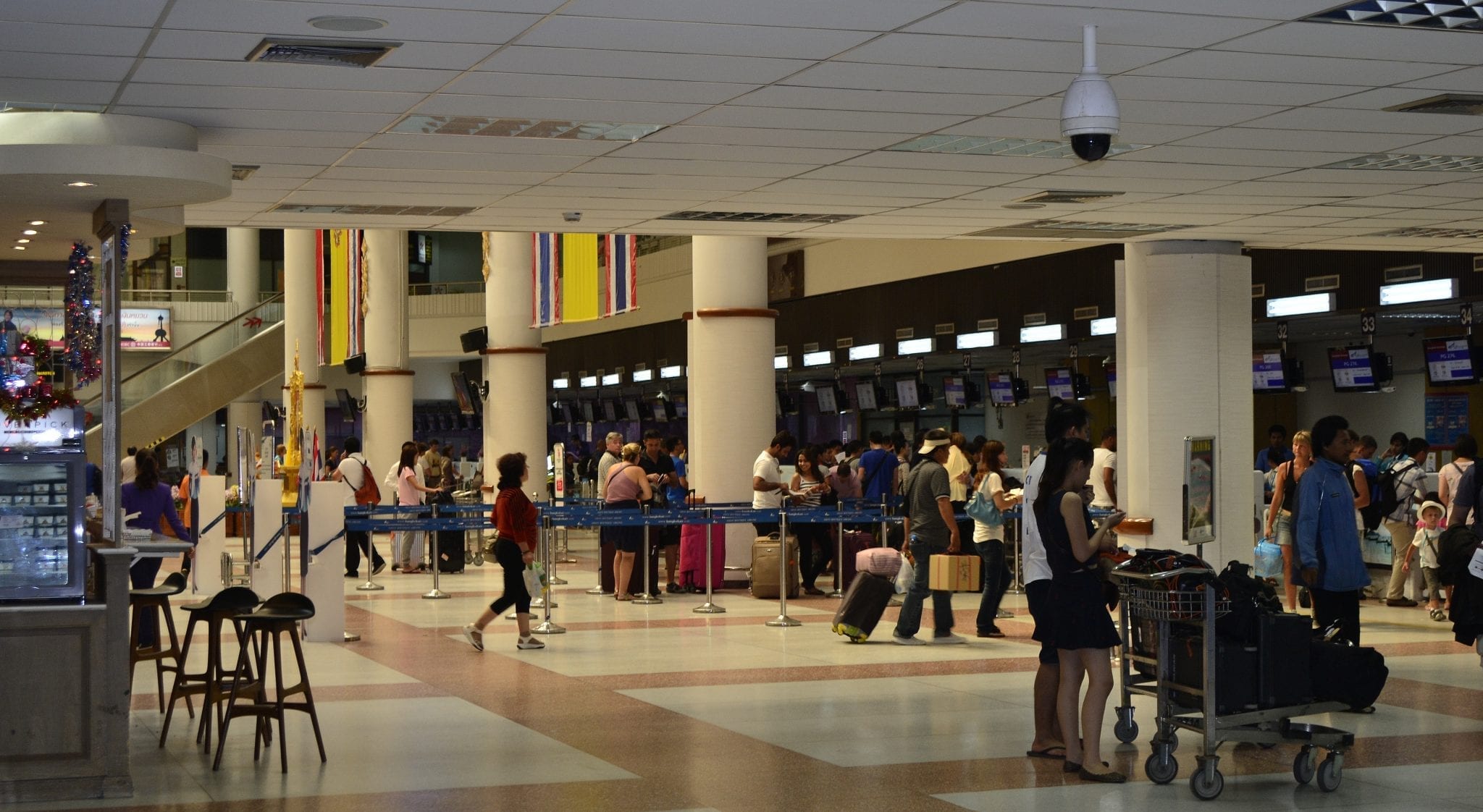
    At Phuket International Airport, SSP has been awarded a four-year contract to operate eight concepts in the new international Terminal 2. Valued at approximately 1.5 billion THB (£33 million*) the new deal will make SSP the leading concessionaire at the airport.

    Landside, SSP will run all food and beverage operations on the mezzanine floor. Its offer will include Burger King, Bill Bentleyn Pub, Ajisen Ramen, Thai Express, Airport Kopitiam, Dairy Queen and The Coffee Club. Airside, passengers will be able to choose from Burger King and Bill Bentley Pub.

    Commenting on the win, Chris Rayner, CEO SSP Asia Pacific said; “We have been running food and beverage concessions in Thai airports, where we are the clear market leader, since 1995 in cooperation with our Thai partner Minor Food Group. SSP Thailand’s strong track record in delivering great brands, great customer service and great sales all contributed to us being awarded the contracts in Phuket, and we are delighted to be building on our success in this strategically important region.”

    Separately, at Suvarnabhumi Airport, SSP has extended all its existing contracts by four years. It has also extended its contracts at Chiang Mai International Airport by two years until July 2018.

    Phuket brand line-up:

    Thai Express is the world’s largest chain of modern Thai restaurants. Serving traditional Thai cuisine in a relaxed and yet contemporary environment, today the brand can be found at over 30 locations from China and Malaysia to Vietnam and Singapore.

    Japanese brand Ajisen Ramen is the country’s leading ramen restaurant and can now be found across the Asian continent. It serves a range of Asian dishes in a format that is simple, tasty and healthy as well as convenient.

    Founded in 1954, the Burger King brand is the second largest fast food hamburger chain in the world. The original home of the Whopper, the Burger King system operates more than 14,000 locations in approximately 100 countries and U.S. territories.

    Bill Bentley Pub is a classic English pub, styled to create the warm welcome of the traditional local.

    Airport Kopitiam, is a bespoke SSP concept which draws inspiration from the ever popular café culture of Malaysia. Its menu features simple meals, including kaya toast and white coffees.

    Founded in the 1940s in Illinois, USA Dairy Queen is famous for its dessert treats and much more. Today it is hugely popular across Asia.

    The Coffee Club, which originated in Australia, is a growing coffee chain in Asia Pacific with over 400 stores across nine countries including Thailand.

  • Apple Should Open More Outlets in China

    Apple Should Open More Outlets in China

    Apple has seen robust sales in China despite the country’s worsening economic situation. Last quarter, revenues from Greater China grew 99% year-over-year, confirming the management’s opinion that China sales have been strong. Chinese economic slowdown concerns have emerged yet again and it remains to be seen whether Apple will continue its strong performance in the region.

    In its latest note to investors, BofA/Merrill Lynch contends that Apple should open more retail stores in China if it wants to increase market share in the country. The idea is based on Merrill Lynch’s survey of 1,000 respondents across China, which was done to find a correlation between retail store presence and iPhone share/iPad ownership in the region.

    Through a regression analysis, the firm found high correlations between retail store presence and iPhone share and iPad ownership. Of the survey respondents, 24% own iPhones while 39% said that they intend to buy one, which shows that Apple could gain further share.

    Merrill Lynch notes that Apple currently has 26 outlets opened in 11 regions across mainland China. The company intends to increase that number to 40 by the middle of this year. Apple has also announced that it will open two more retail stores in January in Guangzhou (Guangdong region) and Nanjing (Jiangsu region). The firm’s analysis suggests that the four new store launches in January can generate an additional 2.99 million units.

    “We believe these store openings could lead to incremental iPhone units sold in the regions and help Apple continue to increase share in broader China,” analysts at Merrill Lynch said.

    In a prior research note, Merrill Lynch had upgraded Apple shares from Neutral to Buy. The firm said that its upward revision in the rating was based on the launch of iPhone 7, potential roll-out of iPhone 6c (5e), and increase in capital return program in April.

    Apple is expected to release its first quarter fiscal year 2016 (1QFY16) results after the markets close on January 26. The tech giant is expected to report revenues of $76.7 billion and adjusted earnings per share (EPS) of $3.24. Merrill Lynch expects Apple to post strong China sales.

    Chinese stocks dropped significantly last August, pointing to slowing growth in one of the world’s biggest economies. Questions were put forth regarding iPhone’s growth in the region at that time. In response to this, CEO Tim Cook told investors that China business has remained robust.

    In the last earnings call, Mr. Cook told the Street that he doesn’t believe Apple’s results in China are heavily dependent on small changes in growth in its economy. He further stated that in light of the number of customers coming into Apple stores and sales trends, it is hard to say that there is an economic slowdown in the country.

    According to the data from Strategy Analytics, China currently comprises 20% of Apple’s total iPhone unit sales. Hence, if Chinese sales are strong, it is very likely that Apple could overcome the tough comps set by the highly successful iPhone 6 and 6 Plus lineup.

  • Apple on a roll with retail expansion in China as it announces 30th store

    Apple on a roll with retail expansion in China as it announces 30th store

    China’s current economic problems – share trading suspended for the second time in a week after stocks fell 7% – doesn’t seem to be impacting Apple’s retail store expansion program in the country. The company has announced the opening of its 30th retail store in China, the second one it is opening this month. Back in 2014, the company set a goal of opening 40 stores in the country by October of this year.

    The latest store is in Xiamen, a port city on the Taiwan Strait. Xiamen is home to one of the four Special Economic Zones established by the Chinese government back in the 1980s, to encourage foreign investment and trade.

    Unusually, the store opens on a weekday, with Apple’s website showing that it will open at 10am on Thursday 14th January. The store is located in the SM Lifestyle Center at 399 Jiahe Road, in the Siming District of the city. It opens just a few days after the 29th store in Shenyang.

  • Foreign operators threaten Korea’s duty free shops

    Foreign operators threaten Korea’s duty free shops

    Korea’s duty free stores are sensing a crisis because of increasingly tougher challenges from their competitors in China, Japan and Thailand, industry sources said Tuesday.

    According to the Korea Duty-Free Association (KDFA) and distribution industry sources, the nation’s duty free retail market grew to 8.3 trillion won ($7.24 billion) last year, up 21.6 percent from 2013. There were still wide gaps with the neighboring markets of China (5.6 trillion won), Thailand (2.1 trillion won) and Japan (1 trillion won).

    But these regional competitors are rapidly expanding their markets, going all out to draw Chinese tourists to erode Korea’s lead.

    And this year has provided good opportunities for foreign operators, as the number of Chinese visitors to Korea sharply declined to 4.36 million in the first nine months, compared with 6.13 million last year, affected by the breakout of Middle East Respiratory Syndrome in April. But the number of Chinese people who visited Japan and Thailand in the first nine months rose from 2.41 million and 4.62 million to 3.83 million and 6 million, respectively, from a year ago.

    Foreign analysts also saw it as serious. “The Korean duty free retail market may appear to be a golden goose because of the influx of Chinese tourists,” said Martin Moody, chairman of Moody Report, a British distribution magazine. “Those golden eggs could prove to be quite fragile, however, because of unpredictable factors as seen in the MERS crisis.”

    Industry experts stress the need for enhancing the global competitiveness of domestic operators by expanding their store sizes and developing specialized services. Amid the ever-toughening competition, running duty free stores is no longer a preferential business, they said, adding that the government and industry should cooperate to create more competitive operators.

  • Courts Retail to open second  megastore by year-end

    Courts Retail to open second megastore by year-end

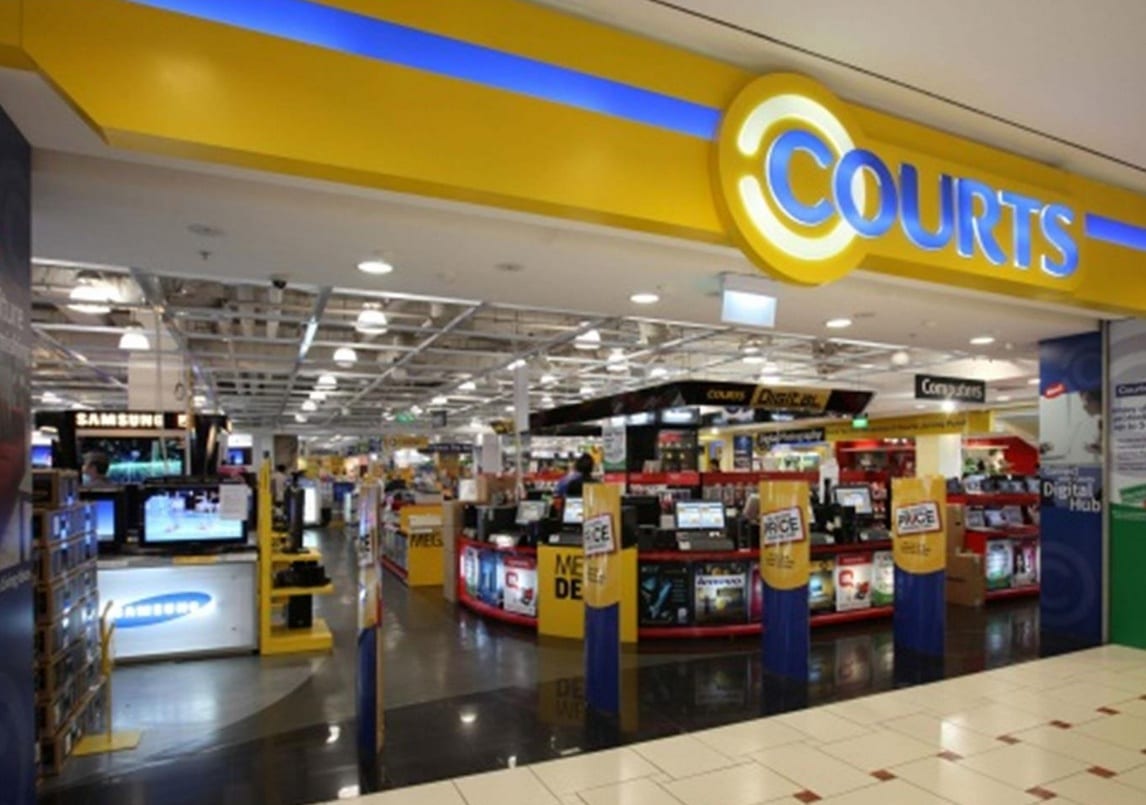
    PT Courts Retail Indonesia, a subsidiary of Singaporean retailer Courts Asia Ltd., will open a new megastore in Bumi Serpong Damai (BSD) City, South Tangerang, Banten, in December as part of the company’s Indonesian expansion.

    Courts Retail Indonesia CEO Roy Santoso said the 24,000-square-meter megastore was currently under construction on a 2.2-hectare plot of land in BSD, a growing township in the southwest of Jakarta with direct toll road access to South and West Jakarta.

    He said the construction of the retailer’s second megastore was 80 percent complete. The store would sell at least 12,000 items from 200 local and international brands. All the electronics and home appliances were local products, while the furniture would comprise 70 percent local and 30 percent imported brands, mostly from Malaysia and China, Roy added.

    “The store spaces will be grouped into four segments: ‘Play’ for electronics, ‘Live’ for home appliances and accessories, ‘Sleep’ for beds and ‘Relax’ for furniture,” he said in a press briefing last week.

    Currently the company has three operating stores: one megastore in Kota Harapan Indah, Bekasi, West Java, and two smaller ones in Bekasi and Bogor, both West Java. It only began active operations in Indonesia in 2014.

    Roy said that Courts Retail would open a maximum of seven stores in total within two years and 10 to 12 stores by 2019 in Greater Jakarta.

    “In these kind of economic conditions, we have to have a sustainable development plan. To reach breakeven, we plan to open two to three smaller-sized stores within two years,” Roy said.

    “Our initial plan had been to have one megastore in each western and eastern part of Greater Jakarta. The eastern part is Bekasi and the western part is BSD. We can still have vast area to build a megastore in BSD,” Roy said.

    “Courts also targets various classes of income groups. In our stores we segment our products into good, better and best so that people can choose. And BSD is easily accessible for people with different income who live in Bintaro and Pondok Indah in South Jakarta and Karawaci in Tangerang, other satellite cities with high numbers of population,” Roy added.

    The company has invested between US$3 million and $5 million for each megastore and $500,000 to $1 million for each smaller store of 2,000 sqm. In total, it has invested around $8 million so far, Roy said.

    The megastore to be launched in BSD will absorb some 300 employees, alongside overall management personnel placed there, too, as the company plans to move its headquarters from South Jakarta to the new outlet by December.

    Amid present competitors in the area, such as Kawan Lama Group’s Ace Hardware and Informa that serve similar product segments, Courts remains optimistic as it offers different product models and promotions.

    Courts Retail promotion strategy includes a flexible credit scheme and cooperation with major credit card issuers, including exclusively with BRI.

    “Other new things offered by Courts include a free delivery service, made-to-order furniture, installation, repair and cleansing services. Our e-shopping website will be ready by the end of this month,” Roy said.