Tag: sia

  • Tim Hortons launches retail coffee range in South Korea

    Tim Hortons launches retail coffee range in South Korea

    Tim Hortons has launched its retail lineup in South Korea as part of its strategy to broaden the brand’s reach.

    The Canadian cafe brand’s retail coffee offerings include Original Blend whole bean coffee and fine grind coffee in five flavours: Original Blend, French Vanilla, Colombian, Maple, and Decaf.

    “Like all Tim Hortons coffees, our bagged coffee retail products start with 100 per cent premium Arabica beans that are roasted with care and blended to perfection,” said Mieka Burns, VP of consumer packaged goods at Tim Hortons.

    “Guests can already savour their favourite Tim Hortons beverages in restaurants and they can now complement that experience at home.”

    Tim Hortons’ whole bean and fine grind coffee are available at the Lotte Mart grocery store in Gangdong Millennial Jungheung S-Class Complex, and will soon be available in department stores and online.

    The Canadian coffee chain debuted in South Korea in 2023 and has quickly expanded to 16 locations.

  • Indosat Reports Strong Growth in 2024

    Indosat Reports Strong Growth in 2024

    Total revenue increased by 9.1% to IDR 55.9 trillion, driven by improvements in customer quality and contributions from all business lines. Cellular revenue grew by 7.5% due to increased revenue in the data and interconnection sector, while multimedia, data communication, and internet (MIDI) revenue rose by 23.4%, supported by increased revenue from IT services.

    EBITDA also grew by 10.2%, totaling IDR 26.4 trillion, demonstrating an EBITDA margin of 47.2% and Indosat’s efficiency in converting revenue into earnings. Profit for the period attributable to owners of the parent increased by 38.1%, totaling IDR 4.916 trillion, reinforcing the company’s financial health and ability to deliver returns to stakeholders.

    Vikram Sinha, President Director and CEO of Indosat, mentioned, “2024 was a challenging year. Despite this, we managed to secure a strong performance as a commitment to continue delivering value to our stakeholders. This strong financial and operational performance also underscores Indosat’s commitment to continuously drive the advancement in the telecommunications industry ecosystem in Indonesia.”

    Throughout 2024, data traffic increased by 12.2% year-over-year (YoY), reflecting the growing demand for Indosat’s services. The company expanded its network infrastructure by increasing the number of 4G BTS to 196,000 to enhance service quality for customers. This led to a 6.6% rise in mobile average revenue per user (ARPU), totaling nearly IDR 40,000 and showcasing the success of Indosat’s go-to-market strategy.

    In the final quarter of 2024, Indosat relaunched its postpaid service under the IM3 Platinum brand, integrating artificial intelligence (AI) to deliver a premium customer experience. The company is also embedding AI into its network operations through a partnership with Nokia, which aims to expand its 4G and 5G networks and provide smarter and more efficient connectivity.

    Indosat is also collaborating with UiPath to empower 100,000 Indonesians with enterprise automation skills by 2027, aligning with its mission to drive digital transformation and foster an AI-ready workforce in Indonesia.

    The company’s capital expenditure (CapEx) in 2024 totaled IDR 9.937 trillion. Indosat will focus on enhancing cellular networks to support the growing demand for AI-powered digital services.

    “By embedding AI across our operations and fostering collaborations rooted in the spirit of mutual cooperation, we are accelerating towards Indosat’s larger purpose of empowering Indonesia,” concluded Sinha.

  • Love, Bonito acquires Singapore-based activewear label Butter

    Love, Bonito acquires Singapore-based activewear label Butter

    Southeast Asian omnichannel fashion retailer Love Bonito has acquired Singapore-based activewear brand Butter and a minority stake in healthcare startup Moom Health for an undisclosed sum.

    The activewear line will be rebranded as ‘Cheak’, a play on the word ‘cheeky’. The company said the acquisitions are part of Love, Bonito’s ambition to build “a holistic female ecosystem with a house of brands curated for Asian women”.

    The deal follows Love Bonito’s series C funding last year where it raised $50 million led by a Chinese venture capital giant Primavera.

    “Our long-term vision is to be a true life partner for our community of women, in and beyond fashion, and activewear is a key category we’ve looked to venture into since two years ago,” said Dione Song, CEO of Love, Bonito.

    “Merging forces with Butter came at the right place and time for both of us, and we look forward to reshaping our evolution into a female ecosystem alongside emerging passion-driven women-led brands.”

    Founded in 2020 by two Singaporean female entrepreneurs, Olivia Yiong and Tiffany Chng, Butter offers affordable activewear designed for Asian body types. Generating $500,000 in revenue in its first year of business with a five-product range, the fashion label is on course to reach 138 per cent year-on-year growth.

    Moom Health was founded by two sisters, Mili and Maya Kale, offering to formulate supplements with experts that combine ancient tradition with modern scientific practice. The Singapore-based startup raised $854,000 in a seed round last month led by DSG Consumer Partners, which was also joined by Love, Bonito.

  • Dark mode, new voice effects coming to Messenger Kids

    Dark mode, new voice effects coming to Messenger Kids

    One of the most requested features for mobile apps, dark mode is finally coming to Messenger Kids. Since the app’s audience isn’t as large as the main app, Facebook took its time to make it available to its users.

    Although kids can’t really complain, Messenger had decided to throw in a couple of additional features to go along with the dark mode. For starters, new voice effects can be added to audio messages. Also, kids can now start games from within their chat thread.

    The dark mode feature, which is only available on iOS devices (Android coming soon), can be turned on and off from the Messenger Kids app settings. Also, the phone’s settings can be used to automatically change how Messenger Kids looks.

    To add voice effects to voice message, simply tap on the “voice” mic icon, press and hold to record a message, then choose from five different options to change your voice to sound like you’re talking into a seashell, or like a robot, ghost, gorilla or mouse. Just like dark mode, this feature is only available on iOS devices for now.

    The ability to start games from within a chat thread allows kids to play two-player games without having to leave the chat thread and go to the Explore tab to pick a game. Once again, the ability for kids to start two-player games from within Messenger chat threads is only available for iOS users.

  • Singapore Airlines unveils new short-haul economy catering

    Singapore Airlines unveils new short-haul economy catering

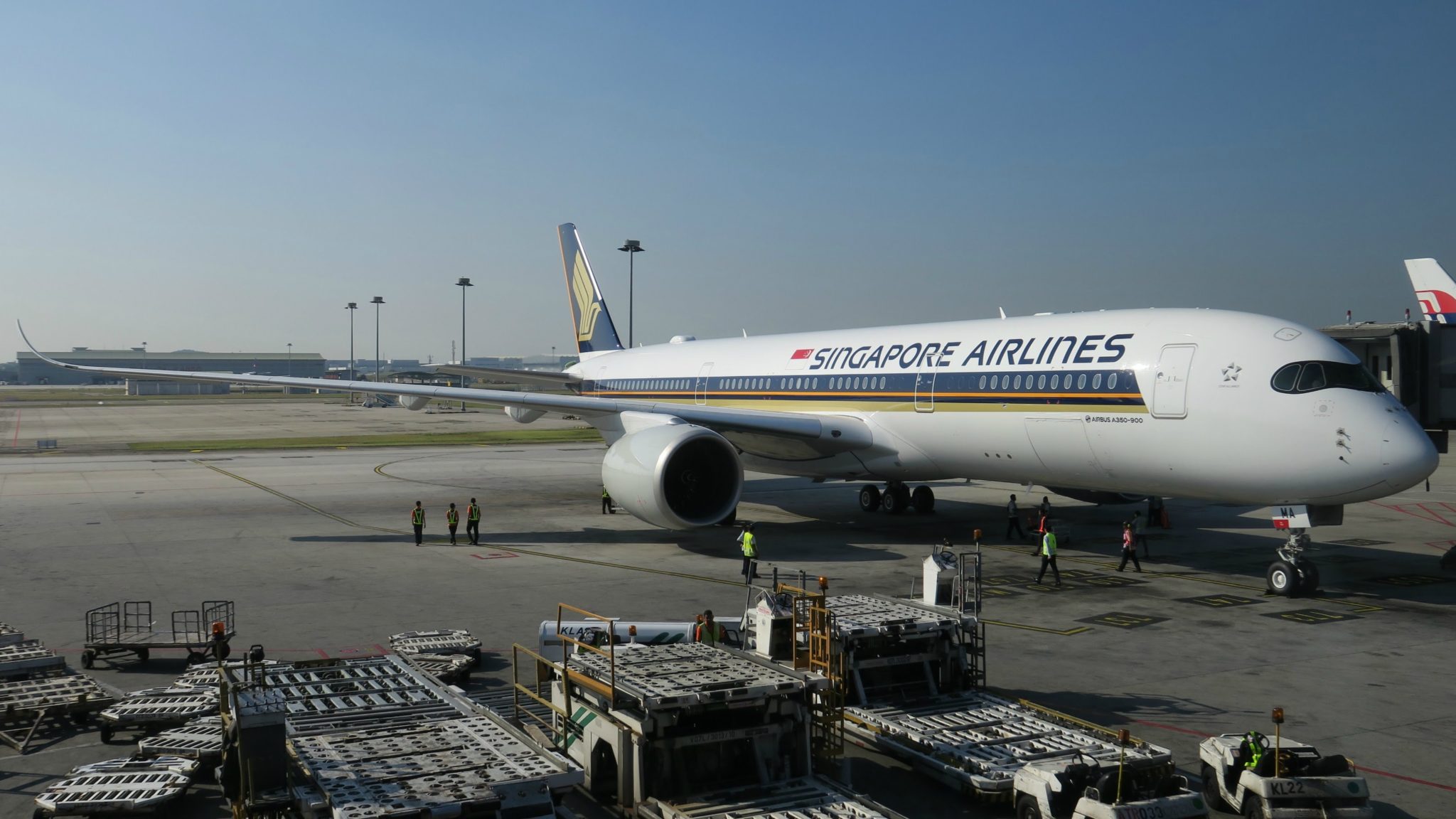
    Singapore Airlines passengers will see a change to short-haul economy class catering as the carrier ditches casseroles and appetizers in favour of boxed meals. Beginning on December 1, flights under three and a half hours will feature a rotation of more than 40 new Singaporean and international dishes.

    Economy class passengers on Silkair, a subsidiary of SIA, will also see the same catering changes as the regional carrier edges closer to fully merging with its parent.

    SIA’s new meal concept follows a broader trend among industry peers to shake up the economy class dining experience. In recent years, Delta and Qantas, for instance, have moved towards bistro-style catering on international flights with an emphasis on quality over quantity.

    Yeoh Phee Teik, senior vice president customer experience at Singapore Airlines, commented:

    “We are delighted to be able to offer a greater variety and quality of meals on our short-haul flights, including selections from Singapore’s popular local favorites that we hope both Singaporeans and international customers will find familiar and comforting.”

    The revamped breakfast dishes on SIA flights include congee with pork ball and century egg, mee siam, and pear cinnamon steel-cut oat porridge. Outside of meal hours, soups such as beef barley, beef goulash, and white bean with smoked duck, will be served.

    Meanwhile, flights featuring lunch or dinner will serve heartier courses including beef brisket with egg noodles, laksa goreng, and lamb albondigas. This is complemented by a variety of cakes for dessert, such as pulut hitam (pictured above) and earl grey chiffon.

    SIA said the new meal concept will help reduce the amount of inflight waste. By opting for leak-proof paper boxes, bamboo cutlery, and a simplified meal-offering, the airline will reduce single-use plastic consumption by 80 percent by weight.

    The boxed meals hold the same amount of food as the previous casseroles, according to the airline. However, SIA will remove appetizers such as bread rolls and fresh fruit portions, previously standard with economy class meals, as part of the new concept.

    A SIA spokesperson said:

    “We have done an extensive research to understand our customers’ preferences. From this, we have learned that most customers prefer a larger portion of the main course compared to an appetizer. We also found that there was high waste of appetizers, especially on short-haul flights. As such, we have removed the appetizers in [short-haul] economy class as part of efforts to reduce food waste.”

  • DBS and Singapore Airlines form digital partnership

    DBS and Singapore Airlines form digital partnership

    DBS Bank and Singapore Airlines (SIA) have today come together to sign a memorandum of understanding (MOU) to enhance digital capabilities across various digital platforms, to enable a seamless banking and travel customer experience for travellers.

    Under the MOU, the two companies will introduce flight booking and merchandising capabilities on DBS’ platforms, a DBS-SIA Rewards Programme on KrisPay1, and the expansion of payment options for SIA customers using PayNow, via Application Programming Interface (API) technology. The MOU is in line with SIA’s move to enhance digital capabilities company-wide, and DBS’ vision to make payments simple and hassle-free for customers through building integrated digital ecosystems.

    “We are excited to be teaming up with DBS, which has been twice globally recognised as the World’s Best Digital Bank. The partnership will provide great benefits to both our companies, given our shared aim to be a digital leader in our respective industries, with enhanced customer benefits through new flight booking, merchandising and reward programme ties,” said Singapore Airlines Executive Vice President Commercial, Mr Mak Swee Wah.

    As the first bank partner that SIA will connect via API for flight ticket sales and KrisShop, DBS customers can now look forward to booking their holidays on the soon-to-be-launched DBS Travel Marketplace which will allow one to purchase flights, book hotels and buy travel insurance on a single integrated platform.

    “We are thrilled to partner Singapore Airlines, winner of multiple best airline awards, to create an inclusive digital travel ecosystem for our customers,” said Mr Shee Tse Koon, DBS Singapore Country Manager. “Singaporeans are among the most well-travelled in the world with over 10.3 million overseas trips made in 2018 alone. Through this partnership, we would be able to elevate the consumer travel experience by offering extensive travel and retail options for travellers to choose from and customise their journeys right at the start.”

    Facilitated by API technology, the collaboration is also expected to cover the following areas:

    DBS-SIA Rewards Programme, where KrisFlyer members can instantly convert DBS points into KrisPay miles via the KrisPay app. Miles can subsequently be used for retail purchases at KrisPay partners island-wide. Alternatively, the KrisPay miles can be converted into KrisFlyer miles instantly within seven days of accrual. DBS is SIA’s first conversion partner on KrisPay.

    By including PayNow as a payment mode, SIA can offer its passengers the flexibility and convenience to pay for their flights from their bank accounts using PayNow, and issue tickets instantly once the payment is done. This is made possible by DBS IDEAL RAPID, an enhanced solution that offers Instant Credit Confirmation, as well as consolidated daily credit and reporting. The comprehensive solution also includes other value-added options like automated refunds; for instance, if a trip is cancelled or changed, SIA can refund the outstanding amount back to the passenger’s bank account.

    The initiatives will be gradually rolled out this year, beginning with the DBS Travel Marketplace, with the full suite of updates to be made available by end of 2019.

  • EU mulls digital firms’ global profits tax

    EU mulls digital firms’ global profits tax

    The European Union is asking its citizens to help decide on a fairer tax regime for large digital corporations that may include a tax on their global profits.

    Firms such as Amazon, Google and Facebook have often been accused of paying too little tax within the bloc by establishing their regional headquarters in low-tax countries such as Luxembourg and Ireland.

    The executive European Commission wants binding legislative proposals for a fair taxation of the digital economy by March.

    In a public consultation published on Thursday, it listed new ideas on what such a blueprint might contain.

    It is seeking responses on a “unitary tax” that would be levied on a share of digital companies’ global profits, divided up between the EU countries where they operate.

    This option has never appeared in EU documents before.

    It would be a long-term solution, as would a proposed tax using the corporate rate of the countries where the firms’ consumers are, rather than where the firms are based.

    That would eliminate the incentive for multinationals to set their EU headquarters in low-tax states.

    The commission also sought reactions to the idea of changing the principle of corporate establishment, so that companies could be taxed when they have a “digital” presence in a country. That was an option listed in a document published in September .

    In the short term, EU states could impose a tax on revenues from “digital activities” or services, like the sale of online ads.

    They could also consider a withholding tax on digital payments or a “digital transaction tax” levied on companies selling consumers’ personal data.

    The move is set to gauge public support for an initiative that is backed by the EU’s big states but opposed by smaller, low-tax countries who fear losing revenues.

  • Cebu Pacific seeks Hong Kong, Bali entitlements

    Cebu Pacific seeks Hong Kong, Bali entitlements

    The operator of budget carrier Cebu Pacific is seeking entitlements to Hong Kong as well as Bali in Indonesia.

    Cebu Air Inc. filed an application with the Civil Aeronautics Board (CAB) for the allocation and re-allocation of entitlements on the Manila to Hong Kong route.

     The entitlements being requested are under a confidential memorandum of understanding between the Philippines and the Hong Kong Special Administrative Region in 2014.

    Aside from Hong Kong, Cebu Air has also filed an application with the CAB to get additional entitlements to fly to Denpasar, the capital of Bali.

    Cebu Air is seeking additional entitlements to Bali under the Association of Southeast Asian Nations Multilateral Agreement on the Full Liberalization of Passenger Air Services (Asean-MAFLPAS).

    The Asean-MAFLPAS removes third, fourth and fifth freedom restrictions among Asean cities except capital cities.

    At present, Cebu Pacific serves 25 international and 37 domestic destinations.

    Cebu Pacific is utilizing a fleet of aircraft which includes one Airbus A319, 35 Airbus A320s and eight Airbus A330s for its flights.

    Cebu Pacific’s wholly-owned subsidiary Cebgo meanwhile, has a fleet composed of eight ATR 72-500s and seven ATR 72-600s.

    From this year until 2022, the group expects the delivery of seven more brand-new Airbus A321ceos and 32 Airbus A321neo aircraft.

    The group recently designated Laguindingan Airport which caters to Cagayan de Oro City and neighboring areas Iligan City, Marawi City, and Bukidnon province, as its seventh hub as part of efforts to strengthen its domestic network.

    Aside from the Laguindingan Airport, the group’s other hubs are located in Manila, Cebu, Clark, Davao, Kalibo and Iloilo.

  • Domino’s pays $42m to buy out Japan stake

    Domino’s pays $42m to buy out Japan stake

    Domino’s Pizza is taking full ownership of its Japanese joint venture by buying out partner Bain Capital’s minority stake for $42 million.

    Domino’s, which in May announced Bain’s intention to exit, on Monday said it would pay less than the $46.4 million it set aside for the deal in its full-year accounts.

    The purchase will be funded by a combination of cash and existing debt facilities, and is expected to be completed by Friday.

    Domino’s said the transaction will be earnings per share accretive in the current financial year, which started on July 3.

    The deal is the second in less than a week for Domino’s.

    Last week, the company continued its European expansion with the 32 million euro (A$48.1 million) acquisition of German chain Hallo Pizza.

    The cost of integrating the 170 stores into Domino’s Pizza Deutschland, which is majority owned by Domino’s Pizza, will bring the ASX-listed company’s net spend on the deal to between $A52.6 million and $A63.1 million.

    That transaction will only have a small positive contribution to Domino’s FY18 underlying earnings because it won’t complete until early in the 2018 calendar year.

    Earlier this month, the pizza chain said it had returned $5.4 million in underpaid wages and superannuation to its employees over the past four years under a national audit of its stores that is due to wrap up in December.

  • Japanese operator plans 50 Myanmar noodle restaurants

    Japanese operator plans 50 Myanmar noodle restaurants

    Japanese noodle restaurant operator Toridoll Holdings plans to open 50 outlets in Myanmar with a local joint venture partner.

    The Myanmar noodle restaurants, in partnership with YKKO, will target the nation’s growing middle class.

    The first has already opened in Yangon, selling bowls of noodles for as little as US48 cents, with serving sizes to suit budgets and appetites. Ingredients are sourced locally and from neighbouring Thailand to minimise overheads.

    Toridoll, based in Kobe, already operates about 900 eateries in Japan and another 380 across 30 offshore markets, including Vietnam, the Philippines, China, Cambodia and Indonesia. Japan’s perpetually shrinking population has prompted the company to look abroad for growth – it has ambitious plans to operate 4000 restaurants abroad in 2025.

    Meanwhile,

    YKKO is an abbreviation of its the name of its first restaurant, Kyay-Oh, which opened in Yankin.

  • Record trading year for Fast Retailing

    Record trading year for Fast Retailing

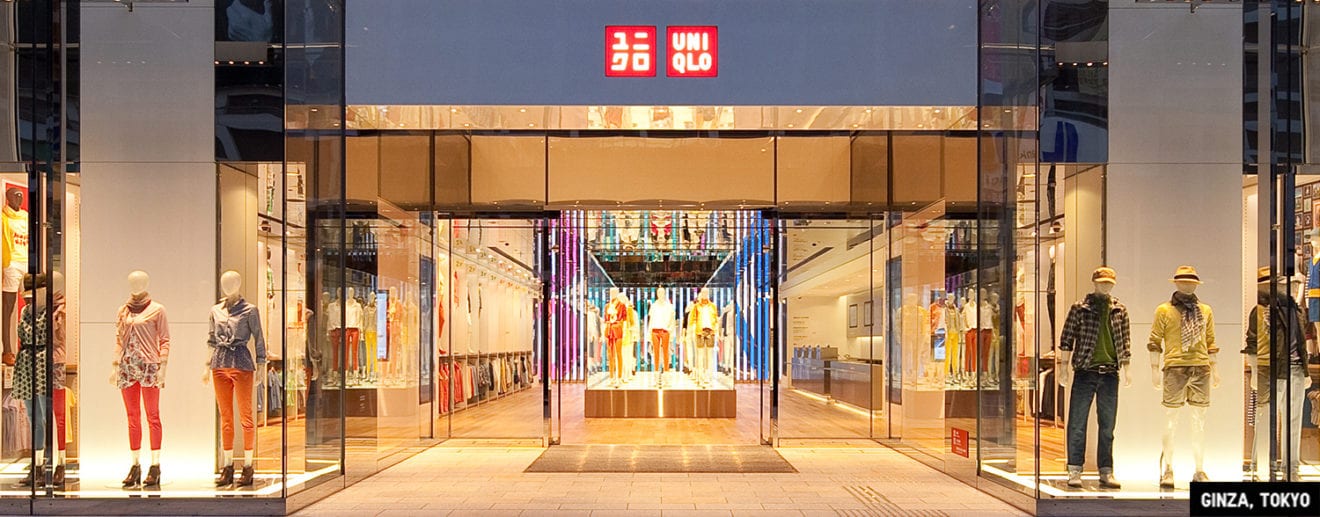
    Uniqlo parent Fast Retailing has had record revenue and profit levels for its latest trading year, to August 31.

    Consolidated revenue reached ¥1.8619 trillion (US$16.6 trillion), up 4.2 per cent year on year, the operating profit soared 38.6 per cent to  ¥176.4 billion while profit attributable to the owners ballooned 148.2 per cent to ¥119.2 billion.
    Net profit expanded by 2.5 times mainly because of profit gains by Uniqlo International.

    Uniqlo Japan: Gross profit margin improves but operating profit down…

    • Revenue up 1.4 per cent to ¥810.7 billion
    • Operating profit down 6.4 per cent to ¥95.9 billion
    • Full-year same-store sales expand by 1.1 per cent (second-half growth of 2.4 per cent, thanks to sales of newsworthy items such as wireless bras and Dry Stretch Kando Pants).
    • Gross profit margin improves by 0.3 points.

    Uniqlo International: Operating profit nearly doubles as Southeast Asia business enters growth stage…

    • Revenue up 8.1 per cent to ¥708.1 billion
    • Operating profit almost doubles (95.4 per cent) to ¥73.1 billion on improved gross profit margins and leaner cost structures regionally, as well as a halving of the operating loss at Uniqlo USA
    • Performance especially strong in Southeast Asia and Oceania, where operating profit doubled year on year.

    Uniqlo Greater China and Uniqlo South Korea also reported large year-on-year profit gains, says Fast Retailing.

  • SIA, Grab integrate mobile apps

    SIA, Grab integrate mobile apps

    Singapore Airlines (SIA) and Grab have integrated their respective mobile apps to offer enhanced convenience to travelers.

    The partnership will benefit customers who are travelling to the airport in six countries across Southeast Asia – Indonesia, Malaysia, the Philippines, Singapore, Thailand and Vietnam.

    SIA customers can now book Grab rides through the SingaporeAir mobile app. Customers using the app will see an option to book a Grab ride to the airport seven days before their scheduled flight.

    Selecting this option will direct customers to the Grab app, where they can choose to order a Grab ride to the airport on-demand or in advance. The airport will be automatically listed as the destination, so the user simply fills in the pick-up point and desired time.

    The first 5,000 customers will receive GrabPay Credits worth S$10 ($7.38) in their Grab account for bookings made through the SingaporeAir mobile app for Grab rides in Singapore.

    “We are constantly seeking to enhance our SingaporeAir mobile app and KrisFlyer program to ensure that we provide more benefits to our customers,” said Campbell Wilson, SIA SVP for sales and marketing.

    Jason Thompson, head of GrabPay, said that with GrabRewards, a dollar spent on Grab is more valuable than a dollar spent in cash. “By integrating Grab’s and SIA’s loyalty programs, customers can look forward to using their points when they plan for their next holiday.”

  • Calvin Klein China opens lifestyle store in Shanghai

    Calvin Klein China opens lifestyle store in Shanghai

    Calvin Klein China has opened a multibrand lifestyle store in Raffles City Shanghai.

    A wholly owned subsidiary of PVH, Calvin Klein has simultaneously opened a similar store in Düsseldorf, Germany.

    Shanghai’s two-storey store offers men’s and women’s CK Calvin Klein, Calvin Klein Jeans, Calvin Klein Underwear and Calvin Klein Performance apparel and accessories.

    Its design concept communicates the brand’s minimal, modern aesthetic with added colour and sumptuous materials to enhance the consumer experience, says the company. Cobalt-blue curtains frame the entrance, while geometric rugs in soft pink offset the grey concrete. Kvadrat/Raf Simons fabric is used throughout as well as Utrecht chairs by Gerrit Thomas Rietveld.

    Oversized silhouette cut-out images of models in the brand’s latest styles hang from the ceiling.

    Digital technology offers a personalised shopping experience. Interactive video and denim-fit guide walls enable customers to browse and try on items featured in the brand’s current campaign.

    An interactive video table invites customers to explore the brand on a deeper level via newspaper, magazine and online articles about the brand, key milestones, runway show videos and events, as well as the official Calvin Klein social-media platforms.

    “As we continue to focus on expanding Calvin Klein’s global footprint, it is our objective to bring a best-in-class retail experience to key markets and shopping destinations,” says CEO Steve Shiffman.

    Founded in 1968 by the designer and his business partner Barry Schwartz, the brand’s global retail sales exceeded $8 billion in more than 110 countries last year.

    Owner PVH also has such brands as Speedo, Tommy Hilfiger, Van Heusen and Warner’s in its portfolio.

  • Japanese Farmers’ Market lands at Changi

    Japanese Farmers’ Market lands at Changi

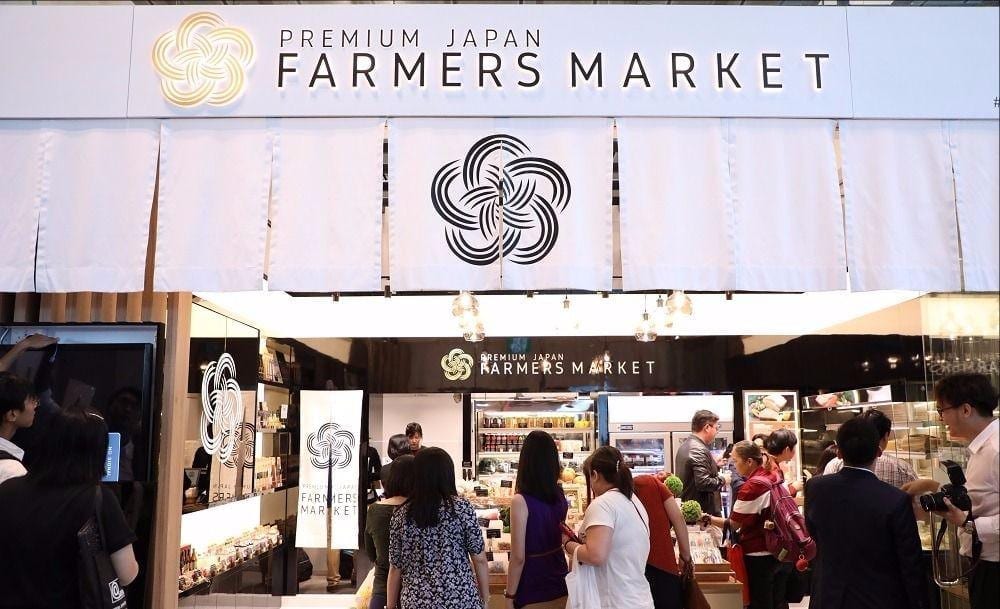
    Hailed as a Singapore first, the Premium Japanese Farmers Market offers everything from seasonal vegetables and fruits to meat products and sake imported from Japan – in Changi Airport’s Terminal 3 departure hall.

    Some items, including egoma tea, a special sushi selection and wagyu sake, are new to Singapore.

    The store also offers ready-to-eat bento boxes by Go-Zen, which can be customised from a range of 25 ingredients including scallops, snow crab, ikura salmon roe, Niigata Japanese rice and wagyu beef.

  • Hong Kong: more than just retail

    Hong Kong: more than just retail

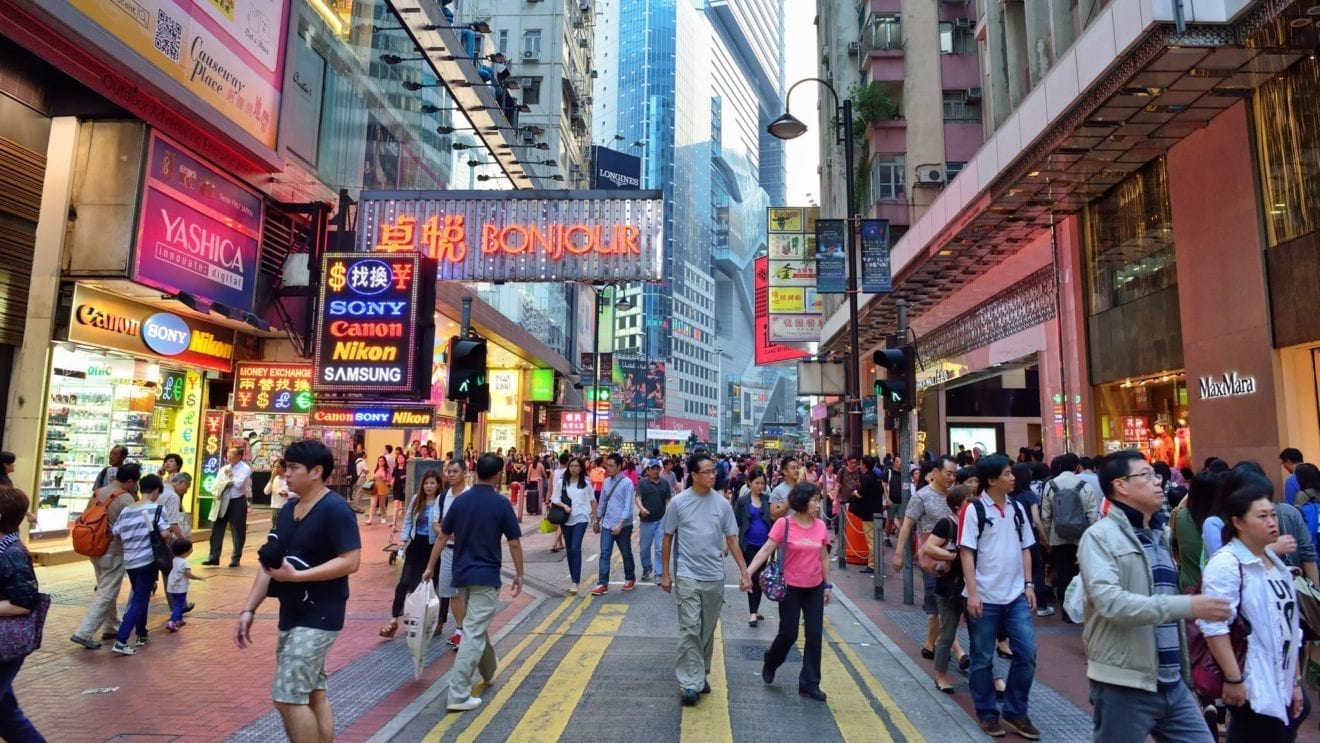
    There has been no shortage of ink spilt in recent years about the negative impact of China’s anti-corruption crusade on Hong Kong’s retail sector.

    Visitor arrivals from the PRC represented 76 per cent of all tourists in 2016, when those numbers fell 6.7 per cent. Taken with aggressive campaigns to lure mainland tourists elsewhere — Japan, Singapore, South Korea — and a strong Hong Kong dollar, life has become harder for the SAR’s retailers and landlords.

    Or has it?

    Despite currency fluctuations and fleeing Chinese travellers, overnight visitors to Hong Kong spent an average of approximately HK$6600 a head during their stays, funnelling nearly $300 billion in related capital into the economy that year according to the Hong Kong Tourism Board — and that was down from 2015. Though Mainland Chinese arrivals declined, short-haul markets (Taiwan, South Korea, Japan, the Philippines, Singapore and Thailand) registered an increase of 3.4 per cent, long-haul market arrivals (the US, Australia) rose by 2.3 per cent, and MICE and cruise passenger visits increased by 10 per cent and 50 per cent respectively.

    People are still coming to Hong Kong –  and they’re still shopping.

    Put very simply, Hong Kong’s one-two punch of consumer-friendly retailing and a great deal to offer visitors seeking to complement their shopping are the primary reasons the retailing scene remains vibrant. An open door business policy and historical connections make international brands a must-stop for regional expatriates and curious regional visitors alike. Stop outside a Marks & Spencer Food Hall on any given afternoon if you need proof.

    The new Italian outlet mall, Florentia Village, at Kwai Chung and the imminent Citygate expansion add to choices for bargain hunters, alongside guidebook hotspots like Ladies’ Street. An added bonus: all of this is free of sales tax. In some form, 12 per cent is added to goods in the Philippines, Koreans and Australians can pay as much as 10 per cent in levies, the Japanese 8 per cent and Thais 7 per cent according to tax advisory Deloitte. Twelve cents may not be a lot on a dollar, but it makes an enormous difference on a genuine Prada handbag.

    A travel ban that actually benefits Hong Kong…

    While it’s true the recent diplomatic spat between China and South Korea over defence deployment has proven a boon to Hong Kong shopping (Chinese travel to Korea fell 40 per cent in the year to April 2017 on the back of Beijing directives to halt travel packages to the Hermit Kingdom) it is in all likelihood a temporary glitch.

    Ultimately it is the city’s extras that keep Hong Kong a shopping option. When not browsing boutiques, stellar food and beverage breaks are available at every turn, and leisure parks, cultural outlets, nature and excursions can all be found in an easily navigable, compact space.

    If there’s a silver lining to the city’s retail property woes it’s the newly available space for international restaurant groups to move into. Finding room on the dining scene so far this year are Japan’s Michelin-starred ramen eatery Tsuta, fresh-local burger shack Honbo, Royal favourite Thai Brassiere by Blue Elephant, Moi Moi by Vietnamese Sydney celebrity chef Luke NguyenLilya Moroccan Lounge and Bar and venerable American dessert cafe The Cheesecake Factory are just a few. Anyone travelling with children (cruise operators are quick to point out the burgeoning family demographic) will be glad to have the amusements at Hong Kong Disneyland and perennially popular Ocean Park — with real animals — an MTR ride away.

    Art & culture

    Admittedly not everyone travels to Hong Kong with family or has a soft spot for amusement parks, and for those shoppers the SAR’s reputation as a cultural wasteland is quickly disappearing. The two-year old PMQ regeneration has put local, artisanal and independent design a shoppers’ fingertips, and the forthcoming West Kowloon Cultural District has just opened its first gallery: M+. Soon to be a few minutes’ walk from the PMQ is the Central Police Station redevelopment on Hollywood Road, Tai Kwun. The 16 buildings will comprise art galleries, boutiques, dining, and leisure spaces with an eye towards highlighting local heritage. Tai Kwun and the WKCD are set to be destinations in of themselves.

    Need some hiking and more?

    Finally, tourists are drawn to Hong Kong from around the world for its renowned urban hiking, traversing over 250km on just the Hong Kong, Lantau, Wilson and MacLehose routes. In no other city in the world can you be on a lush, seemingly remote trail one minute, and ensconced in the glamorous shopping of the Landmark an hour later.

    Also an hour away: Macau, which beckons as a Disneyland for adults, where luxury spas and more Michelin-starred dining awaits. It’s no surprise shopping in Hong Kong is as healthy as ever.