Retail News CRM

Tag: sia

  • Apple Watch cellular functionality to have low reach

    Apple Watch cellular functionality to have low reach

    Although the big selling point of Apple’s newly-announced Apple Watch Series 3 is its cellular connectivity, Canalys has noted that this functionality will launch with a limited addressable market.

    The Apple Watch 3 – announced earlier this month along side the new iPhone 8, iPhone 8 Plus and iPhone X smartphones – will have an integrated eSIM to support both LTE and UMTS connectivity.

    But in a research note, Canalys said this functionality will only be supported by 14 mobile operators across eight countries at launch, and buyers will not have their choice of carrier as is the case with cellular-equipped iPads.

    Instead Apple Watch’s cellular functionality requires a companion iPhone, and that iPhone must be using a postpaid SIM from an eligible operator.

    In addition, in the important Chinese market, the functionality will initially be limited to just five regions not including Beijing.

    “The total iPhone installed base currently sits at around 517 million. Of those, only 164 million are the right iPhones, with the right carrier, on the right tariff to work with the new cellular Apple Watch at launch,” Canalys analyst Ben Stanton said. This means 68% of iPhone owners will be uable to use the new device’s best feature.

    “Apple’s potential buyers are spread across eligible and ineligible operators and contracts, and many will be disappointed. Apple needs to exert pressure on more carriers to make the required network investment before the buzz around its new product dies down.”

    Canalys did note that another six operators are lined up to offer Apple Watch cellular functionality soon, which would increase Apple’s addressable market to 47% of its total iPhone installed base, but the company is yet to specify when these operators will become eligible.

    “There will be some churn as loyal Apple fans switch operators to unlock the full potential of the Series 3, but customers in long-term postpaid deals with ineligible carriers often cannot do this without incurring a financial penalty,” Canalys analyst Jason Low said.

    “This will be a major barrier to early adoption of the Apple Watch Series 3. But eligible operators do have an opportunity to grow their sales of Apple Watches against retailers and Apple direct channels.”

  • Dolce & Gabbana profits quadruple over 12 months

    Dolce & Gabbana profits quadruple over 12 months

    Dolce & Gabbana profits have virtually quadrupled from a year ago. A year ago the Italian luxury fashion house’s profit was €17.93 million (US$21.5 million), while this year the two owners of the group cashed in dividends of €80 million, reports CPP-Luxury.com.

    Its consolidated group turnover for last year hit €1.3 billion, compared to €1.18 the previous year, a rise of 9.6 per cent.

    The group includes Dolce & Gabbana Holding, Dolce & Gabbana Trademarks, which controls the group’s licences, and Dolce & Gabbana.

    Retail business has risen 7.1 per cent to €769 million, while the wholesale business jumped 8.7 per cent. Only licences dropped, by 9.2 per cent to €61.2 million.

    At home in Italy, Dolce & Gabbana has only a 24 per cent market share, compared to 27 per cent in the rest of Europe, 13 per cent in the Americas and 6 per cent in Japan.

  • Danish plus-size brand Carmakoma merges with Only

    Danish plus-size brand Carmakoma merges with Only

    Danish plus-size brand Carmakoma has been amalgamated into the Only fashion brand, paving the way for further international expansion.

    Carmakoma was founded nine years ago and had recently expanded into other European countries, says co-founder and former director Heidie Lykke.

    “After having established ourselves on several international markets we were challenged on ways of financing our continuous development,” explaining the merger.

    Finn Poulsen, director of Only, said his company sees huge potential in the fashion segment.

    “There is a great demand for plus-size fashion that follows the absolute newest trends at strong prices and in a good quality. These are demands that match the Only concept.”

    The brand will now be named Only Carmakoma and its first collection will be launched in January 2018.

    “We expect that Only Carmakoma will in three years be able to account for 10 per cent of the total turnover of Only,” said Poulsen.

  • Hotels told to cough up for playing music on TV by Vietnam’s copyright watchdog

    Hotels told to cough up for playing music on TV by Vietnam’s copyright watchdog

    Collection of the controversial royalty fees will resume after a three-month break following a public backlash.Vietnam’s music copyright watchdog has announced that it will resume charging hotels across the country royalty fees for playing music on TV.

    The Vietnam Center for Protection of Music Copyright (VCPMC) will be charging all hotels VND25,000 ($1.1) per year for each room equipped with a TV.

    The amount is based on similar fees charged in other countries based on information provided by the International Confederation of Societies of Authors and Composers (CISAC) and adjusted to Vietnam’s economy, the center stated.

    At a press conference on Monday, the VCPMC cited Vietnam’s intellectual property law to reaffirm its right to collect royalty fees from hotels that play music.The culture ministry has asked the VCPMC to start collecting fees again after they were put on hold in May following a public backlash, according to Pho Duc Phuong, the center’s director.

    The center also said that 80 percent of the royalties would go to the copyright holders and it would only retain 20 percent to cover its operating costs, Tuoi Tre (Youth) newspaper reported.

    The collection process will be public and transparent, and the royalties will be paid to the copyright holders every three months, said Nguyen Hoang Giang, director of the VCPMC’s northern chapter.

    “The hotels will supply us with lists of songs they frequently play, and after subtracting administrative expenses, we will split the royalties equally among copyright holders,” Giang said.

    However, the VCPMC did not explain how the hotels will be able to compile these lists, or how it will verify them.

    In May, the center’s southern chapter started asking 1, 2 and 3-star hotels in Da Nang to pay music royalty fees and threatened to take legal action against those that refused to cooperate. Many hotel owners were surprised to learn about the new fees and were quick to protest, claiming most visitors don’t use their TVs to play music and not all hotels play music in their lounges.

    However, the VCPMC has been charging 4 and 5-star hotels music licensing fees for the last 10 years, and has been organizing conferences since 2013 to inform all hotel owners of copyright laws and regulations, Tuoi Tre quoted Dinh Trung Can, the VCPMC’s deputy director, as saying.

    Following the public backlash in May, the Copyright Office of Vietnam instructed the VCPMC to temporarily stop collecting music royalty fees until it could devise a more transparent and appropriate roadmap for the collection process.

    The VCPMC is a non-governmental and non-profit collective copyright management organization. It claims to represent nearly 4,000 songwriters and copyright holders of Vietnamese songs, and more than 4 million international writers.

  • Queue greets H&M Vietnam launch in HCMC

    Queue greets H&M Vietnam launch in HCMC

    Queues marked the official launch for H&M Vietnam, with more than 4000 customers on its first day in Vincom Center Dong Khoi, Ho Chi Minh City.

    It announced the opening a month ago on its Facebook page.

    The first 1000 customers at the Swedish fast-fashion brand’s new shop were each given a limited-edition bag, while other shoppers received shopping vouchers.

    H&M Southeast Asia CEO Fredrick Famm says the timing is right for the company to expand to Vietnam. “H&M has been researching and preparing for its Vietnam expansion for a long time.”

    Famm says H&M is looking for further locations in Vietnam.

  • Myer and Amazon announce deal

    Myer and Amazon announce deal

    Myer will stock Amazon Kindle products in its store and online, after the retailers today announced a new partnership.

    Amazon’s heavily-speculatedventure into Australia, alongside a host of other international brands now entering the market, have been posed as major risks by analysts to the 117 year old department store chain retailer, amid CEO Richard Umbers’ ambitious turnaround plan for the business.

    Today’s announcement sees Myer offer a selection of Kindle e-readers and device accessories.

    “We are thrilled to announce our program with Myer, a true icon of Australian retailing,” said Scott Harrington, director of Amazon Device Sales.

    “As the largest department store chain down under, Myer will help make e-reading even more accessible to literature enthusiasts across the nation.”

    “We want to help make it as easy as possible for Australians to delve into a good story. Now that Australians can shop for Kindle e-readers and accessories at Myer, we’re one step closer to that goal.”

    Dain Friis, Myer group general manager home and entertainment, said the “collaboration is a natural fit for us.”

    Earlier this month, former cross-border supply chain manager at Amazon, Brittain Ladd, said the US giant will begin its Australian entry with  a “basic model in terms of staging.”

    Temple & Webster CEO Mark Coulter said he’ll “probably” partner with Amazon in a panel discussion.

    Adairs CEO Mark Ronan is reviewing the possibility of bringing his company’s range of high-end Manchester to Amazon’s platform.

    Amazon itself has begun discussions with suppliers, with former Appliances Online head of buying Fabio Bertola having been brought on to oversee the rollout of marketplace.

    Meanwhile Myer boss Richard Umbers remains committed to his “wanted brands” strategy despite the retailer suffering a $46 million hit from the collapse of its Topshop experiment and continuing pain from fashion label sass & bide.

  • OCBC Bank Launches Mobile Keyboard to Enable Cashless Payments

    OCBC Bank Launches Mobile Keyboard to Enable Cashless Payments

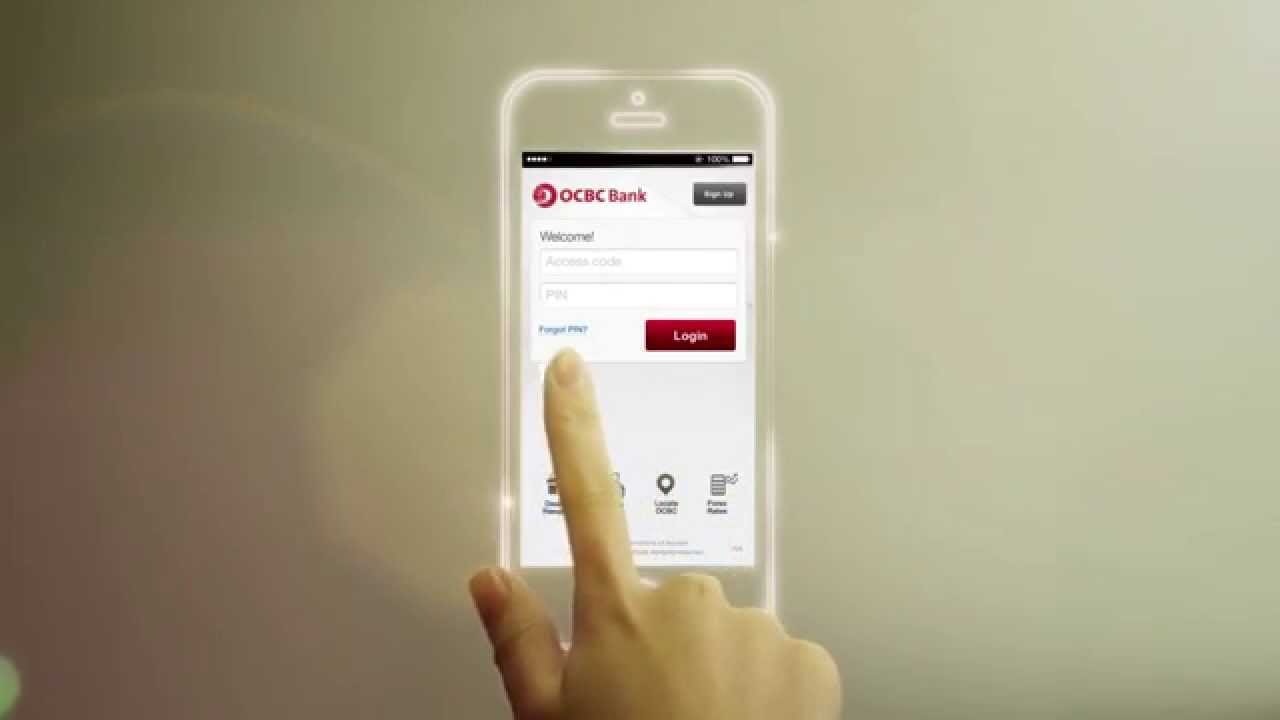
    OCBC Bank has launched a mobile keyboard that allows customers to make peer-to-peer payments without having to exit their current mobile applications. The OCBC Keyboard can be used within any mobile app or browser – for instance, within Facebook, Whatsapp, Instagram or Chrome – to send money instantly to anyone with a bank account in Singapore, including those who have not yet registered for PayNow. The payment rides on the OCBC Pay Anyone e-payment service and can be done using just the recipient’s mobile number.

    The OCBC Keyboard follows on the heels of OCBC Bank’s launch of e-payments integrated with Apple’s Siri and iMessage for iPhone users in 2016, enabling customers to make instant funds transfers with a voice command to Siri or within the iMessage app while engaged in a chat. With the OCBC Keyboard, the convenience of making an e-payment is extended to any app on Android devices running the Android 4.4 KitKat operating system or better. Payments are completely secure as they are authenticated with the sender’s mobile banking credentials.

    Making a payment via OCBC Keyboard

    Imagine being able to make an e-payment as easily as sending an “emoji” to a friend while chatting on Whatsapp, or while negotiating with a potential seller on the Carousell app. Users can automatically access the OCBC Keyboard on any app on their mobile phones once they have updated the OCBC Mobile Banking app to the latest version. They will need to perform a simple one-time set up to enable the OCBC Keyboard and make it the default keyboard on their phone.

    To send money, users simply tap on the OCBC Pay Anyone icon on the keyboard without exiting or switching from their current app activity.Once they select a recipient from their contact list – which is automatically synced with the keyboard – they will be guided to complete the transfer using OCBC Pay Anyone within the keyboard. Once payment is complete, the user can continue accessing the original app.

    Boosting cashless payments

    In alignment with Singapore’s Smart Nation agenda and its drive to go cashless, the OCBC Keyboard is the latest in a series of OCBC Pay Anyone e-payment services that OCBC Bank has introduced to encourage customers to embrace the move away from cash.

    The adoption of the recently launched PayNow service amongst OCBC Bank customers has been exceptionally strong, with over 200,000 signups to date. E-payments done via the OCBC Pay Anyone service have increased 35 per cent since the launch of PayNow, and one in every two PayNow transactions is via OCBC Pay Anyone.

    Mr Aditya Gupta, OCBC Bank’s Head of E-Business Singapore, said: “With OCBC Keyboard, we are embedding payments in our customers’ lives and making it completely frictionless for them to pay while they go about everyday tasks like chatting on Whatsapp, sending emails, buying items on Carousell or browsing the Internet. I’m confident that this added convenience will exponentially increase the adoption and usage of e-payments, including PayNow transfers. We will continue to push the boundaries on e-payments and move the needle in driving Singapore towards becoming cashless.”

    Evolution of OCBC Pay Anyone

    Launched in 2014, OCBC Pay Anyone was the first peer-to-peer mobile payment service offered by any bank in Singapore that enabled customers to make a payment directly into a recipient’s bank account using just a mobile number, email address or Facebook, without having to perform transaction signing using a security token or to add the recipient as a “payee”.

    In September 2016, the daily transfer limit on OCBC Pay Anyone was increased from $100 to $1,000, bringing greater convenience to customers and allowing payments for bigger-ticket items. In October 2016, OCBC Bank further enhanced OCBC Pay Anyone by enabling transactions using Apple’s Siri voice command feature and directly within iMessage.

    In May this year, OCBC Bank launched its first standalone mobile payments app – the OCBC Pay Anyone app – which now consolidates all OCBC Pay Anyone e-payment services into a one-stop shop for customers’ convenience: Peer-to-peer QR code payments via PayNow, QR code payments to NETS merchants, peer-to-peer e-payments and the integration of OCBC Pay Anyone with Apple iPhone’s Siri and iMessage.

    Enabling the OCBC Keyboard for e-payments

    The OCBC Keyboard is available to all OCBC Bank customers using Android 4.4 KitKat devices with the latest OCBC Mobile Banking app. The app can be downloaded from the Google Play Store.

    Customers can enable OCBC Keyboard by following these steps:

    • Tap ‘Pay now’ in the OCBC Mobile Banking app or ‘Send Money’ in the OCBC Pay Anyone app for a tutorial on setting up the keyboard
    • Users will be guided to turn on OCBC Keyboard in Settings and make OCBC Keyboard the default keyboard

    The OCBC Keyboard is now ready to be used as the primary keyboard.

    Making a payment using the OCBC Keyboard

    • Switch to the OCBC Keyboard if it is not the primary keyboard in use
    • Tap on the OCBC Pay Anyone icon on the keyboard to start payment
    • Select the contact you wish to pay to
    • Enter your online banking access code and PIN
    • Select the account to send money from. This step is automatically skipped if you have only one account.
    • Enter the amount to send
    • Create a six-digit passcode to be given to a non-PayNow registered recipient. If the recipient is PayNow-registered, no passcode is required. Confirm the recipient’s name and mobile number on the review screen to proceed.
    • Authenticate payment with a One-Time-Password

    You can then return seamlessly to what you were previously doing on your mobile device. PayNow-registered recipients will receive the payment directly into their bank accounts. If the recipient is not PayNow-registered, they will receive an SMS link. Share the passcode with them to collect the money.


  • NTT Com launches data network services in India

    NTT Com launches data network services in India

    Japan’s NTT Communications has launched international data network services in India as part of a push to expand its presence in the market.

    The services are being provided through NTT Com’s Indian affiliate NTT Communications India Network Services (NTTCINS).

    NTT Com has also commenced construction of two new data centers in Mumbai and Bangalore through managed hosting and cloud service provider subsidiary Netmagic.

    The $160 million investment will add nearly 500,000 square feet of gross floor space, nearly doubling the company’s data center floorspace footprint in India

    NTT Com likewise acquired a VNO ILD network license in March and has been providing its Arcstar Universal One cloud-based network services as it international network services in partnership with local carriers, using these carriers’ network resources while adding value-added services such as NFV.

    “India has been a key strategic market for us with the accelerating shift of IT services from traditional enterprise data centres into the cloud-based services,” NTT Com President and CEO Tetsuya Shoji said.

    “For the past few years, our business in India has consistently grown over 35% annually. With further expansion of data center foot print and addition of international data network services to our service portfolio, we aim to meet the growing market needs for mobility, e-commerce, IoT, cloud and big data.”

  • Startup develops app that allows diners to book tables with discounts

    Startup develops app that allows diners to book tables with discounts

    With PasGo, you can make online restaurant reservations and enjoy a wide range of discounts for free. Restaurant reservation application PasGo was launched in Vietnam in 2014 to present a complete tech solution for both diners and restaurants.

    When you have plans to eat out, a lot of questions will pop up: Where, what and when to eat? And what about discounts? To find the answers, many people usually turn to restaurant reviews and spend time looking for vouchers and discounts online, which can be inconvenient, said a PasGo representative.

    The internet can be a double-edged sword as it offers a lot of information but it’s difficult to decide on which sites to trust, and even when you do buy coupons online, you still want to book tables.

    “How can I find the right restaurant, save money, and book a table before arriving? We realized diners would love a solution to all of those questions, so we created PasGo,” said the company representative.

    Through the app, you can find the nearest restaurant using a map to show you the way. You can also choose from top restaurants without having to spend time reading a review, find discounts and book tables a the click of a button.The developers of PasGo are constantly studying market trends and catching up with new technologies to create a product that can meet the best interests of both diners and restaurants in Vietnam.

    The app is able to filter options to find the restaurant that suits your taste in terms of price, location and quality. It can even fulfill special requests such as finding an eatery that can cater for hundreds of people at once, or that has a private room or romantic seats, and all free of charge.

    PasGo helps restaurants advertise for free and attract customers during off-peak hours, as well as introducing new dishes.

    “This is the optimal solution for restaurants to manage and use their capital as it is based on their actual situations instead of creating wholesaling coupons,” said the representative.

    Over the past three years, PasGo has connected 700 restaurants in Hanoi and Ho Chi Minh City with diners, and serves tens of thousands of users each day, creating the same amount of promotions and discounts.

    It has been loyal to its philosophy of only working with high-quality restaurants to help users feel secure about their choices.

    “We know this is not an easy path but the team at PasGo are consistent, and we hope the success of PasGo will encourage restaurants to pay more attention to their food and service,” the representative said.

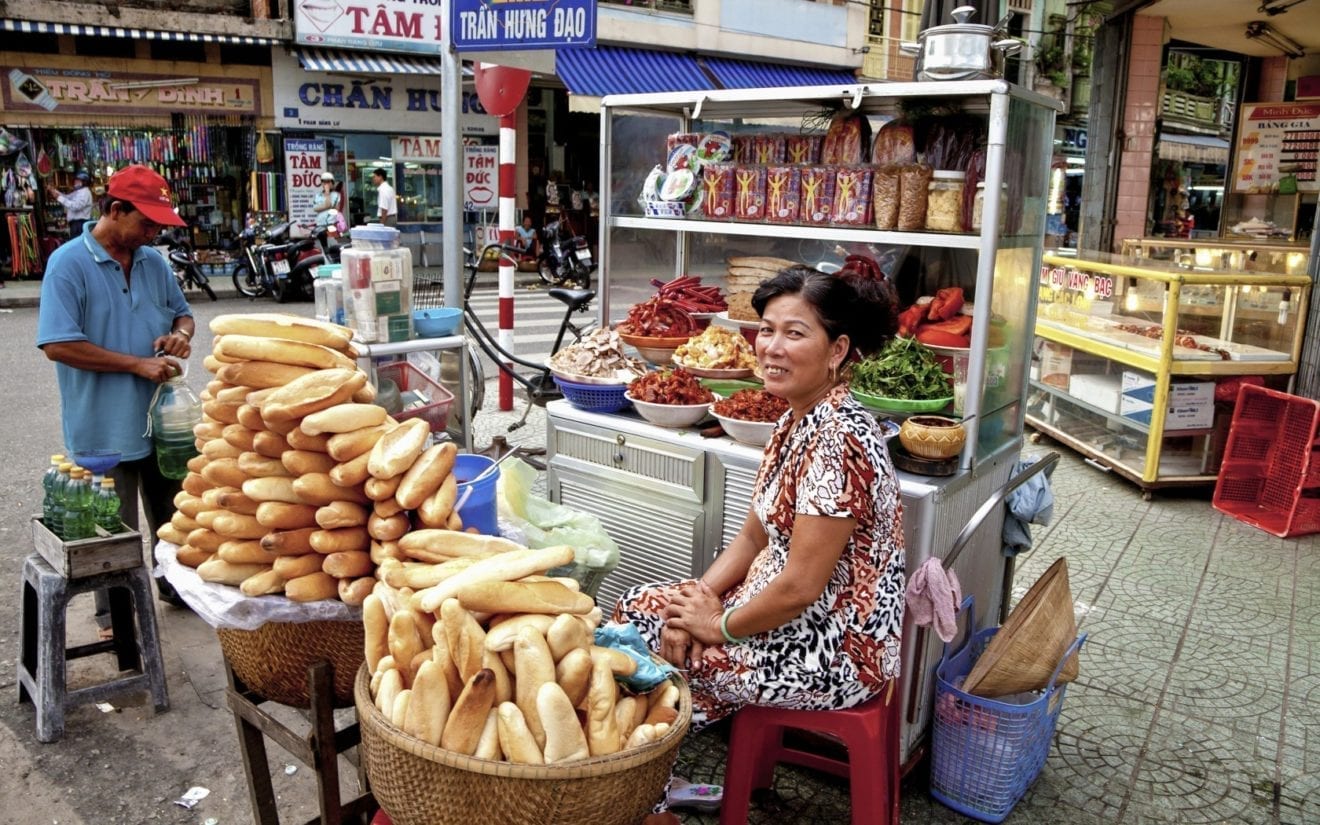
  • Vietnamese street food favored over foreign fast food chains

    Vietnamese street food favored over foreign fast food chains

    Several Burger King shops in HCMC and Da Nang have closed, while Lotteria has also shut down ineffective shops. Other giants have not closed many of their shops, but they are cautious developing their chains.

    McDonald’s, when setting foot in Vietnam, stated it would open 100 shops within 10 years. However, after three years in Vietnam, the giant has opened only 15 shops.

    A representative of Lotteria admitted that competition in the fast food market is getting stiff with many foreign and domestic brands.

    Some brands have shut down shops because their menus were not suitable to Vietnamese tastes and the prices were not competitive.

    Nguyen Huy Thinh, managing director of McDonald’s, said it was normal for fast food brands to shut down unprofitable shops, while a representative from Burger King said the chain’s business has been going well with a two-digit growth rate.

    However, Hoang Tung, a branding expert, blames the failure of some fast food chains on the difference between the food and Vietnamese tastes.

    Burger King, for example, develops products based on burgers as the core product.

    “Vietnamese still prefer banh my (sandwich) and banh my is cheaper than a burger,” Tung said. “This is why the burger chain expansion has slowed down, while banh my chains have been booming.”

    Tran Anh Tuan, CEO of Pathfinder, a consultancy firm, also said that some fast food chains are not positioned well in the domestic market, and products don’t change regularly. And the price is too high compared to consumers’ income.

    “Fast food, in foreign countries, is generally for the masses. But in Vietnam, fast food chains target high-income earners,” he explained.

    Fast food… and rice

    While western-style fast food chains are not thriving, Vietnamese and Asian food brands are doing well.

    Anh from Pathfinder said that many Japanese and Korean food chains have appeared i which are closer to Vietnamese tastes.

    “Korean fried chicken chains have been developing rapidly because they have reasonable prices and fit Vietnamese tastes,” he said.

    In the past, only a few fast food chains sold Vietnam rice, but now it is a major dish on menus.

    MOIT has granted licenses to 148 foreign brands to enter the Vietnamese market in the last eight years.

    This includes 42 fast food, bakery, coffee, beverage and restaurant brands, accounting for 43.7 percent of the total.

  • Food delivery and out-of-home dining are thriving in China

    Food delivery and out-of-home dining are thriving in China

    China is one of the world’s largest e-commerce economies, but that doesn’t mean people are only opting to consume in the comfort of their homes.

    In fact, a study by consultancy Bain and Company and Kantar Worldpanel found that the growth rate of FMCG (fast-moving consumer goods) home consumption is only tepid compared to the strong growth of dining out.

    According to that 2017 China shopper report, released on Tuesday, dining out and food delivery are seeing robust growth with Chinese consumers, who have traditionally cooked at home.

    The results revealed that while the value of food purchased for in-home meal preparation grew by only 3 percent annually from 2013 to 2016, food delivery rose by 44 percent and dining out grew by 10 percent over the same period.

    “You can still have family lunches and dinners at home but there is so much variety of delicious food that is available at 30 minutes from where you live or where you work, why would you bother cooking at home?” said Bruno Lannes, partner in Bain’s Greater China Consumer Products Practice.

    The study analyzed responses from a panel of 40,000 households and 4,000 individuals in tier 1 and tier 2 cities.

    The report’s findings this year are a continuation of a “two-speed” trend identified last year, said Lannes.

    In the case of dining, it’s “high-speed dining out and delivery versus low-speed home cooking” and this divergence will present new opportunities and strategies for food businesses, the report added.

  • Juniper Networks unveils Cloud-Grade Networking

    Juniper Networks unveils Cloud-Grade Networking

    Juniper Networks has launched a new Cloud-Grade Networking portfolio to help operators and enterprises more rapidly build and deploy cloud networks.

    Cloud-Grade Networking introduces a new set of principles for the way applications and services are designed and delivered, utilizing telemetry, automation and machine learning capabilities.

    The paradigm comprises four principles –  a platform-first approach, disaggregation, the concept of a self-driving network and software-defined security.

    As part of the platform-first approach, Juniper Networks has introduced a new Junos Node Slicing service model to enable operators to  run multiple services or instances on the same router but use a separate administrative design for each.

    A new Universal Chassis is meanwhile designed to disaggregate the network so operators can standardise all routing and switching deployments across data center and the WAN in a unified platform.

    Juniper Networks said these new approaches can reduce the operational complexity of managing end-users’ application needs by up to 60% and reduce platform qualification requirements by up to 50%.

    The company has also introduced two new professional services offerings to advance the concept of the self-driving network, which combines telemetry, workflow automation, DevOps, and machine learning in a single infrastructure.

    “The demand for cloud-based services continues to create disruption, resulting in complexity for operators and enterprises that need to pivot quickly. In order to establish a foundation to innovate across IT layers, organizations need to rethink the network,” Juniper Networks VP of marketing Paul Obsitnik said.

    “This is the next wave of cloud transformation, and Juniper is delivering it with Cloud-Grade Networking. We have been on this journey for a number of years and we believe Cloud-Grade Networking encapsulates the key tenets that organizations need to follow in order to reimagine how networks ultimately enable them to drive business success.”

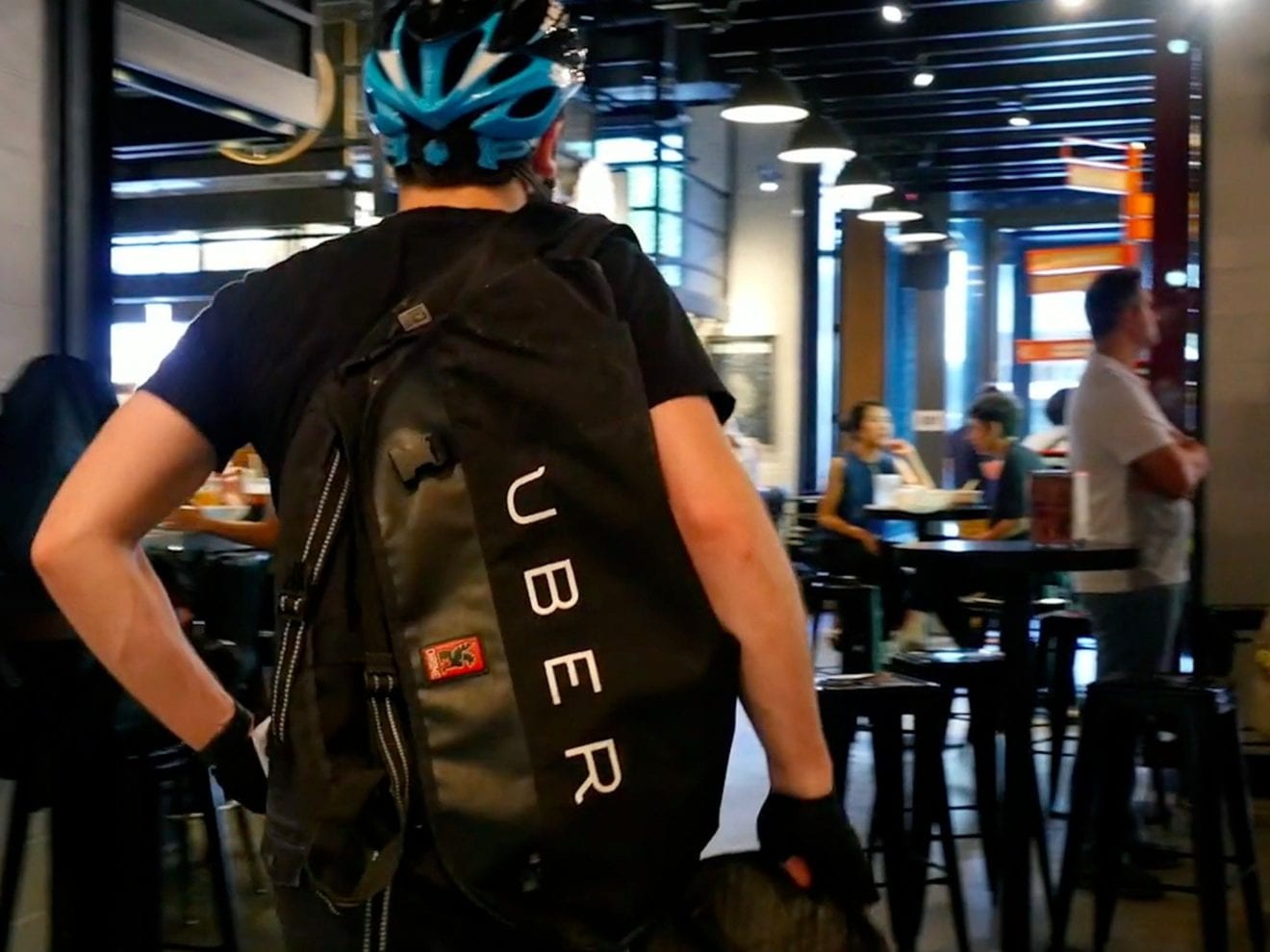
  • Transport Ministry denies Uber and Grab pilots ended

    Transport Ministry denies Uber and Grab pilots ended

    At the carrier’s annual shareholder meeting on Tuesday, it was said that the 191 million shares with a par value of VND10,000 (44 US cents) per share could be sold in the fourth quarter or at any other time that the management board decides.

    Current shareholders will have the right to buy the shares at a rate of 15.5 per cent, meaning that an investor will be able to one additional share for every 15.5 shares he owns at the moment.

    Among the additional shares are 164.73 million shares sold to State shareholders and 16.77 million shares issued to the firm’s Japanese strategic investor ANA Holding Inc. Other shareholders will be able to purchase 9.7 million shares.

    The share issuance is expected to raise VND1.91 trillion (nearly $85 million), which would help the aviation group cover a part of the cost of purchasing new planes and making payments for its suppliers.

    In 2017, Vietnam Airlines plans to spend VND2.1 trillion – 72 per cent of this year’s spending budget – purchasing 10 A350-900WB planes and eight Boeing 787-9 planes.

    This year’s business plan also includes VND87.9 trillion in combined revenue, an annual increase of 22.7 per cent.

    However, the combined post-tax profit of VND1.33 trillion marks a 35 per cent drop from 2016.

    The targeted post-tax profit is lower based on worries about higher fuel costs and rising global oil prices as well as rising amortisation costs generated by the purchase of new planes.

    Last year’s post-tax profit was a record high for Vietnam Airlines, supported by oil prices that hit a historical 12-year bottom in mid-January 2016. Crude prices have rebounded about 47.5 per cent since then. This year’s business plan is developed based on a $64 per barrel oil price scenario.

    The company also attributed the decline in annual post-tax profit to slow growth of market purchasing power, which is forecast at 9.5 per cent for 2017.

    The slow rise in market purchasing power means Vietnam Airlines will have to face a decline in its Revenue per Available Seat Kilometre (RASK) – a term of unit cost used in the aviation industry.

    The RASK figure in 2017 is forecast at 5 per cent lower than 2016 and 22 per cent lower than 2015.

    Meanwhile, competition is heating up n the international markets as low-cost carriers enhance their presence in Viet Nam and in the Northeast and Southeast Asian regions, traditional markets for Vietnam Airlines.

    In addition, the Noi Bai and Tan Son Nhat international airports, the biggest in Viet Nam, will undergo repairs and maintenance at the year end. This will reduce business activities in those two airports by 30 per cent and force aviation firms to cut the number of flights to and from those airports by at least 15 per cent during the day.

    Share price concerns

    Vietnam Airlines also plans to switch listing its shares from the Unlisted Public Company Market (UPCoM) to either the HCM Stock Exchange or the Ha Noi Stock Exchange.

    Shares of the company, under code HVN, debuted on UPCoM at VND39,200 per share on January 3. Its share price has lost nearly one-third of its value to close Tuesday at VND26,825.

    In comparison, the share price of low-cost carrier Vietjet has risen by 18 per cent to end Tuesday at VND126,500 per share. Vietjet shares debuted on the stock market at the end of February.

    Such decline of share price has raised some concerns among the firm’s shareholders about the company’s strength and competence.

    According to the firm’s chief accountant, Tran Thanh Hien, the share price is quite stable and reflects Vietnam Airlines as an aviation company that meets international standards and practices.

    Hien said that the movement of share prices depends on various factors, including business performance, business strategy, market conditions and liquidity.

    For some firms, the amount of floating shares is quite small, showing that the company’s stock structure is dense and making share prices low, according to Hien.

    Compared to the low-cost carrier Vietjet, Vietnam Airlines focuses on the high-class segment with provision of high-quality products and services, said general director Duong Tri Thanh.

    Low-cost carriers have developed strongly in recent years and account for 60 per cent of the domestic market. This sector is expected to grow 20-30 per cent per year in the coming years.

    Vietnam Airlines would, therefore, push harder its operation in international markets, he said.

    For the domestic market, Vietnam Airlines would concentrate its business on the low-cost segment in co-operation with Jetstar Pacific. The two firms would try to keep their market shares at least 30 per cent, Thanh said.


  • JW Marriott Phu Quoc Emerald Bay crowned Asia’s leading new resort

    JW Marriott Phu Quoc Emerald Bay crowned Asia’s leading new resort

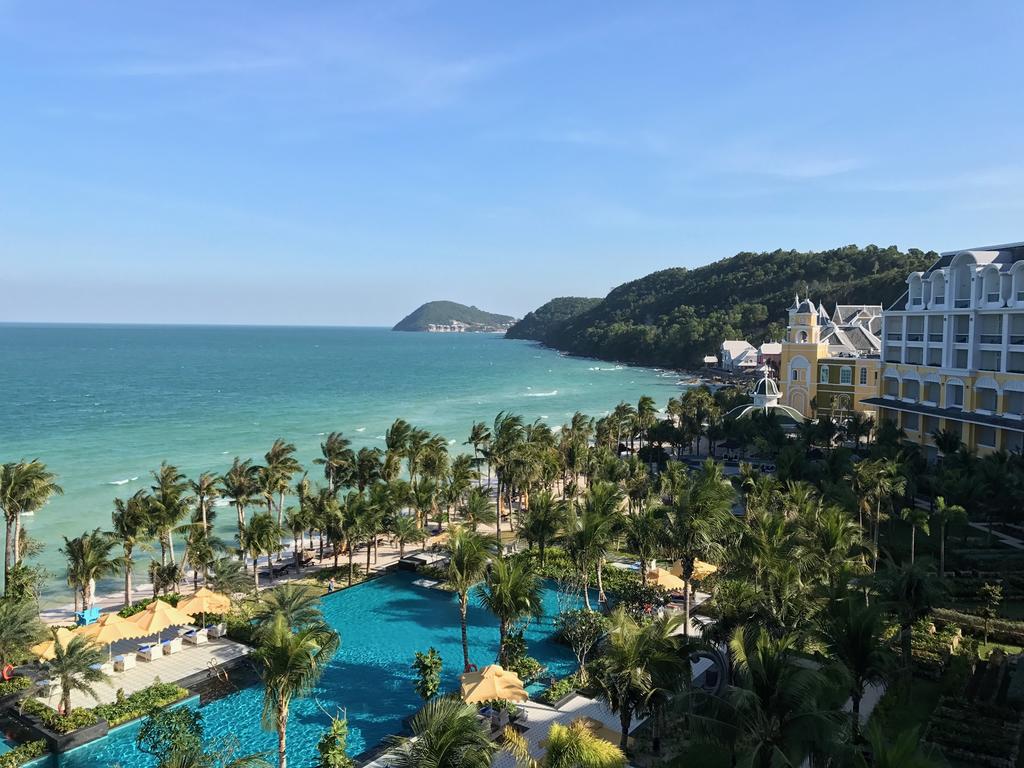
    The award is another big step for Sun Group on its path toward turning Vietnam’s Phu Quoc Island into a luxury global travel destination. The 2017 World Travel Awards Asia & Australasia has named JW Marriott Phu Quoc Emerald Bay in southern Vietnam Asia’s Leading New Resort.

    The five-star JW Marriott Phu Quoc Emerald Bay beat other famous newcomers, including Anantara Kalutara Resort and Shangri-La’s Hambantota Resort and Spa in Sri Lanka, The St. Regis Langkawi in Malaysia, Alila Anji in China, and Hoshinoya Bali and Mövenpick Resort and Spa Jimbaran Bali in Indonesia, to bag the most votes from tourism experts from more than 140 countries.

    “We are delighted to be named Asia’s Leading New Resort by our colleagues in the hospitality industry,” said Ty Collins, the resort’s general manager. “The opening of JW Marriott Phu Quoc Emerald Bay marks the birth of luxury hospitality in Phu Quoc and has established a benchmark of excellence and quality for future Marriott developments throughout Asia.”

    The construction of JW Marriott Phu Quoc Emerald Bay started in 2015 and the resort opened its doors to the public late last year.

    Lying only 15 minutes from Phu Quoc International Airport, the French-style resort has 244 rooms, suites and stand-alone villas.

    It also has four restaurants serving French, Japanese, Vietnamese and Chinese food.

    Emerald Bay is the first five-star resort in Sun Group’s Phu Quoc holiday resort chain to officially open.

    The resort aims to awaken the tourism potential on Phu Quoc and turn the island into a luxury global travel destination. JW Marriott Phu Quoc Emerald Bay’s success as Asia’s Leading New Resort has taken the developer a step closer.

  • Thai AirAsia set to open up Maldives

    Thai AirAsia set to open up Maldives

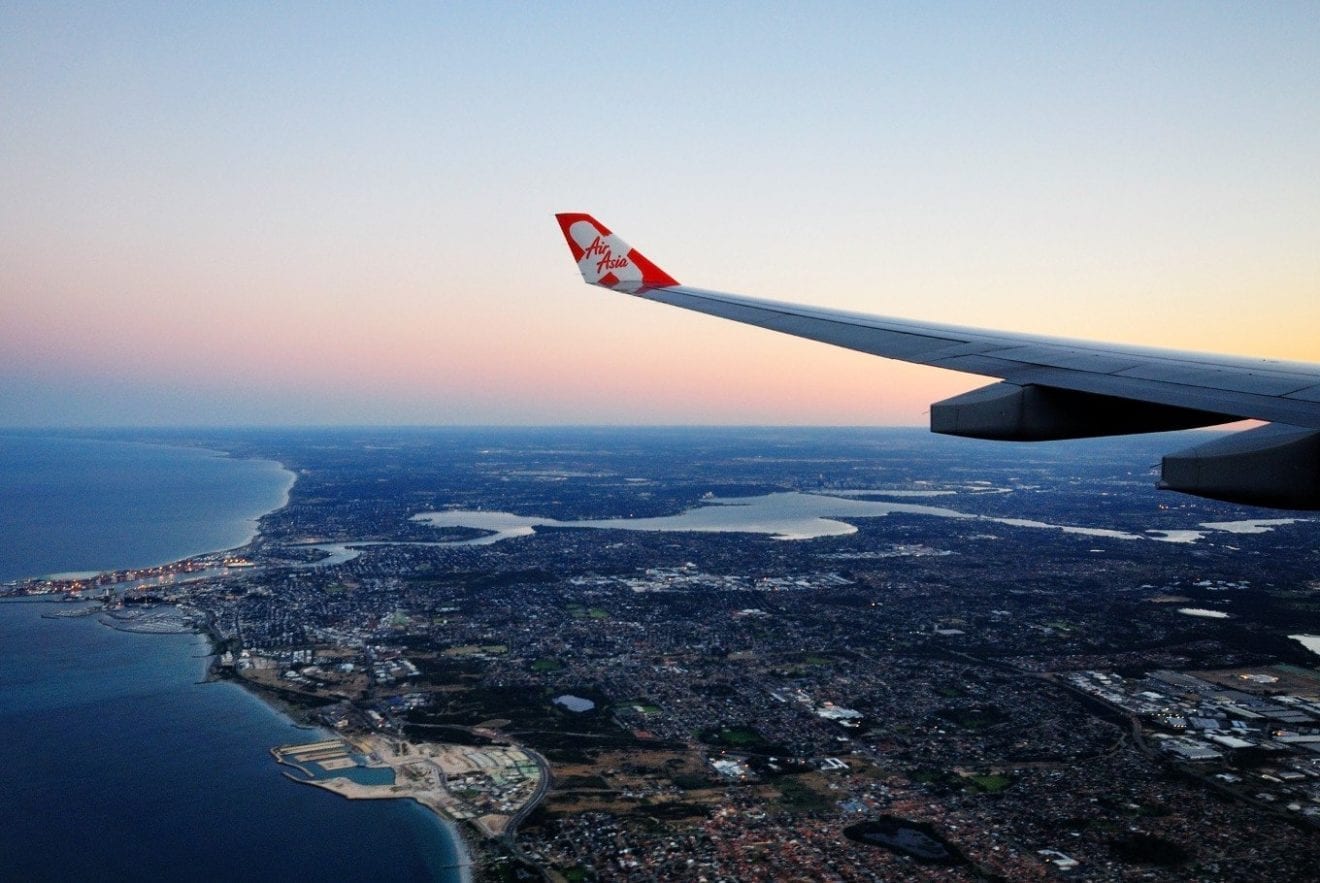
    Thai AirAsia (TAA) is breaking into Bangkok Airways’ long-held monopoly on Bangkok-Maldives air services, knocking down the high fare barrier in the process.

    TAA, Thailand’s largest low-cost carrier, is to launch a daily non-stop service on Aug 11 with an introductory fare that is a fraction of what is charged by Bangkok Airways.

    TAA’s introductory one-way fare inclusive of taxes and fees, will be 1,990 baht, compared with the reduced 20,400 baht round-trip fare quoted by Bangkok Airways yesterday.

    Bangkok Airways’ normal round-trip goes for around 33,000 baht for flights that take slightly over four hours each way.

    TAA is set to change the face of air travel to the Maldives, which has long been regarded as a highly expensive and luxurious destination.

    TAA’s arrival in the Maldives appears to support the island nation’s move to open up an economy travel segment to boost its tourism.

    “The Maldives is indeed a luxurious brand, but it is for all, not only for ultra high-end travellers,” said Haris Mohamed, acting managing director of Maldives Marketing and PR Corporation, a Maldives state-owned firm whose role is akin to the national tourism board.

    Speaking to the Bangkok Post at TAA’s Maldives service launch in Bangkok yesterday, Mr Mohamed said the arrival of TAA is welcome as it would help create a competitive environment as well offer more travel options to the Maldives.

    Santisuk Klongchaiya, TAA’s commercial director, was confident the carrier’s latest international route would show early success with a high load factor of 85% because of the Maldive’s reputation as a world-class destination.

    TAA has successfully secured time slots for arrival and departure at Male airport that are much sought after by other airlines because it suits travellers’ preference.

    The time slots — arriving in Male at 11.40m and departing at 12.30pm — granted to TAA are broadly similar to Bangkok Airways, which has been the sole operator on this route for more than a decade.

    TAA will use 180-seat Airbus A320 single-aisle jets and only offer economy class for the route, while Bangkok Airways deploys A319s with 12 seats for business class passengers and 108 for economy.

    The provision of attractive time slots at the congested Male airport to TAA reflects the Maldives’ belief that the Thai budget airline would boost international arrivals to the republic.

    Mr Mohamed said TAA would not only bring more Thai tourists to the Maldives but also others from Southeast Asia.

    Last year, Maldives attracted 1.3 million foreign visitors with about 16,000 from Thailand. This year, the country expects to ramp up that number to 1.5 million with TAA being instrumental in achieving that target, Mr Mohamed said.

    Arrival growth has been restricted by limited capacity at Male airport, which is building a second runway which has caused part of the existing airport facility to close.

    TAA will become only the third low-cost carrier flying to the Maldives. The others are Malaysia AirAsia flying from Kuala Lumpur and Tigerair from Singapore.