Tag: Singapore

  • Singapore Airlines To Trial Business Class Dine On Demand

    Singapore Airlines To Trial Business Class Dine On Demand

    For decades Singapore Airlines has been known for being one of the best airlines in the world, though I can’t help but feel like they’ve somewhat been resting on their laurels. I feel like the airline used to be super innovative, but is less innovative nowadays:

    • For the most part, I don’t find Singapore Airlines’ new cabins to be that cutting edge, and their business class seat hasn’t evolved that much in the past decade
    • Their meal services in business class are good, though nothing special
    • I will say that their cabin crew are consistently exceptional, and they’re one of the best parts of flying with the airline

    This is due to customer feedback, though Singapore Airlines is careful to note that they want to make sure they develop a system that works before fully implementing this.

    Part of that will be ensuring that flight attendants can deal with the increased work required from dine on demand while maintaining high levels of customized service.

    Is Business Class Dine On Demand A Good Thing?

    On the surface, the addition of dining on demand sounds like a good thing. Especially for an airline like Singapore Airlines, where I sometimes can’t figure out the flow of their meal service.

    But I’ve also sometimes in the past noticed that I don’t always think a dine on-demand system is best. Sure, in an ideal world dine on demand is great, but there are some downsides:

    • It significantly increases the workload for the crew, and will make them more stressed, and perhaps not provide the same level of service
    • If you’re like me and are a sensitive sleeper, I find that the sounds, lights, and smells, from people dining throughout the flight, can make it much harder to sleep

    So while I’m generally in favor of dine on demand, there are also some downsides that are at least worth acknowledging.

    I’d note that quite a few airlines have done dine on-demand trials in business class, but ended up deciding against it. Take Emirates, for example — they trialed it for a while, but then decided not to implement it on a widespread basis (meanwhile both Etihad and Qatar offer dine on demand).

    Bye Bye Lobster Thermidor?

    Singapore Airlines offers a “Book The Cook” menu, where you can order from a much larger menu before your flight. One of the most popular options is their lobster thermidor dish.

    It looks like that may not be on the menu forever in its current form:

    “Like everything, the Book The Cook programme evolves. The lobster thermidor is a perennial favourite but we’re looking at opportunities to modernise that, whether it be a lobster thermidor-type of dish or something similar and lobster- themed which is a little bit more modern, a little bit more healthy perhaps.

    People like lobster, but we’re moving to an environment where people are becoming more health-conscious so maybe the creamy lobster dish is not the right one… maybe a beautiful grilled lobster with fresh asparagus or veggies might be another alternative, as long as we maintain the integrity of the dish.”

    Bottom Line

    I’ll be curious to see what kind of a dine on-demand trial Singapore Airlines runs, and how successful it is. Generally, I’d say dine on demand would be a positive development, though assuming it allows the crew to maintain their high service standards.

    As someone who struggles to sleep without perfect conditions, I’m also generally somewhat apprehensive about dine on demand, though I realize that’s mostly just my problem.

  • Singtel Dashes Ahead of Grab In Survey On Deposits

    Singtel Dashes Ahead of Grab In Survey On Deposits

    A greater percentage of respondents expressed willingness to park money with Singtel compared to Grab, a survey conducted by CGS-CIMB finds. In a recent survey conducted by local brokerage CGS-CIMB, participants were given a scenario whereby they were offered a slight premium (another 30 basis points) to market rates at new digital banks. In this case, 45 percent of the respondents were willing to place fixed deposits with Singtel compared to just 33 percent for Grab. Only two choices were provided to survey respondents.

    We noted a clear difference in the trust levels accorded to Singtel and Grab, based on their willingness to use these entities as a depository institution given an identical set of circumstances, said CGS-CIMB analyst Andrea Choong in the report.

    Singtel and Grab, which operate digital wallets Singtel Dash and Grab Pay respectively, have expressed interests in applying for Singapore’s digital banking licenses. This prompted the local broker to do a survey of preferences.  The brokerage surveyed 139 respondents from various industries, with a larger proportion of them from the finance industry. Those aged between 30 and 50 years made up three-quarters of the sample pool.

    Testing for depositors’ sensitivities to interest rates with an additional 50 basis premium over the rates offered by the digital banks above, 55 percent of those who were previously unwilling to place fixed deposits with Singtel would now in this case, compared to just 40 percent for Grab, the brokerage said.

    CGS-CIMB estimates that 4 to 11 percent of deposits from the domestic banking unit is at risk of being taken by the upcoming new digital banks in Singapore. However, the brokerage acknowledged that this simulation does not take into account «retaliatory measures» by incumbent banks and the effects of further Fed rate cuts.

    The brokerage surveyed 139 respondents from various industries, with a larger proportion of them from the finance industry. Those aged between 30 and 50 years made up 75 percent of the sample pool.

    The fight for deposits is essential for digital banks, as they need cheap retail deposits to move towards profitability. The Monetary Authority of Singapore, in setting out the guidelines for digital banks here, had made it clear that digital bank applicants cannot engage in predatory pricing behavior, and must show a path towards profitability in their five-year financial projections.

    Currently, DBS, OCBC and UOB’s Singdollar deposits account for 24 percent, 17 percent and 20 percent of total deposits in the domestic banking unit – the unit that mainly accounts for Singdollar deposits.

  • Singapore and Thailand Join Hands In Insurance Supervision

    Singapore and Thailand Join Hands In Insurance Supervision

    The authorities in both countries signed a Memorandum of Understanding (MOU) to strengthen cooperation in insurance supervision. The Monetary Authority of Singapore (MAS) and the Office of Insurance Commission (OIC), Thailand, on Thursday signed a Memorandum of Understanding (MOU) to strengthen cooperation in insurance supervision.

    This MoU is an important step which will provide OIC and MAS with a committed approach to working more closely. The MoU will advance a framework for cooperation, exchange of information and assistance in insurance supervision between two authorities as well as facilitating mutual development of the insurance sector in both jurisdictions,» said Suthiphon Thaveechaiyagarn, Secretary-General of the OIC, Thailand in a media statement.

    The MOU on insurance supervision was signed by Suthiphon Thaveechaiyagarn, Secretary-General, OIC and Daniel Wang, Executive Director (Insurance Department), MAS, in Bangkok at the sidelines of the annual Thailand Insurance Expo.

    This MOU affirms the strong relationship between MAS and OIC, as well as our mutual interest to enhance insurance supervision and collaboration in both our jurisdictions. It further deepens partnerships between insurance regulators in ASEAN,» said Ong Chong Tee, Deputy Managing Director (Financial Supervision), MAS in the media statement.

    The Office of Insurance Commission manages the supervision of insurance companies, brokers and agents and promotes the development of business conducts of insurance companies. OIC also builds confidence and accessibilities, strengthens the capacity and promotes the infrastructure of the insurance system.

  • 5G Asia 2019: Collaboration is the key for 5G

    5G Asia 2019: Collaboration is the key for 5G

    The 5G Asia event held in Singapore brought together the industry’s best and brightest names to discuss the invaluable influence that the 5G phenomenon is having all over Asia and across multiple enterprises.

    Pamela Clark Dickson, the practice leader for digital communications and social networking at Ovum, kick-started day 1 with an analytical introduction about the global state of play for 5G and what is to be expected from it in the next 24 months. She described the 5G network as “huge, fast and complex” and that “telcos would need to collaborate” in order to get 5G into the market.

    This was followed by number of other keynotes from industry leaders and even a panel discussion on “Defining the killer 5G app in Asia” where some of the most influential figures in telecoms converged to exchange views about the prospect and widespread influence of a 5G driven telecommunications sector.

    During the panel, the Executive Vice President and CEO of TM One Ir. Ts. Azizi Hadi took the opportunity to introduce the company’s 10 transformative smart solutions, which was launched in August, to drive Malaysia’s commitment towards industrial innovation and growth.

    5G Asia was held between the 10th and 12th of September in Marina Bay Sands and it is one of Asia’s largest events focusing on the expansion of 5G technology in the region. Some of the topics that were explored during the event were 5G deployment choices, the journey to cloud-native, edge computing and revenue generation for companies using 5G, just to name a few.

  • KrisShop Singapore souvenir store pops up at Sentosa

    KrisShop Singapore souvenir store pops up at Sentosa

    KrisShop has collaborated with Enterprise Singapore to open a pop up Singapore souvenir store featuring the city’s most distinctive trinkets.

    The new store displays products from different local brands ranging from Singapore gin to its ubiquitous satay, with a tagline “With Love, SG”. Served as a platform for domestic brands, With Love, SG is curated to demonstrate Singapore’s culture and heritage.

    Singapore Airlines’ KrisShop says it aims to help local brands expand their retail network internationally and to strengthen their brand equity amongst local and international customers.

    KrisShop features more than 2000 products ranging from cosmetics and fragrance to electronics and exclusive co-branded items, sold online and on its aircraft.

  • Price Kaki to launched by Customers Association of Singapore

    Price Kaki to launched by Customers Association of Singapore

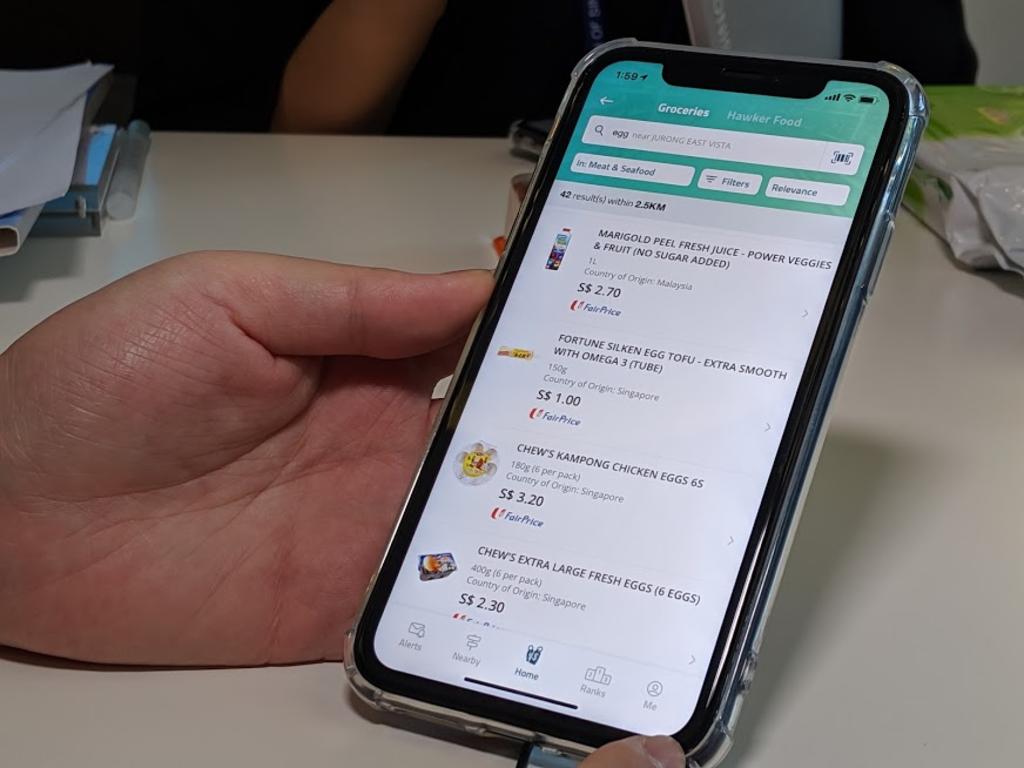
    The Consumers Association of Singapore (Case) has released an app rewarding users for sharing pricing information to allow comparisons while shopping.

    Users of the Price Kaki app, which is expected to launch at the end of this month, can submit photos of any prices they come across while shopping for hawker food or groceries, allowing other users to save costs. Contributors to the pricing information platform are eligible to claim rewards such as film vouchers.

    Price Kaki’s base pricing information will be updated daily by FairPrice, Giant, Sheng Siong and Prime Supermarket.

    Future updates to the app are expected to be broad-ranging and include other businesses such as cafes.

  • Biggest AWS consumer from Singapore stole multiple identities for mining cryptocurrencies

    The Amazon Web Service cloud service had recently received one of its biggest consumers from Singapore, but it was quickly discovered after a small investigation that the user was impersonating several US-based personalities and thus using the computing power for his own benefit by mining several cryptocurrencies such as BTC, ETH, and LTC.

    Ho Jun Jia, also known as “Prefinity” and “Ethereum Vendor” was arrested in Singapore in September 2019 and is waiting for the United States court to decide if they want to extradite him from the country.

    This is very likely to happen as the US and Singapore have an extradition treaty. If the extradition does happen, Ho will have to face fines above the $5 million’s worth of computing power he consumed as well as some jail time for identity theft and fraud.

    Who did Ho impersonate?

    According to the investigation, Ho was impersonating an unnamed game developer in California, which was actually paying the bills on Ho’s illegal activity on the AWS. Furthermore, Ho had also undertaken the identity of a Texas-based individual and an Indian businessman.

    In total, Ho had consumed a staggering amount of $5 million’s worth of computing power, thus potentially generating far more in profits than anticipated.

    Investigators also say that Ho was using trading bots to then speculate with the cryptocurrencies he had generated through his illegal activities.

    It is easily understandable as according to this Bitcoin Trader review on InsideBitcoins, the larger the amount deposited on a Bitcoin trading robot, the higher the chance of not making too much of a scene, therefore helping Ho keep his identity a secret.

    It’s assumed that Ho made far more from speculations than he made with simply mining the cryptocurrencies, thus the unauthorized exchange of securities could also be added to his list of illegal activity.

    Why will Singapore approve the extradition?

    According to investigators, it is assumed that Ho was also hiding his identity in Singapore as well, therefore he was not subject to any type of income or capital gain tax that is active within the country.

    Therefore, it’s easy to say that even if Ho is not extradited he will have to face charges of tax evasion in Singapore, which, although garners a much lighter punishment, would still mean the disclosure of the fortune he accumulated as well as several years served in prison.

    However, considering that most of the damage was caused to US-based individuals as well as companies, Singapore is very unlikely to deny the extradition and allow US authorities to punish Ho.

    In the end, all victims will be compensated for the damage they received from Ho’s illegal activities and further security measures will be implemented on the AWS and Google Cloud platforms.

  • Thinkware dash cams opens flagship store in Singapore

    Thinkware dash cams opens flagship store in Singapore

    Dash cam firm Thinkware is opening a flagship store in Singapore.

    The Thinkware Singapore store will provide a suite of services including troubleshooting, warranty services, dash cam maintenance and repairs. In addition to after-sales services, Thinkware will also exhibit its top dash cams at the venue – including the X700 and latest U1000 models that feature the firm’s Cat-M1 Internet of Things technology and Thinkware Cloud. Customers will also be able to access other enhanced recording and supplementary smart car technologies such as alarm systems and Apple carplay head units, among others.

    The Serangoon North Ave launch comes at a time when the company is on its international business expansion phase within the automotive industry.

    “Thinkware has long been a trusted name in dash cam technology and we believe that Singapore is an ideal market with dash cams steadily growing in popularity amidst advancements in connectivity, recording quality and improved vehicle safety,” said Thinkware Singapore MD Kenneth Low. “We are excited to bring the very first Thinkware premium store to Singapore and look forward to serving our customers.”

    Thinkware is the highest selling dash camera company in the competitive Korean market and its devices are available across 800 cities worldwide.

  • Hong Kong’s Tsui Wah launches second Singapore outlet

    Hong Kong’s Tsui Wah launches second Singapore outlet

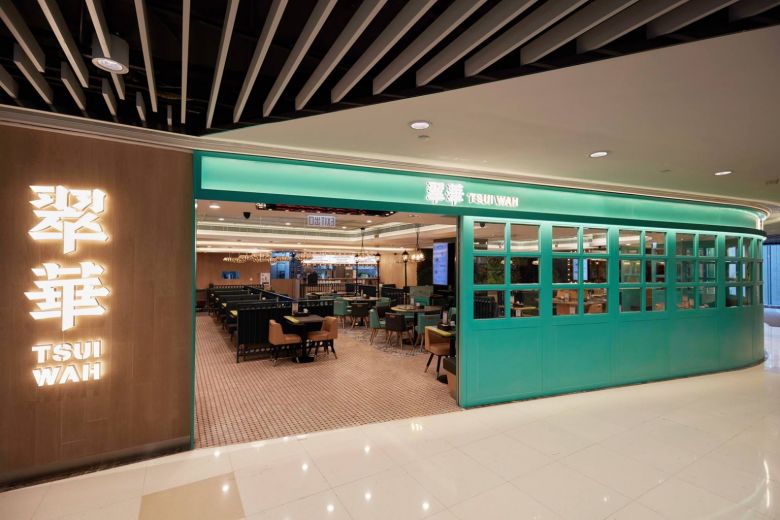
    F&B firm Jumbo Group has opened the second Singapore outlet of its Tsui Wah restaurant at The Heeren.

    The locations are the brand’s sole Tsui Wah venues outside of greater China, with the new 4800sqft Tsui Wah Orchard Road restaurant opening around 15 months after the first Singapore store at Clarke Quay. The second location has 192 seats across its alfresco and indoor dining areas.

    The new Tsui Wah Orchard Road venue has been established for strategic reasons given its easy accessibility on the island’s main shopping street.

  • Starbucks Singapore releases mobile program at selected stores

    Starbucks Singapore releases mobile program at selected stores

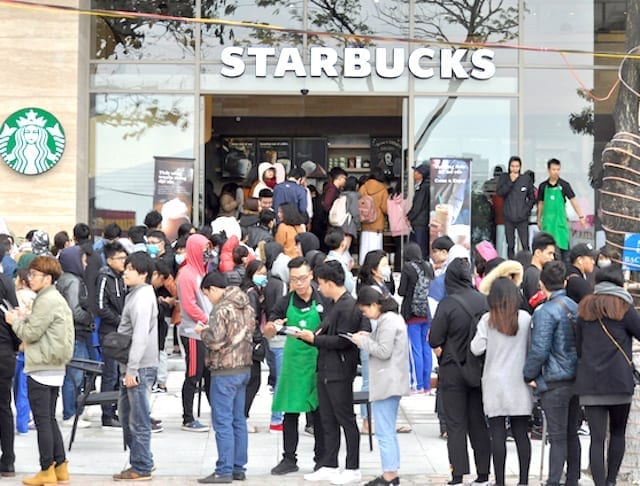
    Starbucks has launched its mobile order & pay (MO&P) service at 32 selected Singapore outlets ahead of a city-wide launch by March next year.

    MO&P allows customers to order in advance and pick up at their chosen Starbucks store. The new feature is also compatible with the company’s loyalty program through the Starbucks mobile app.

    “Innovation has always been a key ingredient of Starbucks’ culture and we are ready to take on the challenge of introducing new technologies and tools, like Mobile Order & Pay, to help make our customers’ experience at Starbucks even more enjoyable,” said Patrick Kwok, GM at Starbucks Singapore.

    “We are consistently on the lookout for new ways to enhance our retail offerings and experience for our local customers, meeting their needs and wants,” he added.

    Starbucks Singapore has marked this year as its “Year of Innovation” after the launch of its flagship store at Jewel Changi Airport. The company also plans to bring on board more partners to diversify its products.

    The Starbucks Singapore mobile application was launched in Singapore in 2012. With the mobile app, its customers can customise their drink, collect stars for their loyalty program and pay for in-store orders.

  • Singapore’s Asset Under Management Growth Slows

    Singapore’s Asset Under Management Growth Slows

    Singapore’s assets under management increased at a slower pace of 5.4 percent year-on-year in 2018, with growth driven by inflows and valuation gains across private market asset classes.

    Despite a challenging year in the global financial markets, Singapore’s assets under management (AUM) increased by 5.4 percent to S$3.44 trillion in 2018, according to an annual poll by the Monetary Authority of Singapore (MAS). The year before, Singapore’s AUM had surged almost 19 percent to S$3.26 trillion.

    Singapore continues to serve as the Global-Asia gateway for asset managers and investors to tap the region’s growth opportunities, with 75 percent of AUM sourced from outside of Singapore in 2018. 67 percent of total AUM was invested in the Asia Pacific, of which more than a third of Asia Pacific AUM were investments into ASEAN countries, MAS said in its survey report.

    The survey found that growth was uneven across the traditional and alternative asset management sectors. Last year’s growth was mostly due to a 15 percent surge in alternative assets to S$646 billion, which was supported by strong inflows and continued valuation gains across private market asset classes including private equity (PE) and venture capital (VC).

    Inflows were strong in traditional sector strategies managed or advised out of Singapore, but these were more than offset by weaker valuations across major asset markets, in line with global trends. As a result, traditional AUM was sluggish and shrank 7 percent in 2018.

    However, the alternatives sector continued to register robust growth, expanding by 15 percent to S$646 billion last year. In particular, PE, VC and real estate saw strong inflows and continued valuation gains as investors increased their exposures to private assets, to enhance returns and diversify portfolios.

    Singapore, as a leading private markets hub, is an attractive location for investment managers and an increasing number of global public investors, including sovereign wealth funds and pension funds, MAS added in its survey report.

    MAS conducts an annual study of the Singapore asset management industry, surveying financial institutions including banks, finance, and treasury centers, capital markets services licensees including real estate investment trust (Reit) managers, financial advisers, and insurance firms.

    More than 800 respondents participated in the latest survey, which excludes direct investments by government-related entities.

  • Leverage Etail in Singapore

    Leverage Etail in Singapore

    In Singapore, more and more people are connected to the Internet and the number of online shoppers follows the same trend. Back in 2014, Visa stated that approximately 26% of Singaporeans used to shop online on weekly basis and recent surveys from Hootsuite and We Are Social show that 89% are searching online for a product or service, while 73% purchased, during Q2 and Q3 2018. The market is growing it is expected that the number of Singaporeans shopping online exceed 4.1 million, by 2021 according to Statista, which makes the market as one of the most active in Asia Pacific.

    This expanding market represents a fantastic potential for e-commerce store owners and Singapore offers numerous advantages to people that are getting started in business.

    Why establishing your business in Singapore?

    Singapore is known globally as a great place to do business. Investors from around the globe are attracted by this place thanks to the benefits it offers. This includes people that want to get involved with the e-commerce sector, and those that do will find that Singapore is a great place to get established, especially when it comes to conquer the Asian market.

    Competitive Economy

    According to the World Economic Forum, Singapore is ranked 2nd in the list of the world’s most competitive countries, making it an ideal place for entrepreneurs. This makes it the most competitive economy in Asia, with it’s next closest Asian rival, Japan, in 5th place. Hong Kong is also in the top 10 in 7th place.

    Singapore’s impressive performance does not stop there as it also ranks very highly for other metrics, including:

    • Ranked as number one for its infrastructure.
    • Ranked as number one for its product market.
    • Ranked in third place for its labour market.

    A Key Regional Player

    Singapore’s impressive reputation globally puts it centre stage in the APAC economy.  According to Singapore’s International Development Board22, approximately 2,600 international firms used Singapore as the location for their APAC headquarters in 2016.

    At the same time, Hong Kong was home to 1,389 international headquarters, while even Shanghai only boasted 470.

    Favourable Taxation and Incorporation

    Another factor that makes Singapore such an attractive place to do business is that starting up is made to be as easy as possible. According to World Atlas, Singapore ranks in 2nd place globally for ease of doing business. Not only are the processes streamlined as much as possible, but Singapore also ranks highly when it comes to supporting businesses.

    For example, it has the fastest court system in the world for resolving business disputes and its business-friendly reputation is helped even more by its reasonable corporate tax rate, which stands at only 17% at the most.

    Building your e-shop

    When you have something to sell, you need a shop in which to sell it. In the past, this would mean building a team to code the platform and while having experts around you for such project still stands, the process is way much easier nowadays, especially with website builders like Shopify that allow you to sell online quite quickly.

    Customise your online store

    These platforms come with numerous features that will help you build a successful store:

    • Themes: Pre-built themes are like skeletons that you can then modify as you wish. This means that much of the work is done for you already, with a few clicks needed to get it just as you like.
    • Extensions: While many features are already included in the packages, website builders propose extensions in case you need something specific, which makes it easy to add features to your store.
    • Shopping Cart: If used properly, the shopping cart can be used to help enhance your marketing, and generate more revenue. People will usually abandon their shopping cart without buying anything, but in placing items in there, they are letting you know what they are interested in. You can take full advantage of this with retargeting and other tools that will help you to make more sales.

    Market your online store

    If Singapore is one of the main location entrepreneurs will choose to launch their companies and to open an online store, it is also a competitive market and the online industry require efforts to make your first sales. While platforms like Shopify are designed to convert, they also provide ranges of features to help you improving your marketing campaigns.

    However, most successful stores also spend time defining and implementing powerful marketing campaigns to develop their brand awareness on the local market.

    As such, Shopify includes functionnalities that will help you to get more customers:

    • SEO: Singapore is a challenging market when it comes to appear first in Google when people search for your products. Website builders include features to customize Title Tags, to submit sitemap, to launch a blog, that should help your pages to rank higher.
    • Social Media: Social media can be such a powerful tool if used right. In addition to being used to market your products, it can also be used to help you develop loyalty to your brand. Get people involved, share related information that will appeal to them and you will develop your very own audience that will be eagerly waiting for your next instalment. Such platforms are fully integrated with the social media world.
    • Email Marketing: As mentioned, with platforms like Shopify you can track users that abandoned their shopping cart and you can easily retarget them or use email marketing to chase them. Newsletters is also a great solution to engage with your audience and website builders come with such features.

    Singapore is a great location to take full advantage of e-commerce and if the market will grow, there are still few spots left. As with any other businesses, however, it needs to be done properly if the venture is to be a success and Singapore offers the right environment for that. Skilful labour, tax-friendly country, developed infrastructure, strategic location in Asia Pacific are among the main advantages you can get by starting your business in Singapore.

  • Singapore Among World’s Worst in Workplace Diversity

    Singapore Among World’s Worst in Workplace Diversity

    While Singapore might be the world’s most competitive economy, its workplaces have a long way to go, ranking close to bottom in terms of diversity and inclusion, and a quarter of employees reporting bullying, according to surveys by Refinitiv and Kantar.

    While Asia-Pacific counted 23 firms on the 2019 Diversity and Inclusion Index published by financial markets data provider Refinitiv, the only representative from Singapore was Singtel.

    The survey, published Tuesday, ranks over 7,000 companies globally and identifies the top 100 publicly traded companies on 24 separate metrics across four key pillars: diversity, inclusion, people development, and controversies.

    The increasing transparency in the reporting of social metrics will offer opportunities for investors to better integrate ESG principles into the investment and strategy decision-making process, Refinitiv chief revenue officer Debra Walton said.

    Singtel came in 79th on the list. Australia led the region, with nine companies in the top 100, followed by Japan with five.

    Singapore’s workplaces were ranked second-last in terms of diversity and inclusion practices by data, consulting and insights firm Kantar in its latest Inclusion Index, released Tuesday.

    According to the survey, which polled 18,000 people in 14 countries across 24 industries, Singapore was identified with the highest level of workplace bullying, along with Brazil and Mexico.

    Compared to the global peers, Singapore workers are the most likely to «feel uncomfortable» by their employers, and 44 percent said they experience «stress and anxiety» at work, compared to 39 percent globally, according to the survey.

    If you are serious about inclusion and diversity in your business, you need to get serious about measuring it. Diversity is the fact, while inclusion is the act, and until now inclusion has been much harder to measure, Mandy Rico, global director of Kantar’s Inclusion Index, said about the findings.

  • Singapore retail sales down again in July

    Singapore retail sales down again in July

    Singapore retail sales in July fell by 2.4 percent after motor vehicles were excluded from the data. Month on month, sales were down by a marginal 0.7 percent.

    Total Singapore retail sales in July were estimated at about S$3.6 billion, with online sales accounting for an estimated 5.6 percent of that total.

    Year-on-year basis, sales of the furniture and household equipment, and computer and telecommunications equipment industries declined by 8.3 percent and 7.7 percent respectively, due mainly to lower demand for household equipment and handphones, according to Statistics Singapore.

    Sales of watches and jewelry and recreational goods, as well as department stores, all registered declines of between 3.6 percent and 6.2 percent. In contrast, sales of medical goods and toiletries registered a growth in sales of 1.9 percent, while sales by supermarkets and hypermarkets increased by 0.9 percent.

    Year-on-year, sales of food and beverage services grew by 3.2 percent in July.

    Month on month, sales were down by a marginal 0.7 percent.

    Total Singapore retail sales in July were estimated at about S$3.6 billion, with online sales accounting for an estimated 5.6 percent of that total.

    Year-on-year basis, sales of the furniture and household equipment, and computer and telecommunications equipment industries declined by 8.3 percent and 7.7 percent respectively, due mainly to lower demand for household equipment and handphones, according to Statistics Singapore.

    Sales of watches and jewelry and recreational goods, as well as department stores, all registered declines of between 3.6 percent and 6.2 percent. In contrast, sales of medical goods and toiletries registered a growth in sales of 1.9 percent, while sales by supermarkets and hypermarkets increased by 0.9 percent.

    Year-on-year, sales of food and beverage services grew by 3.2 percent in July.

  • UBS Powers Singapore Offices with 10-Year Solar Energy Deal

    UBS Powers Singapore Offices with 10-Year Solar Energy Deal

    UBS inks a 10-year deal with Singaporean utilities and marine group Sembcorp which will supply renewable energy to power the bank’s Singapore offices.

    The deal includes the sale of 15,000 rooftop solar panels – exclusively bought by UBS – with 6.3 megawatt-peak in capacity. According to a regulatory update, the panels will be installed on top of UBS’s 40,000 square meter exhibition hall by December 2019.

    The deal aims to utilize solar power to run 25 percent of UBS’s annual energy consumption across its offices in the city-state replacing around 20 million kilograms of carbon emission in 10 years. And by 2020, UBS aims to fully power its Singapore operations with renewable energy.

    As a global firm, UBS strives to go beyond our duty to protect the environment and continually improve our systems to ensure responsible behavior in all aspects of our operations, said Singapore country head for UBS, August Hatecke.